Lupine Top and Back Finished

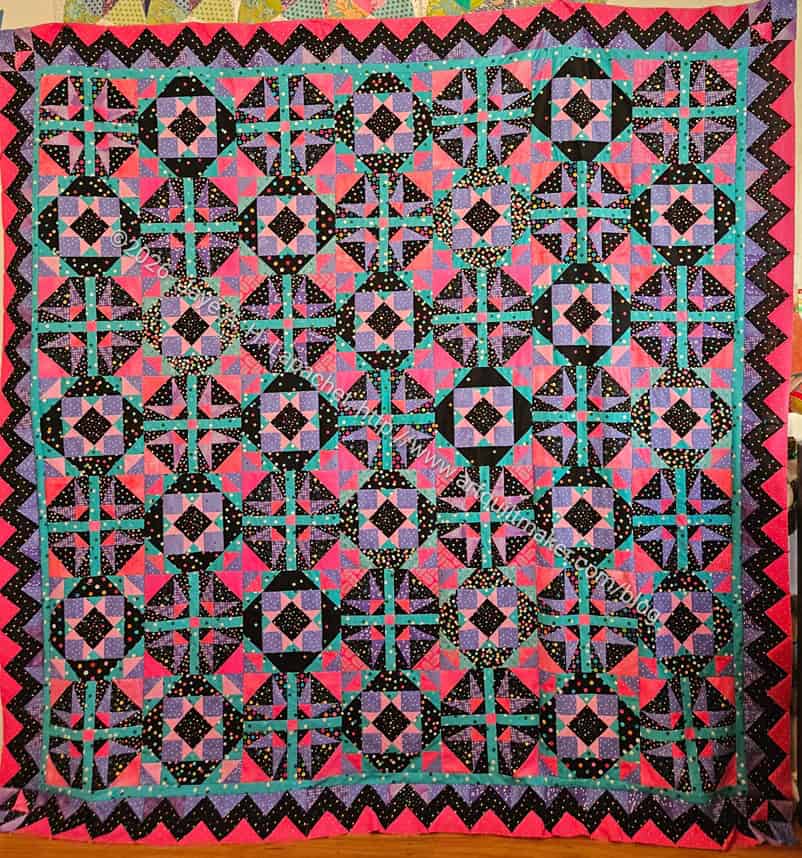
Lupine top finished
Lupine top finished

Lupine is ready to go to Colleen for quilting. Not a great photo, but the quilt is large and doesn’t fit well on my design wall.

I am really pleased with how it came out. It is a but pink and purple, but doesn’t scream ‘little girl’ to me. I think the black really helps give it a good over all feel. 

In addition, black can be depressing. It did make my workroom a little dark, but overall the pink, purple and Carousel blue keep the black from creating a look that is too depressing.

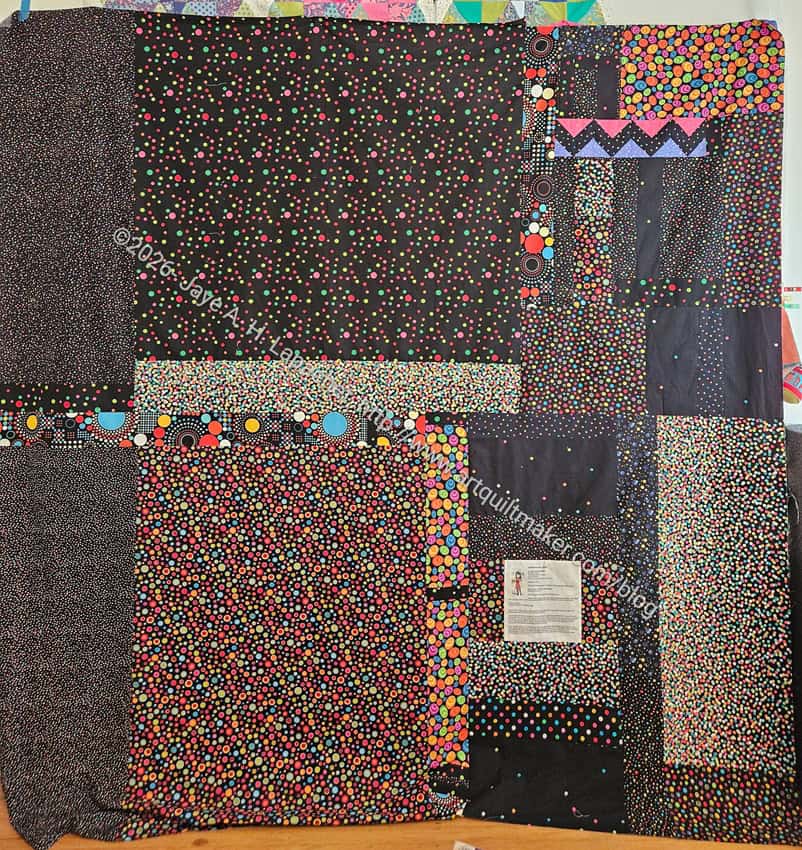
Lupine back finished

I also finished the back. Mom said it looked a little brown, but I definitely used colored dots on black for the most part. One of the prints, a large-ish piece, middle bottom, does have dots that have more brown in them than I would normally use. 

This project used up most of my dots on black fabrics.

I am waiting for a black solid in order to make the binding. I was going to use a pink that matched the border (AGF Cherry Lipgloss), but Lil Sissy pointed out that a black (AGF Caviar) would contain the piece. I think she is right.

Gerre’s Tadpole

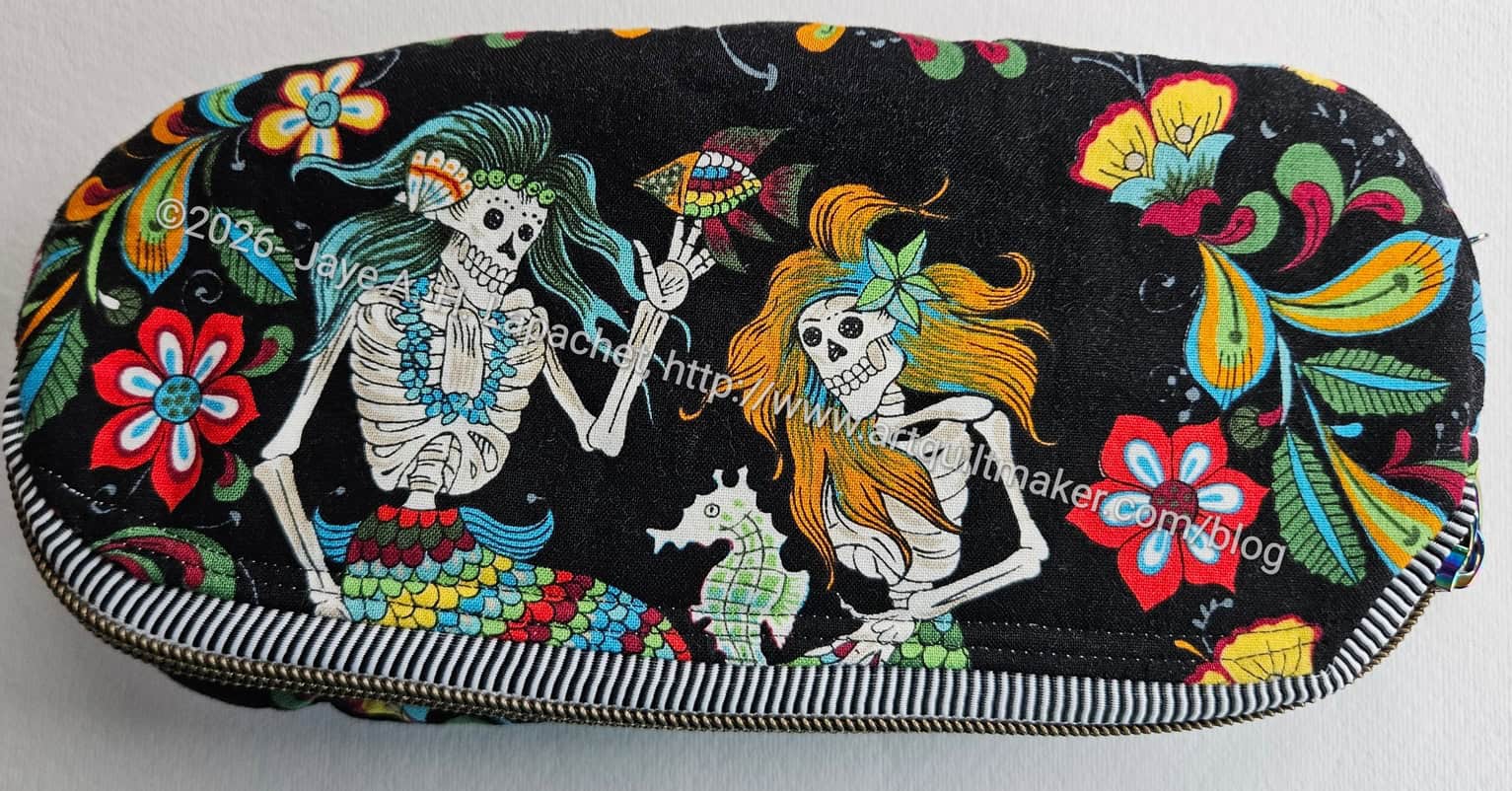
Gerre's Tadpole front
Gerre’s Tadpole front

I finished the Tadpole I made for Gerre’s International Women’s Day celebration. This is another Sew Sweetness pattern I bought and hadn’t yet made.  I made this one at the same time I made Carrie’s

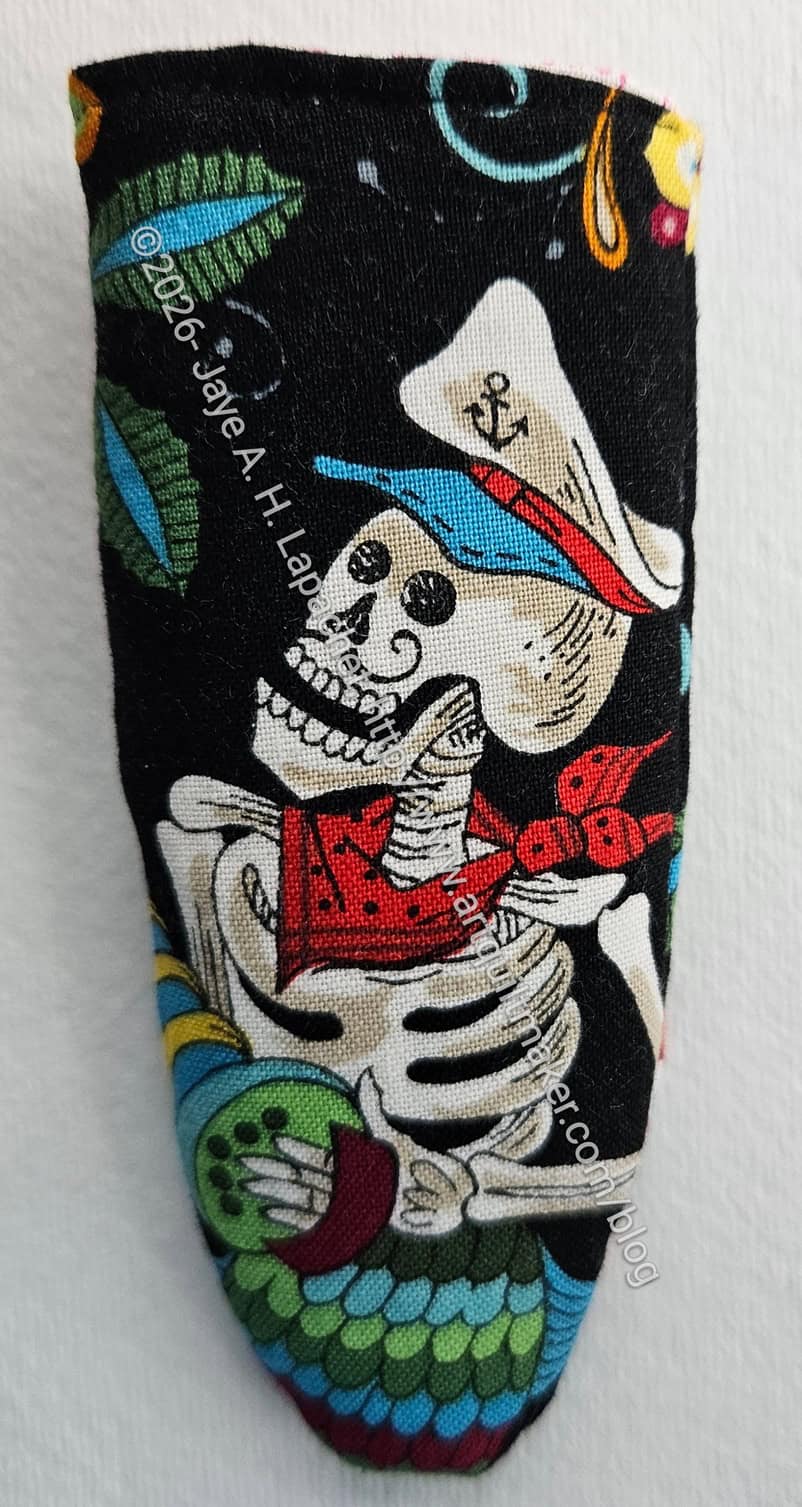
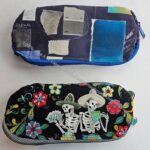
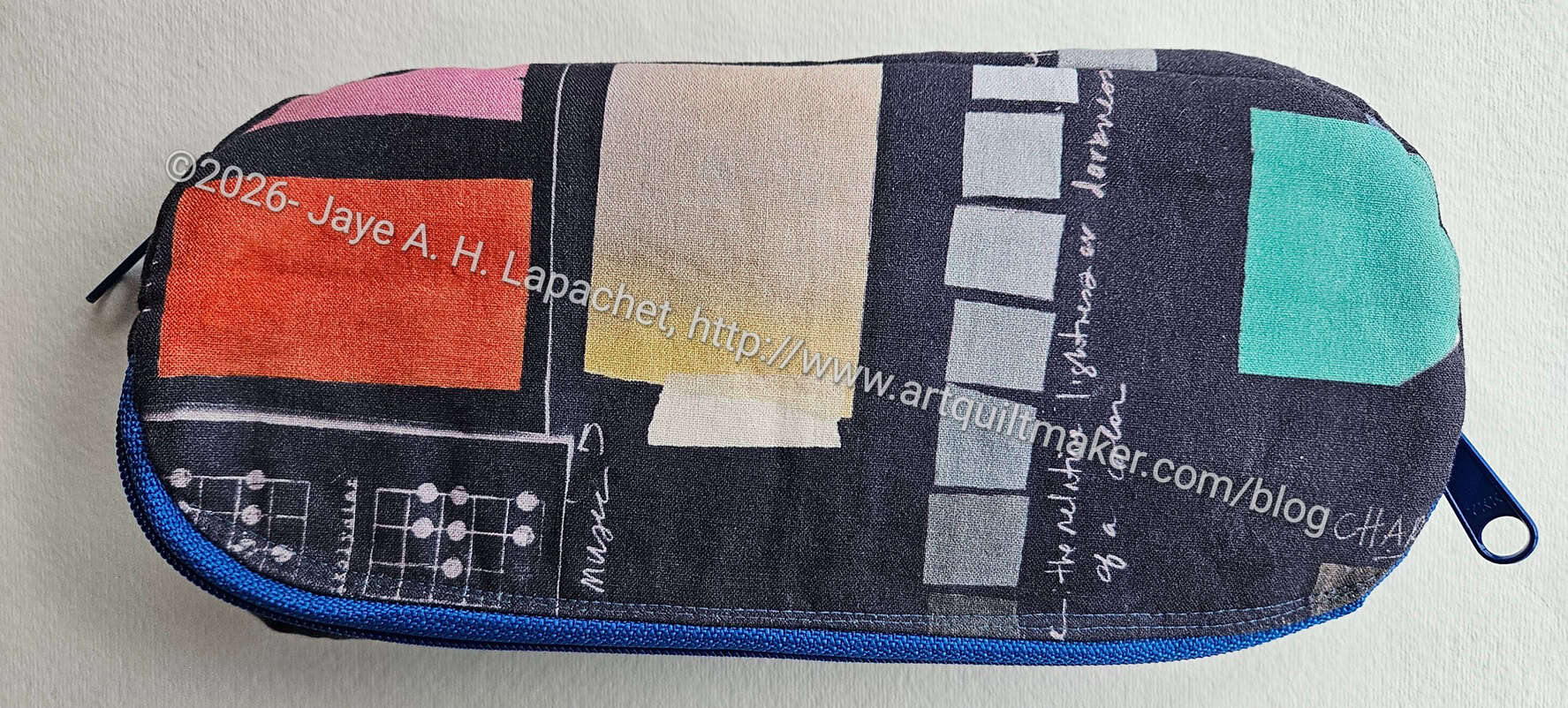
Gerres' Scissor Sheath
Gerres’ Scissor Sheath

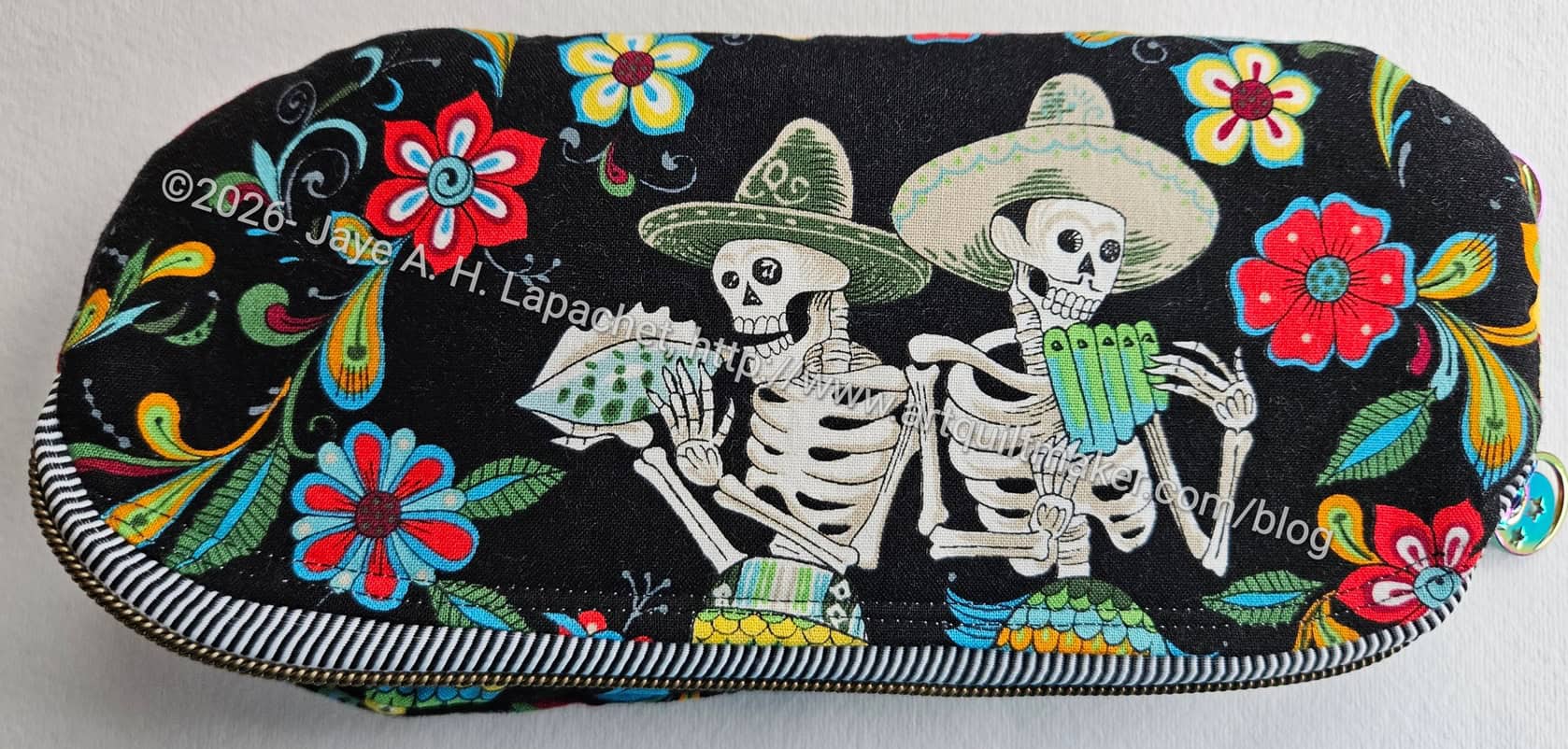
The fabric I used was the same used for another of Gerre’s bags, the Enigma Pouch. I am not a huge fan of this fabric as it looks a little too creepy for me. However, first, I am almost out, and second Gerre said she really likes it. I decided to use it up and then I can get back to the Alexander Henry Dia de los Muertos fabric I also use for her gifts. Yes, I have used a few different fabrics for her gifts. She was the first one, I think, for whom I started making sets of bags. It took me awhile to settle into the process. 

This fabric does provide some good fussy cutting opportunities. Since I don’t have much of it left, I am using all the bits.

Gerre's Tadpole other front
Gerre’s Tadpole other front

This pouch is more 2 sided than Carries, because of the fussy cutting opportunities. It is interesting how different the two sides are. However, all the figures are skeleton mermaids or mermen. I mostly cut off the tail of them. I suppose I could have turned the fabric 90 degrees and included the tail. Considering the design of the pouch, that might be a better way to orient the fabric. I guess I’ll have to make another one to see. 😉

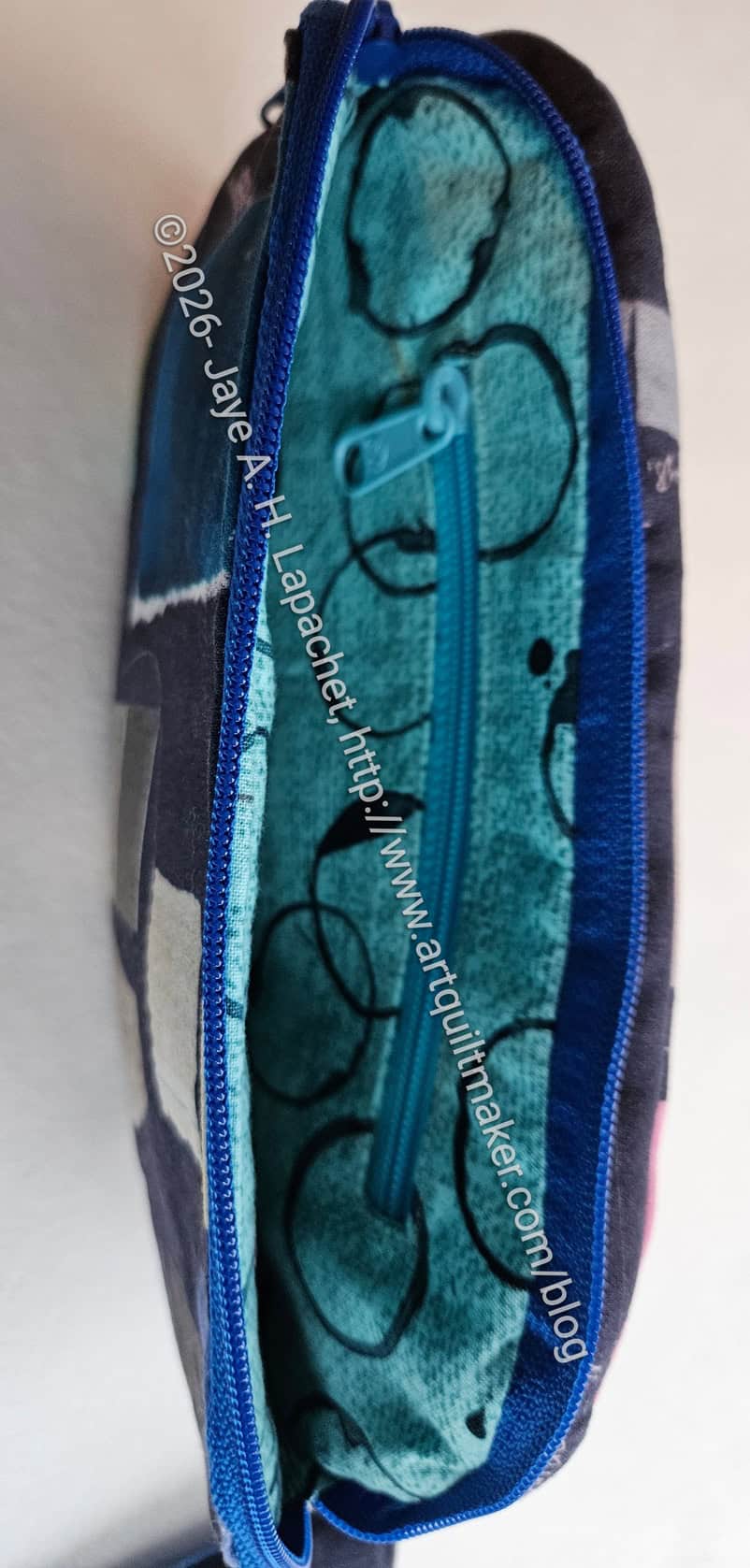
Gerre's Tadpole interior
Gerre’s Tadpole interior

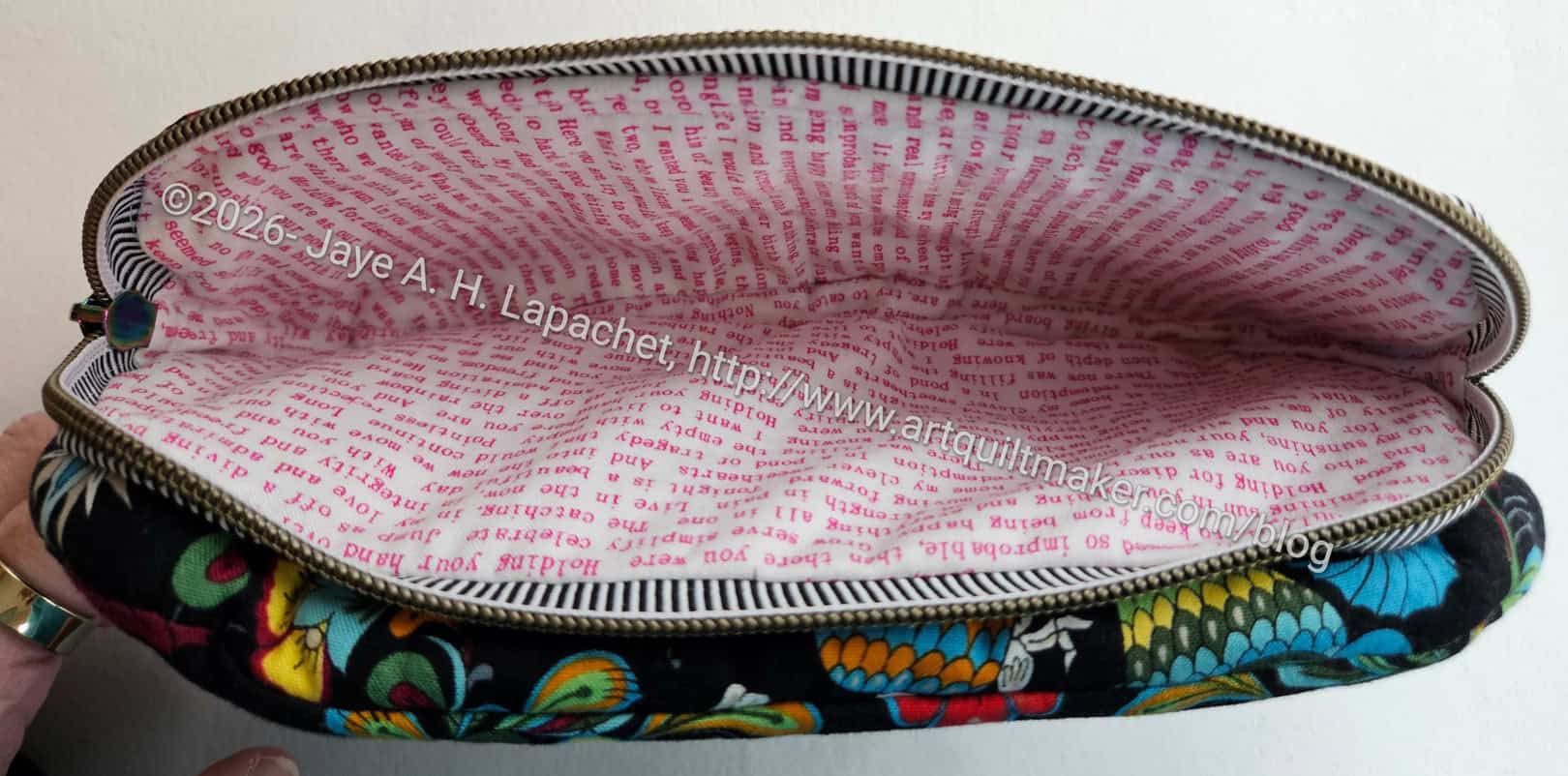
As mentioned, I followed the pattern exactly, which I might not do if I make this again.

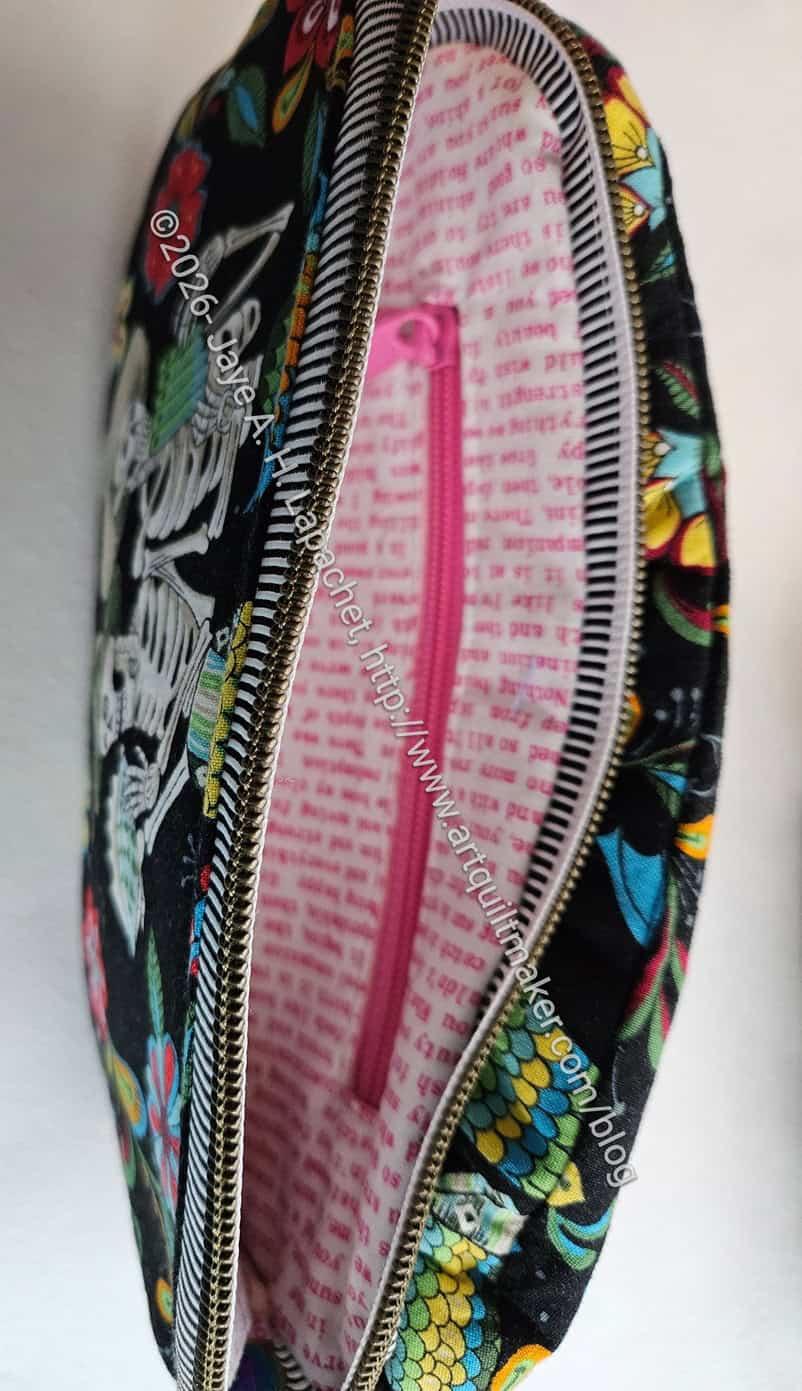
I also put an interior zipper pocket on one side of the pouch. I think this pocket could be used for extra rotary cutter blades. They might not be obvious, but a reminder could be using this same side for a rotary cutter. 

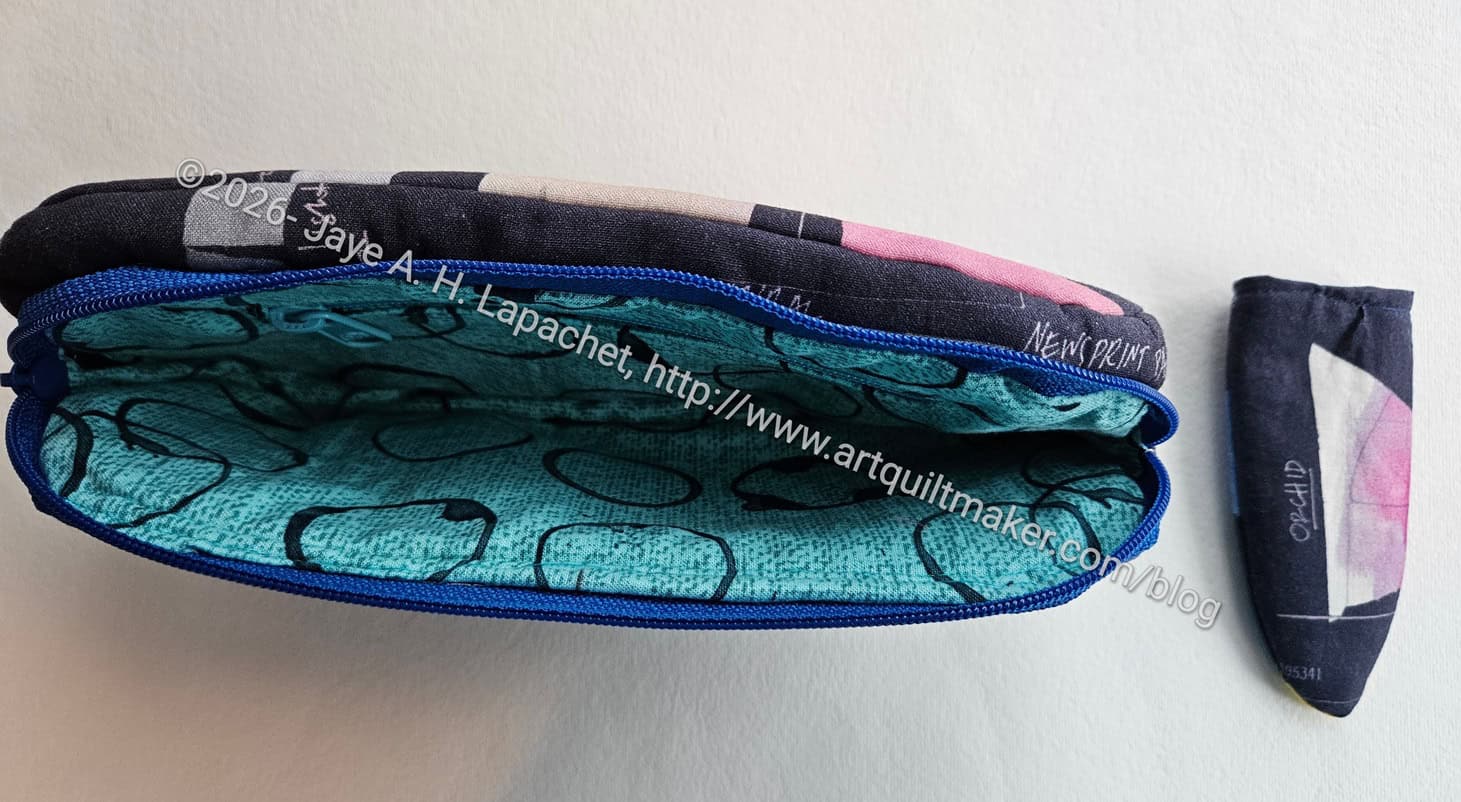
Gerre's Tadpole - interior
Gerre’s Tadpole – interior

I am paying closer attention to making sure the linings are not saggy baggy. I am pleased with the way the pockets came out.

Both Tadpoles look good, I think. I need some practice to make them better, but this is a useful pouch.


Playing with the BAM BOM

BAM BOM blocks - Feb. 2026
BAM BOM blocks – Feb. 2026

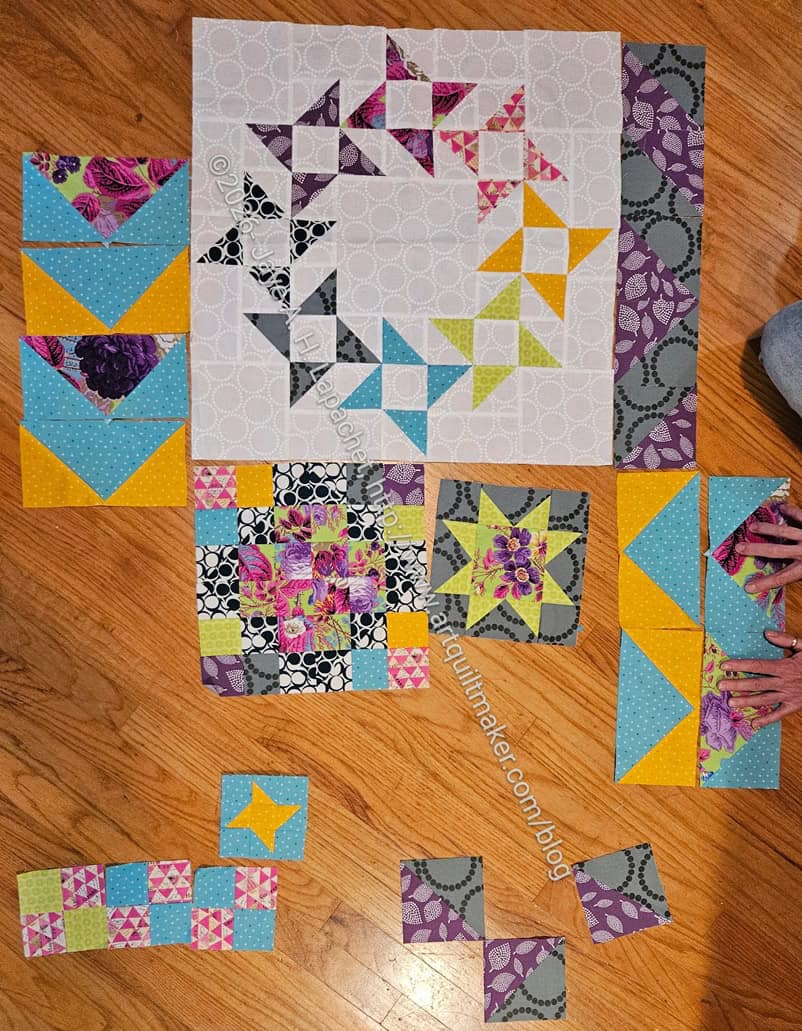
Lil Sissy was in town last week for 12 hours on her way to a sun, sand and scuba diving adventure. She called me a few days before and I cut her in on my day’s plans: museum, GF Chinese food lunch. Then we did some things she wanted, namely getting supplies for some jackets she plans to embellish.

Once we were back and my house she saw my BAM BOM blocks and I let her play with them. We used the ‘design floor’ (LOL) since the design wall was full to bursting.

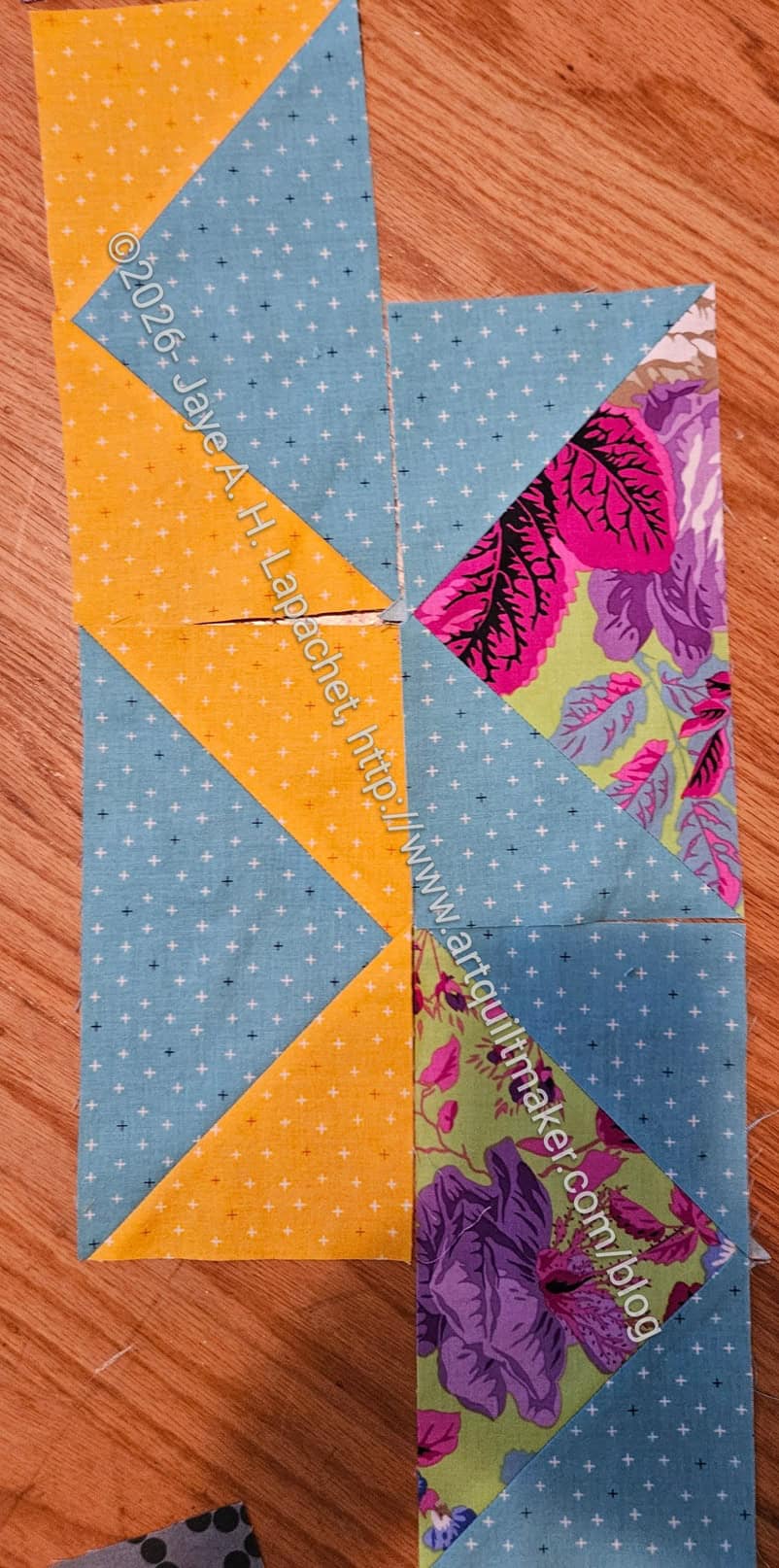
BAM BOM Flying Geese -Lil Sissy arrangement

It is always interesting to have an artist who uses a different medium play around with quilt blocks. I laid them out in a more or less conventional way. She immediately saw diagonals in places I hadn’t noticed.

She wanted me to make a bunch more Flying Geese so I can really lean into the diagonals. I’ll think about that. 

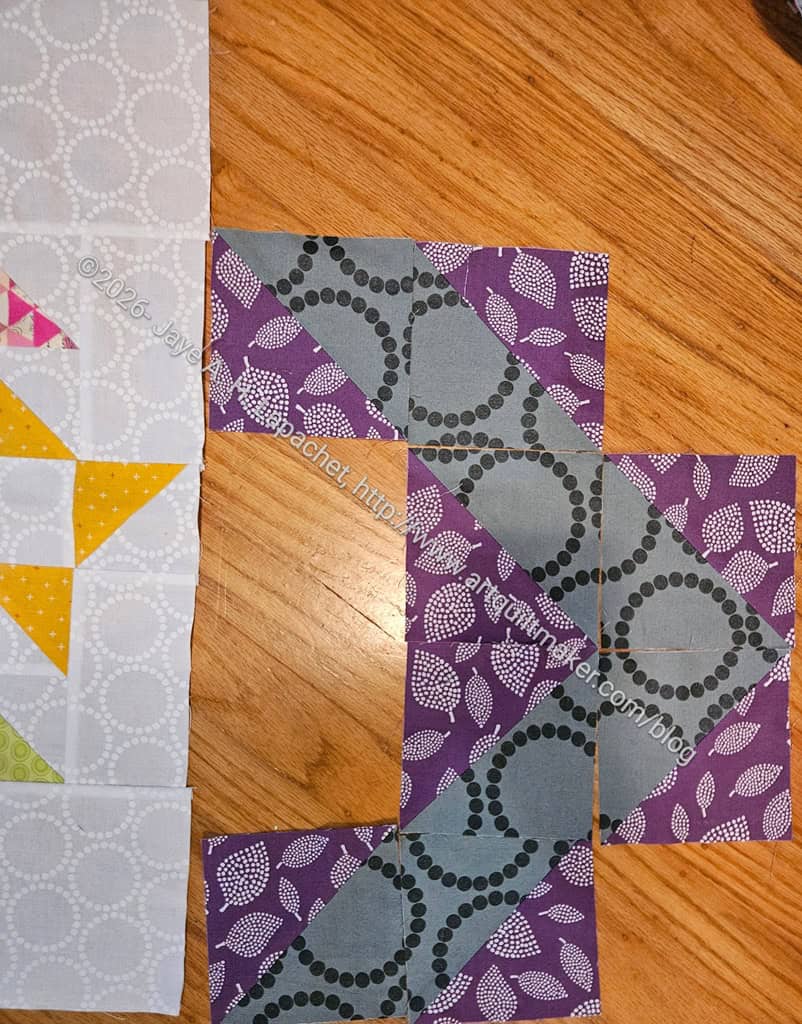
BAM BOM HSTs -Lil Sissy arrangement

She also played with the Half Square Triangles (triangle squares) a bit. Again, she leaned into the diagonals. This arrangement has good possibilities even if I do have to make more HSTs. I think it would look cool to weave the diagonals behind the other blocks. 

BAM BOM Friendship Star Wreath

Finally, we talked about my big Friendship Star Wreath and whether I should re-make it with a dark background. She said no, but I might still do it. That white shrieks at me.

Carrie’s Tadpole

The Tadpole is a pouch that I bought as part of a 4-pack with the Cosquilla pattern last June. I am glad to say that this isn’t the first time I have made a bag from this 4-pack. 

Carrie's Tadpole front
Carrie’s Tadpole front

The Tadpole (weird name, I know) is a useful pouch with two pockets that can secure scissors, rotary cutters and other similar types of tools.

Tadpole with interior zipper

One pocket is on the top and the other is on the bottom so you have to kind of flip it around to get at both zippers.

One of the pockets includes a small internal zipper pocket. This pocket could be added to both of the larger zipper pockets. I am not sure what I would put in that interior zipper pocket, but I do think that, generally, the more pockets the better. In this case, that might not be true if I were to put something in there and then lose it or forget about it. I look forward to seeing what Carrie says.

Tadpole open with sheath (Carrie)

The pattern includes a scissor sheath. I bought Carrie a nice pair of scissors to go with the pouch and the sheath can be customized to fit the scissors. I wanted to do that, but I didn’t want to open a new pair of scissors. I am not 100% sure the sheath is very useful with sharp scissors. It is definitely cool to have a matching scissor adornment, but I am concerned that sharp scissors will cut through quilting cotton. I might make the scissor sheath out of cork or pleather scraps in the future. It wouldn’t match, but it might be useful.

I made this first one in the fabric I use for Carrie, the Carrie Bloomston Color Theory fabric. I was able to use some smaller pieces, which was nice. 

Ends n.23 Start and Finish

Ends n.23 Top
Ends n.23 Top

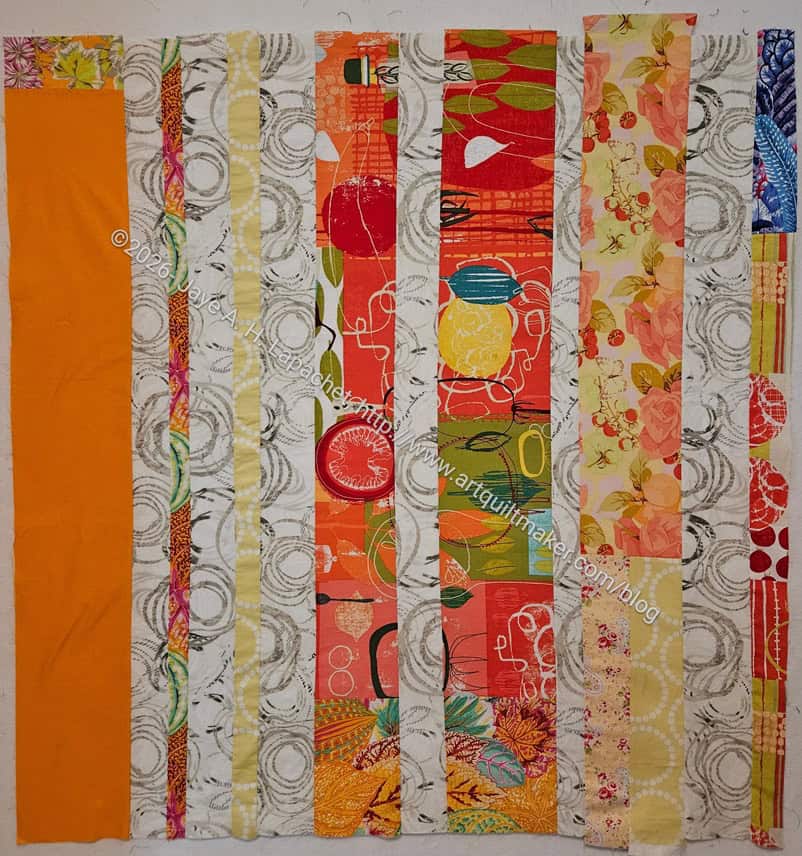
I wanted to make a second donation top for the year and going through a stack of fabric helped. I found the neutral background and that cemented my resolve.

I used the edges that Colleen cut off of Gelato #2 to start this donation quilt. That back was quite large, so I had long pieces from which to choose. 

I shoot for about 40×40 for these quilts so a yard of fabric total works. The neutral I found was a half yard.

Ends n.23 back
Ends n.23 back

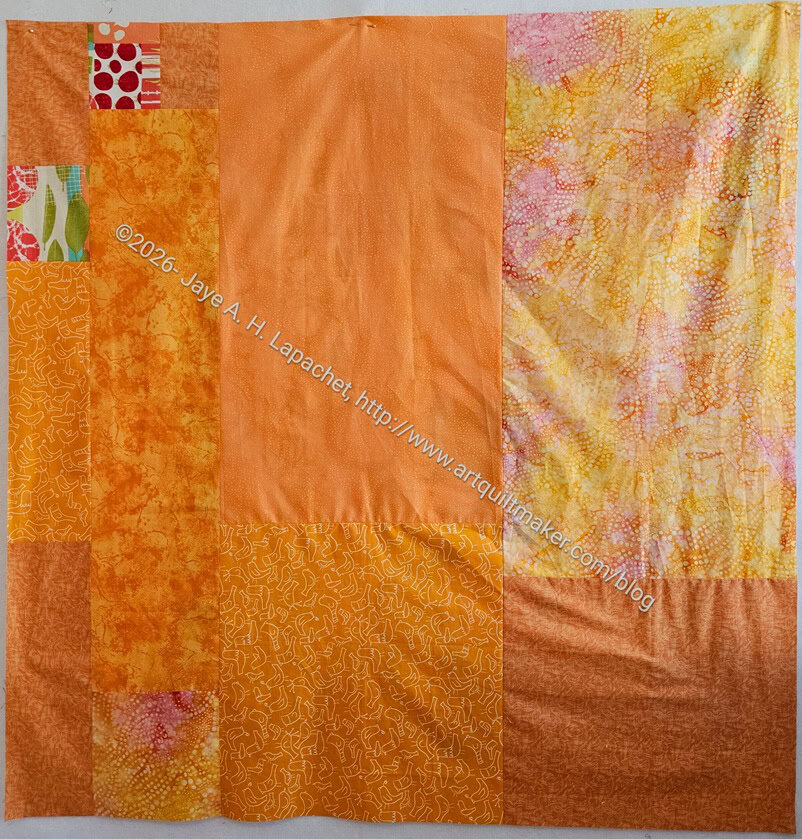
Except for the back, I didn’t need to dig into my bins of fabric. I chose some light oranges for the back, then dutifully measured and put together some batting scraps for the batting.


Finished: Project Bag

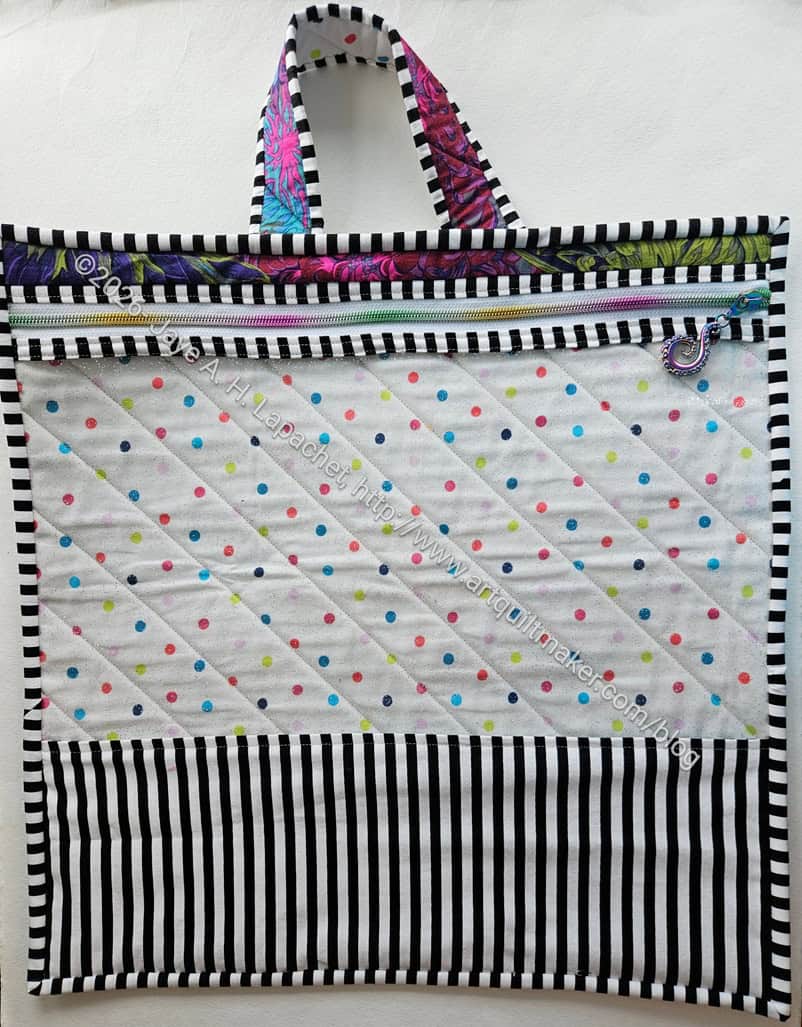
My extra large project bag

I finished the Project Bag that has been on my list for a long time. Or what feels like a long time. The last time I posted about project bags was a year ago and I was thinking about making this project bag.

This bag matches the one I made for myself in November of 2023

I wanted to make sure that the zipper tape was covered. The ByAnnie patterns don’t always take care about that and it is a particular annoyance of mine. I know it doesn’t really matter, but I like the zipper tapes completely covered, even on the inside. 

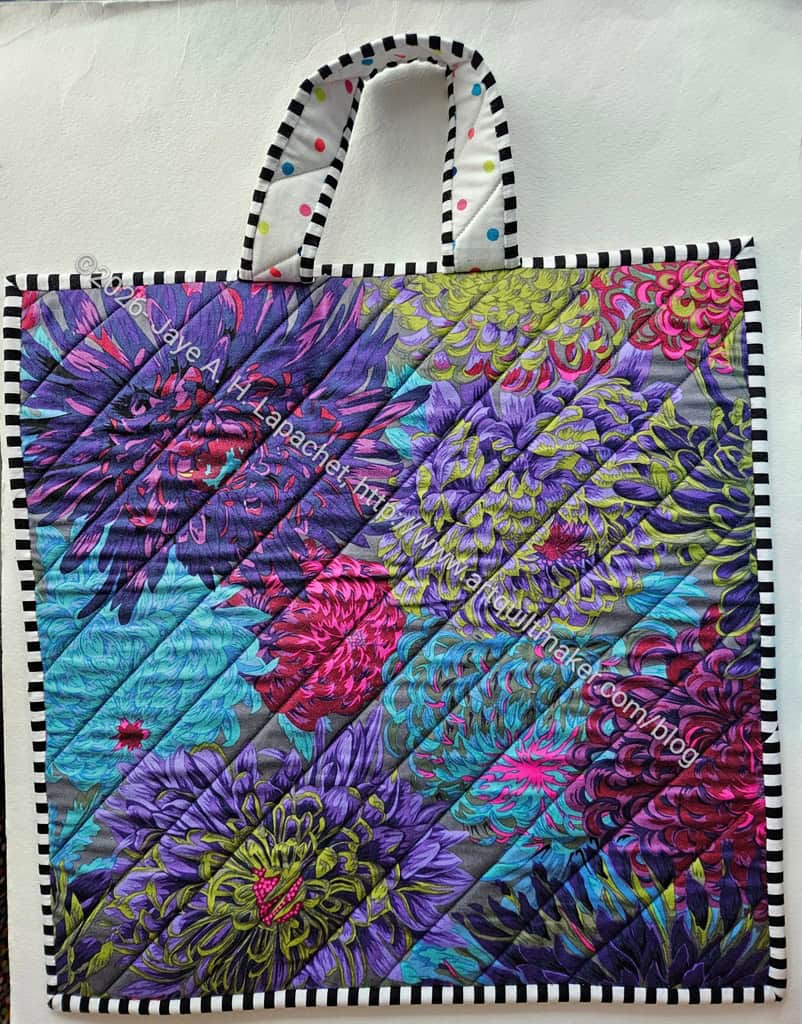
My extra large project bag-back

MaryC uses a technique where she folds a piece of zipper tab fabric in half and slips the zipper tape in then sews and folds the excess back. I tried that this time and found it worked well. My only problem was that I made the piece too small in width. I had to add an an extra piece on top to close the gap. Still I liked the technique. I just need to figure out a better size for the zipper tabs. I think I might have read the pattern wrong and reading it correctly might help. We’ll see if I make this bag again. I think I have enough project bags for the moment. I don’t want too many as it will encourage UFOs.

This is #9 on the guild UFO challenge. I’ll bring it to Sew Day to show off.

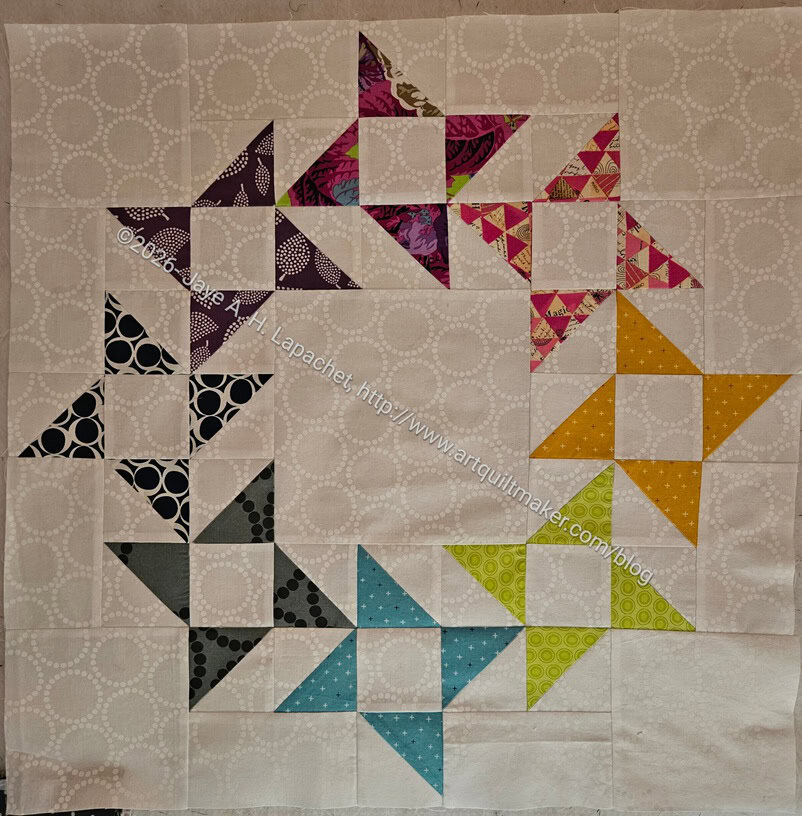
BAM BOM Friendship Star Wreath

BAM BOM Friendship Star Wreath

This block (for Month 3) took me a long time and I had some detours along the way. Finally, I finished it.

I am not 100% happy with it. I would have liked to use the grey Pearl Bracelets, but I didn’t have enough. 

Using the white Pearl Bracelets as the background introduces another color of background into the piece and I had hoped to avoid using white for the blocks. Since I have not used white in any of the other blocks I have to figure out how to make it work. 

First step: go see if I can find more grey Pearl Bracelets. Doubtful, but you never know.

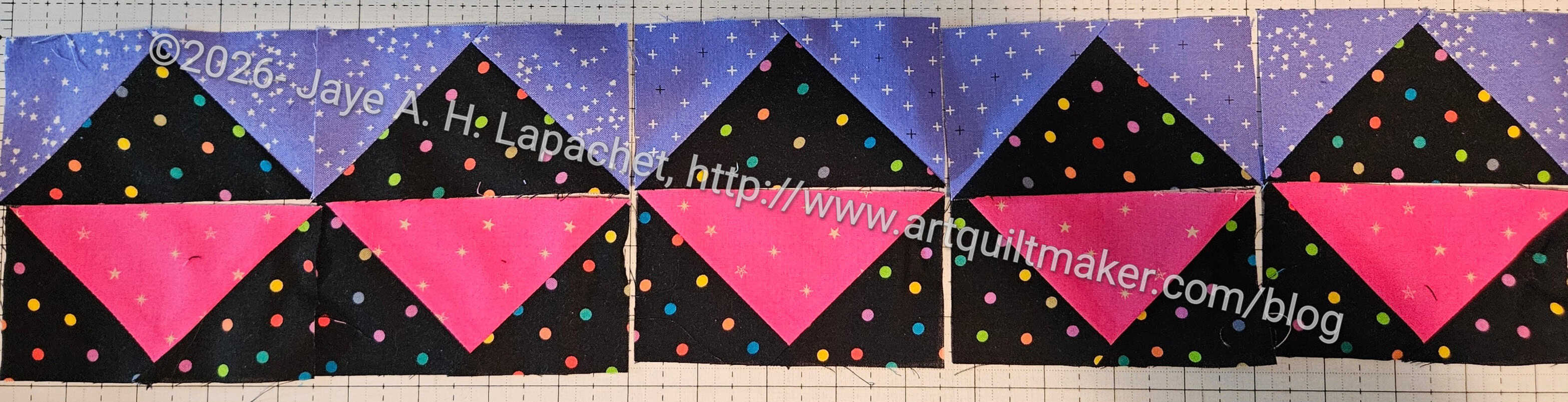
Lupine Border Decisions

I chunked the Lupine quilt top, then sewed the spacer border on. The next step was the Flying Geese border.

Option 1:

Recommended Lupine border

The directions were to assemble two Flying Geese so it looks like the above. The look was ok, but didn’t grab my attention.

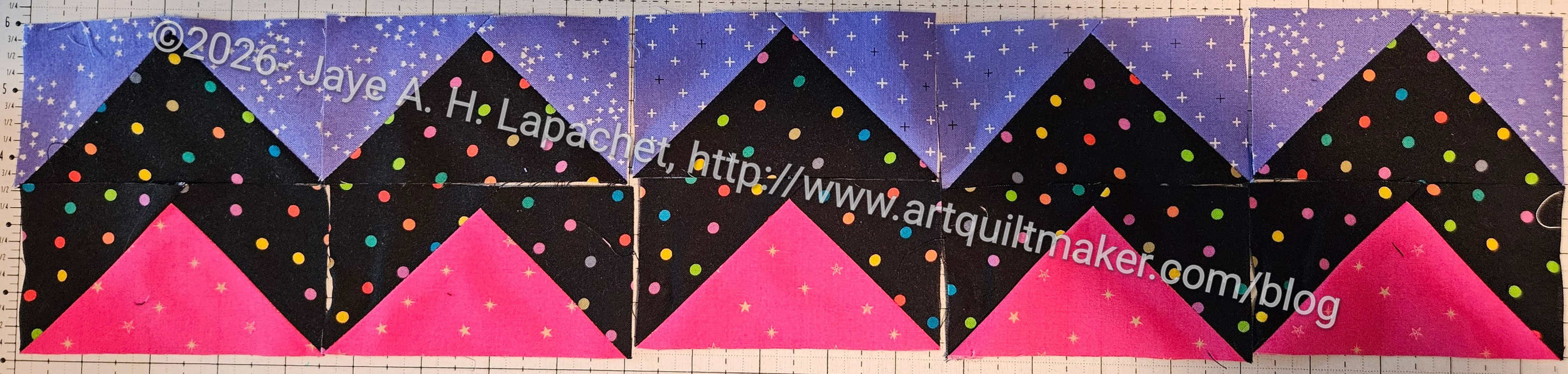
Option 2:

Zigzag Lupine border

I saw a zigzag border that someone made and tried that with my fabrics. This option looked more cohesive to me. 

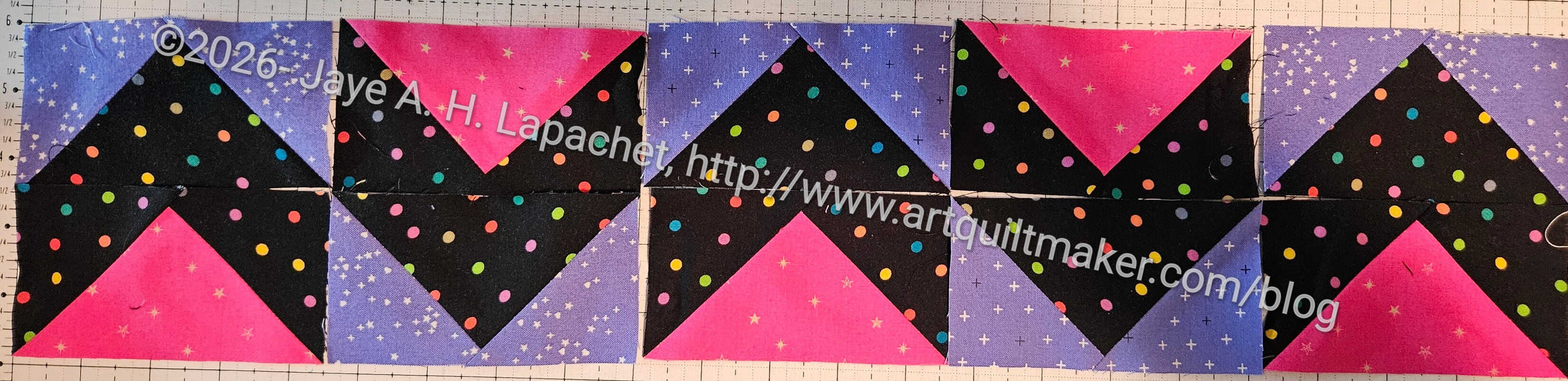
Option 3:

Alternating chevrons Lupine border

Just to see if another configuration would be better, I tried alternating chevrons. This wasn’t terrible and created a lot of movement, but I thought it was a little confusing for the viewer.

I went for option 2 and started sewing long rows of Flying Geese together.

Book Review: Amish Quilts & the Welsh Connection

Amish Quilts and the Welsh ConnectionAmish Quilts and the Welsh Connection by Dorothy Osler

I borrowed this book from the library after Wales and then Welsh quilts started started cropping up in my life. After the Today’s Quilter supplement, I found out that there might be Welsh influence in Amish quilts, so I started reading up on Welsh quilts.

This is a very academic book and had a lot of detailed references to sources as well as explanations of what the author concluded from the information in the sources. The scholarship is impressive.

As with many activities primarily done by women, research is difficult. “…they underscore the lack of value given to woolen quilts within the Welsh culture itself. The explanation for this is not simply that they were products of a folk culture… But quilts were made by women; they were domestic products for private space” (pg.53). This books has copious endnotes, a very detailed bibliography and an index. Many of the references come from letters, ships passenger lists, and data compiled from US census records. 

There are few, if any diaries or journals discussing a connection (inspiration) between Welsh and Amish quilts. The author writes “…discussions have remained largely informal and, for the most part, have not been grounded in any evidence base beyond the visual evidence within the quilts themselves” (pg.131). “Particular equivalence was found in the spare style, intensity of color, and quilted textures of wool quilts made in nineteenth century Wales which–in terms of overall design, use of plain wool fabrics, and elaborate quilting styles–appeared to bear a striking resemblance to Pennsylvanian Amish quilts of a similar date”(pg.7). She goes on to say that questions about where a crossover could have occurred remain unresolved. “..at each stage in the research undertaken for this book, the accumulation of objective data from a multidisciplinary range of sources supported the subjective evidence contained within the quilts themselves”(pg.132-133). Osler is UK based and notes that further scholarship on the topic will have to be done in local historical societies and archives, in person, in the US. 

There are similarities between the Amish and the Welsh such as religious non-conformism and farming. There is also geographic evidence showing possible interactions. The author says “It would seem extraordinarily coincidental that two quilt styles with such close visual connections developed entirely independently in the nineteenth century, when–at that point in time–the communities within which these styles were common practice lived in geographic proximity to each other” (pg.132). “Making quilts in deep-dyed plain cloth pieced into large geometric shapes of abstract form was undoubtedly practiced in Wales prior to the time that this dramatic style came into use for Amish quilts”(pg.132).

If you don’t want to wade through passenger lists and census records, read chapter 7, Tying the Threads. It summarizes the conclusions and leaves out a lot of the detail.

There are lovely color plates of Welsh and Amish quilts as well as a few pages of quilting designs.

View all my reviews