The name, Natalma, was on my mind so I looked it up. “Natalma was an American-bred Thoroughbred racehorse best known as the dam of the most important sire, and sire of sires, of the late 20th Century, Northern Dancer. She also established a highly influential female family, which has produced other leading sires Machiavellian and Danehill, plus numerous other stakes winners.” from Wikipedia.
I should have known it was a horse. Sara loves horses!
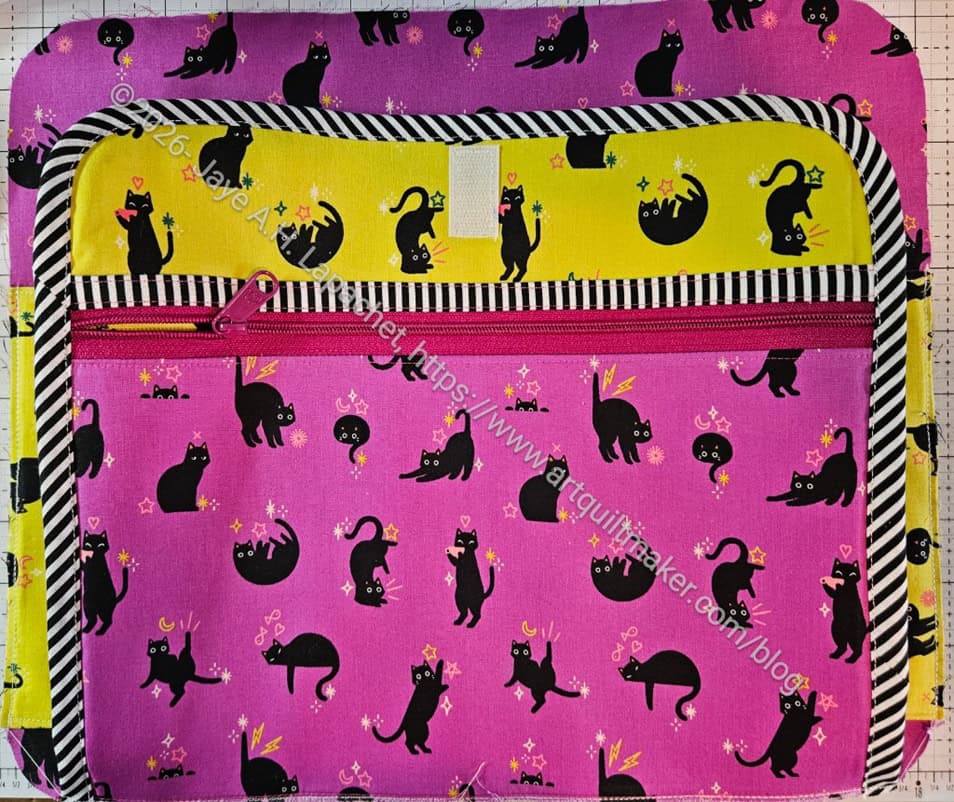
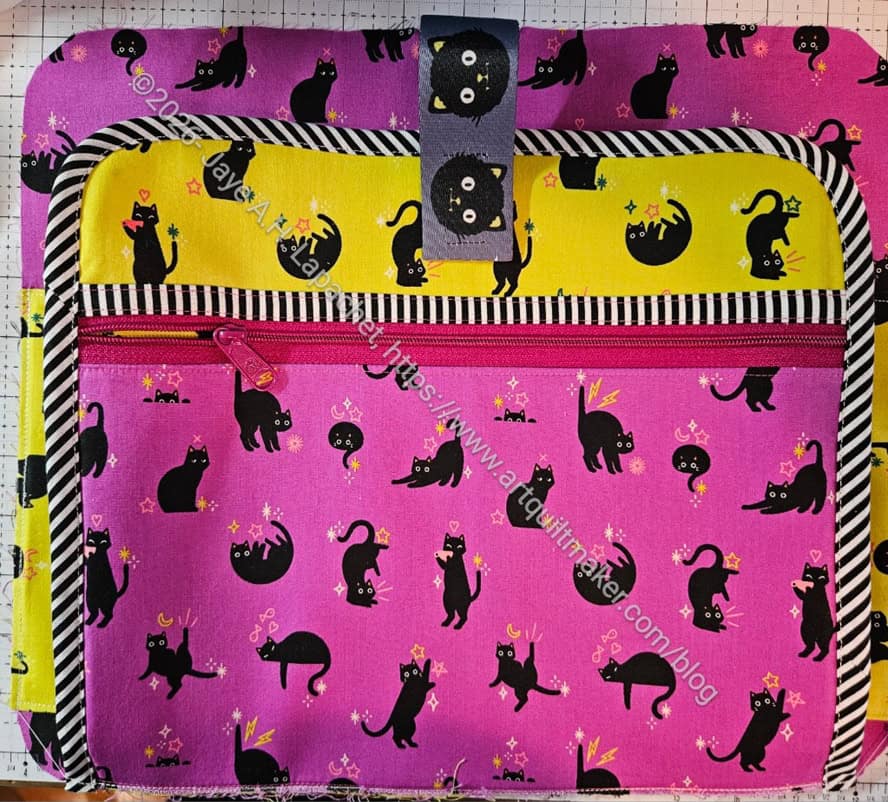
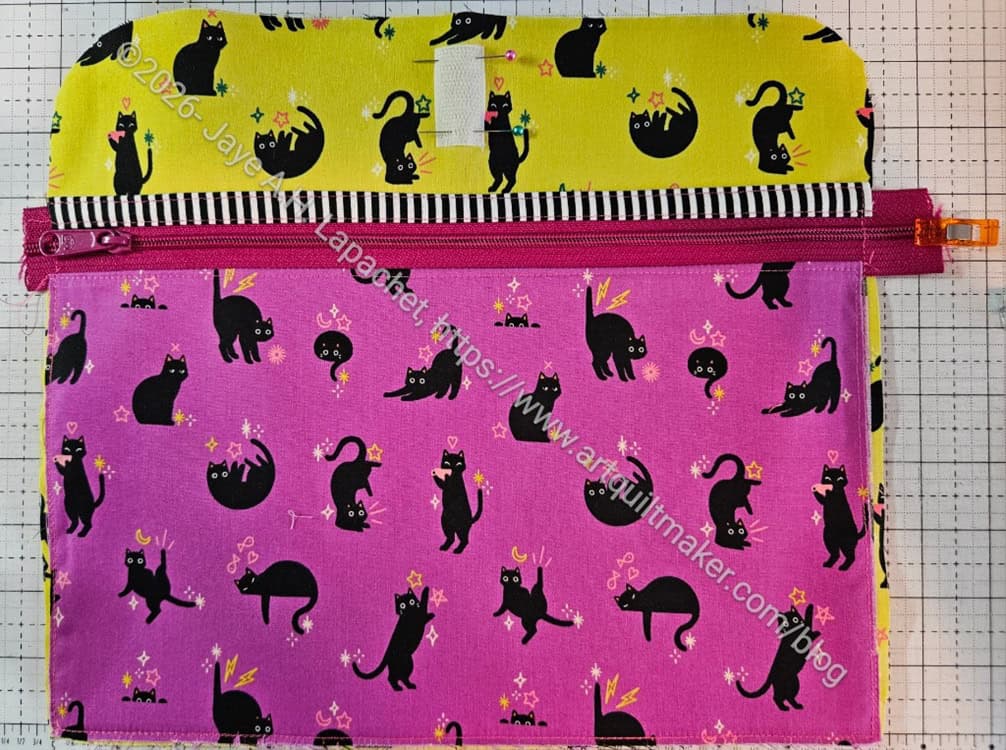
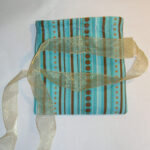
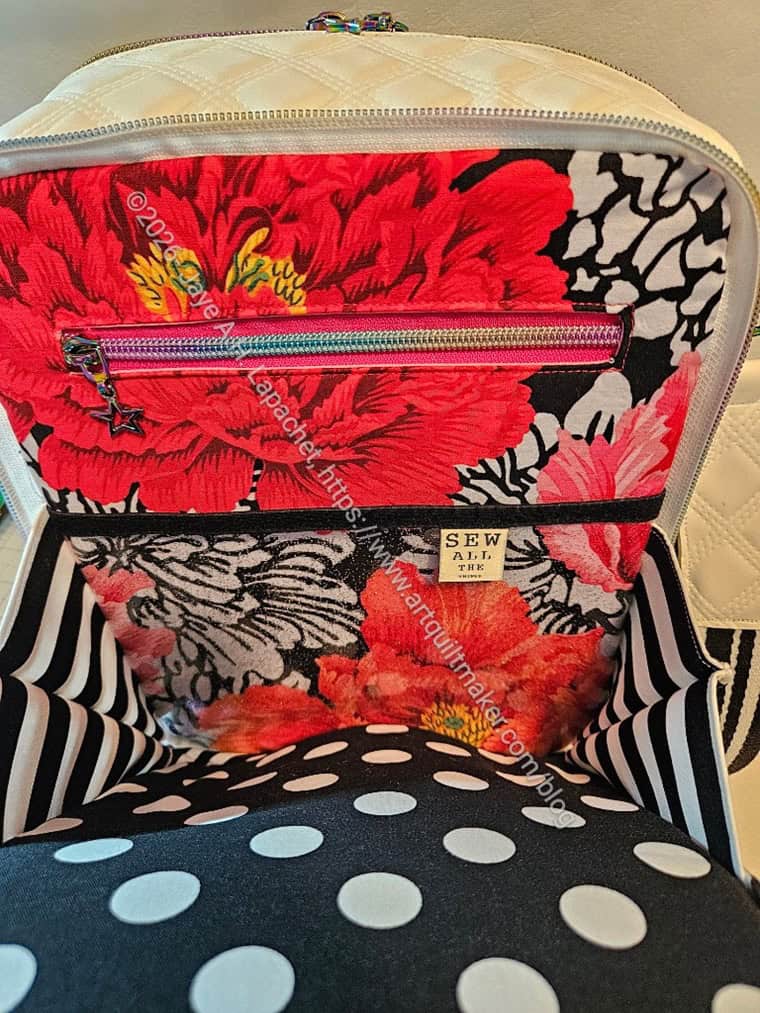
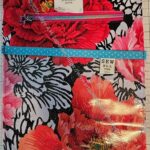
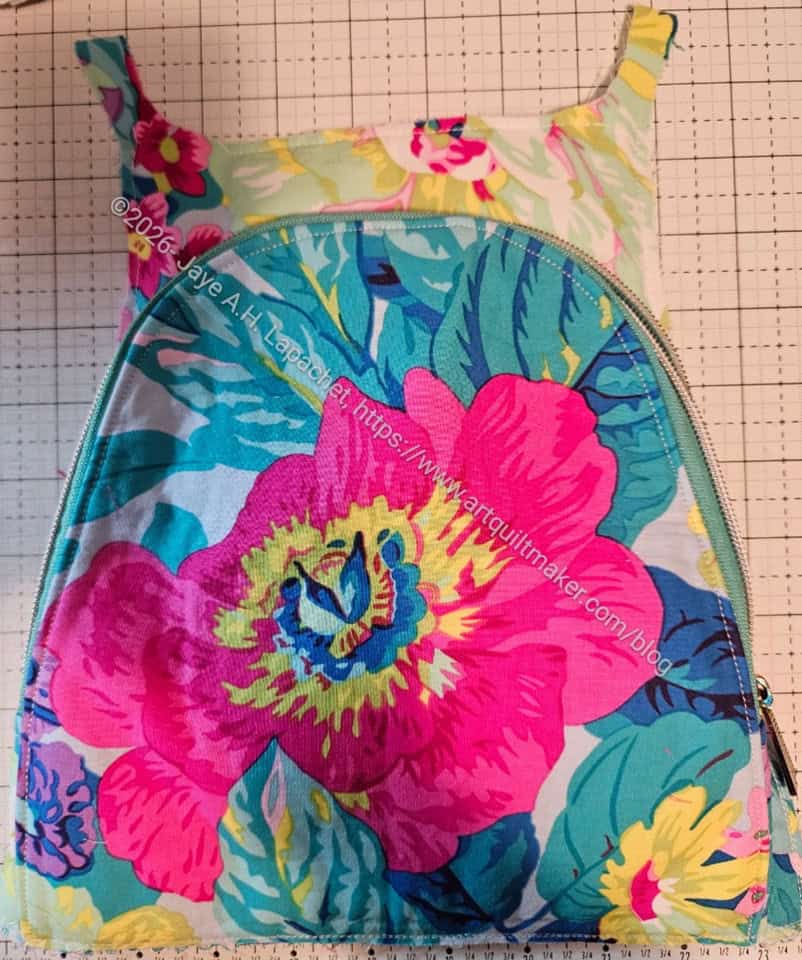
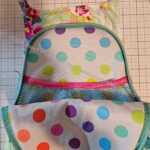
Natalma Accordion pocket with Velcro tab
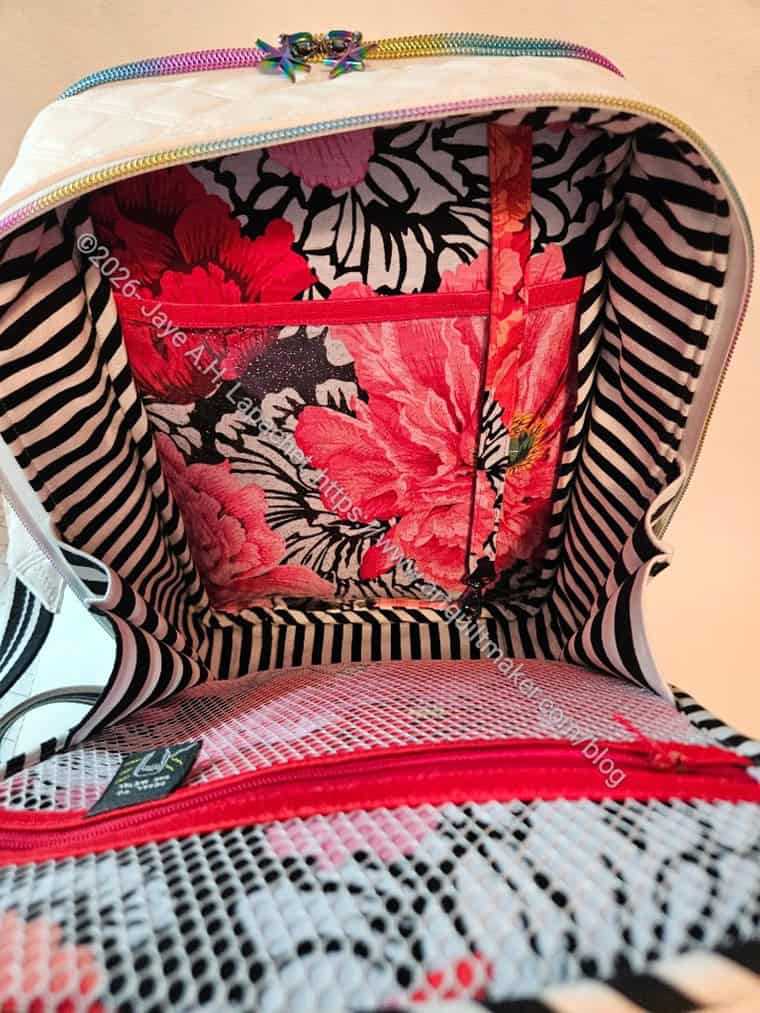
I spent another day last week working on the Natalma. I tried to be very Zen about the process, going through each step and not skipping or putting off steps, like interfacing pieces.
It pays off to do all the prep, because I don’t have to stop to interface or whatever. It is all done. I should learn that this is the best way to work, but my desire to get to the sewing will probably always override that practice. Oh well.
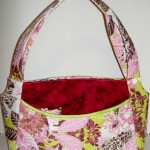
I like making patterns the first time, because I can take notes on what I would change the second time. That pink pocket shown above will be made with vinyl next time. Then I will be able to see what is inside.
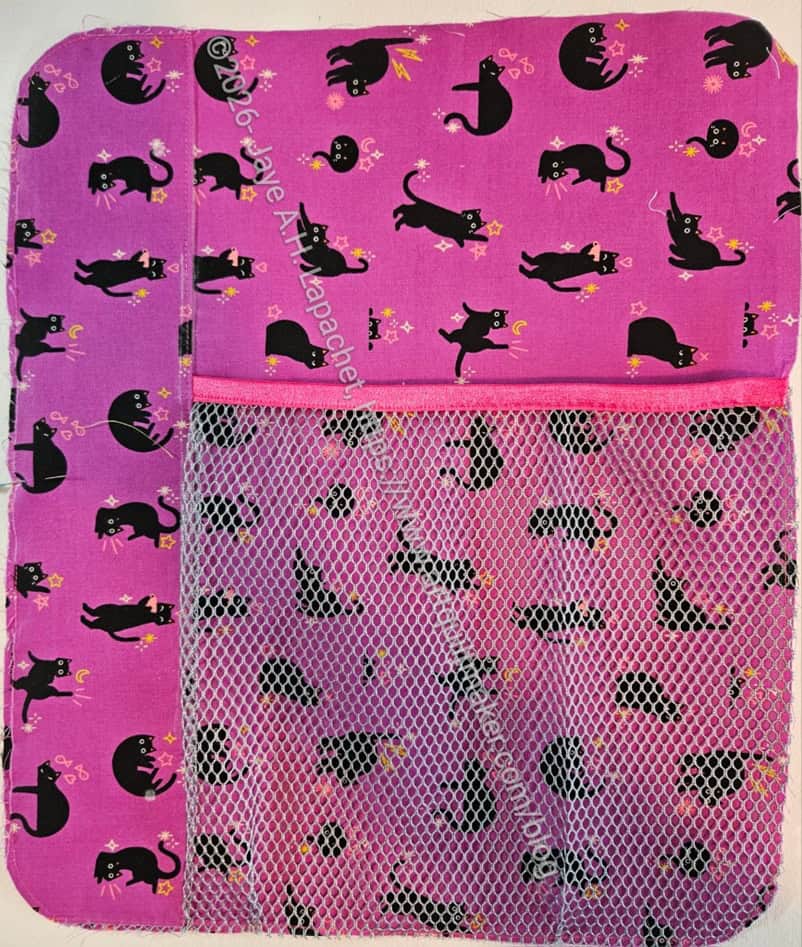
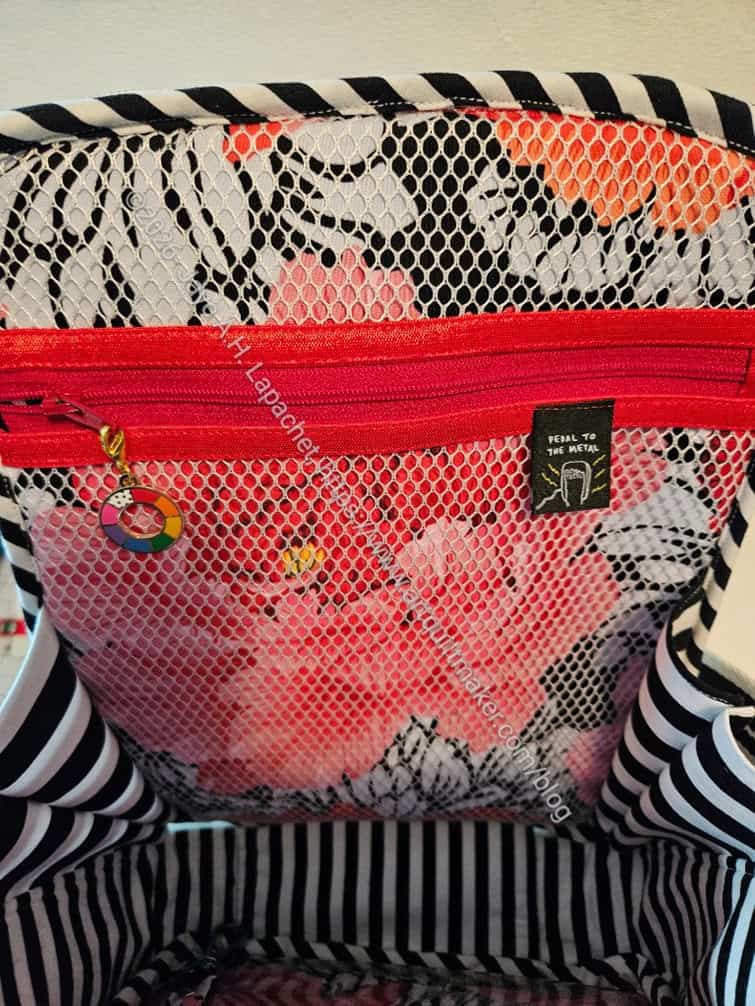
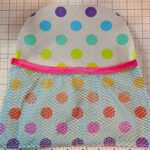
Natalma mesh pocket on main panel
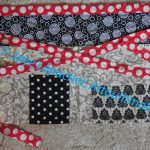
There were some larger pieces done at the beginning, but now I am working on some fiddly bits.
The Joni Tote, as mentioned, is a Sew Hungry Hippie pattern. It is a basic tote. The written instructions are super basic and then you have to go watch the video. If I had known this was mostly a video pattern, I would not have bought the paper pattern. I don’t like being forced to watch the video, especially if I can’t skip to the secotion with which I need help.
You also do not need the acrylic templates to make this tote as the pattern pieces are easily rotary cuttable. I am not trying to discourage you from buying from Sew Hungry Hippie (great content, great service, interesting designs). I was just disappointed at the price of the pattern vs. what I got.
Joni Tote #1
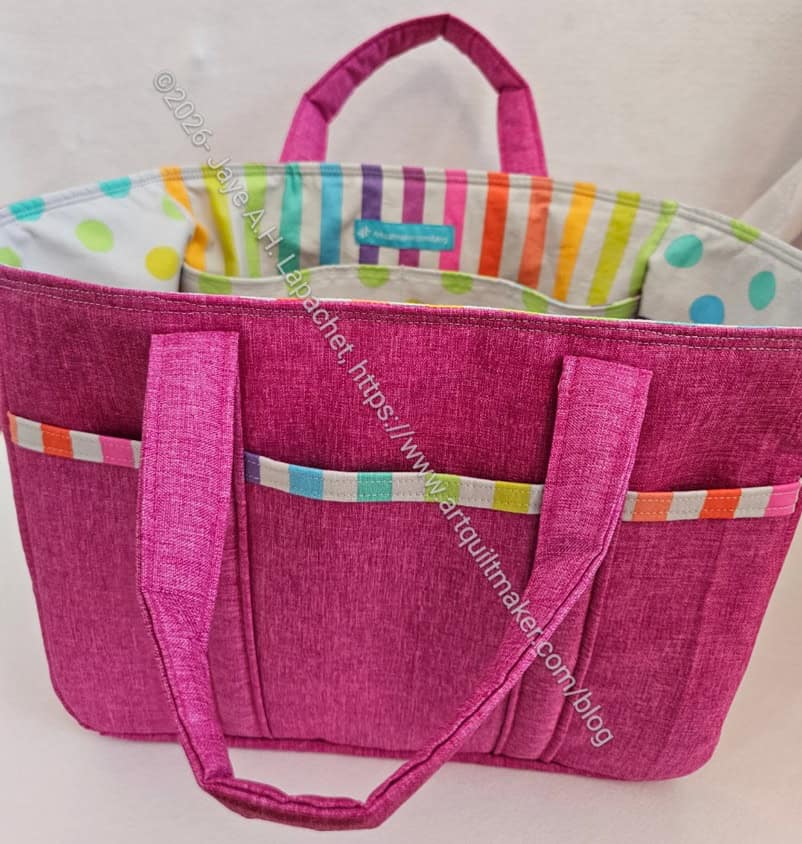
Still, the tote is a good size, it turns out as I should not be carrying much more than I can fit in it. I still plan to use my new Quilter’s Assistant Proportional Scale** to try the pattern in a larger size later. I want to see if it works.
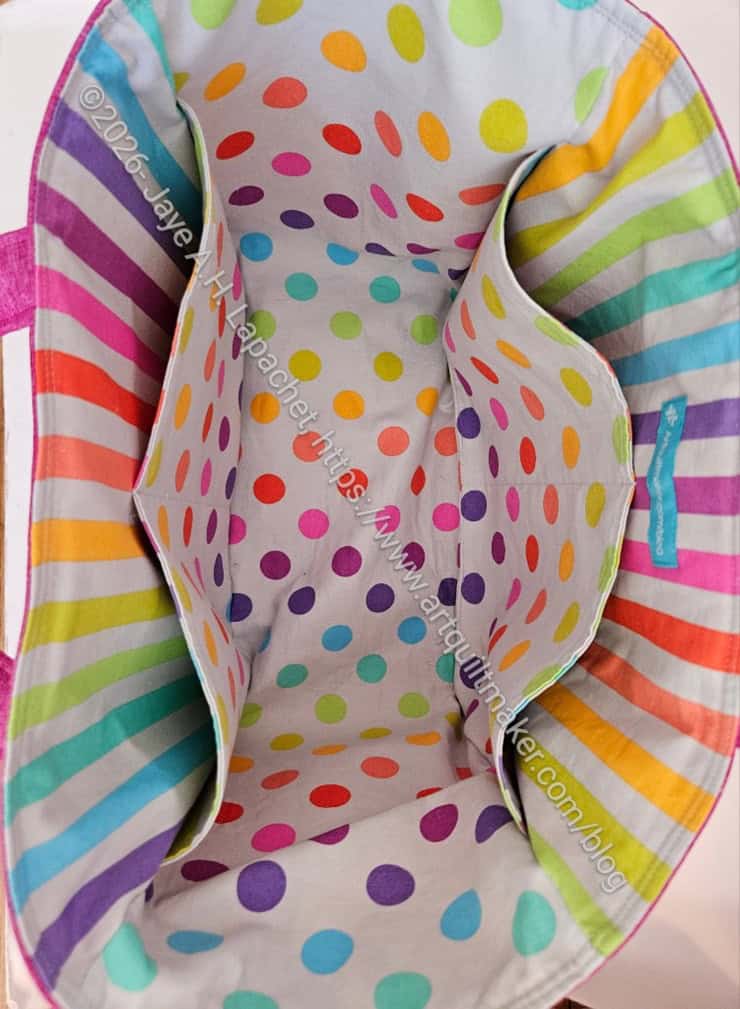
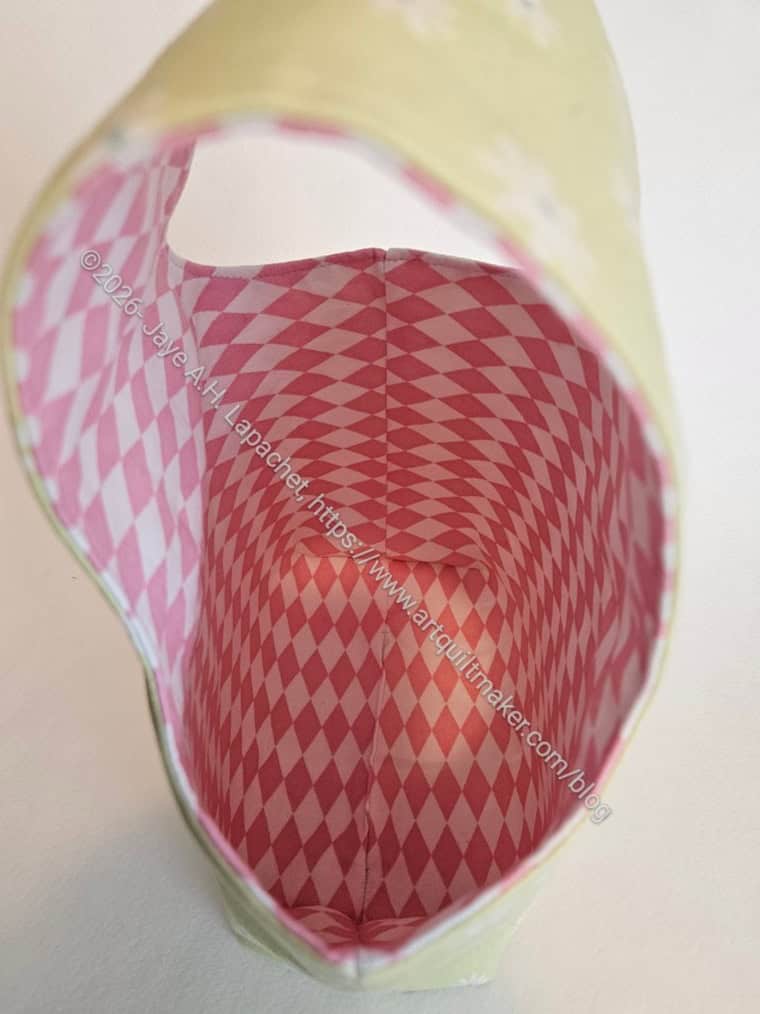
I have to remember to cut the lining smaller as it turned out too saggy-baggy for me. I did partially anchor it to the exterior seams, so at least the lining won’t fly out.
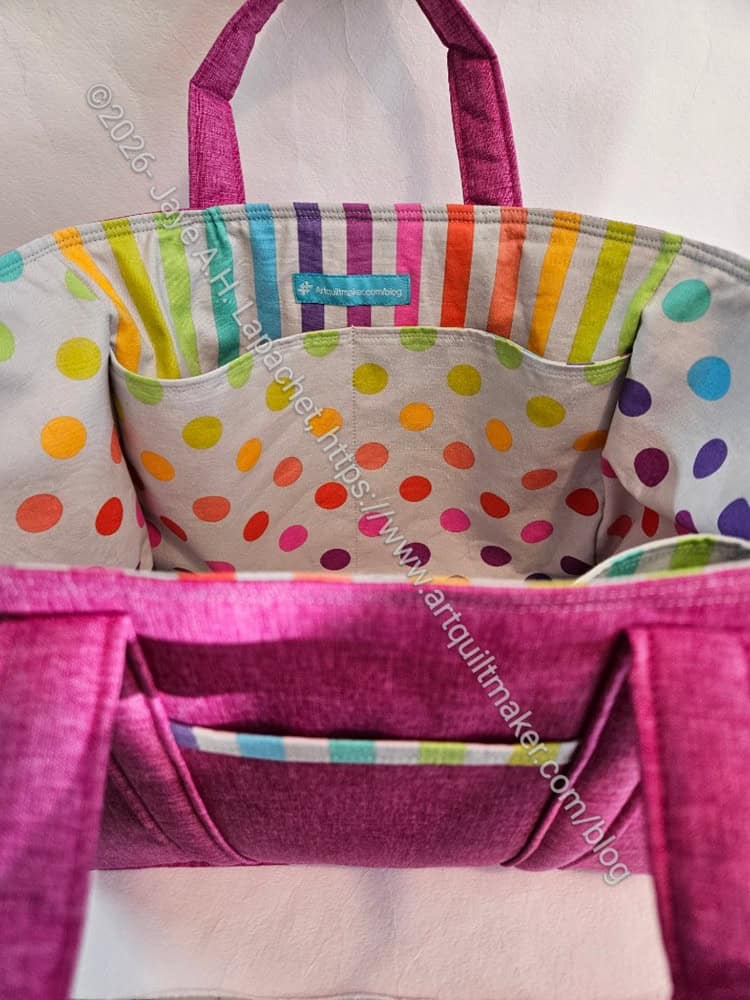
Joni Tote #1 – interior
I like the fabric I used. I used what I had left of the grey Tula Poms. It makes the interior very cheerful. I didn’t have enough for the whole interior, but the stripes coordinate well, as they should.
The exterior is the Sewfisticated VibrantVue in Cherry Blossom. One of the things I like about it is that I can easily wipe off any dirt that gets on the bottom.
Honestly, I barely followed the directions for this bag. I used the cutting instructions. I lined everything, which is not part of the pattern. I added foam to the exterior pieces so the bag stands up, which is also not part of the pattern. I also did a self bordering sort of technique for the trim on the exterior pockets rather than making a binding.
I am sure Natalie made this bag faster, but I am happy with how mine turned out. Another UFO Challenge completed!
**Obviously, you should shop at local quilt shops and small businesses, as I did. However, if you are too busy, don’t have a local shop nearby or can’t find what you need, I use Amazon affiliate links. I may be paid for your purchase of an item when you click on an item’s link in my post. There is no additional cost to you for clicking or purchasing items I recommend. I don’t link to items I don’t like. I appreciate your clicks and purchases as it helps support this website.
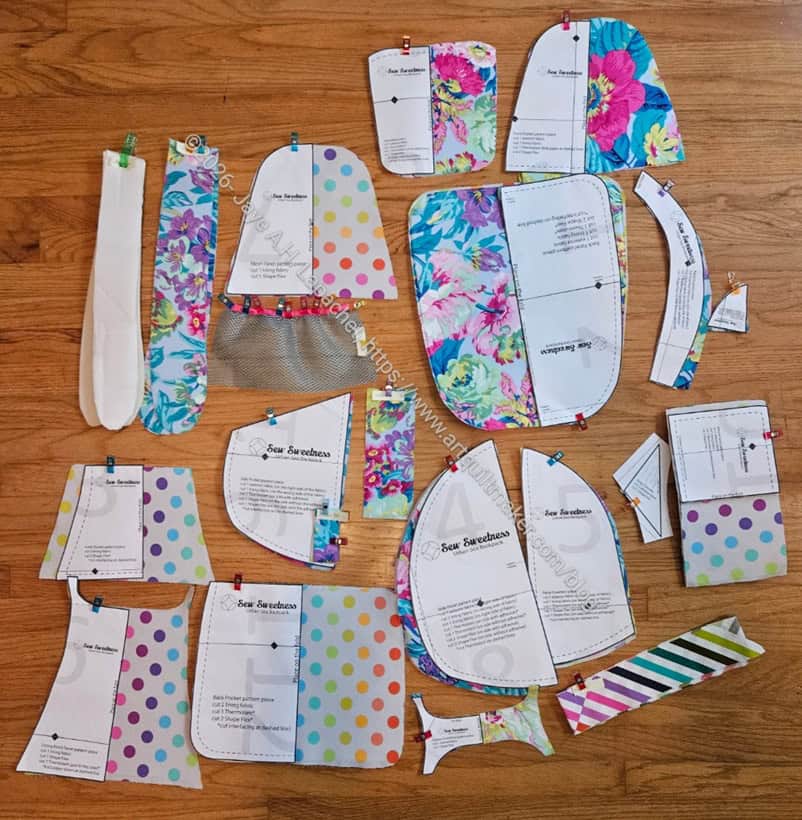
The Natalma is another Sew Sweetness bag from the most recent release. As with the Urban Sea backpack, there are a lot of rounded corners. This meant I had to cut a lot of pieces out with scissors. Some of them only partially, but the prep work at the beginning of the process still took longer. I forced myself, which wasn’t hard, into my Zen prep zone and was fine with all the cutting.
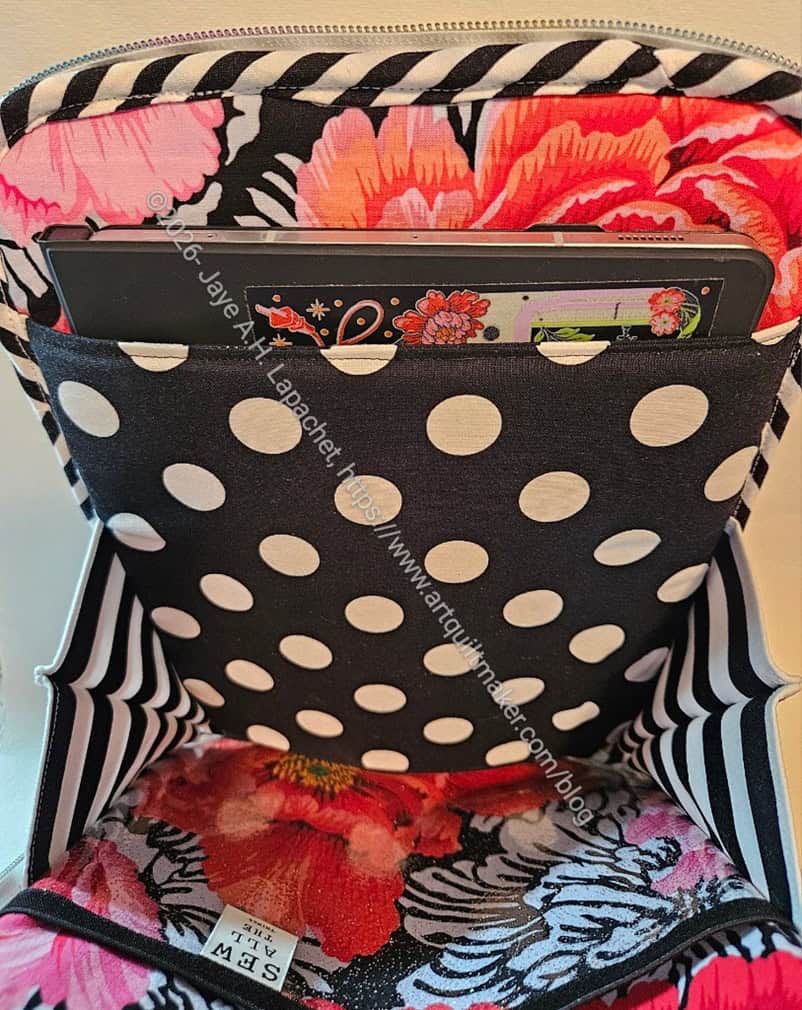
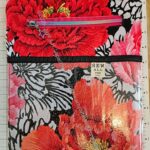
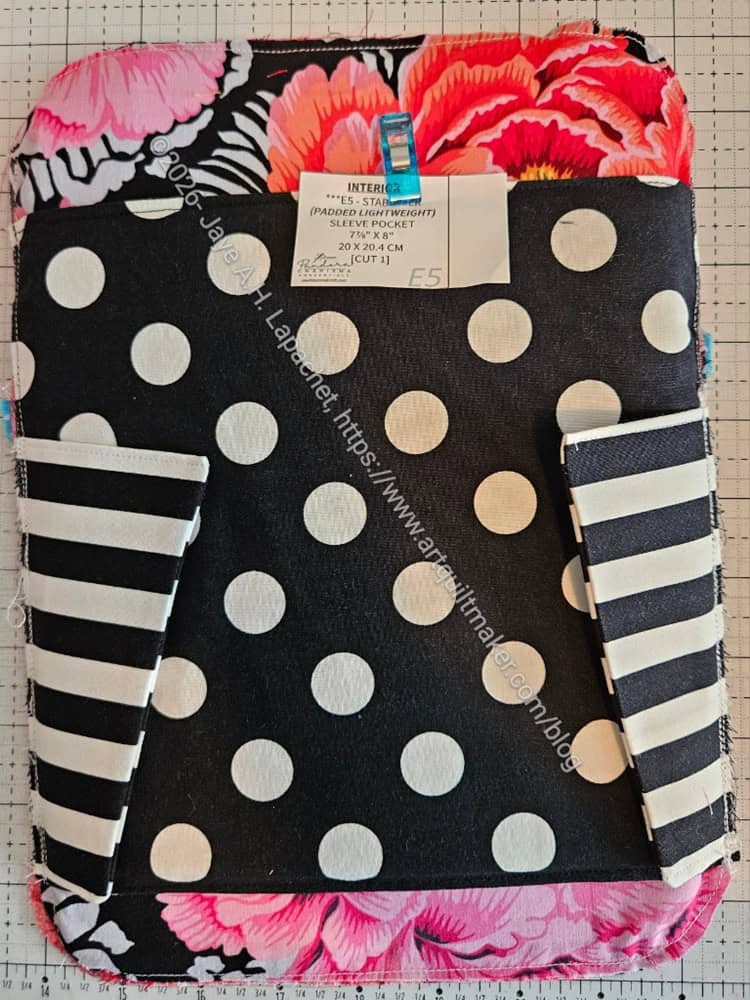
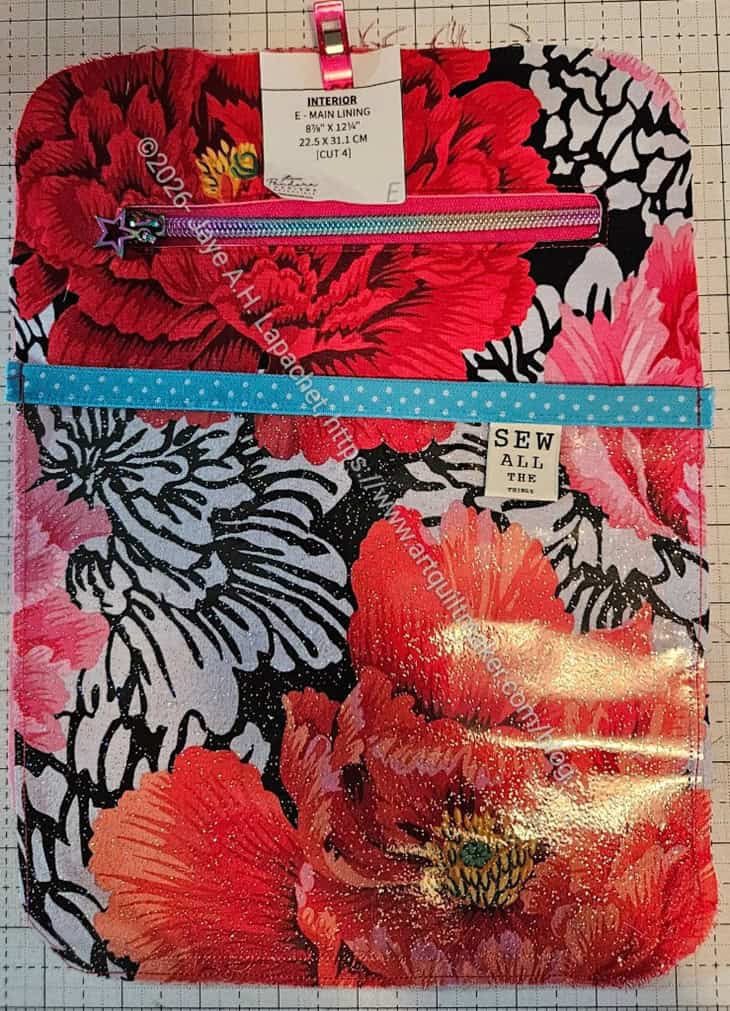
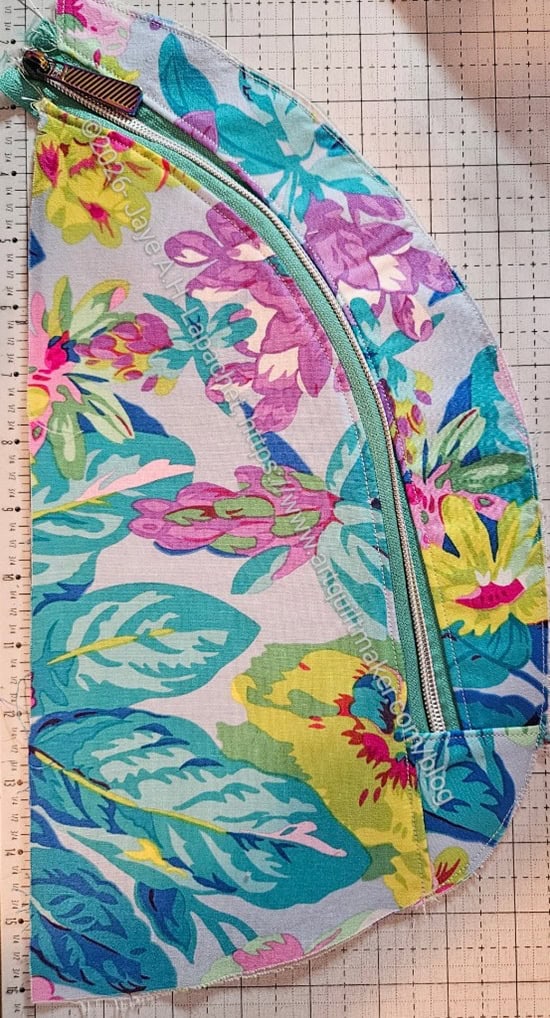
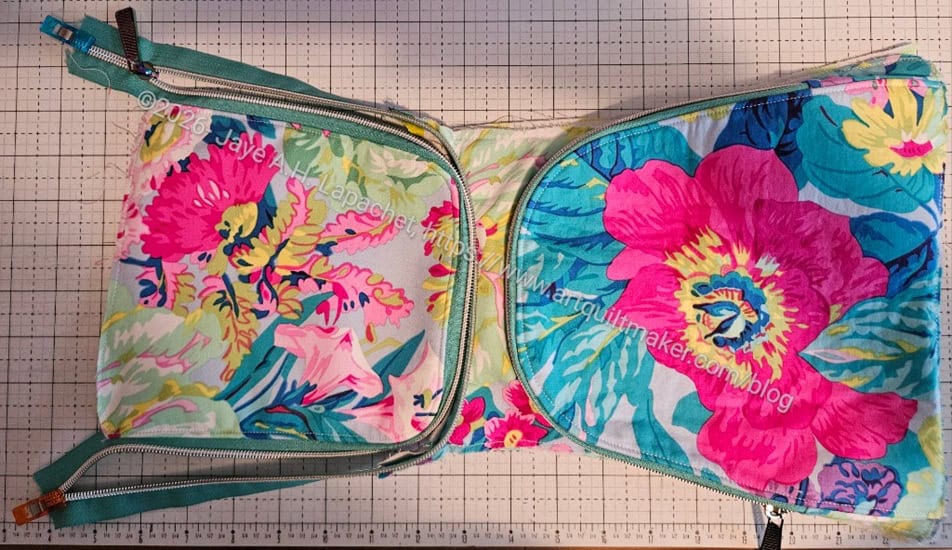
Natalma (Panel E) interior zipper pocket
Finally, late on Saturday, I began to sew the bag together. The pocket in the photo, right, is the interior zipper pocket that is on the left side of the bag. I think next time, I will make the front part of the pocket vinyl.
I do want to make a second one since the three ring binder mechanisms come in a package of two. I don’t want the second mechanism hanging around my workroom. I have to figure out if I will use the second one or if it will be a gift.
My sister texted me and said how many people had complimented her on her Atlas. She didn’t know it was the Atlas, so described it to me. I had no idea what she was talking about and went looking for a gifts post. The most recent one I could find was from 2022, though I thought that couldn’t be right. I decided to make write another one. I knew I had made her some bags that weren’t on any list since it had only been a few months since I sent them.
Here is the list/gallery of gifts I have made for my sister. Quite the range, don’t you think? I love my sister, if for no other reason than she uses the bags I send her.
Turquoise Leopard Tote
Little Bag
Sweet Harmony bag – Full
Lil Sissy’s Cafe Apron Repaired
Lil Sissy Pencil Roll Closed
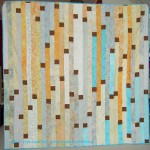
Calm quilt
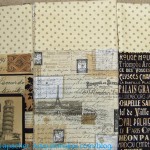
Paris Pillowcases
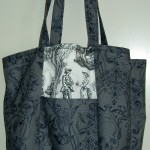
Skull Jane Market Tote for Lil Sissy
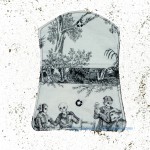
Skull Wallet Open for Lil Sissy
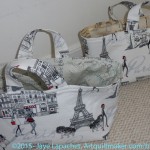
Paris One Hour Baskets
Le Cafe Eiffel Tower pillowcase
Le Cafe Pillowcase 2018
Finished: Jelly Roll Rug
French Cotton Candy pouch
Lil Sissy’s Inside Outside Pouch – 3/4s view
Falabella Pouches
Hemingways for Kim
Paris Enigma Bag (Kim)
Percheron Pouch for Kim
Typewriter Hackney – Top & Front
Paris Hot Air Pillowcase
Paris Pastries Pillowcase
Paris Bicycles Pillowcase
Disco Double Zip Pouch – top
3 king sized pillowcases
Paris Atlas Zipper Case
Paris Hippie Specs Eyeglasses Case
Winner: Pandora Charisma
I am not sure if this list shows everything I have made for her, but it is a good start. The Pandora Charisma #1 is the bag I made her for her birthday.
Finally! I finished the second Pandora Charisma. It was mostly done after Friday night’s stitching session, but I made the strap after the meeting on Saturday.
I am much happier with the way the zipper opens after stitching down the excess binding fabric. I have to review the pattern to see where I misread about binding. I think I may have mentioned I will try foldover elastic next time.
I also think this bag looks pretty professional. It isn’t perfect, but it is very good.
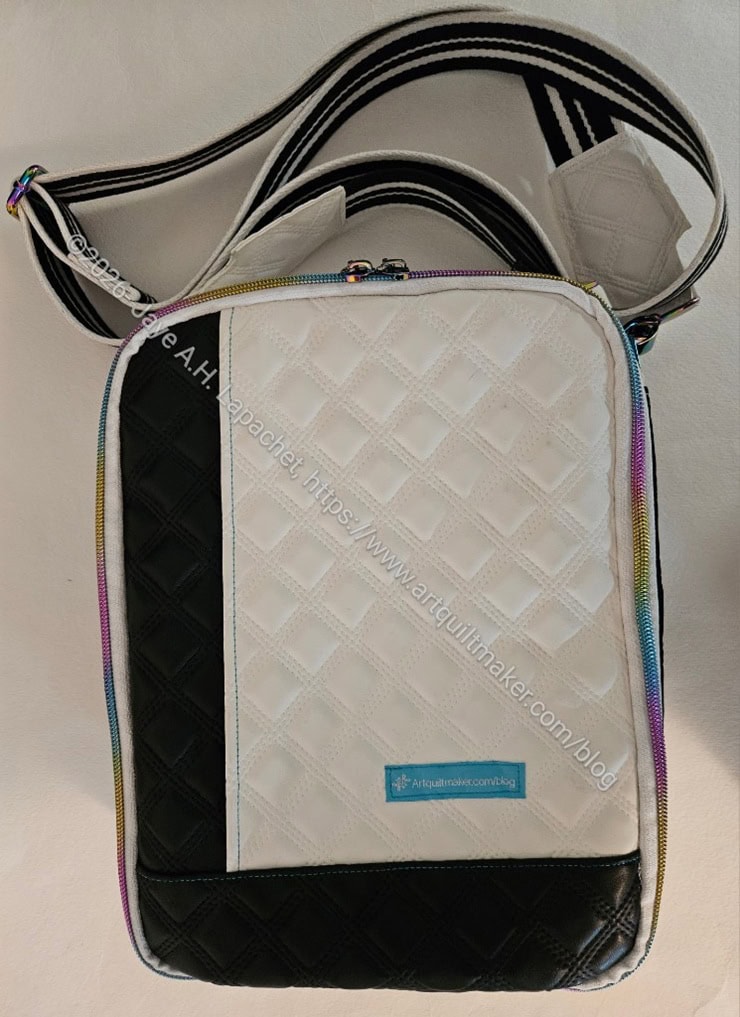
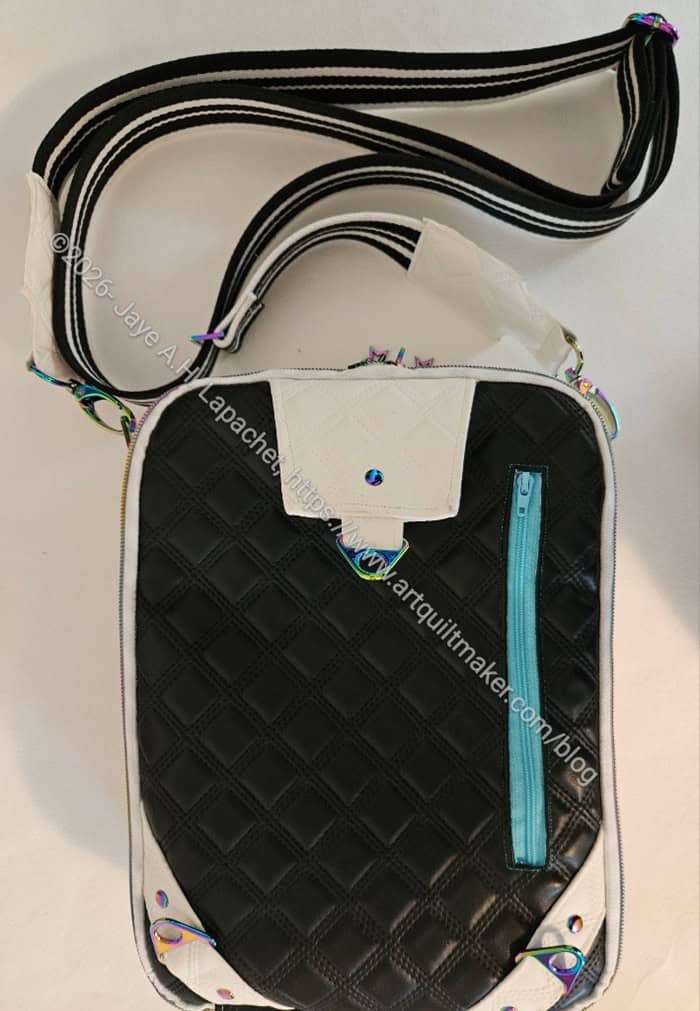
Pandora Charisma #2: finished – back
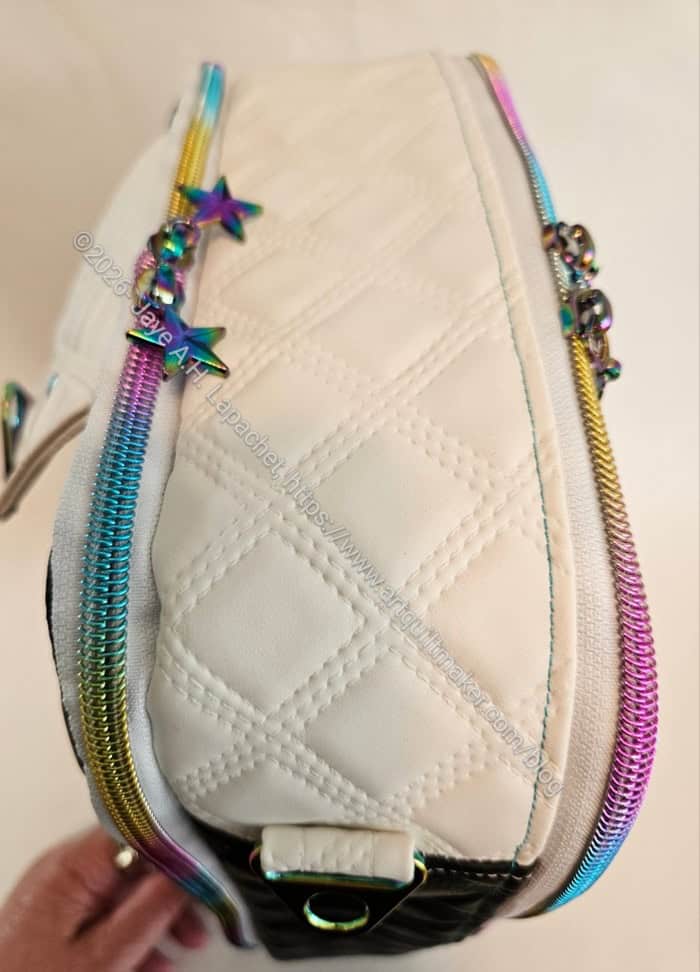
After taking some photos, I realized I needed some zipper pulls! I had a couple of Ruby Star color wheels so I added those, though not to the front pocket. I want that pocket to stay hidden.
I put the strap on the side and tried it out as a cross body bag, but thought I might try out the sling function as well. I plan to take this on a trip and the sling style might be a better way to wear it on a trip. I suppose it depends on whether I am wearing a backpack.
The good thing is I can change the strap at any moment. The same strap works for wearing it as a sling and as a crossbody bag.
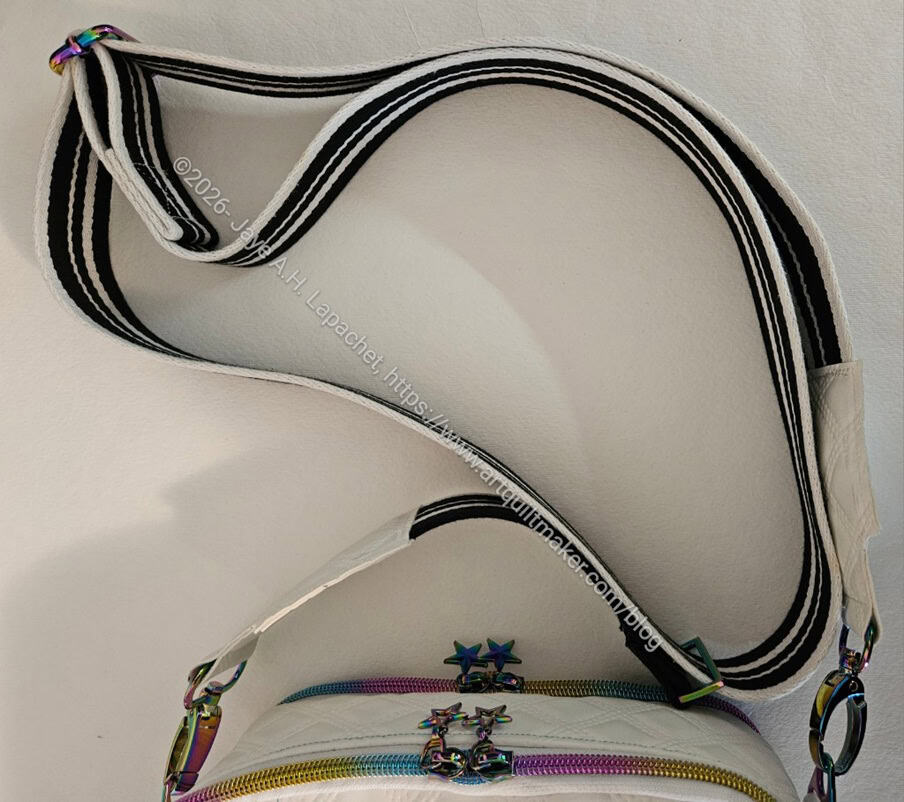
Pandora Charisma #2: adjustable strap
The webbing I chose was very thick, thus comfortable when the bag is on the heavy side. The thickness made the sewing difficult, however, even with the Harry Potter foot.
The pattern includes three different methods for making the strap. I combined a couple of the options for no good reason other than I felt like it. I think I will still rivet the strap in a couple of places. I am not sure I 100% like this strap and may make another.
I also used a different template for the Strap Connector tabs. I used a different decorative version from Sew Sweetness. I used the Diamond vinyl to make the strap connector tab and am a little uncomfortable with the fact that edges are raw. Still, there will be no fraying, so I don’t what I am worried about.
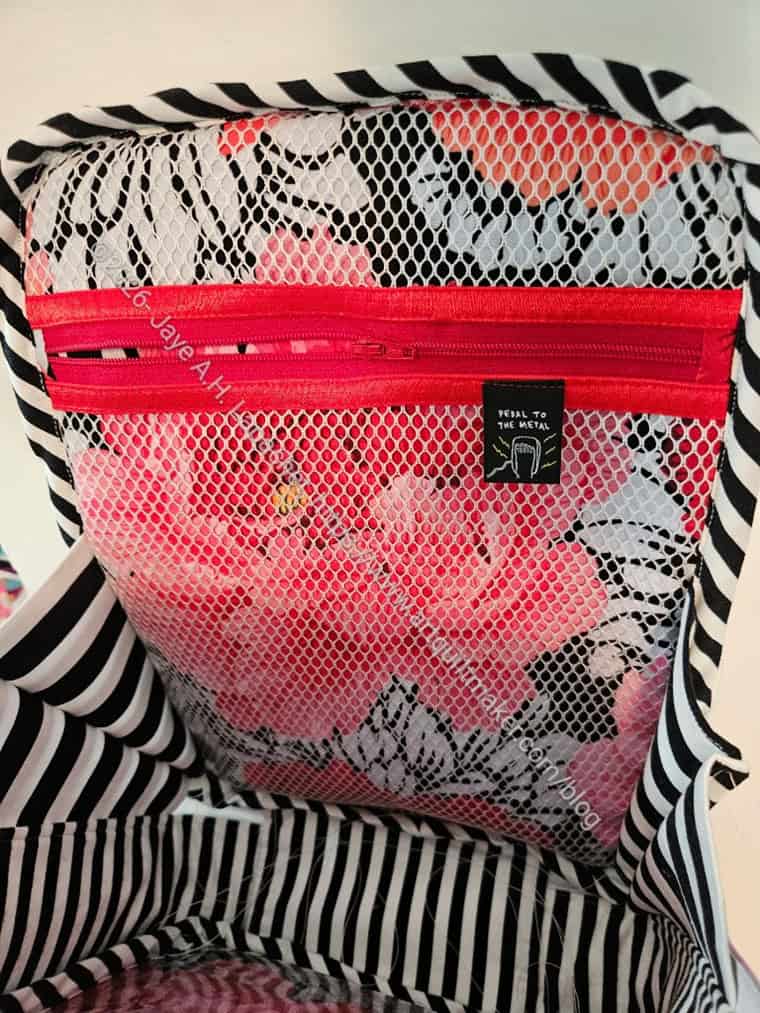
Pandora Charisma #2: mesh pocket
The mesh pocket looks good and I hope it is useful.
In the photo, you can see the Ruby Star zipper pulls I mentioned. The metal is gold, not rainbow, but I think it is ok. I probably mentioned that I used various labels on this bag. Why not?
I notice that there are some places where items could fall out from the bottom. I guess that is why there are pockets.
Pandora Charisma #2: vinyl pocket
On the opposite side from the mesh pocket is the vinyl pocket. One of the things about vinyl pockets is I can see the beautiful peonies in the Philip Jacobs Brocade Peony fabric I used.
In thinking about using this bag, I think the vinyl pocket is where my pens will be housed. I didn’t think about pens before. I may make a specific pen holder/pocket and attach it to the gusset, if I make this bag again.
The key leash is built in, so I won’t have to worry about switching a leash from bag to bag in order to keep my keys clipped to my handbag.
I made the bag pocket using the fatter gussets as someone else in the Sewfisticated group did, so that it opens wider.
Pandora Charisma #2: Vinyl and interior
I added another vinyl pocket to the back section. It covers an interior zipper pocket. This vinyl pocket is shorter than the one described above. It might be a better candidate for pens. We’ll see.
Pandora Charisma #2: my tablet fits!!!
Finally, I am really happy that the tablet/computer sleeve, because it fits my tablet. I didn’t think it would. The sleeve looks really small in the bag and my tablet just fits. It is almost like the bag was made for my tablet, which it wasn’t. The only thing I would do differently is put the tablet sleeve against the main part of the bag next time. The pattern has its placement against the outside of the bag / the back panel. I think the fabric would be less likely to rip with a heavy tablet housed there if it were swapped with the second vinyl pocket.
I am looking forward to using this bag. Yes, I plan to use it soon. I am contemplating not using it until after next year’s Fair, but I think that might be too long to let it just sit around.
I really wanted a nice tidy finish before I left, but I wasn’t able to finish. I want it to be a bag that I will use so I didn’t want to do a rush job.
Pandora Charisma #2: working on the binding
Pandora Charisma #2: working on the binding
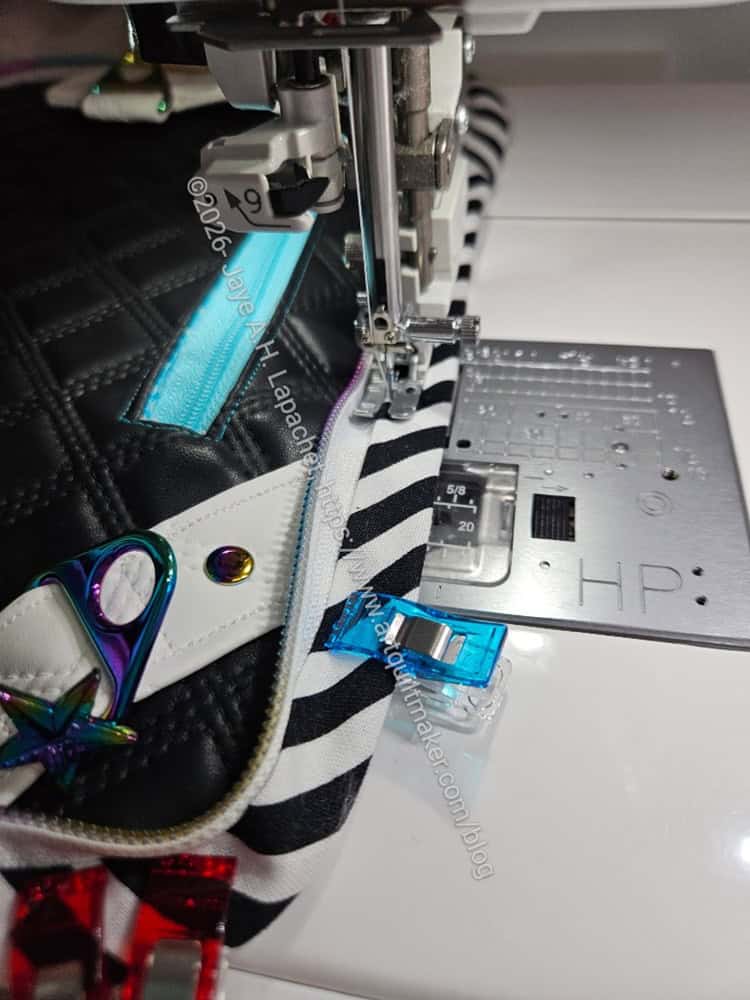
I worked hard on the binding, which is probably the most difficult part of the bag, aside from the thickness of the layers. The thickness of the layers is not a problem for me now because of the Elna’s HP2 foot. I almost finished. I have to fix the binding and have finishing bits to add like making the adjustable strap, so I put it aside and went to Wisconsin.
Pandora Charisma #2 Top
The biggest problem was when I tested the zippers that the binding was getting caught in the zippers. I thought about it while I was gone. I was disappointed and didn’t really want to take the binding off. For this pattern, the binding has been an issue for me. I thinking my quiltmaking binding background is the issue. I think I am making my binding too wide. Next time I make a Sewfisticated pattern, I plan to use foldover elastic. Alternatively, I will check the size of the binding the pattern requires more carefully.
Pandora Charisma #2 – main compartment
I got back to it on Thursday night after a few days of being home. You can see the excess binding fabric in the photo, right. I decided to handstitch the excess binding to itself. That will cover any suboptimal stitching and make the excess fabric more contained. Not an ideal solution, but the excess won’t get caught in the zipper.
I hope to finish soon. I’d like to try using it and see how it works for me.
I spent the Labor Day weekend, when I wasn’t at Sew Day, working on the Pandora Charisma #2. I really wanted to finish it, but didn’t quite get there. The ripping that happened took time.
I sewed some of the panels together wrong. The panels are sewn back to back once they are all done. I sewed two of them to the ‘wrong’ sides. I thought it would be fine, but I found the final assembly to be really confusing. I couldn’t quite translate the panel in the instructions into the way I had sewn them during the final assembly. I ripped back all the stitching and sewed the correct panels to each other.
Pandora Charisma zipper/slip pocket
Pandora Charisma zipper/slip pocket-new
Since I was taking the panels apart anyway, I took the opportunity to fix one of the vinyl pockets. I thought the crookedness of the one on the left would bug me since it wasn’t quite extreme enough to be a design feature. I didn’t have any more of that turquoise foldover elastic, so I used some black, which looks good. Maybe better.
Pandora Charisma #2 binding in progress
I did figure out why the binding of the last one was so difficult. I was supposed to sew both sides of the binding at one time. I just figured that out through a cryptic note I had written to myself.
Putting the binding on this way is difficult. My machine was able to handle it, but it doesn’t look great and I think it might be too big for the space – the binding isn’t filled. The completed binding seems to get in the way of the zipper also, though I have to wait and see since I need to do some trimming and clearing up of threads.
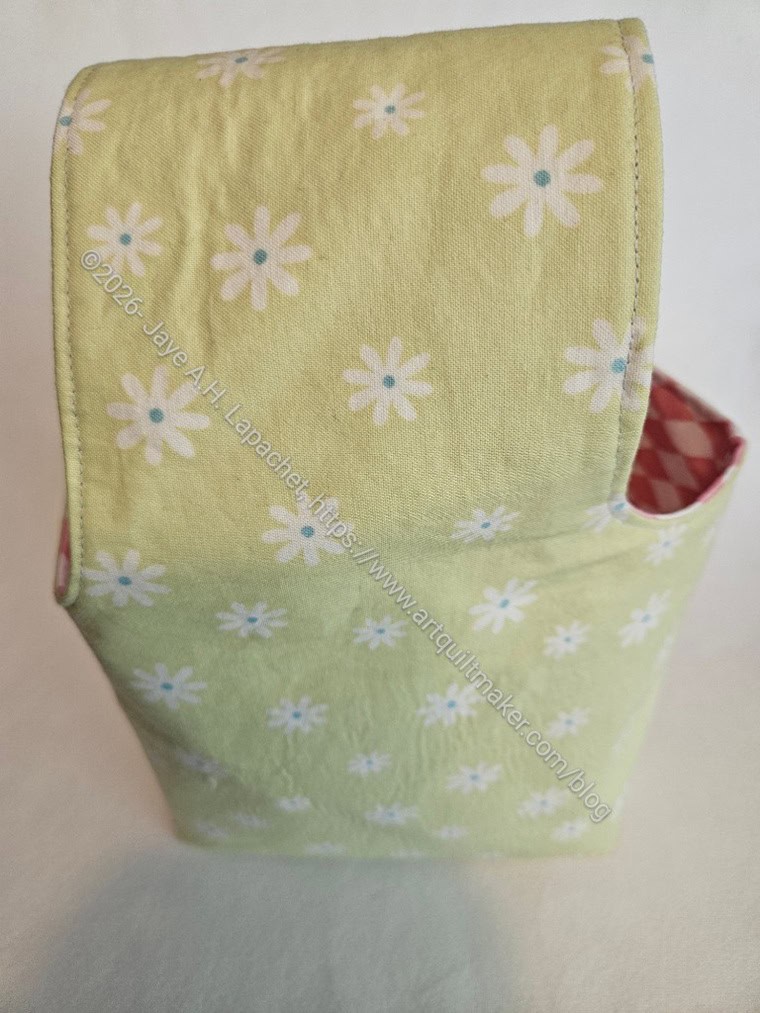
I decided it was time to make another Mini One Handle Tote. I am sort of feeling at loose ends, despite all the projects on which I could make progress. This is a fast project, which is very satisfying to make.
I am behind in my efforts to make 20 or so of these by my own timetable. I haven’t wanted to work on them because I couldn’t find the template last time.
Nobody is harassing me to get these finished, BTW.
Mini One Handle Tote #5
I went looking for my folder and have once again hidden it from myself. < insert eye roll emoji here >
WTH? Every time I go to make one I have lost the file. This is really unlike me. I was thinking that it was a good thing I wrote the tutorial, because otherwise I would have to figure out the whole process over again.
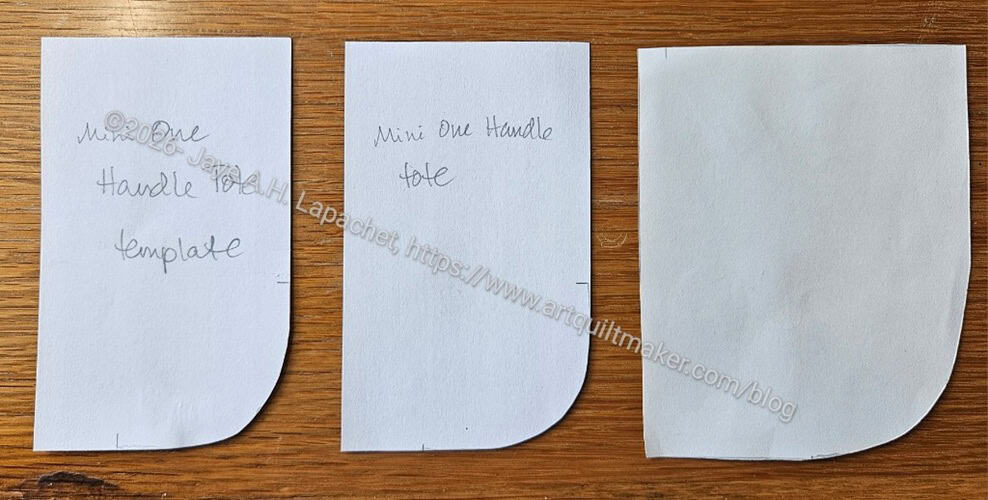
Mini One Handle Tote template
After making a new template and making this latest bag, I cleaned up my cutting table. In the process, I found the two other templates I have made.
Note the difference. The fat template is the first one that I made and the tote handle turned out slimmer. Not skinny, but slimmer. I couldn’t figure out why the handles were so fat in the two latest bags. Now I know. I had been thinking I would move the template more towards the middle to mitigate the fatness of the handle. Now I don’t need to, thought I might try it with the original template just to see the difference.
I got it in my mind that I used an index card to make the template, which is why the two templates on the left are mostly the same. I clearly didn’t use an index card for the original template.
In this version, I used Decor Bond, which I don’t think I will do again. I had a hard time pressing out the wrinkles. I’ll have to look back and see which interfacing I like best.
Now I have made a project file so the templates, at least, are stored in my normal manner.
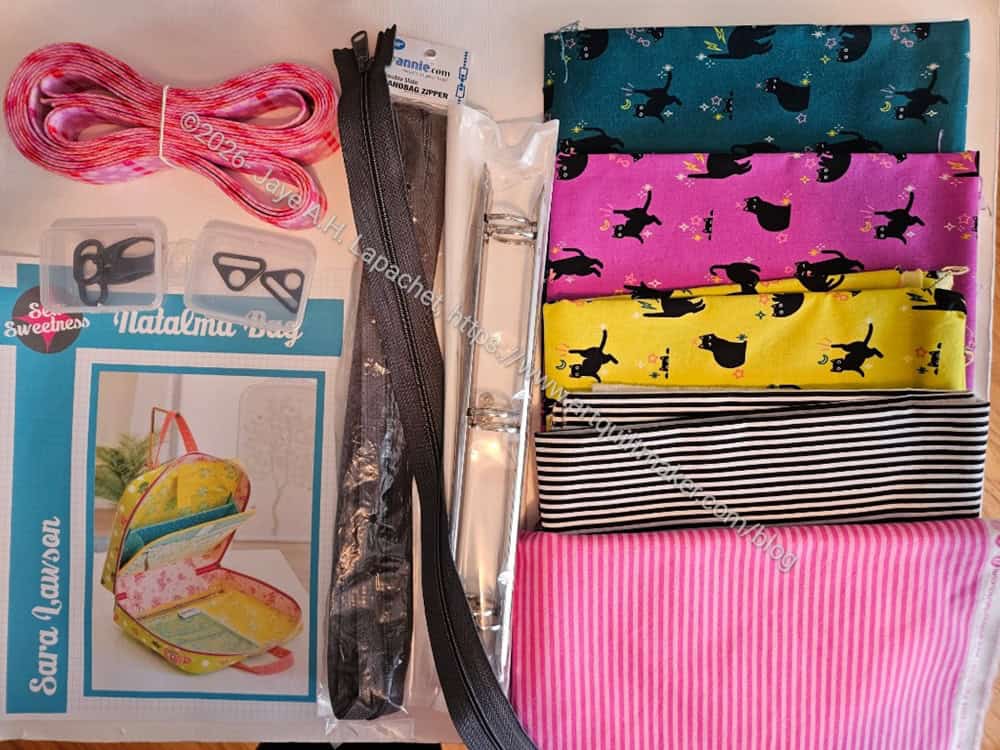
I had to put this project on the back burner while I made the Urban Sea backpack, but I am gathering supplies so I can get started.
I laid all of my choices out, so I could see what I had. I realized that I don’t have a long enough zipper. The ByAnnie 40″ is a bit short, so I’ll need to get some continuous zipper tape in a coordinating color.
The teal cats fabric will go on the outside. I haven’t decided where the other fabrics will be placed, but I want the pink cats to be seen a lot, so they will be in a primary position.
After writing the post the other day, I thought about how using different fabrics makes the pouches look so different.
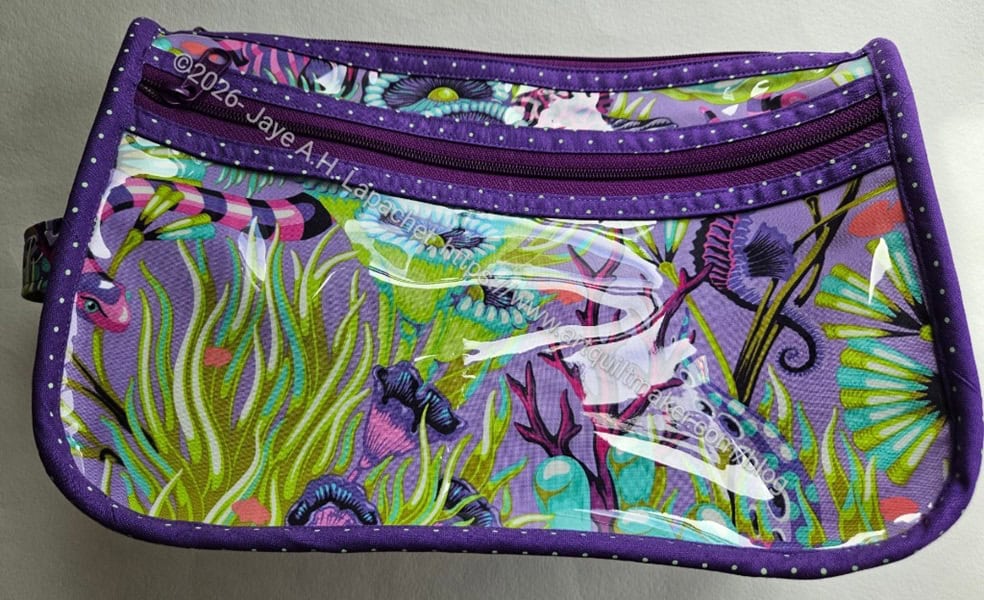
Cosquilla – finished front
Rose Cosquilla finished – front
Beth’s Cosquilla: 3/4s view
These have similarities to the yellow Cosquilla I made first.
One can definitely see the differences on the same pattern, whether quilt or bag, when looking online. I am sure I could make one bag pattern over and over and never make the same kind twice. Of course, I have done that with a few patterns, like the Hackney and the project bags.
I know I said I was sewing this pouch quickly. I really was and I actually finished it on August 13. However, I had a lot of other stuff to post. I put this pouch straight into use then I didn’t post about it.
I am pleased with the other two Cosquilla pouches, but I think this one is my best so far. I was very calm and not in a hurry when I sewed it. I took my time and I think this is the reward.
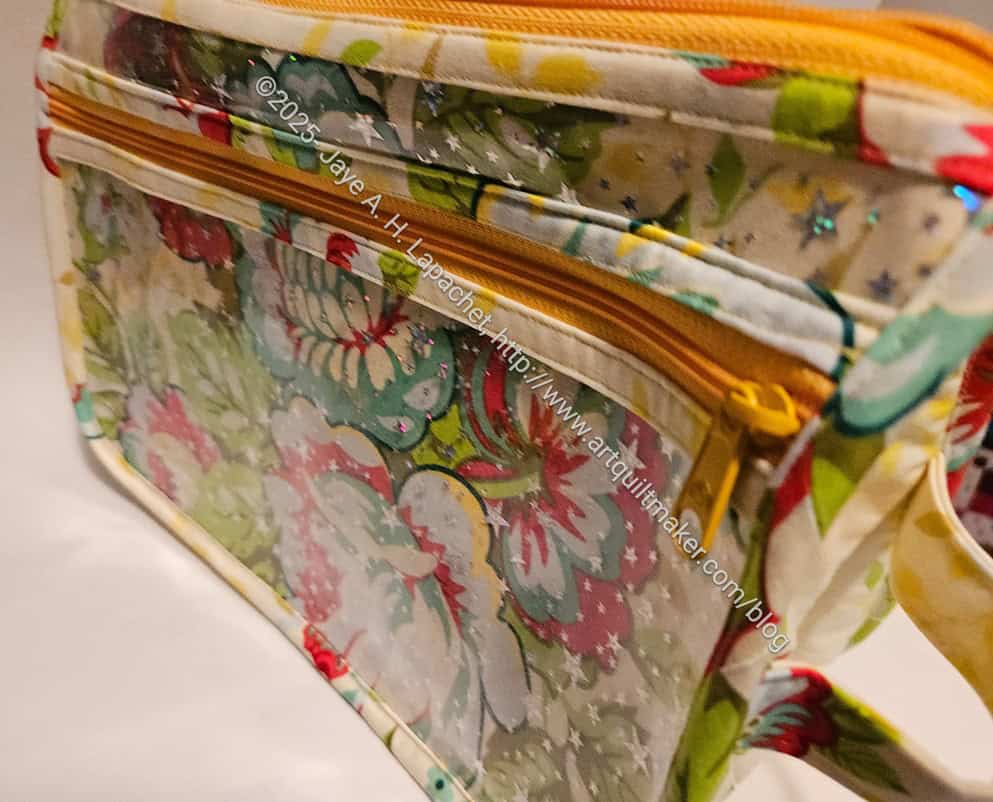
Cosquilla Zipper Pocket
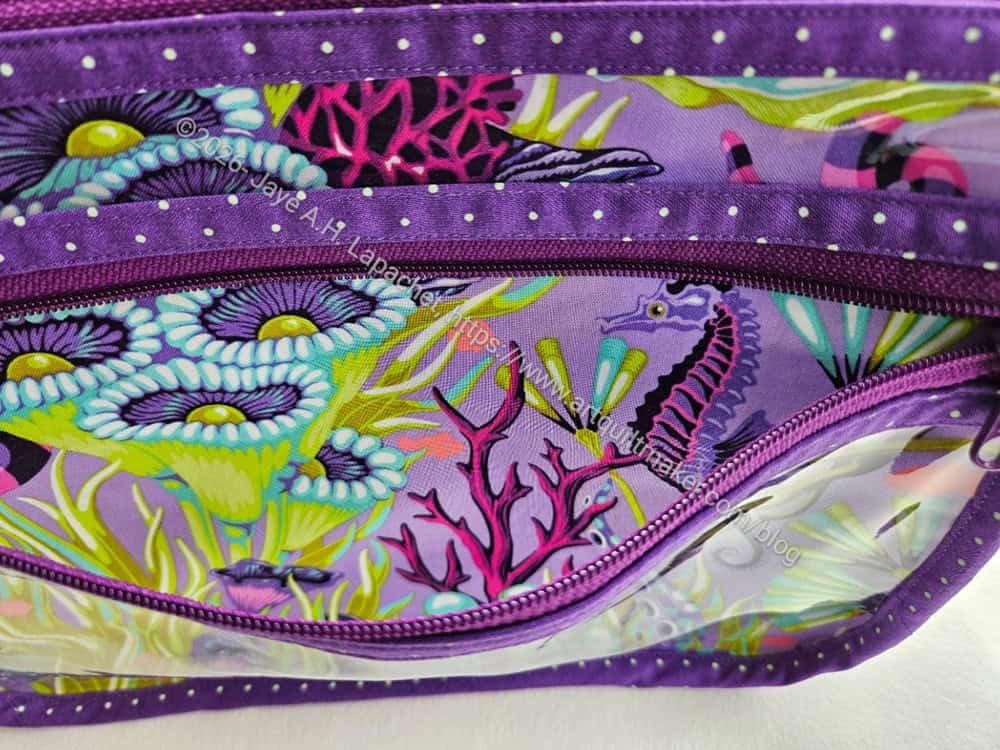
I wanted to highlight the seahorse, but it’s head is hidden by the zipper placket on the pocket. 🙁 I also wanted to cut off the snake, but it’s head is still visible. Oh well. At least it is a pink and purple snake.
Cosquilla – seahorse surprise
The seahorse is a pleasing surprise when the pocket is opened.
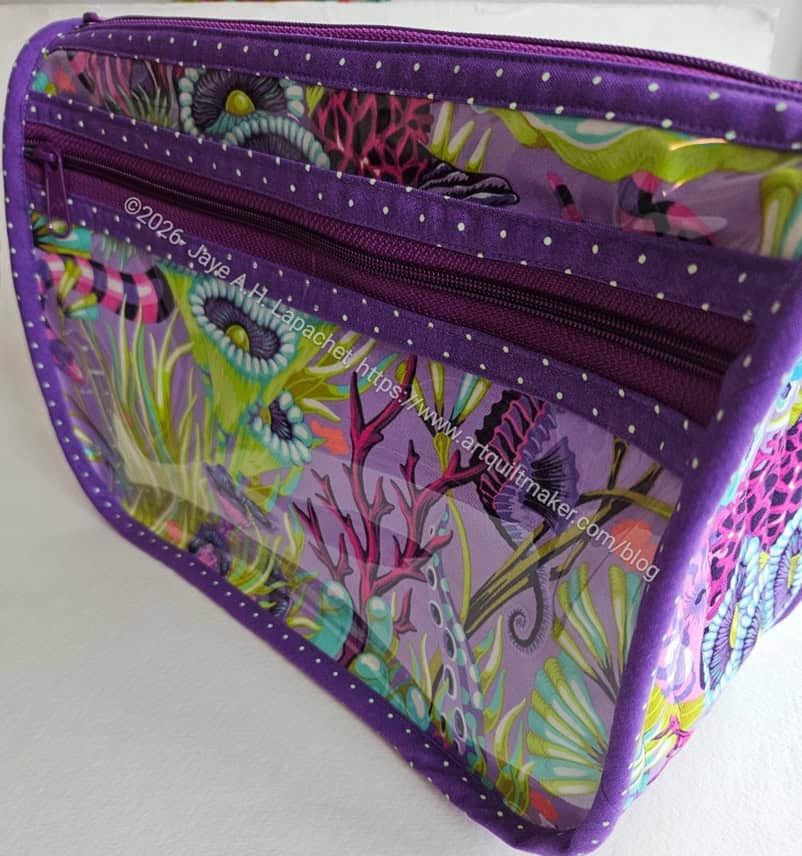
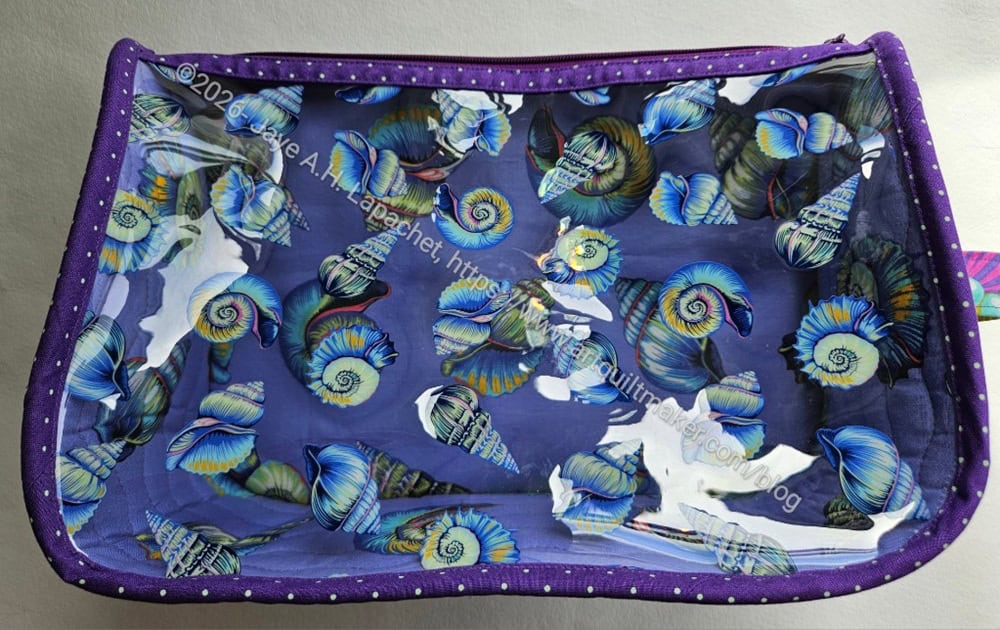
I used two different kinds of vinyl on this pouch. As mentioned, I thought putting the Floral Reef vinyl over the busy Floral Reef print would mean that I couldn’t see either clearly.
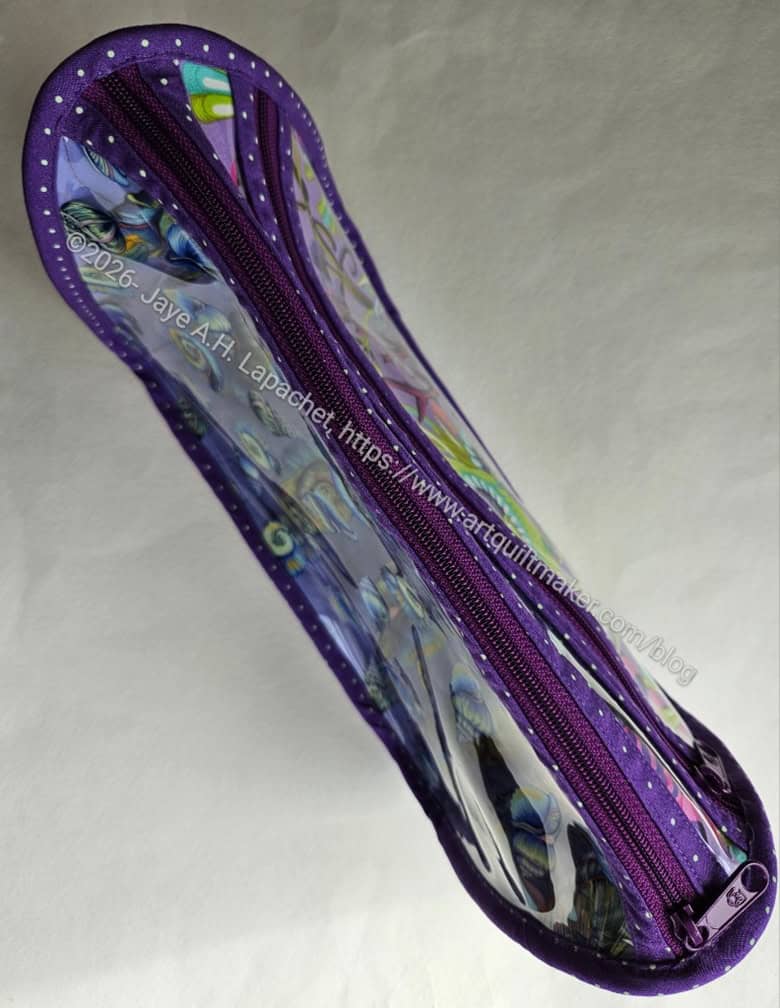
Cosquilla #3 – top
I considered different fabrics to use for the binding. Overall, I think the Tula Pink purple (Aster??) Tiny Dots works very well. The purple doesn’t quite match the zipper. They work together well anyway.
Cosquilla -Floral Reef side
I had some clear vinyl, so I used that over the pocket and the Floral Reef vinyl for the side main panel. I still think the motifs on the fabric and the motifs on the vinyl interfere a little with each other, but it isn’t too bad. I’ll have to think about that when I consider buying other printed vinyls.
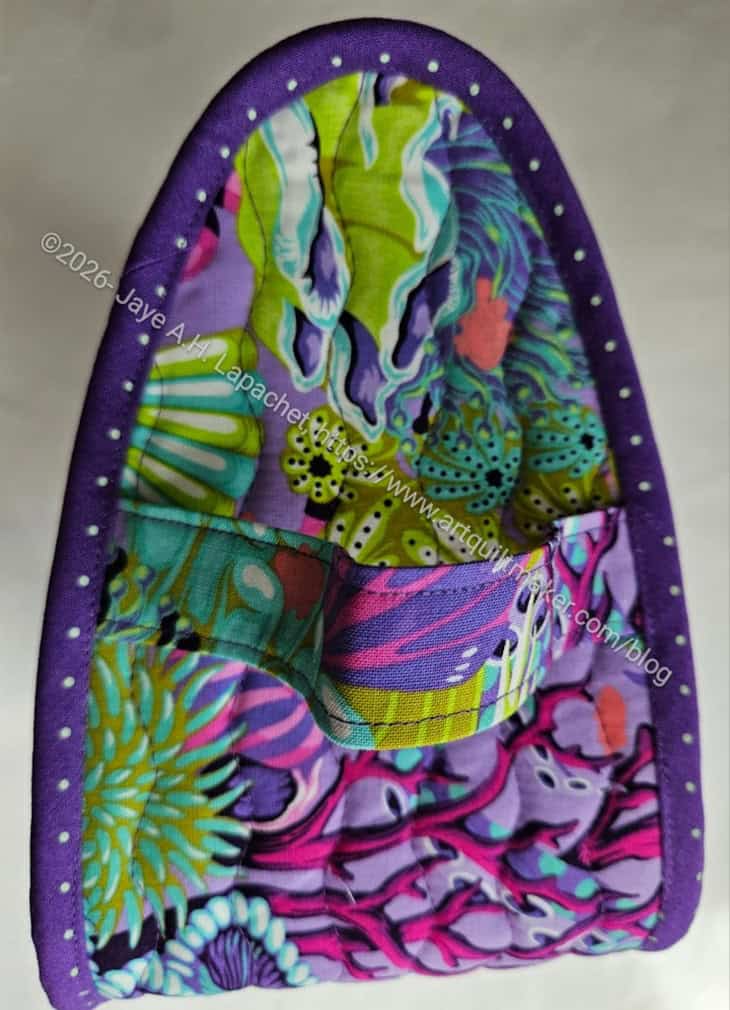
Cosquilla #3 – handle
I think I probably should have put some SF101/ProFuse on the handle, but the handle won’t get much use, so I think it is ok.
I am so pleased with the binding. I used the HP2 foot again and sewed slowly. It was a little short, so I added a straight of grain piece, which was a little problematic when sewing. Otherwise, machine sewing the binding worked very well. I am not embarrassed with how it looks.
I think this was a good fabric combination to use for this pouch. I wasn’t sure how I would use the fabric once it arrived. Seeing it in use when I need a handbag zipper will make me smile.
The Pandora Charisma #2 has been on my mind. I worked on it a little last week and realized I was at the assembly point. Nearly all of the pieces are ready to be assembled into a bag. The sewing of this version has been a lot easier than the first time. And much less anxiety provoking.
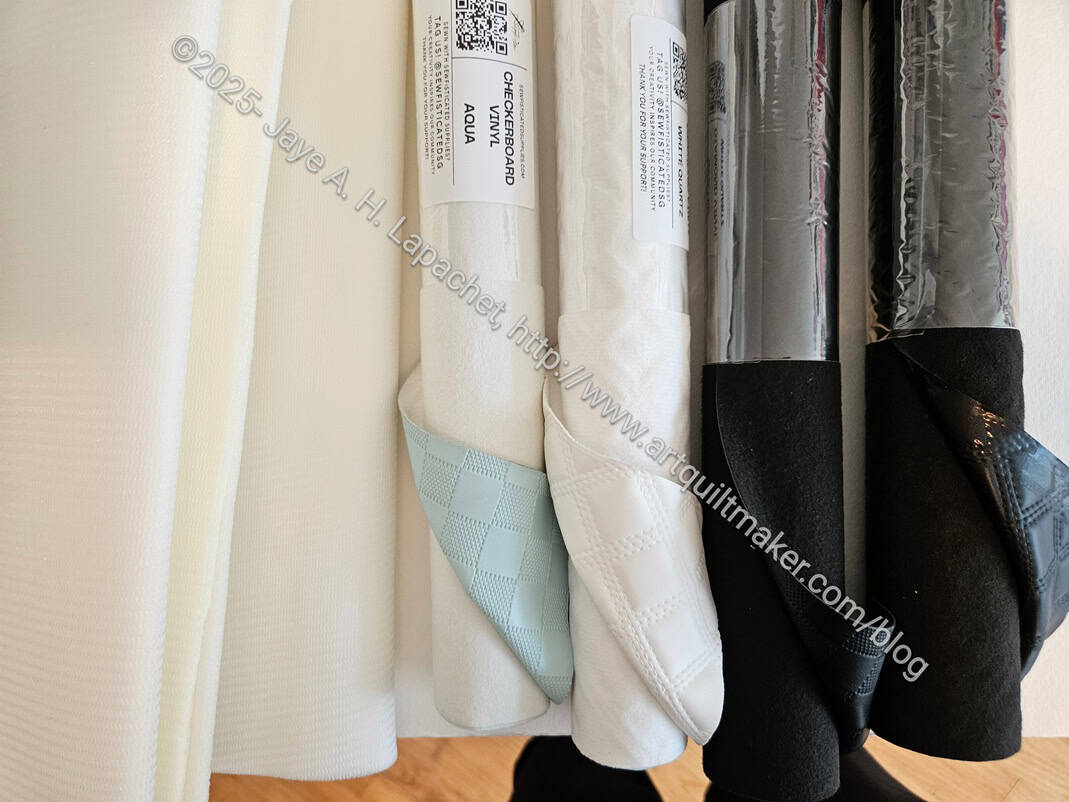
Sewfisticated substrates
The next step was to get the zipper gusset done, but I was anxious about the layers. The outside is made with the same pleather/Diamond Vinyl as Pandora Charisma #1. I took a breath, cut the pieces I needed and made a start. I had the good sense to install a leather needle and the HP2 foot*. I don’t know what HP stands for in the Elna world, but maybe I should call it my Harry Potter foot since it is really magical. 😉
Pandora Charisma #2: gusset layers
Pandora Charisma #2: gusset layers
There were about 5 layers of the Diamond Vinyl through which to sew. Once I was setup, I went for it. My machine sewed through them all like a champ. Granted I sewed very slowly, but it worked!! I was thrilled.
I had to do a lot of ripping over the weekend. It was one of those “it’ll be fine” moments and I should have taken heed sooner. Live and learn!!
I was able to rivet crucial points at Sew Day, thanks to MaryC.
Now I am on to final assembly.
*N.B. “Suitable for the dual feed narrow system, the HP2 foot combines the advantages of a slim ¼” foot with dual feed capability. Providing high visibility, it is ideal for precisely sewing curves and topstitching. In addition, it guides simultaneously the top and bottom layers of fabric for perfect results when quilting and matching patterns. It must be used together with the HP needle plate.” from Elna site
The last time I worked on the Pandora Charisma #2 was back in July. I have been itching to work on it again, but hadn’t quite gotten to it lately. That changed on Sunday. I came back from viewing the amazing dahlias in Golden Gate Park and got to work.
Having all the pieces and parts in one project bag really helped.
First I made the tablet sleeve. I kind of wanted to make it from vinyl, so I could see the lovely Brocade Peony print I used for the main panel. I decided vinyl would look great, but not provide any protection for my tablet. I hunted around and found some of the Tula Poms and used them for the padded sleeve. When I stick my items into the bag, I’ll be able to see the flowers.
Pandora Charisma zipper/slip pocket
I did use vinyl for the lining zipper pocket. I decided to put the pocket on at an angle, but it ended up just looking a little wonky. I wanted it to be more accessible and thought that putting it at angle would help. Perhaps I need to think that through a little more for next time.
Now I am ready to put the whole thing together. I think I might have skipped making the gusset, but can easily sew one. I am finding that having made the first one means making this one is more understandable.
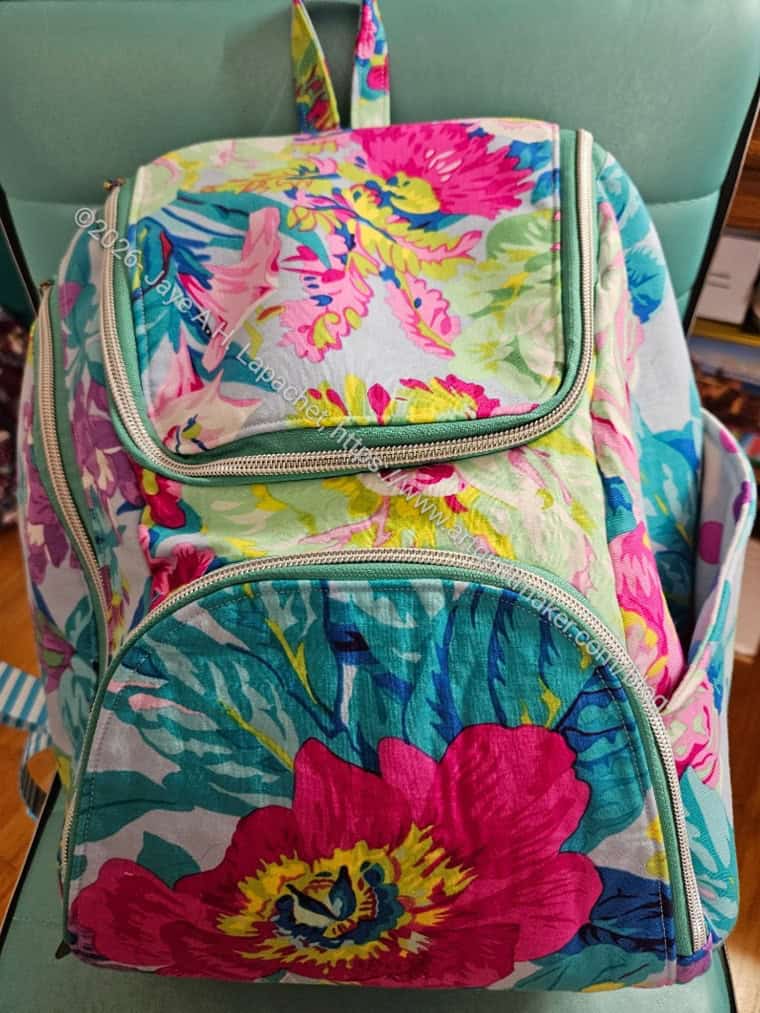
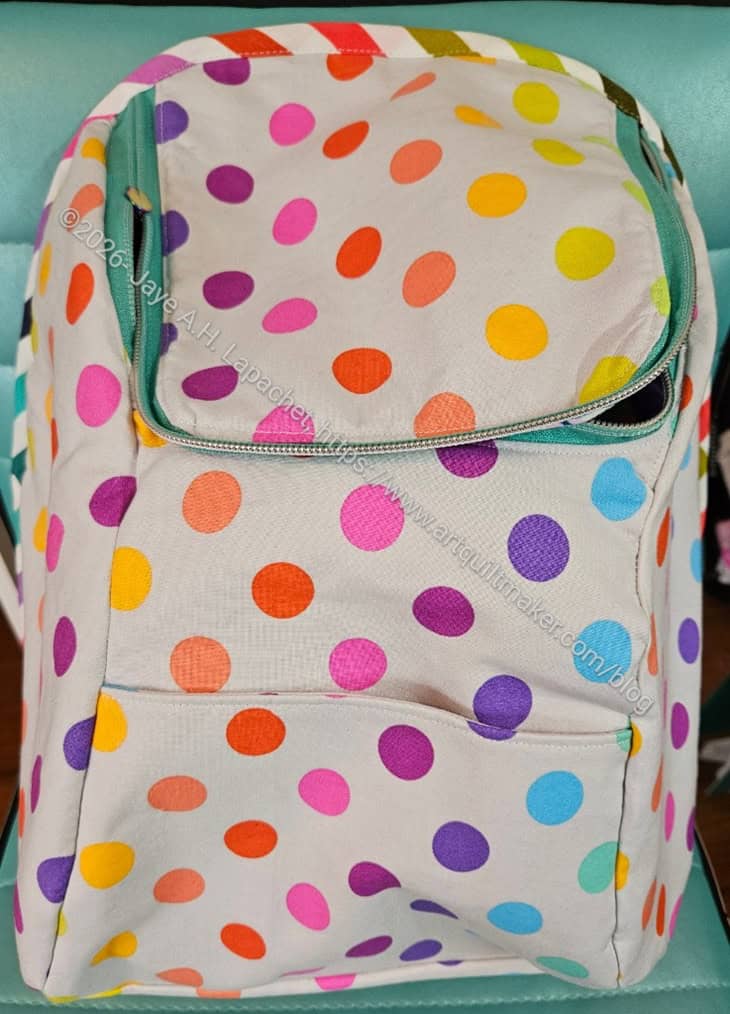
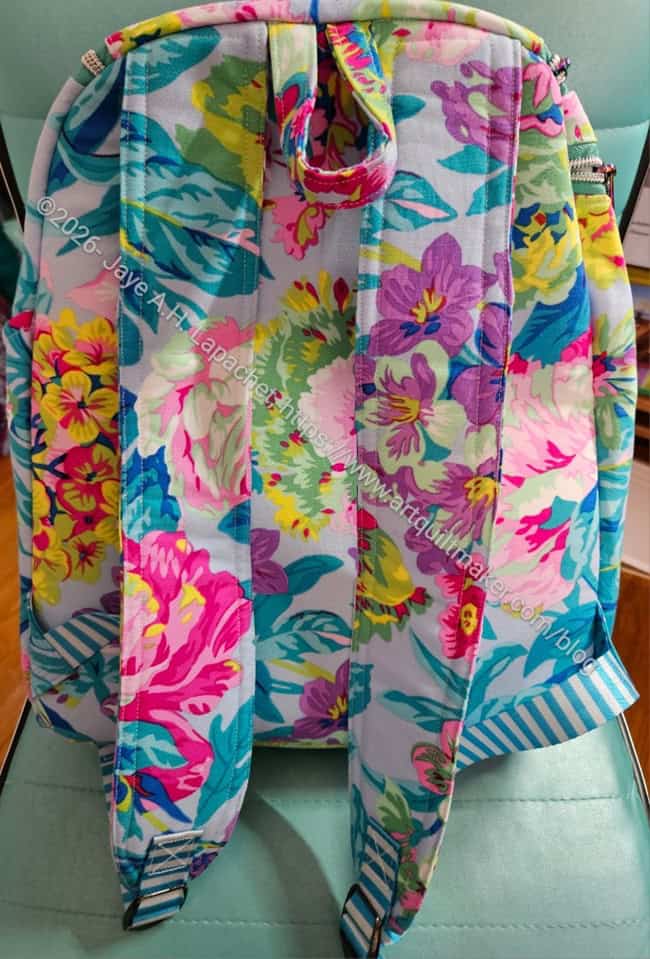
I finished the Urban Sea Backpack. As mentioned, it is for my Mom. It isn’t perfect, but, in general I am pleased with how it came out.
As is usual, I want to start another one right away. I am slightly daunted by the amount of cutting, which may drive me to figure out the Scan ‘n Cut.
The more I look at this project, the happier I am. There are some parts I would like to do better, but I was pleased to look at them with curiosity and an eye towards figuring how how I could do better. I didn’t look at them with shame or the need to explain.
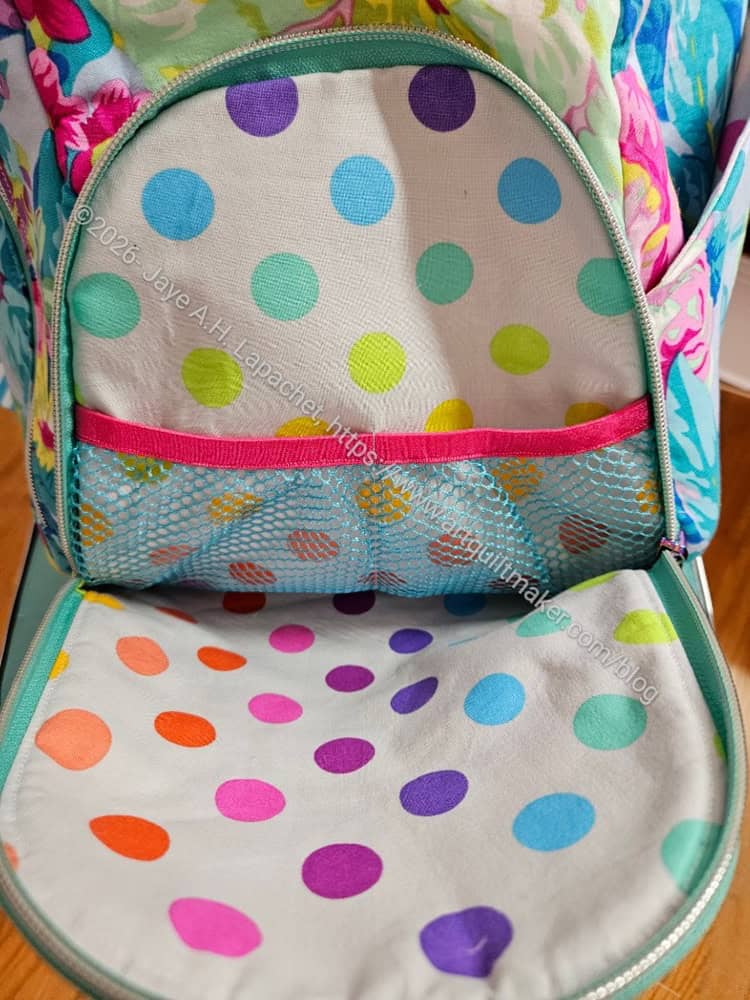
Urban Sea backpack – interior right side out
Before I turned the piece right side out to finish it, I took a photo of the interior.I wanted to get a better view than the one I usually get by photographing down into the bag. This view gives me a better view of the details of the interior.
I am super pleased with the interior. I think it is the fabric. Disco Poms is a GREAT fabric. I may need to get more. I am glad I used it as it is super cheerful.
Urban Sea – front pocket
The front pocket was a bit of a Hail Mary. I am not super fond of the ByAnnie mesh. It is fine and a high quality product. My stuff just gets stuck in the mesh. I really want to find a mesh that has smaller holes like some lingerie bags. I am thinking of buying a lingerie bag, disassembling it and trying the fabric in a bag. The colors are fairly limited, so, for the moment, I am either substituting vinyl like in the Everything But the Machine bag or sticking to mesh and hoping for the best. One good thing about mesh is that you can see what is in your pocket.
Urban Sea – back with straps
People in the Sew Sweetness FB group commented on the straps. I am not sure they are anything special. I did follow the directions and think I would like to add more padding in the future.
My new machine, especially the HP foot really helped me make this bag. I am a lot more relaxed making bags-few tense shoulders and only a little yanking with tweezers, which is better for my body overall. I am much less worried about whether my machine can handle what I want to make.
I finally was able to finish cutting out the Urban Sea Backpack. Whew! That was a lot of cutting.
You might notice that none of the pieces are square. I had to cut them all out with scissors except for the couple of pieces that shared a shape with the Chickadee backpack. Other than that the cutting process just took a long time. I had time to make sure the fabrics were oriented in the same direction across pieces and all the interfacings were correct.
If this cutting experience doesn’t drive me to continue learning to use the Scan ‘n Cut, I don’t know what will. 😉
Urban Sea -Side pocket in process
Once all the pieces were cut, it took a few days for me to get to the project again. As is usual, I started sewing smaller pieces into larger. Once of the first sections was the side pocket and I was pretty excited about how it looked. I was amazed at how clever the pieces were. There is one small triangular piece used in this pocket. As I was cutting, I couldn’t figure out where it would go. It fits in this pocket to extend the curved zipper tab. Genius!
It is not a flat pocket, it has some dimension, which will make it more useful.
Urban Sea -front pocket in process, closed
Once a number of those sections were complete, I could start focusing on combining the smaller pieces into sections of the backpack. First, I made the front pocket, which required zipper tabs, a zipper and other bits and pieces.
I am pleased with my fussy cutting, too.
The sideways capital I piece at the top was another piece I couldn’t imagine using, but it was amazingly perfect. I really can’t imagine how Sara figures these bags out.
Urban Sea -Inside front pocket
Urban Sea -Inside front pocket installed
I thought it would be hard to add the inside of this pocket to the piece, but, essentially, I sewed the front pocket on top of the inside. Don’t try this at home without the pattern! Again, it worked perfectly.
Urban Sea -Top and front pockets
At the moment, I am adding the top pocket/flap to the piece above.
It’s a new adventure! It’s also an adventure that I am enjoying. I sometimes feel frustrated when making bags, but so far I haven’t felt like that with this bag.