Book Review: Japanese Beadwork with Sonoko Nozue

Japanese Beadwork with Sonoko Nozue: 25 Jewelry Designs from a Master ArtistJapanese Beadwork with Sonoko Nozue: 25 Jewelry Designs from a Master Artist by Sonoko Nozue

Before this book is even opened, there is an air of exotica – a demure look by a young Asian woman shot in black & white. She definitely has a secret and as one delves into the book the reader finds that the secret is feminine, delicate, refined, exotic and wearable pieces.

The introduction, by Nathalie Mornu, gives background on the author, Sonoko Nozue including her inspirations, enticing personality traits, teaching projects and some biographical details. The information makes me, not much of a beader, want to meet the Ms. Nozue.

The basics section is a bit daunting at first glance. The necklaces and bracelets are intricate. Those photos are deceiving and should not scare entice the reader, though, because different types of beads, needles and thread are covered right away in the beginning of the basics section. I always enjoy reading the definitions of the beads. For example, “Matsuno beads are glass beads produced exclusively by the Matsuno Company, which was established in 1935. They can sometimes be difficult to find in Japan. Outside of Japan, they’re sold under the brand name MGB. Matsuno beads have thick walls and small holes. (pg.12)” You might be thinking “BFD!”, but I think it is interesting to know that this company has been in existence since before World War II as well as what I need to look for if I want to find these beads in the US. There is a also a chart of symbols; the same idea as knitting charts. The basics section continues with a section on techniques, illustrated by a small bag project with an inset cameo. The basics section wraps up with several pages of stitches.

Chapters on projects start immediately after the basics section. The projects are well illustrated and have beautiful photographs of models wearing the jewelry. My favorite projects are Cheerful Midafternoon (pg.22), a necklace that looks like one worn by Audrey Hepburn in Breakfast at Tiffany’s, and Dripping the Moon (pg.30), a pendant that resembles a small purse (mentioned above). Projects also have variations. Crystal Rose, a large and elegant necklace (pg.102) suggests mounting the pendant on a hair comb instead of hanging it from a rope (‘chain’).

There are so many illustrations that make up the directions in this book that quiltmakers can get inspired for machine quilting and embellishing from looking at the photos alone.

The book has a gallery in the back and an index, two of my favorites. This book is pure and simple eye candy. Take a look.

View all my reviews

Book Review: Diane Fitzgerald’s Favorite Beading Projects

Diane Fitzgerald's Favorite Beading Projects: Designs from Stringing to BeadweavingDiane Fitzgerald’s Favorite Beading Projects: Designs from Stringing to Beadweaving by Diane Fitzgerald

As the title says, this book is all about the projects. After a brief introduction by Diane Fitzgerald and a multi-page foreword (AKA lovefest) by Jean Campbell describing Ms. Fitzgerald’s career and many talents, the book starts right in on the projects. There is no ‘Basics’ section, but tips and techniques are woven throughout the book.

This book has a whopping 24 projects. At an MSRP of $27.95, that is about $1.04 per pattern. If you want to try a lot of different techniques, this is a good book to buy.

Throughout the book, the author shows very clearly how to put the beads together into the larger units needed to make the project. In looking at these images, I am sure a clever quiltmaker could apply beads to a quilt project in the same manner and achieve a great, if flatter look. The book is also good for the quiltmaker who wants to know more about beads. This book has wonderful pictures of different beads used.

I was hard pressed to pick a favorite project as I started to look through them. Many of the projects are necklaces in styles that I don’t wear. I liked the Midnight Snowflakes (pg.75) necklace, but it wasn’t a favorite. I also liked the Lacy Bracelet (pg.71). I was also quite partial to the May Basket project (pg.65), but can’t imagine wearing one as a broach or as a pendant. I did like their look and imagined having a “Spring Tree” (as opposed to a Christmas Tree) covered with these baskets. I was getting discouraged, but the end of the book (pg.100) shows the Braided Garland Necklace. Though it is a little bit large, I love the spring feeling of it.

Each project has a page with a variation so the reader can see what the project looks like in slightly different colors or using different beads.

The end of the book has a gallery of projects, presumably by Ms. Fitzgerald. I really like the Tulip Necklace Pouch (pg.125). It reminds me of the beaded bag Hermione uses in the Deathly Hallows.

Enjoy this inspirational book and thanks to Lark Books for sending it to me.

View all my reviews

Book Review: Metal Clay Fusion

Metal Clay Fusion: Diverse Clays, Detailed Techniques, Artful ProjectsMetal Clay Fusion: Diverse Clays, Detailed Techniques, Artful Projects by Gordon K. Uyehara

One of the first things I thought of when I saw this book was that the cover piece looked like some prehistoric animal, but not in a bad way. The shape looks very organic in a prehistoric sense. That was the beginning of realizing that the author, Gordon K. Uyehara uses many, many shapes and designs from nature, or which were informed by nature, in his work. This gives the hard edge of metal smoothness and positivity.

The things I like about this book are:

  • lots and lots of excellent, detailed photos
  • index
  • attention to the details of the works.

I also like these words from the author, which can be found in the introduction, “The near obsessive compulsion to create with silver clay in the face of a dwindling savings account and the feeling of spending way too many hours on something that might just lead to nothing go beyond logic.” I think we have all felt that way about some creative endeavor.

As with many of the Lark Craft books, this one is full of information about metal clays. It goes into detail about the properties of different types (bronze vs. copper, for example) and how to use them. This book also has tips inset on the pages. The detail photos show how to achieve the minute design details shown on some of the finished pieces. Included are sections called, for example, “Paintbrush Skills” and “Carving,” which help the reader with those details.

I liked the few pages on Design (pg.49-50). I don’t think anyone can get enough design training and hearing it from different voices is valuable.

This technique requires firing, so there are many pages included that discuss firing – temperatures, what to do when combining the metal with other materials. The books includes a section called “What happens during firing” and also a section on Mental Theatrics. We all go through some kind of drama when preparing to do something major to a piece. This section talks about ideas. I don’t see this type of writing in many books, so I was glad it was included and hope Lark makes it a regular feature of their quilt books as well.

The photos are predominantly of Mr. Uyehara’s work, but there are also pieces from other artists. Barbara Becker Simon’s Jester Jar is one of my favorites. It combines glass and metal. I also like the Bubbles Belt Buckle by Liz Hall (pg.38).

The projects are interesting. They range from earrings, bangles and beads to Hashi Oki (chopstick rests), condiment spoons and hairpins. I was very glad to see some new and different projects in this book.

As I have mentioned numerous time, I do not make jewelry, so this book will be donated to the Library, but, if nothing else, this books is a wealth of inspiration in shape, detail and design. There are plenty of curves to offset the hard edge of the metal. Spirals, ovals and circles permeate Uyehara’s work. There is a lot of eye candy in this book and would be an excellent book for inspiration, even if you are not a jewelry maker.

View all my reviews

Book Review: The Creative Habit

The Creative Habit: Learn It and Use It for LifeThe Creative Habit: Learn It and Use It for Life by Twyla Tharp

I started this book some time ago after I received it as a gift. I didn’t get very far as it didn’t grab my attention and other books elbowed their way to the front of the line. I, finally, decided to get serious and really start reading it. One of the best things about it so far is that Twyla Tharp describes creativity as a habit. While that sounds much more boring that creativity being a flash of light from God, it is much more comforting for me. I can develop a habit; I can’t really wait around for a flash from God.

I took the first test and had a hard time with some of the questions, but found that I got into it as I went on. I also gained some insight and was able to go back and fill in other answers I had skipped.

Not being a student, I don’t sit with my books at a table and read and write notes or take tests. I like the tests and think they are useful, but the tests came up periodically, usually at times when I didn’t have a writing implement or the time to devote to the test. This was one of the reasons I got stalled.

Eventually, I just started to read the book, not do the tests and underline words and phrases that spoke to me. That was a much better plan and I got a lot out of it.

I plan to take bits I underlined out of the book and write about them here. Look for those snippets or review-lets in the future.

View all my reviews

Book Review: Adventures with Leaders & Enders

Adventures With Leaders & Enders: Make More Quilts In Less Time!Adventures With Leaders & Enders: Make More Quilts In Less Time! by Bonnie K. Hunter

I bought this book with an Amazon gift card, because I had heard so much about Bonnie K. Hunter, especially from Katie of Katie’s Quilting Corner. I have been using the the Leaders & Enders technique, which Hunter calls L&E in the book, for awhile. I didn’t really need a book to tell me to cut my scraps into manageable and usable sizes and sew them together.

The first 14 pages talk about the Leaders & Enders technique, including useful sizes in which to cut your scraps, sorting scraps, making some basic units (4 patch, 9 patch, half square triangles), and a small section on strip piecing. The last page (pg.15) is called “What quilters are saying about Bonnie Hunter’s Leaders & Enders method.” All the praise is glowing and there are little stories about people using the Leaders & Enders technique.

The Leaders & Enders technique is explained thoroughly on pages 8-9. If the quiltmaker reads these two pages, s/he will know what to do.

The beginning section also talks about finding time and getting organized. Finding time is a perpetual problem for most people, so Hunter’s advice is useful and realistic. The Getting Organized section (pg.12) talks a lot about containers, what she likes about certain types and what she doesn’t like about others.

Aside from the fact that publishers are demanding that quilt authors make many projects, I think Bonnie K. Hunter had to create projects for this book. If a quiltmaker cut up his/her scraps and made bunches of 4 and 9 patches accented by half square triangles, most wouldn’t know what to do with them. The projects make sense in this book.

Adventures with Leaders and Enders has 13 projects and all of the quilts are made from pieces cut using Hunter’s method. Larger pieces of fabric are used for sashing, borders, etc in most of the quilts, but the majority of the blocks are made with scraps using the Leaders & Enders technique.

At the end of the book (pg. 92-93), there is a section that includes paragraphs on “Additional thoughts on color”, “Allow yourself playtime”, “Analyze the pattern” and “How to gauge yardage.” In this section, she says “If I run out of something, I just substitute something else.” I think that is very good advice. Many vintage quilts have random pieces that don’t match, because, presumably, the quiltmaker ran out of fabric. We are fortunate to have plenty of fabric, but keep this advice in mind as a few different fabrics can add interest and movement to a quilt.

My favorite quilt in this book is the Blue Ridge Beauty, which uses a similar block to my the block used in my Stepping Stones quilt. I like the combination of 4 patches and half square triangles. Actually, I like most the quilts in the book, though I do find the total scrappiness of some of them somewhat unsuccessful. In Sisters Nine Patch, Ms. Hunter sticks to a certain color palette and I think this choice makes this quilt one of the more successful projects.

I am not much of one for randomly selecting fabrics and putting them in a quilt. I like a little more thought, so some of these projects strike me as not being well chosen in terms of color. Still, they have charm. I also think that Hunter’s color palette is a little muddier and more Civil War-ish than mine. That difference definitely affects my view.

I would have dearly loved to have a seen a gallery of quilts (made by students??) in different colors in this book. I think the reader would really benefit from such a gallery.

This is a quick read. I would get it from the Library, but the tips and tricks are good and can be used with any type of fabric.

View all my reviews

Book Review: Liberated Quiltmaking 2

Liberated Quiltmaking IILiberated Quiltmaking II by Gwen Marston

I knew I liked this book when I read “Life is short. Do your own work, have a good time, and be nice to everybody…including yourself” (pg.10). I also liked this book, because she talks about the wheres and whys of the quiltmaking process. Gwen Marston assumes that quiltmakers are intelligent. She says “We can solve our own problems” (pg.11) and “contrary to popular belief, you don’t have to suffer to make a good quilt” (pg.10). I like Gwen Marston’s writing style, the clear directions and the information she packs into this book.

This book is about design; designing your own quilts as in not using a pattern. This book is about what kind of quilts that can provide inspiration, how to use that inspiration to make your own quilts and the steps to get there. This book is about having fun, using good fabric and enjoying yourself.

This is also a technique book which straddles the line between liberated construction and good technique. She says “…that working in the Liberated style doesn’t mean you have to throw the baby out with the bathwater” (pg.12), a sentiment with which I wholeheartedly agree. Liberated Quiltmaking is a “process rather than a pattern (pg.8)” and not an excuse for poor design or bad technique.

Most of the books talks about process and the vehicle she uses are, for the most part, traditional blocks such as log cabins, baskets and square within a square. Marston shows us some quilts, usually antiques, talks about the liberated fundamentals of that block and then give step-by-step instructions for the liberated version of the block.

Each section that shows how to make the various blocks, and block parts, are well illustrated. Both written and visual steps are shown. In working with these designs and techniques the reader gets the distinct impression that s/he should follow the directions, but adjust as needed to make the piece her/his own. In the star making section, she writes “the cuts are not made exactly from corner to corner” (pg.31). The end result is complex looking, but not difficult.

One block in the process section is from a quilt by a student (Kathy’s Block, pg.39-45) and other sections discuss borders, triangles, recut blocks and medallions. Kathy’s block is a good lesson in making lemonade out of lemons. If you are afraid of sawtooth borders or joining a border round robin, then this book will help you get more comfortable with the concepts. The topics are covered thoroughly and in a way that gives the reader confidence to do what she is teaching. The Medallion with Wild Geese and Squares on Point (pg. 102) in this section is particularly cheerful.

Keeping the above in mind, Gwen writes “As I am writing about a process rather than describing how to make a specific project, it is not my intention to give you the exact measurement to duplicate my quilt. Rather, I am showing you how to figure out how to make your own blocks any size you want (pg.81).” I hope, after reading this book, that my readers will go away with those skills firmly embedded in their head and fear left outside the workroom door.

It may as well be said right up front that a lot of the blocks and units are on the bias. They are on the bias because of the way they are cut or pieced. Sewing slowly and using Mary Ellen’s Best Press will allow you to work with the bias with no trouble.

If you can only buy one quilt book, I would buy this one. The scope for imagination, as Anne of Green Gables would say, is limitless. A quiltmaker could easily spend her life making variations of liberated quilts from this book.

View all my reviews

Book Review: Creative Quilting with Beads

Creative Quilting with Beads: 20+ Projects with Dimension, Sparkle & ShineCreative Quilting with Beads: 20+ Projects with Dimension, Sparkle & Shine by Valerie Van Arsdale Shrader

Beads must be in vogue, because I received this book from Lark Crafts yesterday. I was immediately drawn to the pomegranate on the front cover. The beads on that piece are perfect.”

The book has 24 pages of “The Basics”, which includes everything from Beads (pg.8) to Hanging an Art Quilt (pg.24). The book follows The Basics up with Projects, a gallery and templates. There are also bios of the designers and (YAY!!!) an index.

The introduction includes a line, which I think is a good reminder for working with beads on quilts “…the many ways beads can work with their fabric background, either as part of a pattern on as a dramatic focal point (pg.6).” In Kissy Fish, I used the beads to enhance the overall design while the fish was the focal point. Both thoughts are represented in this book.

“The Basics” talks about beads including the purchasing of beads and a reminder to the reader that anything with a hole in it can become a bead. “Creating with Beads (pg. 10-11) talks about supplies the maker will need to work when using beads including beading needles. The chart of different types of beads from A Bounty of Bead + Wire Earrings would not be out of place in this section.

The following 10 or so pages gives the reader the rudiments of quiltmaking. There is a section on pressing, which I don’t remember seeing in other books. “A portable padded pressing board is helpful when pressing partially completed quilts with the beaded side down. The padded board will cushion the beads to help you avoid dimples and other imprints on the quilt (pg.15),” which is good to know. Free motion quilting, fusible applique’ and hand techniques are all covered. There is also a small section on embroidery stitches.

This book is a compilation of various designers’ work, which means that there is a lot of variety in the projects. The projects are laid out in the Quilting Arts magazine style. There is only a small paragraph or sentence about the inspiration or reason for the work and then the materials needed and instructions start. I would have liked to have seen more thoughts from the artist.

I really couldn’t pick a favorite project as several of them were appealing. By The Sea by Kathy Daniels (pg. 26), the first project in the book was appealing for its line of white sashiko like stitches and machine quilting. Jewels of Our Past by Larkin Van Horn (pg. 68-71) also had interesting machine quilting, but I also like the blue dots for their varied repetition. The pomegranate book cover  by Sarah Ann Smith (pg. 98-101) is quite special. The machine quilting is very effective and the pomegranates, as I mentioned, sparkle. The group of projects also included an apron, magnets, a handbag and a purse.

The gallery gives the reader an idea of the style of the various artists and provides inspiration. I wish the photos had been larger in that section.

View all my reviews

Book Review: A Bounty of Bead + Wire Earrings

A Bounty of Bead & Wire Earrings: 50 Fun, Fast Jewelry ProjectsA Bounty of Bead & Wire Earrings: 50 Fun, Fast Jewelry Projects by Nathalie Mornu

This is a book I received from Lark Crafts as a review copy back in December. It took me a little while to get to this title due to the holidays, illness and travel. As I have said, I am not a jewelry maker, but I found some interesting things to inspire me in this book and am glad I finally was able to review it.

First, there are lots of great photos. There are photos of the projects, inspiration photos, such as the various “Earrings Around the World” photos, clear photos of tools and processes as well as large images of each project. The photos really make this book.

The other element that I like about this book is from the “charts and graphs” department. I haven’t ever seen a book that includes a chart detailing the size of holes (figure 1, pg. 8). Not only does the chart show what an 18mm hole looks like, but the chart includes a 2″ ruler alongside the equivalent ruler in millimeters, thus showing that an 18mm hole is approximately 3/4″. There is also a key to wire gauges (pg.139), which I thought would be helpful to designers.

Throughout the book are “Designer Tips”, which cover such aspects as “do not ream crystals. They shatter easily” (pg.9). Good to know and a perfect way to communicate that information.

While I have said I am not a jewelry maker, I do buy an use beads on my quilts, including the recent Kissy Fish. Thus the pages called “Bead Types and Shapes” (pg.10-11) were of great interest to me. There is a bead type called West African Lost Wax. Who knew? There are also rice, Roccoco, Chinese cinnabar, domed, donut and Cupolini. All of these sound very interesting. The pictures next to each of the names and description ensure that the reader knows what the author means. If this type of chart is not prevalent in jewelry books, then it would be worth buying this book for the chart. Nathalie Mornu talks about wire, tools, safety and techniques with the same clarity and knowledge.

If you like projects, then this book has lovely projects. My favorite is called Florentine Lace (pg.91), because of the filigree the maker creates. I was hard pressed to choose, though, because I also liked Spellbound (pg. 114) and the shape of Rain (pg.107) as well.

I think jewelry makers would get something out of this book. Buy at your bookstore or check it out at your local library.

View all my reviews

Book Review: Quick Quilts from your Scrapbag

Quick Quilts from Your Scrap Bag (For the Love of Quilting)Quick Quilts from Your Scrap Bag by Patricia Wilens

I picked up this book as I was running out the door to wait for the Young Man while he went to an appointment. The title is fairly modest, but I ended up really liking this book. I received it from Quiltin’ Jenny in a blog giveaway. The book has 35 projects, which might be a compilation from other sources. 35! Since I read it, I have been paying attention to the numbers of projects in other books and none that I have come in contact with lately have anywhere close to that many.

As you well know, I am not much of a book-full-of-projects-girl, but I found that many of the elements and blocks in these projects spurred on my imagination in terms of incorporating them in other projects of my own design. One of these elements that I found really intriguing was in the Dizzy Geese pattern (page 106-109) where a unit of 3 Flying Geese is place in a wreath formation around a Storm at Sea-type block. It doesn’t look very difficult and really adds a look of complexity to the block. I was amazed and surprised to see a quilt using this (or a similar pattern) at PIQF 2011. Holly Casey used this pattern in a blue and gold colorway to great effect.

This 1999 book covers all sorts of techniques from piecing to applique’. A lot of piecing techniques have changed since 1999 and the book includes a lot of templates. One of the things I like about it is that the author includes a little of the story behind each of the quilts.

The book has a variety of inset tip blocks, including an inset tip box called Diagonal-Corners Quick-Piecing Method on page 11. This tip box really explains how to do the diagonal corner piecing method using the Angler or a similar products. Another tip box explains what they call “working with bias edges”, which is really an explanation of how to block a block and this is an excellent, clear one.

The Streak of Lightning pattern (pg.62) is really interesting. I like the combination of prominent lines and smaller squares. The example, however, does show its age in terms of fabrics. I was a little confused by the quick piecing method for the half square triangle with the square and two triangles as half of the block, which I think needs to add a step or two to be clearer.

This is the book that made me realize that books could help improve quiltmakers’ precision and accuracy by including the finished sizes of the units that make up a block. I really liked the Odd Fellows March quilt and block (pg. 72). This pattern does provide the size of the blocks, but not for each unit.

A number of the quilts have Irish Chain type settings (pages 20, 28, 88 and 129). The different quilts provide the reader with different examples that help add this setting to the reader’s bag of tricks. The Irish Chain setting is a good way to set blocks together.

This book has an interesting variety of projects some of which even I would like to try.

View all my reviews

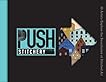
Book Review: Push Stitchery

PUSH Stitchery: 30 Artists Explore the Boundaries of Stitched ArtPUSH Stitchery: 30 Artists Explore the Boundaries of Stitched Art by Lark Books

I have to admit that I like pretty, cheerful art. I also like pushing the boundaries, which isn’t always pretty. This book make stitchery (do they call it that anymore??) cool, but not always pretty.

This book arrived on my doorstep from Lark (Hey! Thanks, Lark!) at an interesting time, because I was stitching madly on my Kissy Fish project. Compared to the work in this book, my work is extremely simple.

This book has a lot of intimate imagery. There are images of people in bed together, faces stare out at you imploringly from the pages,nakedness, roadkill and the jostling crowds of people that make up the daily life of those of who take public transportation. there are flaming eye sockets (pg.124), plenty of skulls, and sex. One of the artists says “The things that interest me are shock, sex, violence, love, laughter, absurdity, beauty, and contrasts” (pg.116). This quote describes the book pretty well. These pieces are more like paintings than the kind of embroidery to which I am accustomed.

Vintage linens are used in various pieces. Pieces are also mixed with non-textile elements including china and metal. All different types of stitching are used as well: machine, hand, variety of threads and stitches, etc.
I think of embroidery and stitchery as crafts where women dominate. There are a large number of men represented in this book.

Some of my favorite pieces are the stamps (pg.46-47, the image of the carafe and cup (pg.27), London Calling Paris (pg.104) and Driving (pg.158). The pieces and the imagery are the stars of this book. The text was minimal, both in amount and layout. It was not the star of the show and that allowed me to immerse myself in the images. The photography is really good in this book. I was able to see the detail of the stitching in most of the pieces.

Lark is really putting themselves out there by producing catalogs of different types of crafts. I really appreciate the risk they are taking and suggest that you support their efforts.

View all my reviews

Book Review: Layer Cakes, Jelly Rolls & Charm Packs

Jelly Roll, Layer Cake & Charm QuiltsJelly Roll, Layer Cake & Charm Quilts by Pam Lintott

This is almost a pure project book and I wouldn’t have picked it up if Frances and Sandy hadn’t talked about it over and over. Frances has definitely made my favorites from the quilt projects in this book.

There is a lot to like about this book. There are a variety of patterns for every skill level. The authors clearly state how many precuts are needed to make the quilt. A lot of the quilts have colors that really appeal to me, but there are also reproduction and more muted fabrics used, so that the book covers a lot of bases in terms of tastes in fabric. Almost every quilt is made twice with the second quilt using very different fabrics. I like this aspect, because it is hard for me not to be influenced by the fabric choices in the photos. Seeing a second quilt in different colors reminds me to the design of the quilt rather than the colors.

There are small introductions to each quilt, which are similar, if not as detailed, as the color stories in The Gentle Art of Quiltmaking. They suggest other options, talk about the fabrics chosen and encourage the quiltmaker, as in the description of Little Houses (pg.102-109) where the pieces are on the small side.
One pattern I can’t get out of my mind is Stepping Stones, pg.72-79. It is one of the more complex patterns and it  includes four patches, so what is not to like? 😉 If I made it, I would want to use fabric on hand, so I have spent some, otherwise unpleasant commute time, daydreaming about various color variations, cutting strategies, etc.  Using fabric on hand (I am thinking green. I have lots of green I don’t use much)  would I start cutting 10″ squares and then start the quilt when I was finished cutting them? Would I cut half green 10″ squares and half cream or another light? Three quarters green and a quarter light? There is a lot of piecing in this this pattern and there are some areas in the example quilt that could use a bit more contrast.

I liked the border on the Raspberry Ripple quilt (pg.14-17) because it has the ‘self-bordering’ effect that I like so much. It fits well into the design of the quilt and finishes some of the motifs, which really completes the overall design. High Flying Geese (pg.30-35) is very similar to Serendipity Puzzle, a classic Dutchman’s Puzzle pattern. The colors are so fresh and appealing in the Lintott version that I would consider making another version just because I am inspired by that freshness.

Some of the blocks in the book are so easy and so large that you could do a quilt really quickly. Those quilts don’t appeal to me, but I know they might appeal to others. Some of the photos aren’t very crisp. I was disappointed in the photo of Damask Rose (pg.48-53), because the piecing is very hard to see with the fabrics the authors chose. This is one of the more complicated quilts and I would want to show off the piecing. It may be that the authors wanted a soft chintz feel to the quilt. This is also one of the few quilts in the book that does not have a second colorway.

Hexagon Hip Hop (pg.64-71) is version of a hexagon quilt, like the Attack of the Hexies quilts, but using half hexagons. It has a really interesting and well thought out border that fits the overall design. I also like that the second colorway shows how nice a gift a hexagon quilt would make for that special guy (dad, brother, etc) in your life.

If you want a wide variety of patterns to use with Jelly Rolls and other precuts, then you might enjoy this book.

View all my reviews, including non-quilt related reviews

Book Review: Gentle Art of Quiltmaking

The Gentle Art of Quiltmaking: 15 Projects Inspired by Everyday BeautyThe Gentle Art of Quiltmaking: 15 Projects Inspired by Everyday Beauty by Jane Brocket

My normal practice for writing reviews is to read the whole book and review the whole book. Occasionally, I’ll glance through a book and write a short review based on my impressions. That was my intent with The Gentle Art of Quiltmaking.

My first impression was that it was a project book and I could churn out the review quickly. The book stayed in my bag and I slogged through the beginning, which covers fabric quantities, cutting fabric and calculating binding. I found the book hard to read and understand. I wasn’t getting the point and I couldn’t figure out the problem. The books is a nice hardcover, with gorgeous photos and pleasant font. The tone is pleasant to read.

One day I found myself with an hour or more to sit and nothing else to claim my attention. Having time, being able to slow down allowed me ‘get’ this book. I was able to fall into the mindset of the author and start to enjoy her writing. I was able to spend a couple additional hours focused on the text of the book. After finishing, I went back and read the beginning, which I found to be much more enjoyable. I realized, in going back, that Brocket says, at the very beginning of the introduction “This is a book about quilt inspiration.” And it is. I missed that crucial line.

This book is a project book, but if you buy this book because of fascinating projects, you will be disappointed. Buy the book for the inspiration and not the projects. Buy the book for the color stories. The subtitle is a complete misnomer and should have been something like “how to write color stories in fabric.” If you buy this book because of color stories, you will adore it.

Color stories seem to be coming into fashion as a way of narrowing a color palette for a quilt. Bill Kerr and Weeks Ringle talk about the “Big Idea” in their books. Michael Miller, a fabric manufacturer, is posting color stories on their blog.

The color stories are the best part of this book and what drew me in. Brocket does a great job of giving us insight into the inner workings of a creative person’s mind. The color stories also don’t shortchange the design process. They are an integral part of the design process. Brocket’s quilts have a story to tell, or a Big Idea to convey, like Bill Kerr and Weeks Ringle discuss in Quilts Made Modern. Jane Brocket‘s writing about the creative process demonstrates to the reader the work that goes into designing a quilt.

The stories start on page 31 with Beach Hut. Each quilt pattern is introduced by a few pages describing the thought that started it all, how the design fits into her idea, her story and how she selected the fabrics. In this section Brocket talks about books or other materials that entered into the design equation.

Fabric selection is also, clearly, a major factor in Brocket’s quilts. In some cases, she found a fabric and built a story and a quilt around it. In other instances, like with Beach Hut, Lisbon Tile and Summer Day, she has made a second quilt in order to expand the story or make the fabric work for her idea.

The fabrics are also not shortchanged. The author and publisher acknowledge the intelligence of the readers by saying exactly (from the selvedge) what fabrics were used. They also give ideas of what other fabrics could be used and acknowledge that fabrics go out of print fast. I saw this information also included in Pam Lintott‘s book,Layer Cake Jelly Roll Charm Quilts.

In quiltmaking, design, and especially color, are very important. In fact, design and color can be the raison d’être of the quilt, yet both design and color are often given short shrift in project books. Books and articles delve deeply into the how, but talk very little about the WHY of the quilt. Why that fabric? Why that fabric combination? Why the juxtaposition of the simplicity and complexity between fabric choices and piecing? This aspect is underrepresented in most current quilt books. As a result, it seems to be something that quiltmakers are not comfortable discussing or attempting.

Jane Brocket covers the WHY very well. She delves into the WHY in minute detail. She covers the creative process very well enabling the reader to understand that there isa process (not magic. Hopefully, the information described will give people permission to explore their own creative process.

A note about the styling: I was not enamored with the styling of the quilt photos. Most of the quilts are photographed in locations that appear to be beyond Shabby Chic and well into ramshackle and derelict. In the picture of the Beach Quilt, Candy version, the viewer sees more of the wall than the quilt. The book designer did include a quilt gallery with 4 photos to a page (this book is on the larger side) so the reader can see the quilts laid out flat without the creativity of the stylist.

View all my reviews

Book Review: The Practical Guide to Patchwork

The Practical Guide to Patchwork: New Basics for the Modern QuiltmakerThe Practical Guide to Patchwork: New Basics for the Modern Quiltmaker by Elizabeth Hartman

I am still looking for a comprehensive, basic guide to quiltmaking; a book to which I could refer when I had a question. I am beginning to think that such a book does not exist and may not be possible to create. Granted, I haven’t read every single book purporting to be a “comprehensive guide.” Why do I care? Aside from wanting that all-knowing guide, I want my students to have a resource to which they can refer when they get stuck. The resource should be comprehensive, basic, detailed and POSITIVE. Skills are important, but the quilt police are not. I want to get people to their sewing machine to experience the joys of quiltmaking.

The Practical Guide to Patchwork: New Basics for the Modern Quiltmaker by Elizabeth Hartman, of Oh! Fransson fame, is another entry into my unofficial contest on ‘ultimate guides.’ This is a beautiful book. It is a nice size, the paper feels good, colors are cheerful, the photos are wonderful and the fabrics are appealing. I also like the way she arranged the projects: “Projects to get you started,” Projects for the a Confident Beginner,” and “Intermediate-Level Projects.” No advanced projects, but perhaps that is coming.

Hartman talks about supplies in a good amount of detail. Her advice, which I agree with, is to “…buy the best-quality materials you can afford.” I keep my supplies for a long time, so it makes no sense for me to buy poor quality. I have the first ruler I ever bought and still use it. She talks about using different types of fabrics, such as linen and mentions madras plaids, vintage bed linens and shirting cottons. I think this approach is encouraging, because she is giving permission to use what people have on hand to those who need it. Also, quiltmakers were told for a long time that sheets were too tightly woven to use successfully. This ‘rule’ isn’t even mentioned. She warns that different fabrics may take some extra work, but I like the tone of trying things out with which pervades the book. I used a Japanese fabric that was thicker and more loosely woven than quilting cotton and lived to tell the tale, so Hartman’s advice is sound. She has good example photos of fabrics she is discussing.

The author includes organizing tips as well as quiltmaking basics (pg.17). Often, the value of organizing your projects is overlooked. Hartman uses organizer cards and labels. Organizing can often be a critical piece of the quiltmaking process and I don’t remember another book that talks about it. I didn’t quite understand her process, but think it is similar to my Post-it note method.

She has an interesting way of hanging small quilts. Ms. Hartman shows a quilt with corner triangles as a hanging method rather than a sleeve. She says that this method works for smaller pieces (pg.19). She also talks about piecing the back, which is something I also don’t remember seeing in many other books.

The author includes some information on color. In it, she reviews a variety of color wheel concepts. There are a couple of paragraphs on each concept, such as the definition of a monochromatic color scheme. This section is like candy, because it is so well illustrated. The fabrics and colors she selected to illustrate her concepts are fantastic! Another addition is a short discussion of negative space, e.g. background. Again, I don’t remember other books even mentioning negative space. I could look at these pages for a long time.

I thought it was interesting that her idea of dots is completely at odds with Harriet Hargrave in the book Quilter’s Academy Vol. 1–Freshman Year: A SkillBuilding Course in Quiltmaking where she said “Dots can add interest, but as with calicoes, too many can become very busy and detract from the design of the quilt. The fewer fabrics your quilt design has, the more important it becomes to limit the use of this type of print. (pg.69)” Elizabeth Hartman says “…but don’t discount the importance of basics, such as dots, stripes, smaller floras, and other small- and medium scale prints. (pg.24)” This might be the ‘modern quilter’ flash in the pan talking, but I think the dichotomy illustrates how individual fabric selection is to each quiltmaker and the importance of finding your style.

Speaking of fabric, Ms. Hartman uses such appealing fabrics throughout the book, even for the most mundane of tasks, such as how to rotary cut (not mundane, I know, for those who are learning to rotary cut!), that I want to run upstairs and pull out some fabric and practice rotary cutting.

This book has a little of everything to get someone started. A new quiltmaker could really get started using this book, with only a little bit of additional help from Quilty. She talks about quilting the quilt sandwich and points out that it is better to avoid stitching in the ditch, because it looks bad if you miss it. This is so true!

The basics section covers 44 pages of a 127 page book, then she gets on to the projects. Right before the project section starts, Elizabeth Hartman writes one of the most important elements in the whole book, which is “…and get you thinking about how to make your quilting projects more uniquely you. (pg.44)”

Most of the projects cover 4-6 pages of instructions. The projects are not difficult for an experienced quiltmaker, but they are also not boring and show good use of a variety of fabrics. Ms. Hartman shows the back as well as alternate color ideas in fabric, not computer generated, for each project. She also does not rehash concepts she has already written about, but refers readers back to previous pages for the information. The projects section also has tips, tricks and new concepts. In The Small Plates pattern, pg.56-61, she describes fussy cutting. In Batch of Brownies, pg.62-69, she talks about the idea of resting places for the eye, which can be used in other projects as well.

Hartman doesn’t always explain her fabric choices. While you might have gotten too much of that in Jane Brocket‘s The Gentle Art of Quiltmaking, I find it useful to understand why an author selected certain fabrics and what they were trying to convey. It helps me learn and improve my own choices.

At the end, Elizabeth Hartman has a page of resources, but the book contains no index. I think it would benefit from an index as a tool for those who wanted to refer to certain sections.

View all my reviews

Book Review: Ring a Day

Ring a Day: 700 Photos from a 365 Day Jewelry ChallengeRing a Day: 700 Photos from a 365 Day Jewelry Challenge by Marthe Le Van

This is a book by Marthe Le Van that I received for free to review from Lark Crafts. The first paragraph sums this book up very well. Le Van writes “When I hard that a group of jewelers was creating one new ring per day for an entire calendar year, three thoughts immediately came to mind — This is brilliant! This is completely mad! Where do I sign up?”

Some of the most creative works come out of projects that are brilliant or mad and the Internet helps by making such projects global. The project ended up with 1600 images of rings and the book contains 700 of them.

The book is small in format, easy to carry around; a nice workbook type size. The photos are on the small side, but not tiny. The book is arranged like a daily calendar and some of the rings fit in with the day. For example, for New Year’s Day (January 1) there is a ring made from a champagne cork. I like the fact that there is just enough text in this book. There are not long essays on jewelry making, but salient quotes from the artists. I think these quotes can be used by quiltmakers to gain inspiration. A simple quote that struck home was from Victoria Lynn Takahashi who said “Sometimes a girl just has to play. (pg.15)”

I noticed that entries recounted family projects where people had gathered, someone suggested they all make rings and the entire family sat around making them (pg.69).

I think the great part of this book is the message of inspiration: you can make a work every day; you can make a work from things on hand, you don’t need to shop; making a lot of small work enhances your chances for creating a masterwork; practice makes perfect.

I love this quote from Shannon Conrad ‘The hardest part of making a ring a day was just that — you have to make a ring EVERY day. There was no break. It was relentless. (pg.11)”

Even if you are not a jewelry maker, take a look at this book. Take a look at the shapes and materials and be inspired by them.

Thanks to Leah Eagel from Sterling Publishing for sending me this book

View all my reviews

Book Review: Masters Art Quilts v.2

UPDATE 8/26/2011: Giveaway is closed. See information about the winner in the 8/26 post. Please leave other comments in the comments section. I love hearing from you.

Masters: Art Quilts, Vol. 2: Major Works by Leading ArtistsMasters: Art Quilts, Vol. 2: Major Works by Leading Artists by Ray Hemachandra

Another 39 quiltmakers have been included in this volume of Masters:Art Quilts Vol.2, which makes me happy for a number of reasons. First, I think the first volume was successful. Second, there may be more volumes to come. Third, Lark may be setting a trend of inspiration and essay type quilt books. Fourth, more eye candy for me. 😉 I wrote a review of the previous edition in which I wrote the possibility of a series of books on inspiration and I also talked about some of the artists included.

This second volume continues all the good included in the first book. This book also includes different artists, some with whom I am familiar, some of whom are new to me, others who have been absent from my sphere for awhile.

I received this book, again, for free to review from Lark Books. Thanks to Amanda and Ray for keeping me on their list! As if that weren’t enough,  Lark has, once again, agreed to give away a copy of this book in conjunction with this book review to one of you lucky readers! See the rules below.

This book is thick, square and heavy. Each of the 39 artists, again, have multiple pages on which their works are displayed. As I mentioned in my previous review, this layout gives the reader an idea of the breadth of work each artist has produced. Additionally, the layout celebrates the artists throughout the book: the title page has their names. The back cover has the artists’ names. The table of contents lists them and each section devoted to the artist has their name on the edge of the page. This layout seems makes me feel good about reading this book.

Martha Sielman curated this group of quilts. She reminds us, in her introduction, that the point of art quilts is to look beyond the obvious imagery to what the artist is trying to say. Art quilts have been on my mind, in particular my art quiltmaking since I co-hosted Creative Mojo with Mark Lipinski, and reading the introduction helping me move towards understanding what I am thinking about in relation to art quilts. In some respects art quilts are about a story and Sielman says “you’ll discover many stories that enrich your appreciation of both art and the world around you.” (pg.7). So far, I think this is true for me. The introduction, which I read after I perused some of the photos made me wonder about photo realistic quilts again. The question in my mind is whether or not the artists that use this technique trust their own drawing or painting or image development skills? I wonder…

I noticed a lot of neutrals throughout the book. I expect that in an art quilt book because a lot of the artists use nature imagery.

Nelda Warkentin’s work looks like fractured ice crystals. Her piece, Tropical Dream (pg.140) is spare compared to other works and it contrasts with other dense complicated work. It gives the reader the opportunity to meditate on the wide variety of art quilt imagery.

Reiko Naganuma’s quilts are bright and cheerful. They are a contrast to many of the other quilts, but they still fit in. Her quilts also appear to have visible texture (pg.169, 171).

I was very pleased to see Rise Nagin show up in this book. Her quilt, Target: On the Beach (pg.221), has been on my mind lately. I remember seeing it in the early 1990s and, lately, I was wondering if she had moved on to a different medium. Her older work has an ethereal quality while her new work has more color and layers. Seeing Nagin’s work again makes me wish for more biographical information in this book.

In looking through this book, with its wide variety of quilts, I found that many art quilts are messy. It occurred to me that messy quilts could be a turn off for some people and made me wonder if art quilts could be made neatly. Warkentin’s piece, Tropical Dream (pg.140) is fairly neat, which further led me to wonder what role the neatness/messiness of the quilt plays in the quilt’s story?

My favorite piece is probably Letters Lost by Margery Goodall (pg.293). I am surprised at the name, but that makes me like it all the more. This quilt has rectangles laid down in vertical rows. The rectangles are sewn with one straight line through each column of rectangles. The colors are very light as well. Not one color, but very pale with hints of brighter colors. I like the texture of the fabric that is not completely sewn down.

I also like the paper doll feeling of Rachel Brumer’s quilt Triplets (pg. 320). I would have liked to see an index with all of the names of the quiltmakers and their quilts in alphabetical order.

There is a lot of piecing in this book and many of the artists used commercial fabric. There are a lot of faces depicted in this book. The editors have not highlighted one technique or image. There is a wide variety of work and artists, so that all quiltmakers could enjoy this book. This book should definitely be on your ‘to purchase’ list.

View all my reviews

Giveaway Rules:

1. Go to the Lark Crafts site and find something quilt related that you enjoy

2. Come back here and tell me about it in a comment on this post. Write something meaningful or thoughtful.

3. The giveaway deadline is 8/19. I’ll pick a winner after midnight on 8/19 and post it over the weekend.

4. Make sure I can get a hold of you.