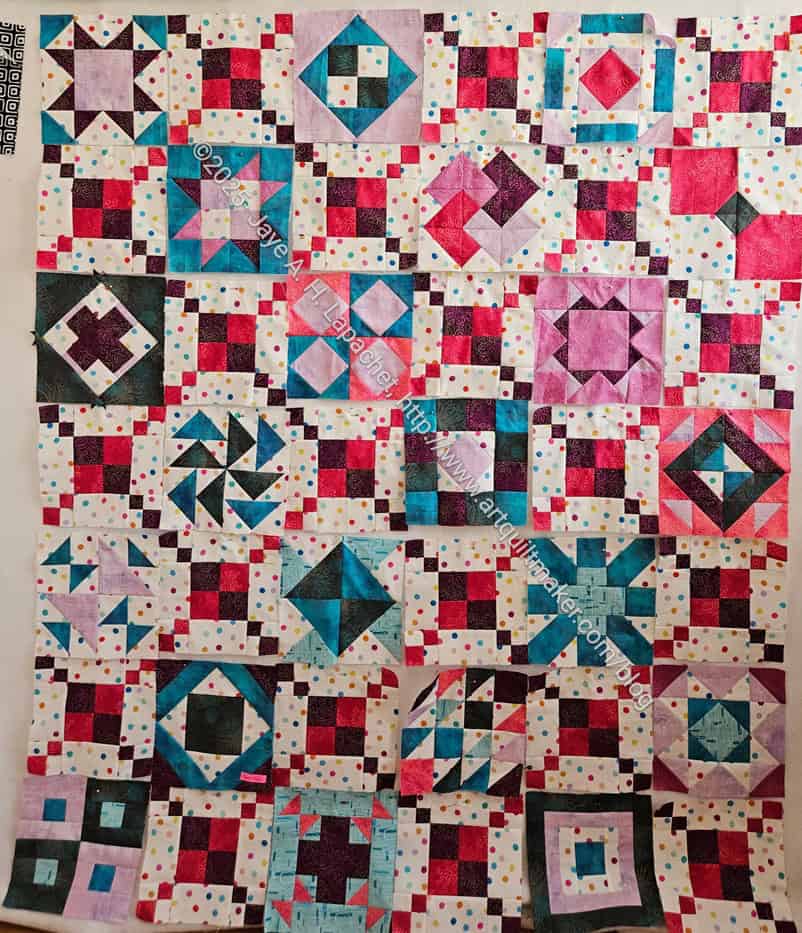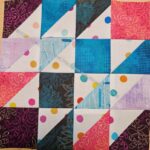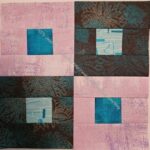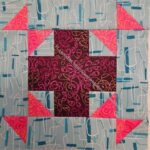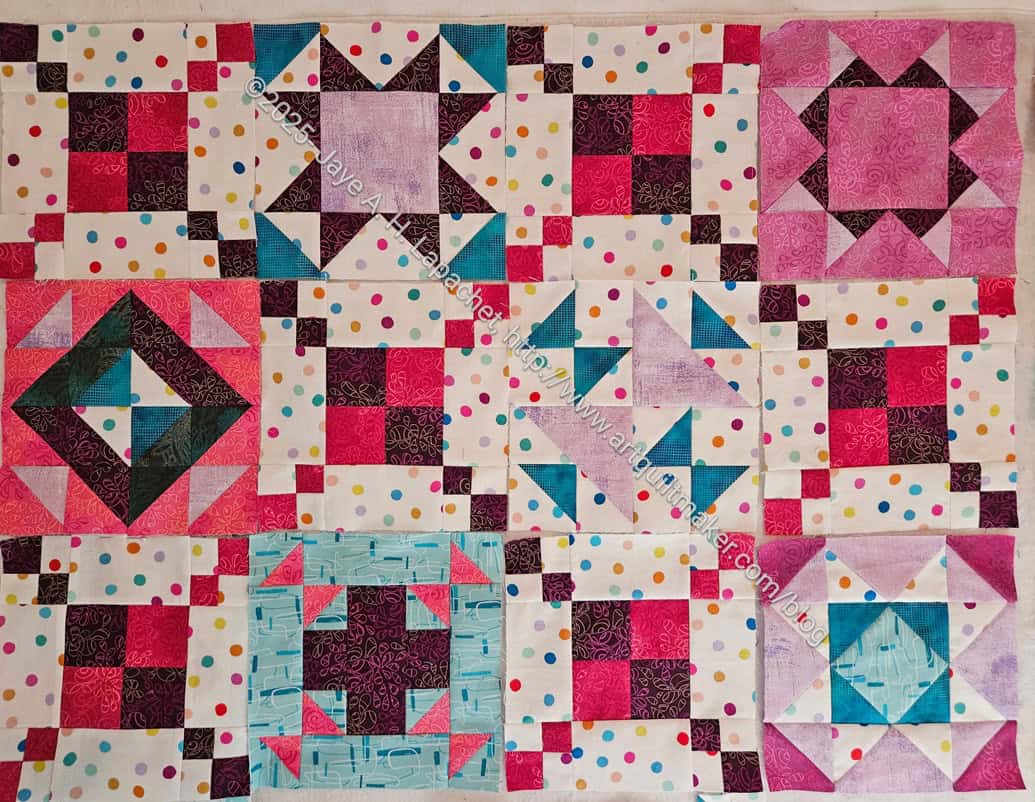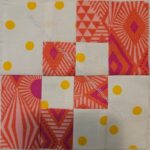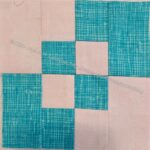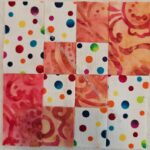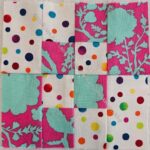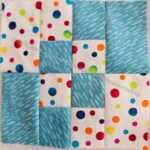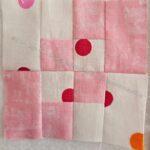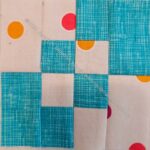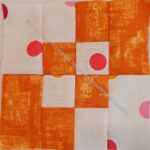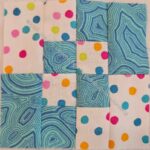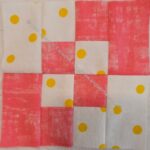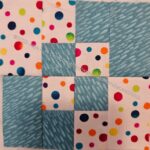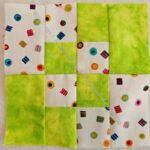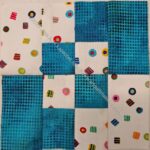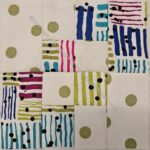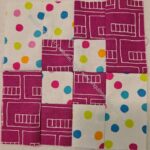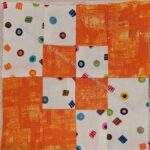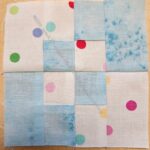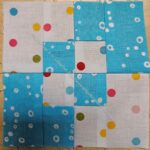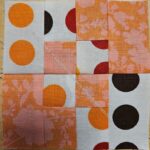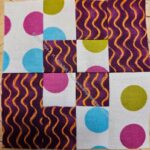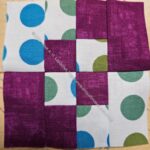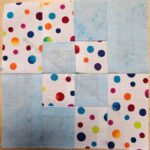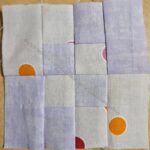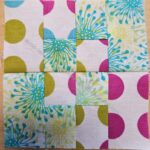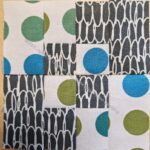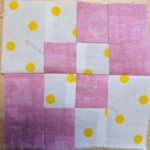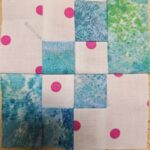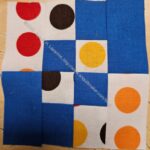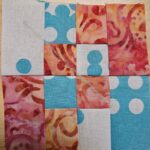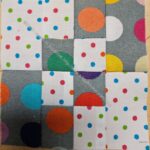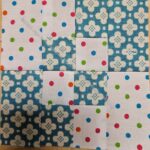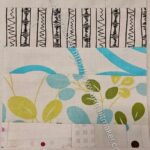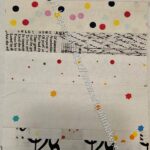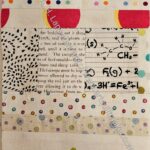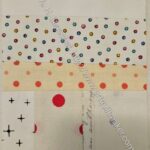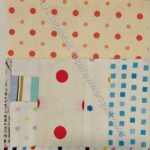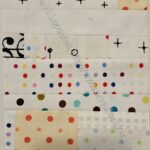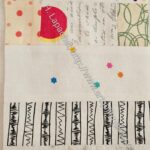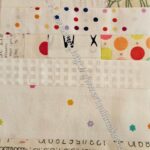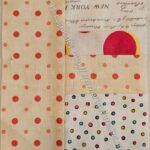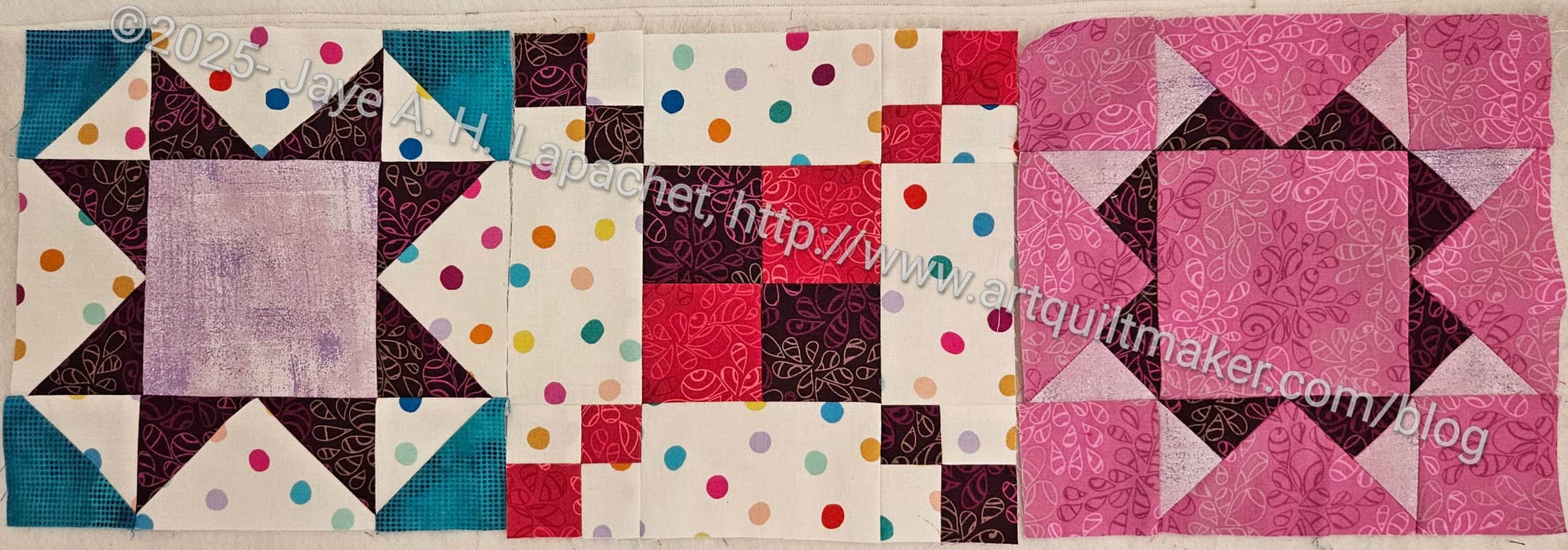
My donation block making has stalled a bit. I am working feverishly on other projects, some in preparation for the holidays and some just because. Still, I have a few to show.
Tag: Blocks
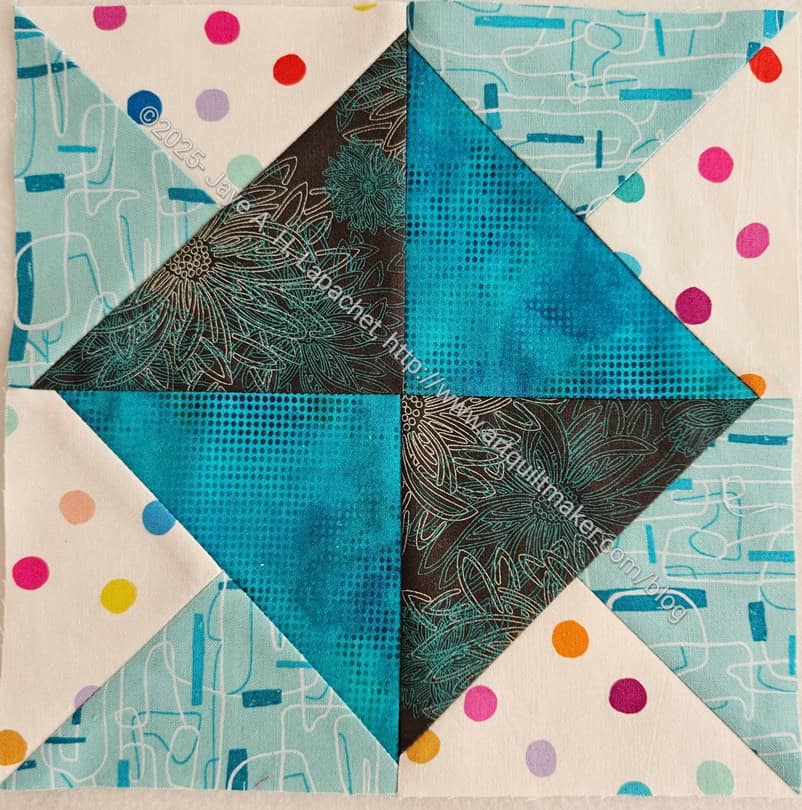
Patchwork Palooza Block 18

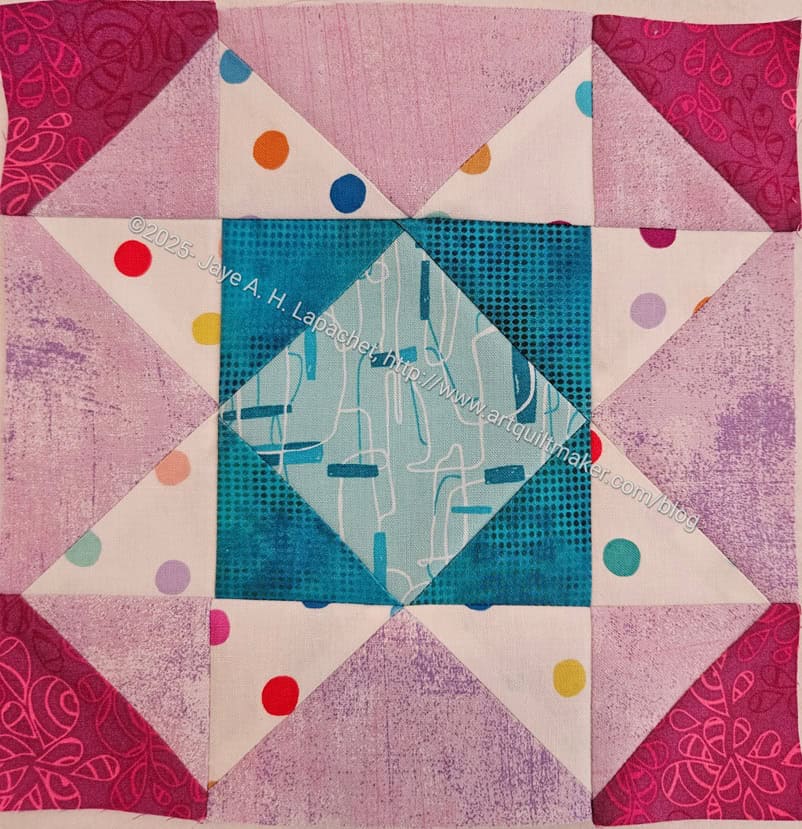
Guiding Star came out on November 7, while I was away. It reminded me of Come Together, which I posted about earlier. This is the third, I think, Sawtooth Star type block.
Fortunately, I brought my fabrics and was able to get started. I know there are only a few more weeks left of this project, then I can put all of the blocks together. I am looking forward to that.
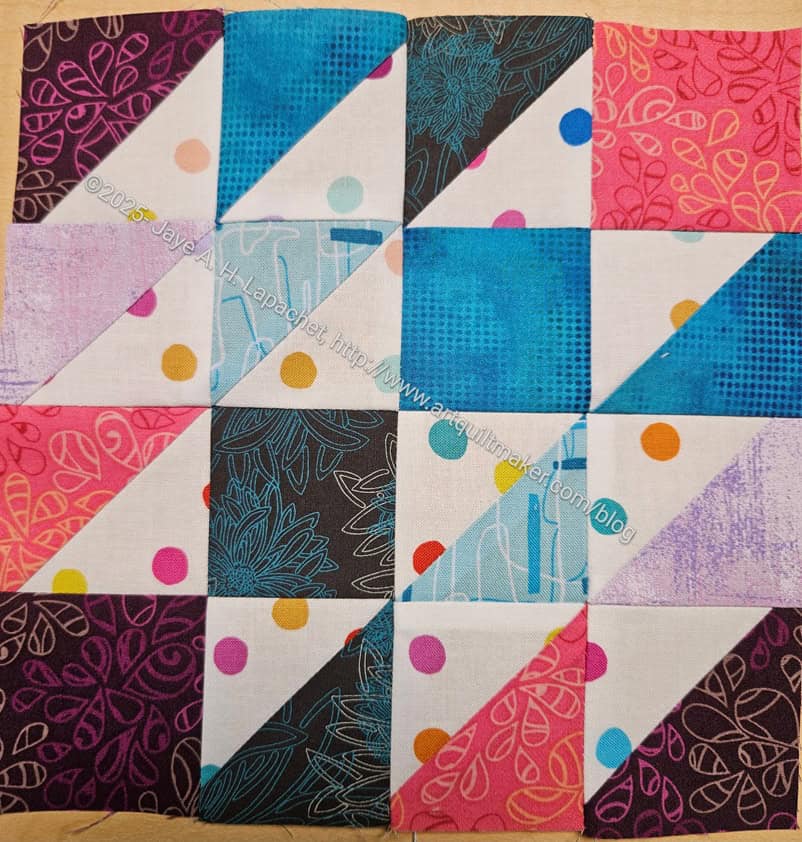
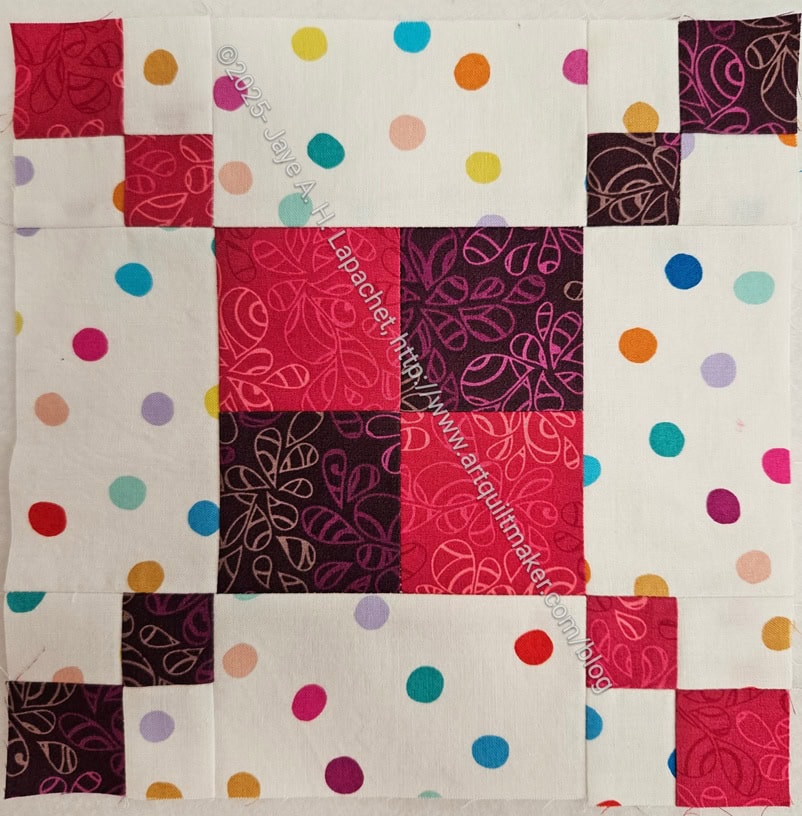
Palooza Block 17: Starlight Path

I really liked the way this block went together. It came out really well in terms of the piecing.
I found the color suggestions to be confusing and more so since I was working without a design wall. I am pretty happy with the way the block came out, however.
I am finding my fabric choices to be an unusual combination. They are good work with because the fabric is high quality. However, I am not sure I would have picked them had I really thought about it.
I was reading Around the Block** and found a block that was similar to this one, Crockett Cabin (pg.47). It has a few fewer HSTs than Starlight Path. In Barbara Brackman’s Encyclopedia of Quilt Patterns**, there is a section (pg.137) with blocks of the same structure, though with different layouts and numbers of HSTs.
**N. B. : Obviously, you should shop at local quilt shops and small businesses. However, if you are too busy or can’t find what you need there, I use Amazon affiliate links and may be paid for your purchase of an item when you click on an item’s link in my post. There is no additional cost to you for clicking or purchasing items I recommend. I appreciate your clicks and purchases as it helps support this website.
Patchwork Palooza Block 16

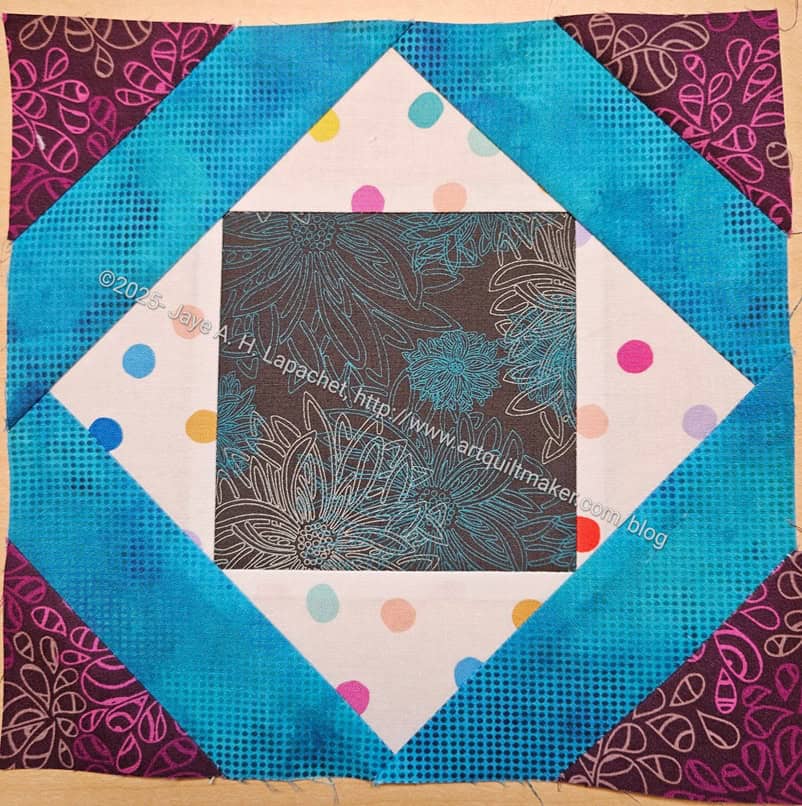
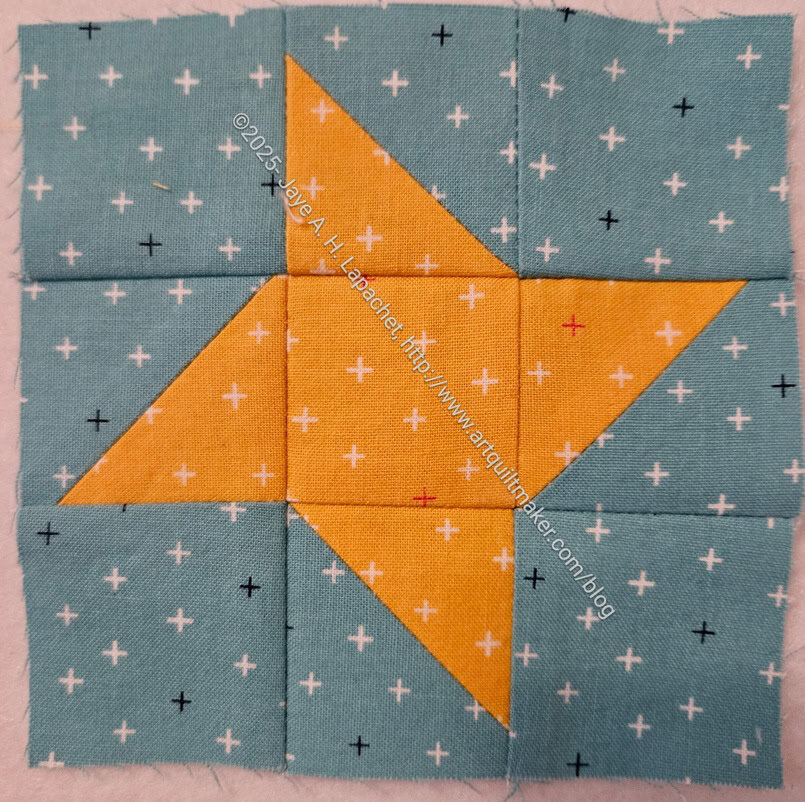
One of the blocks that arrived in my inbox while I was in Portland was Safe Harbor, Block 16. It is a kind of Square in a Square block.
I was very interested in the way the corners were added. Instead of a template for the blue pieces, the designer used a flippy corners method. Very clever!
Patchwork Palooza Block 15

I am behind on posting these.
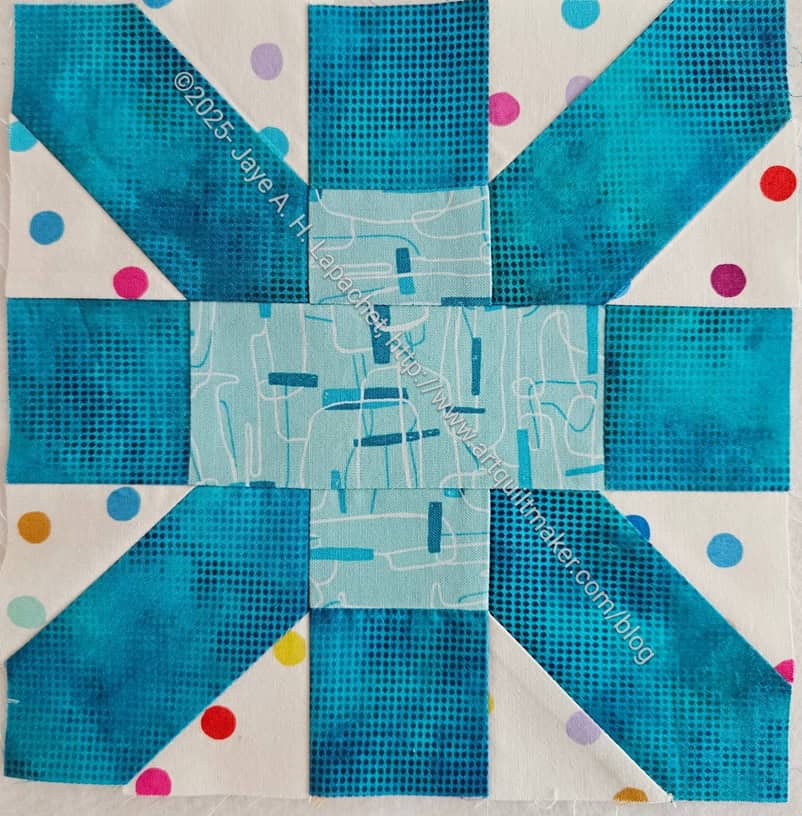
After a hitch with my email subscription to the Patchwork Palooza blocks, I was able to quickly make Block 15 of the project after receiving the pattern from Friend Julie.
This looks like a Lozenge Plus block to me, though the PLUS in the center looks a little fatter.
In Barbara Brackman’s Encyclopedia of Quilt Patterns**, this block, #1970, is called the Spool Block and is attributed to Nancy Cabot, c.1938.
In Jinny Beyer’s The Quilter’s Album of Patchwork Patterns, this block is #186-2. It is also called the Spool Block from Nancy Cabot (glad they agree!). Beyer references The Chicago Tribune, April 1, 1938. I should go look that up sometime.
**N. B. : Obviously, you should shop at local quilt shops and small businesses. However, if you are too busy or can’t find what you need there, I use Amazon affiliate links and may be paid for your purchase of an item when you click on an item’s link in my post. There is no additional cost to you for clicking or purchasing items I recommend. I appreciate your clicks and purchases as it helps support this website.
The Quilt Block Cookbook
The Quilt Block Cookbook: 50 Block Recipes, 7 Sample Quilts, Endless Possibilities by Amy Gibson
I received this book as a gift from a guild member as part of a swap quite a while ago. I wasn’t that excited about it and almost gave it away. I never did and I am really glad! This book is surprisingly awesome!The blocks are different from those in regular block dictionaries. The concept, which I like, is about putting different units together to create interesting blocks. The concept is very similar to Doreen Speckman‘s book, Pattern Play.
The introduction (pg.9) starts with an essay on why the author loves blocks. I agree with all of Gibson’s comments, especially “…quilt blocks are incredibly versatile.” (pg.9). Sewing one block IS a little triumph and well-done blocks ARE mini masterpieces.
Blocks are a great way to build community. The author writes “Quilting isn’t just about sewing. It’s also about community…” (pg.10), which is included in the ‘Share the Love’ subsection (pg.10). Guilds can use this book for group projects around blocks, or a Block of the Month project. Working together with different units can show how simple changes make huge differences.
The ‘Share the Love’ subsection is followed by a “How to Use this Book” section in which the author explains fitting the units together into larger blocks, explaining “12 inch blocks are a very common size, and for good reason. They’re divisible by 2, 3, 4 and 6, which makes them incredibly versatile and simple to both design and work with.” (pg.11). This section shows how to make high impact changes with a small switch in units. The section also talks about templates.
This book is named “…Cookbook”, so the cooking theme is carried out throughout the book. In the ‘Season to Taste’ subsection, the author shares “from fabric choices, to unity styles and methods, by all means, please make these your own. And this where the unit substitutions come in. Maybe you don’t enjoy curves and you don’t want them in your block. No problem – use a different unit…” (pg.12).
The “Working the Grid” section is GREAT. It is a “quick overview of how grid style blocks work” with examples of different grids. It is a good lesson that gives quiltmakers real skills and reminds me of Jinny Beyer.
“Combining Units” (pg.14) talks about combining the different units included in the book. This builds on the previous section and gives the reader practice on breaking down blocks.
Gibson talks about most blocks needing to be squared up after making them (pg.15). I don’t agree and am concerned when she doesn’t talk about squaring up so the block or unit looks correct, e.g. points aren’t cut off. Sometimes squaring up is needed, e.g. in the Patchwork Palooza project, but you have to do it properly.
“Stocking Your Kitchen” (pg.17) is all about the tools and supplies you will need to make blocks. The “Ingredients” (pg.18-19) are described as the basic units that the book uses to make blocks. The idea is to use these to build up blocks. These are mostly normal blocks, like 9 Patch and Flying Geese. Some of them are colored differently or turned a different way to fill out the section with ‘new’ blocks or units. In general, I love these pages and know I could happily make blocks forever with only these units.
The blocks start on page 22. All of the blocks are made by combining the units discussed above. Most of the results are not standard/classic blocks, though some are. I like the way the units with the 3 triangles are colored in Mango Tango (pg.52). It’s a good way to make a zigzag. Corner units in Moon Bug (pg.58) are awesome! They have the same structure as Four Patch Fun blocks. Windsong (pg.92) uses Flying Geese in a creative way to make a Friendship Star center.
There is a section called “Staples” (pg.101-), which has blocks that are described as being “…bold, quick and they show off fabrics well..” (pg.103). This is where you will find blocks that you might have seen in conventional block dictionaries. Piccadilly (pg.104) is awesome. I definitely want to try it.
Amy Gibson did a great job on designs for quilts (pg. 124-). These are not all standard, but lay blocks out in interesting and fresh ways to make interesting quilts. Off the Grid (pg.126-128), which is based on a standard straight layout, has an awesome border, which not only makes the quilt larger, but adds a lot of interest. Full Scale (pg.129-131) is a great layout when you want to use a few blocks to make a quilt with a lot of punch. Celestial (pg.134-135) uses a similar layout to my Carpenter’s Wheel quilt. I think I like all the designs. The good thing is that you can use these layouts with any size blocks.
The last part of the book has the obligatory “Construction Techniques” (pg.149) section. The section explains making units quickly and easily. The directions can be used any time you want to make these units even if you are using different sized patches.
“A Look at Seam Pressing Strategies” (pg.160) is a model of diplomacy and good information. I like it that Amy mentions reducing bulk.
One of the final sections, “Perfect Pairings” (pg.162-164) shows readers what blocks look like together. This is followed by “Unit sizing Chart” (pg.165-167), which gives cutting information for various sizes of units. Templates are included at the end with appropriate photocopying instructions in case you enjoy foundation piecing.
Overall, I am really glad I didn’t give this book away. It is a surprising gem that I can’t wait to use more.
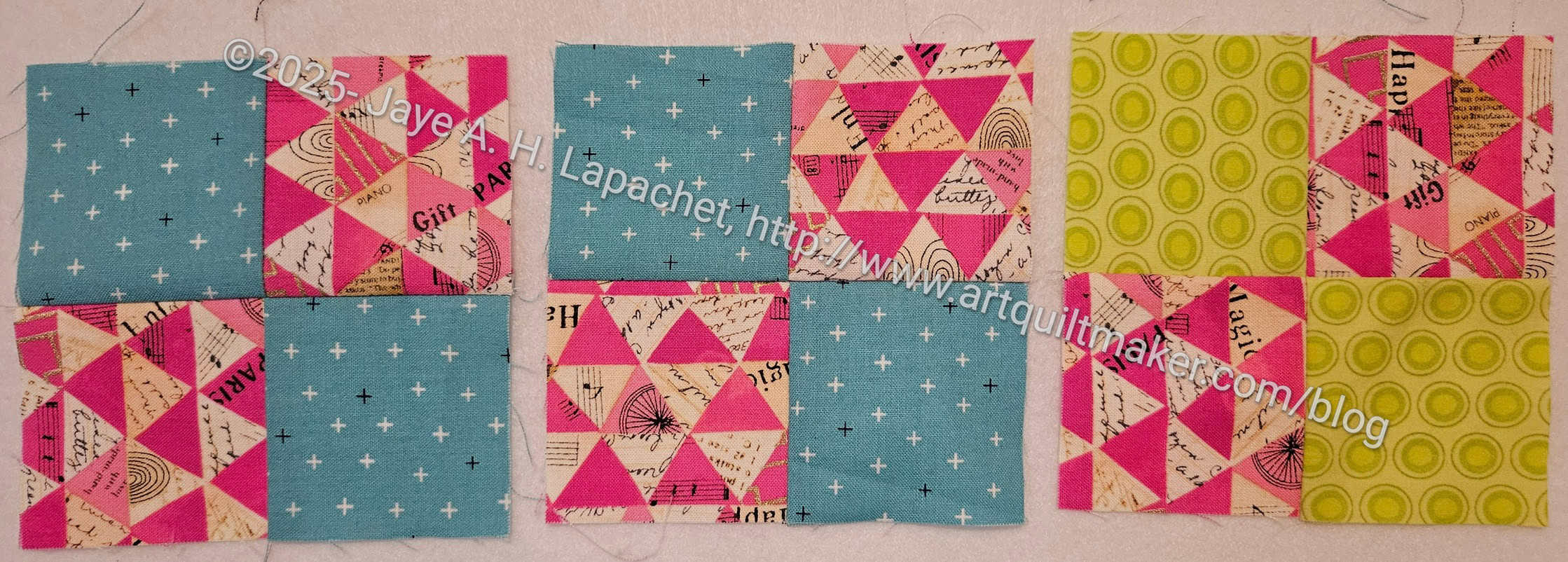
A Whole Lotta 4 Patch Fun
I really like making these blocks. They come together quickly and I am using up pieces I, otherwise, probably wouldn’t use or would allow to lay around for a long time.
Surprisingly, I LOVE making these blocks. They go together quickly, they are made using scraps and stacking up quickly.
October Donation Blocks
I started off the month continuing to make white strip blocks. The bin really was not organized well and I found a whole new selection of strips I could use to make blocks partway through. I was up to a total (not just the ones made in October) of 40 white strip blocks early in the month, but continued to make them. I like my scrap bins to be as empty as possible. The white bin is proving to be a challenge to empty.
Patchwork Palooza Block 14

Patchwork Palooza Block 14 is called Spin Cycle in this project.
I found the block in Jinny Beyer’s The Quilter’s Album of Patchwork Patterns, where this block is called Southern Belle (58-1). It is by Clara Stone from Practical Needlework, ca 1906.
The name could be all about the way the block is colored. I saw it also called Double Pinwheel, but the units may have been turned to enhance the Pinwheel look.
Patchwork Palooza Alternate Blocks

How many times can I say palooza? A lot apparently.
Now that I have finished the last backlog block for this project, and while I waited for the next block to drop, I needed to get busy on the alternate blocks. There are 21 of them and they will all be the same. Don’t worry, I am not going to bore you (even more?) by posting each one I finish.
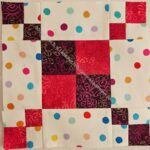
There is a lot of chain piecing and sewing, then cutting of strips to make the units that make up these blocks, so it took me quite awhile to finish the first block. I did eventually and it isn’t anything special, IMO. It is an Irish Chain type block.
I didn’t find the exact block in my sources, but may yet do so. In Barbara Brackman’s Encyclopedia of Quilt Patterns**, a very similar block to this one is called Single Irish Chain by Nancy Cabot, 1933. It is similar to Pennsylvania (pg.231-2023).

I put a couple of blocks on the design wall to see what I had. So far, so good.
**N. B. : Obviously, you should shop at local quilt shops and small businesses. However, if you are too busy or can’t find what you need there, I use Amazon affiliate links and may be paid for your purchase of an item when you click on an item’s link in my post. There is no additional cost to you for clicking or purchasing items I recommend. I appreciate your clicks and purchases as it helps support this website.
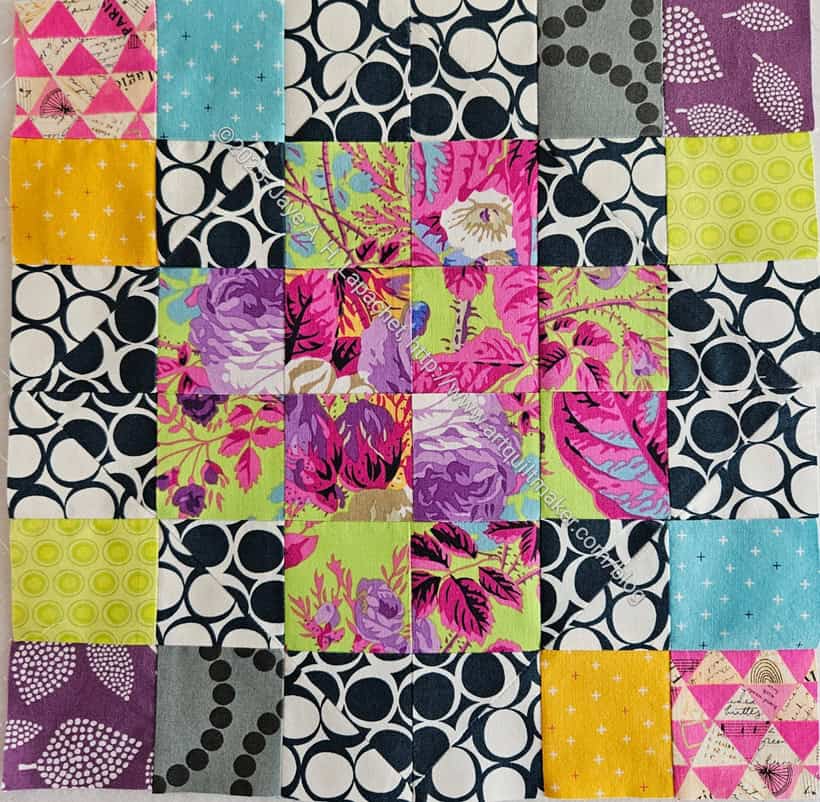
Patchwork Palooza Block 6

This is the last backlog block. The PP project calls it Keep the Fire, but it is a Bow Tie block. I am not sure why the Patchwork Palooza people are renaming the blocks. I suppose it makes the block fresher.
I found it in Jinny Beyer’s The Quilter’s Album of Patchwork Patterns, where the block is called Necktie (73-1). It is by Ruth Finley, ca 1929.
I have to make this block for another project and I found the instructions to make this one SO easy. I have always dreaded the flippy corners method. No problem on this block. It came out great, especially after the grief with Block 8.
BAM BOM 2025 – First Blocks

We introduced the BAM BOM last weekend at the guild meeting.
The first block is the HST and these are mine. For this block, I am using some fabric from a member who passed away.
The rule is at least 6 seams, so I knew I had to make more than one HST. I used the 8-at-a-time directions I give to my students and made 8.
I have an idea in my mind to use HSTs in more places around my quilt. For now, I will stick with these, but I might make more later.
Patchwork Palooza Block 5
I am almost finished with the backlog of blocks.

I finally finished block 5, Card Trick, or, as the Patchwork Palooza people call it, Go Your Own Way. I don’t like this block. I always have trouble making it, which seems very odd to me. It shouldn’t be a difficult block, but for me, it is. Apparently, it didn’t like me either as there was a lot of ripping involved in finishing it.
In Barbara Brackman’s Encyclopedia of Quilt Patterns**, this block, #1674, is called Crow’s Nest or Card Trick. Both names are from Beth and Jeff Gutcheon. In the Encyclopedia it is colored very strangely, so you can see the card effect. It looks more like an Ohio Star, but with half QSTs instead of regular QSTs.
In Jinny Beyer’s The Quilter’s Album of Patchwork Patterns, this block is #143 and also called Card Trick, but doesn’t have the QST in the center. It is listed as from The Perfect Patchwork Primer by Beth and Jeff Gutcheon.
**N. B. : Obviously, you should shop at local quilt shops and small businesses. However, if you are too busy or can’t find what you need there, I use Amazon affiliate links and may be paid for your purchase of an item when you click on an item’s link in my post. There is no additional cost to you for clicking or purchasing items I recommend. I appreciate your clicks and purchases as it helps support this website.
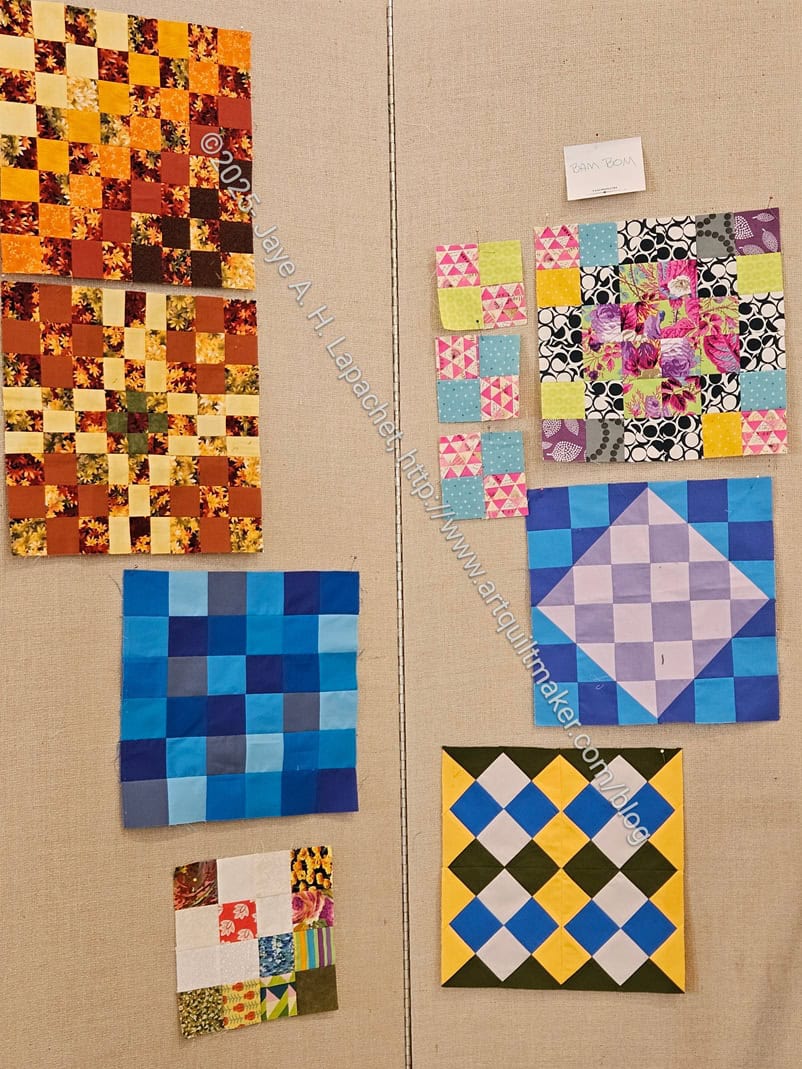
Patchwork Palooza Block 12
BAM BOM Start
SueG and I have been working for a few months on organizing a block-of-the-month (BOM) program for the guild. It starts in a few days. If you want to join, buy a membership in the guild. We will make the BOM program available in the group’s forum as well as at the meetings.
We wanted this to be a different kind of BOM. The participants won’t be getting one block that they have to make in a certain size each month. We are going with a “Choose Your Own Adventure” style. People will get a pattern, but there will be choices of sizes. They can use any technique to make it and change the size if they want.
I have started to choose my fabrics. These aren’t all of them. I think I need some kind of citrus or sunshine type warm color and a turquoise as well. Stay tuned for the additions as I evolve the fabrics in my own mind.