Book Review: Around the Block

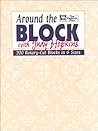
Around the Block with Judy Hopkins: 200 Rotary-Cut Blocks in 6 SizesAround the Block with Judy Hopkins: 200 Rotary-Cut Blocks in 6 Sizes by Judy Hopkins

Around the Block is a 1994 book and one of my favorites. It allows my imagination to fly.

This book is a block dictionary not a project book. The directions for making blocks come in 6 different sizes. There are also worksheets for various settings (pg.133-134), but no specific projects as more contemporary books include. Readers will have to think when using this book. It provides blocks as inspiration. The evolution of this format is The New Quick & Easy Block Tool, which I reviewed a year ago.

The text starts with a very short introduction (pg.3) that is firmly based in the pre-MQG time frame. Judy Hopkins writes “my fondness for traditional patterns goes hand in hand with an unwavering commitment to quick, contemporary cutting techniques.” (pg.3) This is the first book I remember supporting rotary cutting techniques. My first quilt class used templates and scissors so this book gave me hope that I could complete projects faster than once every five years.

The introduction explains what a revelation this book was when the author writes “while there are numerous comprehensive block books on the market, many of them are reference books, geared towards pattern identification – tantalizing collections of possibilities that are out of reach of the quilter who is unwilling, or unable, to do the calculations necessary to translate small line drawings into usable quick-cut blocks.” (pg.3) I have a few of those such as Maggie Malone’s 1001 Patchwork Designs**. Hopkins describes this book as “…different. Designed for the quilter who loves both old patterns and modern rotary cutting techniques, it provides clear, complete rotary-cutting instructions in the multiple sizes…” (pg.3). She was very forward thinking when she wrote this as we now see many quilt patterns using classic block patterns all of which have rotary cutting instructions even when they are oversized or slightly different than the classic block. The introduction is very clear about what the book is and is not.

The next section is called ‘Using the Block Patterns’ (pg.4-6). The section explains how the book is laid out and how to use the charts. One useful piece of information included is that the underlying block structure/grid is identified (pg.4). If readers never use the cutting instructions, this piece of information is useful for understanding other patterns and how to combine blocks to make a successful quilt. The block sizes range from 4″ or 6″ to 12″ or 14″.

The explanation in this section uses one block chart as an example. The author methodically works through each section of the chart (pg.4-5) to explain how to use it to make a block in the size you want. The illustration and information of each chart makes the blocks really easy to cut and sew for visual learners.

Variations are included in each chart. It makes me think this was one of the foundation books, or pre-cursor books to the MQG movement.

‘Rotary Cutting Individual Pieces’ (pg.6) provides a brief description of rotary cutting.

‘Planning Your Quilt’ (pg.7-8) starts with “you almost certainly will want to use these patterns to make quilts, not just blocks” (pg.7), which may or may not be true. I have done block exchanges where the blocks were just an exercise in color and never amounted to a quilt or other project. Block exchanges can be a great way to do a fun activity with a friend. The author gives recommendations on how to design a quilt with blocks.

This section talks about settings, calculating yardage, quilt plans and provides a list of standard quilt sizes. Judy talks about using the charts to make multiple identical blocks. Of course, we now have tools such as Electric Quilt and Adobe Illustrator which allow quiltmakers to design quilts, calculate yardage and change colors or fabrics easily. The section also refers to several books that may be helpful in various steps of the quiltmaking process. I like this, because it means that the author acknowledges that the book is not a complete guide to quiltmaking.

The ‘Gallery of Blocks’ (pg.9-28) displays all of the blocks, for which directions are provided, in color. The colors used are all solids and not to my taste, mostly. It is, however, nice to have them in color to give the reader a different view of how the blocks might look. The name and page number for the cutting chart is included with each illustration.

‘Block Patterns’ (pg.29-128) follow. Each page has two patterns/ charts of block instructions and includes about six sizes. The sizes vary based on the block’s grid structure, there are always a combination of small, medium and large blocks. Looking at the blocks in this section always makes me see something different. I love this section as it really gives me the information I need to make a block without a lot of extraneous words. The visual element of the charts is super helpful.

The last part of the book is ‘Assembling Your Quilt’ (pg.129-134). The section includes information on squaring up blocks, straight and on-point sets, sashing, borders, mitering corners and finishing. The ‘Finishing Your Quilt’ section (pg.132) refers readers to other books, as mentioned above, with more comprehensive information on the topic. I approve!

There is also a ‘Block Index’ (pg.135) and a bibliography (pg.136).

This is a great book for anyone who likes to make quilt blocks. Although it is an older book, it is super useful. I highly recommend it to anyone who wants to make blocks or practice cutting and piecing.

Nota bene: This book is out of print, but has been been reprinted with v.2 and v.3 in a book called 501 Rotary-Cut Quilt Blocks. You can also get a used copy. Look for it in used book stores. It is a very worthwhile purchase. I would have a hard time living without this book.

View all my reviews


**N. B. : Obviously, you should shop at local quilt shops and small businesses. However, if you are too busy or can’t find what you need there, I use Amazon affiliate links and may be paid for your purchase of an item when you click on an item’s link in my post. There is no additional cost to you for clicking or purchasing items I recommend. I appreciate your clicks and purchases as it helps support this website.

Book Review: Scrap Patchwork

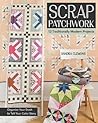
Scrap Patchwork: Traditionally Modern Quilts - Organize Your Stash to Tell Your Color StoryScrap Patchwork: Traditionally Modern Quilts – Organize Your Stash to Tell Your Color Story by Sandra Clemons

I bought this book at The Cotton Patch in Lafayette on a whim. I look at it periodically and have even marked some quilts I want to make, though I still have not taken the time to make any of them.

The table of contents is pretty normal. It includes a list of projects grouped together and also has a section called ‘Special Techniques.’ These are fairly basic, such as cutting strips (pg.103) and Flying Geese (pg.105), but I find it is always good to see if I can learn something new from an author.

The introduction starts out talking about fabric and how much we love it. The book is described as “the 13 fabulous quilts in this book are designed to make use of scraps” (pg.4).

The introduction also discusses the various sections of the book including organization of your scraps, color, instructions and the ‘traditionally modern’ idea of the book. I have never liked the word ‘traditional’ in relation to quiltmaking as I have never really used those small calicoes typically associated with ‘traditional quilting’. I do love blocks, too. 

‘Color Basics’ follows the introduction (pg.5). Clemons acknowledges that choosing fabrics can …”sometimes be overwhelming and intimidating, especially when working with scraps” (pg.5).

This book includes a more complex color wheel. There are 4 tones in each section. For example, orange goes from pumpkin to coral to baby poop brown to a light chocolate brown. I like the Johannes Itten Color Wheel better but I also like that this one is more complex so it reminds readers s/he can use magenta or scarlet with emerald or sea foam green, that the classic combinations can be changed up. Sandra points out that “there are also colors that you don’t see on the basic color wheel – tints, tones and shades” (pg.5), which expands the way readers can look at color combinations.

Ms Clemons also has some information about the meanings of colors. She notes that these are common associations. Different cultures and traditions may expand this section for readers.

The color section continues with value and contrast. She provides a definition, which I urge you to stop and think about before reading on in the book. Really try to take the meaning on board (pg.6).

The author says “contrast and value are relative. A fabric may look dark when it is next to a light fabric and look light when it is next to a dark fabric” (pg.6). This is really true. This is why I don’t use the ‘paper bag’ method for creating scrap quilts. I select my scraps carefully so that even a scrap quilt looks cohesive.

I am not sure I agree with her definition of contrast. The definition I always use in my classes is the difference in light and dark.

The section on colors is useful. I like the short paragraph on color relationships (pg.7). The section on types of colors is also a good reminder.

The book has ‘tips’ on many pages. One suggests the Ultimate 3-in-1 Color Tool** (pg.6) and another talks about yellow (pg.7). They are scattered throughout the first part of the book and add to the usefulness of the book.

Ms. Clemons continues the color instruction by talking about different types of color stories, such as calming (pg.8) and harmonious (pg.9) color schemes. Within these sections she also mentions triadic, quadratic and tetradic color options.

Sandra discusses keeping color inspiration binder (pg.12), which is a great way to keep track of color combinations you like. A folder on your phone or tablet’s gallery, or a Pinterest Board can also work.

The second major section is called ‘Organizing Scraps and Stash Fabrics’ (pg.13). The author explains the system she describes in this book as “…it’s simple to maintain” (pg.13). Whatever system you use to organize your fabric must be easy to maintain. If it isn’t easy to maintain, you won’t keep it up. I know this because I struggle with maintenance.

Ms. Clemons shows you how to fold a fat quarter (pg.13). Mine usually have bites cut out, so this doesn’t exactly work for me, but this tutorial is helpful. The tutorial is followed by tutorials on how to fold half yards, 2 yards and more than 2 yards (pg.14-15).

Following the folding tutorials are tips on storing fabrics as well as determining an overall color of a fabric so it is easy to store (pg.16). There is a short discussion of fabric storage (pg.17) followed by a pattern for fabric storage boxes (pg.18-19). You really have to take all of the ideas on board and find what works for you. We all have different sized workrooms and storage areas available to us, so don’t give up just because you don’t have the exact space the author enjoys. Sandra has definitions of different types of color arrangements, such as large scale and multi-colored to help categorize your fabric.

Scrap fabric storage has its own section. She has some good tips (pg.19), but I want to remind you to really think about how you use your scraps and organize them in a way that would facilitate their usage. I have described my system in a previous post. I want to note that it is constantly evolving. Bonnie Hunter has a system called The Scrap User System.

The ‘Stash Building’ section (pg.21-22) is a good idea and good to keep in mind, but I never do it. I buy what I like and can’t seem to stop or change strategy.

Be sure to check the ‘Sewing Notes’ (pg.23) as the information applies to the projects which being on pg.14.

The project pages start with a flat picture of the quilt, design thoughts, fabric requirements and cutting instructions. There is also a section on block construction, which is followed by assembling and finishing the quilt. Some of the projects include an alternative color scheme. There is also a lifestyle shot of a finished version of the quilt. Very little about the inspiration for the quilt is included which is normal, but also makes me sad.

The design thoughts goes over color scheme, accent colors, design and a section on hitting your stash and scraps. I like this idea because I get some idea of what the author was thinking. It also gives the reader the tools to create their own color story.

My favorite quilts in this book are Playful (pg.40-44), Fiddlestars (pg.45-49) and Magic (pg.86-90). It should be possible for me to make one of these soon!

The ‘Special Techniques’ section, as mentioned, discusses various techniques used in the various projects. Learn to cut strips properly (pg.103), make HSTs (pg.103), QSTs (pg.104, use templates (pg.104), locking seams (pg.105) and many others. You may have a favorite method for all of these pieces, however it is always good to review the author’s ideas in order to perfect your technique or try something new.

One example is the Square-in-a-Square section (pg.106). The author talks about folding the pieces in order to match them up. This is genius!

As per usual, there is a short section on finishing your quilt (pg.109-110). One thing I noticed is a reference to quiltmaking basics on the C&T site.

This book looks like a standard project book book, but I think it brings much more to the party. Definitely worth a look.

View all my reviews

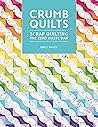
Book Review: Crumb Quilts

Crumb Quilts: Scrap Quilting the Zero Waste WayCrumb Quilts: Scrap Quilting the Zero Waste Way by Emily Bailey

I saw this book referenced, or reviewed, in a quilt magazine. I thought about buying a used copy, which I have been doing a lot lately. Getting a book for $5 is pretty great. Ultimately, I decided to get it out of the library and I am glad I did. It was my first opportunity to use Link+ in awhile. What a great service!

This is essentially a project book. It starts out with a short introduction saying “Quilters are thrifty, resourceful and creative. ” (pg.4) I think ‘thrifty’ is aspirational, but quiltmakers are definitely resourceful and creative. I do agree that using scraps “…produces gorgeous original quilts full of interest and memories.” (pg.4). As an example, I really enjoy looking at my Scrapitude quilt as I move in and out of my bedroom. Different fabrics I used in that quilt remind me of other projects and make me smile.

The introduction is followed by the normal ‘Tools and Materials ” section(pg.6-9). Page 8 and 9 include extras that aren’t always in quilt books. I do think that the information about scrap fabrics (pg.9) is a guideline. 

The author alludes to curating fabrics but doesn’t come out and say it, so I will. Choosing your scraps carefully will make your quilts look more successful. Also, DO NOT include ugly (based on your opinion or sensibilities) fabrics.

Don’t let Bailey’s size guidance limit your use of favorite fabrics. You can use any size that works for you. You may want to insert a super skinny strip. Go for it. If you have made quilts, you know this stuff. When I make my improv quilts I use whatever size piece of fabric works for me. Occasionally, I use very skinny strips so only an eighth or sixteenth of an inch of fabric shows. 

The Crumb Quilting Method (pg. 10-15) provides good instructions if you have never made ‘made’, or crumb, fabric before. I particularly liked her technique for appliqué (pg.13-14) because it makes a lot of sense. She also has instructions for reverse appliqué (pg.15), which I haven’t seen in this context before.

The ubiquitous ‘how to quilt’ section is at the end (pg.116-121) and is called ‘General Techniques’. Emily points out that using a specialty ruler (pg.116) to cut certain shapes can be really helpful. I agree. There is a lot going on with ‘made’ fabrics, and not having to focus on figuring out where to cut can be helpful. Quilting and making a label are also covered in this section.

The rest of the book is all projects. Emily’s quilts are cheerful and happy, in general. The shapes she uses are simple but interesting as well. I like the curved strip piecing of Zoodles (pg.26-29). The curve is fun, and it reminds me of learning curved strip piecing back in the dark ages. Friend Julie pointed out that the grey in Zoodles was a little too dark. It didn’t provide enough contrast to show off the ‘made’ fabric really well. If that is the look you like, then GREAT! However, ‘made’ fabric takes a lot of time and energy, so I like to make sure that my individual blocks or pieces stand out or are shown off to their best advantage.

I think the Flying Geese Runner (pg. 38-41) is my favorite project in the book. I like the simplicity of the overall design. I also like the squares combined with the Flying Geese.I would, again, pay careful attention to the contrast with the background. There is a fine line between creating movement using different colors and losing parts of the design because fabrics used in the Geese are too close to the background color.

Some of the appliqué projects look a little forced. In general, I think it is the fabric choices and not the quilt design. However, there is one project that seems to have too much going on. ‘Made’ fabric has a lot going on to start with, so simpler overall quilt designs work better. Choose your fabrics carefully to achieve the look you want. The author may not mind parts of the design disappearing. I prefer to be able to see the whole motif.

Loose Change (pg.50-55) is an appealing pattern. The circles could be pieced into the quilt using the Clammy** or techniques by Ruth McDowell instead of appliqué, which could be more precise.

Remembering Ida (98-113) is a cool sampler quilt using ‘made’ fabric. Again, when making this project, be sure to pay attention to contrast so your hard work stands out.

All in all, this is a cheerful book with some good ideas.

View all my reviews


**N. B. : Obviously, you should shop at local quilt shops and small businesses. However, if you are too busy or can’t find what you need there, I use Amazon affiliate links and may be paid for your purchase of an item when you click on an item’s link in my post. There is no additional cost to you for clicking or purchasing items I recommend. I appreciate your clicks and purchases as it helps support this website.

The Quilt Block Cookbook

The Quilt Block Cookbook: 50 Block Recipes, 7 Sample Quilts, Endless PossibilitiesThe Quilt Block Cookbook: 50 Block Recipes, 7 Sample Quilts, Endless Possibilities by Amy Gibson

I received this book as a gift from a guild member as part of a swap quite a while ago. I wasn’t that excited about it and almost gave it away. I never did and I am really glad! This book is surprisingly awesome!The blocks are different from those in regular block dictionaries. The concept, which I like, is about putting different units together to create interesting blocks. The concept is very similar to Doreen Speckman‘s book, Pattern Play.

The introduction (pg.9) starts with an essay on why the author loves blocks. I agree with all of Gibson’s comments, especially “…quilt blocks are incredibly versatile.” (pg.9). Sewing one block IS a little triumph and well-done blocks ARE mini masterpieces.

Blocks are a great way to build community. The author writes “Quilting isn’t just about sewing. It’s also about community…” (pg.10), which is included in the ‘Share the Love’ subsection (pg.10). Guilds can use this book for group projects around blocks, or a Block of the Month project. Working together with different units can show how simple changes make huge differences.

The ‘Share the Love’ subsection is followed by a “How to Use this Book” section in which the author explains fitting the units together into larger blocks, explaining “12 inch blocks are a very common size, and for good reason. They’re divisible by 2, 3, 4 and 6, which makes them incredibly versatile and simple to both design and work with.” (pg.11). This section shows how to make high impact changes with a small switch in units. The section also talks about templates.

This book is named “…Cookbook”, so the cooking theme is carried out throughout the book. In the ‘Season to Taste’ subsection, the author shares “from fabric choices, to unity styles and methods, by all means, please make these your own. And this where the unit substitutions come in. Maybe you don’t enjoy curves and you don’t want them in your block. No problem – use a different unit…” (pg.12).

The “Working the Grid” section is GREAT. It is a “quick overview of how grid style blocks work” with examples of different grids. It is a good lesson that gives quiltmakers real skills and reminds me of Jinny Beyer.

“Combining Units” (pg.14) talks about combining the different units included in the book. This builds on the previous section and gives the reader practice on breaking down blocks.

Gibson talks about most blocks needing to be squared up after making them (pg.15). I don’t agree and am concerned when she doesn’t talk about squaring up so the block or unit looks correct, e.g. points aren’t cut off. Sometimes squaring up is needed, e.g. in the Patchwork Palooza project, but you have to do it properly.

“Stocking Your Kitchen” (pg.17) is all about the tools and supplies you will need to make blocks. The “Ingredients” (pg.18-19) are described as the basic units that the book uses to make blocks. The idea is to use these to build up blocks. These are mostly normal blocks, like 9 Patch and Flying Geese. Some of them are colored differently or turned a different way to fill out the section with ‘new’ blocks or units. In general, I love these pages and know I could happily make blocks forever with only these units.

The blocks start on page 22. All of the blocks are made by combining the units discussed above. Most of the results are not standard/classic blocks, though some are. I like the way the units with the 3 triangles are colored in Mango Tango (pg.52). It’s a good way to make a zigzag. Corner units in Moon Bug (pg.58) are awesome! They have the same structure as Four Patch Fun blocks. Windsong (pg.92) uses Flying Geese in a creative way to make a Friendship Star center.

There is a section called “Staples” (pg.101-), which has blocks that are described as being “…bold, quick and they show off fabrics well..” (pg.103). This is where you will find blocks that you might have seen in conventional block dictionaries. Piccadilly (pg.104) is awesome. I definitely want to try it.

Amy Gibson did a great job on designs for quilts (pg. 124-). These are not all standard, but lay blocks out in interesting and fresh ways to make interesting quilts. Off the Grid (pg.126-128), which is based on a standard straight layout, has an awesome border, which not only makes the quilt larger, but adds a lot of interest. Full Scale (pg.129-131) is a great layout when you want to use a few blocks to make a quilt with a lot of punch. Celestial (pg.134-135) uses a similar layout to my Carpenter’s Wheel quilt. I think I like all the designs. The good thing is that you can use these layouts with any size blocks.

The last part of the book has the obligatory “Construction Techniques” (pg.149) section. The section explains making units quickly and easily. The directions can be used any time you want to make these units even if you are using different sized patches.

“A Look at Seam Pressing Strategies” (pg.160) is a model of diplomacy and good information. I like it that Amy mentions reducing bulk.

One of the final sections, “Perfect Pairings” (pg.162-164) shows readers what blocks look like together. This is followed by “Unit sizing Chart” (pg.165-167), which gives cutting information for various sizes of units. Templates are included at the end with appropriate photocopying instructions in case you enjoy foundation piecing.

Overall, I am really glad I didn’t give this book away. It is a surprising gem that I can’t wait to use more.

View all my reviews

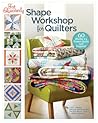
Book Review: Shape Workshop for Quilters

Fat Quarterly Shape Workshop for Quilters: 60 Blocks + a Dozen Quilts and Projects!Fat Quarterly Shape Workshop for Quilters: 60 Blocks + a Dozen Quilts and Projects! by Katy Jones

I am sure I have mentioned in passing that I am going through all of my quilt books. This book is one I rediscovered. I have a vague memory of buying it but had completely forgotten about it until this recent inventory.

The book is described as “…quilters of all skill levels will develop a deeper understanding of how shapes can be incorporated into a design while completing gorgeous projects. “- Cover flap. After reading the book and looking at the photos, I agree. I think, overall, it provides a breath of freshness when thinking about shapes.

The Introduction (pg.6) describes the Fat Quarter Shop and the Fat Quarterly, a former e-zine, which I don’t think is published any longer. The Welcome page (pg.8) follows with a description of the Shape Workshop, “…the ultimate guide to understanding and incorporating shapes into your quilt projects.” (pg.8). The book “presents six common quilting shapes used in dynamic and exciting ways. “(pg.8).

The About Us page shows the team responsible for the book. Some were associated with Generation Q magazine, so very modern quiltmakers.

The shape ‘workshops’ start on page 10 with squares and rectangles. There is a description of squares and rectangles followed by blocks (pg.11-21) comprised of squares and rectangles. Some blocks are renamed classic block patterns. For example, Owl in the Corner (pg.20) is really a Nine Patch with cool owl fabric. Each block takes up one page including the instructions for making the block.

The shape’s block section is followed by a project section with about two projects in each section. Each project features the chapter’s shape(s). The directions are about 2-4 pages each.

The shapes covered in this book, in addition to squares and rectangles, are circles, triangles, stars, polygons and diamonds. Each shape is described on one page that includes some quick tips. Each section has about 10 blocks covering one page each. As with the squares and rectangles section, there are two-four larger projects.

In the circle section (pg.30-49) I really like the Modern Wheel block (pg.34). It reminded me of the blocks in my Eye of God quilt. The Quarter Twist block (pg.36) is similar to the Flowering Snowball block. I also like the Joseph’s Coat block (pg.40). This block keeps coming up in various ways, so I might have to make at least one of these block soon.

Both Circle projects are fun. There are pizza placemats (pg.43-45), which would be great gifts for a young person flying the nest.

The Orange Soda quilt (pg.46-49) looks like a big challenge. The example uses fun fabrics. The curves are done with applique’ not piecing so not as difficult as the project first appears. It could also be done with piecing, but would need more planning. If I had been writing this section, I would have included both options.

Triangles make up chapter 3 (pg.50-67). Migration (pg.52) and Points Practice (pg.53) stand out, but the blocks are interesting in general. Points Practice is one of those blocks where a classic that has been renamed. In Barbara Brackman’s Encyclopedia of Quilt Patterns**, this block is called Mosaic #17 and is n.345 from Ladies Art Company. The Fast Forward / Rewind quilt (pg.64-67) is a fun variation of Flying Geese.

Stars are the featured shape in chapter 4 (pg.68-89). Different shapes make up the overall star designs. Scrappy Star (pg.71) immediately caught my attention as it is one of the blocks the Patchwork Palooza BOM. In the Patchwork Palooza Project, it is called Whirl & Settle. In Barbara Brackman’s Encyclopedia of Quilt Patterns**, this block is called Indian Star. It was originally published in the Kansas City Star in 1937.

Three in the Breeze (pg.75) is a good use of, or a different take on, the Friendship Star block.

Chapter five (pg.90-109) is all about polygons. In case your last geometry class was too many ears ago, a polygon is a many sided flat shape with at least three straight sides, but typically five or more (pg.90). The authors help readers out by saying ” some are made from pure polygon shapes, some are simpler shapes that together create a polygon shape. ” (pg.90).

In the block section Castle Walls is a winner (pg.95). Dresden Plate is included in this section (pg.96-97) and has great directions for making the petal points. I also like Bathroom Tile (pg.99), but I don’t like the construction. It looks like the authors tried to simplify the construction and just made it more complicated using applique’.

The Saw Blade quilt (pg.106-109) in this section is a classic and stellar. I’d love to make this quilt sometime. The authors use templates for construction, but I think there is a way to make the blades using strip piecing.

Finally, diamonds, which are the subject of Chapter six (pg.110-129). Most of the included blocks have squares on point or a group of shapes that look like a diamond rather than incorporating true diamond shapes. Still, there are a couple of blocks, like Diamond Pinwheel (pg.114) and Diamond in a Diamond (pg.119) that use a true diamond shape. I like the way the authors expand the way readers think about diamonds and all the shapes, in general.

Pinchers (pg.121) would make a really fun quilt. It would be easy using EPP. The Starry Hanging Storage (pg.122-125) is a fun and useful project. I might choose different blocks or motifs for the exterior, or even a really fun print with no piecing or applique, but I like the idea.

The final chapter is the ubiquitous ‘Quilting Basics” section (pg.130-143). It includes how to piece various units like Flying Geese, HSTs and Four Patches. There are also instructions on how to complete applique’ and EPP. Templates are also included. They need to be enlarged.

Overall, this is an inspiring book. The layout is innovative even though the book is a few years old (2011). I like the styling, especially the way the different chapters used different colors.

The teaching element was good and not heavy handed. See if your library has this book. It is worth a look.

View all my reviews


**N. B. : Obviously, you should shop at local quilt shops and small businesses. However, if you are too busy or can’t find what you need there, I use Amazon affiliate links and may be paid for your purchase of an item when you click on an item’s link in my post. There is no additional cost to you for clicking or purchasing items I recommend. I appreciate your clicks and purchases as it helps support this website.

Book Review: Handmade Style

Handmade Style: 23 Must-Have Basics to Stitch, Use, and WearHandmade Style: 23 Must-Have Basics to Stitch, Use, and Wear by Anna Graham

I saw the Carry-All Pincushion somewhere and thought about making my own pattern. I never did it and when I saw the pincushion again I checked the library then I realized they had this book, so I borrowed it. I saved myself some time and got to take a look at a book by a designer whose patterns I have used and liked. Remember the Poolside Tote?

The first thing I noticed is that this book is photo heavy. I am not sure it has more photos than other books I have reviewed, but the arrangement makes it seem like more. Leafing through shows the number of photos and the organization  of the book.

The text starts with a short introduction. The introduction has no biographical information, just Anna Graham’s wish for readers of the book and a little advice. There are a few pages of photos to pique the reader’s interest in the whole book. Each of the three sections has only photos with the name of the project. There are a few pictures of each project from different angles as well and the page on which the reader can find the instructions. The book is not organized with all the information together (e.g. project photos and instructions). I kind of like this arrangement.

The ‘To Wear’ section (pg.11-19) starts right after the introduction. This section has a dress, flip flops (!!!), pg.14-15, a tunic and metal bracelets.

‘To Wear’ is followed by ‘To Carry’ (pg20-39). The texture on the bag that designates this new section (pg.21) is great. It makes the bag look very sturdy and useful. The pictures show projects ranging from totes, pouches and cases to a variety of bags, zippered cases and wallets. The Market Bag (pg.26) is a favorite.

The final section is called ‘To Use’. This covers a myriad of projects including quilts, pillows, a floor poof (pg.50-51), and various baskets. This is the section where the Carry-All Pincushion (pg.56-57) can be found.

The photos used in the three sections are very appealing. They are staged well and make me want to make more than one of the projects.

The only how-to section covers the making and attaching of double fold bias tape, pg.62-63. After learning to make double fold bias tape, the instructions for the projects start on page 65. The project instructions are the bulk of the book.

The illustrations in the instructions all look hand drawn. Each pattern or project instruction is from 2-4 pages long. Some projects include tips in sidebar format about doing some step or a special technique. For example, off to the side of the Metal Bracelets instructions, pg.74-75, is a sidebar of how to install rivets and grommets (pg.75). In the Makeup Travel Case pattern, a sidebar on handmade piping is included, pg.95.

In addition to installing rivets and grommets and making piping, quite a few bagmaking techniques and other techniques are included in the book. These including installing an adjustable slider (pg.107), installing magnetic snaps (pg.100-101), adding darts (pg. 110-111) and a couple of different zipper techniques.

Some of the smaller projects, like the Gadget Case (pg.28-29, 86-87) would make relatively quick gifts.

There is a glossary, pg.138-139, which explains a lot of the terms used in the book. I like some of the definitions, such as ‘top stitching,’ but found some to be lacking. Fusible Interfacing is described as ‘interfacing with a special glue that adheres the interfacing to fabric with the heat of an iron.’ My question after reading that definition is WHY? Why do you need interfacing, what is it good for, etc.

The resources section has vendors with whom I am familiar. This is a 2015 book, so some vendors are out of business. I was pleased to see some new resources that might provide some new bag hardware finishes or different prices.

This book is worth a look.

View all my reviews

Book Review: The New Quick & Easy Block Tool

The New Quick & Easy Block Tool!: 110 Quilt Blocks in 5 Sizes with Project Ideas—Packed with Hints, Tips & TricksThe New Quick & Easy Block Tool!: 110 Quilt Blocks in 5 Sizes with Project Ideas—Packed with Hints, Tips & Tricks by Liz Aneloski

This book is the same format and style as the book I reviewed a few weeks ago, The New Ladies’ Art Company Quick & Easy Block Tool: 110 Quilt Blocks in 5 Sizes with Project Ideas.

This book starts off, after the table of contents, with directions on how to use the Block Charts (pg.4). The page includes a chart key giving readers tips on reading and using the various included charts, especially those that tell makers how sew each block. Quiltmakers are able to use this book in a similar manner to Around the Block, a favorite block book, which is now out of print.

Block Index by Name (pg.5-7) shows all the blocks included in this book. It is arranged by name. While the blocks in the other book weren’t unknown, the blocks in this book are more familiar. There are a lot of basket blocks as well as quiltmaking standards like Dutchman’s Puzzle, Flying Geese, Friendship Star, 9 Patch, Ohio Star, Pinwheel, Shoofly and many others. The authors include a Snowball block, which is a great alternate block to create secondary designs.

The author or editors have colored the block examples so readers can get an idea of how they will look. Remember to try placing colors in different places for a variety of looks. This allows makers to perfect their piecing by using the same pattern over and over to achieve different looks.

The Grid Number Index (pg.8-10) shows blocks together when they are based on the same grid, such as 2 Grid (Four Patch), 3 Grid (9 Patch), etc. This list helps quiltmakers combine different blocks to create interesting secondary designs. Block grids help with construction and also putting blocks together in your own design. This section includes 2,3,4, 6 and 8 grid blocks. 6 and 8 grid blocks are great to blow up into really large elements. They often have more pieces so the design look good enlarged. The large size also makes them easier to piece. Grids are also shown on each block page.

The concept of grids isn’t explained very well, though there is space on the first page of the section, so the authors could add it. I refer you to Jinny Beyer’s The Quilter’s Album of Patchwork Patterns. Ms. Beyer provides detailed explanations about girds in quiltmaking and lists of blocks and the grids to which they belong. It’s a good start to learning about grids as it helps with understanding some of the math of quilt blocks. We don’t always get that information when we just use patterns.

To help readers who use and enjoy pre-cuts, a “Precut Friendly Index” (pg.11) is provided. This information provides a baseline to terms and sizes used in the book. Great idea! The terms and sizes are followed by lists of blocks suitable for the various pre-cut sizes. For example, charm squares (5 in. x 5 in.) can be used for Dutch Rose and Maple Leaf blocks while fat quarters can be used for Starshine and Union Square B. Remember: yardage can be used for all blocks. You don’t need pre-cuts to be successful. You can also make your own pre-cuts by cutting the relevant size off the yardage.

Block making instructions start on page 13 with Air Castle. Included on each block’s page is a wealth of information. Not only do readers find the name and a list of cutting instructions, but the grid, design options, a piecing chart, yardage for a quilt and written instructions. Note that yardage for only one size quilt is given. That varies depending on the block pattern. Some sizes given enable you to make baby quilts, while other blocks have lap quilt sizes included. Readers can extrapolate out for larger sizes.

The Design Options are the best part of this book. The options provided are a great way to use the blocks or a great jumping off point for your own designs. It is also a great way to see how blocks work together. Readers can also see how a block, when combined with others can look more complex. It is a good way to get an understanding of how relatively simple blocks look different and more complex when put together.

Aztec Jewel (pg.17) would be a great block if readers want to show off a variety of fabrics. Further fussy cutting motifs from some of your special fabrics would work well with this block. The example shows two different fabric placement methods.

I am a sucker for basket blocks and, as mentioned, there are several in this book, starting with Baby Bunting (pg.18). I would have liked the design options better if they had showed some designs with different basket blocks, like in a sampler. I know, however, that the authors had to focus and that is beyond the scope of the book.

Readers could combine the different basket blocks to make their own scrappy basket quilt. Baskets included in this volume are Basket A (pg.20), Basket B/Cake Stand (pg.21), Basket C (pg.22), Basket D (pg.23), Basket E (pg.24), Basket F/ Flower Basket (pg.25), Basket G (pg.26) and H/Cherry Basket (pg.27).

The design options given for these baskets are not that interesting, but they can start off your design inspiration. For some reason, this group of basket blocks reminds me of Laura Nownes’ Going to Market pattern. The Going to Market pattern does not look like these baskets at all, but you can get some inspiration from it.

Cats & Mice (pg.32) reminds me of a tile floor. In looking at the design option, I am tempted to reduce the amount of piecing to enhance the star motif. I can see, when just looking at the block, that it might be difficult, but the edge triangles could be cut from a QST.

Despite the name, I am interested in the Country Farm block (pg.37). I am not sure I have seen it before, but I don’t pay much attention to frame blocks as a general rule. I think it looks like the background is in the center. It might be a difficult block to use with such a large open space in the center, but it would be another block to use for showcasing large motifs you fussy to size. I think it would be worth playing with the block. It reminds me of Ocean Waves (pg.76) and could possibly be put together in a similar manner with some thought.

Millstone (pg.68) shows a quilt that looks really cool because the blocks are combined. I think the background gives a little visual space so that the individual blocks can shine.

Old Maid’s Puzzle (pg.78) is very traditional. It is often seen in sampler quilts as it uses a variety of QSTs and HSTs. They way they have put 4 blocks together in the design options really makes the block really interesting. I have never been excited in this block until I saw the design in this book. Granted, I have never played with it either.

The design for Paradox (pg.81) looks like a continuous design. by that I mean one block flows into the other. Readers could make a lovely braided design by coloring multiple blocks carefully. For example, using ombre fabrics or carefully placing pieces from carefully gradated fabrics. Using the color wheel and placing the fabrics in ROYGBIV order would be gorgeous. A light to dark arrangement would be striking as well.

This book does not leave beginners out. There are easy blocks in multiple of sizes such as Rail Fence (pg.84). Readers could use a layer cake with this block design very easily, though the pre-cut friendly note says to use Jelly Roll strips.

I am enamored with Jacob’s Ladder type blocks at the moment. There are several different versions in this volume, such as Road to Heaven (pg.90) and Road to Oklahoma (pg.91)

Rolling Stone (pg.92) and Single Wedding Ring (pg. 97) are, essentially, the same block. They are colored differently and the design options look different. This is something that interests me about quilt blocks. People seem to think that putting fabric or contrast in a different place means the block can be renamed. I don’t really agree, though I can see the reasoning in that opinion. In this book, I am a little disappointed in the authors, because they could have added a completely different block and given readers another, completely different block with which to play.

I am sure you have seen the 16 patch donation blocks I make for my guild. I have tried, in different ways, to show guild members different design options with this block. When I saw the Star of Sedona (pg.104) I saw the 16 patch in the middle of the block right away. I immediately thought of adding a border of squares and HSTs to some blocks I haven’t yet handed in. This would throw the community giving team for a loop, but would make the blocks more interesting and larger. The color/ fabric placement we use in the donation blocks are incorrect for the Star of Sedona, but might work. Definitely something to try.

After the block section is finished, the author has included a section called Tips & Helpful charts (pg.123-128). As the title indicates, this is a useful section. I recommend you mark and keep it in mind for later. It will be useful to know that there are tips on cutting different shapes (pg.123) and also information on how to sew various shapes (pg.124).

The ‘Grids’ paragraph (pg.123) is too short, but useful. It is a good start, or additional information, on being able to look at a block or quilt and figure out the block or the piecing.

The authors say, in the ‘Create New Blocks’ paragraph, “Create more complex blocks by repeating and rearranging simpler blocks in groups of four or nine.” (pg.123). Keep in mind that if you choose blocks with the same grid, your quilt will look more cohesive. Of course, that needs to be the look you want. There is value in trying a variety of blocks together.

The ‘Corner Alignment for Piecing Shapes’ (pg. 125) is from Alex Anderson’s Simply Stars book and is one of the most useful charts around. Use this chart to ensure you are lining up your triangles the correct way for the best piecing outcome.

Find information on yardage (pg.126), sizes for on point designs (pg.126) and a chart for changing block sizes (pg.127).

Piecing blocks is a great way to hone your sewing skills. This book can support that as well as a desire to step away from patterns and create your own quilt designs. Piecing blocks is also a great way to get your sewjo back. Blocks can always be donated to a community giving project after you have moved on.


Book Review: Quick & Easy Block Tool

It’s been awhile since I posted a book review. Here is a great book I think you will enjoy!

The full title is The New Ladies’ Art Company Quick & Easy Block Tool: 110 Quilt Blocks in 5 Sizes with Project Ideas.

The New Ladies' Art Company Quick & Easy Block Tool: 110 Quilt Blocks in 5 Sizes with Project IdeasThe New Ladies’ Art Company Quick & Easy Block Tool: 110 Quilt Blocks in 5 Sizes with Project Ideas by Connie Chunn

I saw this book at a shop in Oregon last year. I didn’t buy it at that time, but I did add it to my wish list. One of my SILs bought it for me as a gift. I don’t ‘need’ any more block books, but I love them! In this case, I am glad I received this one as it has great ideas for using blocks. They also used lovely colors for the examples.

Ladies Art Company “of St. Louis, Missouri was the earliest quilt pattern company to publish quilt patterns in large quantities and design varieties. Officially established in 1889 (although the family gave a date of c1874 for the founding), Ladies Art Company continued to publish patterns until the 1970s. This collection is housed in the Michigan State University Museum.” See Quilt Index for more information.

This book starts off, after the table of contents, with directions on how to use the Block Charts (pg.4). This page includes a chart key giving makers tips on reading and using the various charts, especially the charts that tell makers how sew each block. Quiltmakers use this book in a similar manner to Around the Block**, a favorite block book, which is now out of print.

The Block Index by Name (pg.5-7) shows all the blocks included in this book. It is arranged by name as suggested by the title. The author or editors have colored the examples so readers get an idea of how the finished pieces will look. Remember to try placing colors in different places for different looks. Changing placement of the colors and fabrics allows makers to perfect their piecing by using the same pattern over and over to achieve different looks.

The Block Index by Grid (pg.8-10) helps quiltmakers combine different blocks together to create interesting secondary designs. This feature relates back to Jinny Beyer’s The Quilter’s Album of Patchwork Patterns, but without the extra information Ms. Beyer provides. It’s a good start to learning about grids and understanding some of the math of quilt blocks. You can always level up with The Quilter’s Album of Patchwork Patterns**.

To help readers who use and enjoy precuts, a “Precut Friendly Index” (pg.11) is also included. This information provides a baseline to terms and sizes used in the book. Great idea! The terms and sizes are followed by lists of blocks suitable for the various precut sizes. For example, charm squares (5 in. x 5 in.) can be used for Crazy Ann and Cut Glass Dish blocks while fat quarters can be used for Home Treasure and Kansas Troubles. Remember: yardage can be used for all blocks. You don’t need precuts to be successful!

Block making instructions start on page 13 with the block, Album 1. Included on each block’s page is a wealth of information. Not only do readers find the name and a list of cutting instructions, but the grid, design options, a piecing chart, yardage for a quilt and written instructions. Note that yardage for only one size quilt is given. That varies depending on the block pattern. Some sizes give enable you to make baby quilts, while other blocks have lap quilt sizes included. Readers can extrapolate out for other needed sizes. The block pages are extremely well designed.

The Ladies Art Company (LAC) number is also included. It can help you reference other resources. For example, if you know the LAC number you will be able to find the exact same block in Barbara Brackman’s Encyclopedia of Pieced Quilt Patterns (3rd Edition)**. This and The Quilter’s Album of Patchwork Patterns both have references to LAC numbers.

What sold me on this book was the ‘Design Options’ section. The author and editors show different creative ways in which the blocks can be combined and used. This visual aid really spurs on creativity. I particularly like the movement in the Barrister’s Block (pg.15). Combining Fanny’s Favorite (pg.42) blocks creates an interesting secondary design. Mrs. Morgan’s Choice (pg.80) also appeals through the diamonds adding additional movement to an interesting pattern. So many of these blocks look simple and even a little boring alone, but shine when combined. The quilt made up of Nonsense (pg.82) blocks is one such design. It really sings when combined with like blocks. Old Tippecanoe (pg.89), combined with Snowball blocks creates a great chain type design.

Rocky Glen (pg.98) has a lot of piecing which makes the quilt look modern and very complicated when the blocks are combined.

Swing in the Center (pg.112) is probably my favorite because the combination of multiple blocks looks like a mosaic floor.

Turkey Track (pg.117) reminds me of the Spiky 16 patch quilts I have made. Quiltmakers could make the spikes (HRTs) in this block with the Split Recs ruler**.

After the block section is finished, the author has included a section called Tips & Helpful charts (pg.123-128), a useful section. I recommend you mark it and keep in mind for later. There are tips on cutting different shapes (pg.123) and also how to sew various shapes (pg.124).

The ‘Corner Alignment for Piecing Shapes’ (pg. 125) is from Alex Anderson’s Simply Stars book ** and is one of the most useful charts around. Use this chart to ensure your are lining up your triangles the correct way for the best piecing outcome.

Find information on yardage (pg.126), sizes for on point designs (pg.126) and a chart for changing block sizes (pg.127) as well.

Piecing blocks is a great way to hone your sewing skills. This book can support that as well as a desire to step away from patterns and create your own quilt designs. It is also a great help if you are not feeling inspired.

Nota bene: The only edition available on Goodreads was the Kindle edition. I didn’t read the Kindle edition. I read a spiral bound paperback edition** and that is the edition I recommend.


**N. B. : Obviously, you should shop at local quilt shops and small businesses. However, if you are too busy or can’t find what you need there, I use Amazon affiliate links and may be paid for your purchase of an item when you click on an item’s link in my post. There is no additional cost to you for clicking or purchasing items I recommend. I appreciate your clicks and purchases as it helps support this blog.

Book Review: Simply Modern Patchwork Quilts

Carina Gardner's Simply Modern Patchwork Quilts: 12 Posy Garden Quilts and Sewing Projects for the Beginning QuilterCarina Gardner’s Simply Modern Patchwork Quilts: 12 Posy Garden Quilts and Sewing Projects for the Beginning Quilter by Carina Gardner

I received this book for free as an affiliate of Creative Fabrica. It is a self-published ebook, which you can find on the Creative Fabrica site. I was able to download it as a PDF, which opened with no problems in my normal PDF viewing software.

The table of contents contains an Introduction, Guest Pattern Designers and then Patterns in Section 1 and Finishing in Section 2 (pg.4).

In the Introduction, Ms. Gardner talks about how she came to quiltmaking and relays that she designed a fabric line for Riley Blake which debuted in 2016 at Quilt Market in Salt Lake City. She names the guest designers who are all new to me. There are brief bios of these designers on page 6.

Patterns start immediately with a design called Modern Granny Pillow. This design, made with larger squares, could be a donation top design really easily. The pattern is 3-4 pages long. The page numbers disappear when the patterns start.

An eBook makes it hard for me to flip through and decide on my favorite pattern. I like the first pattern for the possibilities. The second pattern, however, a Sawtooth Star mini quilt, appeals just because I love Sawtooth Stars. Gardner calls the pattern “Clean Star”.

The patterns use a variety of different techniques. The Starburst Paper Pieced Pattern is paper pieced and the paper piecing patterns to make the project are included right with the text, not at the end of the book, as with most commercial publications. That is a nice feature. I notice that there is no ‘square’ included with the paper piecing pattern to help readers figure out the size. Of course, you can make it whichever size you want.

Some great quilting is shown in the Garden Prairie Mini Quilt by Christine Cook. This is the last pattern in the book and does not include instructions for quilting.

All of the patterns are fairly easy and very appealing, especially when using bright fabrics contrasted with bright whites or cool greys. More traditional calicos and even Civil War prints would look good, too.

Section 2 about finishing starts immediately after the patterns. The first part talks about backing. The author discusses how much is needed depending on the type of quilting. She also talks about how to finish pillows and discusses challenges with ending up with different sized projects.

The Binding subsection follows. Ms. Gardner makes clear that she cuts all bindings on the straight of the grain. She mentions bias binding and how it stretches, but does not compare the two types of bindings or enumerate the benefits of bias binding. In the book, they are considered equivalent.

Ms Gardner shows how to bind a quilt including creating a mitered corner and creating an invisible join. The Finishing section also talks about piping. I have not seen piping included in very many books I have reviewed. She uses width-of-fabric (WOF) strips whereas I might use bias strips. Clearly WOF strips have worked for the author.

There is no supply list for this section and I think that might be helpful because she springs the fact that the reader needs a zipper foot midway through the process. Still, the instructions are basic, but clear and make me want to try piping again.

There are two full quilt patterns in the book as Easter Eggs (like in video games). Both are expanded from other projects in the book.

If you need quick, satisfying and relatively easy patterns, this book will satisfy your desire. Pull some favorite fabrics out of your stash and any loss of sewing mojo will be quickly restored.

View all my reviews

Book Review: Quilts from the House of Tula Pink

Quilts from the House of Tula Pink: 20 Fabric Projects to Make, Use and LoveQuilts from the House of Tula Pink: 20 Fabric Projects to Make, Use and Love by Tula Pink

I had to read this in my browser to write this review as I kept falling asleep as I read it at night. I didn’t fall asleep because it was boring; I fell asleep because I was tired. I think I have to be sitting upright to write reviews. 🙂

As I have worked on La Pass, I have gotten more interested in Tula Pink. I have watched most of her Tula Talk Tuesday videos and have gained a lot of respect for her work ethic, design ideas, her ability to have fun along the way and to connect with her customers. I was somewhat disappointed in this book. I wanted to learn more about Tula Pink the person. Instead I was handed more patterns for projects. The projects were fun and whimsical and some of the projects are interesting, but I have enough projects. I want to learn about inspiration, what inspires Tula and more about where she came from. I know it is too much to ask, because everyone needs their privacy, but I still want to know. Despite this disappointment, there are some interesting things about this book.

As I said, I borrowed this on Kindle. The Library’s hours are much reduced and I can’t take time from work to drive over to the library to pick up the print book. It is much easier for me to write reviews when I have the print book. I can flip back and forth and refer to page numbers for you. This will be a much more basic, not as detailed review.

One weird thing was that on the title page, Tula’s name was spelled ‘Tule’. The librarian (cataloger) in me always studies the title page. Not sure if it is just this copy or if she used to spell it that way. Strange. Also, where was the copy editor???

The first few pages after the title page and before the contents page has the beautiful photos we come to expect from Tula. I like how some of the quilting extends beyond the photo onto the page.

The first section of the book is called Techniques and Designs. It includes techniques that Tula uses in her quilts such as Easy Corner Triangles, Half Square Triangles, Tula’s Totally Tubular Tube Technique, Fussy Cutting Method, Scrappy Fusing Technique, Squaring up Strips, Nesting Seams method, and her binding method. Tula also talks about sketching out your design, selecting fabric and thinking about quilting designs.

After the Techniques section comes the projects section. The first project section is her storytelling quilt pattern section and the other one is Color Block quilts and projects. She also has Haiku quilts and projects.

If you have the Simple Folded Corners ruler I talked about you don’t need the Easy Corner Triangles method. However, it is an interesting method, especially where she talks about the measurements.

Tula’s Half Square Triangles method isn’t rocket science. I do like her attitude, however. She writes “Piecing is often discussed in terms of easy and hard. The reality is that there are only so many ways to sew a couple of pieces of fabric together, and none of it takes a college degree to accomplish.” I think this is true, straightforward and well said. She goes on to talk about thinking of piecing in terms of the time it takes.

Tula’s Totally Tubular Tube Technique is a method for creating offset strips. I might be able to use this.

I am pleased to say that Tula shows how to nest seams . Yay! I am not the only one who still does that. I wonder what would happen if other modern quiltmakers knew she nested her seams?

Tula talks about color. Her methods are no different than the methods I teach, but she has better names for them: The Starlet, The Chorus Line, and the Centerpiece Theory. She also talks about creating color stories and I like the way she illustrates this by giving examples of things to think about that represent the colors in the story. For example, for a warm color story Tula suggests you think about “sunsets, fire and gerbera daisies”. These items represent warm colors exactly. She goes through cool, monochromatic, analogous, and complementary. Thinking about items in a certain color family is a great way think about colors. It trains your eye to think about visual images in terms of where colors fall on the color wheel. The examples she uses are all from her own lines of fabric and are very interesting.

The author has a few pages on quilting and discusses home vs. professional quilting. Tula gives the pros and cons of both, disparaging neither.

There are 20 projects in the book. Each pattern has about 7 pages. Tula weaves a small story around each quilt, which I find entertaining and endearing. The quilts are mostly made from squares and rectangles, so not very difficult. I noticed that there were a few triangles in one quilt. Not all of the projects are quilts. She also shows you how to make a framed silhouette, a shower curtain, a clock, pillows, a lampshade, a sleeping mask, and a sketchbook cover. Some of these have buttons, hand embroidery and others use different interfacings.

Throughout the book are hand drawn images of project steps, finished projects (in addition to the photos) and details. The images look like they were colored in with colored pencils. The end of the book has all of the templates. Finally, there is also an index, which makes my librarian heart sing.

None of the projects are very difficult. They all have some humor associated with them. This book is worth a look if you want any of those things or you just like Tula Pink.

View all my reviews

Book Review: Confessions of the Quilting Circle

I read this book as part of a group in which I participate that occasionally has discussions about quilt-related books. I sincerely disliked this book and if you have any desire to read it, don’t read this review post. I ruin the ‘surprises’ completely. The good thing is that the book got my hackles up enough to make me think about some of the issues and write this review.

Confessions from the Quilting CircleConfessions from the Quilting Circle by Maisey Yates

This book is about family secrets. I really, really dislike family secrets. The past has a way of cropping up when least expected and at the most inconvenient times. In my life I am determined not to make any more family secrets and resolve as many of them as I can without hurting anyone.

The book is also about the abuse of women. Two of the daughters are involved with an extreme form of sexual violence while the youngest was a teen mother. I didn’t like the way the author handled these situations. First, I thought there were too many of them to be handled well or with sensitivity in one book. This could have been three books with more backstory for each of the sisters to round it out. Second, the situations were not handled in a sensitive or complete way. Third, they were handled in a kind of offhand way to create added drama. I think that is irresponsible.

One sister was the victim of domestic violence. The husband’s side of the story, the details of his arrest and some of the consequences before the trial were not discussed. I think it is important to know what is going to happen in such a situation and give women information about the signs of a budding domestic abuser. This part of the story was sprung on the reader with no warning. Perhaps that was a tactic to make us feel what the character was feeling. Additionally, the author did not discuss counseling and no resources such as shelters were discussed. This lack of information added to the feeling that the author just threw it in to add drama. I didn’t expect this book to be a “what to do if you are in an abusive situation” handbook, but it didn’t come across as realistic.

The second sister was raped as a minor. She didn’t understand that this was a crime, even as an adult. As an adult she should have known. There was no talk of going to the police in order to prevent it from happening to other girls, which seemed like a strong possibility given the man’s job.

The youngest sister got pregnant and didn’t tell anyone. She was 18 and had healthcare, I assume, through college. She just dealt with it herself, according to the story, which I find impossible to believe.

I don’t think the way Mary is described as a mother explains why Hannah and Avery accepted their situations. Mary is described as not being able to show that she cared for her daughters. She is also described as choosing a good husband and providing a stable home for her daughters.

It just doesn’t make sense that Hannah would accept rape in exchange for a letter of recommendation or why Avery would accept being abused for her ‘perfect’ life based on Mary’s actions. Also, even in the 80s and 90s women were being educated about sexual violence. I can see how Avery might have fallen into an abusive relationship, but there would have been signs early on. David would not have just changed into an abuser because of stress. Mary was not a horrible mother, even if she wasn’t perfect and the storyline that these things were because of the way she acted just doesn’t follow.

I know that the author used these topics to add drama to the story. I find these to be serious issues for women today and I resent the offhand, insensitive way in which they were handled. Women have to deal with protecting themselves every day. Trivializing important women’s issues even in a ‘chicklit’ type of novel doesn’t help anyone.

I also don’t think the quilting aspect was very important. It did tie the aspects of the story together. There also wasn’t too much detail so non-quiltmaker readers wouldn’t be put off.

The journal aspect of the story was good. The entries didn’t take up pages and pages. I don’t think the identities of the women were very clear or why they were important, even at the end. I could have just missed that part.

All in all, I am happy not to read this book again. I also will probably not read any books my Maisey Yates again.

Book Review: Stitch ‘n Swap

I borrowed this book from the library in Kindle format. I kept it for a long time and then it was yanked from my digital bookshelf by the tyrant that is the app?

Stitch 'n Swap: 25 Handmade Projects to Sew, Give & ReceiveStitch ‘n Swap: 25 Handmade Projects to Sew, Give & Receive by Jake Finch

This book is described as a guide on how to organize and participate in successful community swaps. My mind immediately went to swapping with other members omy quilt guild. The authors, however, weren’t limiting their ideas to just guilds. They use the term “like minded stitchers,” which is a very nice term! They also mention bees, small groups or other regular congregations of those with whom “you have something in common.” There are 25 projects and one of the projects inspired me to borrow this book.

The books starts off with an Introduction, which clearly and succinctly explains swaps. It explains what they are, different types and how they work. Fun is clearly at the forefront according to the author. The authors mention having a theme and offers up a few as examples. My guild does this every year. One year we had a kitchen themed swap and I received a gorgeous casserole carrier. Other theme ideas are a single fabric, a type of project, like pincushions or something like storage containers. The author has compiled projects from a variety of designers. One of the designers is Victoria Findlay Wolfe.

Next comes the guidelines for organizing a swap in a chapter called ‘Organizing a Swap’. The author believes that any kind of swap should stretch your creative muscles. As you know I am a pretty confident bag maker, but in the last guild swap, I learned some new skills when I made the Oslo bag for Cyndi. In this chapter, Finch provides a list of guidelines for leading a swap, including written guidelines and list of participants as well as a backup plan. There are also optional guidelines, what to do when you are using a commercial pattern and a little on working with kids.

One of the suggestions is to keep the swap to about 20 people. Having some kind of ice breaker event so people can get to know each other could make the swap more successful. These optional guidelines are followed, in the book, with theme suggestions, style and advice for a successful swap.

Of course there are always dropouts. Life happens. I have often acted as a swap ‘angel’ where I make something that will be given to the dropout. One good reminder is to just be philosophical and accept the dropout gracefully. It does not good badmouthing the person to other swappers.

After these two chapters, the projects start. There are pincushions, a sewing kit, a variety of bags, a scissor case, baby organizing supplies, such as a diaper changing mat, a few small quilts, cushions and many more.

Most of the projects are not exciting and I have other versions of these patterns already in my workroom. I was excited about the fabrics used and some of the interesting piecing. In Anne Deister’s couch scarf, she sewed rainbow strips unevenly so there is a lot of movement along the width of the couch scarf (which is described as “a long, pretty quilt”).

My favorite project is the Interchangeable Monster*. This is a one eyed stuffie, nominally like a dragon, but with wings and legs that can be moved around and changed -like Barbie clothes, maybe? Most of the other projects are cute, but not that interesting.

There is no index, and no gallery of projects at the beginning. I am glad I borrowed this book so I could take a look at iti. If you are new to organizing swaps, you need this book. If you want a lot of small projects for swaps or gifts, this is a good book for you.

*Since this is a Kindle book there were no page numbers, which is why I have not given you any references.


**I use affiliate links and may be paid for your purchase of an item when you click on an item link in my post. There is no additional cost to you for clicking or purchasing items I recommend. I appreciate your clicks and purchases as it helps support this blog.

View all my reviews

Book Review: Sew & Stow

Sew Stow: 31 Fun Sewing Projects to Carry, Hold, and Organize Your Stuff, Your Home, and Yourself!Sew Stow: 31 Fun Sewing Projects to Carry, Hold, and Organize Your Stuff, Your Home, and Yourself! by Betty Oppenheimer

I borrowed this book from SFPL and it sat around a long time before I read it thoroughly. It is geared towards people who sew and are looking to organize rather than quiltmakers and bagmakers. There is something about the tone that gives me this impression. I also think it might be geared towards beginners, but the sections at the beginning didn’t insult my intelligence. I found the definitions and terms useful. It starts off with ‘the projects in this book are designed to be used.’ (pg.3). That explains my impression.

The projects are arranged in order of complexity (pg.3). The author, Betty Oppenheimer also says that as readers make these projects, we will gain the experience needed to design our own practical projects. Hhmm. I wonder about that, but appreciate her faith. To help, the book concludes with a chapter to get readers thinking about the design process in a practical way.

One of the fabulous things about this book is the beginning (starting on pg.4). Projects are shown, one to a page, in full color with a reference to where readers can find the directions in the book. I love that there is a visual index to all of the projects.

That being said, most of the projects are not items I would make, though if my child were setting up house, I might change my mind. I’d love a hammock (pg.4, 82), but probably wouldn’t use it. Our showers have doors, so the shower curtain (pg.5,86), as cute as it is, is of no use to me. I can see some use for the Pocket Packet Holder (pg.10, 102), but I would make it out of vinyl and, maybe, resize the pockets a little. I can imagine putting this near the front door for masks, keys and other things that need to go with a person who leaves the house. I really want the knitting Needle Tote (pg. 11, 105) to work for me, but I don’t have many straight needles and my circular needles mostly won’t fit in this kind of holder. I do like the Nifty Visor Organizer (pg.13, 112) and think that might make a good gifts for guys. I really like the Over-the-Shoulder Bottle Sling (pg.19, 135). It would be very useful for me. I have a buckle and may make one to use on my walks. It would be nice not to have to hold the bottle all the time and let my arms swing free. Another great gift idea, especially if it isn’t too difficult. I think my favorite project is the Customized Hobby Tote (pg.30, 182). It looks like a wonderful size to keep around the house for hand sewing. The tote also comes with a strap, presumably for carrying.

The pictures of all the items tempt the reader. The table of contents doesn’t show up until after the all the projects on page 33. By this point, readers are well and truly hooked. The table of contents gives you more than the projects. It starts with ‘Selecting the Right Equipment and Fabric’ (pg.37-54) and Techniques & Tools for Cutting, Sewing, and Finishing (pg.55-80). The projects start after the second chapter and are organized into groups such as ‘Sew Simple’ (pg.81-100),’ Bag-a-Thon’ (pg.121-144) and ‘Stow it Your Way’ (pg.179-187). The book also includes an Introduction (pg.34-36), a Resources List (pg.189) and an Index (pg.190-191) YAY!

A couple of lines written in the Introduction (pg.34-36) touched me. The author writes “Sewing is an art and science that can contribute to our material and our spiritual growth. It speaks to the idea of basic human survival on the practical side, and of community and personal growth on the philosophical side.” (pg.35).

The reader is promised “in the ‘Selecting the Right Equipment and Fabric” (pg.37-54) chapter, “you’ll learn everything you need to know to acquire the right materials and get set up” (pg.37), which I think is a tall order. Oppenheimer starts out by talking about what a maker needs in a sewing machine, followed quickly by what you need to know about your machine. There are sections about tuning up your machine, cleaning, and tension. Other tools such as needles and pins, thread (pg.40), Scissors and other Cutting Tools (pg.41) as well as measuring and marking tools (pg.4-42) and irons (pg.42) are all discussed.

The rest of the chapter is all about fabrics (pg.42-54). Selection, fiber content, weight, weave, attributes, absorbency and breathability, thickness, hand, yarn size and thread count are all discussed. I haven’t seen such a comprehensive guide in many, if any other books.

The ‘Techniques & Tools for Cutting, Sewing and Finishing’ (pg.55-80) is advertised as “helpful for you to know how the patterns are designed and best to use them. (pg.55). This section basically covers general sewing techniques and finishing touches. There are tips for laying out pattern pieces (pg.56), transferring the pattern layout (pg.57), marking rounded corners (pg.59), more on tension (pg.60), hand stitching (pg.61), forming a felled seam (pg.63), types of pleats (pg.66) and much, much more. This might be a very good reason to buy this book**. There is so much here that is useful, including basic, but not used very often terminology.

After the basic chapters (and 80+ pages!), the patterns start. All the tips and tricks, math as well as details about supplies are included. Each pattern is 3-5 pages in 3 or so colors, but not including photos. The step-outs are all drawings. The reader gets different views of the projects by looking at each pattern. In some cases, variations are included. For example, the Knitting Needle Tote pattern (pg.105-107), with a few changes, can be used for a cosmetic case.

The last chapter, ‘Stow It Your Way’ (pg. 179-188) has patterns, but they are all used as tools to teach the reader how to customize projects to suit his/her individual needs. The author talks about questions to ask yourself when designing or modifying a pattern (pg.179). She goes through the steps required to create your own pattern, such as adding seam allowances and the order the project should be sewn (pg.181).

The Index (pg.190-191) is pretty comprehensive. It includes techniques as well as projects. Bags are listed by their name as well as under the ‘bag’ heading.

All in all, I think, looking at this book in much more detail has made me more excited and interested in it than I was during my first cursory glance. I think you would like it and find it useful.

View all my reviews


**I use affiliate links and may be paid for your purchase of an item when you click on an item link in my post. There is no additional cost to you for clicking or purchasing items I recommend. I appreciate your clicks and purchases as it helps support this blog.

Book Review: Sew Gifts!

Sew Gifts!: 25 Handmade Gift Ideas from Top DesignersSew Gifts!: 25 Handmade Gift Ideas from Top Designers by That Patchwork Place

I wanted to read this book for a long time. I finally borrowed it from the library and found that the projects were all made from very appealing fabric combinations. Also, the photography was very appealing.

There are several interesting projects. I found that the projects are different from other books on making small gifts. Still, I enjoy seeing how other designers deal with zippers or make a pouch in a different shape.

This book has very little text beyond the patterns. It is a compilation of projects from different designers. Mary V. Green wrote the Introduction, which is very short. It doesn’t provide much information except to talk about how great sewing gifts for people is and mentions the variety of occasions appropriate to give sewn gifts. Readers do get a brief view of the patterns included in the book, because of a few of them are showcased on the page opposite the Introduction.

After the brief introduction, the patterns start. The patterns are divided into four sections. Bags, Bags, Bags includes tote bags, zipper pouches, wallets, a key holder and a few other things. The section called Gifts for Special Interests contains a scarf, a knitting needle zipper pouch, a sketchbook cover and matching pencil pouch, a backgammon game and an owl softie. Kitchen Mates shows readers how to make a Little Girl Bake Shop set, a holiday apron, a casserole carrier and mug rugs. Pillow Perfect is all about pillows.

Patterns are about 4-6 pages each and include a lot of photos, which makes making the projects easier and the patterns more understandable. Some of my favorite projects are the Zippered Dresden Pouch ( pg.10-13), Wristlet Key Holder (pg.23-25), Triangular Knitting Needle Case (pg. 43-47), Artist’s Sketchbook Cover and Pencil Case (pg.48-54), and the Hoot Pincushion (pg.63-69). I also like the felt cupcakes (pg.72,74) included in the Little Girl Bake Shop set (pg. 68-74). I am sucker for felt food, though I have no reason to make it. I just like it. The Casserole Carrier (pg.81-85) could also be used as a project carrier. The Pillow pattern designs are interesting enough to be the start of quilts. Basic sewing techniques start on page 105. The section includes brief overviews of binding, blanket stitch, sewing curves, edge and top stitching, felting wool, fusible applique’, satin stitching, seam allowances and zippers. The ‘Meet the Designers’ section starts on page 110. Each designer gets a one paragraph description with some links to blogs and websites.

The Zippered Dresden Pouch ( pg.10-13) is one of the very appealing patterns. After making the Dresden Sew Together Bag, I am enamored with using Dresden Plates for embellishments. The embellisment brought this pattern to my attention immediately. It also included good skills which were well explained for making future pouches, such as using zipper tabs and boxing corners, two skills not always included with zipper pouch patterns.

The Wallet Key Card (pg.14-17) is interesting. I don’t think I would use such a thing, but it might be a good gift. The zipper might need a zipper tab.

The Wristlet Key Holder (pg.23-25) was another interesting project. I can’t think of a time when I only go out with a key, but this might be a good project to make for a child who doesn’t need a driver’s license when s/he is outside playing.

I like the shape of the Casual Crossed Hobo Bag (pg.4-39). The pattern requires enlargement, which is possible, but may not be so easy without access to a copier. The pattern does show how to manually enlarge it.

Triangular Knitting Needle Case (pg. 43-47) uses a shape for a zipper pouch I don’t remember seeing before. I use circular needles for the most part, but I have been thinking about what I could store in this zipper pouch. Pens when I go to guild instead of having them hang in the loops I made in my last Chubby Charmer? Of course, they wouldn’t be as accessible encased in a pouch.

The Artist’s Sketchbook Cover is not that different than the journal covers I make at regular intervals. The Pencil Case (both projects: pg.48-54) is just a zipper pouch. What makes these two patterns fun is the design on the outside. It is fiddly to do so much piecing, but also fun and cheerful.

The Sewing Kit in a Jar (pg. 59-62) is kind of novel and might make an entertaining, if not very useful gift.

The Hoot Pincushion (pg.63-69) reminds me of my Henry Owl Softies. I like the idea of using buttons for eyes and also the pocket for scissors. I was also pleased to see that the designer included supplies to weigh down the pincushion.

For times where you need appealing gifts quickly, this is a book that you could use. There are patterns you could make over and over in different fabrics and with different embellishments. I would have liked to have brief descriptions of the designers’ inspiration for the project, but perhaps I am the only one as that doesn’t seem to be something publishers like to include. Also, I guess I can check their websites to see if they talk more about the projects.

View all my reviews

Book Review: Kitchen Stitches

Kitchen Stitches: Sewing Projects to Spice Up Your HomeKitchen Stitches: Sewing Projects to Spice Up Your Home by That Patchwork Place

I borrowed the book from the library right before shelter-in-place started. It has been in my ‘pedicure bag’ since March. I read halfway through it and then didn’t get back to it until the other day. I usually write my reviews while getting a pedicure. Since I haven’t gotten one in months (#thankspandemic) the review has languished. I decided that it was time to finish reading the book and start writing the review.

I originally borrowed the book because of the bag on the front cover. I don’t remember where I saw the cover, but I loved the shape of the bag, so I sought out the book.

The book is essentially a project book. Aside from the introduction, the book is made up of patterns, not essays. There is little discussion of inspiration for the projects. The book is organized into three sections: ‘get cooking’, ‘set the table’ and ‘add a little spice’. The projects are all easy to find using the table of contents. Each project is by a different designer. Natalie Barnes (pg.17), Kim Niedzwiecki and Amy Ellis are familiar to me.

The introduction (pg.4) starts out with a huge assumption, “if you’re like many sewists and quilters, you like to cook almost as much as you like to play with fabric.” This is not true for me and quite off putting. For me, any time cooking takes away from sewing. I like good food, but only for nutrition. I am not much of a creative cook and definitely do not like complicated recipes unless they yield 12 meals. My YM says that he would know if I won the lottery because I would hire a cook. The intro would have started off, for me, in a less confrontational manner, if the focus has been on gift giving or enriching home decor.

The first project section, ‘Get Cooking’ (pg.5-44), starts off with an image of some of the projects included. I always like it when there are photos of the projects organized somewhere. The fabrics used are very appealing. ‘Get Cooking’ probably has the most projects. The first group of patterns includes the bag that drew me to the book, called the Baguette Tote (pg.12-15), as well as two other projects. All of the patterns are 3-ish pages. There are a lot of pictures to assist in making the projects.

The projects throughout the book are presented in groups of 2-3 and, occasionally, singly. The items in each group relate together somehow. I think the projects are useful and practical. I get the sense, however, that they are more for show than use. For example, Insul-Bright is a common item in the supply lists. There is no discussion of what it is or what temperatures it can handle. I would have like to have a section discussing techniques for sewing for the kitchen, dos and don’ts and things for which to watch out.

In addition to the Baguette Tote, this section includes patterns for a variety of potholders, such as a double-handed hot pads (pg.20-22), oven mitts (pg.27-31) single handed hot pads (pg.35-37), hot pan handle holders, (pg.37-38). There are also tea towels (pg.33-34), a slow cooker cozy (pg.23-26), which is customizable, and a couple of different aprons.

Many of the projects are customizable, so you can fit them to your casserole dish or slow cooker. Also, this makes it easy to make something for a gift you purchase.

The “Set the Table” section (pg.45-76) is all about decorating the table using fabric. I have made lots of fabric napkins and we use them every day. I am glad I have them because we can wash them instead of tossing. also, I have used fun fabrics and fabrics that coordinate with US holidays, such as Mardi Gras and Labor Day, in addition to Christmas and Thanksgiving. I find making napkins, especially the ironing, tedious and am glad I don’t have to make any more for awhile. Still, if you don’t have an abundance of napkins, this book provides excellent inspiration. We also use a tablecloth instead of place mats so I would re-purpose the table mat and place mats into a table cloth or even a table runner.

The Bistro tablecloth and napkin set (pg.61-66) has a clever design. I might re-purpose the motifs into a table runner for my buffet. The applique’ seems like a lot of work for something on which people will spill red wine. Still, I like the applique’ motifs.

This section also includes patterns for a tea cozy (pg.46-49) and several types of place mats. There are also a variety of techniques. I didn’t find the fabrics in this section particularly appealing. The projects, however, were small and would be good for learning specialized techniques such as reverse applique’, embroidery, foundation piecing, all detailed in this section.

The author is big on the Quilt-as-you-Go technique. It is a quick way to get a piece quilted, so can save time with certain designs. The Shattered Strips table runner and place mats set uses this technique. It is a good reminder of the method, which is also used for the Baguette Tote (pg.12-15), and I might take it to heart to make a quick table runner for my buffet. The interesting thing about the place mats is the pocket for the silverware. It is an interesting variation on a place mat pattern.

“Add a Little Spice” (pg.77-94) includes more decorative projects such as memo holders, a coupon (recipe) bag, and coasters. My favorite project in this section is the coupon/recipe keeper. It could be made as a little girl’s purse, or a bag for small item to put inside a larger totes. This project is described as attaching “to the handle of your shopping cart for an easy, hands-free shopping experience. Extra pockets provide room for phone, pen, calculator, wallet, and more.” These features are not shown in any of the photos and the inside is just implied. I would have liked an inside photo.

The “coasters with curves” are adorable and use the fat rickrack to good advantage. The wine glass charms and fridge magnets also use rickrack, though the small kind. I like the clever way the rickrack is twisted together.

There are many other kitchen related projects in this book. If you have wedding showers coming up and more fabric than budget, this book might provide the means to give beautiful, unique gifts using the materials you have on hand. The table runner ideas are really sparking my imagination.

There is no glossary or index. The last few pages of the book have short bios of all of the artists. The bios include the artists’ website or blog.

View all my reviews