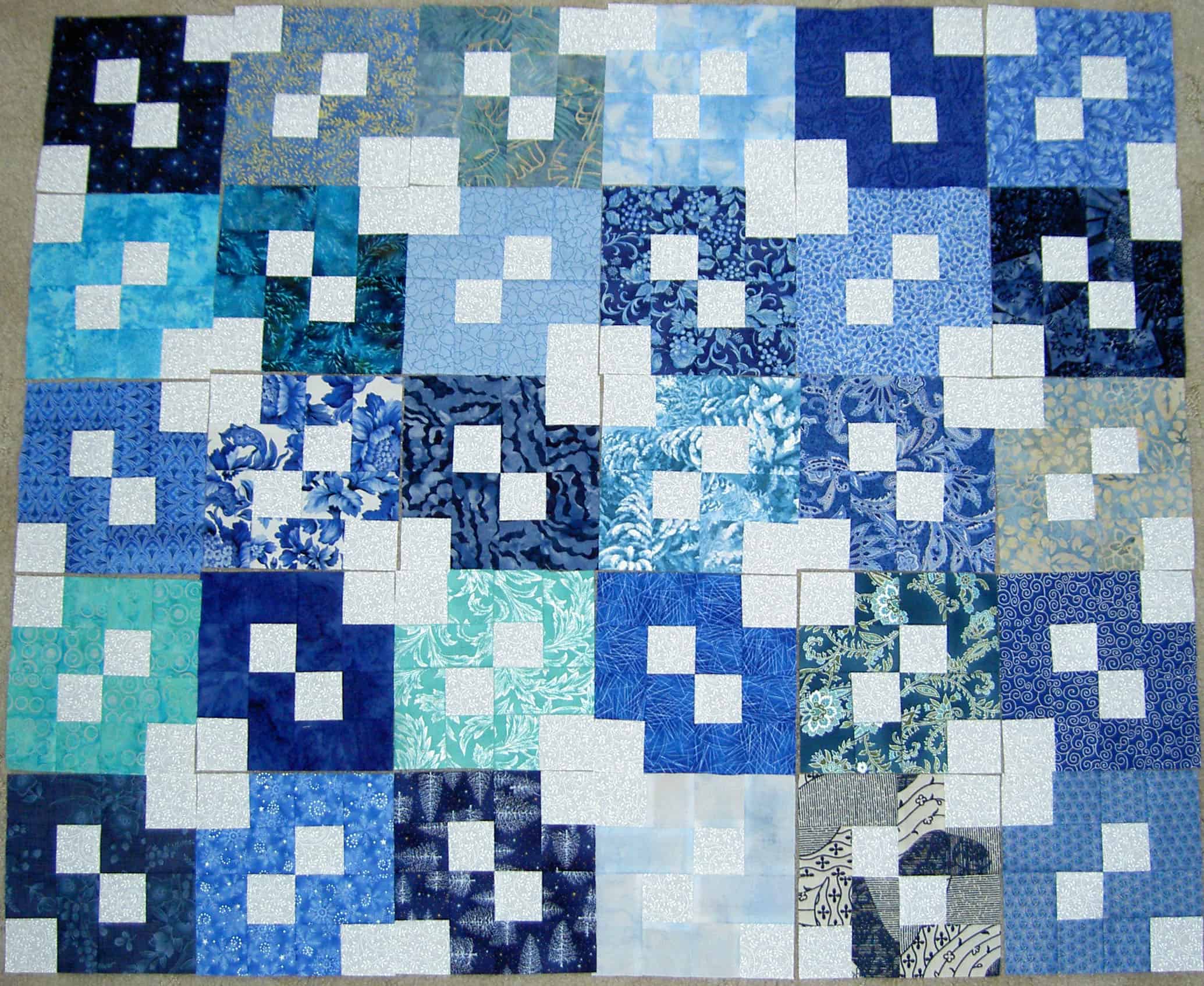
I received another batch of Infinity blocks from my SIL in the mail last week. Here is the large group (about 31) that I received.
Blocks from SIL, August 2009
It is so interesting to see her fabric selections and the fabrics she has and compare those two points to the blocks I have made and the fabric I have used. I was also thrilled and amazed to see some of the fabrics that she owns/chose for this project. We get along pretty well, but, sadly, we don’t get to spend very much time together since we live on different coasts. See the bottom right, second block in? That is not a fabric I would have suspected SIL of having, yet I am thrilled that she included it! It shows me another side of her quiltmaking.
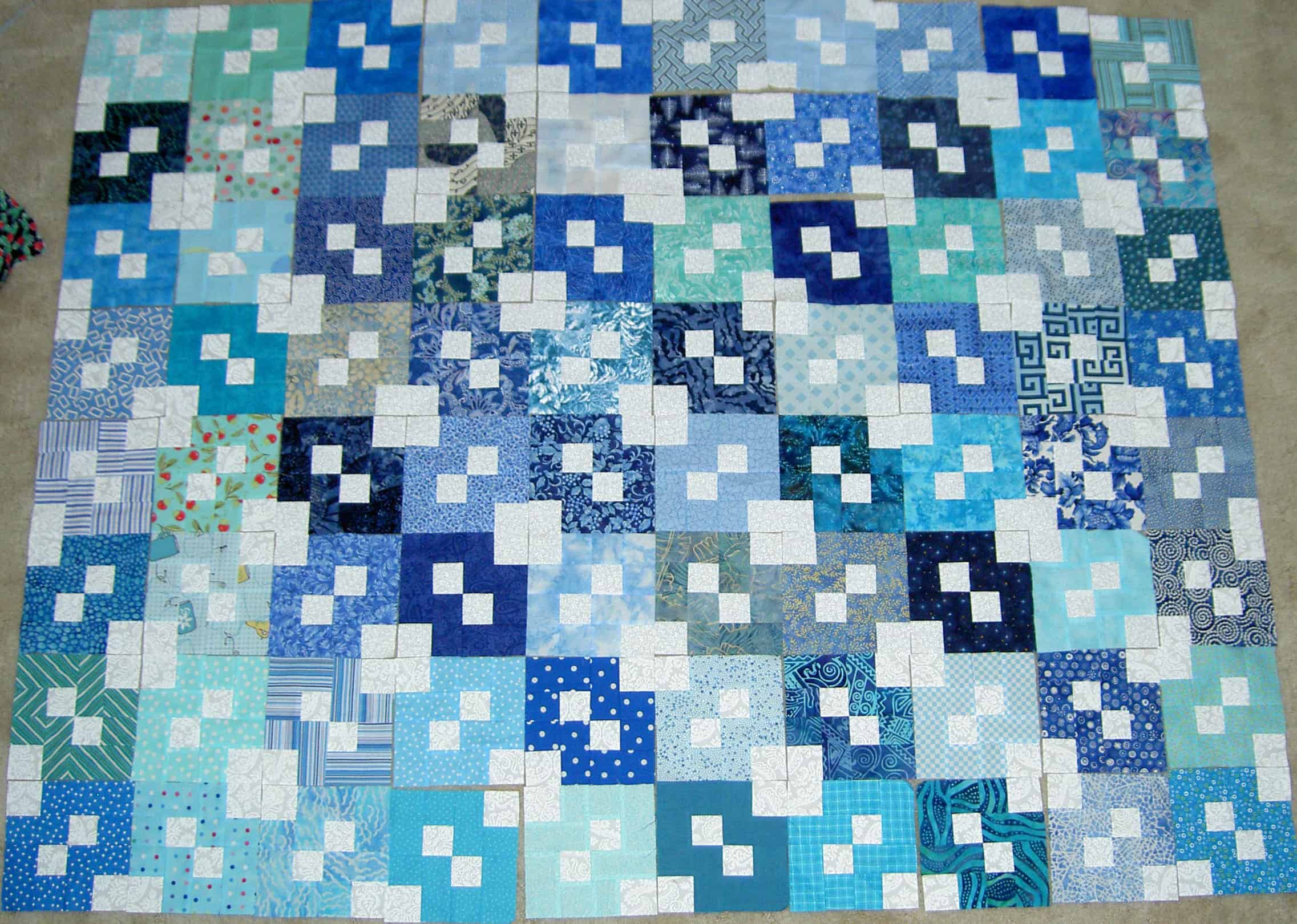
After laying these out I decided to lay out all of the blocks I had, so I gathered up the various stashes of Infinity blocks and laid them out on the floor of my workroom.
All Infinity Blocks, August 2009
The above group has about 80 blocks in it. WOW! I can’t believe that we have made that many. I realized that there are a few elsewhere that aren’t included. So, there will be at least one more photo of these quilt blocks for your perusal.
I am glad we are working on this project together. I feel like it brings us closer together.
See the Creative Prompt page if you have questions about this project.
Post the direct URL where your drawing, doodle, artwork is posted (e.g. your blog, Flickr) in the comments area of this post. It will keep all the artwork together.
There is a book called Brain Rules. One of the rules is that the more senses you stimulate, the more people will remember about what you were telling them. Another rule is that vision takes up about 50% of a person’s sense-related brain power.
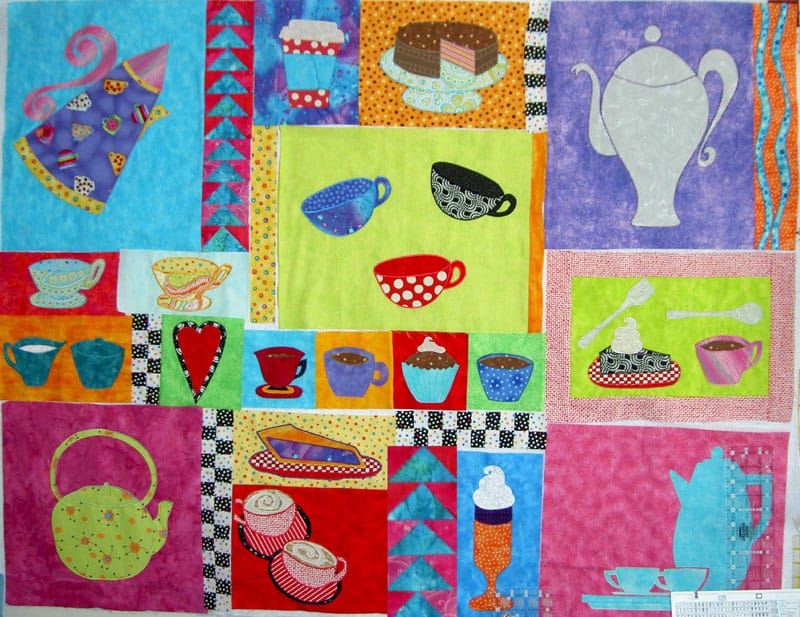
I had a lot of help on the Tarts as it progressed and one thing that SherriD did was use her Photoshop powers to stimulate my vision sense.
In the first picture, she showed how the quilt would look with some more flying geese in the bottom middle would look. I ended up adding some silverware, but the idea was sound.
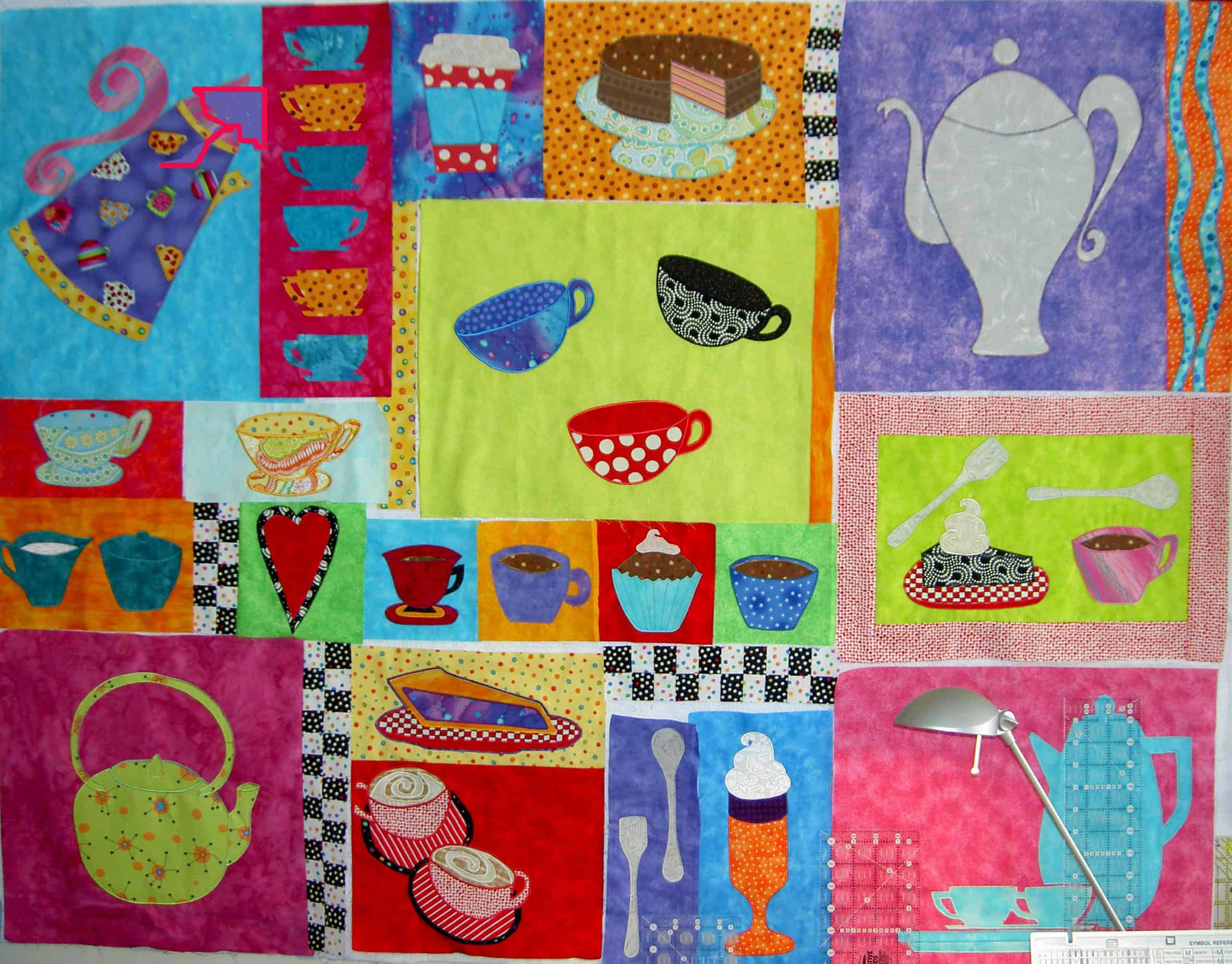
SherriD Two Cups
Once I definitely replaced the Flying Geese with the stack of cups, SherriD thought it would look better if I had two godl cups there. I wasn’t about to redo another part, but I liked the show and tell.
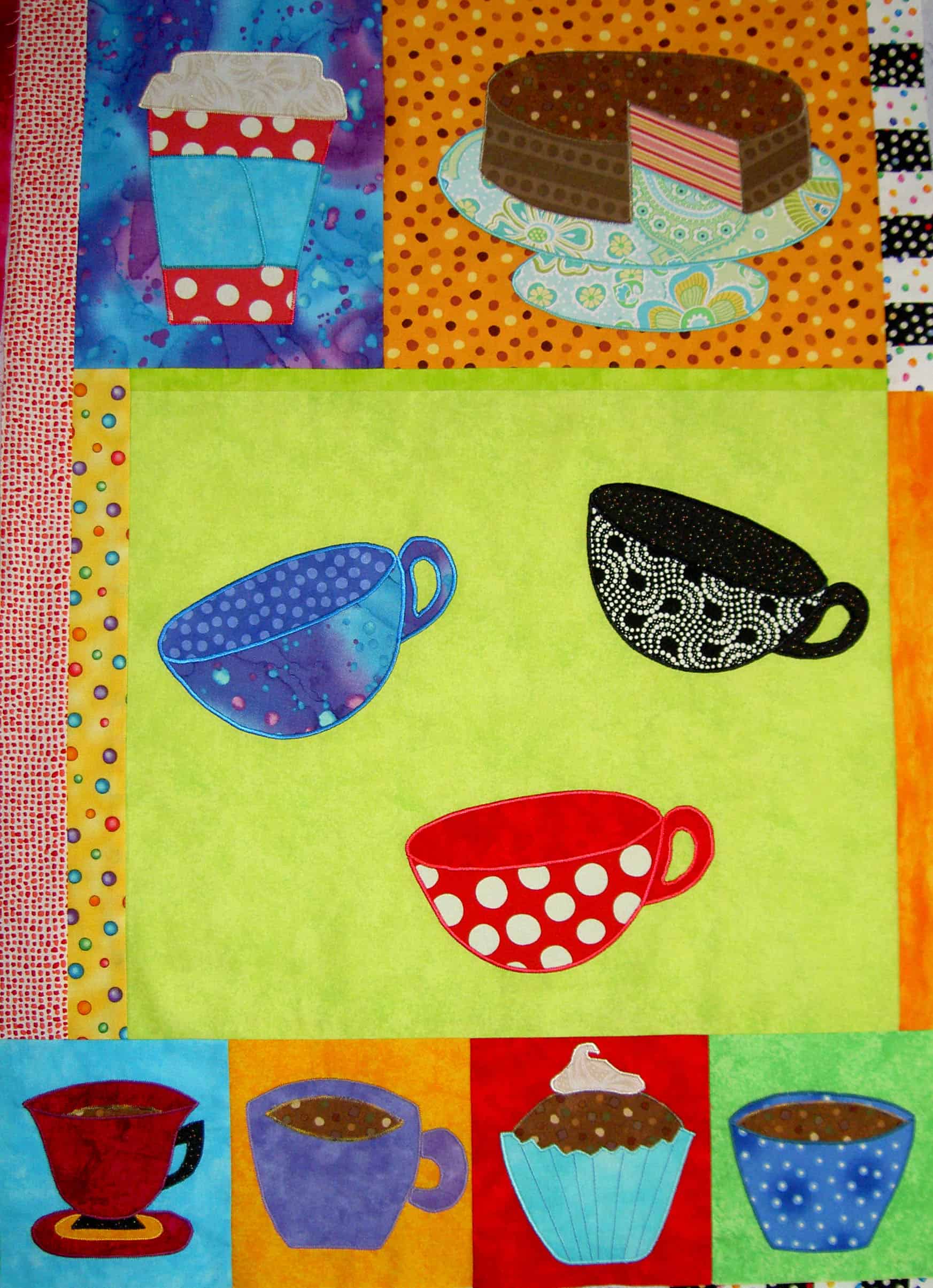
By the way, there are twenty-three elements (blocks) in this piece. Of the 23, twelve have been redone at least once. rust me, it seemed like I redid a lot more than that!
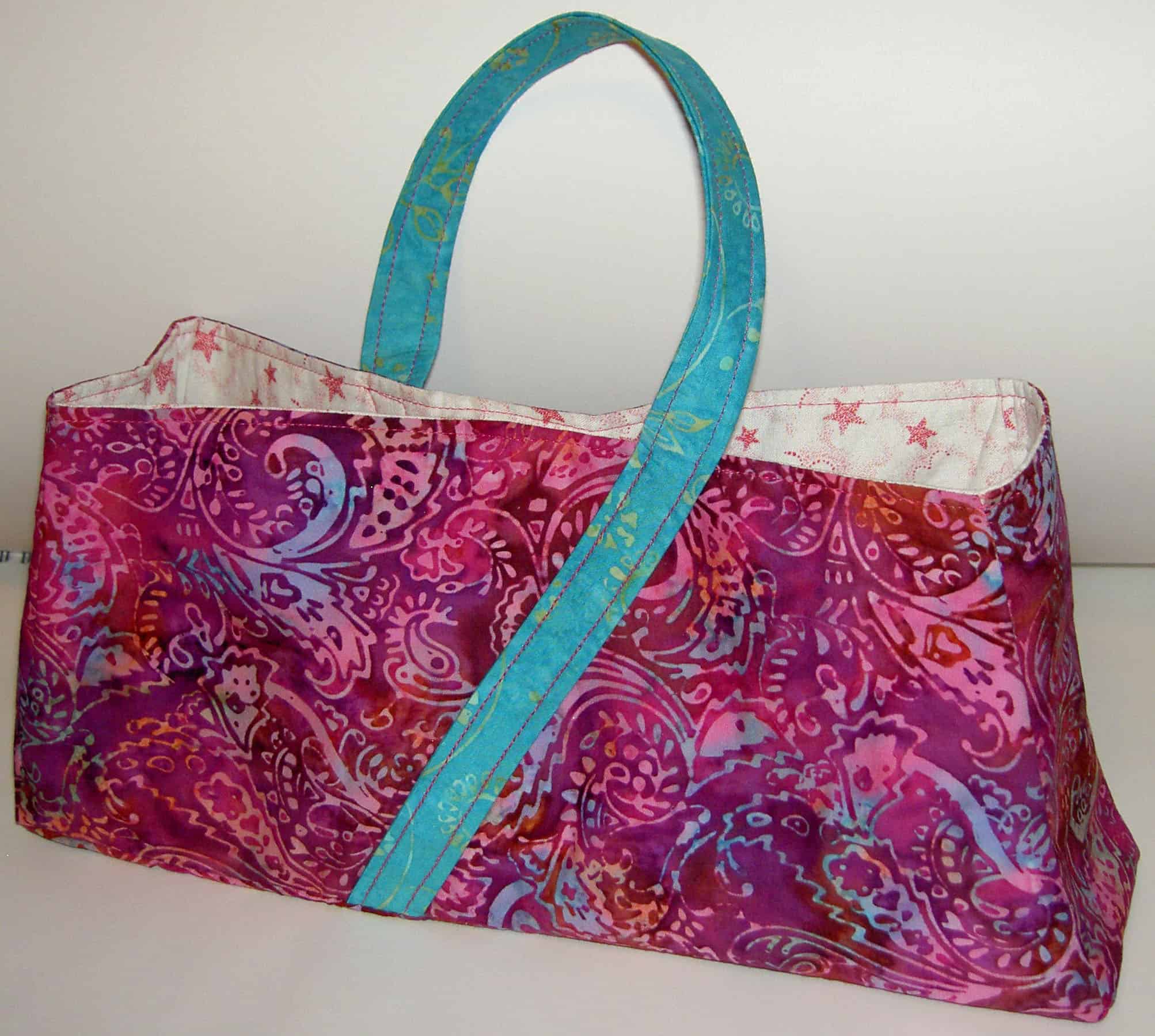
As you know, I have been thinking of branching out from the Eco Market Tote bag pattern that I have a been using for the past 1.5 years. I saw the Over the Top bag in a recent issue of Quilts & More magazine. That mag is on Facebook, so I get more notifications about what they have going. I saw their promotion for Quarterly Challenges, which reminded me of this bag. A couple of things came together, including watching their little tips video, so I downloaded the pattern last Friday and made the bag, mostly, on Saturday.
Batik Handbag
I am pleased with the way it came out. It is the perfect size for a small handwork project tote. As with all things I sew from a pattern, I found that the first piece is really a test piece. I rely heavily on TFQ and her garment sewing experience when it comes to 3D projects, so deciphering this one alone was a challenge.
There were a few things I didn’t really understand in the pattern and, thus, skipped. I don’t see that it made much difference in the long run. There were some things that the pattern said to do that I would do differently a second time. I would add more stiffness to the bottom, perhaps something like Timtex. The pattern says to sew only to the dots, which are about 1/4″ away from the edge. This makes sense for the bottom seams. It is necessary in order to put the Y seams together. It isn’t necessary on the top of the bag and actually turned out to be a pain. since the top seams weren’t crossed by another machine stitched seam, they started to come apart after I had the bag mostly together. I ended up hand stitching the tops of the seams.
I think that this pattern has a lot of opportunities for embellishment, which could be fun. I keep thinking of a picture I saw in either thr3fold journal or Quilting Arts, where Laura Kemshall did a beaded edging on one of her bags.
In anticipation of loving this pattern, I bought enough magnetic clasps to make 4 bags total. After making it, however, I am not sure whether or not I will make any more. In some ways I want to make the bag again, so I can perfectmy construction techniques. On the other hand, I don’t think they style and size would be that useful for me, so I am not sure I want to have a bunch of them hanging around the house. They may, however, make nice gifts.
Last year I found a quote in Judy Martin’s newsletter by a reader who talked about projects classified as mind sorbet, which I recounted in a post. After the Tarts Come to Tea, I really feel like I need some mind sorbet, something that I don’t have to think about much. The Tarts was a real design challenge: worth it, but a challenge. Now I need a break.
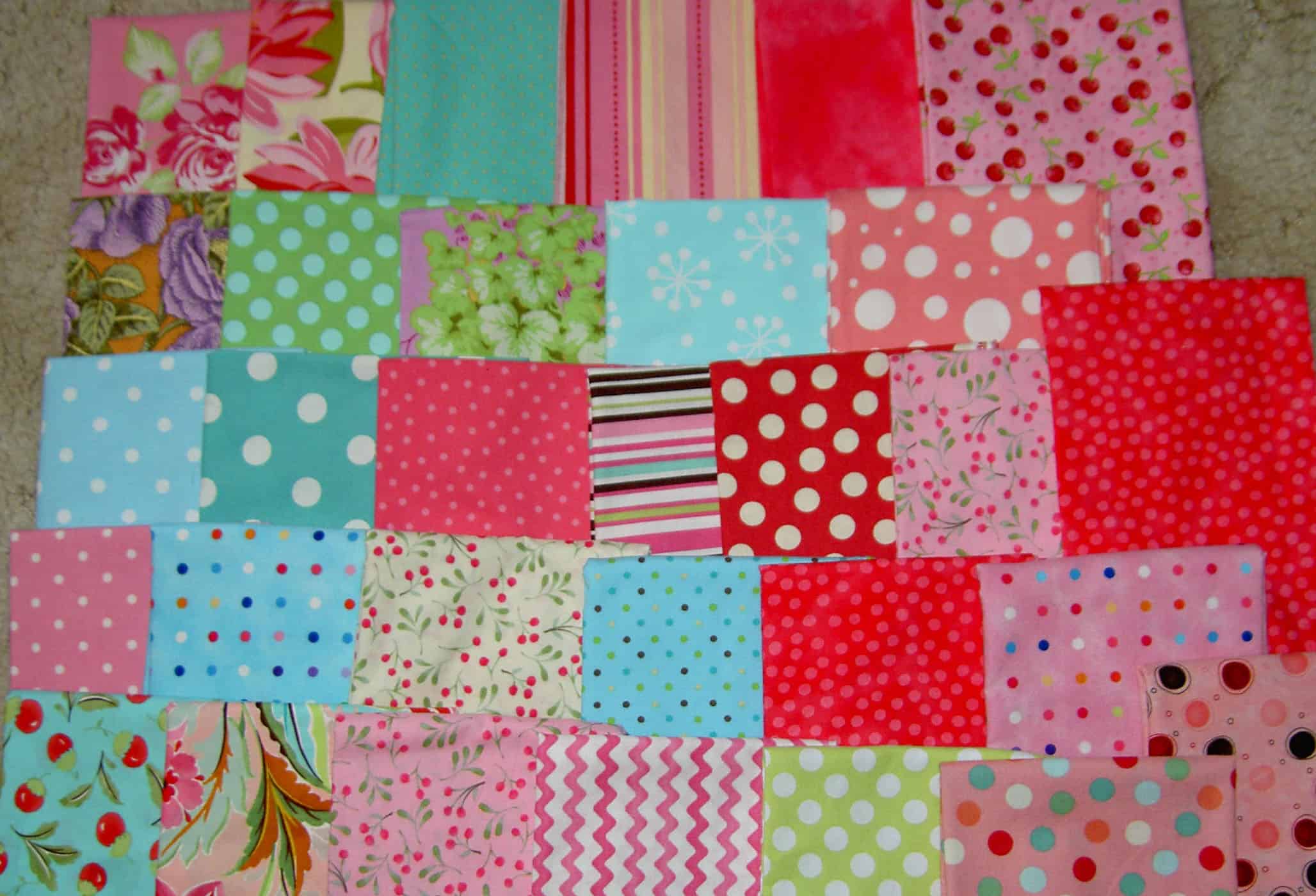
Fabric Selection, August 2009
These are the fabrics I have been collecting for the past little while with the idea of making this quilt. There are an abundance of dots, but hopefully enough other designs and scale to make it interesting.
I scanned back over some of the posts showing fabrics that I bought with this project in mind. I don’t see them in the picture above, so I will need to look at them and see if they fit in with the idea I have in my mind.
This quilt was inspired by a pattern by Terri Atkinson called Yellow Brick Road, which I wrote about in a post called Avoidance Issues. The idea was further encouraged by a trip to Texas in April. For once I sat in a window seat and was able to look at the regular patterns created by lots and fences, etc. After that trip, I had a lot of ideas and went crazy putting my own designs “on paper”. EQ6 makes such an exercise really easy. The project is really all about the fabric, though.
Sorbet, August 2009
This image looks a little weird because it is exported from EQ6. I haven’t colored all of the blocks, but this should give you a bit of an idea of the next project.
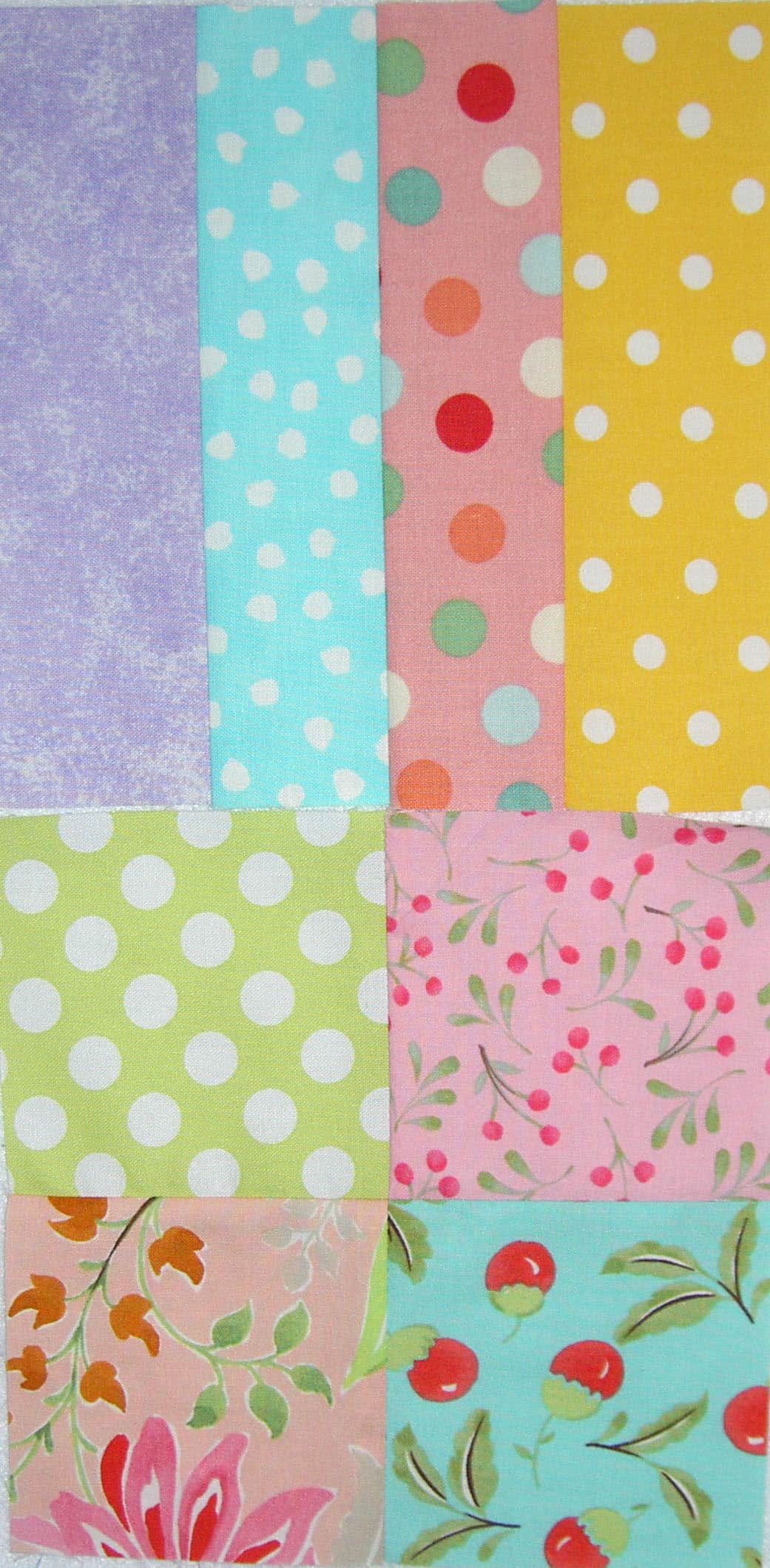
I made two blocks today. They took me about 5 minutes each, which is exactly what I wanted.
2 Sorbet Blocks, August 2009
In order to get the variation, I need to print the rotary cutting directions for the rest of the blocks. We’ll see what we get.
In a recent comment, Quilt Rat asked how I pick the prompts for the Creative Prompt Project. In part it all started with Amy at the Creative Mom Podcast, because I heard one word, thought about her thematic prompt and started on this project. The project has evolved very differently than the project in my mind.
Around the same time, I had been thinking about Illustrated Journals and that influenced my decisions about the CPP as well. You can read a little about my thoughts at the time in my February 20, 2009 post.
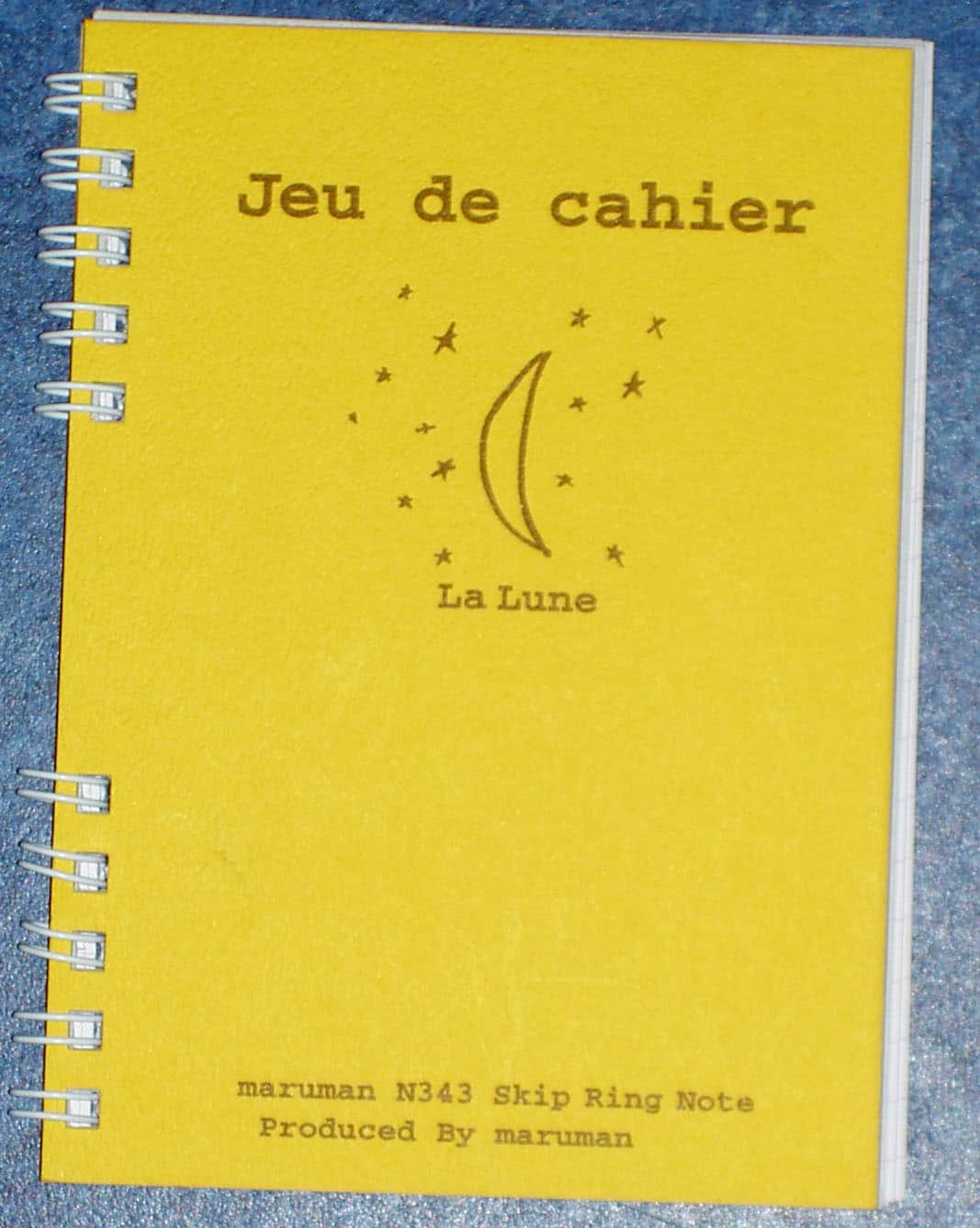
Another piece of the puzzle was a little book that DeWayne gave me as a Christmas gift. DeWayne is a former co-worker who is an unbelievably creative person. Every year at Christmas DeWayne gave everyone on the management team a little gift and one year it was a little blank book called Jeu de Cahier.
Jeu de Cahier, Front Cover
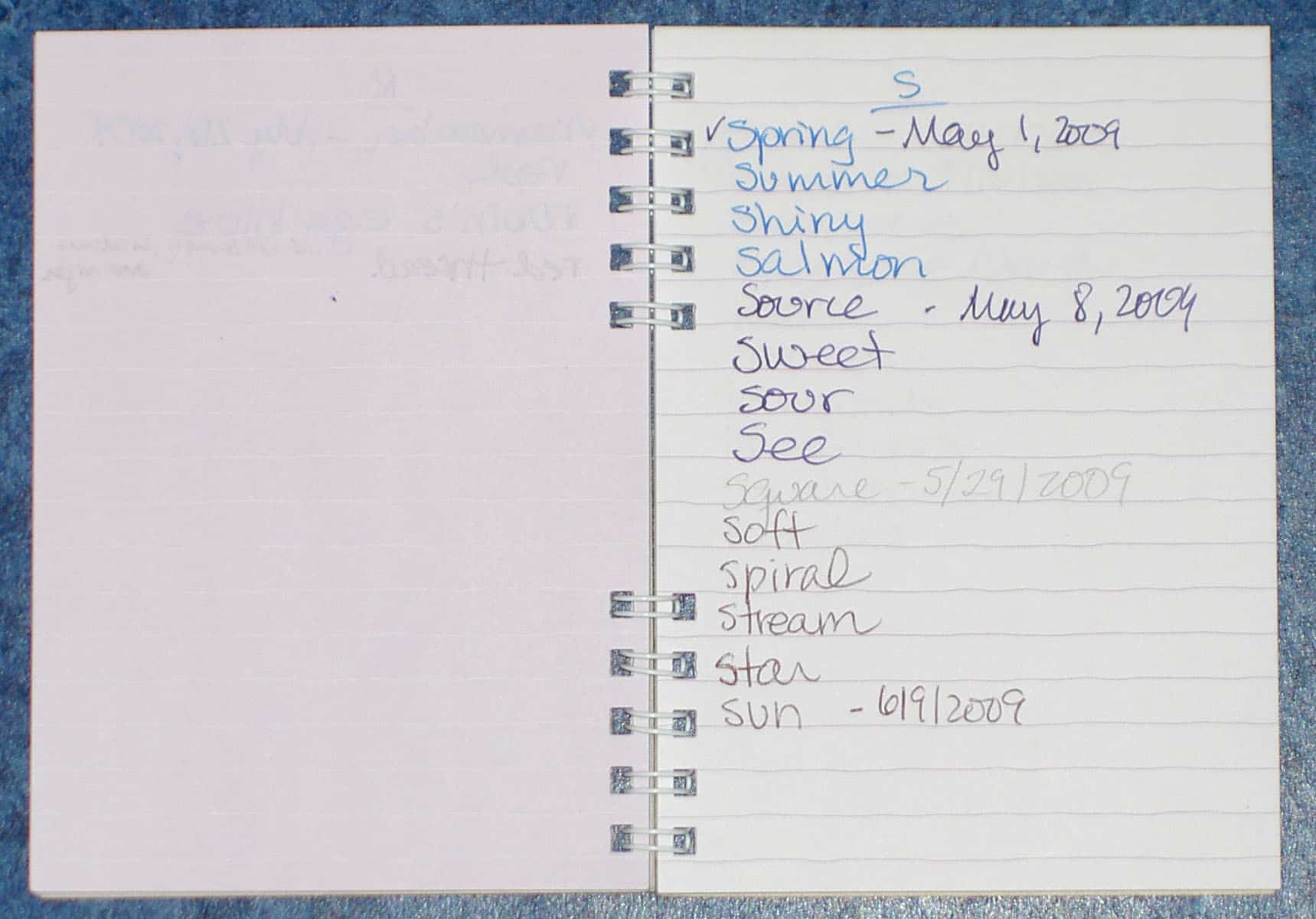
I am very particular, and a bit of a connoisseur/snob, about my notebooks and journals. This one didn’t fit, so I threw it into a drawer. When I started the CPP, I came across this notebook again and decided that it would work for keeping track of my ideas for prompts. I have a big list in the front with all of the prompts and then I organized them by first letter of the alphabet, so I can keep better track of the ones I use.
Prompts, August 2009
As I wander through my life, I note down words that might make good prompts in the future.
Finally, I am getting to Quilt Rat’s question. Choosing a prompt depends on my mood. I leaf through the book and see what words jump out at me or strike my fancy. I, sometimes, try and choose prompts that fit in with a theme or something that is happening in the world. I don’t worry about that too much, however, because I don’t really think it matters for the CPP purposes.
I try to prepare the prompts so that they post on the Friday and are consistent in terms of numbering and order. If I can think of a theme that fits, then I add that as well. Sometimes I change a prompt just before it is going o post and that can get me into trouble. Remember the double prompt Friday – June 5?
Last Sunday night, I went over and watched a movie with my SIL. We often craft together and this night was no exception. We watched Alfred Hitchcock’s Lifeboat and stitched. I was able to finish the last middle block of the Flowering Snowball/Cross Block project.
Now I need to worry about the border blocks. I haven’t taken the time to make the pattern for those. I will soon.
See the Creative Prompt page if you have questions about this project.
Post the direct URL where your drawing, doodle, artwork is posted (e.g. your blog, Flickr) in the comments area of this post. It will keep all the artwork together.
My rating: 3 of 5 stars
I enjoyed this book and thought it was well written. One thing that jumped out at me was that the pacing was different from many of the novels, and especially mysteries, I have read recently. Initially, I thought the book was moving too slowly. Then I realized that the pacing was just different, told myself to slow down and enjoyed the book immensely.
Marie Bostwick is a good writer. I liked the integration of quiltmaking into the story without having it take over the story as it does in other novels. There is some religion, but not so much that it is irritating.
I was pleased to meet up with the characters from A Single Thread again and find out where they were. Their characters have developed and, while there was nothing wrong with them in A Single Thread, I enjoyed the character development. It was particularly noticeable in the character of Abigail Wynne. She has softened around the edges and the friendships from A Single Thread have had a noticeable effect. I also noticed significant character developments in Ivy, a new character.
As I said, the story gave the reader some news about the lives of Liza, Evelyn, Abigail and Margot, but the basic premise of the story, around which the subplots revolved, had to do with domestic violence. One of the characters in the story is involved with that situation. I thought some of the information Marie Bostwick gave about the fear, uncertainty and mistrust was very well written. I do think that it is impossible to convey some of the feelings without having experienced it.
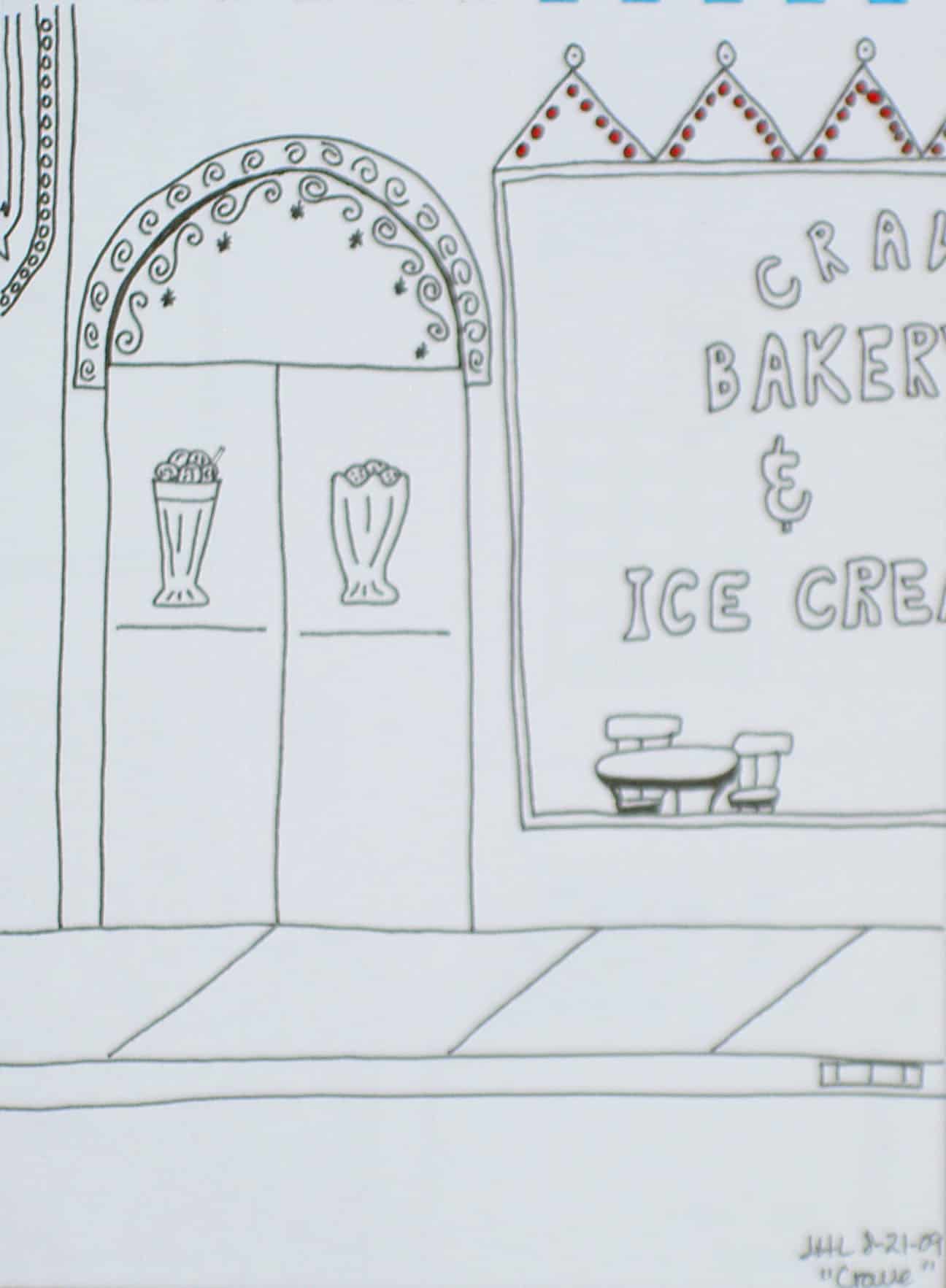
In some ways this is a homage to Crave Bakery, a San Francisco Bakery that creates gluten free goodies for those who cannot eat wheat and other grains.
It is also an effort to create an old fashioned ice cream counter.
I have a box of Recchiuti that I have been slowly savoring as I work on the Tarts project. The box is almost empty and, TA DAH, I have reached a major milestone in the work on the Tarts project!
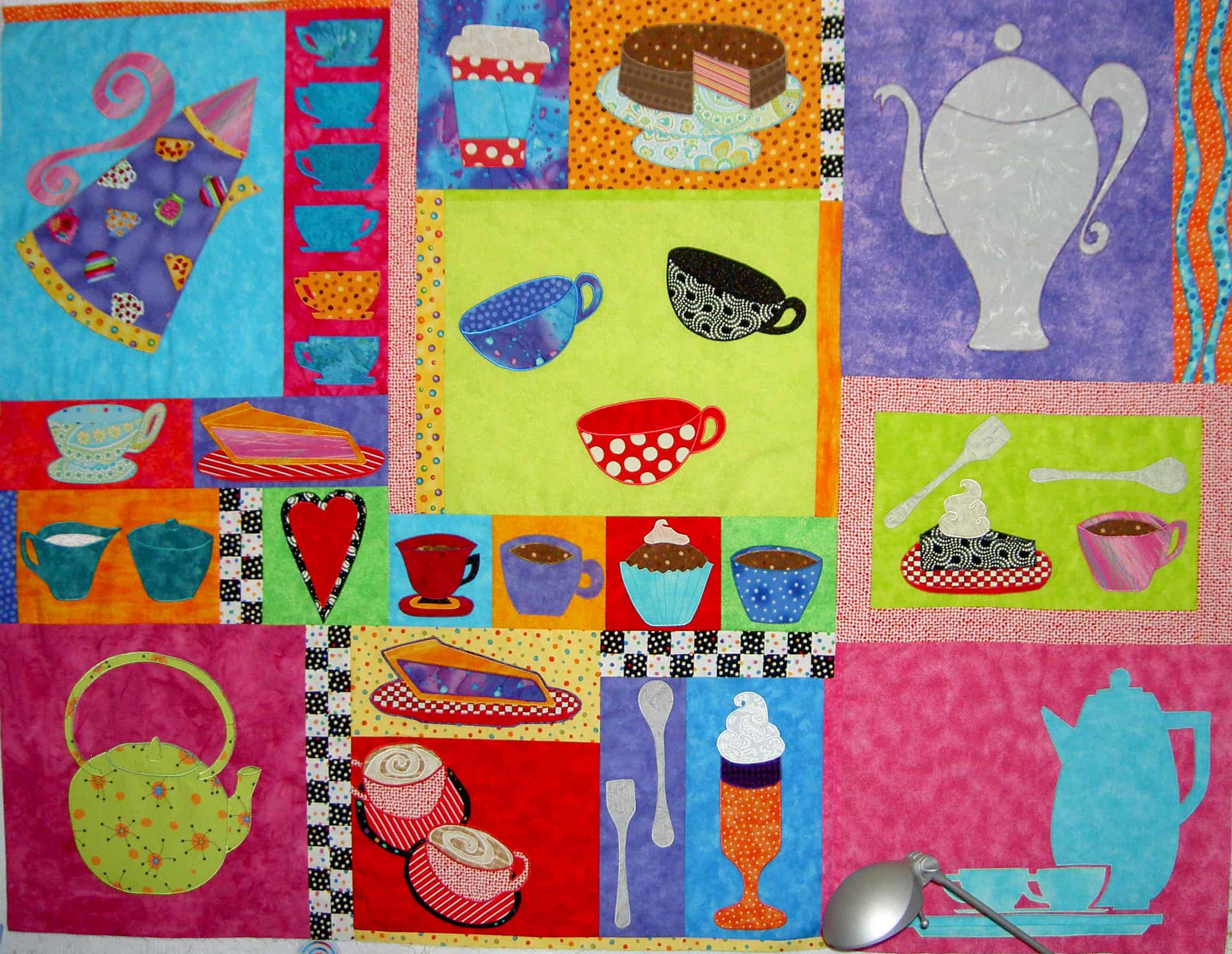
Tarts Top Complete, August 2009
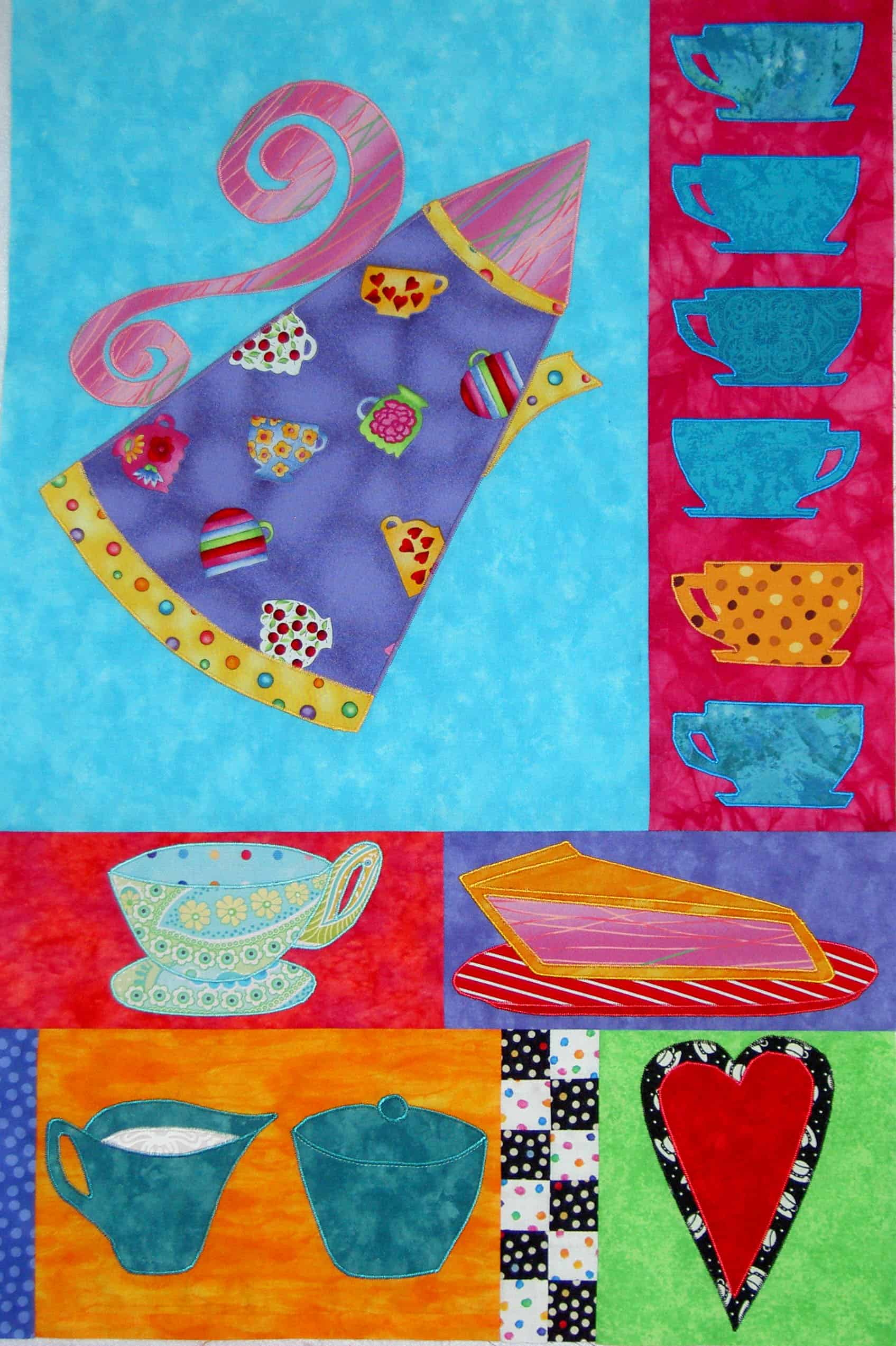
Your eyes do not deceive you. The Tarts Come to Tea top is completely sewn together. I had some bits of time over the weekend and used those bits to work on the Tarts. I really need to get this piece off my design wall and work on something easy. I resisted the urge, especially after all this time, to just throw the thing together. I really looked at it as my last opportunity to fix any despicable design decisions.
My first order of business was to replace the yellow cup.
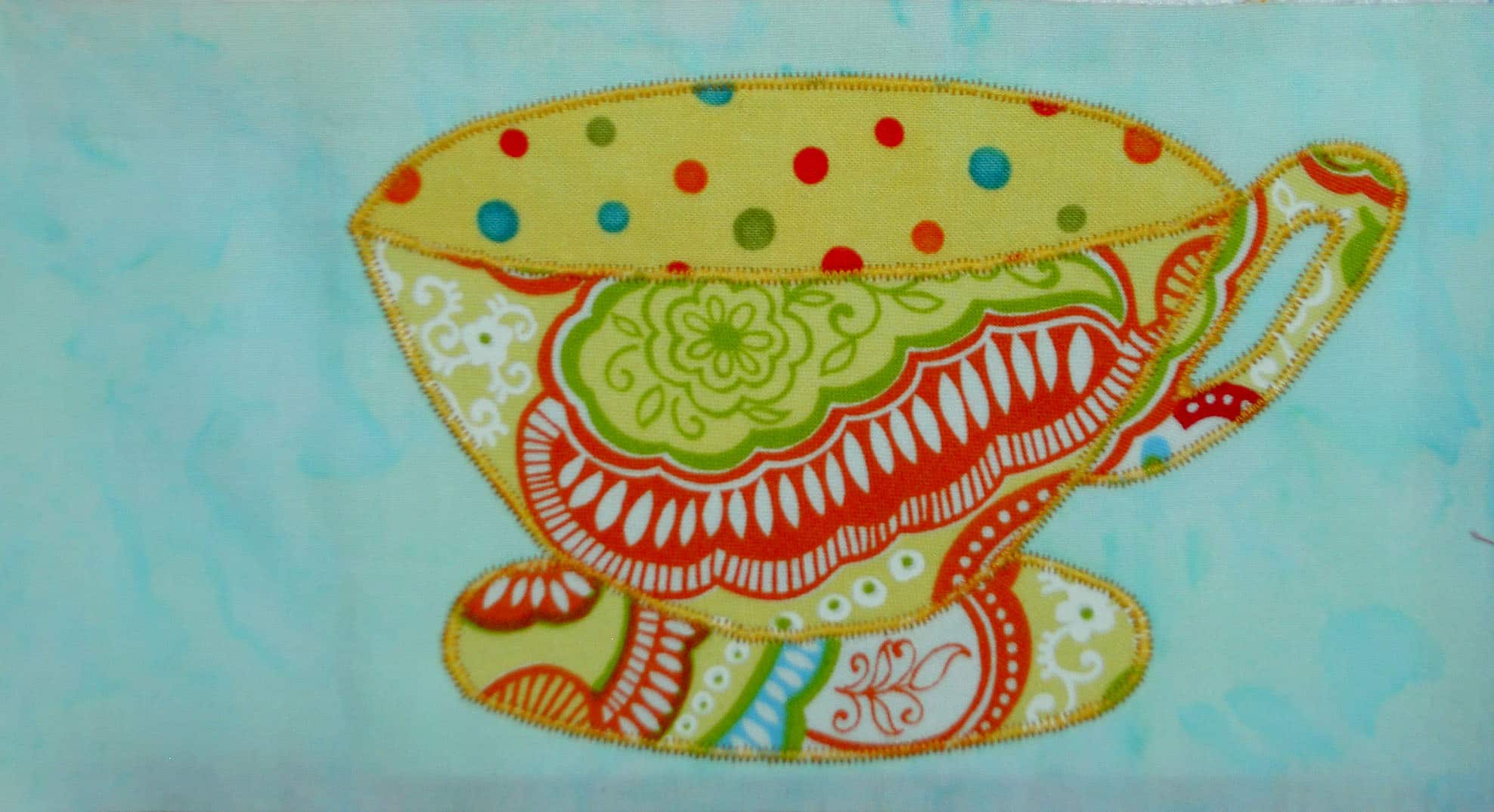
Yellow Print Cup
I like the cup itself and am pleased with the fussy cutting and satin stitch quality. As part of the complete Tarts Come to Tea design, it didn’t work. My eye kept jumping to it. While I want the viewer’s eye to move around the piece, I didn’t want it to be glued to the yellow cup.
New Pie, August 2009
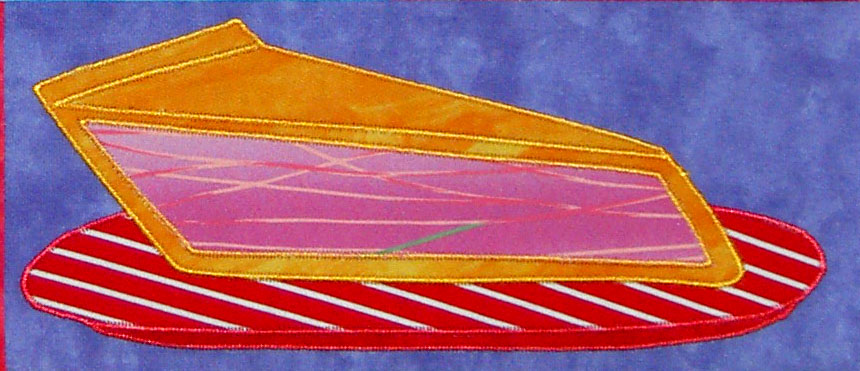
TFQ suggested pie. Since I was thinking along the lines of a pastry or tart as well, I appliqued another piece of pie. I used the same design as the original piece of pie.
Old Pie, August 2009
The problem was that they were too similar. I didn’t make enough changes to the design, even though the colors/fabrics are different. The similarities are highlighted because the two elements are close together in the piece.
I resolved the issue in my mind, however. I am going to applique’ some whipped cream on top of the new piece of pie, and perhaps a cherry. It will overlap on to the blue block above it. I planned to do it before the entire piece was sewn together, but I got caught up in the excitement and focus of the sewing and forgot. I’ll add it later this week or on the weekend.
Upper Left, August 2009
I had already started to sew sections together last weekend when I tried to tell myself I was finished. Still, there was a lot of piecing to do, so I got too it.
Upper Middle, August 2009
One thing I forgot about improvisational piecing is that one has to add bits and pieces in between. I really didn’t want to do much of that, because I liked the look of the blocks being next to each other. That meant some trimming and adding little bits, which I did, and which will, hopefully, be mostly hidden once the piece is completed. I couldn’t avoid adding some bits and I had to pay attention to the checkerboards, because I didn’t want to cut them off in the middle of a square.
Lower Left, August 2009
There were a few places where I couldn’t trim and augment. Those spots should be readily apparent from the photo. In general, I am pleased with the way the piece turned out.
Quilting is next, of course. As I mentioned in the last post about the Tarts, I seriously thinking about quilting the piece myself. I want it to be done a certain way. I don’t think I am good enough yet on the longarm to quilt the detailed design I have in mind. I really want the cups and pastries to stand out. More thinking on this is required.
I can’t really believe that it is together. It has been such a long process!
I have bags on the mind again. I really am thinking about new bags to sew.I would like to have several in my repertoire. They make great quick projects. As such, I was reading Vicki Welsh’s most recent Field Trips in Fiber episode and found a really great laptop bag by Candy Glendening of Candied Fibers. I got the impression that this was her own design. I was really impressed with the attention to detail and the thoughtfulness of the design. I like the water bottle pocket and the cell phone pocket. The machine embroidery or quilting which Candy used to embellish the bag is very nice, too.
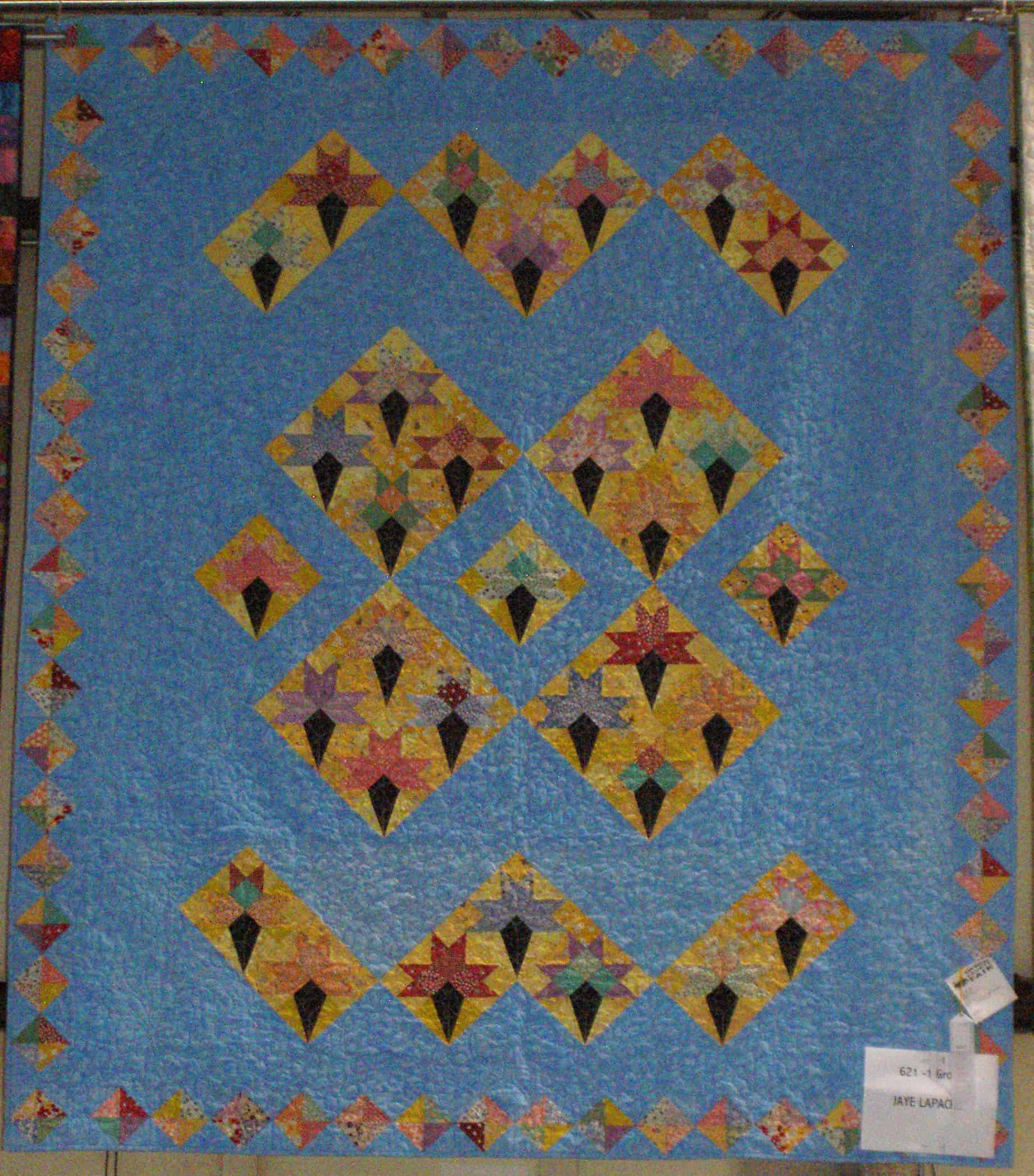
I went to the San Mateo County Fair on Saturday. I was really pleased to discover that The Nosegay had won a 3rd place ribbon.
Third place isn’t first place, but I am so happy that I won something. It has been awhile since I won a ribbon. I couldn’t have done it without Colleen of Sew Little Time Quilting. She is a fabulous longarmer. She also sells fabric, teaches and designs patterns. Her longarm work is out of this world.
Anyway, I am reinspired to enter this quilt somewhere else. We’ll see if I can get my act together.
In general the Fair was fun. I ate two, yes 2, frozen, chocolate and nut covered bananas. I love them so much!! They just say fair to me. We saw fireworks, got free ice cream, watched hucksters and hawkers, and some people rode rides. I didn’t have as much time with the quilts as I would have liked, but got some nice pictures and will have some time to look at them carefully later.
Scarlett Burroughs over at Craft Gossip.com has written an article/post about the CPP. I am really excited that the project is getting some traction in various places around the web.
Craft Gossip has different areas dedicated to different types of crafts including felting, crochet, knitting, and many others. Recent articles/posts include book reviews on a metalsmithing book and a post on elf-like Christmas stockings. It looks like she has tutorials, videos and freebies. Go check it out and thank her for highlighting the CPP.