I bought a slim volume from the Gualala Arts Center (707-884-1138) containing quilts from the Penny Nii collection. Sue Friedland wrote: “Title: 4 x 4 x 12 BY 3 X 3 X 9 The 4 x 4 x 12 refers to a collection of art quilts commissioned in the 1990s, from leading international artquilters, by Penny Nii of San Francisco. The twelve 48 inch square artquilts, by such luminaries as Michael James, Judith Larzelere, Libby Lehman, Theresa May and our own Sue Friedland, have never before being exhibited publicly. With them will be nine 36 inch square quilts by local artquilters — Mary Austin, Annie Beckett, Suzan Friedland, Kathye Hitt, Iris Lorenz-Fife, Janet Sears, Carol Tackett, Bonnie Toy, and yourself…”
I had a hard time actually getting a hold of someone at the arts center who would sell it to me, but eventually I received my copy. The quilts are great. Star by Leslie Gabrielse is interesting because of the incorporation of classical elements into this art quilts. Jane Sassaman’s Brocade in in her style, but looks very similar to a row quilt.
It is worth getting a copy of this little catalog. I hope it has success so that other quilt exhibits will be encouraged to print catalogs.
I spent two fantastic days studying with Libby Lehman in two different classes that basically boiled down to using your sewing machine. One class was called Primadonnas and the other was called Super Machine Stitching.
Stop what you are doing (after you read this blog entry!) and then RUN don’t walk to the nearest Libby Lehman class. Do whatever it takes. You won’t regret it! She is a fantastic teacher and I would take another class from her in a hot minute.
Good things about Libby Lehman’s teaching:
1. Dry sense of humor.
2. Knows about more machines than just her Bernina and shows what foot to use for the major brands. Doesn’t treat non-Bernina owners like second class citizens.
3. Willing to take requests.
4. Willing to repeat herself if you weren’t paying attention and explain something again in a different way, if you didn’t understand.
5. No problem with letting students take pictures of her quilts and samples (I do ALWAYS ask).
6. Knows her stuff and can teach it.
7. She uses pieced backgrounds a la the Pushed Neutral idea that Mary Mashuta teaches.
8. She uses any fabric; e.g. she is not a hand-dye only person. YAY! I admire those who can hand-dye, but I don’t want to hand-dye. There is lots of great fabric in this world and I want to use ALL of it.
9. She likes quilts that make her want to look at them some more. She said to keep her intersted.
10. Down to earth and not holier than thou.
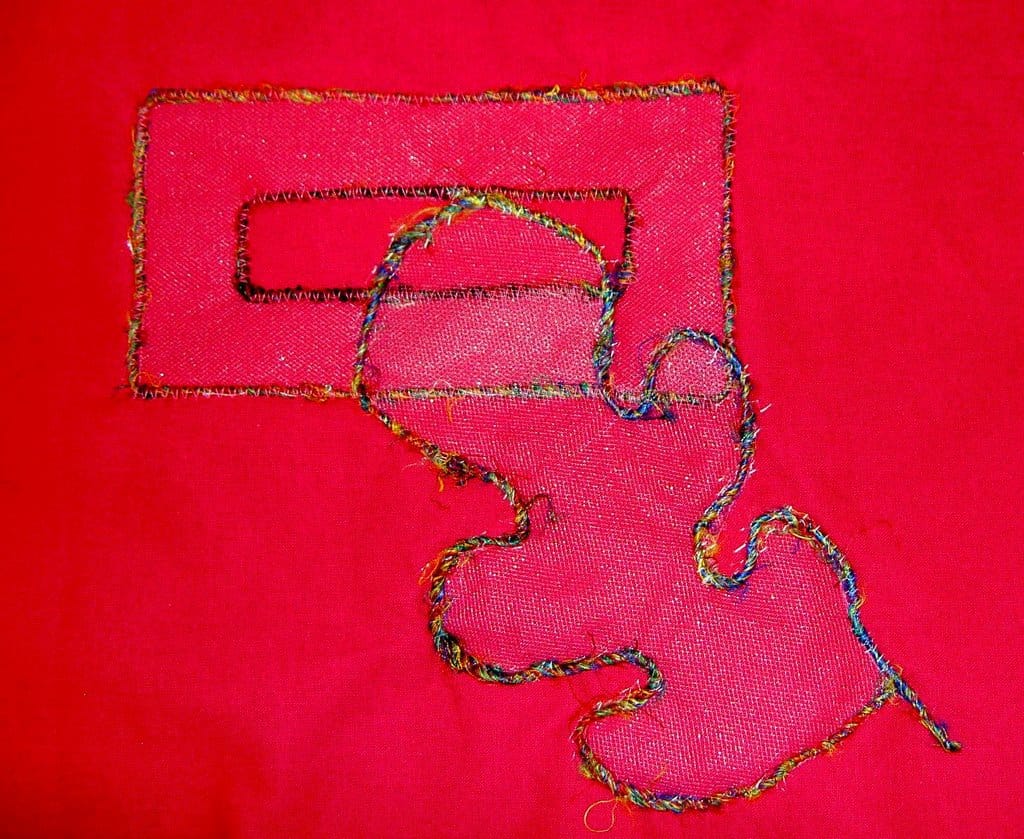
In Primadonnas, we learned to couch, bobbin-draw, and use sheer fabric. This is one piece that I made:
Libby Lehman Class sample
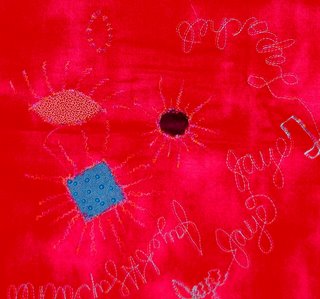
In Super Machine Stitching, we did things with satin stitching that I would not have believed possible. This is a techniques class not a project class. You have to think about how you would use the techniques. These are the samples that I made:
Libby Lehman Class sample
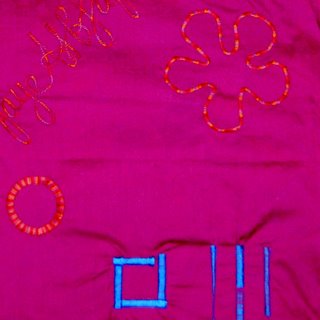
I am very proud of the writing as well as the freemotion satin stitching. It is fun, even though I don’t know what I would use it for. I am not planning on making any earthquake quilts in the near future. I was thinking that I could finish See, the piece I started in the David Walker class, using this technique, though not quite as messy, perhaps.
Libby Lehman Class sample
I am particularly proud of my “hippy-dippy flower” (as Libby called it) and the circle. If I have the right threads, I may stitch some of these circles on the Thoughts on Dots quilt. We will see. It would certainly add a bit of interest and dimension. Also, a lot of work.
Libby also has a fantastic teaching set up.
Libby’s teaching setup
She uses Powerpoint for her presentation as well as video camera projected on the screen to show the details of what she is doing with her sewing machine. It was refreshing not to have to run up to the teacher’s sewing machine every other minute. No more standing around trying to jostle for position behind the tall people who are trying to see what the teacher is demonstrating. No more crowding the teacher. I think it helped provide a relaxing environment for the class and allowed everyone to see the demonstration equally. She has really moved the bar up a notch for quilt teaching. If you are a quilt teacher, step up to the plate.
In all the goodness there is also badness. This may be the most expensive workshop of my life. I want to buy a new sewing machine. My sewing machine performed flawlessly, was wonderful, did not break any needles or cause any thread blobs in the bobbin area. BUT. It also could not keep up with those newer machines and, especially those Berninas (Libby uses a Bernina). They can do things that my machine can’t do, like right and left justify their tapering satin stitch. I never wanted a Bernina before, but the thoughts actually crossed my mind. I feel like a traitor. I tried to assuage my guilt and make my machine feel better by buying two new feet – an open toe embroidery foot (the better to satin stitch, my dear) and the Beading Foot set. I wanted a couching foot, but, apparently, Janome doesn’t make one. I will try the Beading feet for couching and see what they do. I intend to add a lot more couching on my quilts. 😉
I actually put this in the washing machine tonight and plan to go and switch it to the dryer now. I am capable of ironing it and may even do that tomorrow. I want to make Dutchman’s Puzzle blocks out of this fabric and I want to do it soon. I want to keep up momentum.
I have to say that I almost didn’t wash it. It felt so good in my hands (YAY P&B!) that I just wanted to start cutting it up.
Above is pretty much how the piece was before I started working on it again last night and this morning.
Here you can see I got the piece into what I thought was a final stage. I particularly like the upper lefthand corner section.
Two concerns I had were adding the new fabrics from Seattle and the sewing.
After contemplating the construction of the piece (AKA how to sew it together), I realized that adding an additional row would allow me to sew the thing in 4 patches AND leave the two bottom rows unsewn so that I could work on uniting the two halves. (In case I forgot to mention it, dear readers, I plan to make this piece twice the size it is now and add a couple of rows on the right hand side as well.) St. JCN sugested that I keep the bottom two rows on the design wall to aid in uniting the two halves. I decided that it would be easier to work with the bottom two rows if they were not sewn together. All of this meant that I needed an extra row otherwise I would have an orphan row which would ruin my 4 patch sewing model.
You might ask why not sew the thing in rows. I find that sewing large pieces in chunks (e.g. 4 patches) rather than rows facilitates squareness of the entire piece.
Adding an additional row also meant I could start to incorporate the Seattle fabrics into the piece, so the two halves would not look like completely different quilts.
7/29/2006: I have had Thoughts on Dots on the wall for a few weeks again, but haven’t moved any of the squares around nor have I sewed anything.
I moved some squares around this morning when it was very quiet in the house and, as a result, today was the first day in a long while that I have felt like being creative. I really need a table to which I can walk up and glue and paint and cut, because I had a massive desire to experiment with the Tsukineko inks.
8/19/2006:
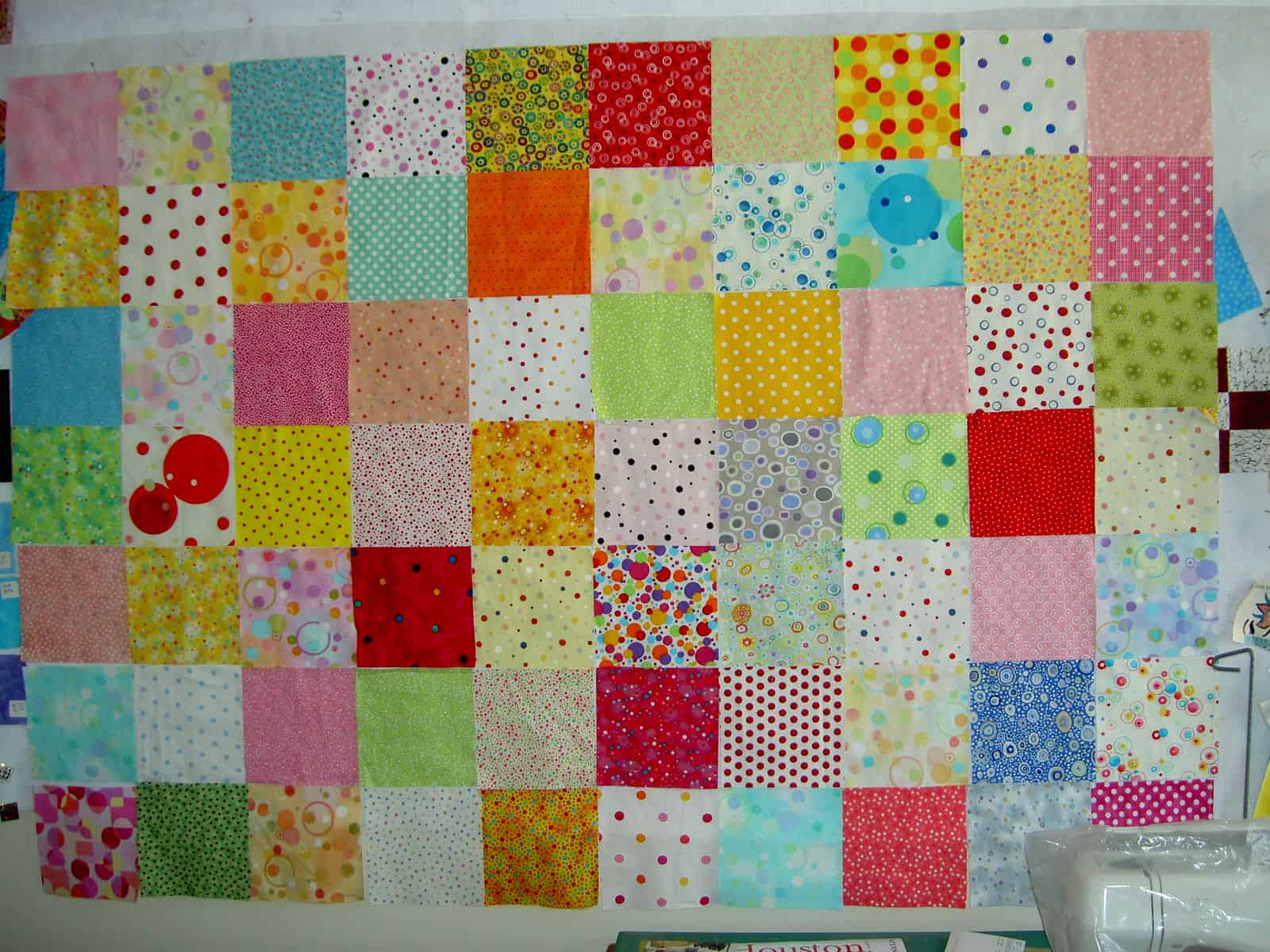
I did move a number of squares around after I took the above photo, but think I may have the final layout now. It is an interesting exercise to get the colors/fabrics in the right place in order to give the right feel.
One wrench in the mechanism are the new dot fabrics that I cut last weekend while in Seattle. I had planned to add them to this piece, but am wondering if I don’t like the light, fresh, airy feeling of Thoughts on Dots as it is now? Or am I being a chicken and need to, as Lorraine Torrence says, make visual decisions visually? This quilt is destined to be a cuddle quilt, as I may have mentioned, with the express purpose of making me feel better when the life or the monkey chatter gets overwelming. I think, as a result, that the layout has to give the right feeling more than be designed as a great work of art.
I have more sets of squares waiting for my attention in this same exercise and am looking forward to working with them.
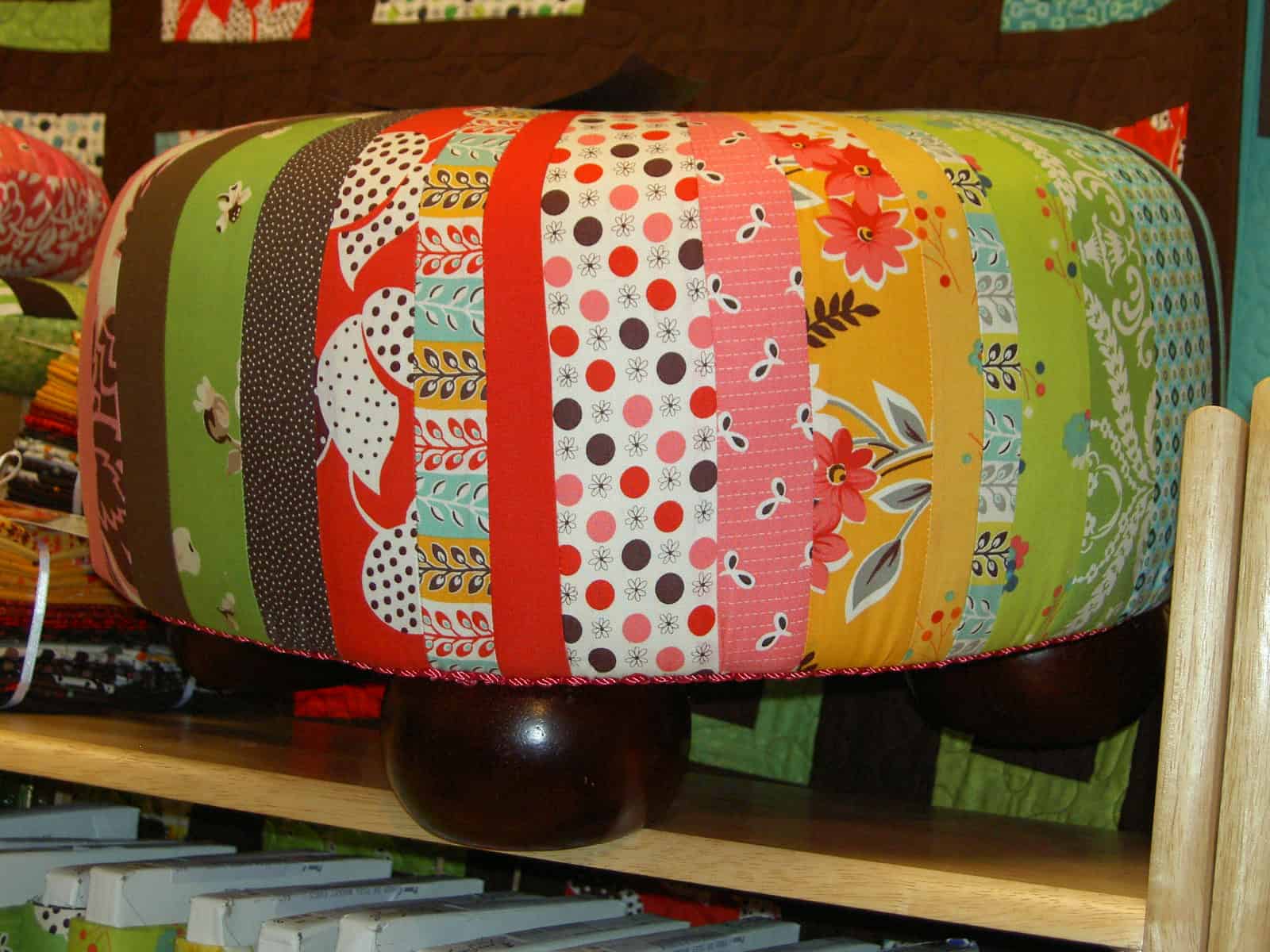
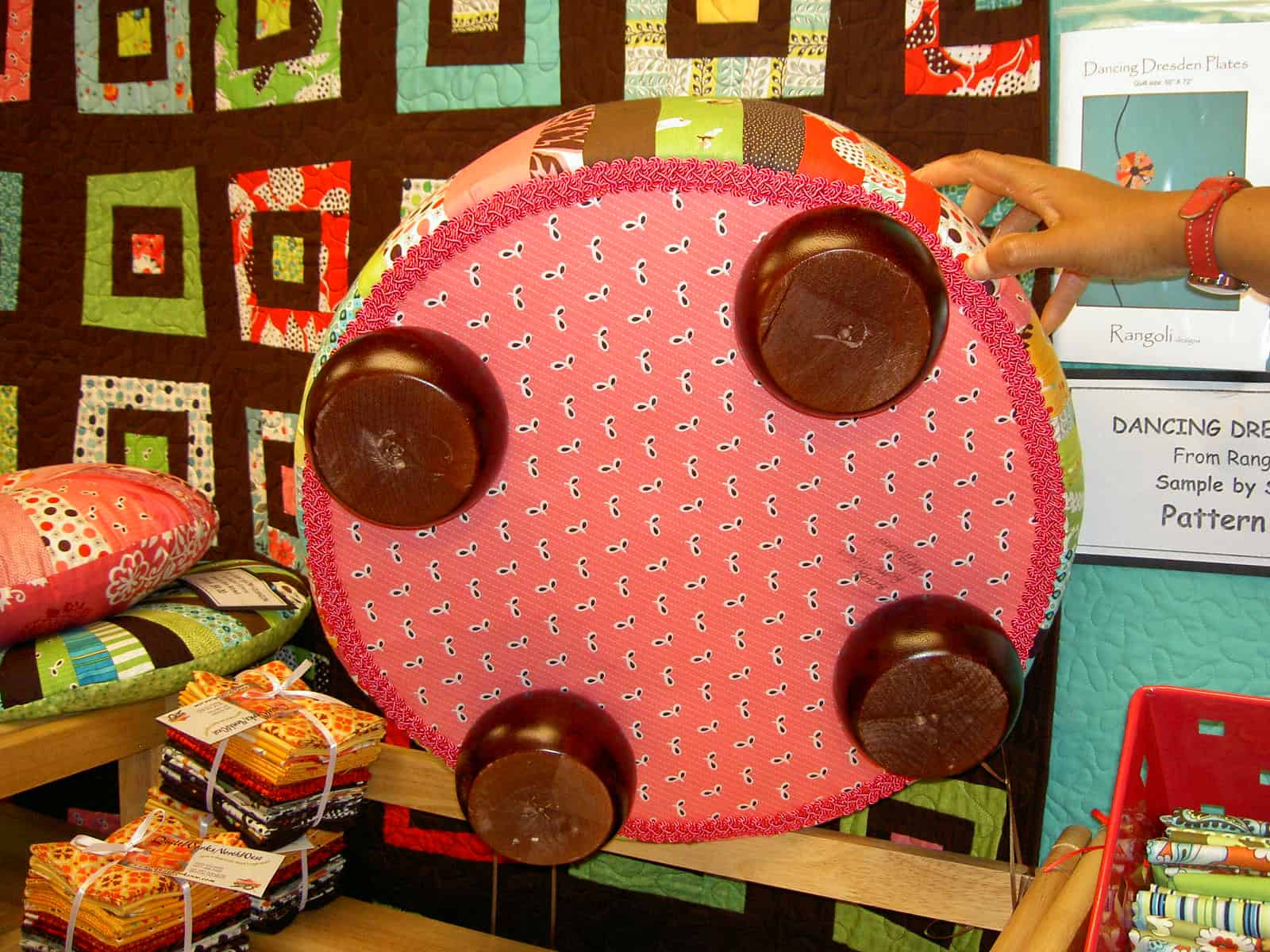
Mull over these photos from the weekend. Check back, I may annotate them. Until then, make up your own stories!
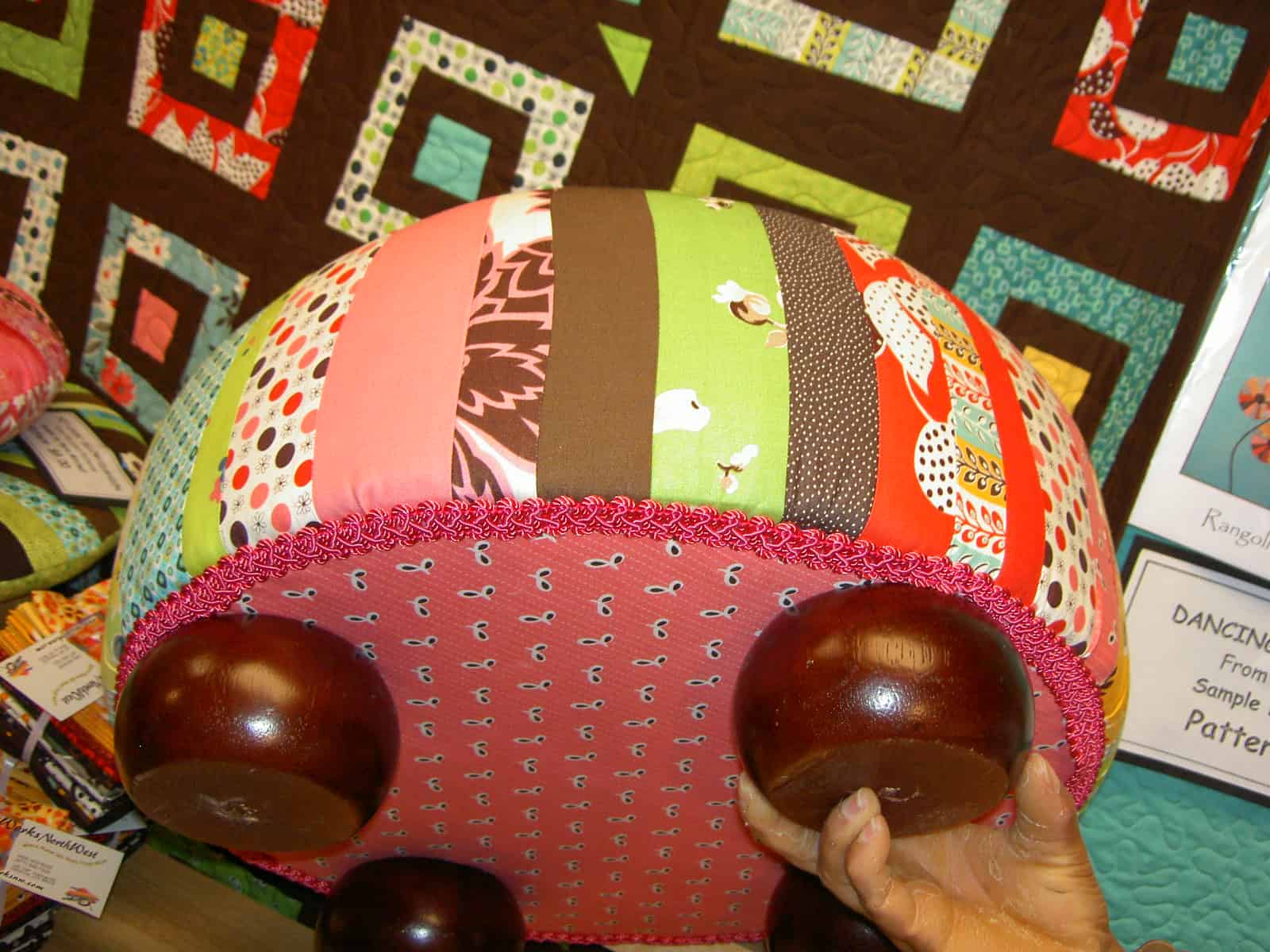
1. 2. 3. The photos above are of a tuffet. The pattern is sold through Quiltworks Northwest in Bellevue. I took the photo in order to see better how to make it. I urge you to buy the pattern.
4. Coneflowers, or echinacea, which I feel in love with over the weekend. Yes, I have seen it before, but somehow they struck me. I may have to plant them in my garden.
5. Sideways sunflowers. I am not sure if I get enough sun in my garden to grow sunflowers, but I may have to try.
6. 7. 8.
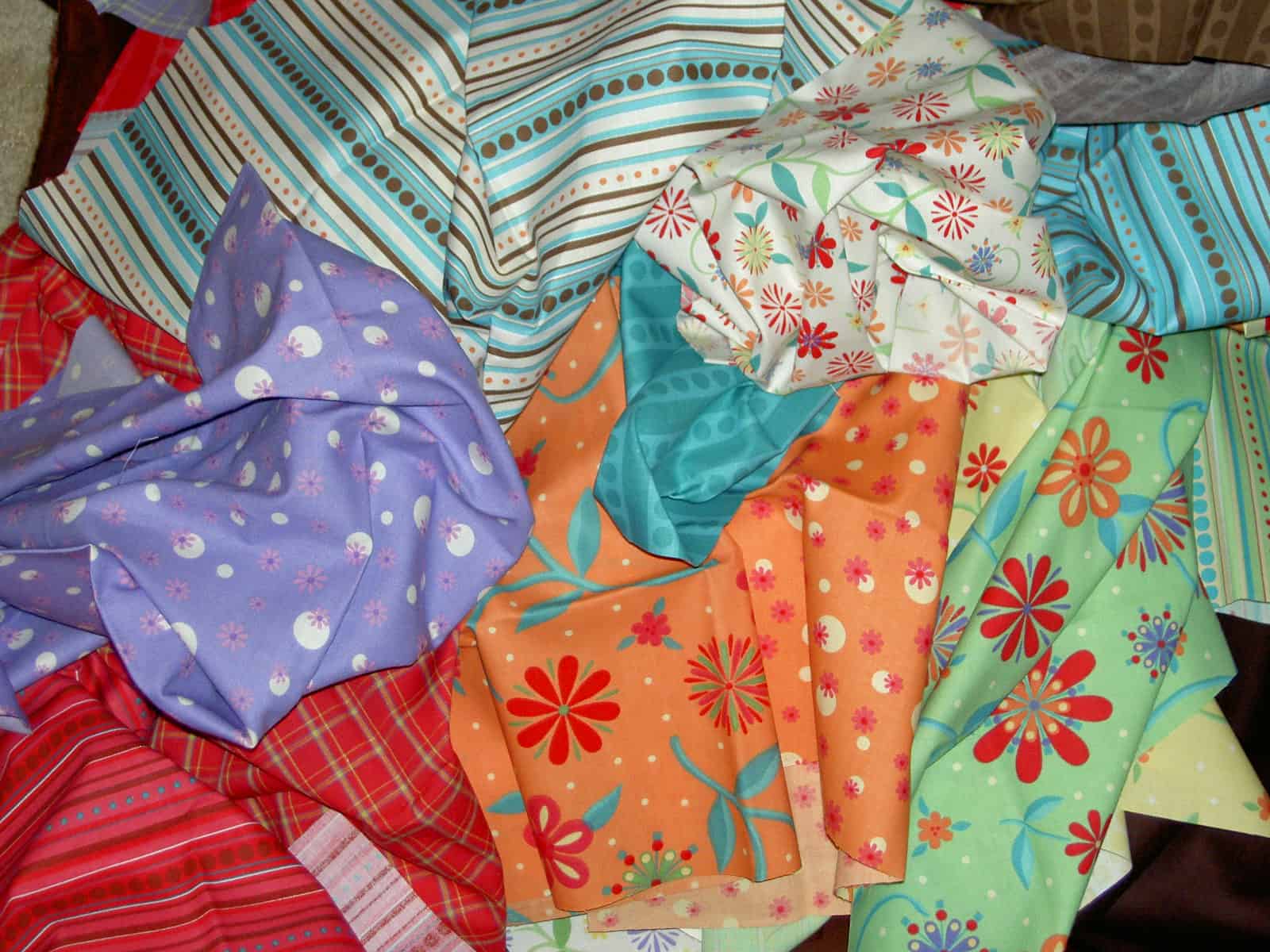
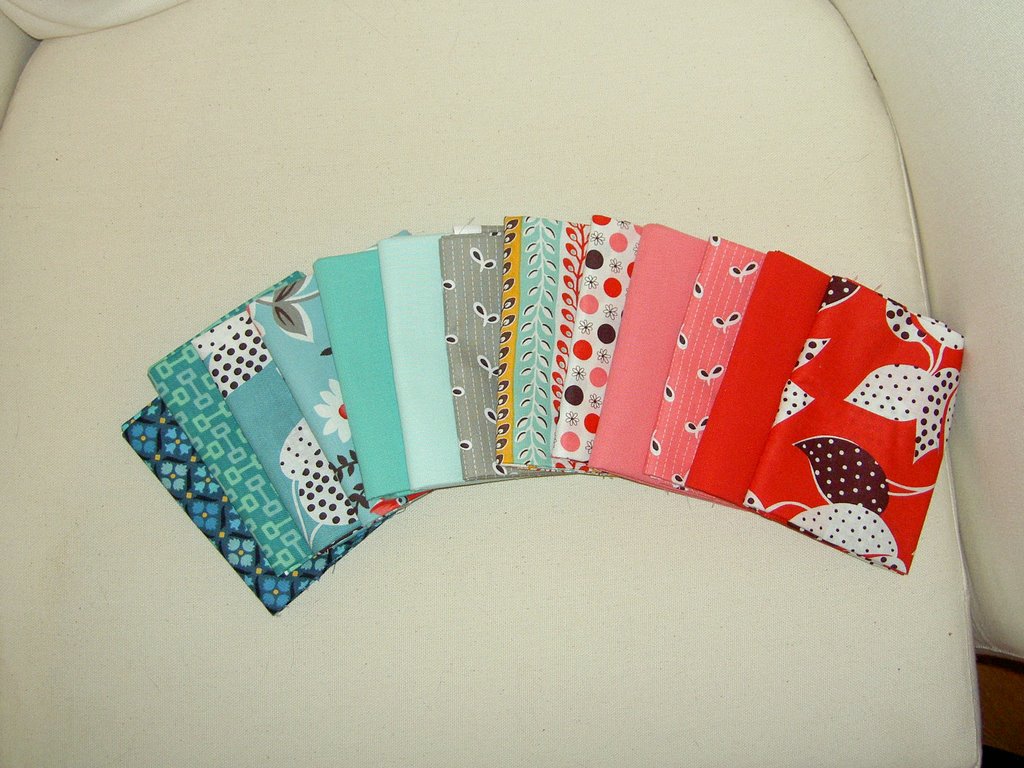
Two packs of Denyse Schmidt fabric.
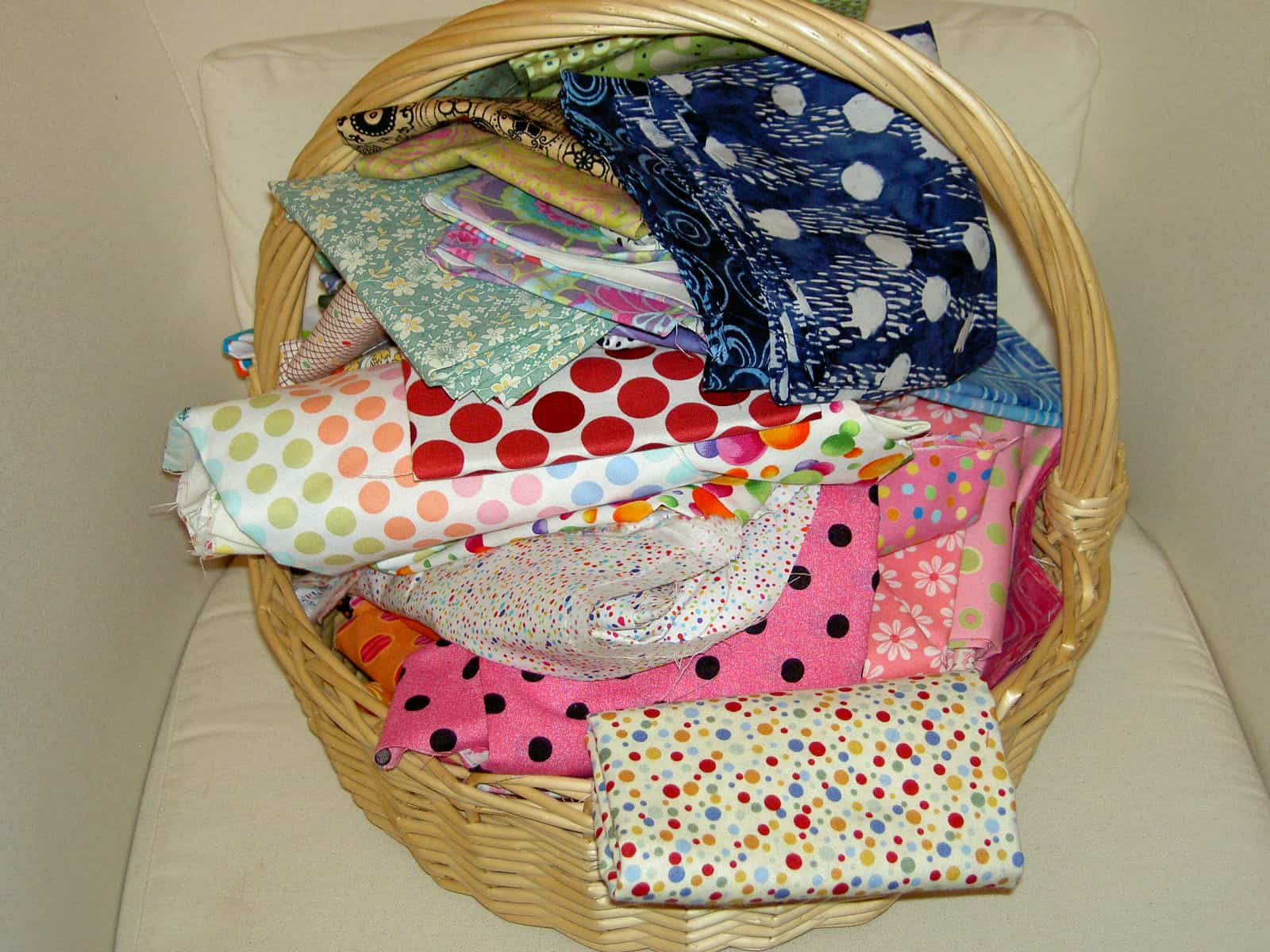
9. Some of the fabric which was purchased during the Seattle weekend. Once again, St. JCN came to my rescue and the fabric came home washed and ironed.
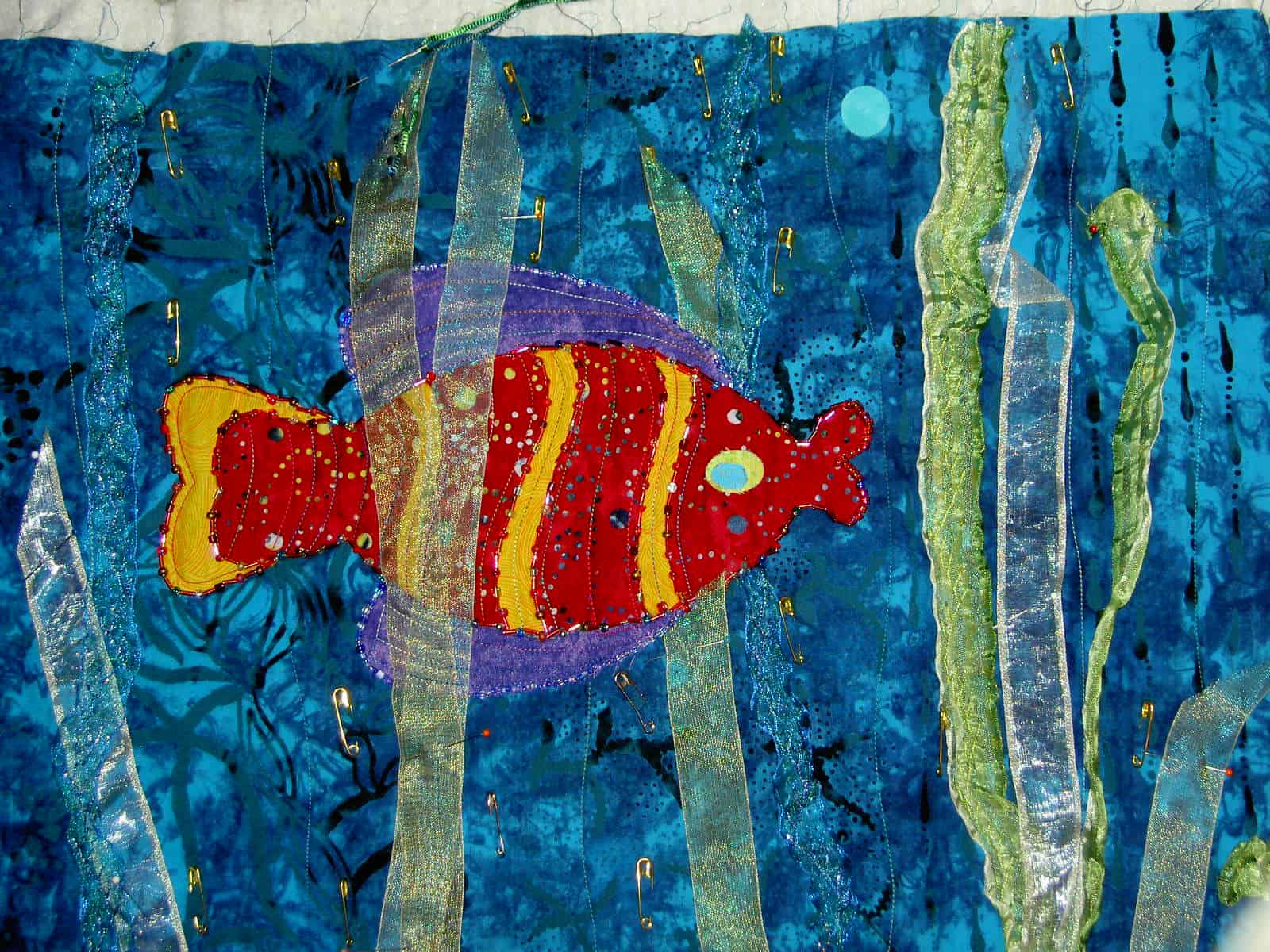
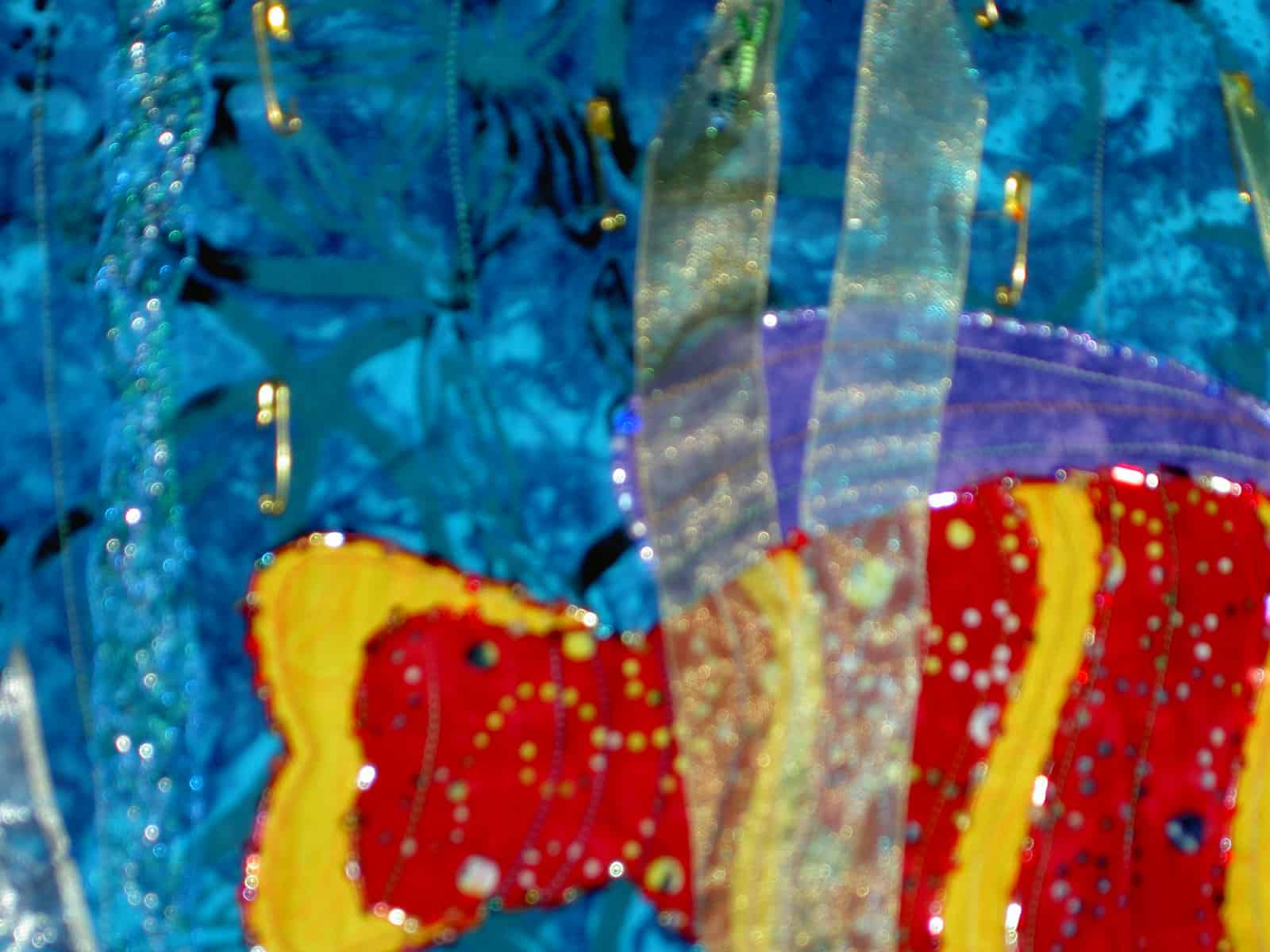
I am shocked that it has been a month since I have posted anything. No sewing has taken place except some beading that I did on Kissy Fish. I worked on it in the car as we drove, but the beading doesn’t show up very well in this photo. Here is a detail, but it is also difficult to see the beading and embroidery. I am off to a quilt show in Seattle this weekend and will hopefully have a cleaner (more sewing machine friendly!) house and lots of inspiration when I return.
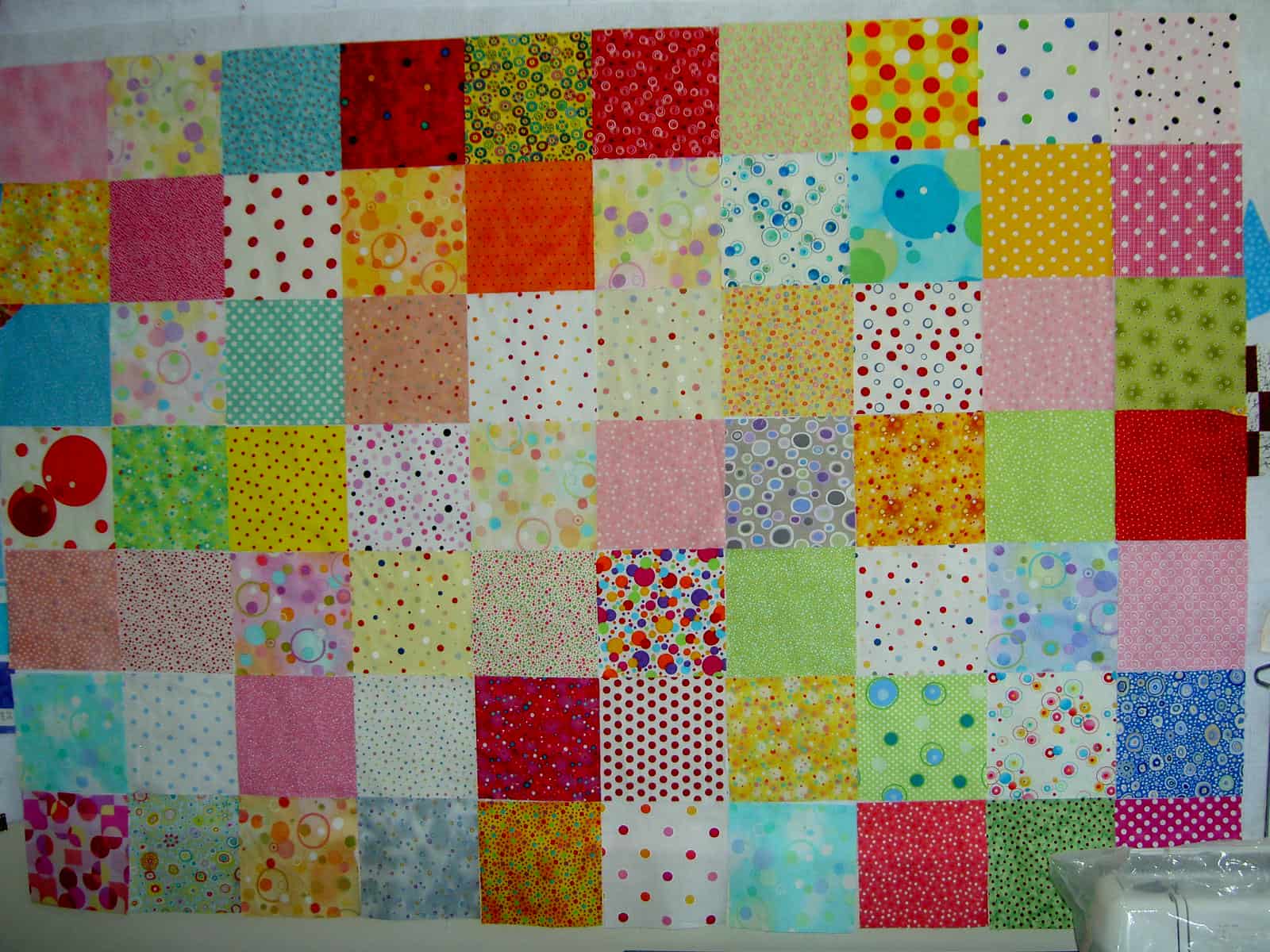
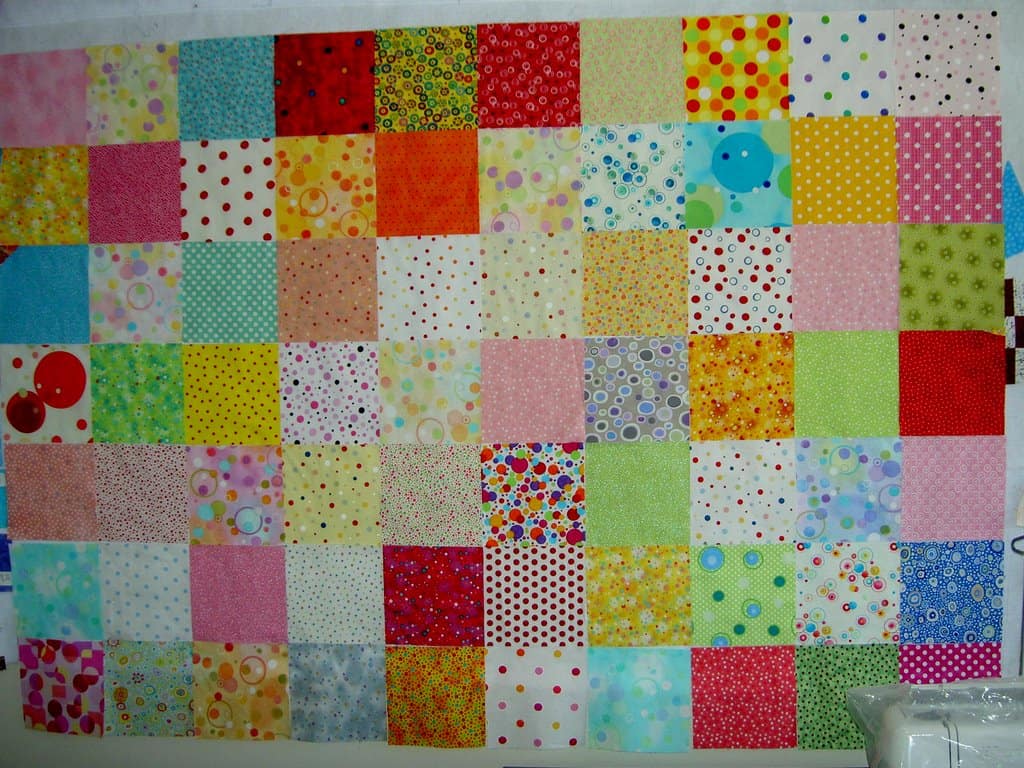
I removed the Pamela Allen quilts and the April Cornell squares from the design wall. I wasn’t working on them and they were starting to depress me*. I put the dot blocks back up instead and it makes me really happy to look at the dots. I also enjoy rearranging the squares into a pleasing layout. This is an extension of working on the various block arranging that I have been doing lately. Below is the photo of the arrangement as I put them up on the wall.
Thoughts on Dots in progress
I have rearranged a few, but nothing major. I am sure there will be some major rearranging as time progresses. I see a diagonal line of white-lights that I would like to break up. I see that I need to pay attention to the placement of the scale of the dot fabrics as well.
Another challenge is the size. Mostly I work on quilts that are about the size of my design wall, which is approximately 64″x42″. I want this quilt to be a true cuddle up quilt. I want to use it to warm me up, but also to comfort my spirit. It may be a quilt that gets used up. It will be a quilt that gets coffee or wine spilled on it, a quilt that gets washed. Thus, I want it to be bigger.
I have, already, more squares than will fit on my design wall and more to cut. I am determined to use as many dot fabrics as I can dredge out of my palette (AKA stash). I am also resolved not to worry about the size.
The challenge is to make it work together while sewing it in sections. I won’t be able to get the whole thing on the design wall all at once. St. JCN suggested a method that I am considering. She suggested that I create a top section and sew it together. Next, I am charged with creating a row or two that works with the top as a transition row, and sew it together. I should not sew it to the larger piece. Then, in order to create unification between the already sewn together top section and the yet to be created bottom section, I should put the transition row or two up the design wall and begin building the bottom section. My primary concern is that the top and bottom be balanced. I am going to try St. JCN’s technique and see how it works when I am ready to sew.
In terms of scale, I need to cut more of the dots with the large circles (4th from the top on the left and 3rd from the right and 2 down). I don’t know how many colorways are languishing in the fabric closet, but I am sure I can dredge some up from somewhere if there are no more in my palette.
I also notice that there are too many of the hoop dots (2 over from the left on the top row, 2 up from the bottom on the left) for the top section. I will remove some of these and save them for the bottom section.
So, come back and see how this project develops.
*I really need to drag out, at least the Jaye’s Garden piece, and some nice Perl Cotton or Oliver Twist specialty hand sewing threads and just start sewing on it. DH’s family doesn’t have a tradition of working on projects while they are chatting and visiting, so it is harder. Like the Nike ad says “Just Do It!”
Alex Anderson has a podcast. It seems to be an extension of Simply Quilts, though not officially. She has about 24 episodes all ready for you to hear via your MP3 player or on your computer (iTunes works well). The episodes vary in length and she does follow up on previous episodes. I would start from the beginning because she does refer back to previous podcasts.
I was skeptical about hearing about quilting, because quiltmaking is such a visual medium. I was pleasantly surprised to hear what a great job AA does using the tools she has. She does refer to supplementary materials which are posted on her website. I think this is a great way of using available technology to deal with a visual medium.
I also find that hearing a podcast helps me keep up with quilting even if I am not actually sewing right at the moment. I find that getting different kinds of sensory stimulation for quilting keeps me in the loop.
If you are not used to listening to books on tape or podcasts, this is a fun and free way to get started.
The first episode talks about what happened with Simply Quilts and how it worked out for her. I get the impression that this is the first step in something larger – another TV show, perhaps?
DebR over at RSR didn’t really ramble when she talked about creativity today. She really put together a classic post that should go into the BLOG OF CLASSIC POSTS. She explains her modus operandi in the creativity department and shows a great way of looking at creativity, which makes creativity accessible. Be creative and the art will come. RSR makes a good point about observing patterns and having them come together at some point through work on your own or by chance so that you have enough information to create. I think her discussion also shows that you can’t just sit down and create something. You have to gather the materials in one way or another. They may be ideas in your head, they may be mag pics in a folder or images in a folder on your desktop. At some point there is enough so you can get to work. I like this process as well, because it means that genius takes work and what I am doing is right.
APNQ has an exhibit up on their website of Postcard Quilts. The webmaster has a nice utility to zoom through all of them using ‘next’ and ‘previous’ buttons. One of my favorites reminds me of our 2005 trip to Hawaii. I love the turtle design.
A few years ago, I went to Lowell, Mass while on a business trip. I didn’t get to devote as much time as I would have liked to the experience. We didn’t have much time for sightseeing and I was pretty tired from taking a Red Eye. Still, it was great to get a flavor of the place. The quilts that I saw at the New England Quilt Museum were wonderful.
I was thrilled recently to see that the Lowell Textile Museum has put their online catalog in beta out on the web. While I am a sucker for online catalogs, I am more thrilled that more textile and quilt information is being put out as well. I would LOVE LOVE LOVE to see a quilt catalog that had hundreds and hundreds of quilts ranging from famous quilts to the neighbor next door quilts. The catalog could cover anyone that wants to upload a quilt and just be images and description-a virtual collection. I think it would be a great resource for historians, geneologists, people seeking patterns, artists, everyone, especially as it evolved. I think it would be fantastic. When I win the lottery, this will be my project.
In this catalog, I would like to see a general browse feature. Additionally, a photograph browse, a textile browse etc. would allow people browse through the collection if they just want to get an idea of what the museum owns.
I hope that some of the fabric companies look at these collections, because some of hte fabrics look really interesting. It would be great if The Electric Quilt could partner with the museum to reproduce their fabrics digitally for use with EQ5.
Still, I am thrilled that this new resource is available and I look forward to see more of their collection virtually.
I had a few hours in Baltimore on Thursday June 16, so I went up to the Mt. Vernon District and looked around. While I was there I visited the Walters. I like their tag line: experience 55 centuries of art. I can’t even conceive of 55 centuries. How wonderful it is that people have been making art for 55 centuries!
The Walters is in an interesting space. It is a blend of old and new. The old really appeals to me, but I also liked the new staircase that they have built recently (I understand). The sculpture courtyard, on the first floor, was modeled after an Italian palazzo. It was very light and airy and I enjoyed being in there. I would have liked to have sat there for awhile with some cappucino and written in my journal. Alas, it was not to be. An activity for another day. There were two elderly people sitting and seemed to be enjoying themselves. I will take their enjoyment as my own.
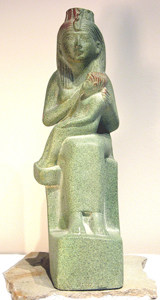
Isis Nursing Horus
Hands down, my favorite piece was in the Egypt gallery. It was a statute of Isis sitting with Horus on her lap. It was called Isis Nursing Horus. First, I liked the subject matter. It was very feminine, but also showed what a strong woman Isis was. She was a goddess in her own right as well as being the wife of Osiris and the mother of Horus, two other strong gods. Despite the fact that she was a goddess, she was also a mother, which, on some level, I find very profound. In terms of the actual piece, I like the simple lines, sort of Bufano-esque. There are other pieces that I saw while surfing which are much more detailed and painted. This version is my preference. It looks like I could buy a copy of this statue at The Virtual Khan el Khalili. I’ll have to consider it once the construction is finished.
I also liked a painting near the Impressionist Gallery called The Christian Martyrs’ Last Prayer by Jean-Leon Gerome. While I wasn’t thrilled with the subject matter, (Christians praying right before they were going to be killed for sport at the Circus) the thing I liked about it was the detail. The way the lion was painted, the beard of the man saying the prayer, the stone on the structure. The lion looked like it could have turned it’s head and roared. I was also quite taken with the pad on the lion’s paws. You can’t really see the paw and the pad very well in the ‘Net image, but it is amazing. I guess this is a good reason not to rely completely on the web for everything. We still need to go to art museums.
Another piece I loved was a sculpture of a little girl. It was so realistic that it was nearly impossible for me not to touch it. It was called First Disappointment by Erastus Dow Palmer. This piece is not available in image format on the web, nor was there a postcard of the piece. What a shame.
I really think that museums should make more of their works available either in postcard or image format. I think it would allow more access to their collections. I understand the concept of inventory, but inventory vs marketing…. Frankly, I just want access…
I only had a few minutes to look at the Treasury, which had all of the china, crystal and silver. It was one spot that I wish I had spent more time in, but I didn’t see that it was available until I wandered past it. I love china, crystal and silver. I spent a few minutes looking at a chocolate pot. I know it is a silly piece of dishware, but I love the way the handle is perpendicular to the spout.