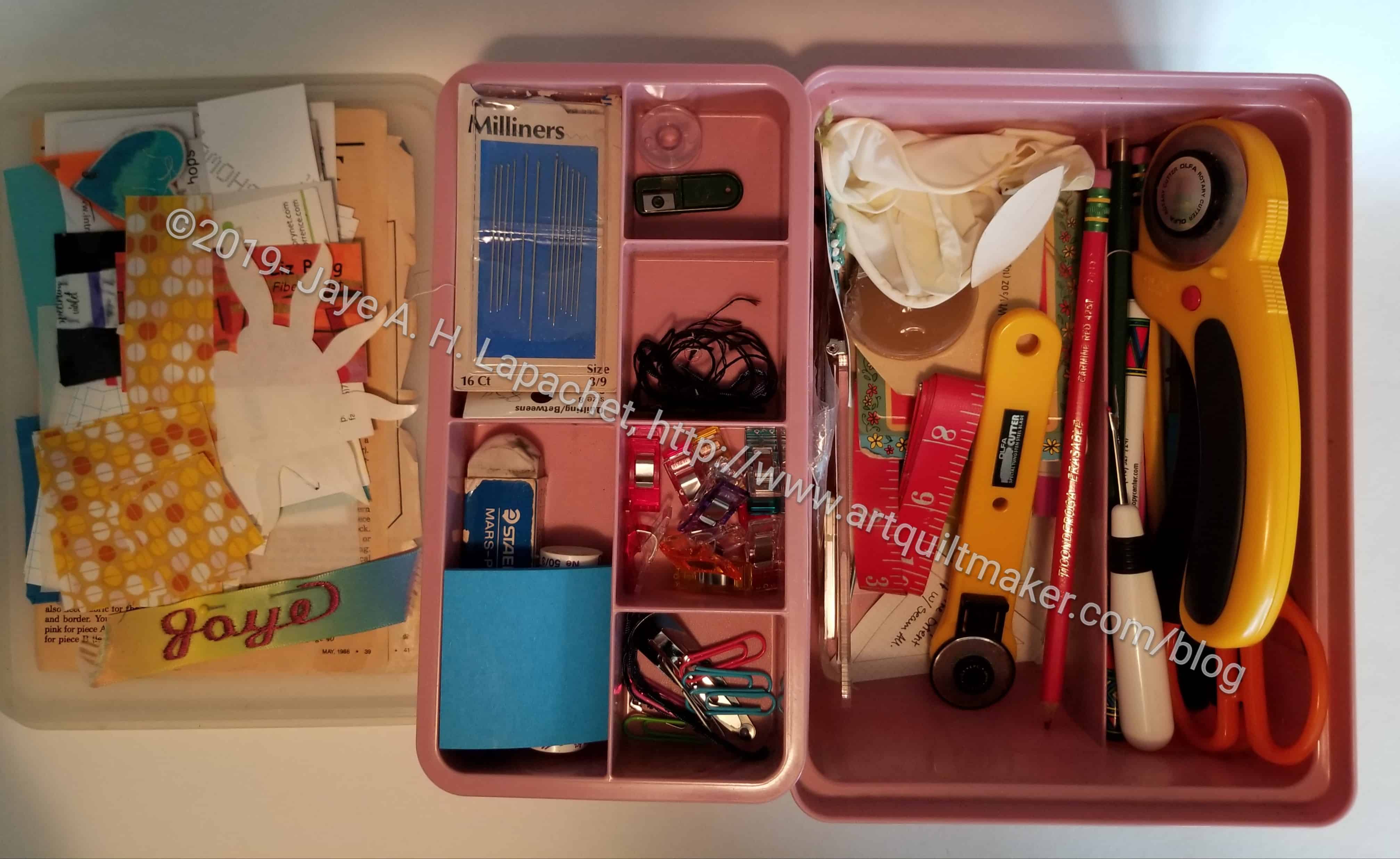
I often refer to BSK in my tutorials and when I teach. When I teach I can show a BSK, but that doesn’t really work in tutorials.
BSK is basic sewing kit. I know I have referred to what it is in passing. It is also in the glossary, but I thought I would write about my BSK and give you some visuals. I don’t usually include fabric as part of a BSK, so it is not included here.
A BSK is a basic sewing kit, which includes all the tools you need to make a quilt.
I choose to have a basic sewing kit I keep at home and another one I use exclusively for travel. This way I don’t forget anything when I go on retreat and I have what I need when I am sewing at home. I did not go out and buy second items for my travel kit. I have collected the duplicate items over the years. I suggest you do the same as outfitting yourself or quiltmaking can be daunting.
A basic sewing kit for quiltmaking includes the following:
Sewing
Sewing machine
-
- Sewing machines come in all price ranges and lists of features. It is important to buy a reliable machine. A new machine is not required. A used machine from a reliable dealer is a great option. I use Janome machines. I have friends with Berninas, Jukis, Pfaffs and Brother machines.

1/4 inch foot – find the one that fits your machine. I like one that has a flange.
Bobbins – I like to have plenty of bobbins. I don’t know what ‘plenty’ is. I wind about 10 bobbins at a time for my basic sewing color (Aurifil Dove, 2600) and maybe a half a bobbin for other colors. It depends on what I am doing. I try to walk the line between having thread sit on the bobbin for years unused and having a bobbin available so I can continue sewing.
Thread – I use Aurifil, but find a high quality thread that your machine likes. My go to all around sewing thread color is Aurifil Dove #2600. This color blends into a lot of fabrics. I don’t generally change my thread color when I change fabric, but might depending on how the thread looks. I do change the color of thread when I am top stitching, for the most part.
Machine needles – I like sharp needles. I don’t use universal needles.
Hand sewing needles – I like chenille needles in size 24 because they have a big eye, so are easier to thread, but the eye isn’t too big
Needle threader – I have lots of different ones and they all break at some point. I just keep trying different ones.
Pins – my favorite are Dritz 64 Pearlized Pins, Long, 1-1/2-Inch**. they are long and don’t bend as quickly as others.
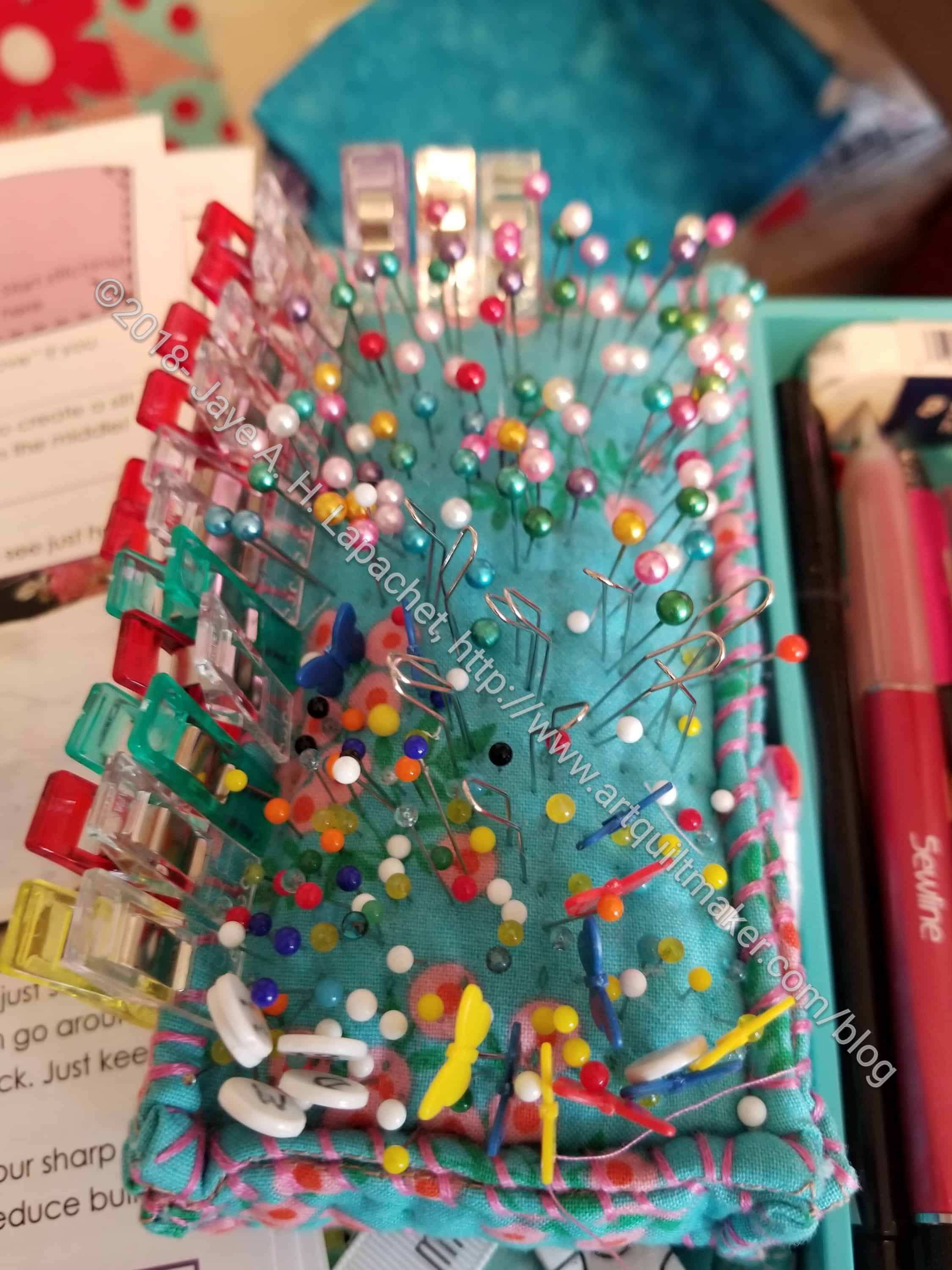
Pincushion
Wonder Clips (especially if you are making bags) – I like both sizes, but use the small clips more often than the large clips. I buy only the Clover brand version as I go through the off brand versions like water. They break very easily with the smallest amount of stress.
Pressing
Iron – I have had good luck with inexpensive irons from stores like Target, Costco, etc. I had several
Ironing surface
-
- I have a Polder ironing board which I received when I got married. It works fine and I have had no problems with it. I have had to buy new ironing board covers, which I have found at the Container Store.
- I also have a June Tailor Quilter’s Cut ‘n Press** for travel, Sew Days and retreats. It was very convenient when we were in Portland. It also fits in my ruler/mat bag along with my mat
Cutting
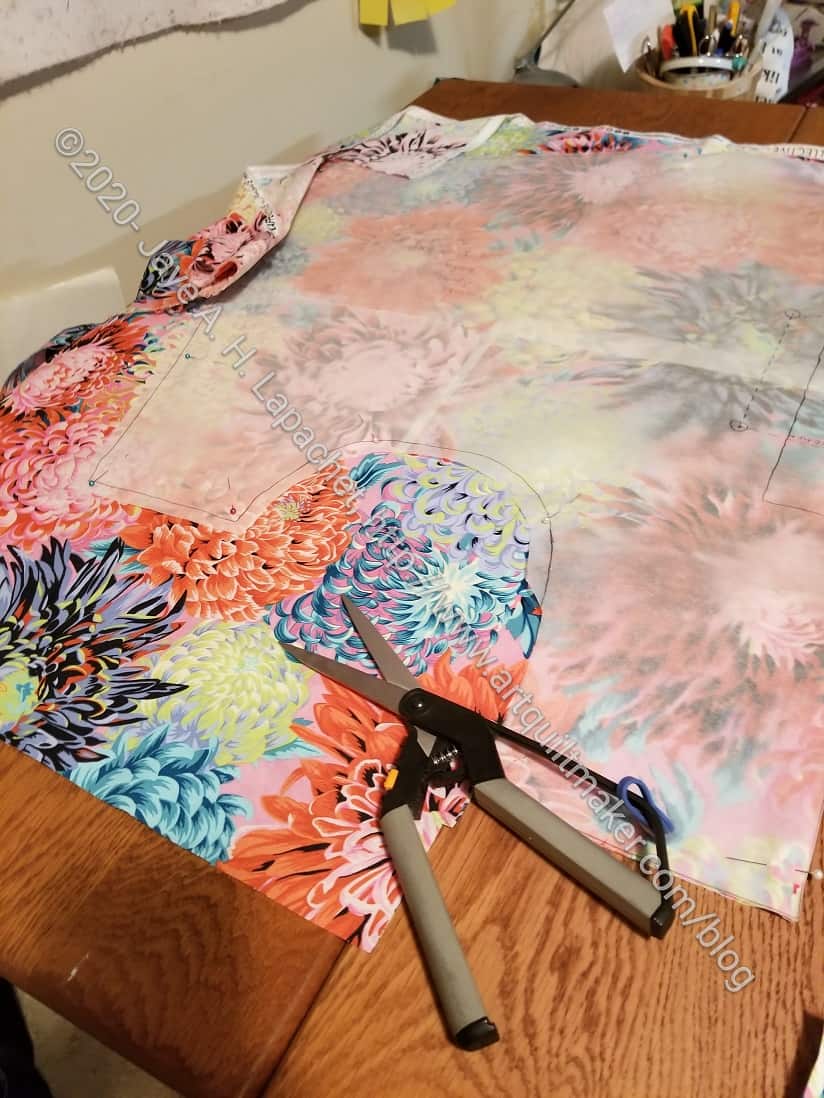
Scissors
Snips
Rotary cutter – I like the OLFA 45mm Ergonomic Rotary Cutter (RTY-2/DX) – Rotary Fabric Cutter w/Blade Cover & Squeeze Trigger** because the blade is protected unless you are squeezing it. It is not possible to leave it open. I have other types of rotary cutters as well, but this is the style I use the most. I use a 60mm rotary cutter when I am cutting foam, which means less re-cutting. I use the small size occasionally when cutting curves.
Acrylic ruler(s) – I have a quite the collection after so many years, but the following are what I consider the basics.
-
-
- 4.5 inch x 8.5 inch Creative Grids Quilt Ruler 4-1/2in x 8-1/2in Rectangle – CGR48** is my go-to ruler for trimming and cutting small pieces. It fits well in my hand and is easy to manage.
- 8-1/2in x 24-1/2in Creative Grids Quilt Ruler 8-1/2in x 24-1/2in Rectangle – CGR824** is what I use when cutting strips
- Creative Grids Quilt Ruler 15-1/2in x 15-1/2in Square – CGR15** is what I use when cutting binding and large squares for bags.
- Creative Grids Quilt Ruler 6-1/2in x 6-1/2in Square – CGR6** is a smaller square that is really useful for cutting pieces in patterns and for scrap processing.
-
Self healing rotary cutting mat
Unsewing
Seam ripper – I have a lot of seam rippers. I have them everywhere as I don’t want to go hunting for them. I like the Clover ergonomic seam ripper**, because it has a fat white handle. I received a Clover Grip Fit seam ripper** as a gift. Even though the handle isn’t as fat, it fits in my hand pretty well. I also have a couple of Kaffe Fassett seam rippers which have a super fat handle, so far very comfortable. the blade isn’t as thin and I can’t always get it under the stitches.
Marking and Measuring
See also: Cutting
120 inch measuring tape
Marking tools
-
-
- Sewline Pencils
- Chalkoner
-
Extension cord (good for quilt retreats/travel)
-
- I like the one I bought in 2025 that has a whole bunch of outlets in a compact and not ugly case**.
Quilting
Machine quilting gloves
Walking foot
Basting pins
Painter’s tape
Masking tape
Optional
Pen
Notepad – I like graph paper notepads or journals so I can draw quilt blocks, if I need to
Glue Stick
Bobbin boat/bobbin holder (something to keep your bobbins from rolling away)
Tweezers – I like the ones called Swiss Precision Angled Tweezers 4 1/2″ 507SP on the GEQuilts website. I use them for bagmaking and also sometimes for removing threads
Pinking shears
Applique’ scissors
Stiletto
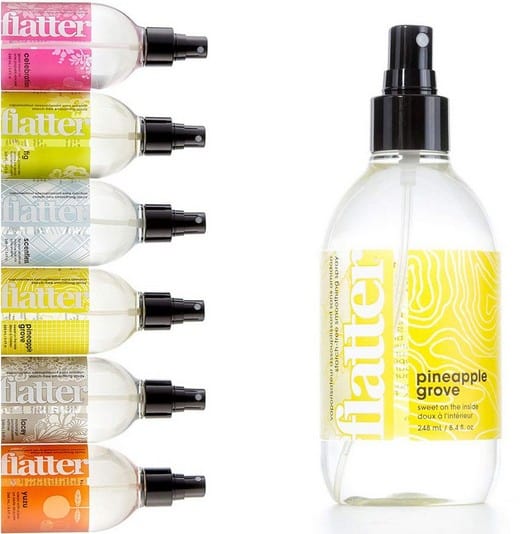
Flatter
Free motion quilting foot
Travel iron
This is my first effort at describing a BSK so I may make updates.
**Obviously, you should shop at local quilt shops and small businesses. However, if you are too busy or can’t find what you need there, I use Amazon affiliate links and may be paid for your purchase of an item when you click on an item’s link in my post. There is no additional cost to you for clicking or purchasing items I recommend. I appreciate your clicks and purchases as it helps support this website.
