Sampler Class: Fusible Machine Applique’ Tutorial Part 2

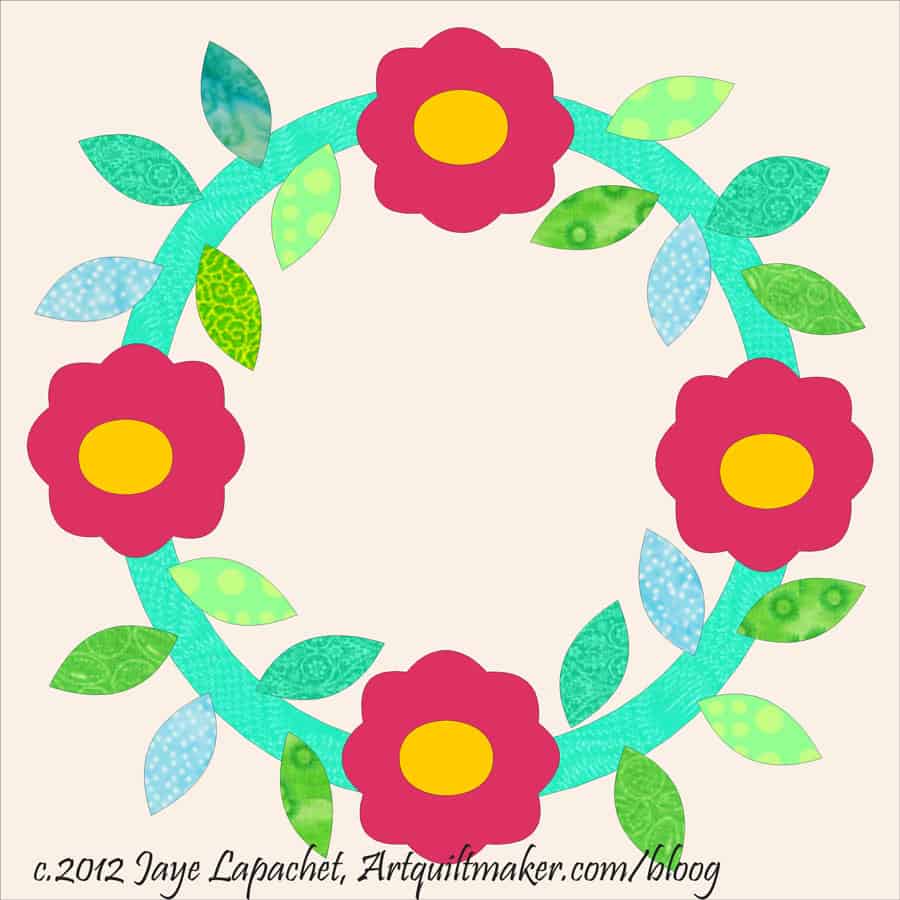
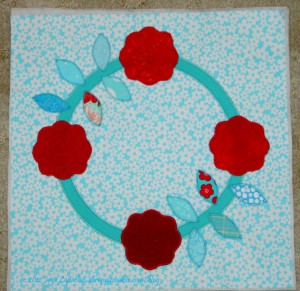
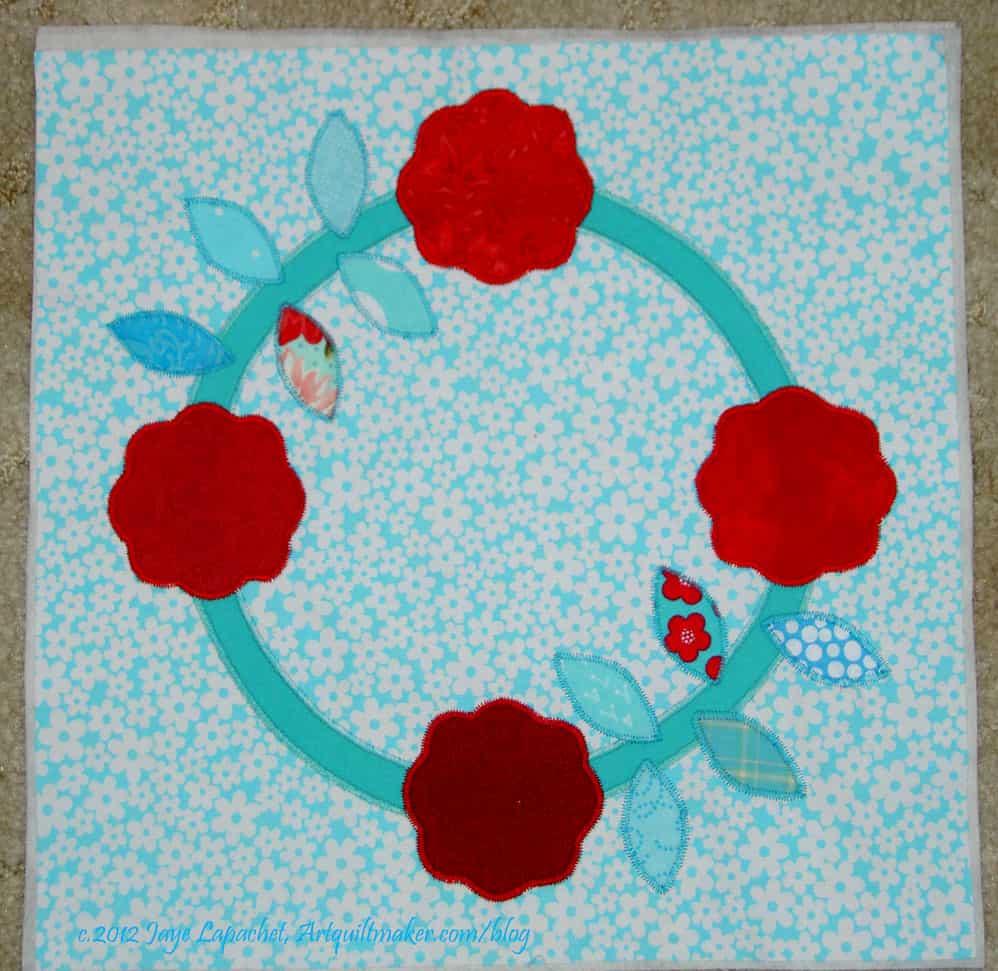
We are making the Flower Wreath block. To find out how to make templates, including the ring see Part 1.

Flower Wreath
Flower Wreath

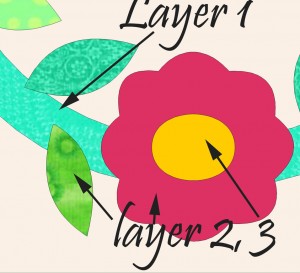
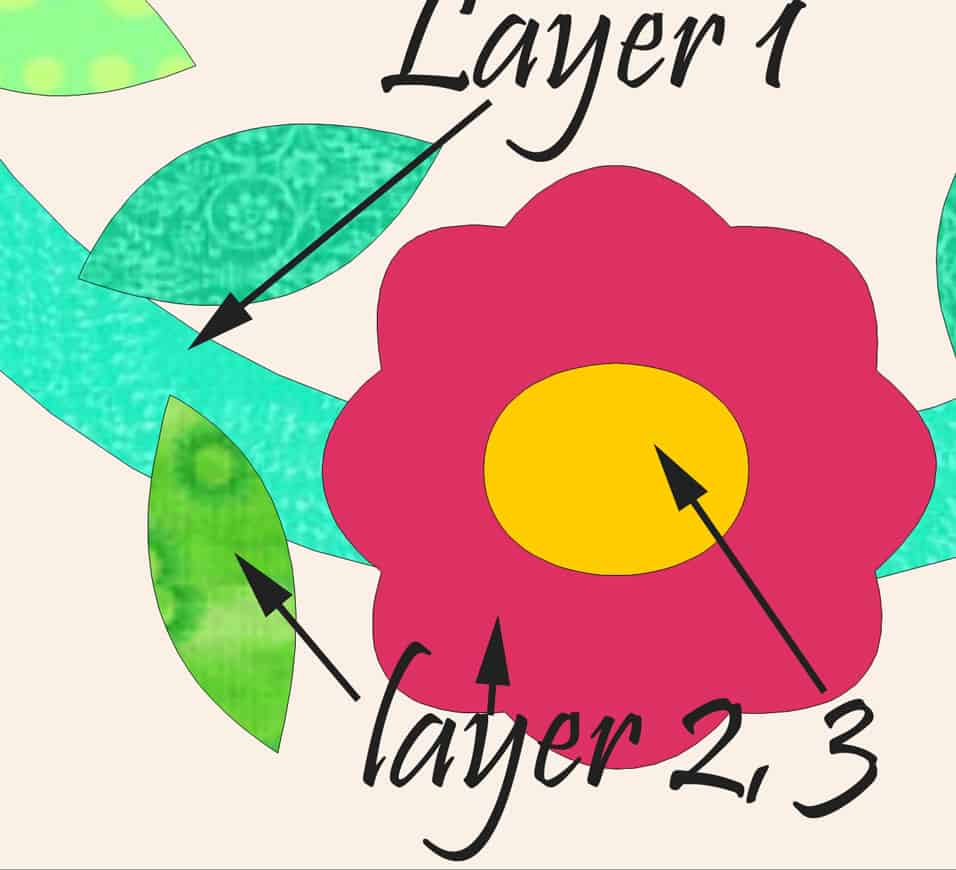
Choose your fabrics. You will need fabric for the flowers (1-4 fabrics), leaves (1-20 fabrics) and the wreath (1 fabric). The leaves can be the traditional green or you can use something else. If you use one color, you might want to mix up the prints to increase interest. You can also use different colors. Make the block your own.

I am going to try and use a variety of turquoises and aquas to keep my color scheme in the aqua/turquoise with red range. I have a few of the leaf fabrics picked out from my scrap basket, but need to find more. It is important, with my limited color scheme to make sure the viewer can see the individual leaves.

Cut piece large enough for ring

The ring is the biggest pain to deal with so I deal with it first before I even really think much about fabrics for the other parts. I decided to use one of the Pat Bravo Pure Elements solids in the turquoise range, but more on the green side. I haven’t used it in this quilt before. I picked it to highlight the leaves a little more.

Cover fabric with fusible

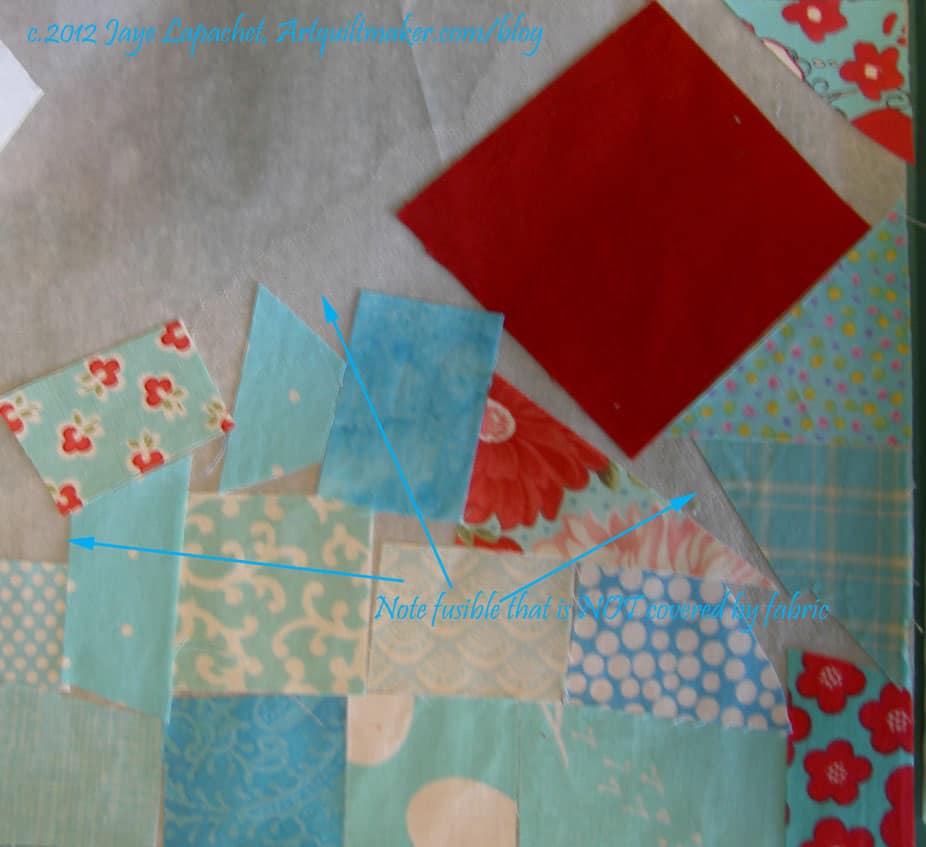
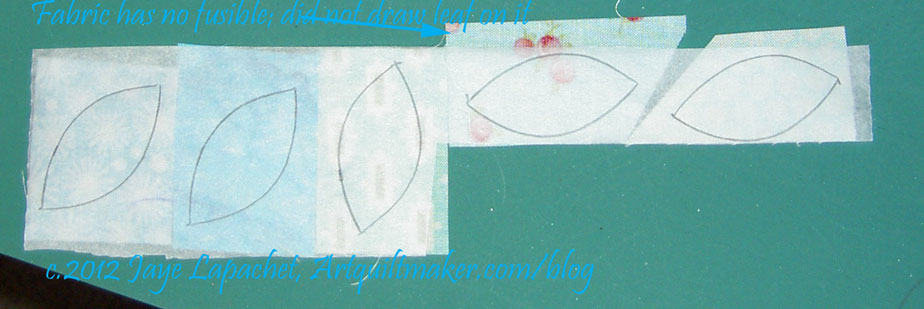
Now you need to make sure that your fusible will cover your fabric.

I used a package of Steam-a-Seam 2 Lite, but there are many fusibles that will work just fine for this project. Use what you know how to use or what you have on hand.

Tear the paper carefully off of one side of the fusible (or follow directions for your fusible) and stick it to the fabric, smoothing it carefully so there are no puckers or bubbles. The fusible is sticky so you can stick to the fabric and reposition it until you are happy.

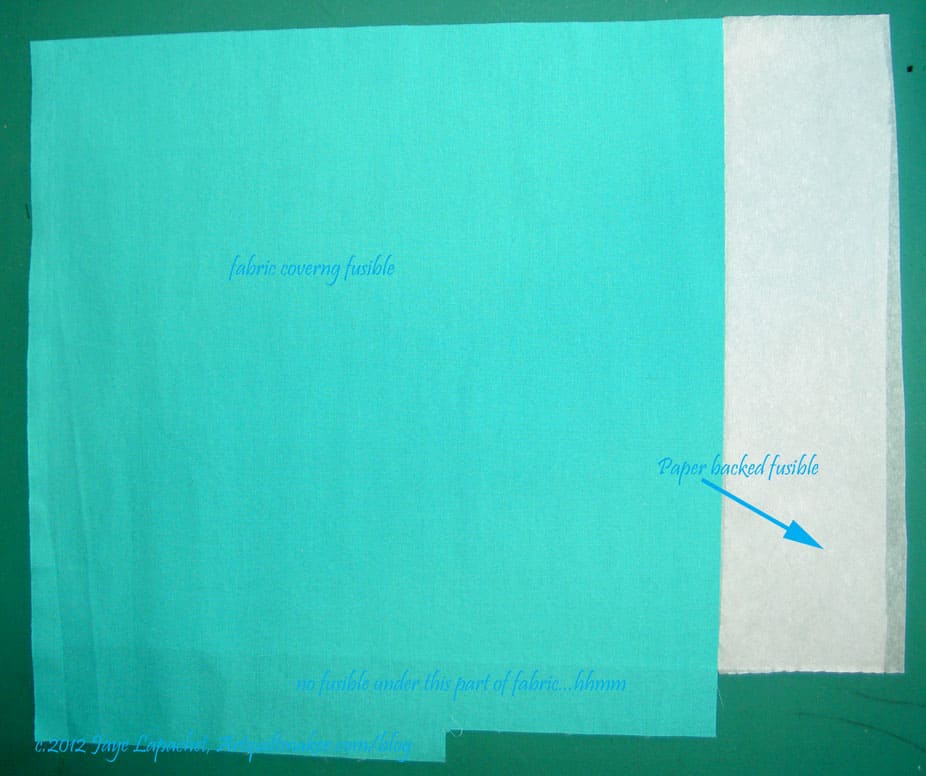
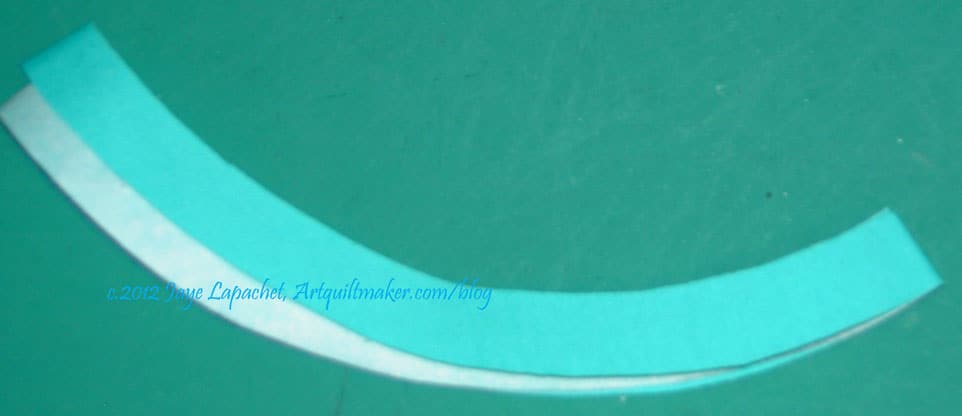
Back of fusible backed fabric

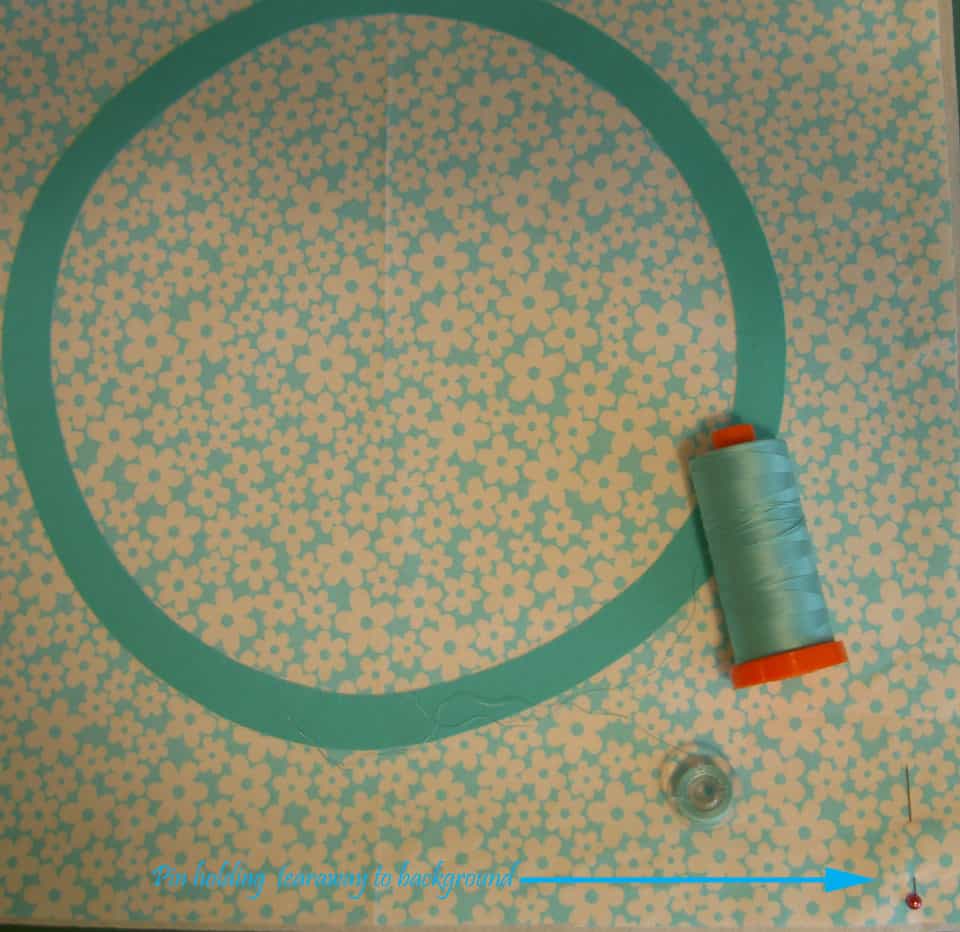
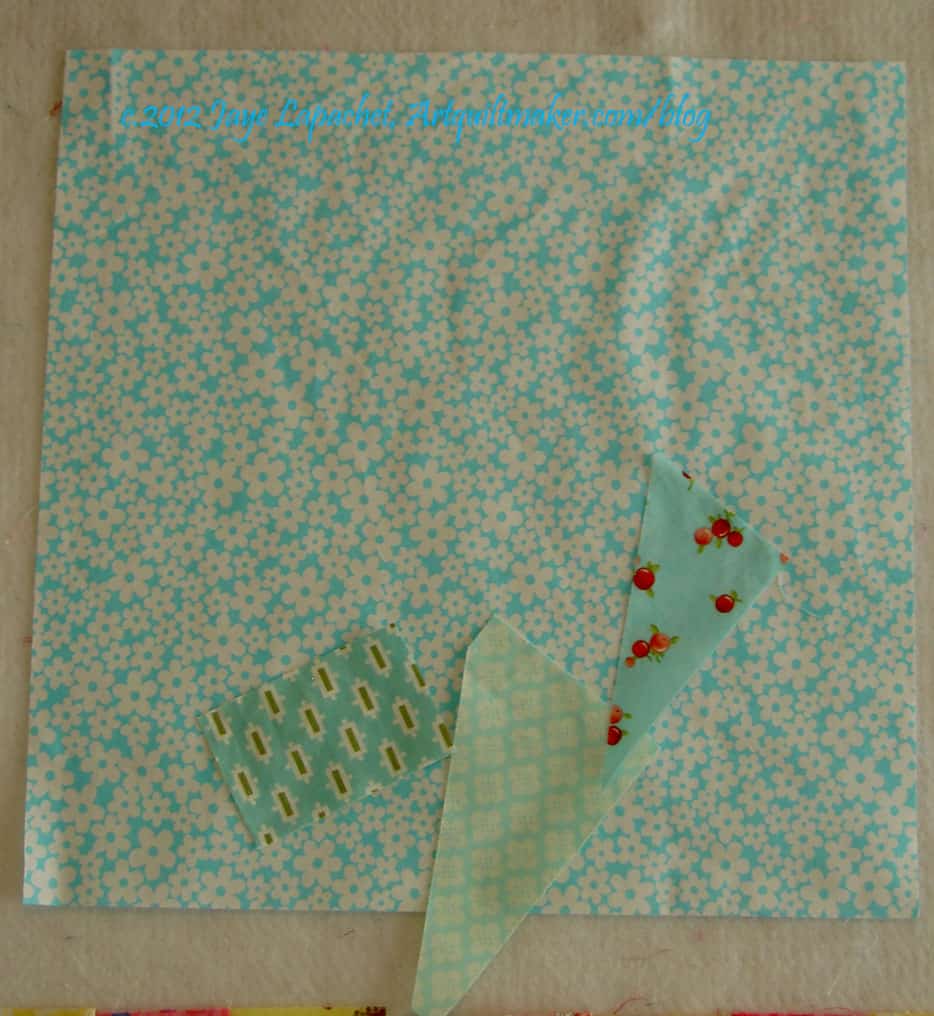
Since the pieces I had were 8.5″x11″, I needed to cover an extra piece (bottom of the photo above) that was wider than the 8.5″ width of the fusible. I cut a piece from the fusible (white part in photo above) and re-positioned it  to cover the part of the fabric I need for the size of the template.

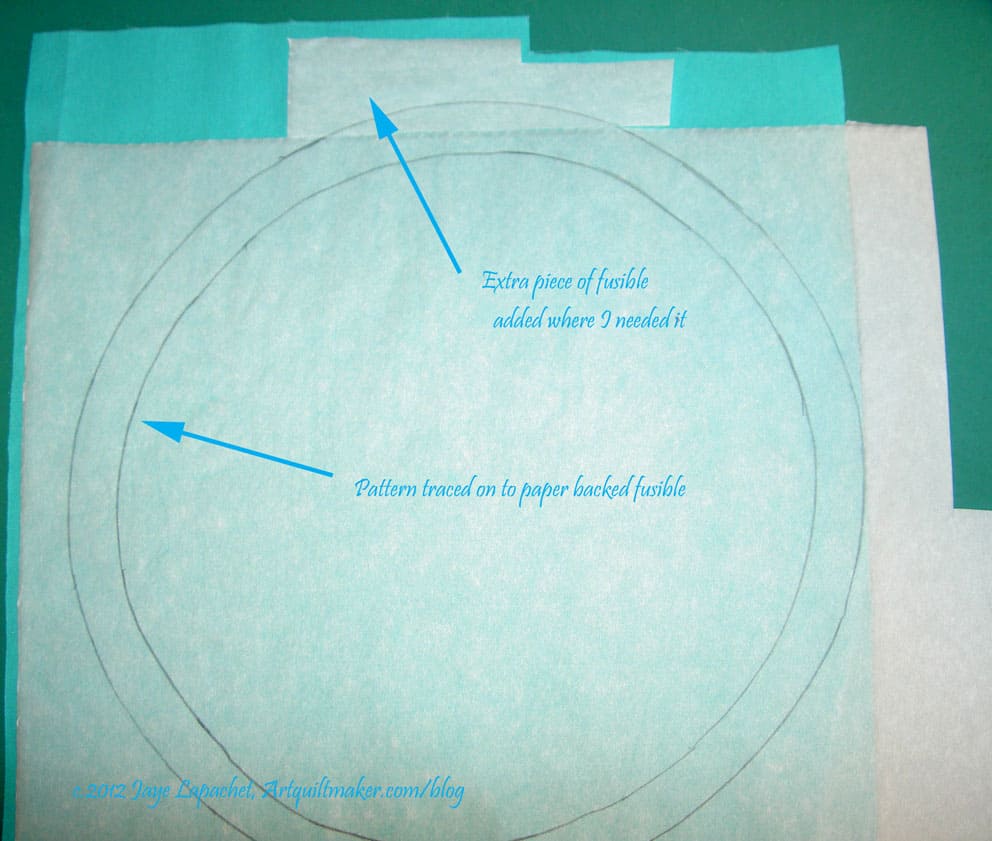
Once you are happy, fuse the 2 sided fusible (should have the paper left on one side) to your ring fabric. Follow the directions on the package or website. You may want to cover your ironing board and the piece with junk fabric or an applique’ pressing sheet to keep your iron and ironing surface clean.

Turn your fusible backed fabric so that the paper left on the fabric is face up, as in the photo above. Place your ring template face down on the paper and trace around it with a pencil.

Ring cut out
Ring cut out

Cut out the ring carefully on the line. I used an X-acto knife to start the center. I did use a pair of fabric scissors, but not my Gingher scissors. It is kind of hard to know what to do, because you are cutting both fabric and paper and you need a nice sharp edge. I use a pair of my mid-range scissors and hope for the best. They still seem sharp even after a bit of this type of cutting.

Fold the ring into quarters and finger press lightly. Again you will be lining up the folds to center the ring.

Retrieve your background. Fold the background into quarters and finger press, so you can see the folds.
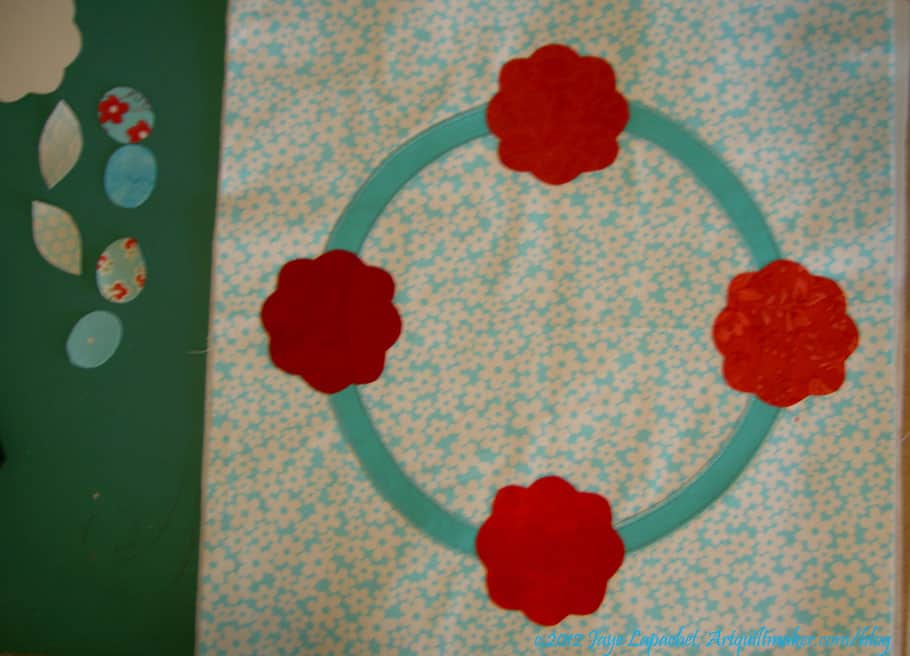
Line up ring on background


Remove paper from the ring.

Line up the folds of the ring on the folds of the background. If they are all in alignment, there should be a ring fold snuggled with a background fold evenly. If you want to check, measure from the edge to the ring. You do need an absolutely square block for this to work.

Press the ring onto the background so it sticks.
Carefully bring background with the ring stuck to it to the iron. Check to see that your ring is still in place. According to your fusible directions, press the ring into place.

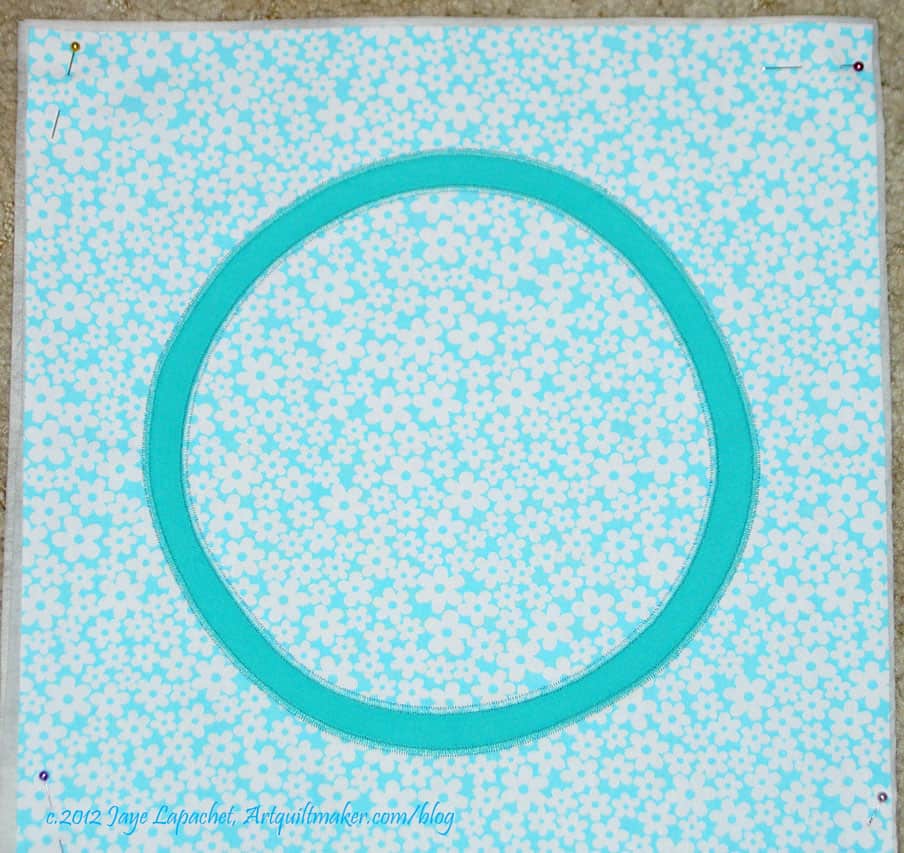
Your ring should now be firmly ironed on to the center of the background.

Leave this piece on the ironing board temporarily.

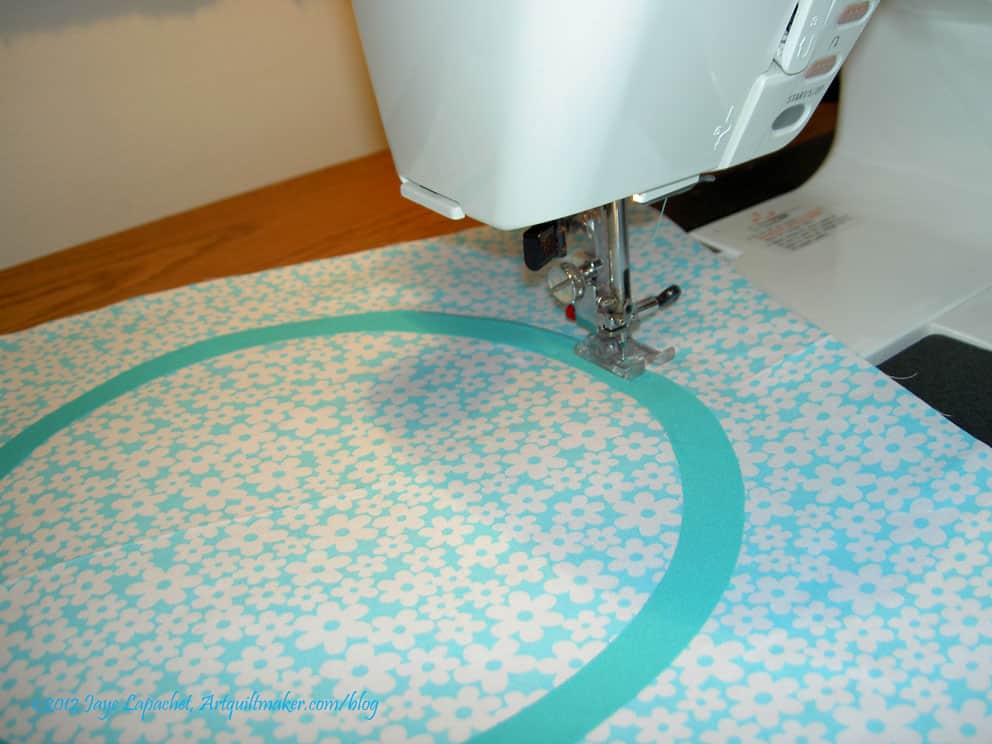
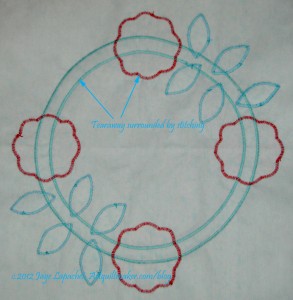
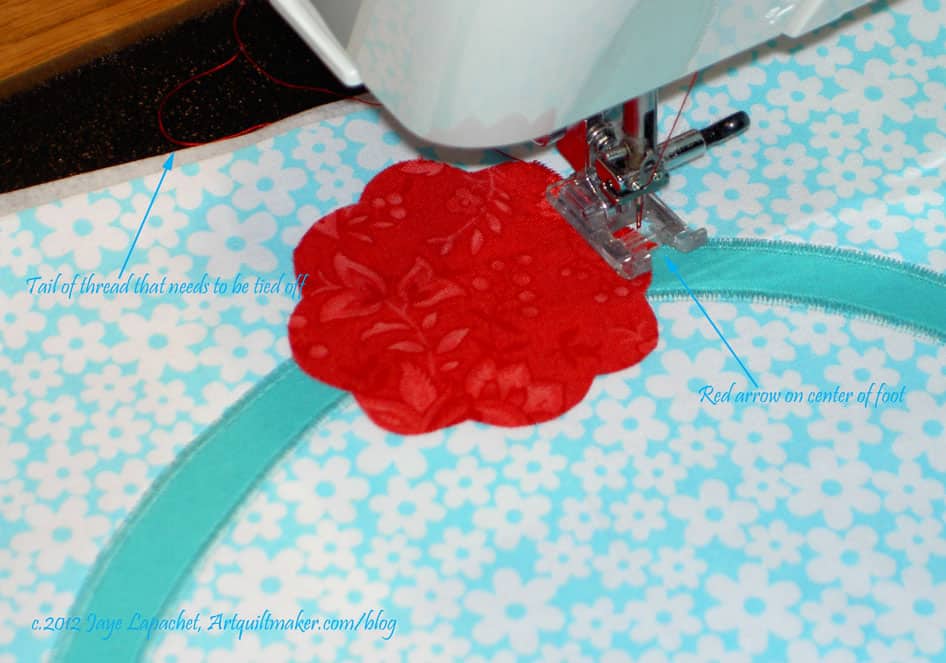
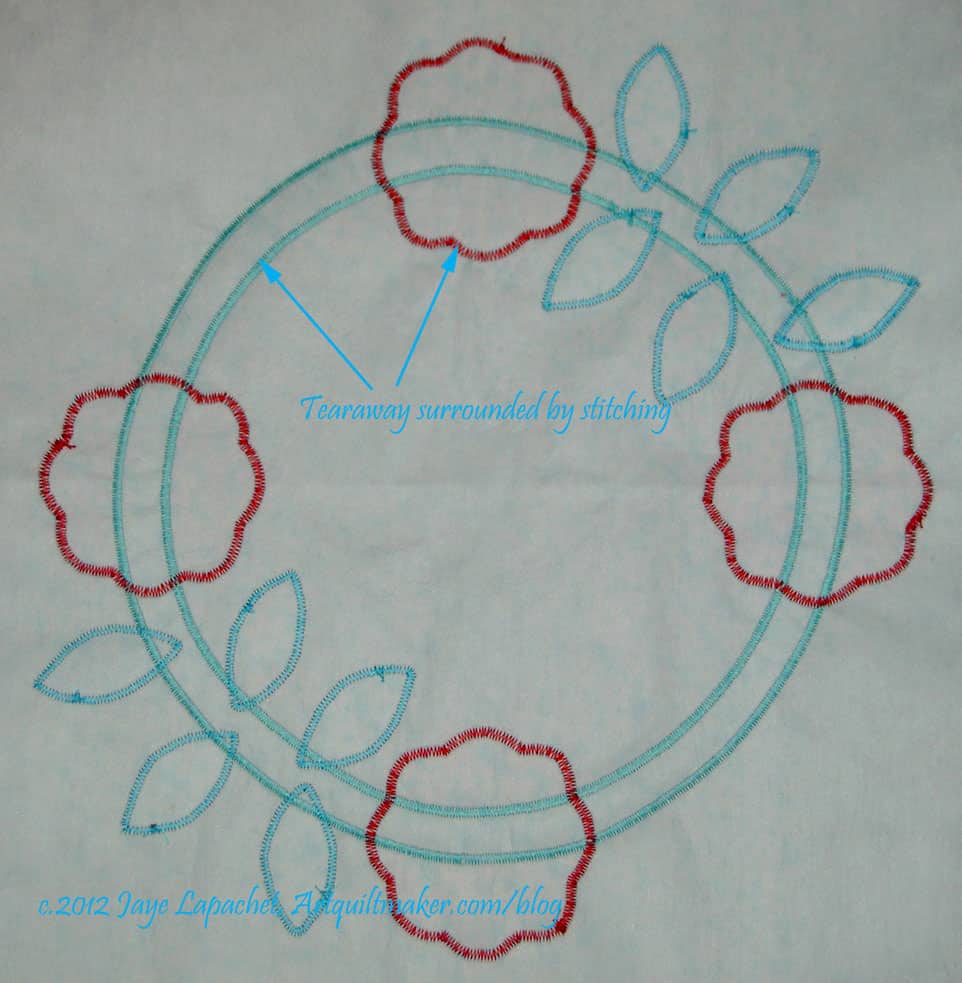
Get the tearaway you purchased (or had) and cut two pieces of tearaway stabilizer a little bit larger than your background. Place your background on top of the tearaway and pin it to the background. This will provide stability and prevent the piece from puckering when you zig zag stitch the pieces.

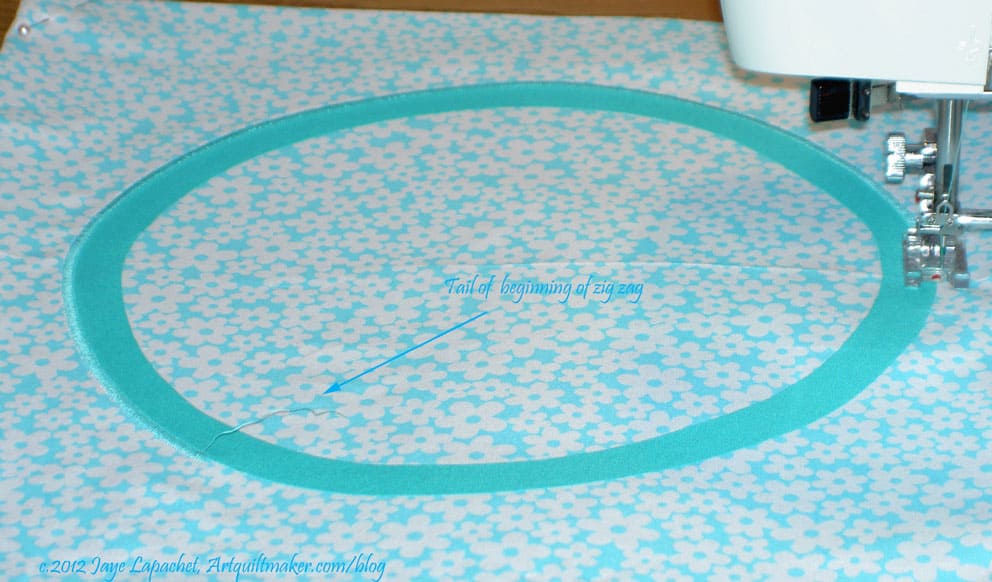
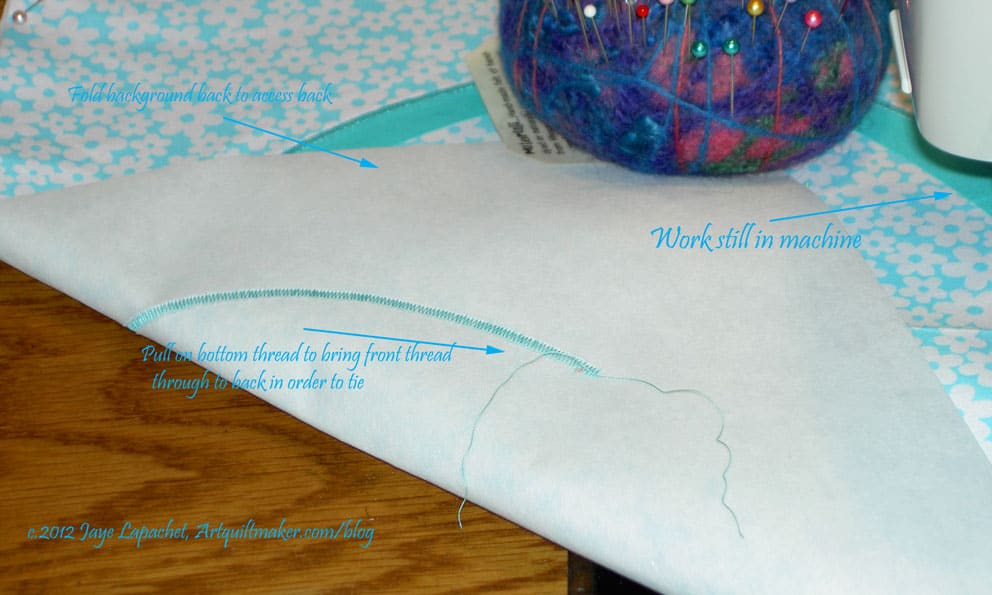
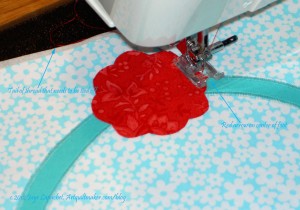
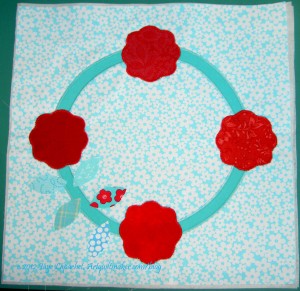
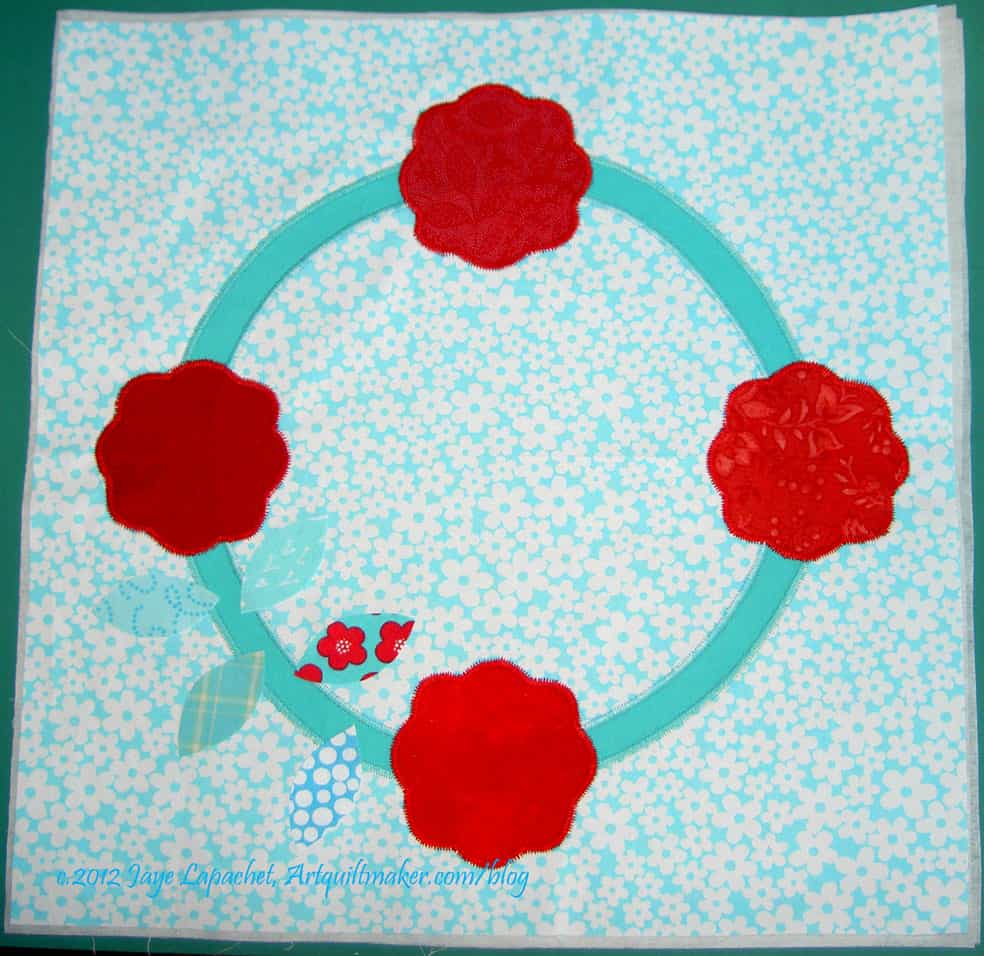
You are now ready to machine applique’ your first part of the block. See part 3 for machine stitching the block.

Tutorial: Nine Patch

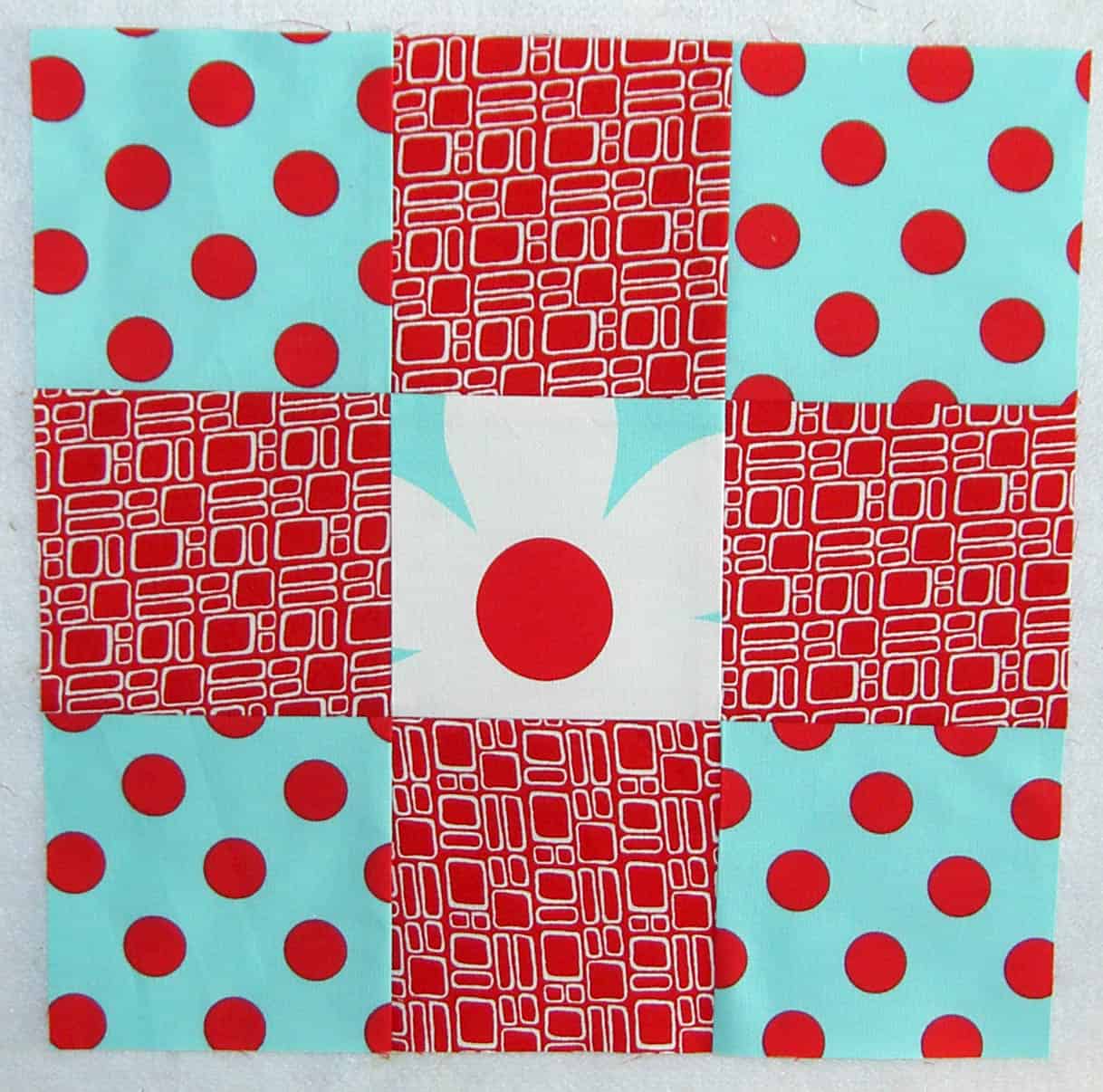
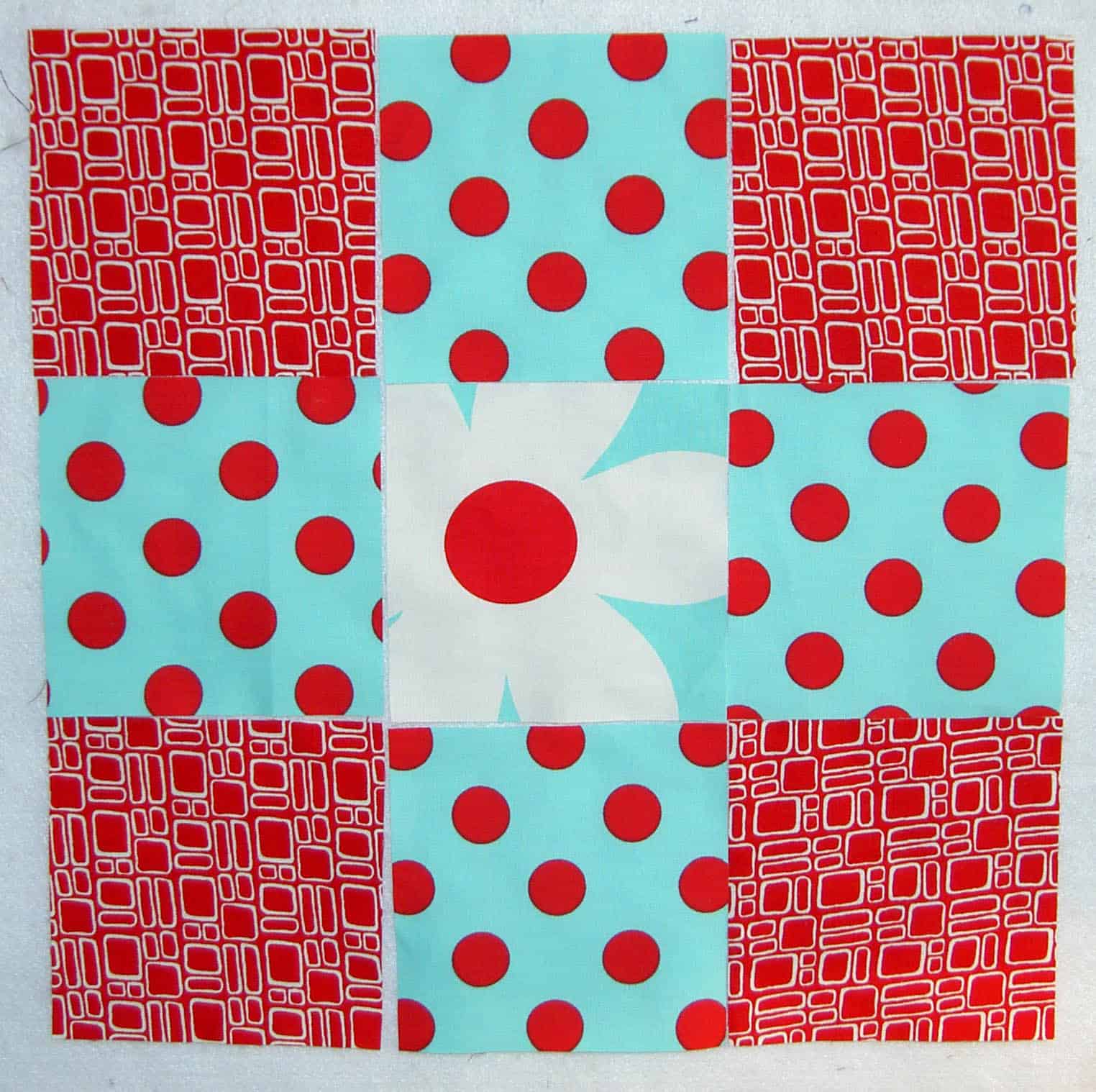
Finished: Nine Patch

Today we are making a Nine Patch. This is usually the first block I teach when I teach beginning quiltmakers in a Sampler Class context. You will need:

Supply list:

  • rotary cutter
  • rotary cutting ruler large enough to cut 4.5″ squares
  • rotary cutting ruler
  • fabric (2-3 different)
  • Optional: Mary Ellen’s Best Press (or similar)
  • Optional: pins
  • sharp trimmers or scissors
  • thread for piecing
  • sewing machine
  • Iron
  • ironing surface
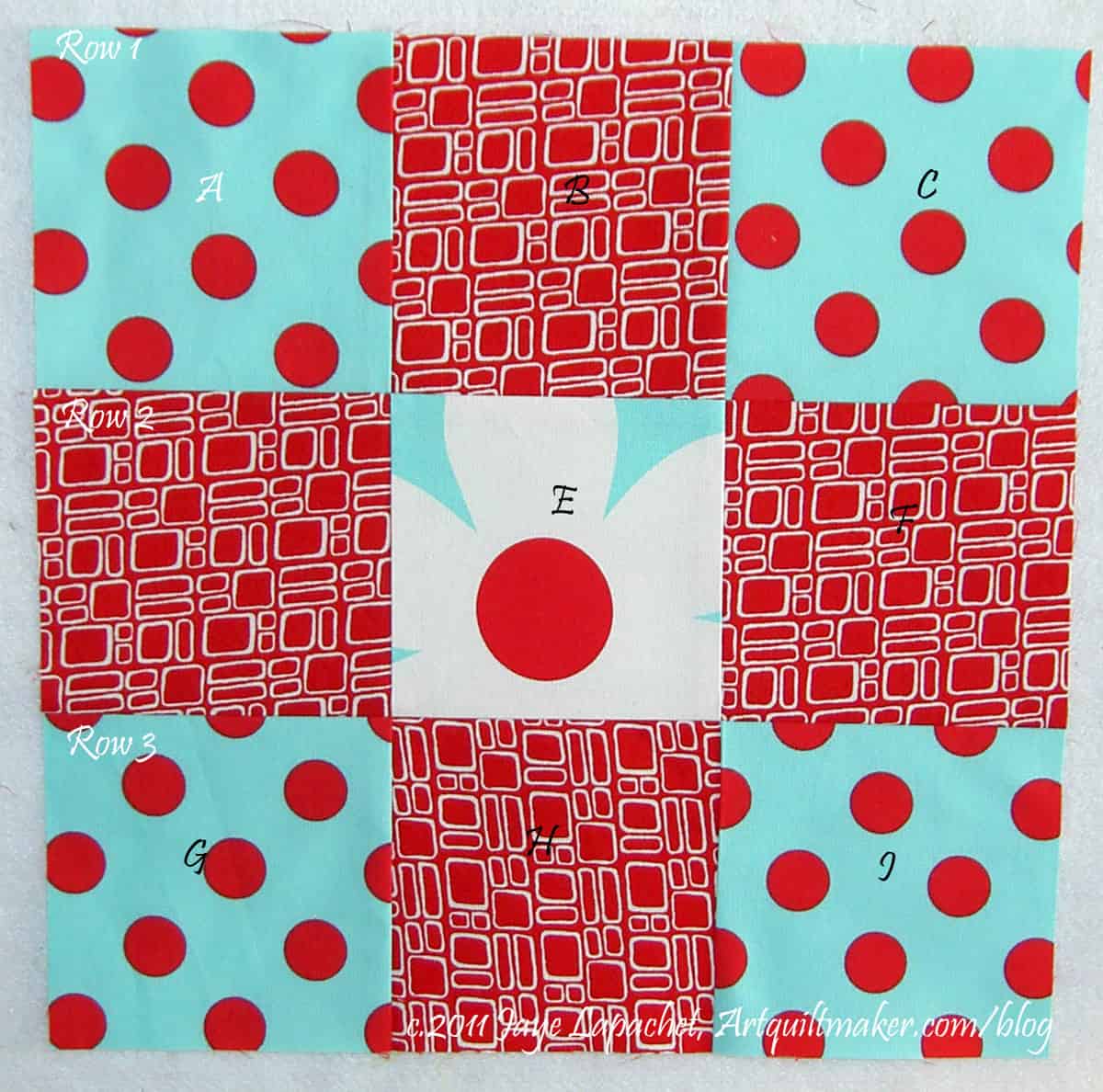
Key Block
Key Block

I have marked the rows and patch with letters and numbers so I can more easily refer to them for you.

Nine Patch: Center
Nine Patch: Center

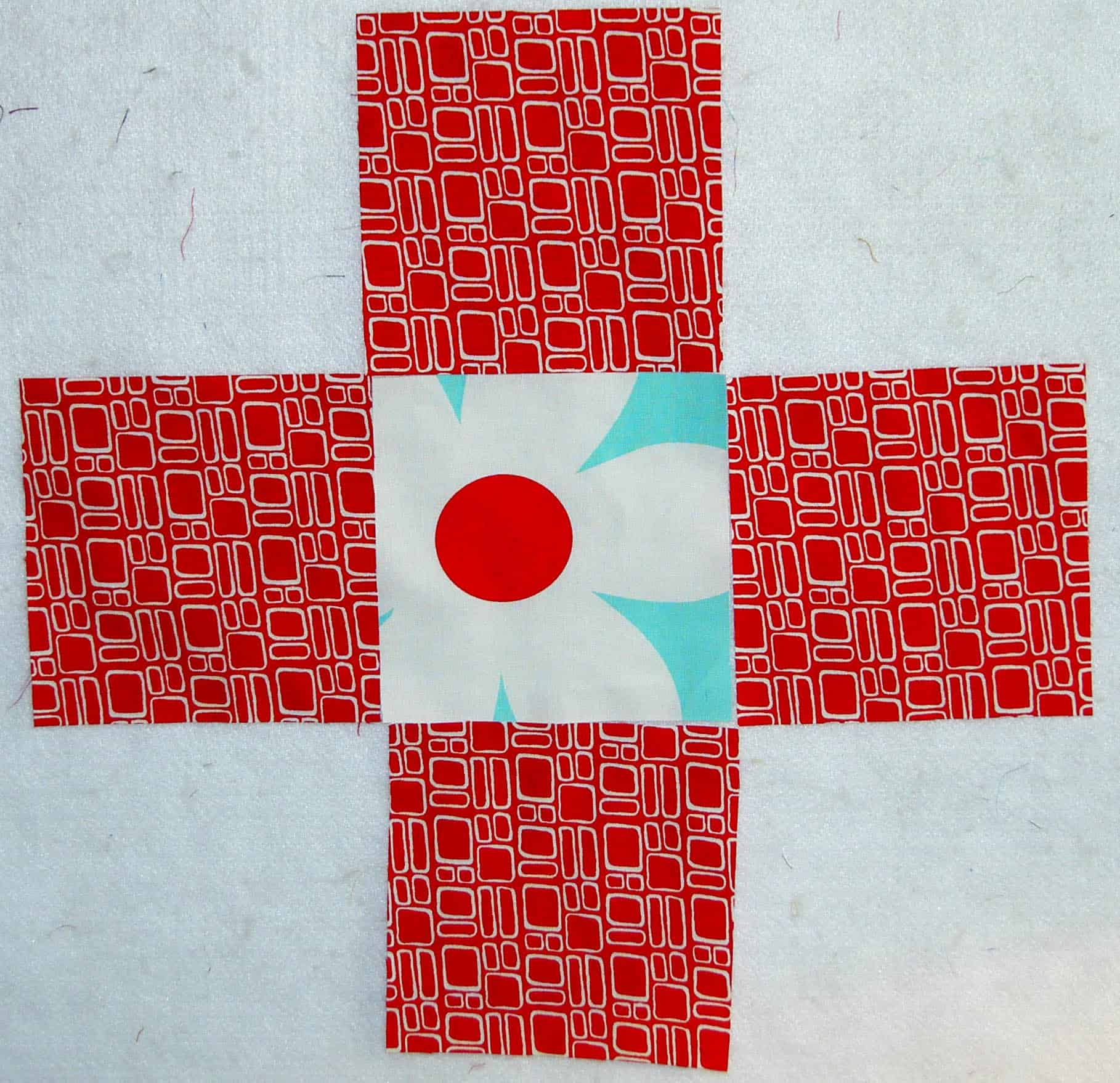
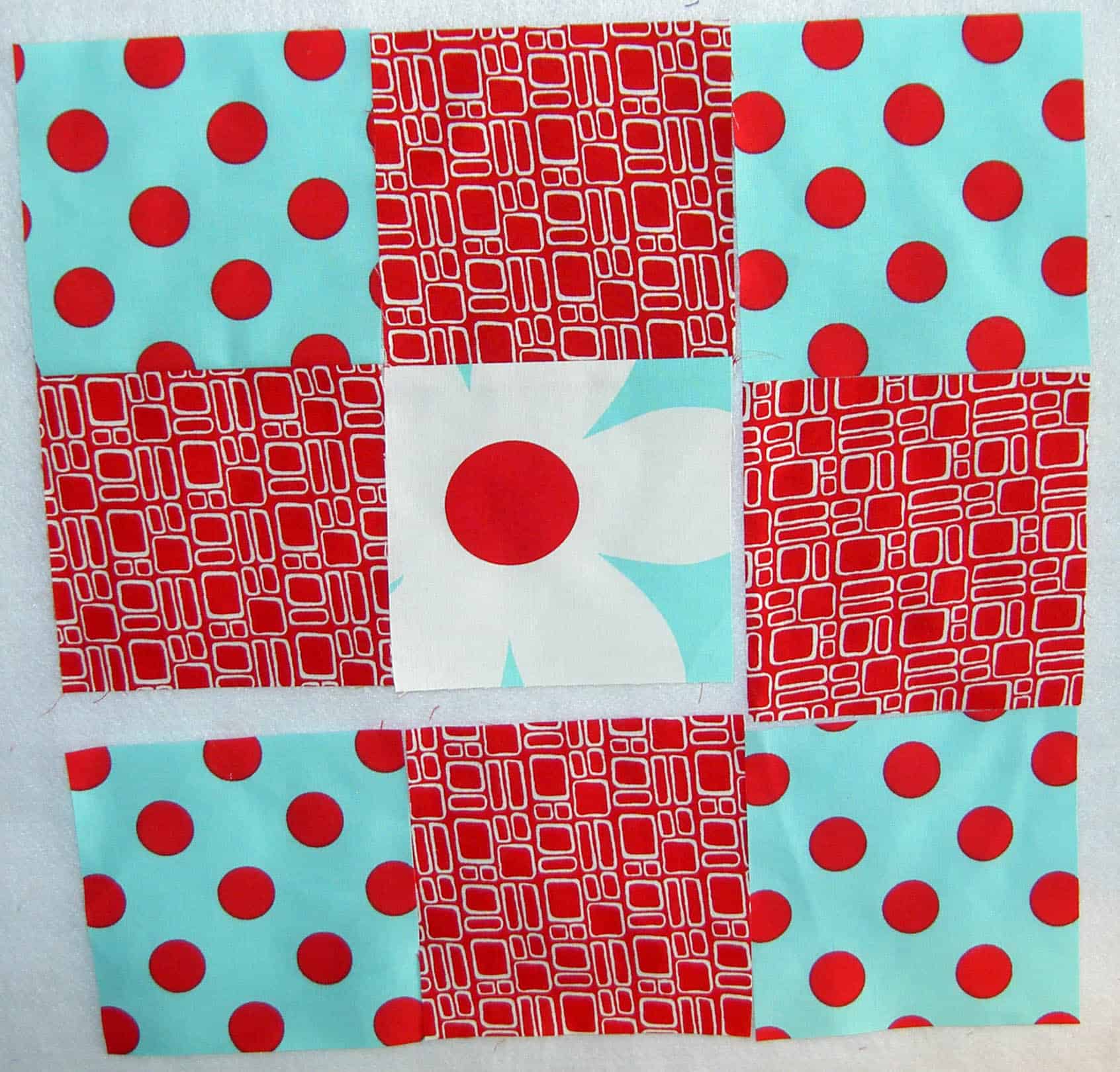
Step 1: Cut fabric. You need 9 squares 4.5″x4.5″ each. I like to use a different fabric in the center of the nine patch block. It adds interest, especially to a 12″ finished size.

Adding Reds
Adding Reds
Adding Blues
Adding Blues


This block is actually the first block I teach in the sampler series. This particular Nine patch will be in the quilt I am making with Frances. You have seen it in different photos on the blog.

Move Fabrics Around
Move Fabrics Around

Step 2 (above): After you cut the squares, move them around to make sure you have the placement of the fabrics in the right place.

Start Sewing
Start Sewing

Step 3: Prepare to start sewing.

start, usually in the upper left hand corner 9row 1 patch A and row 2 patch D), everything else being equal. In general, if I don’t start in the upper left hand corner for other blocks,  I start by sewing smaller units/patches into larger patches.

Sew patches together in groups of 2

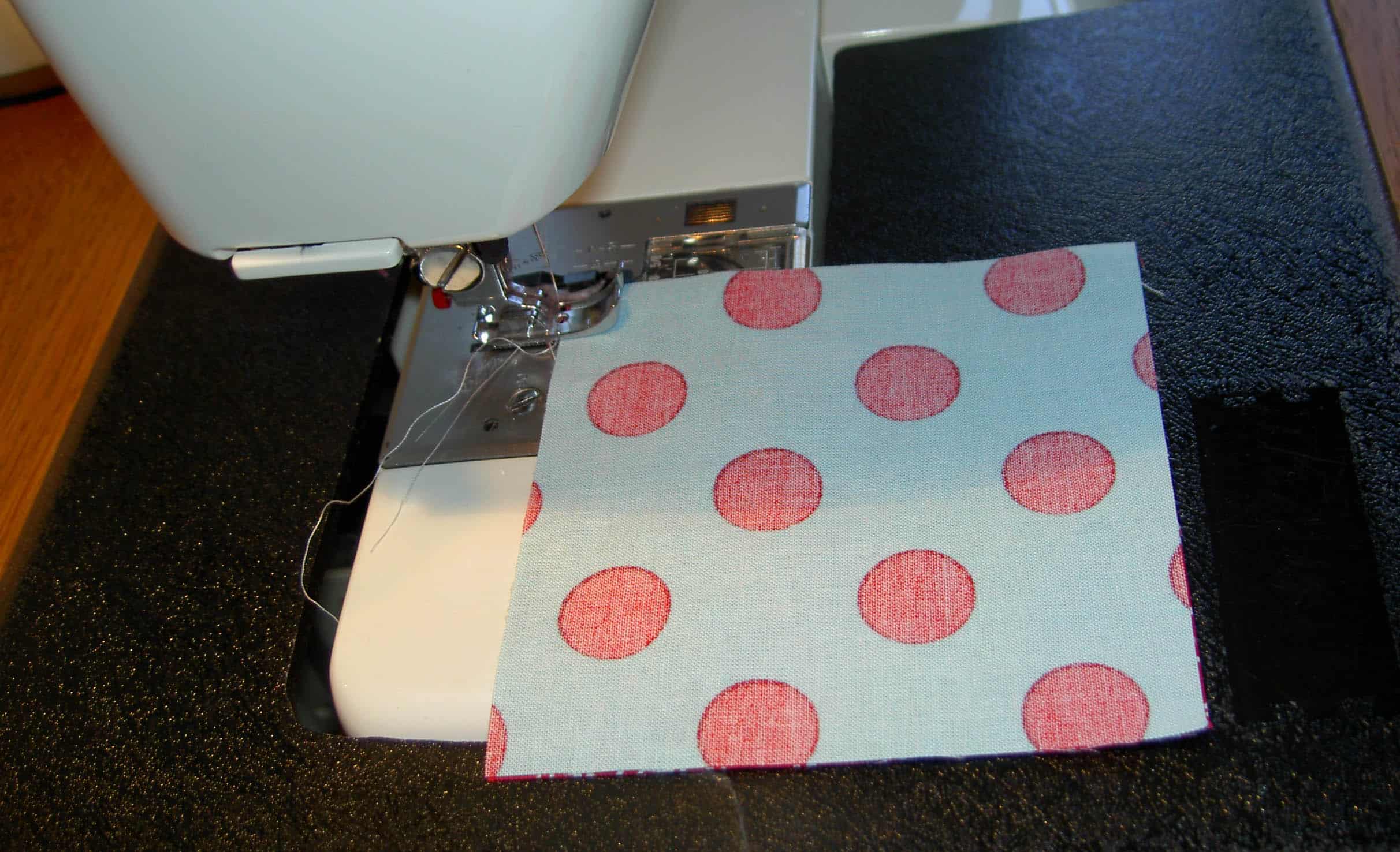
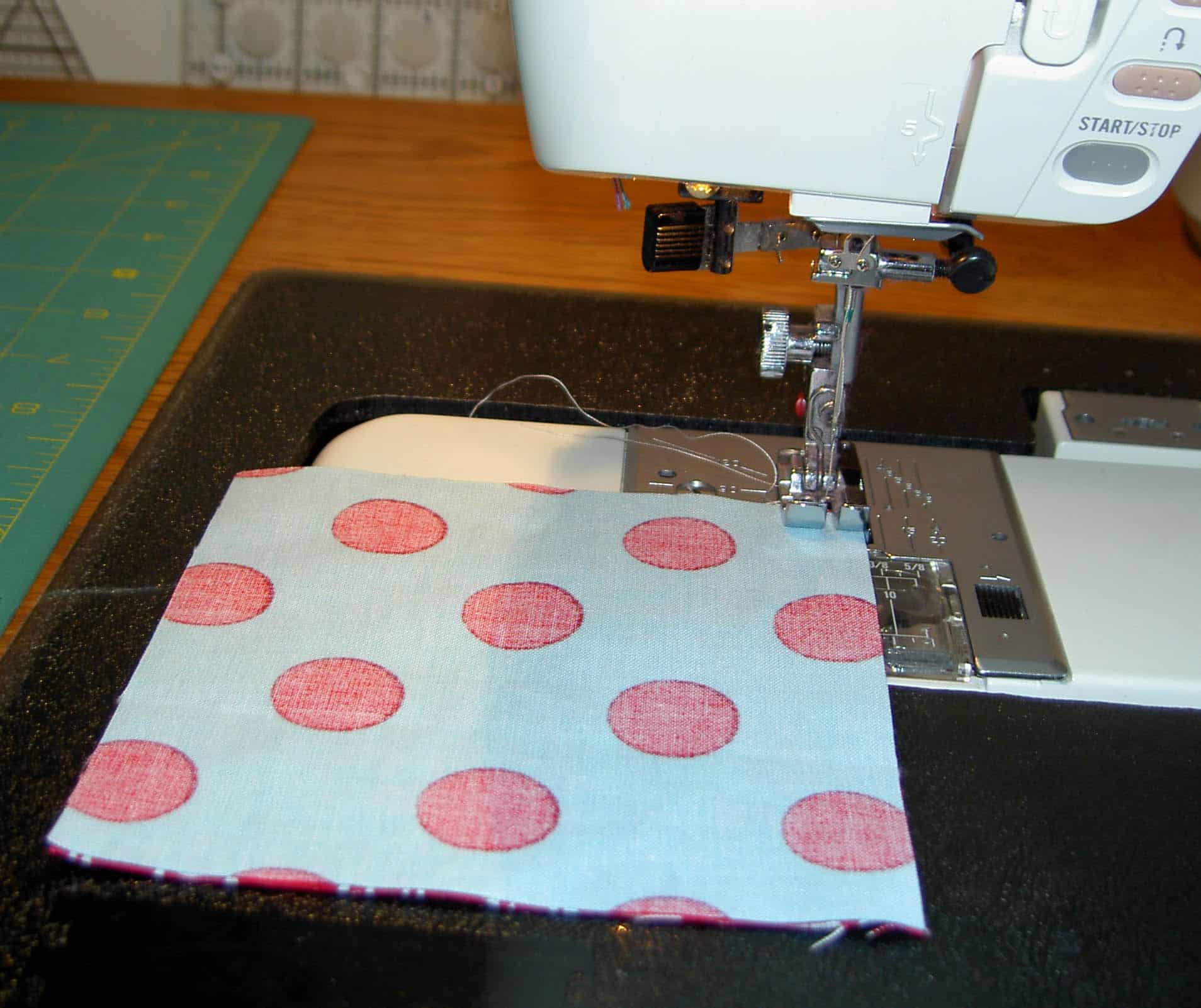
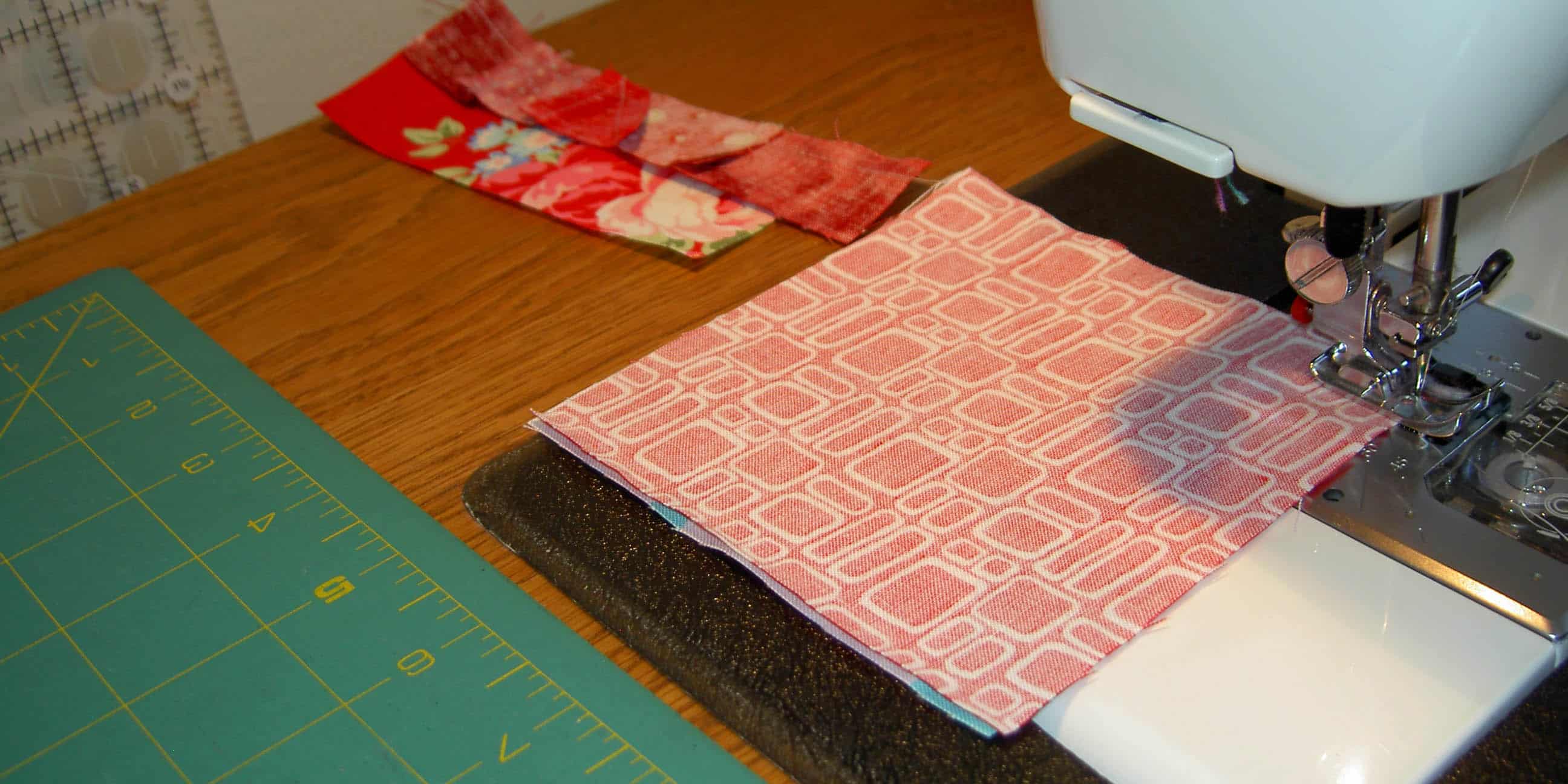
Step 4: Place fabrics right sides together and place into machine. I have my quarter inch foot on my machine and I sew 2 patches together to make a unit that will fit into the upper left hand corner of the block.

Sew patches together in groups of 2 (front view)

The edges of the patches are lines up so that the bottom fabric is not showing when I sew. Fabrics are right sides together.

Patches Sewn
Patches Sewn
Chain Piecing
Chain Piecing

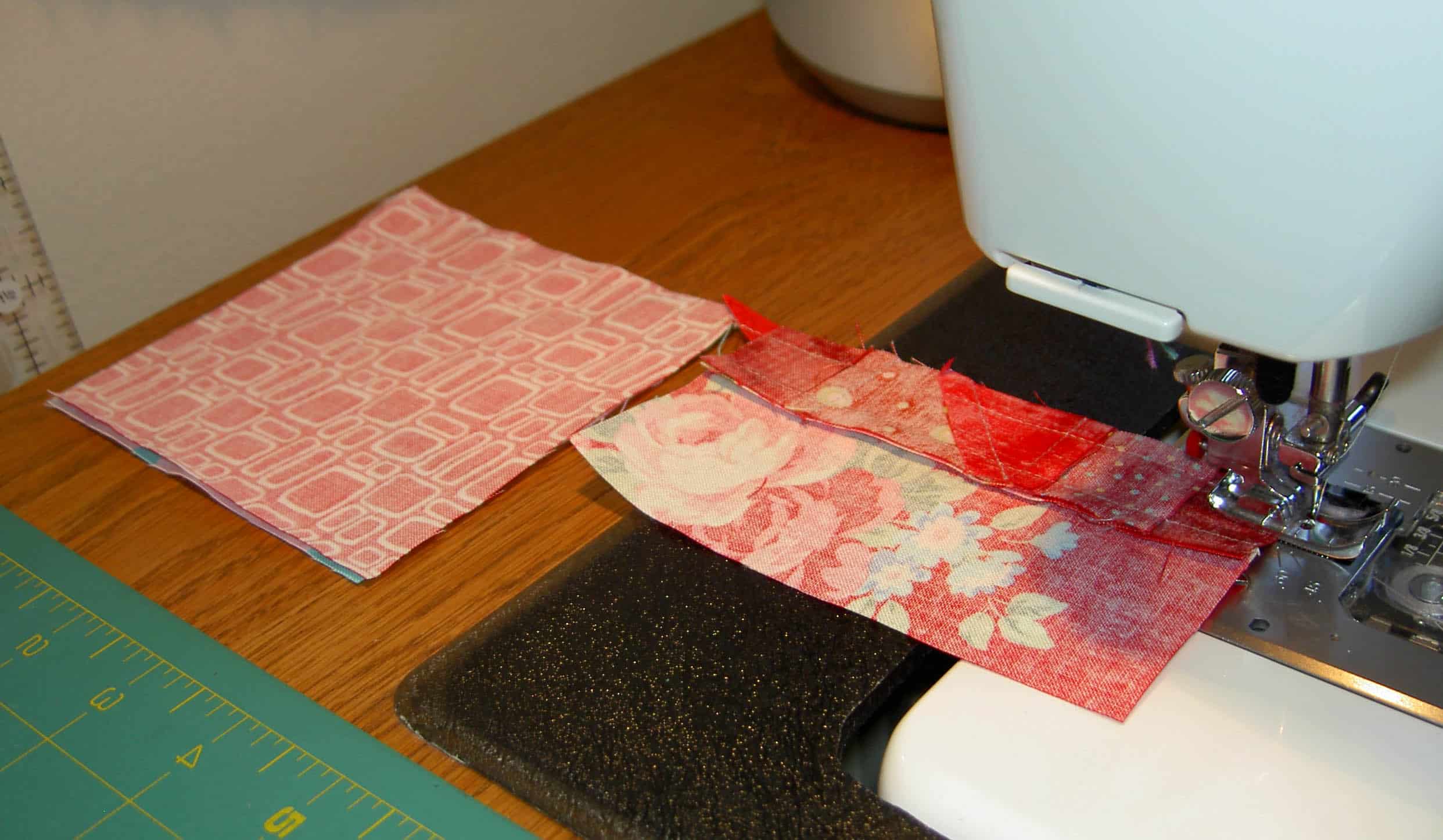
You can certainly take the sewn patches out of the machine, but this is a good time to talk about chain piecing. I have other bits and pieces handy so that I can keep sewing, so I will put them through the machine after the patches for the block on which I am working. In the above photo, you can see scrap pieces for a journal cover. I find it is much easier to work on sewing scraps together rather than another block. For my journal covers, I sew pieces together any which way. I don’t have to worry about putting the right patch in the right place or not cutting off triangle corners. This method gives my brain space to concentrate on the block at hand.

Once you have done some blocks and know how you work, you can certainly put the next group of pieces for your current block through the machine after the first set. Also, if you feel confident, then go ahead and put the next set through the machine.

Cut off Chain Piecing

Step 5: After you have put your second group of patches, or your scraps, through the machine, cut off the sewn patches apart from your second group of sewn pieces. I usually just put one set of chain piecing through my machine after my set of patches for my current block, especially if I have a lot of fiddly placement. I would rather unsew one set of patchwork if I make a mistake than many.

Trim threads
Trim threads

Step 6: Trim threads.

I dislike a bunch of long threads hanging off the back of my finished blocks. The best way I have found to deal with that is to trim as I go along. Trimming threads is a personal preference. I find it makes my blocks look a bit better and there is less of a chance of anything getting caught in my machine as I sew further along in the project.

Set Seams
Set Seams

Step 7: Bring your 2 sewn squares over to your ironing board and press the threads on the seam allowance from the back with the patchwork closed. You have not yet opened your piecing to look at it from the front.

I have no idea if this step really sets the seams. Fons & Porter do this and since there doesn’t seem to be any harm in it, I started to do it as well. If you skip this step, your patchwork will not fall apart.

Open Patches
Open Patches

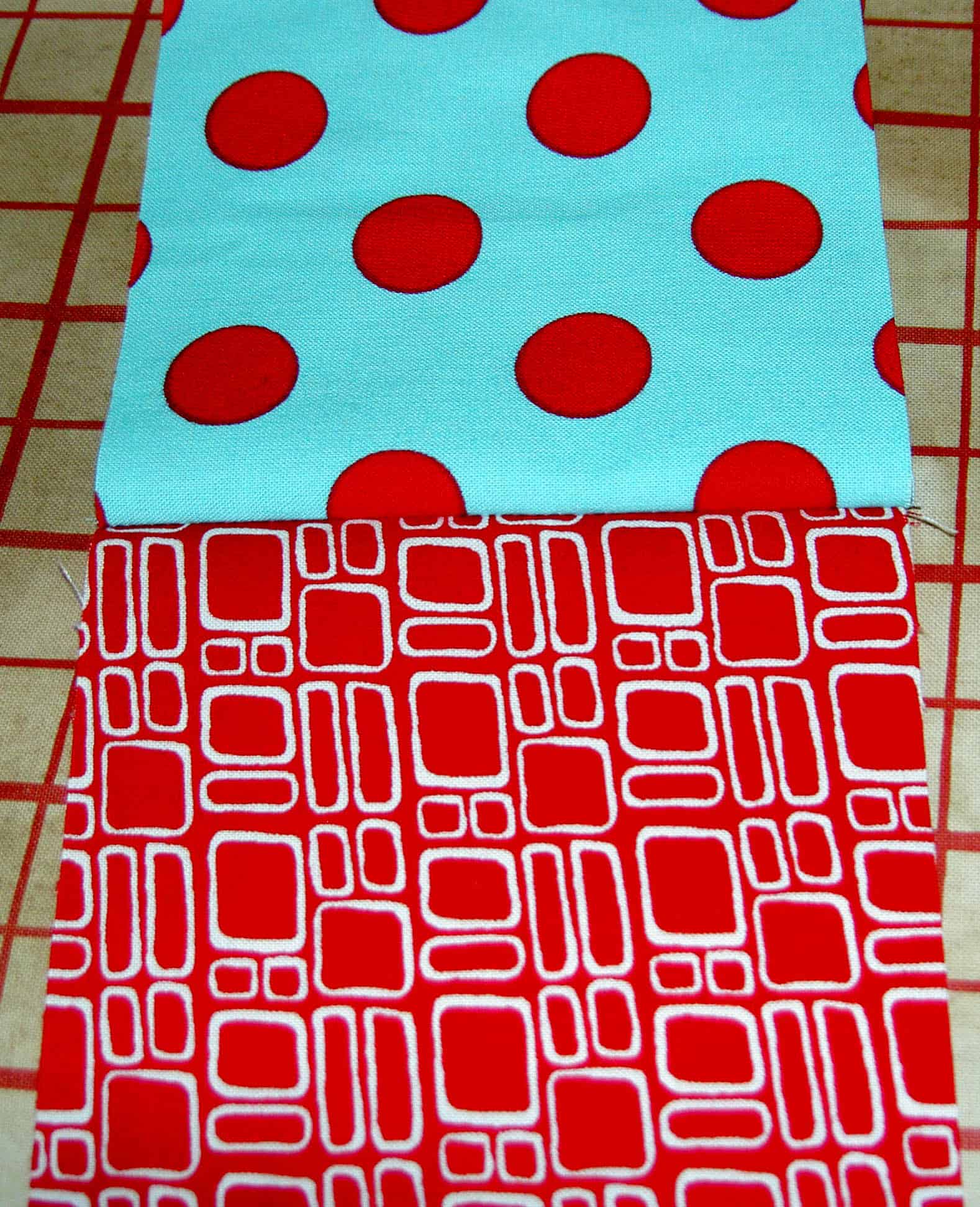
Step 8: Open your patchwork so that the seam allowance is pointing towards the patch that will be in the very upper left hand corner.

Seam Allowance Points Away

Step 9: Point the seam allowance, referenced above, away from you.

You could also point it to the side (either right or left depending on which is comfortable based on the hand with which you press). Above is the way I do it, which probably depends on the size of my ironing board and habit.

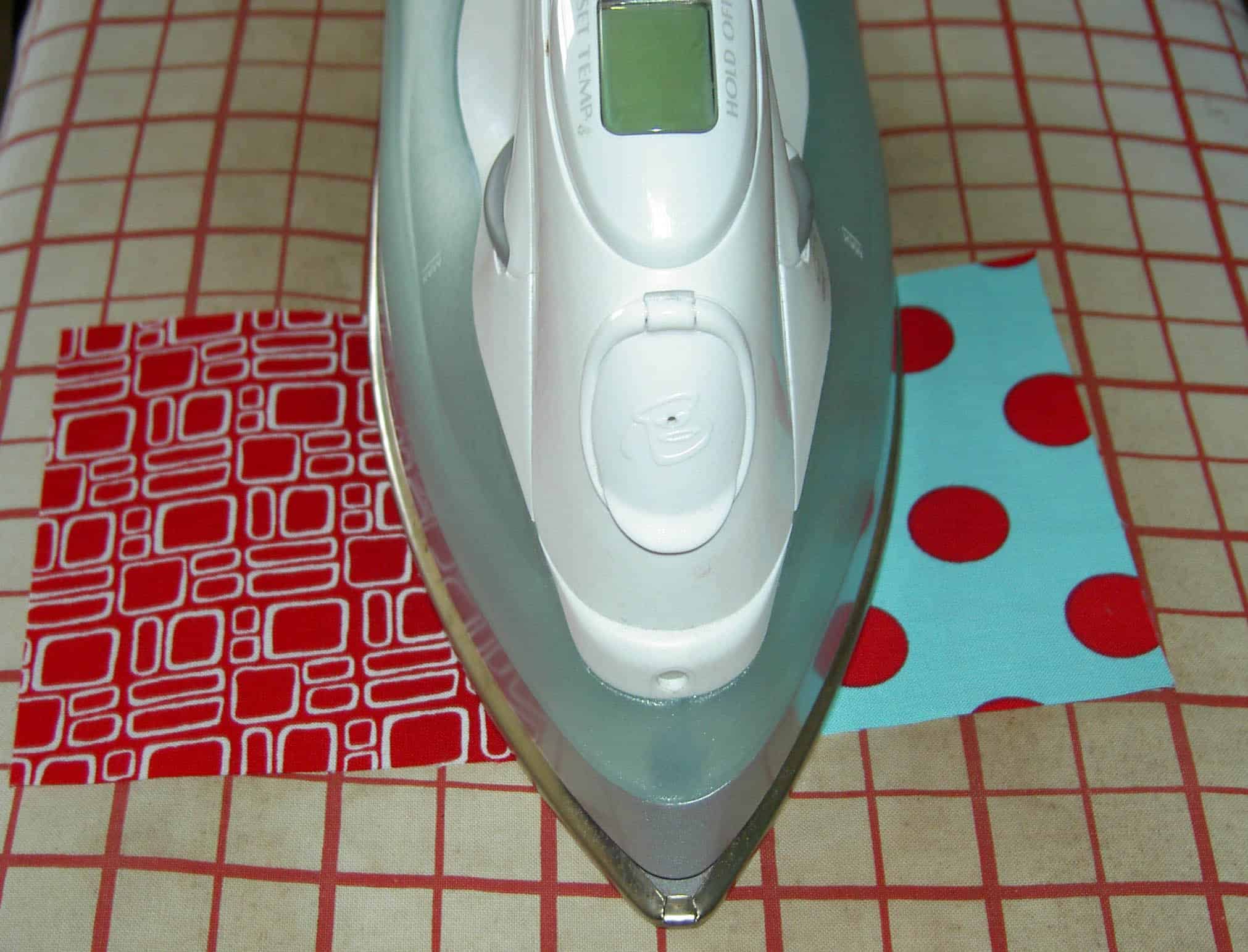
Press
Press

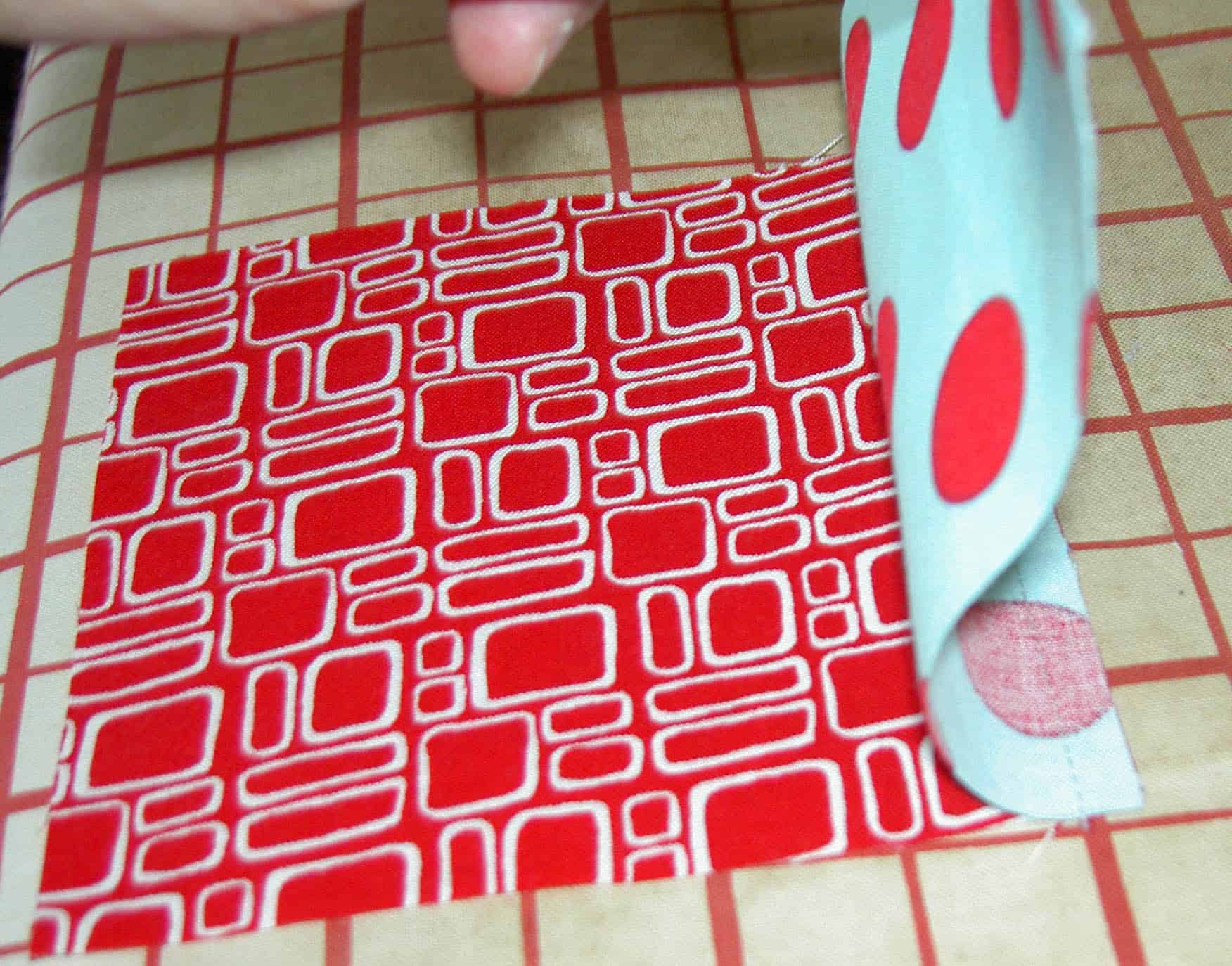
Step 10: Swoop your iron carefully from the patch without the seam allowance to the patch which is laying on top of the seam allowance. In my case I am swooping carefully from the red towards the aqua dot.

Place Sewn Patches on Design Wall

Step 11: Place sewn patches on in their spot on the design wall (or design floor or design table).

Place Sewn Patches on Design Wall (detail)

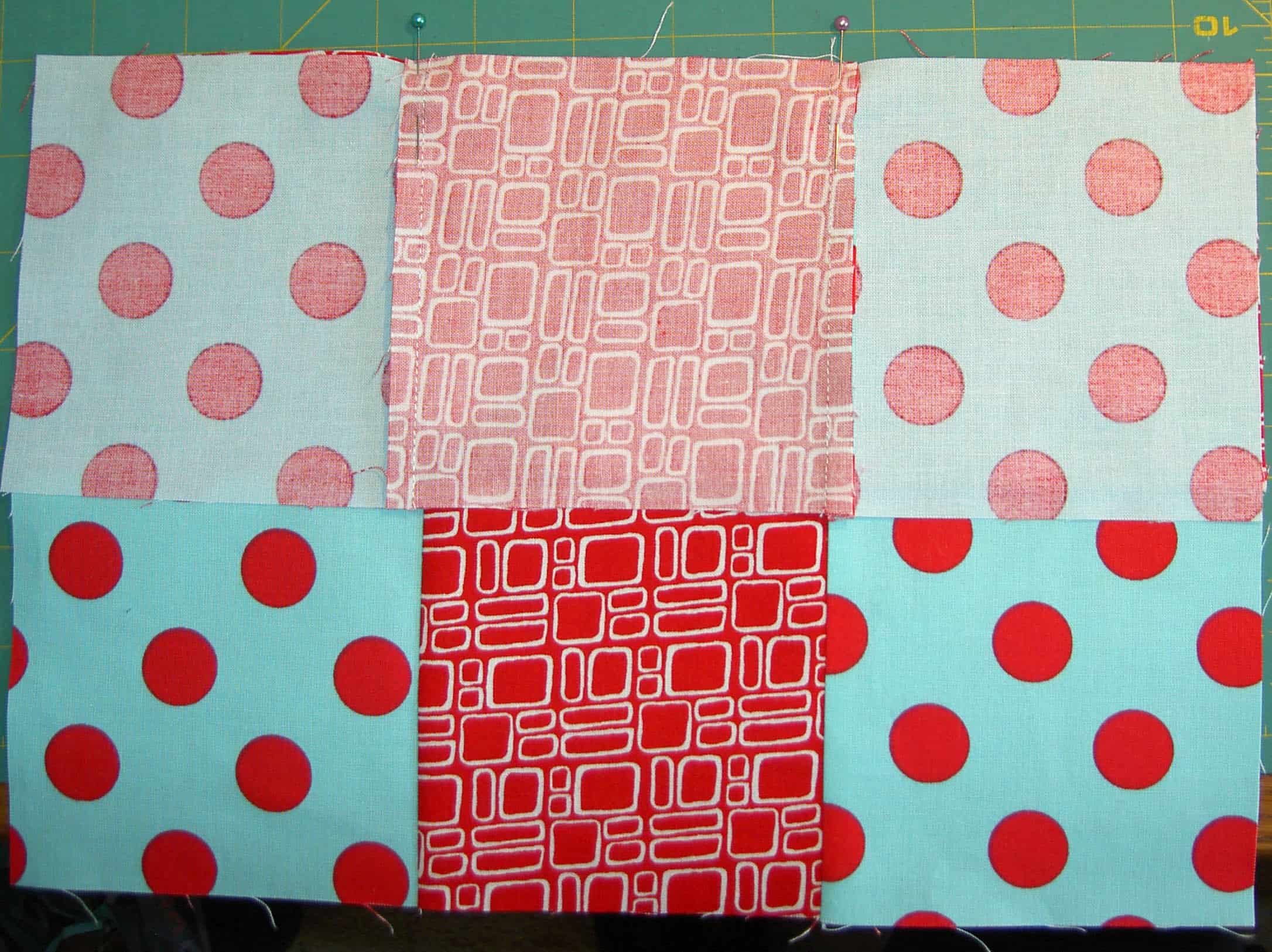
You will notice that they are quite a bit smaller (1/2″ to be exact) than your other cut pieces. No panicking is necessary. The patches are smaller because you have used 1/2″ of fabric for the seam allowance. You are on track, if your block looks like the two pictures above.

Sew Next Patches
Sew Next Patches

Step 12: Take the center patches (from row 1 patch B and row 2 patch E) and sew them together. Again, you will place your right sides together before you sew.

Use Chain Piecing Techniques

Step 13: Follow steps 3-11 for these patches and the right hand patches (row 1 patch C and row 2 patch F).

Press Opposite
Press Opposite

Step 14: Above we pressed towards row 1. After sewing row 1&2, patches B&E, you will press the seam allowance towards row 2. Patch E will be on top of your seam allowance.

Used Another 1/2"
Used Another 1/2"

Step 15: Place your pressed patch on the Design Wall. You have used up another 1/2″ of fabric.

After you have sewed all the patches for rows 1&2 together, you will need to sew the patches for row 3.

Step 16: Sew row 3 patch G to patch D. Yes, patch D is already sewn to patch A. Don’t press yet.

Step 17: Follow the directions in Step 16 for patch H and patch I. Wait to press.

Step 18: Press patch G towards patch G.

Step 19: Press H towards patch E

Step 20: Press patch I towards patch I

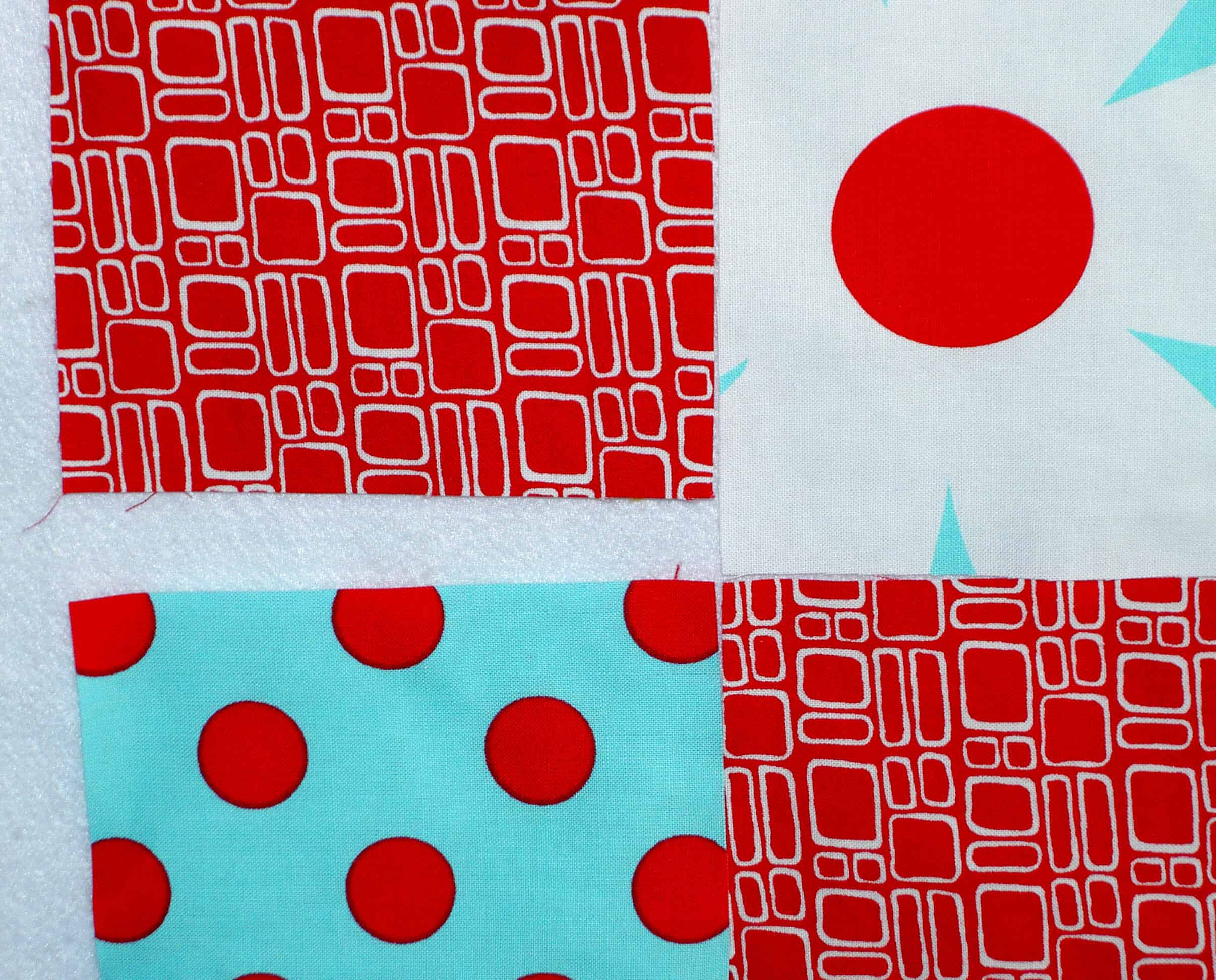
Nesting Rows
Nesting Rows

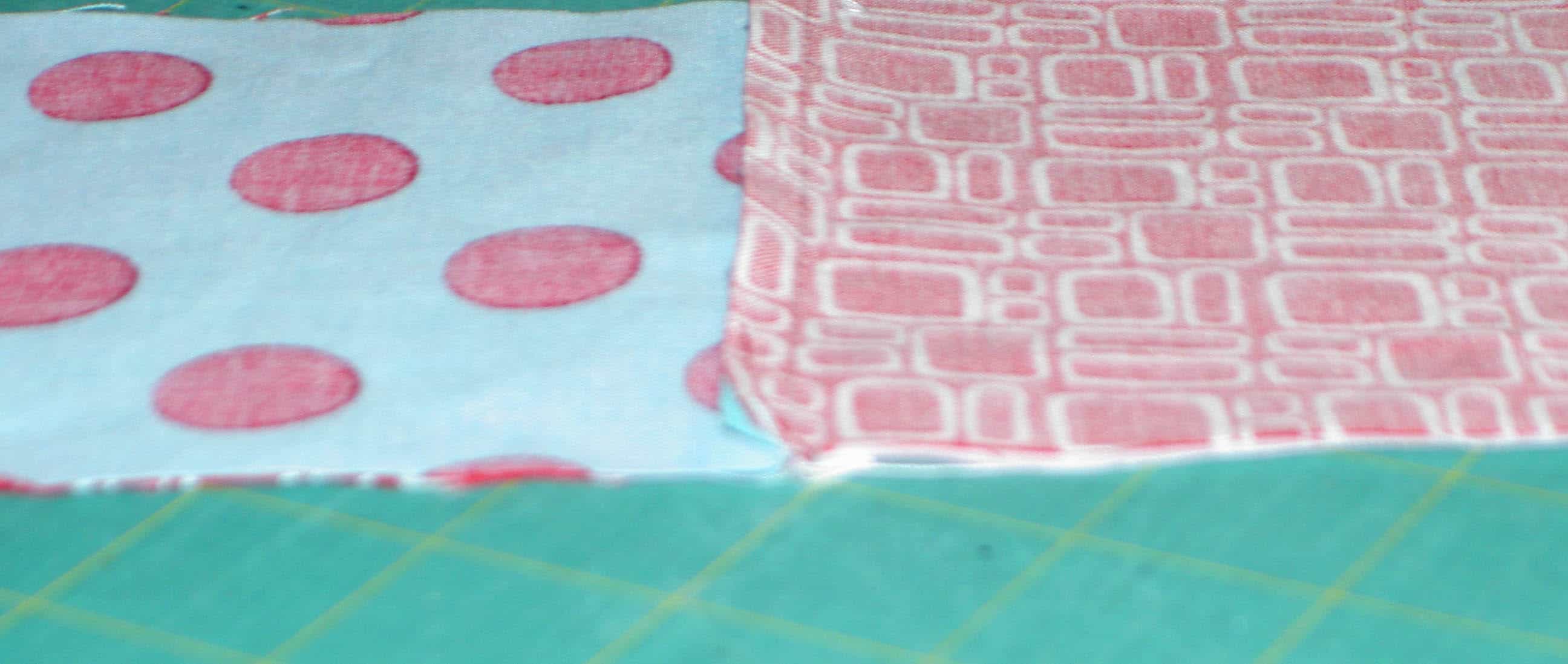
Step 21: Lay the column with patches B, E and H on top of the column with A, D, and G. Make sure that your seams look like the photo above – nested into each other, not resting on top of each other.

The reason to pay attention to pressing is that you can ‘nest’ the seams when you go to start sewing the rows. Nesting seams is when the seam allowances are pressed in opposite directions so that they rest against each other.

Sew Left Column to Middle Column

Step 22: With the column with patches B, E and H on the bottom, sew the column with A, D, and G to the column with patches B, E and H on the right side.

I did use some pins at the seam allowances.

Step 23: Set seam between the left and middle columns.

Step 24: Press seam allowance between the left and middle columns in whatever direction suits you.

Lay Left Column on Middle Column

Step 25: Lay left column (with patches C, F and I) on top of the middle column.

It looks like the top row, but really is the right column. I just have it turned so the right column is on top.

Step 26: Pin at seam allowances, if desired.

Step 27: Sew left column (with patches C, F and I) to the middle column.

Step 28: Set seam between right and middle column.

Step 29: Press seam between right and middle column.

Finished: Nine Patch

Step 30: Congratulate yourself! You have successfully completed your Nine Patch!!!


Nota bene: I may update this tutorial or make clarifications, changes as necessary


Sampler Quilt Update

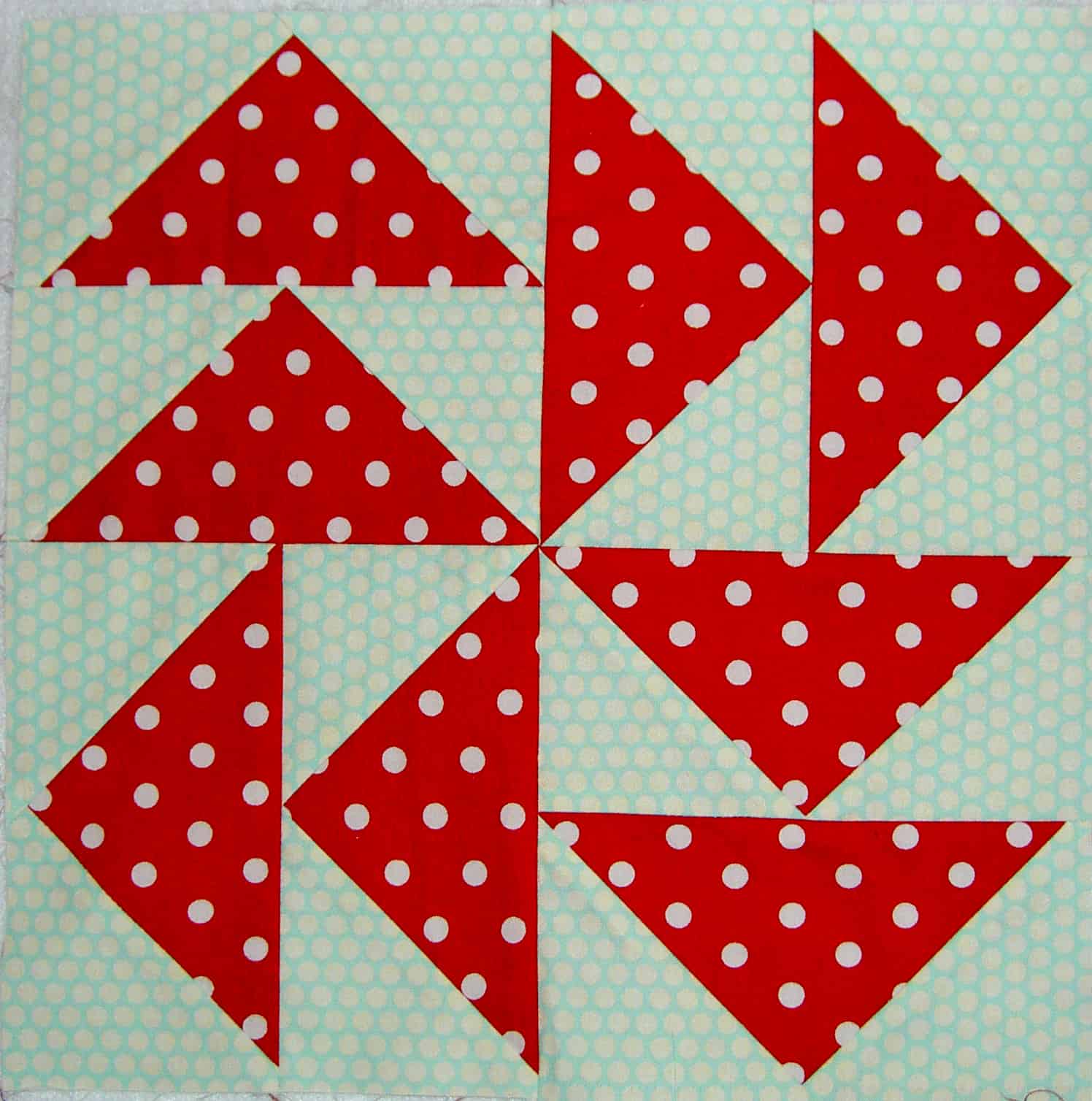
Dutchman's Puzzle
Dutchman’s Puzzle

As you may have heard on The Off Kilter Quilt podcast, Frances and I are working on a Sampler together. Frances posted her version of the Dutchman’s Puzzle and it looks great. She is doing a wonderful job!

We have been on a bit of an unintentional hiatus, because I was out of town for 10 days, she had some things to take care of and went to the beach, the Young Man graduated and, generally, life got in the way of quiltmaking. I needed to get in gear for as much sewing as humanly possible this weekend, so I started in on the Dutchman’s Puzzle on Thursday night.

Doing one block doesn’t take very long. I thought I would just getting the cutting done, but I was able to piece the whole block together. I had enough time even after I sewed the four major sections together wrong and had to rip them out! Being more of a morning person, I don’t sew well at night (make lots of mistakes) and usually just hand sew bindings or something. I am glad I didn’t do worse damage!

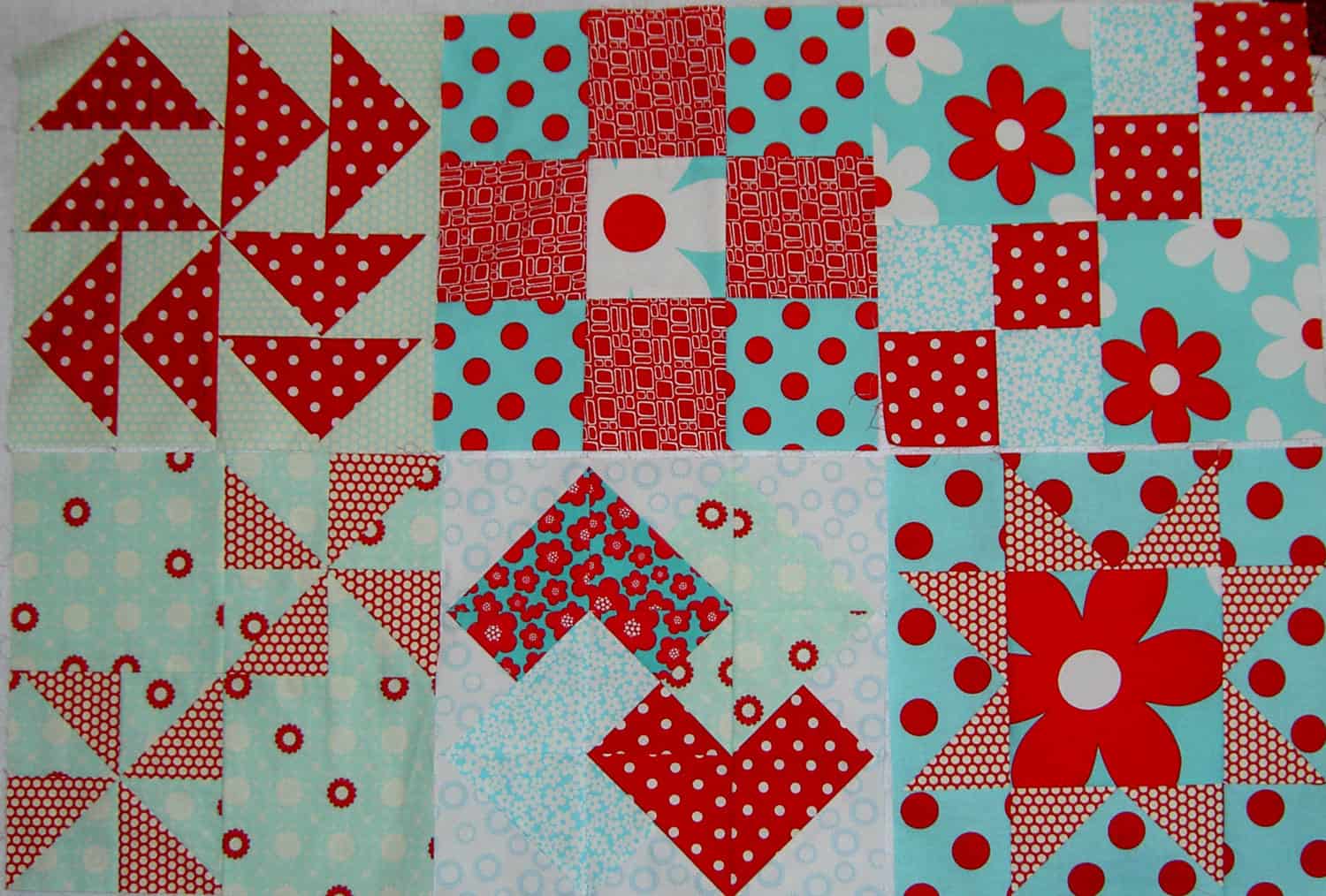
Sampler Blocks, early July 2011

Now I have a nice round 6 blocks. This reminds of the goals of the first ever quilt class I took. The goal was to make a 6 block sampler. The blocks are different, but this group of blocks provides me with some fond memories.

I also was able to look at the piece from a color and fabric stand point. I am not liking the Card Trick. I need to decide if I will make a new one or include the light background fabric in a couple of other blocks.

I can also see that I need to include the Big Plain Jane fabric, and a few other fabrics, in at least one more block. I am pondering whether or not there is a block scheduled that will showcase it.

All in all, I really like the way this is coming out.

Quilt Class Sampler Blocks

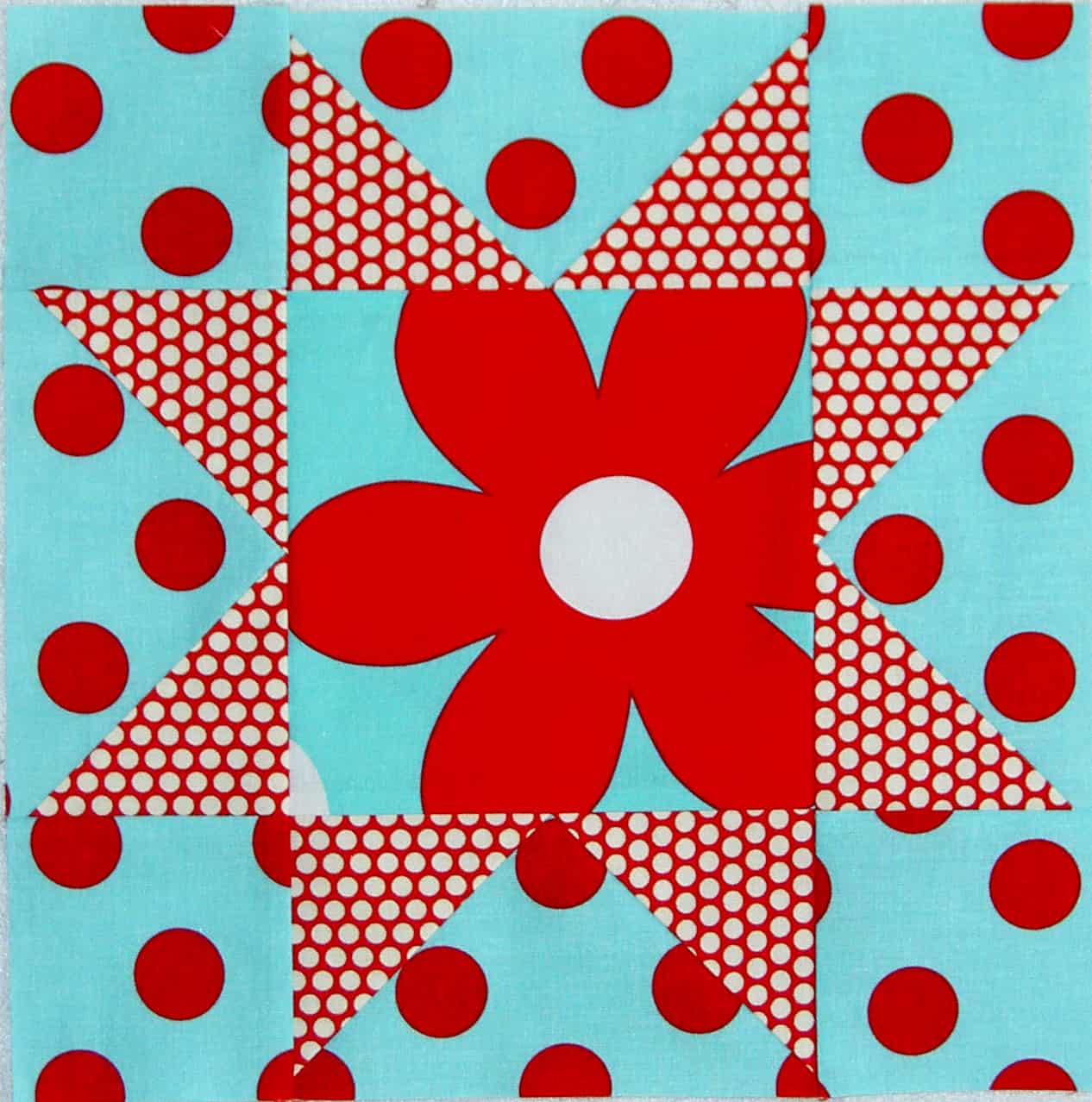
Sawtooth Star
Sawtooth Star

This post is kind of a roundup of the good and the bad. No ugly today, as I use GREAT fabric. 😉

This Sawtooth Star block is one I use to teach Flying Geese. I love the Dutchman’s Puzzle block, but think starting students out with 4 Flying Geese as opposed to 8+ is much kinder.

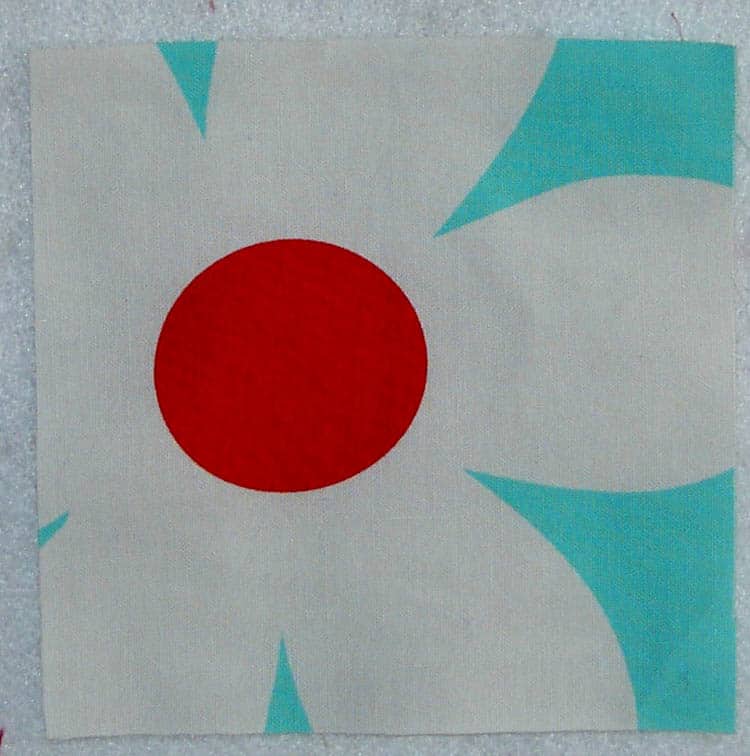
The larger blocks are weird for me to make, because I like to make 6″ or 8″ blocks mostly. The good thing about making these giant blocks is that there is a lot of potential for fussy cutting and the Big Plain Jane print worked really well in this block. I tried to position the flower a little off center to add a bit of interest while not showcasing the white flower that is near the red flower on the print. I am really pleased with how cheerful this blocks looks. I am glad I am working in a turquoise/aqua and red palette.

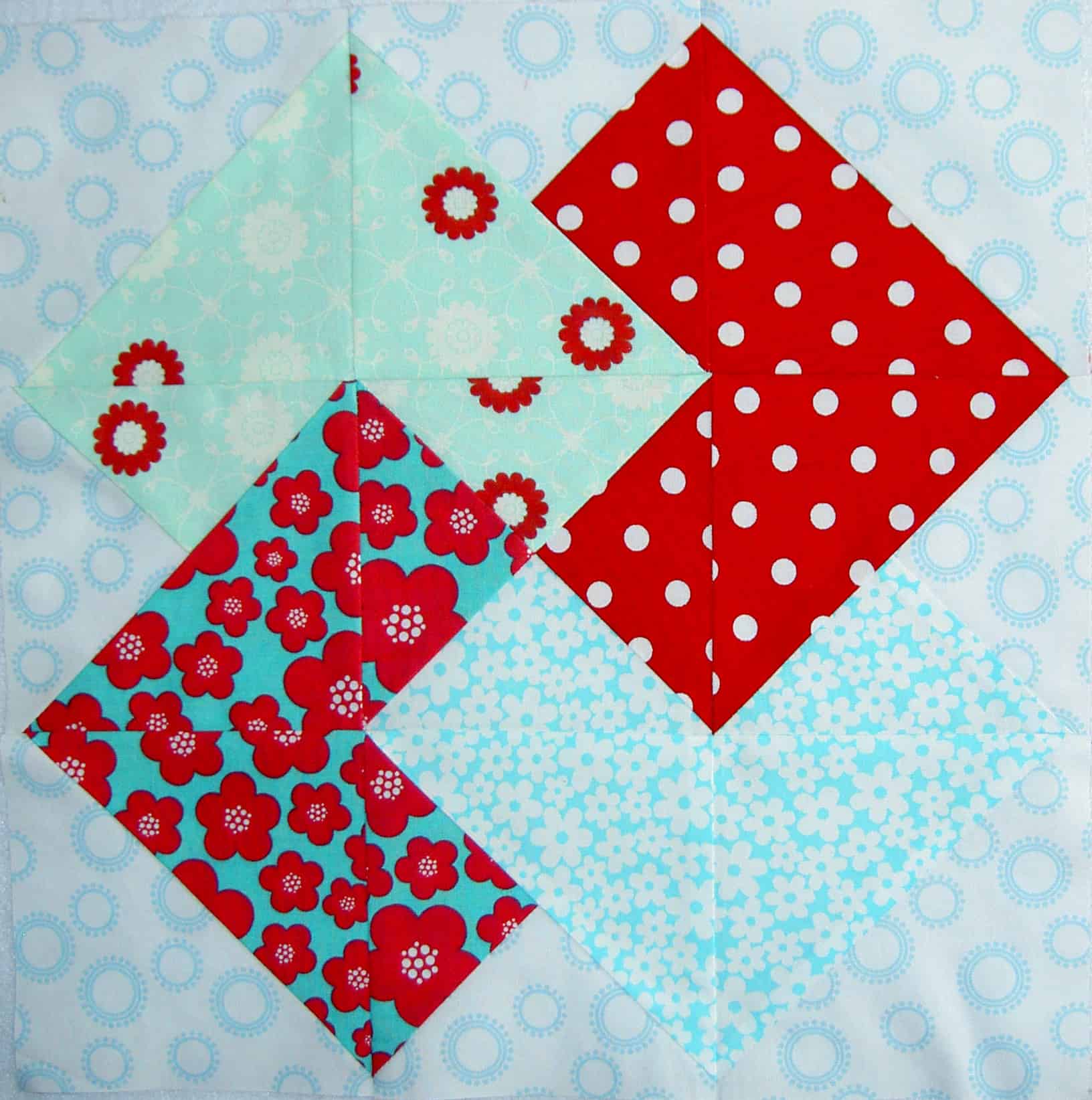
Card Trick
Card Trick

The Card Trick block is a great block for practicing triangles. It includes both half and quarter square triangles. If you haven’t tried the Card Trick, it is a great block as long as you pick the right fabrics. I, as you can see, did not build in enough contrast between the background and the light fabrics.  There are a lot of seams and triangles in this block and you have to lay it out and piece carefully, because it is easy to get mixed up.

As I work on this project I see these blocks set on point with red cornerstones. We’ll see as the time gets closer.

Selecting Fabric

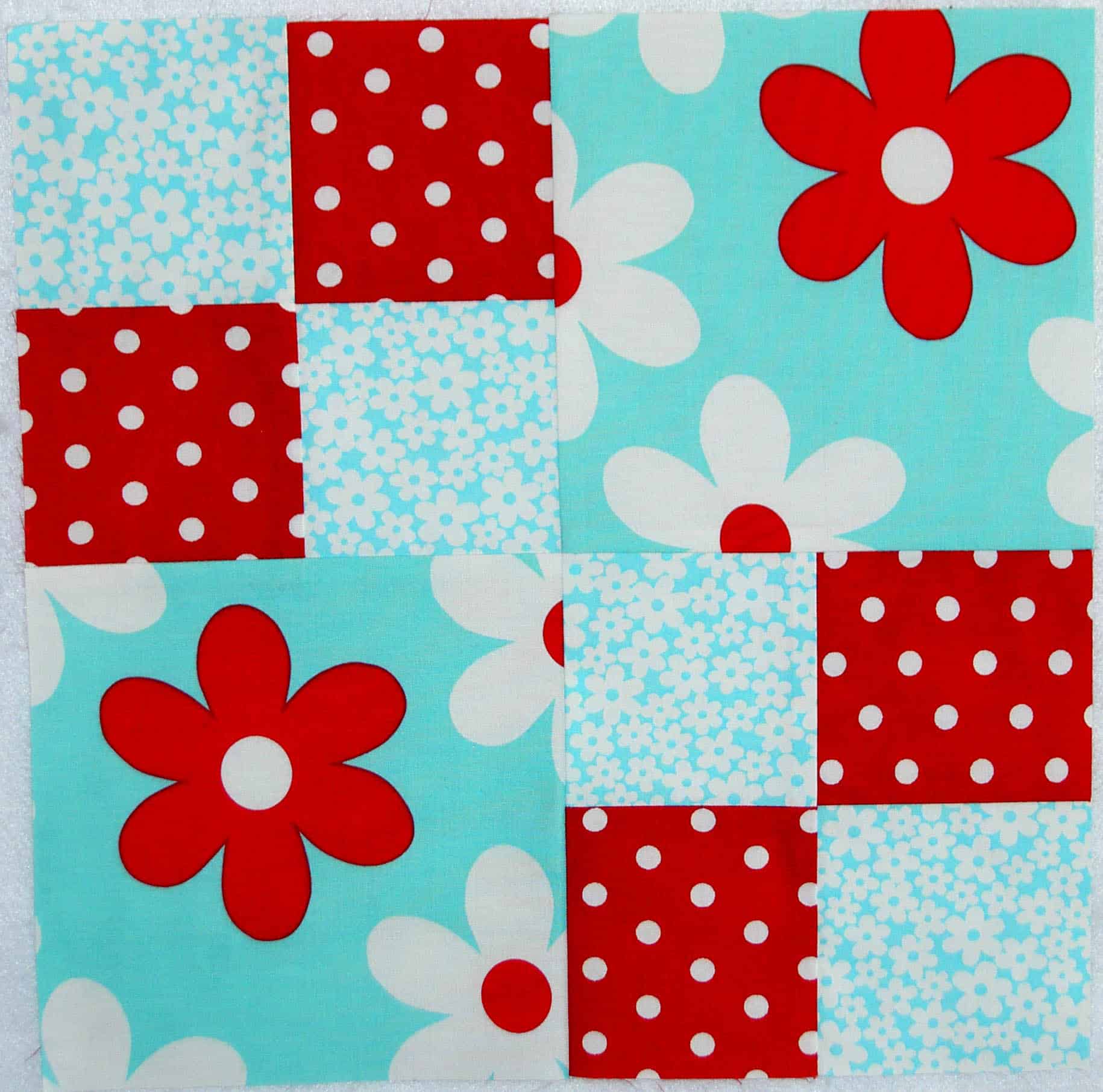
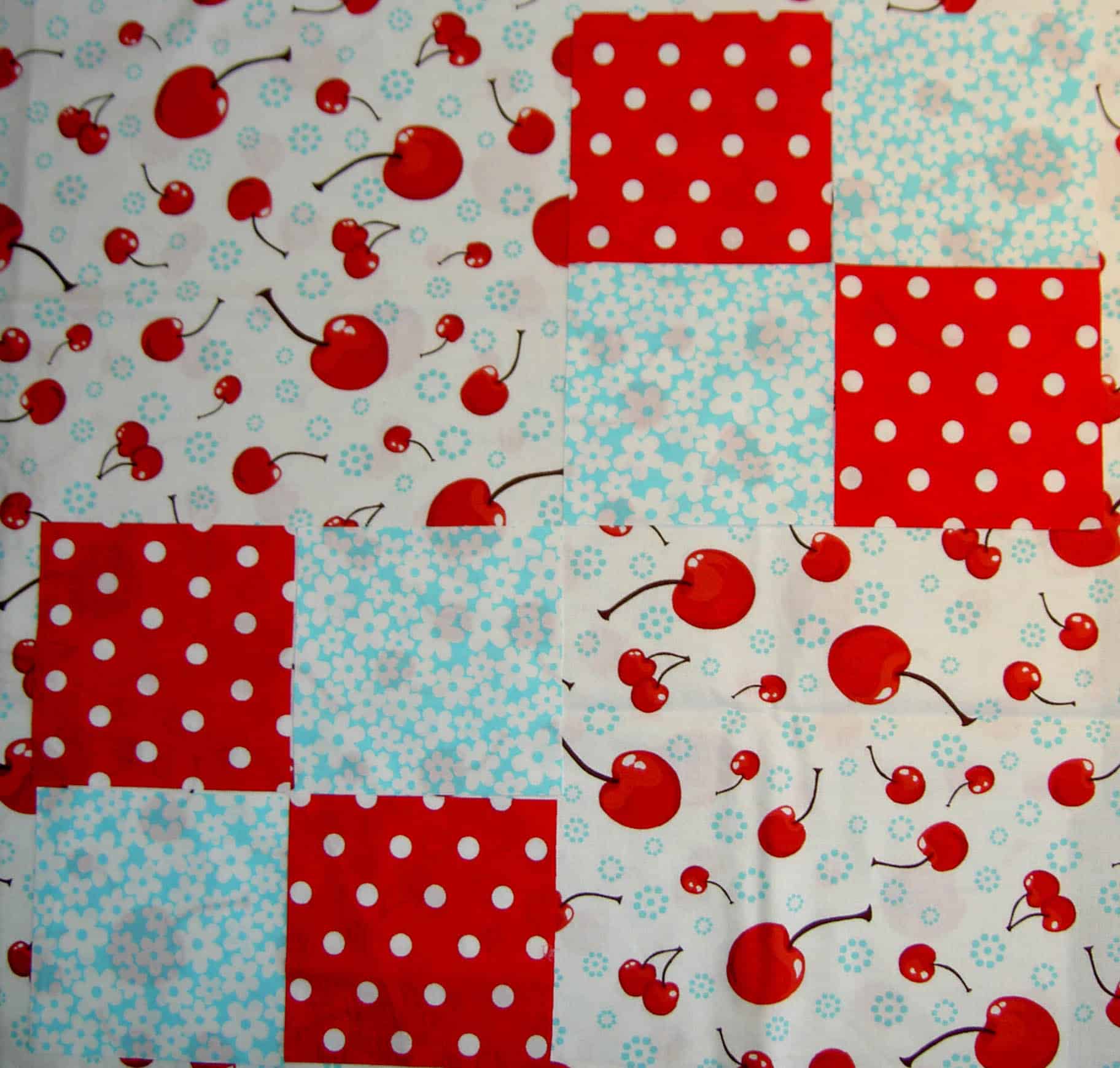
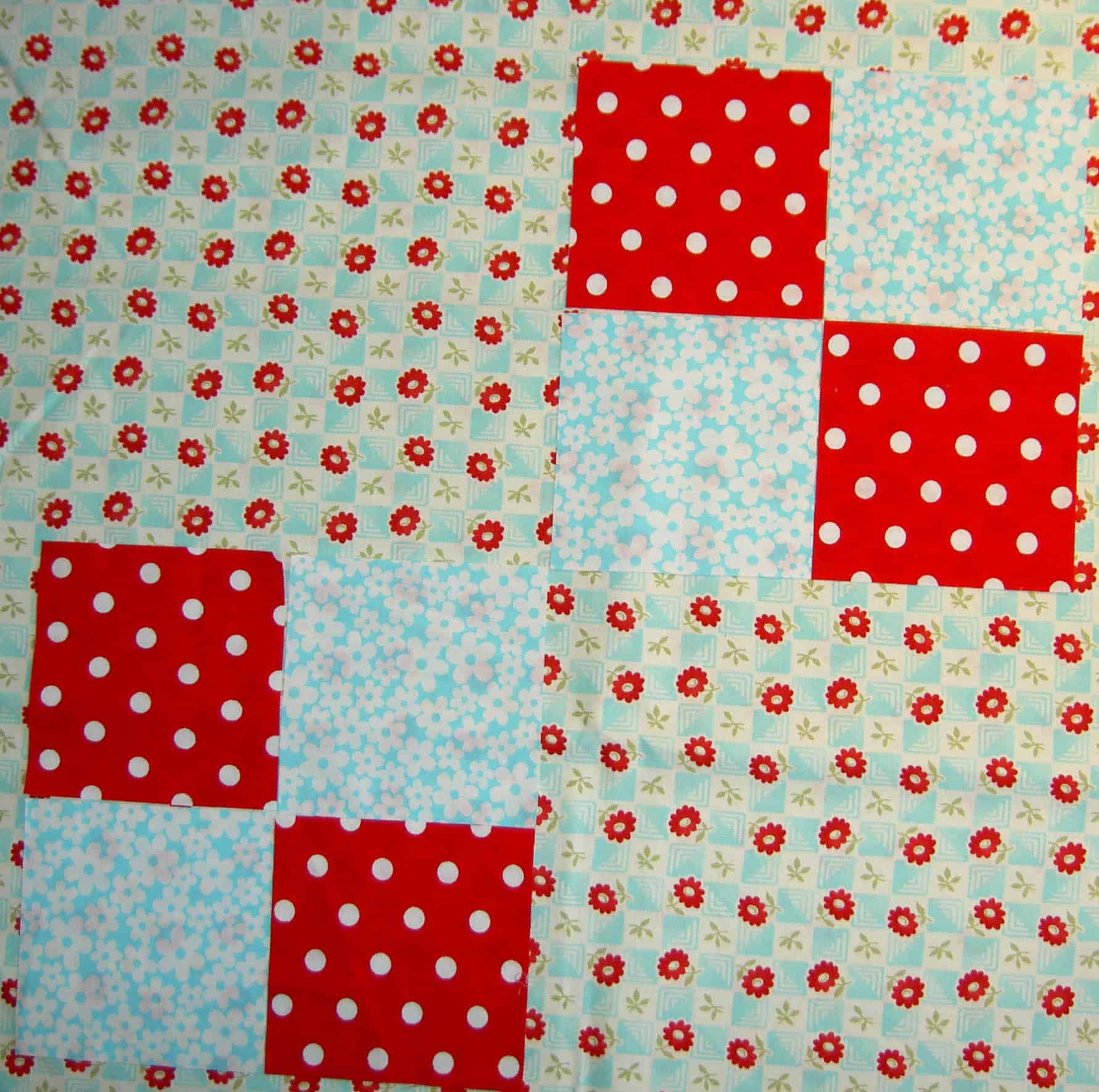
Selecting fabric is a very personal choice. I have a group of fabrics for my sampler class with Frances and I needed to choose some background-esque fabric to go with the Four Patches for my Double Four patch block. These are large blocks and I don’t normally work in this size, so I found it challenging.

I fell back on Lorraine Torrence‘s old adage: Make Visual Decisions Visually. That is the best advice I have EVER gotten in quiltmaking. Go take a class from Lorraine and buy her books. She is awesome.

Plain Jane
Plain Jane

I liked the bold graphic-ness of this print, but thought it might be too large.

Cherries
Cherries

I thought for sure this would work, but the cherries felt too scattered. They need to be hemmed in a little.


Bliss
Bliss

Something in the color was off with this print. The aqua in the Bliss print is more green while the small flowered print is more on the turquoise side.

Plain Jane (smaller flowers)

This is the same print as the first one, but the flowers are smaller. I like the way you can see more of the flowers. Success!


Final
Final

I chose the last print and above is how the finished block looks.


New Inspirations (and A New Danger to You)

As you may remember from a previous post that I am teaching a class at work (other life). Above is the gorgeous quilt from one of my students. The photo is not so gorgeous, unfortunately. Alice has used all batiks and the quilt just glows.

I got a new phone for work and it has a camera. Danger! Now I have a camera with me AT ALL TIMES. WOW! This is great for me, because every time I see something I can snap a picture. The color isn’t as good as my other camera, but at least I have it with me all the time.

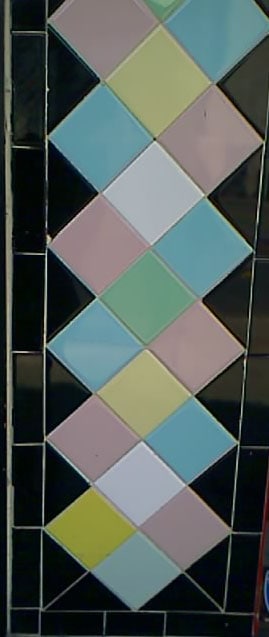
These are tiles I have been walking past for years. Finally, I was able to take a photo. This is a simple tile pattern, but I love the contrast between black and the pastels.

I stopped by Stone Mountain and Daughter to buy some fabric for pants. While, I was there I saw this quilt (yes, I asked and received permission to photograph). It reminds me of the Piece O’Cake pattern (below-pic from APNQ 2006). I like the subtlety of the fabrics that the maker chose.

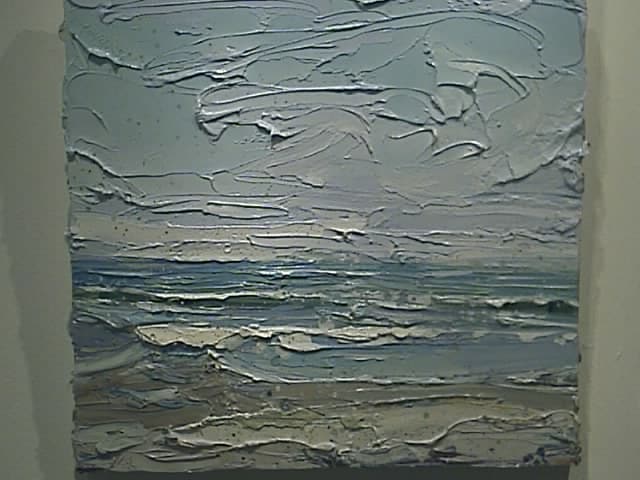
This is painting by Carolyn Meyer. Ms. Meyer is the Assistant Director of Fine Art at the Academy of Art. The Academy of Art gallery was one that I went to visit a few weeks ago. I went back, because I love this painting. It has some qualities of Wayne Thiebaud’s work, but this painting is very restful to me. It is called Summer and I would love to have this piece to hang in my house. Unfortunately, it is $1900 and I don’t have it to spent on a painting right now.

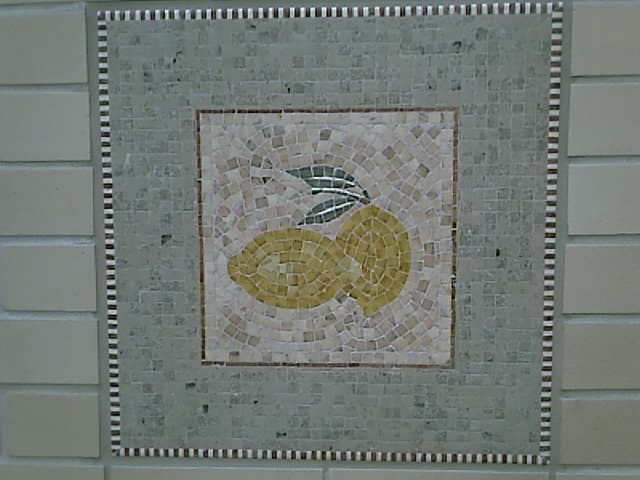
One of the mosaics in the building where I work.


September and October provide some of the best weather in my area. One day, after work, I couldn’t shake the need to go and sit by the ocean for a few minutes. Despite the weird looks that Darling Boy gave me and the several questions about what exactly this action meant for his future, we went. We went to a place where they have recently remodeled a few benches and a parking lot at the top of one of the cliffs. While there I saw this tree. I couldn’t shake the idea that the trunks would make a wonderful quilting pattern.
I applied some filters to the photo to try and outline the pattern of the trunks.

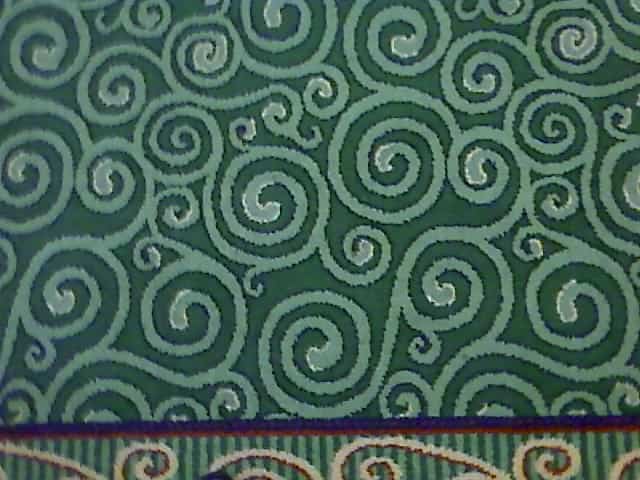
Rugs – good quilt patterns?
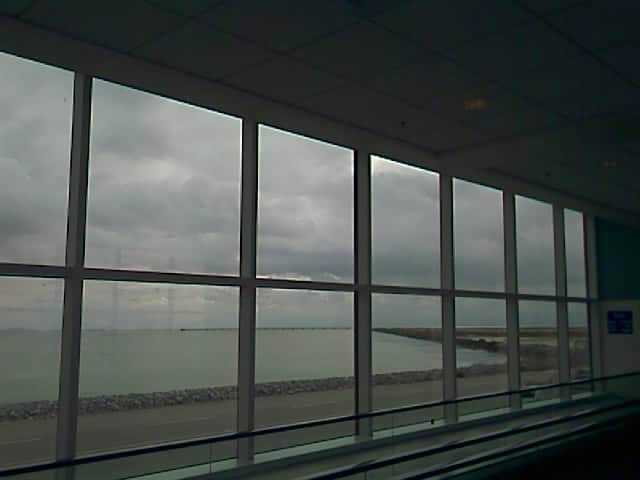
I like the repetition of the windows with the estuary in the background. The color didn’t come through very well, though.

Class notes

My students are back in the groove of quilting, so tomorrow I will give them their next block, a foundation piecing block. I picked the New York Beauty for the block with the Pineapple as the alternate. Not sure which one I will do. Perhaps both.

I still have to finish the damn Nosegay and am thinking that I will have to completely redo the bottom (cone) part. It just doesn’t fit. C’est la vie.

I did have osme success with applique’, however. The Grandmother’s Flower Garden petals are applique’d to their background. This is one of the blocks from the class that has been kind of languishing.

I also worked on applique’ from an Elly Sienkiewicz class that I took years ago at Thimble Creek. It is one of the blocks from one of her Baltimore Album Quilt books. After doing two of the cut snowflake type blocks I decided that there was no way I could do an entire Baltimore Album Quilt. Still the block I worked on is nice and I did want to finish it. My applique’ leaves a lot to be desired, but it shows me making progress. The journey not the destination. I look forward to finishing it so I can say that one UFO is off the pile.

Forced Creativity WORKS!!!!

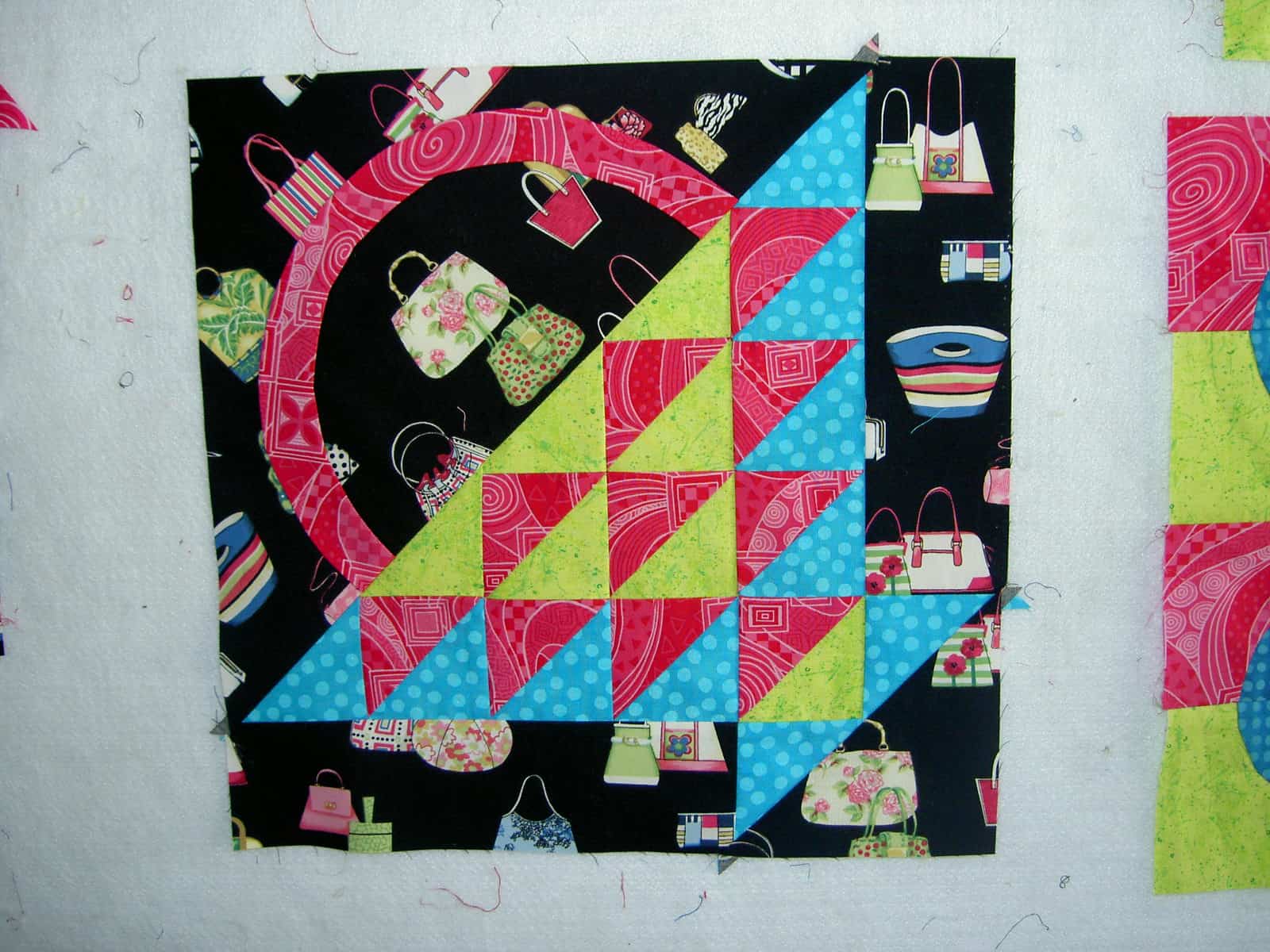
This is the block that I made today. I wanted to get it done to show my students and just hadn’t made the time. I decided that I was in the groove and did it this morning. I thought I would run my errands first, but realized that that was deadly and did the pieced part of the block first. After cutting, it took me about half an hour to do the main part of the piecing. HALF AN HOUR!!! That is nothing. How could I forget that piecing, once you know what you are doing, takes no time??!!?? Later this afternoon I appliqued the handle and sewed the two halves togther.

I am pretty excited now and will, perhaps, make the Nosegay. I gave the Nosegay to the students as an alternate block to the 8-pointed star. I always give an alternate block, but haven’t made many of them for this project. Nobody has done the Nosegay including me. It is the traditional version with inset seams and not Doreen Speckman’s version with no insets.

I think the colors are pretty bright, but I like the brightness and the different way in which the fabrics react with each. The purse fabric is a new colorway, as I ran out of the other colorway. I like this colorway better with the bright green and pink. I am wondering if I should redo the other blocks with this colorway? Seems a little crazy, but I am the woman who took apart a whole back of a quilt, because I needed to use some of the fabric on the front of another quilt. Stranger things have happened. 😉

My sis said she didn’t really like the color combination. Oh well. I have to admit that I was getting tired of it until this most recent block. I like it. We’ll see how it ends up.

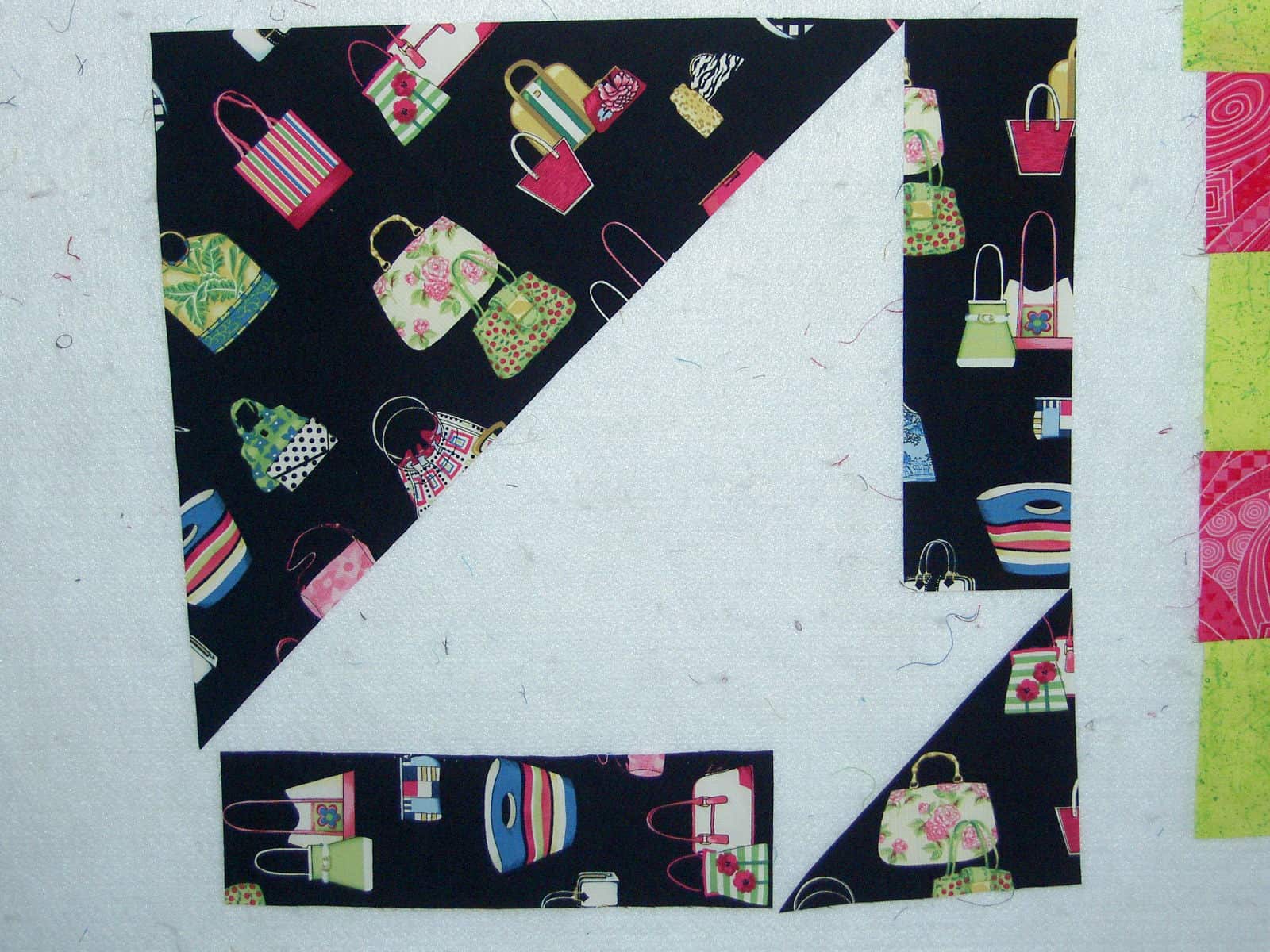
This is an interesting photo that I took before I cut and placed the middle pieces. You can see that I was having some trouble cutting the background so that it all lined up. I eventually got it right, which you can confirm in the photo at the top.

My problem with lining up the fabric the way I did is that two sides of the block (top and left) are on the bias. I have to remember that so that I can take care in handling the block later.

I still have to applique the Grandmother’s Flower Garden to a background, so perhaps I should do that instead of starting the Nosegay. It shouldn’t take too much time, especially if I machine applique the petals. Stay tuned.

How to Sew a Curve in 3 Easy Lessons

I spent time this week catching up to my students on my blocks. I had the pieces to the Drunkard’s Path blocks cut for weeks, but couldn’t seem to get them together. I pinned and pinned and pinned and pinned and pinned and something didn’t seem right. I couldn’t figure out what it was and I couldn’t sew the things with so many pins. Per chance, I picked up Ruth McDowell’s Piecing book. If you don’t have this book, get it. It is the best.

Anyway, I read the bits about sewing curves and found the problem. Clipping! I had forgotten to clip the concave part of the curve. I think I was so caught up in having problems with the block when I was a beginner and trying to make the Drunkard’s Path that I couldn’t think straight.

I sewed all the little blocks together then played with the layout for a few days and came up with the following layouts:

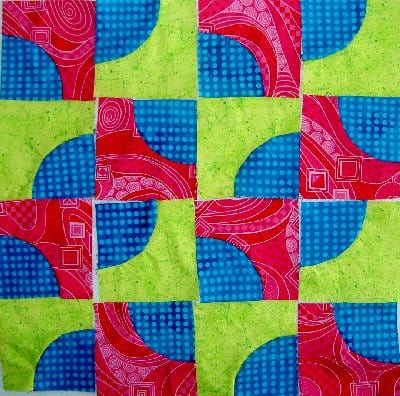
Drunkard's Path
Drunkard’s Path

Good graphic look on this one.

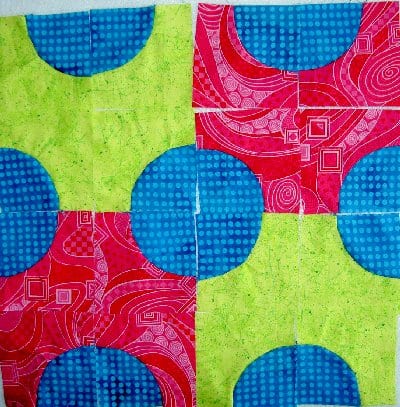
Drunkard's Path #2
Drunkard’s Path #2

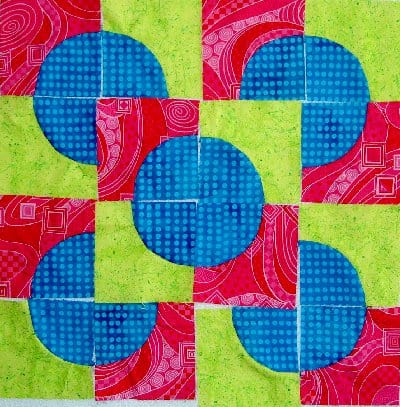
I really like the way the middle circle comes forward in this design.

Drunkard's Path #4
Drunkard’s Path #4

Not sure what the heck this is supposed to be, but it obviously doesn’t work.

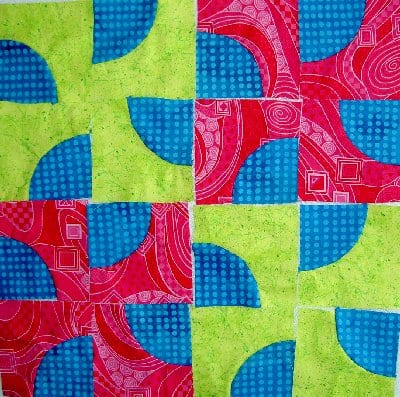
Drunkard's Path #5
Drunkard’s Path #5

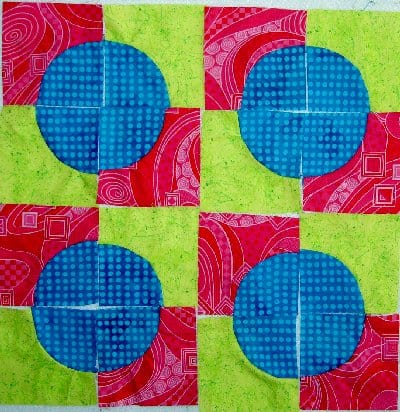
I like the way the pinwheel type design shows up. This is my second favorite.

Drunkard's Path #6
Drunkard’s Path #6

Again good graphic look, but the way the circles go off the side don’t appeal to me as much as the other layouts.

Drunkard's Path #7
Drunkard’s Path #7

This is supposed to be an X, but the X doesn’t show up, because I used three colors (2 for the background) instead of just two total.

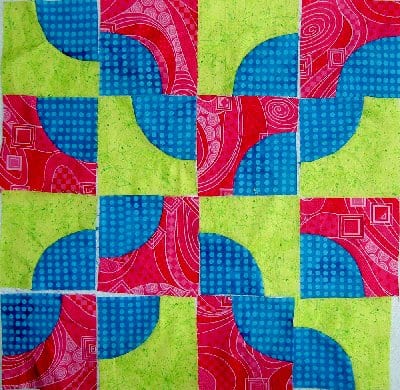
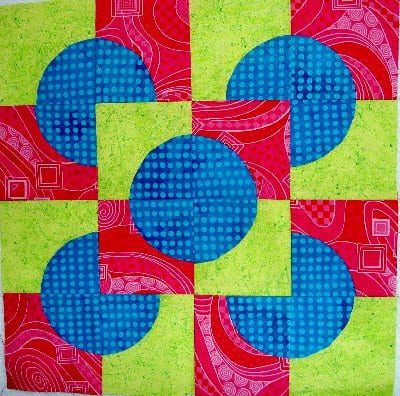
Until I finally decided on the design below. I did have a hard time deciding between this and the pinwheels:

Drunkard's Path Final
Drunkard’s Path Final

This exercise, again, shows how great blocks are. I could make a whole quilt with this block and do each one with a different layout. I think that there is so much that can be done with block designs.