Handbag Sampler – More Blocks

Handbag Sampler - new blocks
Handbag Sampler – new blocks

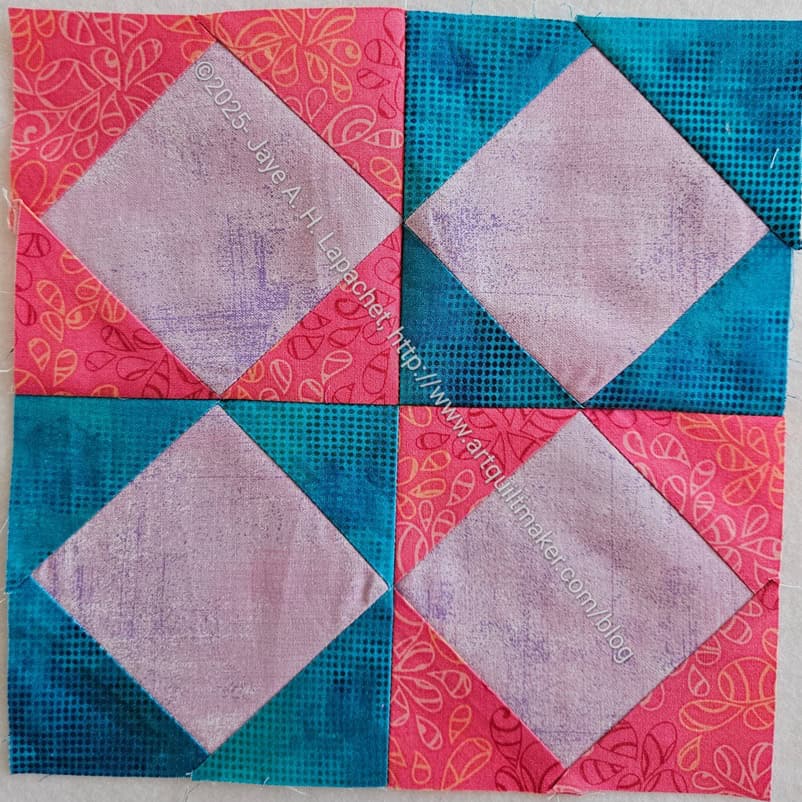
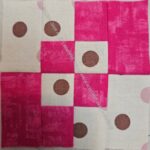
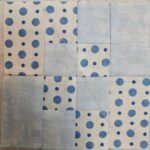
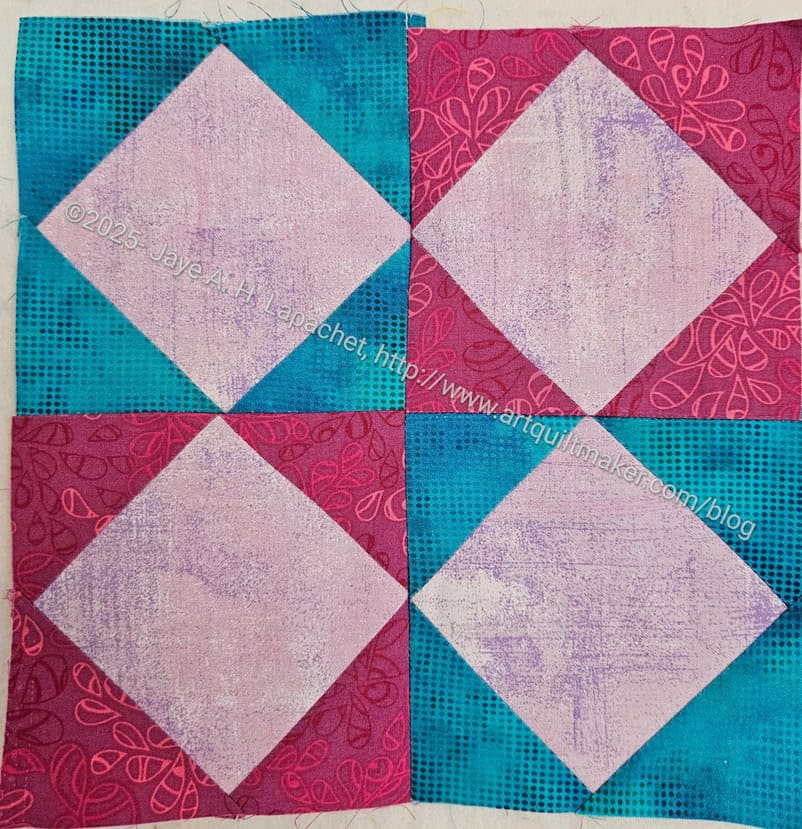
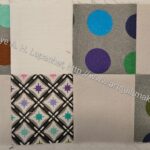
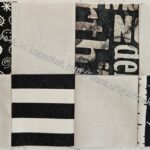
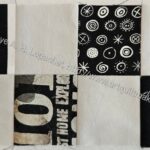
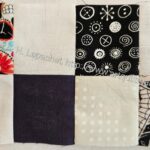
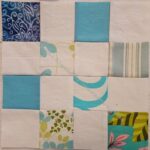
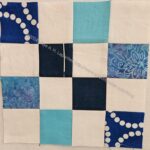
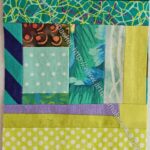
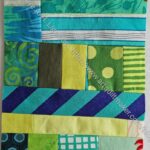
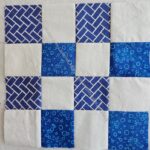
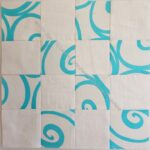
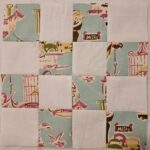
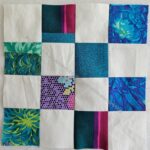
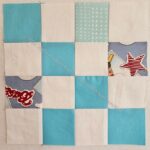
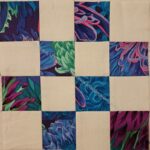
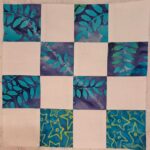
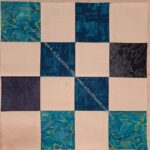
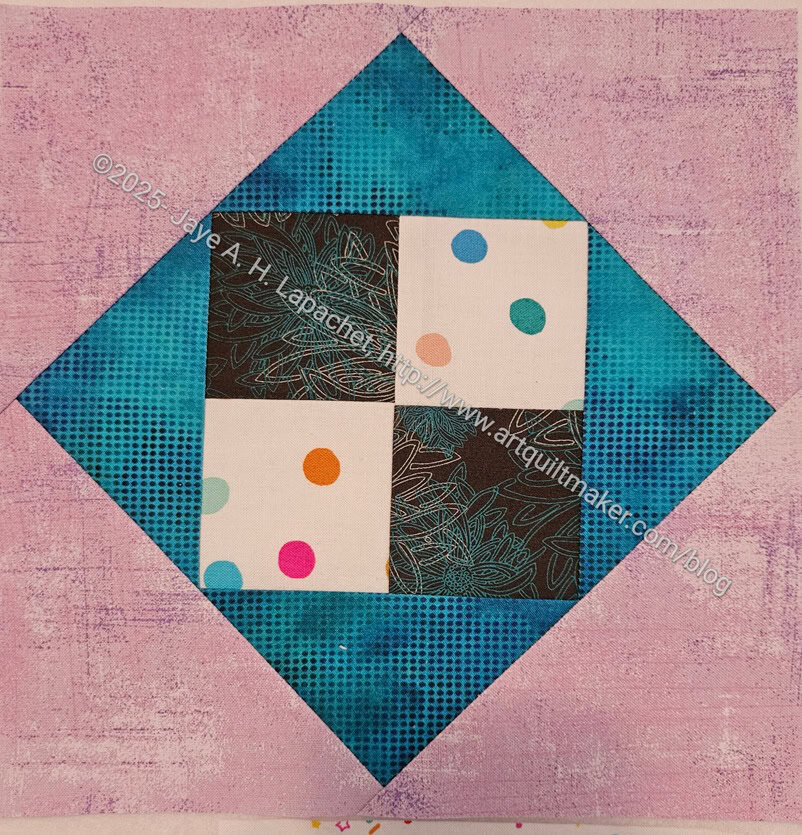
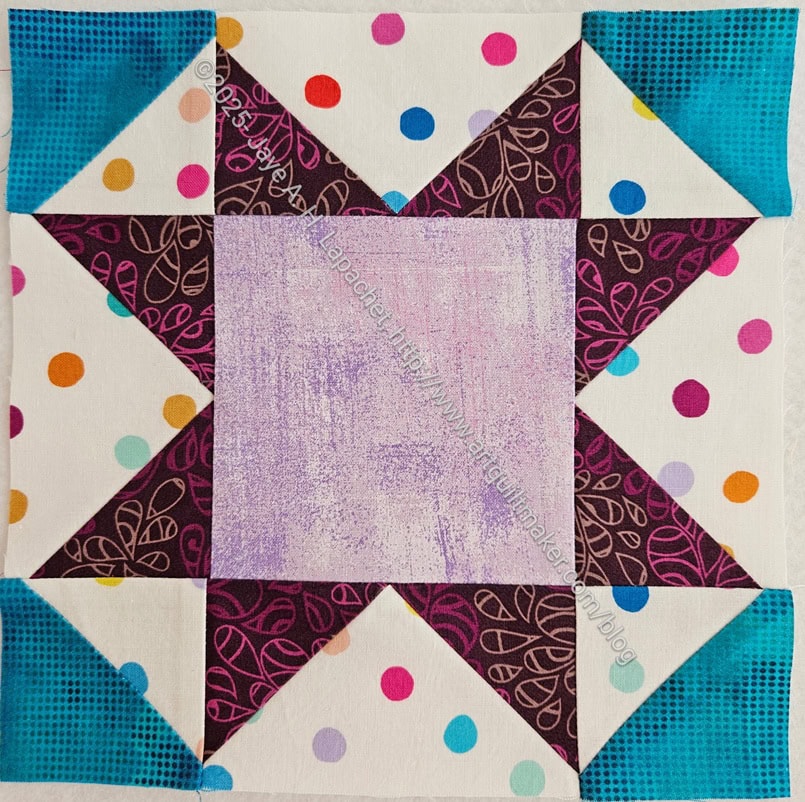
I couldn’t help myself. I said I wouldn’t, but I really couldn’t help myself. I made two more blocks for the Handbag Sampler.

I decided that the quilt needed a few more blocks and I took the time on Sunday morning to choose a couple of easy blocks. I chose Sawtooth Star, because it is a favorite. I also chose Fox & Geese, because I thought it would look good with the other blocks. I really had to stretch that blue fabric, because I had barely enough to make the background.

Handbag Sampler - all the blocks
Handbag Sampler – all the blocks

The blocks went relatively quickly and I think they look good with the other blocks. I am well on my way to finishing the quilt.

June 2025 Donation Blocks

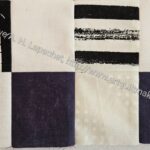
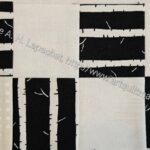
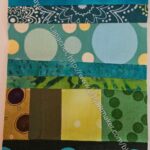
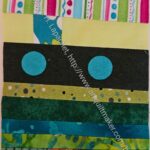
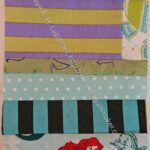
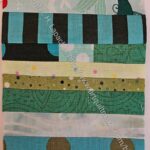
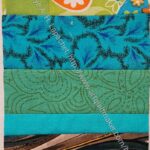
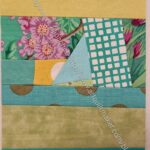
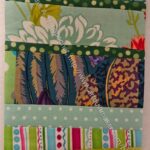
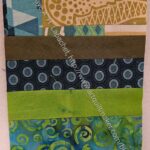
Hooray! I have some blocks to report. 44 is a good number. I had to start on blue strip blocks even though I didn’t make a white improv quilt after I finished the white strip donation top. My blue scrap drawer is overflowing. I can’t shove anymore scraps in it, so here we are.

I really like making these strip blocks. They are so much more fun than the Half 16 patches, though it could just be that I was sick of them because Sidewalk came out really well.

I plan to use the blue strip blocks for another Sidewalk quilt. The blocks are the same size and I am not done with that Sidewalk design yet. 

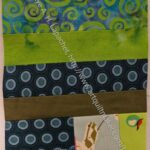
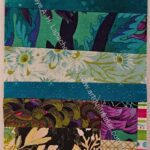
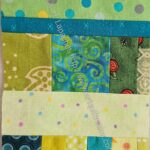
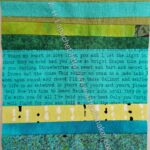
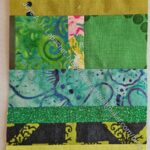
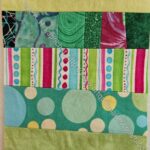
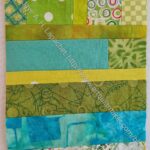
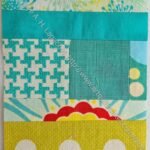
Blue Strips

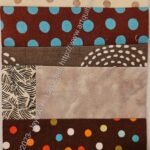
Blue Strip blocks
Blue Strip blocks

I finished enough of the blue strip blocks to make another Sidewalk quilt. This will be the third blue strip donation quilt I have made! Apparently, I use a lot of blue. I am really excited to try the Sidewalk pattern with these strip blocks.

This is not all of the strips blocks I need. It is the group I put up on the design wall as I was making them. 

I have made a little dent in my blue scrap drawer. I can probably close it now. I plan to keep making these blocks until I have used most of the strips. I did find that a lot of the scraps are smaller than 4.5 inch strips, so another blue improv donation quilt is in my future, too.

April 2025 Donation Blocks

I  made some effort to make some blocks this month, but spent most of my charity time on the Grey Improv donation quilt.  I also started working on the sashing blocks for the quilt I saw at the Sonoma County Fair. I have about 3 half 16 patches done.

Two blocks is a little sad, though.


Retreat Progress on Old Town

Old Town Retreat progress

I made really good progress on Old Town at the Retreat.

I was able to piece 15 (of 25 total) blocks. Each block has 69 pieces so that was a LOT of piecing. I was SUPER happy to be doing that piecing, I have to tell you.

Julie helped me put them up on the design wall so we could look at them.

Even with out much sashing, there is a distinct secondary design going on.

Old Town Retreat progress - detail
Old Town Retreat progress – detail

I sewed a little bit of the sashing and put that up as well, so we could kind of see what was coming.

I am excited to work on this some more.

February 2025 Donation Blocks

After turning in a batch of 16 patches, I switched back to making my white strip donation blocks. I should have done it ages ago as the strip blocks lead directly to quilts whereas the 16 patches lead to someone having to store them until someone takes them to make into a quilt.

I am honing in on having enough to make another white color strip quilt.

January 2025 Donation Blocks

I almost didn’t make any donation blocks this month. As mentioned my mom is sick and it is taking up time (time I am glad to have the opportunity to use). I worked on a donation quilt for most of my leaders and enders time. I finished that and did get to a few blocks. Not the 31 I had hoped for, but some is better than none.

2024 All the Donation Blocks

This is quite a few donation blocks! I am pretty pleased with how many blocks I made this year. I know you saw many of these yesterday. Scroll down to revisit the ones I made earlier this year. I made 149 donation blocks. That is less than half of my goal, but it is still a significant number. I hope to do better in 2025.
December 2024 Donation Blocks

Again, I worked on some strip donation blocks in anticipation of a new donation quilt.

Book Review: The New Quick & Easy Block Tool

The New Quick & Easy Block Tool!: 110 Quilt Blocks in 5 Sizes with Project Ideas—Packed with Hints, Tips & TricksThe New Quick & Easy Block Tool!: 110 Quilt Blocks in 5 Sizes with Project Ideas—Packed with Hints, Tips & Tricks by Liz Aneloski

This book is the same format and style as the book I reviewed a few weeks ago, The New Ladies’ Art Company Quick & Easy Block Tool: 110 Quilt Blocks in 5 Sizes with Project Ideas.

This book starts off, after the table of contents, with directions on how to use the Block Charts (pg.4). The page includes a chart key giving readers tips on reading and using the various included charts, especially those that tell makers how sew each block. Quiltmakers are able to use this book in a similar manner to Around the Block, a favorite block book, which is now out of print.

Block Index by Name (pg.5-7) shows all the blocks included in this book. It is arranged by name. While the blocks in the other book weren’t unknown, the blocks in this book are more familiar. There are a lot of basket blocks as well as quiltmaking standards like Dutchman’s Puzzle, Flying Geese, Friendship Star, 9 Patch, Ohio Star, Pinwheel, Shoofly and many others. The authors include a Snowball block, which is a great alternate block to create secondary designs.

The author or editors have colored the block examples so readers can get an idea of how they will look. Remember to try placing colors in different places for a variety of looks. This allows makers to perfect their piecing by using the same pattern over and over to achieve different looks.

The Grid Number Index (pg.8-10) shows blocks together when they are based on the same grid, such as 2 Grid (Four Patch), 3 Grid (9 Patch), etc. This list helps quiltmakers combine different blocks to create interesting secondary designs. Block grids help with construction and also putting blocks together in your own design. This section includes 2,3,4, 6 and 8 grid blocks. 6 and 8 grid blocks are great to blow up into really large elements. They often have more pieces so the design look good enlarged. The large size also makes them easier to piece. Grids are also shown on each block page.

The concept of grids isn’t explained very well, though there is space on the first page of the section, so the authors could add it. I refer you to Jinny Beyer’s The Quilter’s Album of Patchwork Patterns. Ms. Beyer provides detailed explanations about girds in quiltmaking and lists of blocks and the grids to which they belong. It’s a good start to learning about grids as it helps with understanding some of the math of quilt blocks. We don’t always get that information when we just use patterns.

To help readers who use and enjoy pre-cuts, a “Precut Friendly Index” (pg.11) is provided. This information provides a baseline to terms and sizes used in the book. Great idea! The terms and sizes are followed by lists of blocks suitable for the various pre-cut sizes. For example, charm squares (5 in. x 5 in.) can be used for Dutch Rose and Maple Leaf blocks while fat quarters can be used for Starshine and Union Square B. Remember: yardage can be used for all blocks. You don’t need pre-cuts to be successful. You can also make your own pre-cuts by cutting the relevant size off the yardage.

Block making instructions start on page 13 with Air Castle. Included on each block’s page is a wealth of information. Not only do readers find the name and a list of cutting instructions, but the grid, design options, a piecing chart, yardage for a quilt and written instructions. Note that yardage for only one size quilt is given. That varies depending on the block pattern. Some sizes given enable you to make baby quilts, while other blocks have lap quilt sizes included. Readers can extrapolate out for larger sizes.

The Design Options are the best part of this book. The options provided are a great way to use the blocks or a great jumping off point for your own designs. It is also a great way to see how blocks work together. Readers can also see how a block, when combined with others can look more complex. It is a good way to get an understanding of how relatively simple blocks look different and more complex when put together.

Aztec Jewel (pg.17) would be a great block if readers want to show off a variety of fabrics. Further fussy cutting motifs from some of your special fabrics would work well with this block. The example shows two different fabric placement methods.

I am a sucker for basket blocks and, as mentioned, there are several in this book, starting with Baby Bunting (pg.18). I would have liked the design options better if they had showed some designs with different basket blocks, like in a sampler. I know, however, that the authors had to focus and that is beyond the scope of the book.

Readers could combine the different basket blocks to make their own scrappy basket quilt. Baskets included in this volume are Basket A (pg.20), Basket B/Cake Stand (pg.21), Basket C (pg.22), Basket D (pg.23), Basket E (pg.24), Basket F/ Flower Basket (pg.25), Basket G (pg.26) and H/Cherry Basket (pg.27).

The design options given for these baskets are not that interesting, but they can start off your design inspiration. For some reason, this group of basket blocks reminds me of Laura Nownes’ Going to Market pattern. The Going to Market pattern does not look like these baskets at all, but you can get some inspiration from it.

Cats & Mice (pg.32) reminds me of a tile floor. In looking at the design option, I am tempted to reduce the amount of piecing to enhance the star motif. I can see, when just looking at the block, that it might be difficult, but the edge triangles could be cut from a QST.

Despite the name, I am interested in the Country Farm block (pg.37). I am not sure I have seen it before, but I don’t pay much attention to frame blocks as a general rule. I think it looks like the background is in the center. It might be a difficult block to use with such a large open space in the center, but it would be another block to use for showcasing large motifs you fussy to size. I think it would be worth playing with the block. It reminds me of Ocean Waves (pg.76) and could possibly be put together in a similar manner with some thought.

Millstone (pg.68) shows a quilt that looks really cool because the blocks are combined. I think the background gives a little visual space so that the individual blocks can shine.

Old Maid’s Puzzle (pg.78) is very traditional. It is often seen in sampler quilts as it uses a variety of QSTs and HSTs. They way they have put 4 blocks together in the design options really makes the block really interesting. I have never been excited in this block until I saw the design in this book. Granted, I have never played with it either.

The design for Paradox (pg.81) looks like a continuous design. by that I mean one block flows into the other. Readers could make a lovely braided design by coloring multiple blocks carefully. For example, using ombre fabrics or carefully placing pieces from carefully gradated fabrics. Using the color wheel and placing the fabrics in ROYGBIV order would be gorgeous. A light to dark arrangement would be striking as well.

This book does not leave beginners out. There are easy blocks in multiple of sizes such as Rail Fence (pg.84). Readers could use a layer cake with this block design very easily, though the pre-cut friendly note says to use Jelly Roll strips.

I am enamored with Jacob’s Ladder type blocks at the moment. There are several different versions in this volume, such as Road to Heaven (pg.90) and Road to Oklahoma (pg.91)

Rolling Stone (pg.92) and Single Wedding Ring (pg. 97) are, essentially, the same block. They are colored differently and the design options look different. This is something that interests me about quilt blocks. People seem to think that putting fabric or contrast in a different place means the block can be renamed. I don’t really agree, though I can see the reasoning in that opinion. In this book, I am a little disappointed in the authors, because they could have added a completely different block and given readers another, completely different block with which to play.

I am sure you have seen the 16 patch donation blocks I make for my guild. I have tried, in different ways, to show guild members different design options with this block. When I saw the Star of Sedona (pg.104) I saw the 16 patch in the middle of the block right away. I immediately thought of adding a border of squares and HSTs to some blocks I haven’t yet handed in. This would throw the community giving team for a loop, but would make the blocks more interesting and larger. The color/ fabric placement we use in the donation blocks are incorrect for the Star of Sedona, but might work. Definitely something to try.

After the block section is finished, the author has included a section called Tips & Helpful charts (pg.123-128). As the title indicates, this is a useful section. I recommend you mark and keep it in mind for later. It will be useful to know that there are tips on cutting different shapes (pg.123) and also information on how to sew various shapes (pg.124).

The ‘Grids’ paragraph (pg.123) is too short, but useful. It is a good start, or additional information, on being able to look at a block or quilt and figure out the block or the piecing.

The authors say, in the ‘Create New Blocks’ paragraph, “Create more complex blocks by repeating and rearranging simpler blocks in groups of four or nine.” (pg.123). Keep in mind that if you choose blocks with the same grid, your quilt will look more cohesive. Of course, that needs to be the look you want. There is value in trying a variety of blocks together.

The ‘Corner Alignment for Piecing Shapes’ (pg. 125) is from Alex Anderson’s Simply Stars book and is one of the most useful charts around. Use this chart to ensure you are lining up your triangles the correct way for the best piecing outcome.

Find information on yardage (pg.126), sizes for on point designs (pg.126) and a chart for changing block sizes (pg.127).

Piecing blocks is a great way to hone your sewing skills. This book can support that as well as a desire to step away from patterns and create your own quilt designs. Piecing blocks is also a great way to get your sewjo back. Blocks can always be donated to a community giving project after you have moved on.


November 2024 Donation Blocks

The regular monthly posts are a bit out of order this month due to the American Thanksgiving Holiday. Enjoy more donation blocks! I am back working on a Color Strip quilt, though we all know white is not a color. 😉

I need 40 of the strip blocks to make a nice sized quilt, so I have a few more to sew.

LeMoyne Star Demo

As you know from the Sampler Quilt class tutorials, I am very fond of people learning all the quiltmaking techniques. It is a way to be free from the tyranny of always having to use a pattern.

NOTE: I am not against quilt patterns and I feel we should all support quilt designers.

Y Seams demo sample
Y Seams demo sample

However, at some point quiltmakers will want to make a quilt design they have thought up themselves. To do this, we need to know all the techniques. Thus, I couldn’t say no when SueS asked me to do a Y Seams demo for the guild. As usual, I had to overachieve. I posted a handout to the guild members only site*. Most of the information is in the Y Seams tutorial.

I made a whole bunch of step outs and notes to tell people. I won’t be actually sewing. That didn’t work out well when I tried to show a demo of leaders and enders, thus the step outs.


*N.B. If you are in the Bay Area and want to join, click the join button on the guild site. We also have a Zoom option, though the demos and Bag Club are not always available via Zoom.

More Ribbon Friendship Stars

Ribbon Friendship Stars - second batch
Ribbon Friendship Stars – second batch

I said I would make a few additional Ribbon Friendship Stars to make up where someone bailed out. I was supposed to make another 5, but only had the fabric for another four. I hope that is good enough, though I can whip up one on the special Sew Day next week if we need an extra.

Ribbon Friendship Stars

Ribbon Friendship Stars

I made the blocks I promised to make for a group quilt. Most people are making 6 blocks, but I agreed to make more since I suggested making the quilt larger.

I am not a huge fan of the Friendship Star block in general. I like them smaller than 12 inches, which is why I made the Friendship Stars in Flying Around so small. I also like them better when combined in wreath format.

For this quilt, I liked the sentiment of the Friendship star and thought the addition of the ribbon (the green and the blue) was an interesting element. When I put all the blocks next to each other on the design wall, I though they looked great. It looks a little boring with just my blocks, but the group will use different red-violet fabrics for the centers and that will make the whole quilt more interesting.

These blocks are easy to make and would be great for a quilt for friends. I copied the design into EQ8 and created a pattern so you can make blocks for your friends, too. If you need a reminder of how to make Half Square Triangles, you use the Leah Day 2-at-a-time tutorial or my Triangle Technique (8-at-a-time HSTs) tutorial, if you are making a lot of blocks.

Julie is also making some of these blocks. She sewed a practice block, which I think is a good idea, even though I didn’t do it. She also has a great post about her process and the tools she used. I forgot about the Seams Easy marking tool, which I have, but always seem to forget about.

These are the blocks I agreed to make for the project, but I have more fabric, so I thought I would make more blocks so that the quilt can be bigger. We’ll see if I can get them done.