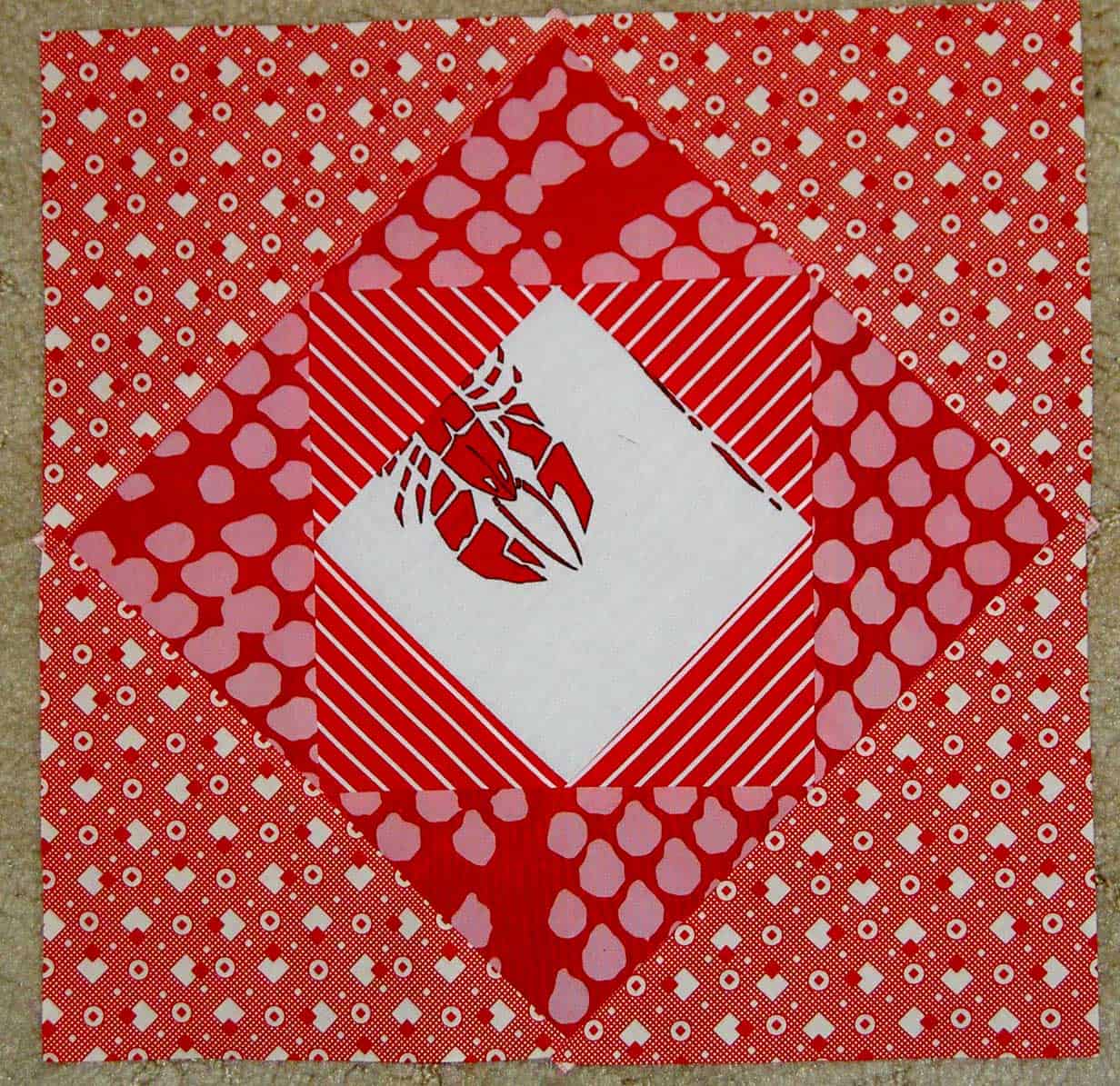
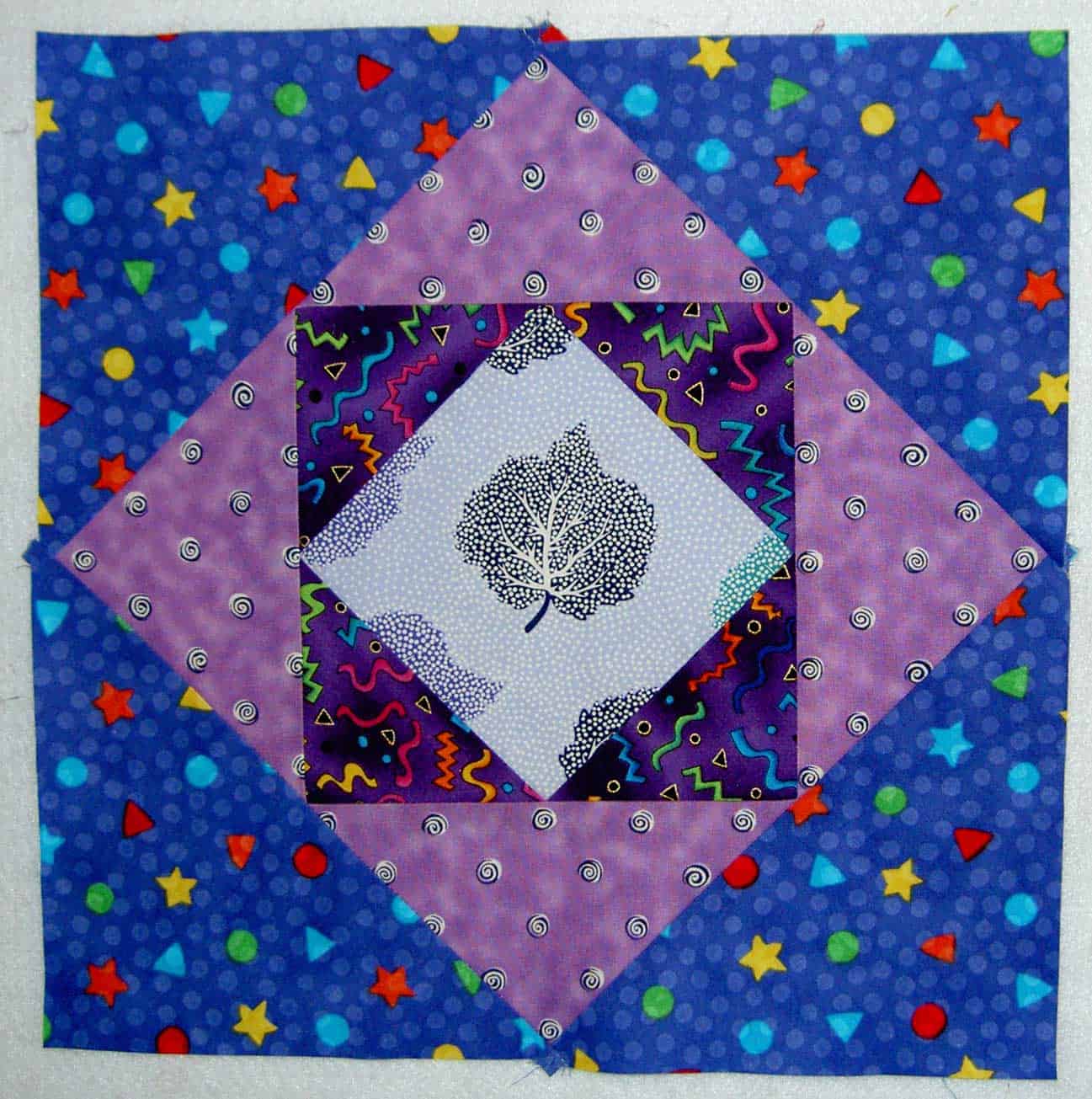
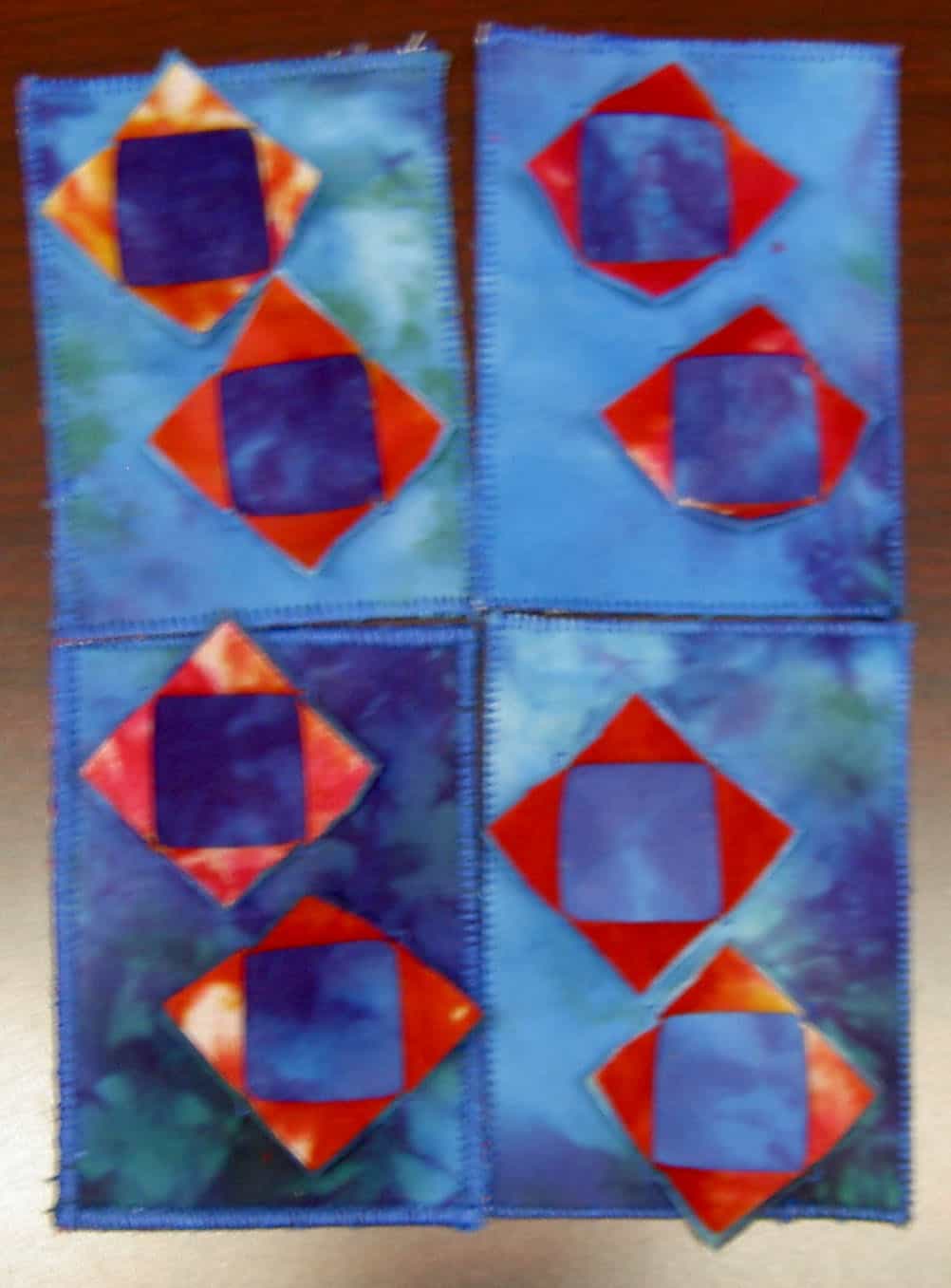
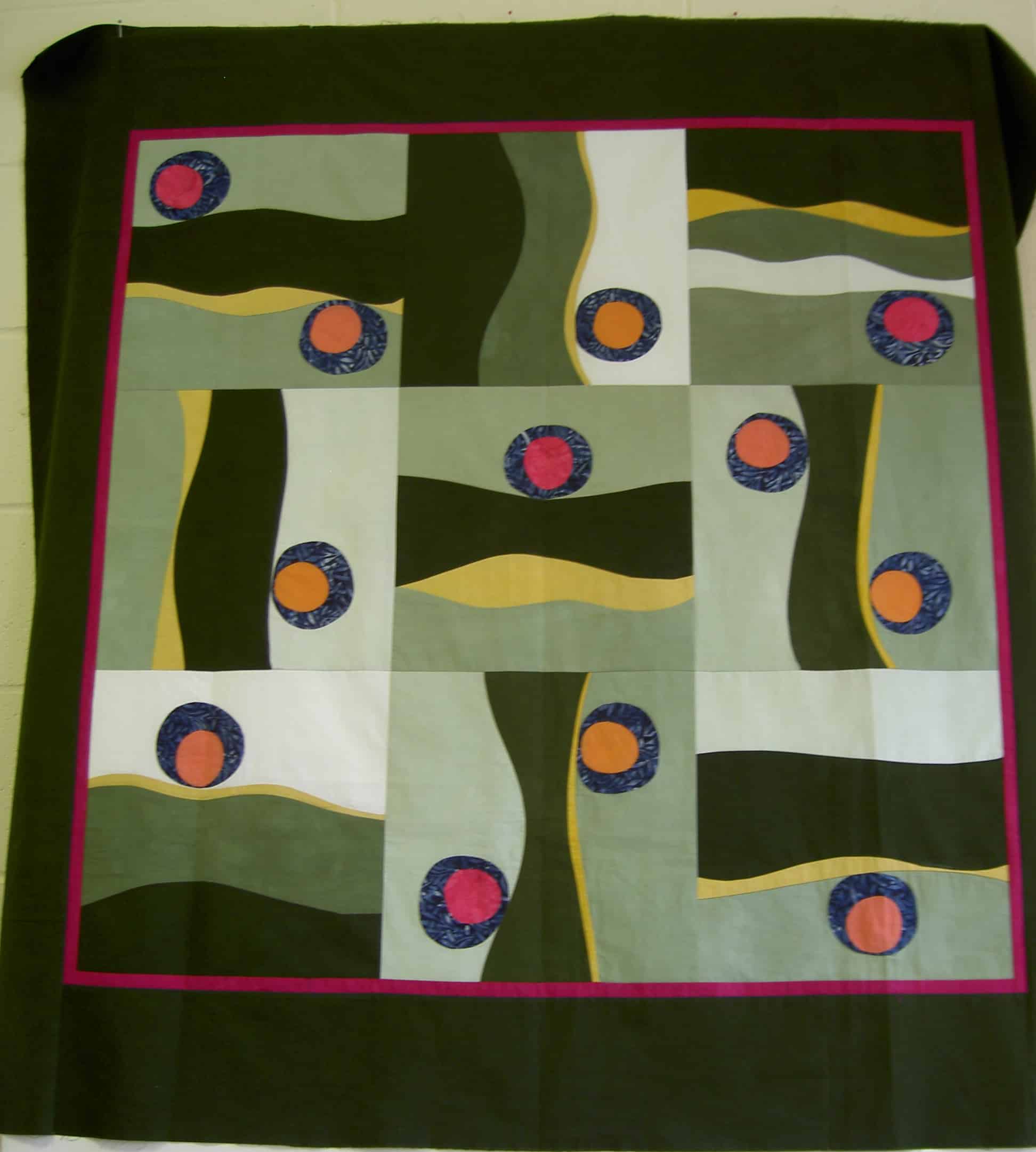
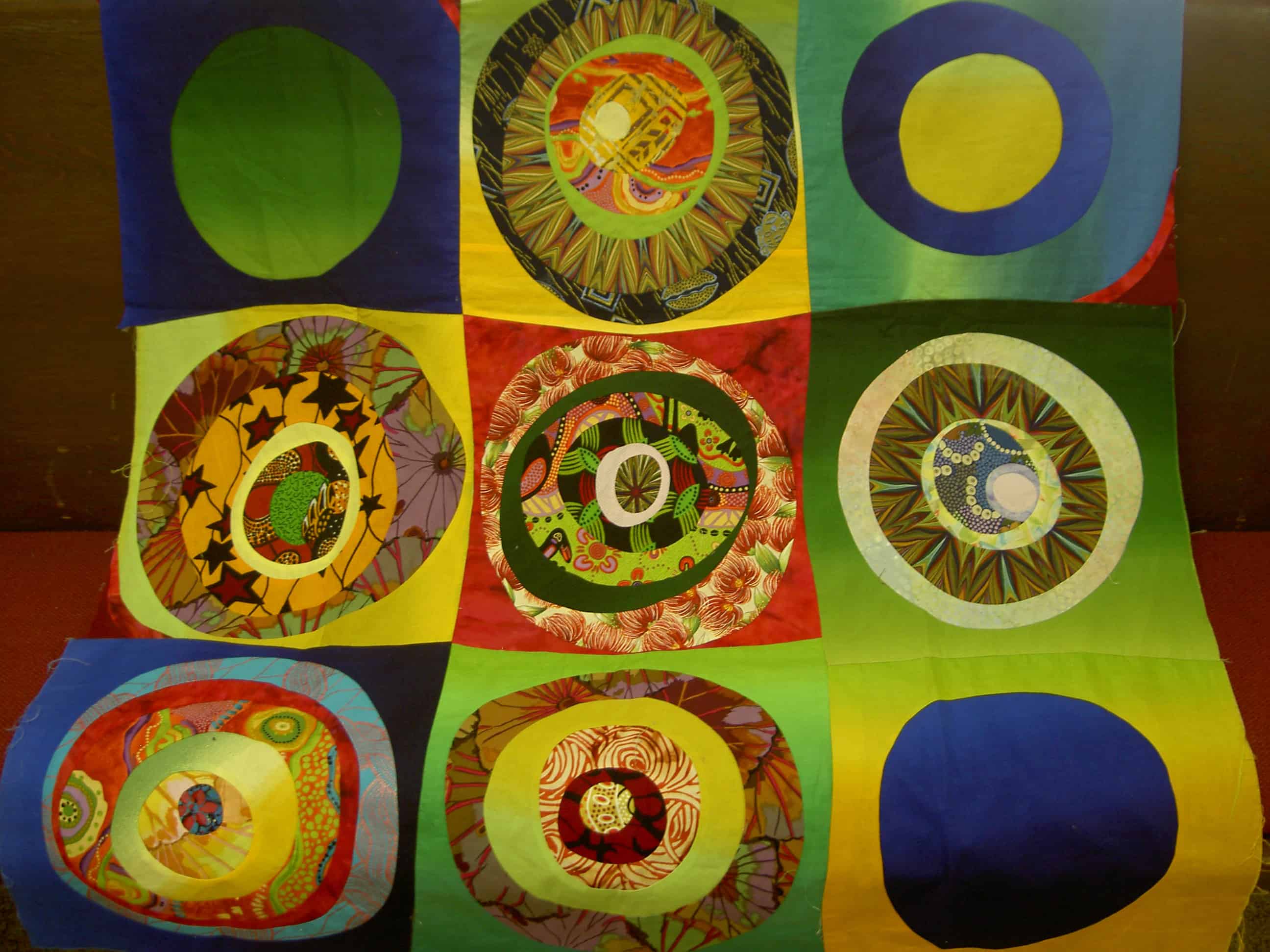
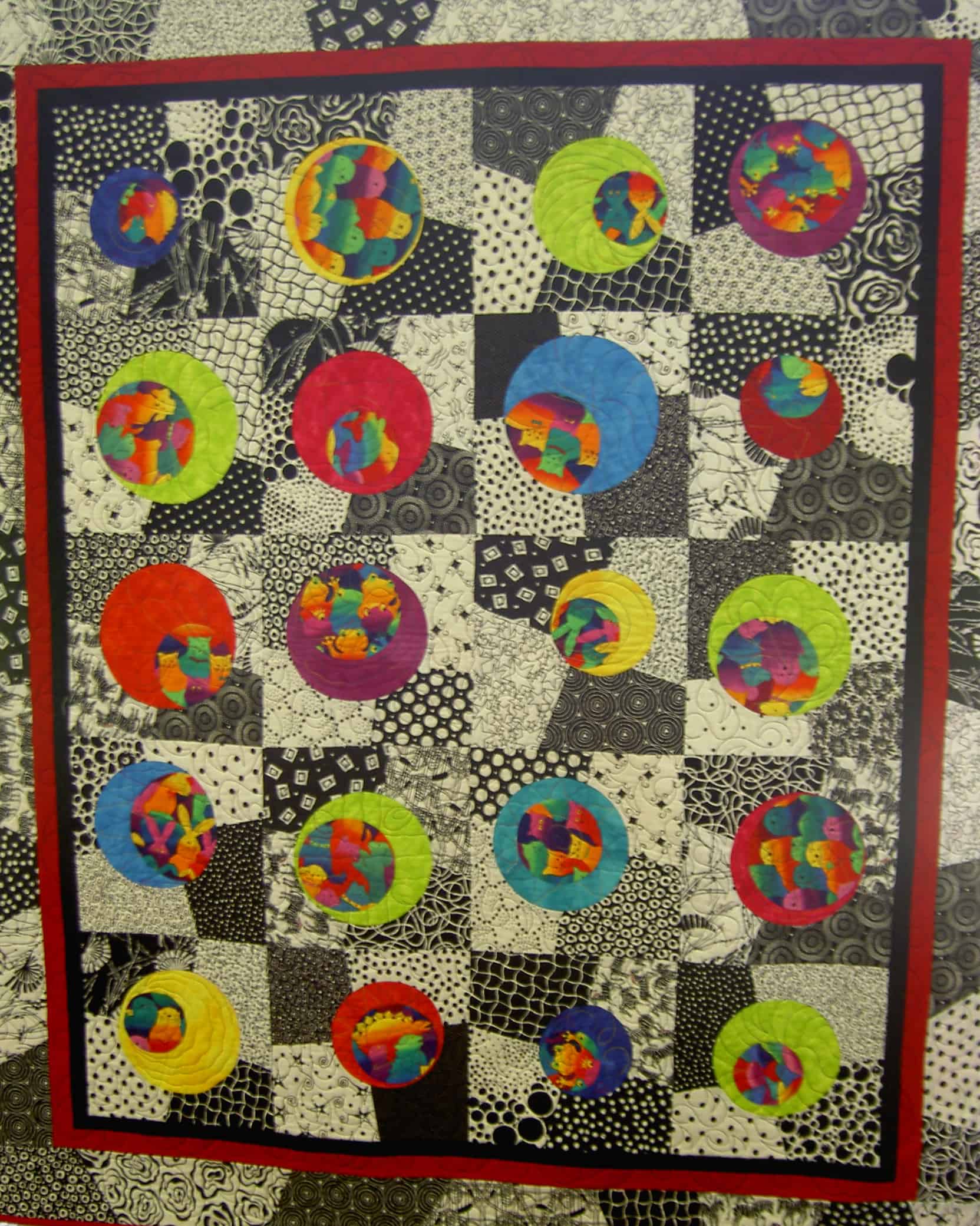
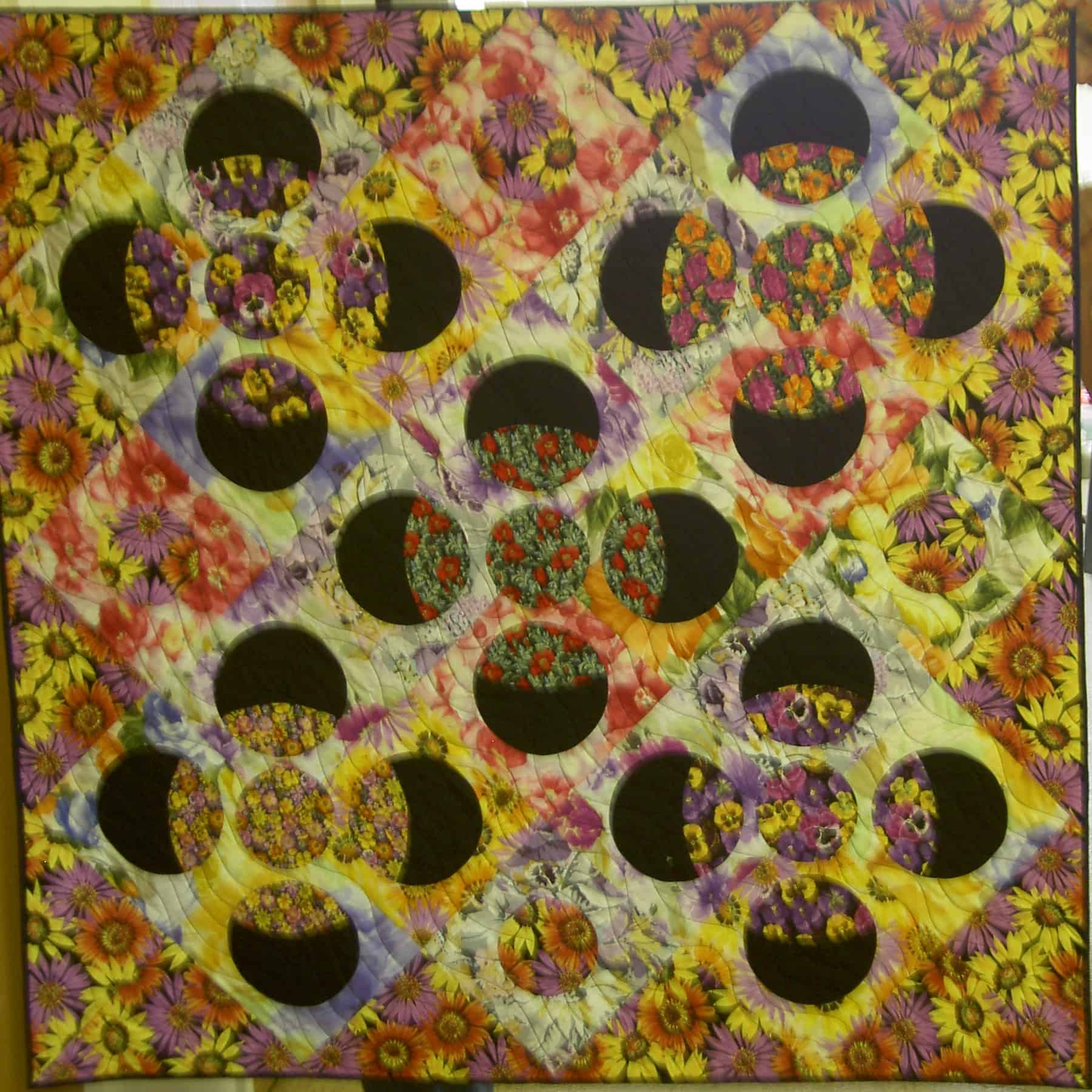
You might remember that there was some devastating flooding in Central Tennessee earlier this year. This is Anna Maria Horner’s neighborhood. She created a project, which I talked about on Thursday, called Rainbow Around the Block. Simply, she is collecting 12.5″ unfinished 2 color blocks (e.g. red and white, blue and orange, etc). These blocks will be made into quilts and given to families who lost their homes, belongings, etc.
Last week, she sat down with her children and designed blocks. I think this is a very nice idea. I can picture the children drawing and coloring and talking with their mom about helping these neighborhood families. We have these kind of times in my family where the lull of filling in a spot with color without the distraction of screen noise helps to free the mind from the mind’s monkey chatter and allows people to bring up interesting conversation topics.
She intends to post a version of each child’s work on the Rainbow Around the Block page as a group called The Horner Family Blocks. The first one, The Joseph Block, is up already. It is a simplified version of a Square in a Square block and simple directions are given for sewing it together. I am concerned about the way she suggests cutting a square into the quarters that the quiltmakers will have a lot of bias blocks to work with. Perhaps that is part of the plan? In any case, you can make any block you wish and a variety are already posted for your viewing pleasure in the Flickr Group.
I made two blocks. I don’t normally make 12×12″ (finished blocks) and the pieces seemed so large. I just made them, though, without questioning or quibbling. The first deadline is July 1. Close to 100 blocks have been posted to the Rainbow Around the Block Flickr Group. People have really taken the idea of letting the fabric do the work, that I talked about from the Jane Sassaman lecture, to heart. I guess they got the message sooner than I did!
One of the email newsletters I read for my job is called ResearchBuzz. I know I have mentioned this site before. One day, I was pleased to find an article that would allow me to keep a steady stream of quilts coming to my blog reader.
After creating the link above (by changing the tags at the end to suit your needs), paste this URL into your Bloglines or Newsgator or Google or whatever reader and it will send you back search results. I put the above search into my (newly refurbished) Google Reader and was immediately provided with several fresh looking quilts for my viewing pleasure.
I also wanted to see what was new and exciting in the basket quilt arena so I changed up the URL above to:
Before he went off on his new adventures, Mark Lipinski showed the Half Square Triangle ruler from Creative Grids. I have been interested in it, but not enough to buy it before I could try it. Inspired by TFQ’s good example, I finally started to read blogs in a blog reader. This helped me to see a post on the Exuberant Color blog about using this ruler. There is also a video posted. This is a wacky looking ruler, but Wanda’s photos make it look really useful. It looks like it cuts off the bunny ears as well. My only concern is often I would use 2.5 HSTs?
Need to know the basics of fusing from the Expert? Did to refresh your skills or check the whys of what you have been doing? Melody Johnson posted a step by step guide recently. She includes a lot of details along with photos.
Writing
The Professional Quilter blog had a post about Print on Demand. The article starts out with the line “Many quilters have a book in them and don’t know where to start”. Isn’t that a great and positive way to start an article? It certainly caught my attention! Morna has links to several of the popular print on demand companies as well as links to more information. This is a brief overview type article, but it was a good reminder with resources for further exploration.
Journals and diaries are part of daily life for many girls and women. I have kept a journal for years and write faithfully nearly every day. These pages are, mostly, for my eyes only. Occasionally, I share drawings I have done, such as the drawing for the Original Bullseye border and the notes I took on the Cartier exhibit. NPR is working on a story called “The Hidden World of Girls“. they are asking for uploads of journal pages to their Flickr pool. These aren’t all the art journals we are used to seeing these days. These are the words depicting the angst of growing up and learning to deal with life. I am glad NPR is taking a look at this subject. What do you have to share?
Making
Journal covers have been on mind lately. I think I will make a new one for myself and I have a desire to make a couple as gifts. While this topic was rattling around in the back of my brain, I saw a blog post on Kindle covers made with selvedges. I have always been intrigued with items made from selvedges. It really takes some commitment to use selvedges, because you have to save them! I also cut off a selvedge the other day and thought I should save it and send it or give it to someone working on such a project. I don’t know anyone and I don’t think I want to start such a project, so into the garbage it went. Finally, I relate journal covers with things like Kindle/Nook/iPad etc covers in my mind. I guess since they are all designed for added protection it makes sense. One of the nice things about the Kindle cover pictured is that it has a flap to close it. I will think about adding something like that to a future journal cover.
By the way, the Selvage Blog has a lot of interesting projects made out of selvedges including a great quilt, called the Blue Zinger by Jen Duncan, using a pattern I tried to make once. I’ll have to look up the name. This is a great blog in that there is a lot of interesting information and a variety of different projects. Even our own Quilt Rat showed up with a selvedge house!
Again with the blog reader, I saw Corky’s post on her class with Karen Eckmeier. I love the village projects she and her friends worked on. They remind me of those French and Italian villages clinging to the sides of cliffs.
Inspiration
Need some additional inspiration? The Harry Ransom Center has made a database of medieval and early modern manuscripts available on the web. These types of manuscripts were elaborately decorated and make for wonderful inspiration for borders and quilting designs. Not all of the pages have those elaborate illustrations. Some are just regular parchment like pages with script writing. You can see a slideshow of various pages on the first page. There is also a way to search. There are lots of scrolls, flowers and religious iconography.
Have you done your Rainbow Around the Block block for Anna Maria Horner’s project? In case you haven’t heard, she is collecting blocks to make quilts for people in Tennesse who were affected by recent flooding. A number of people have already contributed and AMH has a Flickr Gallery for your viewing pleasure. Check the link for directions and information.
I get depressed and want to completely quit making quilts whenever I see Red Pepper’s quilts. That [wo]man (??) makes quilts like I make toast. She is prolific and per pieces are gorgeous. A recent post shows a fantastic, absolutely, positively wonderfully GORGEOUS red and white quilt. No amount of new fabric is going to allow me to make that quilt. How does she do it?
Deirdre has created a gallery of quilts at the recent Northern Star Quilt Show in Connecticut. Take a look and let her know what you think! Nice job!
Deirdre, being the awesome ‘Net surfer that she is sent a site called Pattern in Islamic Art. The images are WONDERFUL. If you aren’t inspired, I am not sure anything will inspire you! There are great ideas for quilts, quilting motifs and Creative Prompt Responses!
Suzanne Cabrera is a sketch artist whose blog I read intermittently. I have posted links to some of her drawings here before. Posts popped up in my blog reader today or over the weekend so I went to take a look and found the most wonderful series of posts about her 30th birthday and the wishes for love and hope she sent out to the world. Take a look at the idea, photos of the event and responses. We couldn’t do this here, because we are too close to the ocean and we don’t want the sea life to choke on balloon parts, which makes me even more happy to see Suzanne’s celebration.
And if all of the above isn’t enough Vicki Welsh has recently posted her latest edition of Field Trips in Fiber. I love to make her list and am, alas, once again not on it. She surveys various blogs and puts up links to finished projects. I started to put links to each piece I liked, but I liked all of them so decided to give Vicki a shout out for her hard work on this list. Go and take a look at the beautiful pieces.
We went on a family outing to Border’s the other day. I know how exciting that sounds! I had a gift card to use as well as a 33% off coupon. The child wanted to get the latest Artemis Fowl book, so it seemed like a good way to spend an hour together. I went to the craft section and looked at all the quilt books they had available. I saw the new Anna Maria Horner book there, Handmade Beginnings, so I took a look.
I have no babies in my life at the moment, and, thus, have no plans to buy this book, but, of course, I found two projects in it that I loved! One is a tote bag, which is large and has some dividers in it. It is called the Here We Go bag. The other project is a decorating project called Writing on the Walls. You pick a word and then through various means create the letters, attach them to stretched canvas and you have a wall decoration. This might work for the C*R*E*A*T*E project I have in mind. The AMH project is another way I could make that project work.
I took some time with the V&A exhibit ancillary materials. The blog is a marketing piece, but it is so well written and entertaining that it made me want to jump on a plane and go to the exhibit and damn the consequences. Lynn Prtichard gives lists of upcoming quilt events in the UK. I could be entertained with quilts for the whole summer if I were a lady of leisure. I am hoping that my quilt friend, LoveAnna, is getting to some of these exhibits. I watched the Caren Garfen video again and really enjoyed it. The website is really a treasure trove of information and photos. It is really the epitome of a web as I clicked here and there and really got lost in a world of quilts.
A survey of how much quiltmakers are spending was recently released. Terri (of quilt book mystery fame) pointed me to an article about the survey. Interesting that we are still spending. I am doing my part, for sure. 😉
Visiting
Remember I visited the Decorator Showcase house? Lil Sissy pointed me to an article on the house that might give you a better idea of what it looked like and was about. The photos in the article also give you a lot more of an idea of what we saw. They do show off the rooms to their best advantage. The before and after photos are great, too. The other great thing about this article is that the reader really gets to see a lot of what we saw, sans the shoving of people out of the way!
Admin
Spam is becoming a huge problem on Artquiltmaker Blog. Does this mean I am popular? I never was in high school. Bleah on spam. Generally, I, at least, glance through the posts to see if anyone inadvertently wrote something that my spam filter didn’t like. Lately, I have been getting 20, 30, 40 spams a day and have just been marking them all and deleting. Some tips:
one word replies get sent to the spam filter
embedded links get sent to the spam filter
nonsense series of letters and numbers get sent to the spam filter
If your message gets sent to the spam filter, because you are being cute or funny, future posts will need me to approve them and I may miss them in my wholesale deleting of spam. See here for more info.
I signed up for the SFQG emails. These emails notify me of upcoming speakers to the local guild. My mom and I went to one towards the end of the year last year to see Mike McNamara. For $5, I can hear really great lectures and see wonderful slides. A recent email notified me that Jane Sassaman would be coming to lecture. My mom is gone and I almost didn’t go, but I committed to myself to go and went.
I am not much into the whole guild thing right at the moment. I do belong to two different guilds, which suit my needs very well: workshops and like minded people. It might be interesting to be a member of the SF Guild again, but I don’t want to volunteer for stuff. I just want to sit in my workroom and make stuff. Selfish, I know.
Still I couldn’t resist the lure of Jane Sassaman. I have admired her quilts for awhile and love her name. She has designed a rug (I don’t know if it is still in her shop) that I would love for my dining room. Boy am I glad I went! The lecture was wonderful! I usually feel so inspired when I hear someone like Jane Sassaman speak.
When I arrived at the meeting the greeter asked me if I wanted a hostess or chaperone. I didn’t so I said so and I was rather proud of myself for saying so. I was tired and didn’t feel like talking to people. They have a lot going on and the hall was crowded. The only seats apparently available were int he front row. I thought they might be saved for the officers, but I went and sat in one and nobody kicked me out.
Simple Shapes Complex Fabric
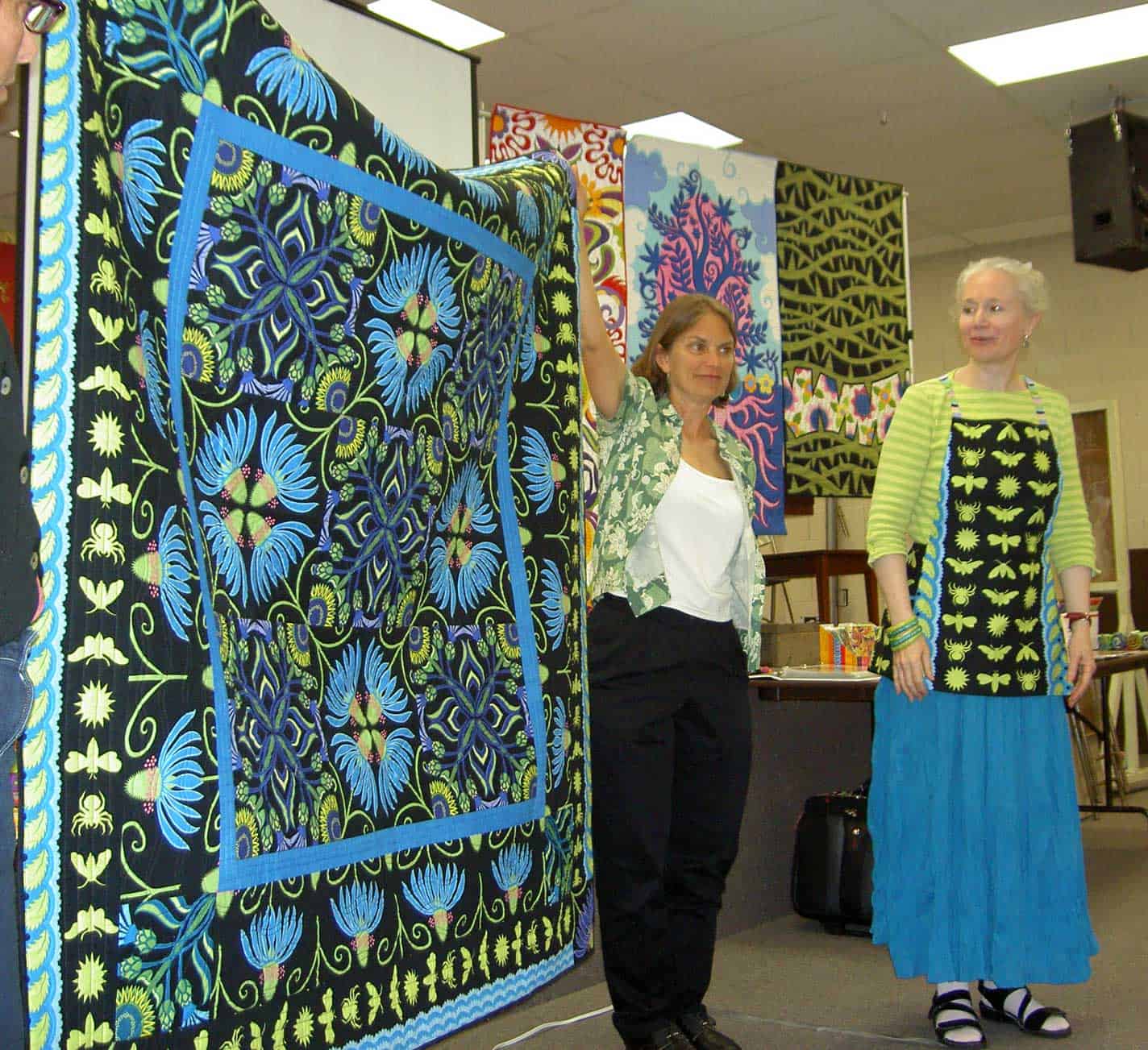
Ms. Sassaman called her lecture A Fabric Romance. She talked a lot about the fabric she has designed, about which she is very enthusiastic. She said that she has spent a lot of time working with the fabric she designed. Ms. Sassaman said that she has filled her whole hose with the fabric. She showed pictures of duvets, pillowcases, throw pillows, upholstery, seat covers and even a tree skirt for the holidays. I was enamoured with all the fabric that she used and it made me think that these types of simple home decor accessories would be a wonderful, and relatively easy, way to cheer up my house. It would also be a wonderful way to use up precious fabric in large amounts so as not to worry about cutting it.
I love it when I go to a lecture and learn something. Jane’s fabric is pretty busy or complicated. She said she designed it that way to make the work of quilting easier for people like us. The one tip she repeated over and over in various ways was:
Simple Patches, Complex Fabric.
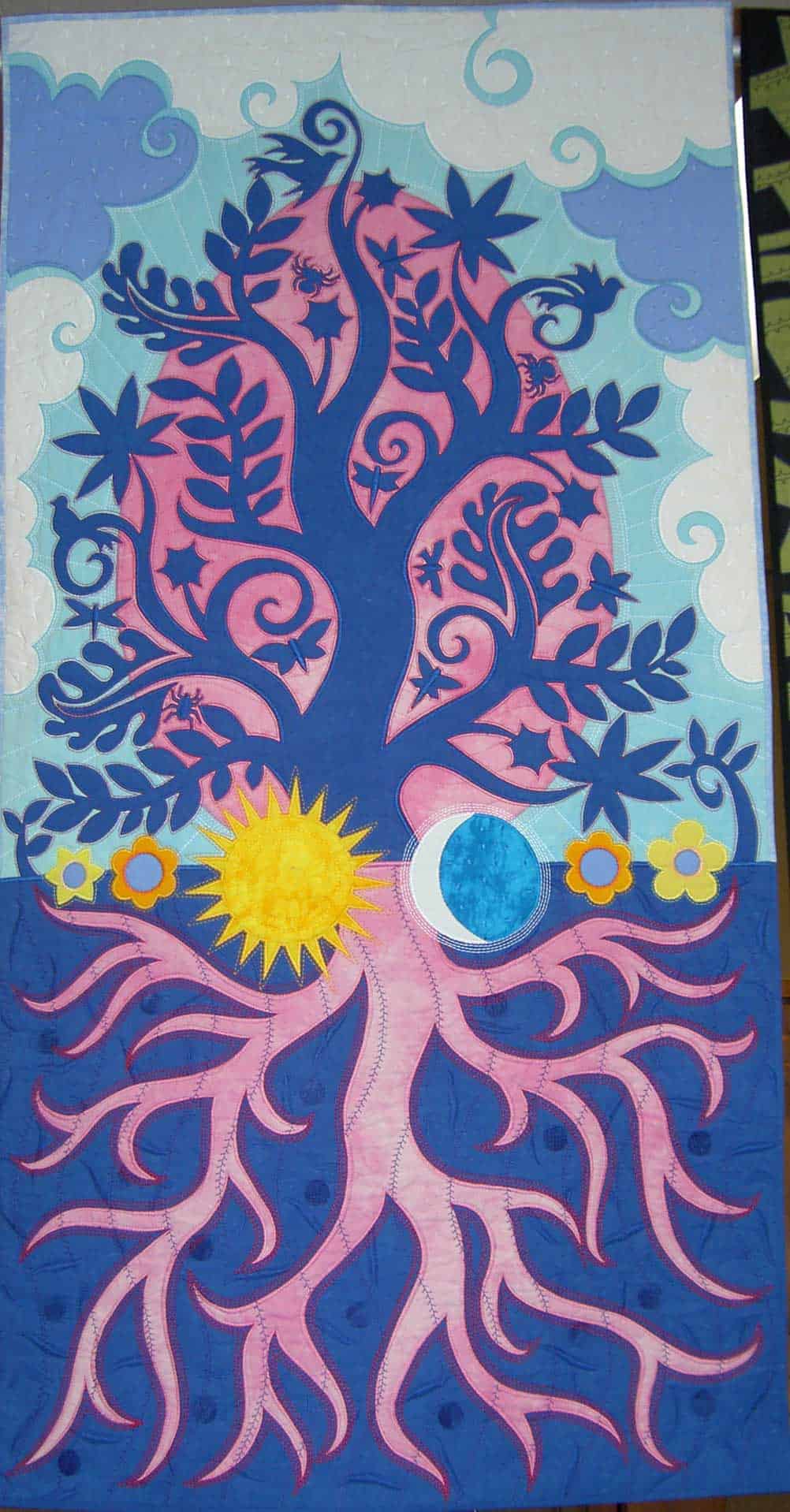
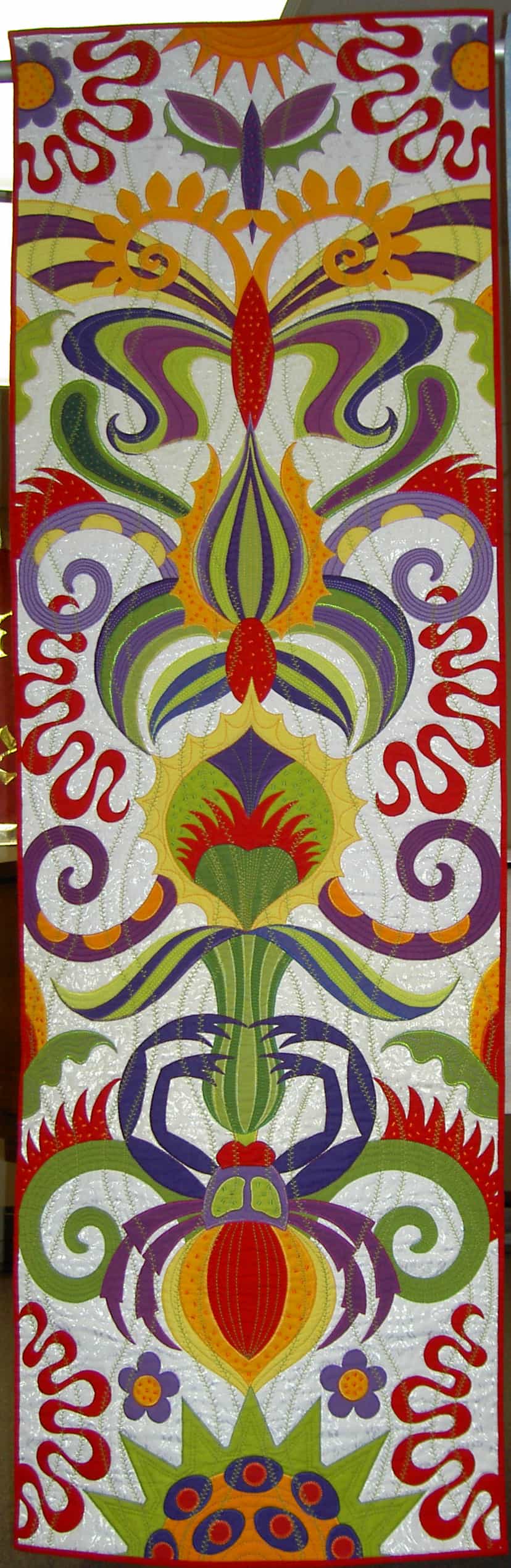
With larger designs, fussy cut and cut larger patches. What I think she meant by that is displayed in the quilt to the left = “complex fabric with big motifs makes simple piecing look sophisticated.” There is no applique’ in that piece. She has fussy cut the fabric motifs and carefully placed them to make the piece look complex. She showed several examples in her slide show and had a few examples in person as well.
I have to say that after listening to her talk, I am looking at fabrics, especially the large prints that we love and are so popular right now, a little differently.
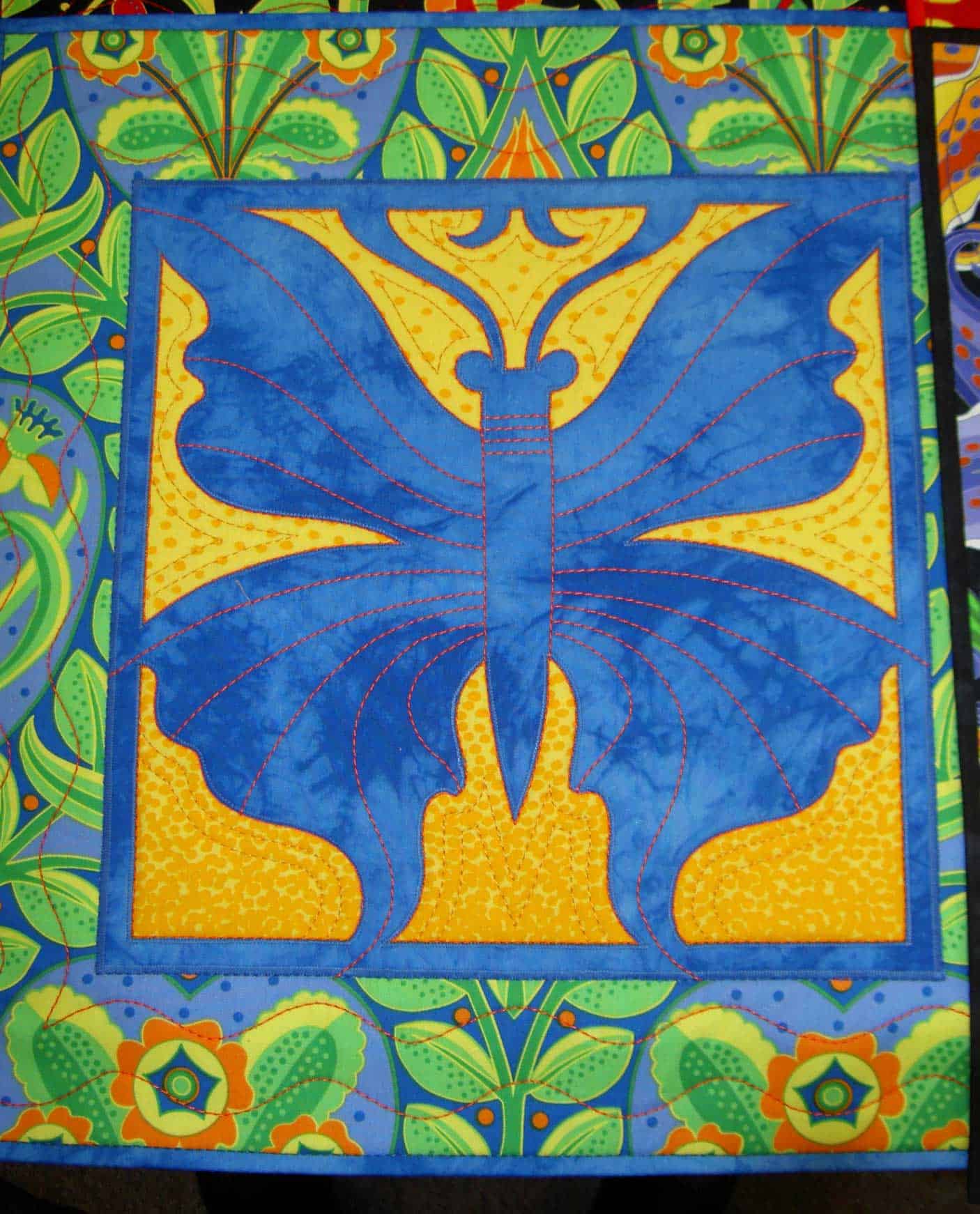
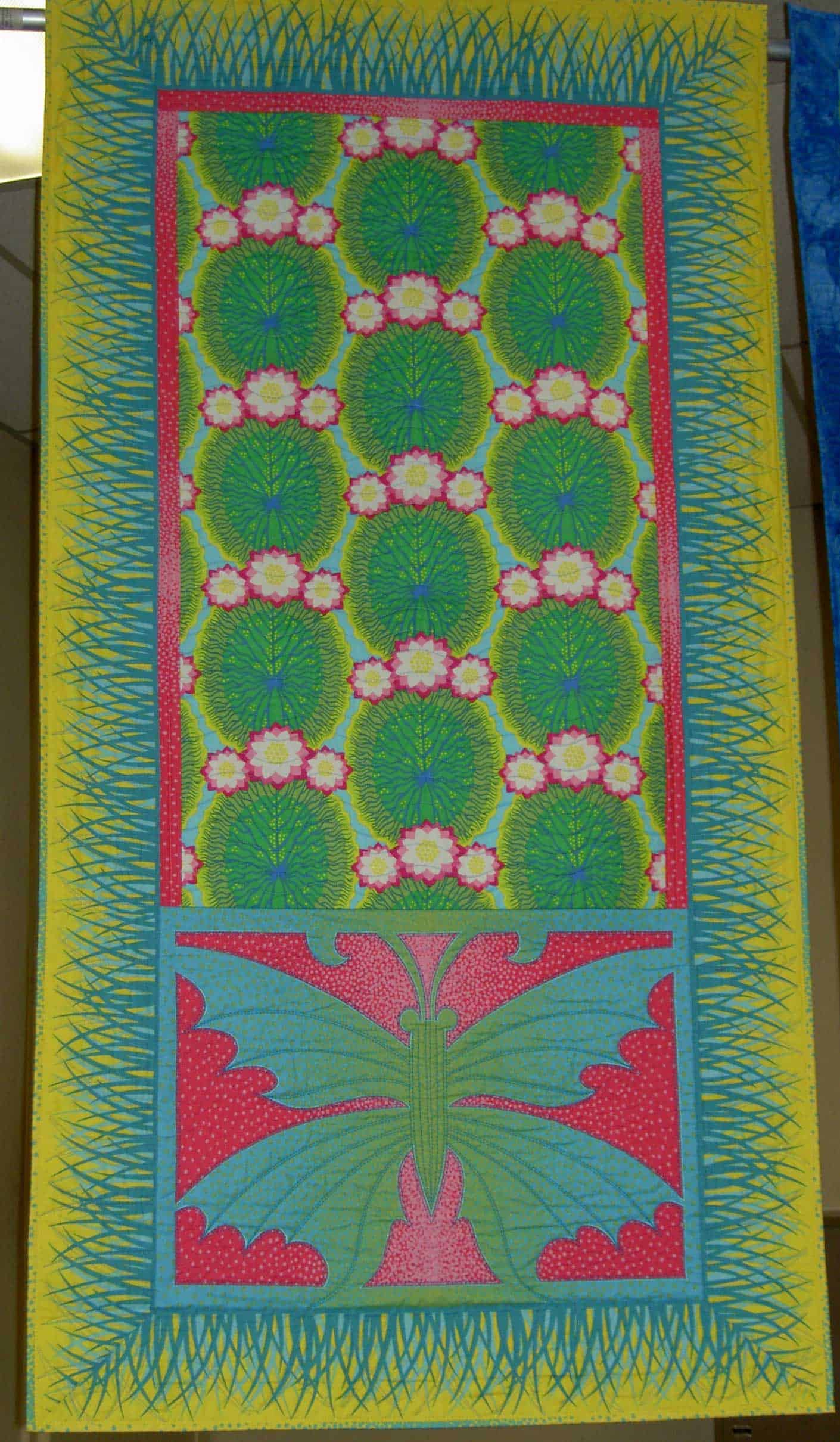
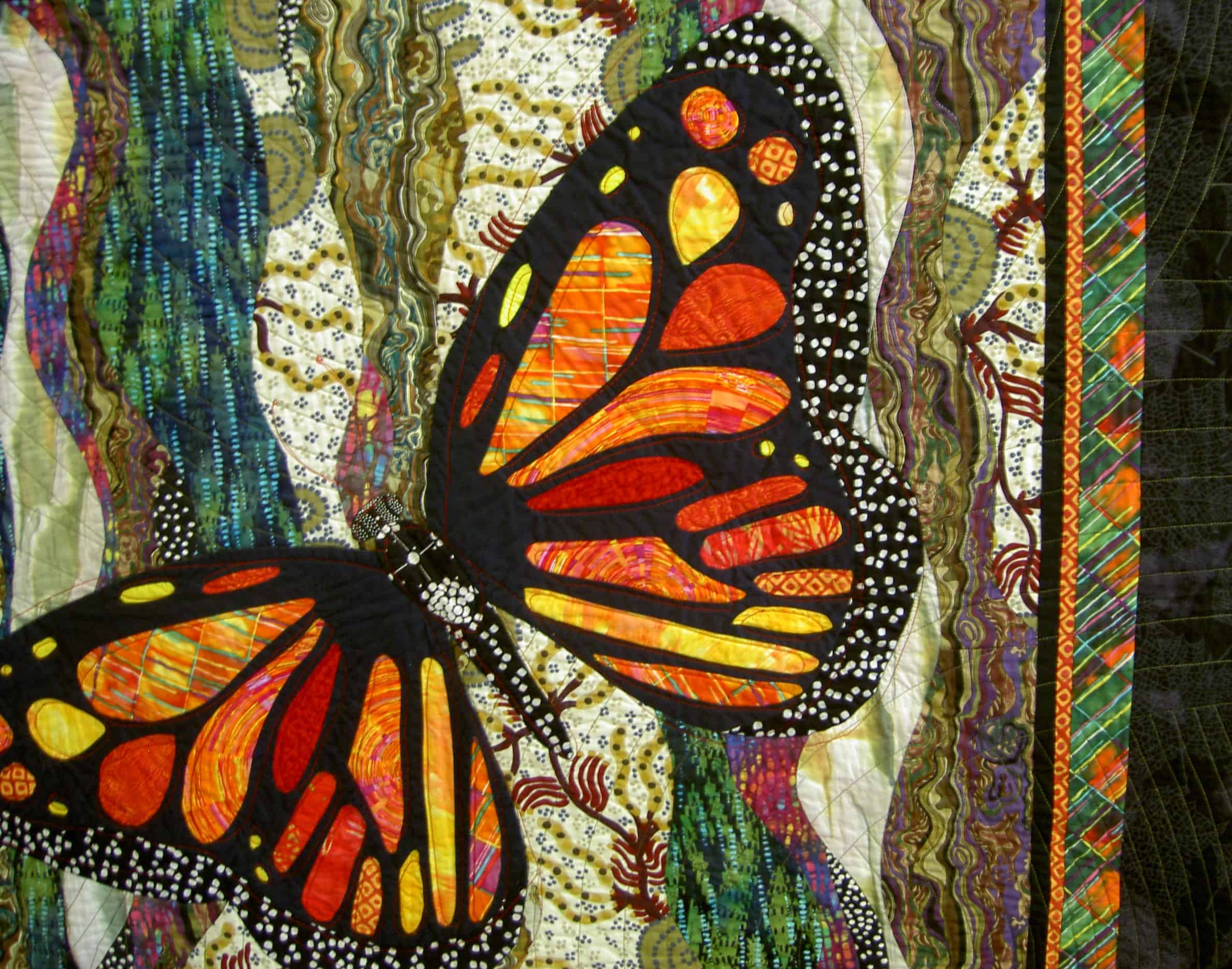
Blue ButterflyBlue Butterfly-detail
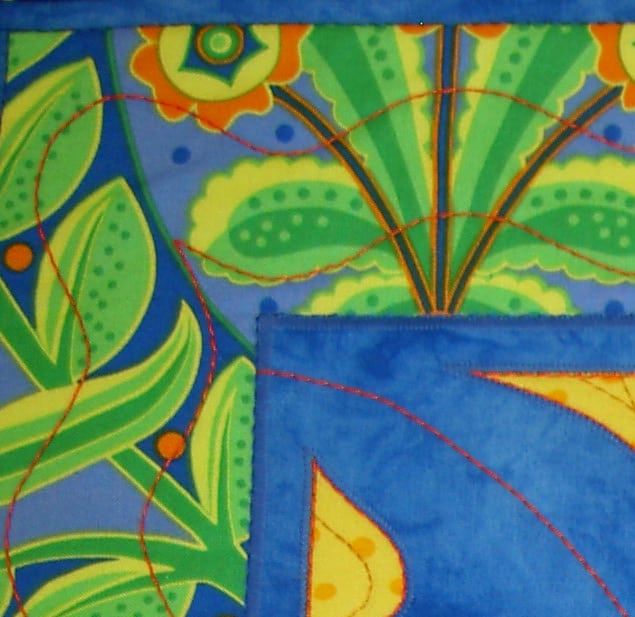
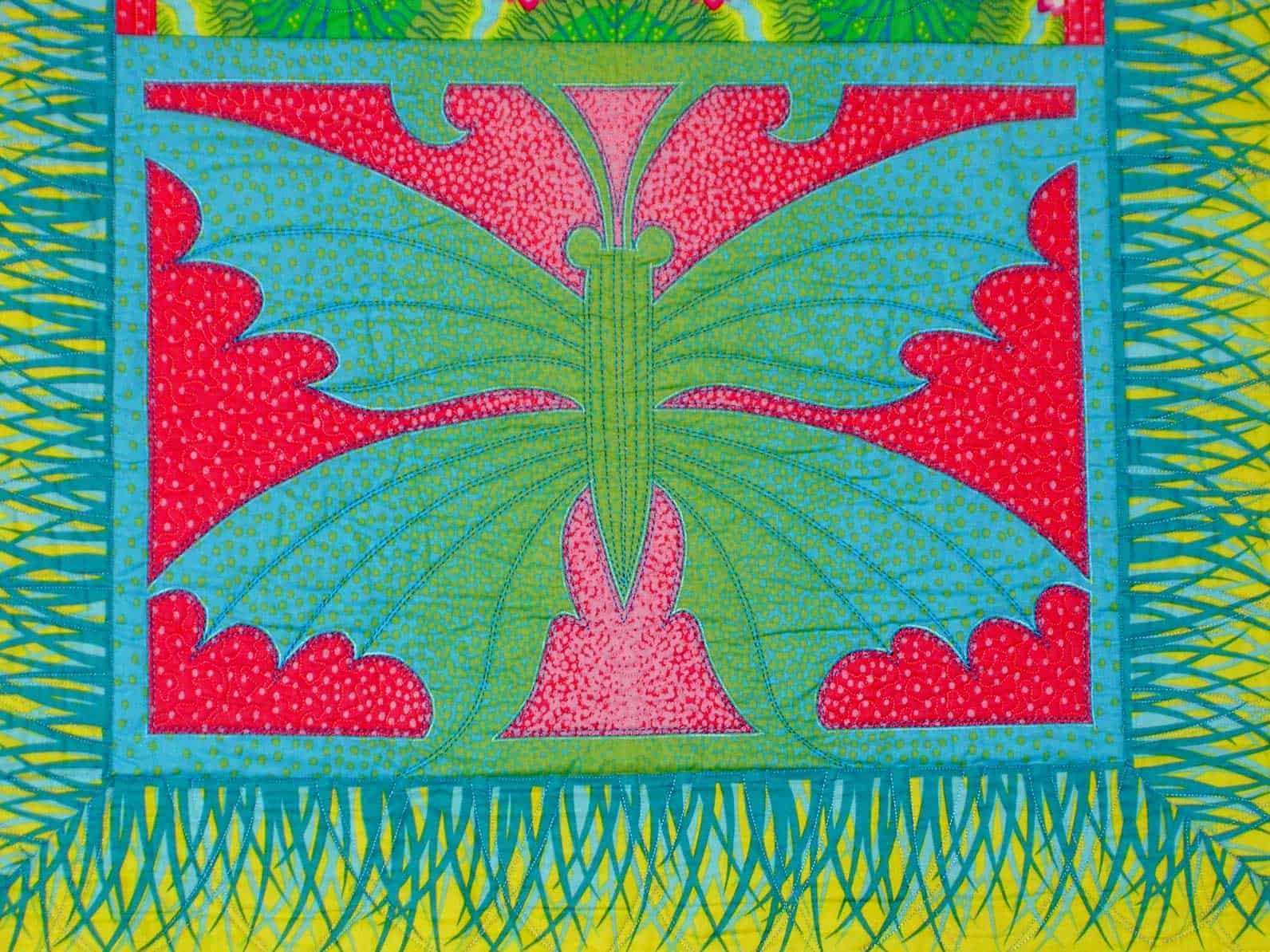
Some things I noticed were that her stitching is a real design element. The stitches are large and fill in some outlines where there would otherwise be blank space.
I rarely think of thread that way and would like to try and learn to do that, because, at least, in the butterfly, it is very effective. I did do a bit of this type of stitching to accent the angles and folds in the Pie block in the Tarts Come to Tea.
I am not sure if it is the design and if that type of stitching would translate well to other shapes, but it is definitely worth thinking about and trying to incorporate more of into my pieces.
In general I think thread still has a lot more to add to my pieces that I am currently doing. TFQ and I have said that threadwork has become much more noticeable in recent years. Jane’s work is another example.
She learns, “like other visual people” (her words), by looking at other artists’ work. She is heavily influenced by William Morris, the English designer. From him she learned “if you have an empty space, put a dot in it.” Right up my alley! I never much liked Morris’ work, but think I may have gained a new appreciation for him after listening to Ms. Sassaman speak about how he influenced her. She opened my eyes to some of his other work besides that one sees at Liberty of London.
She also enjoys the work of Christopher Dresser. He was a contemporary of William Morris and was trained as a botanist. His work is quirky in that he gives extreme discipline to natural objects. She showed a beetle box/jar which illustrates this concept. The beetles, which would probably rarely stand still, are stopped and in order in this piece.
Rennie Mackintosh is another designer to whom Jane looks for inspiration. She particularly showed the stylized roses. I used to make small leaded glass panels and one I made used a pattern which included these roses. I don’t know if I have a photo of it, but if I do, I will post it sometime.
Viennese Succession is a movement that she loves. I may not have completely understood what she said, but I think she said she likes this era, because of the decorative arts elements. Manufacturers put restrictions on the artists designing hte decorative arts (e.g. design for this box, which will be 4×4″ square) and then the artists put further restrictions on themselves within the first set of constraints. Dagobert Pesch was an Austrian artist from this era. She enjoys the scary elements that he puts in his work (e.g. the spiky leaves here and the pointy bits on this tiara). I am sure someone who knows more about him could talk more intelligently about his work.
Josef Frank was another Austrian artist who moved to Sweden, whose work Ms. Sassaman enjoys. He loved to put everything he possibly could on a piece.
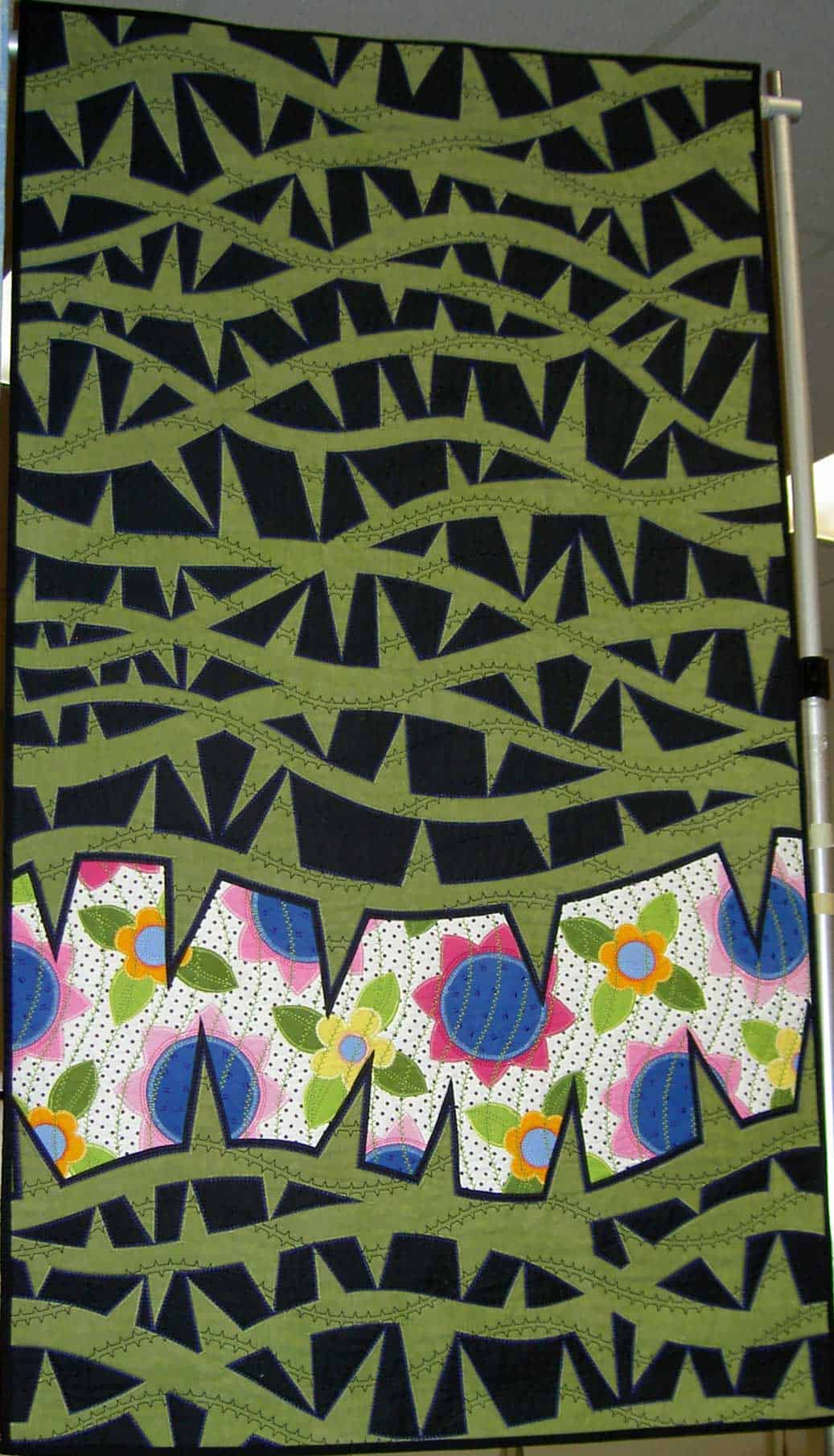
Jane has an interesting sense of the macabre. She likes the spiky, spooky elements. She said that she always puts something scary in her work. They are not scary, but they are not sweetness and light either. Spikes and thorns can be seen regularly in her work. She walked us through her design process via slide and showed some of the designs she had considered that didn’t make it into the final collections.
It takes her about 4 months to complete a collection of fabric. Included in the process is lots of “noodling” around at which time she tries to make the pieces work together. She starts with line drawings in black and white. She figures out how they will repeat and how the different designs (on each bolt) will work together. She makes her colorways “talk” to each other so they be used together. Her collections involve about 10 prints in 3 colorways – 30 total for each collection. She calls her fabric designs “William Morris on antidepressants.” That got a big laugh.
She starts with 3 contrasting shapes when she gets to work on a quilt and then adds in a collage style. She will often have layered shapes, which are made up of three layers using shapes that mimic each other.
She is heavily influenced by the decorative arts and uses lots of decorative elements in her work. Her quilt, Willow, was influenced by English embroideries of the 1600s. You have to look at her quilts side to side, as is the case with many historic embroideries, to see the “conversation” going on. The side motifs are similar on each side, but not the same. I think I learned something about looking while at that lecture.
Busy Shop
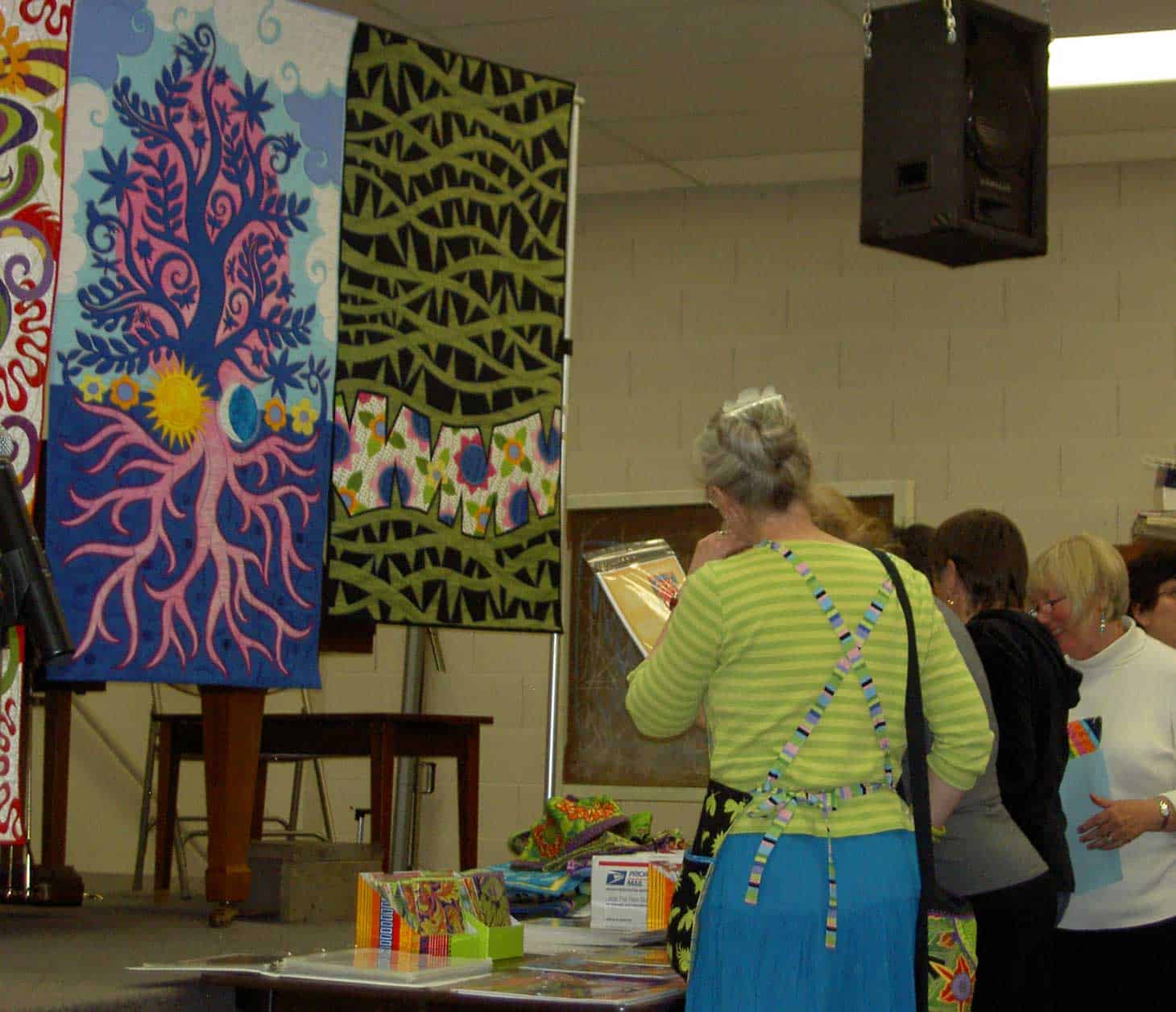
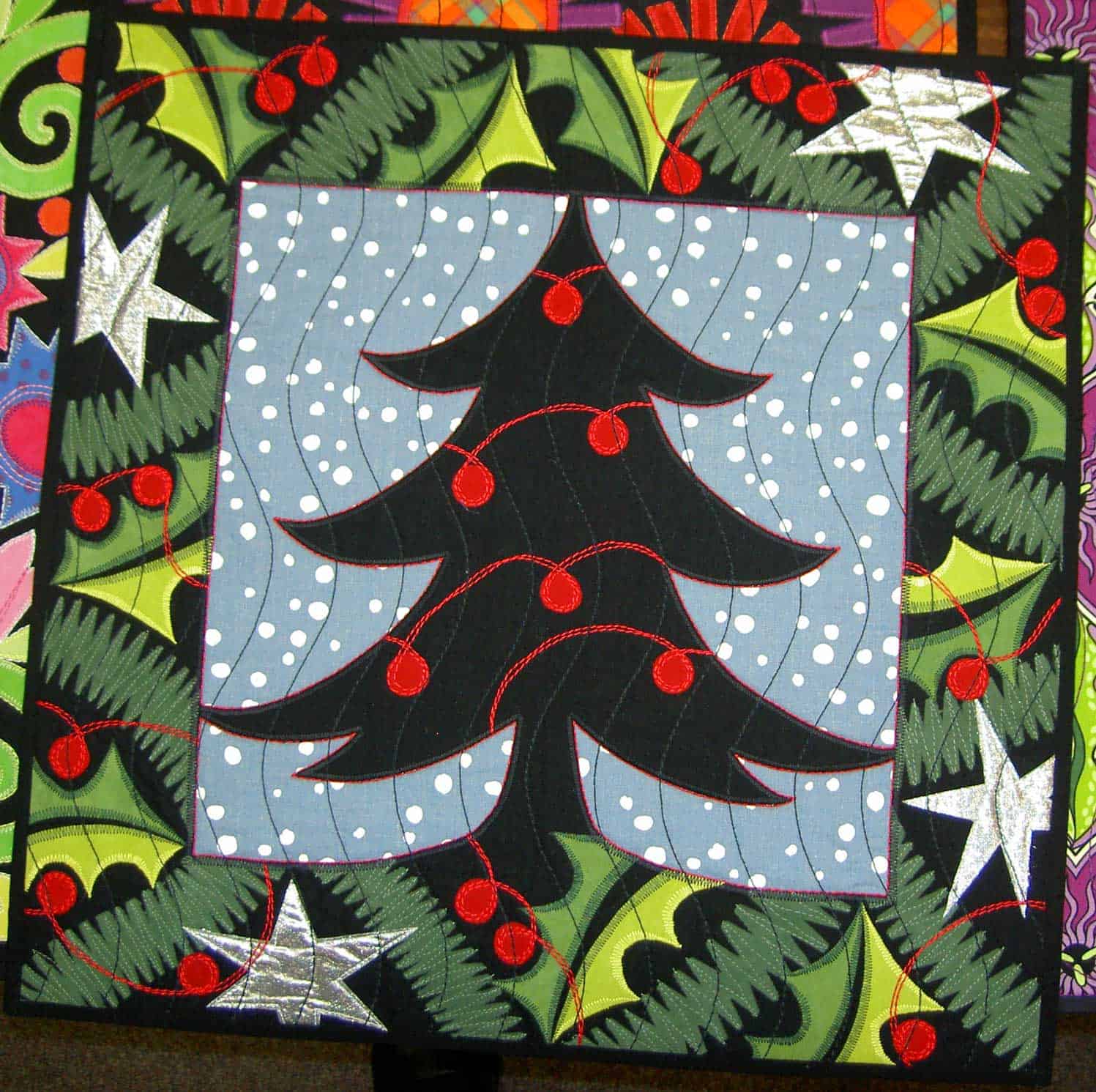
She brought quite a few things to sell. Before the lecture, the shop was busy. After the lecture, it was completely mobbed with people grabbing things right and left. She has a couple of lines that I think are very good marketing ideas. One is called Simple Silhouettes, which are patterns for ~1 foot square quilts using piecing and applique’. They look to have very few pieces. She also has created a line of sewn accessories she calls Home Dec pint sized patterns. These are specifically designed for newer quiltmakers, young parents and people who are just starting out and don’t have a lot of time. All of these patterns and her fabrics can be purchased from her shop.
Deluxe Seasonal Patterns - Winter
A few other photos:
Pink Butterfly with GrassPink Butterfly with Grass - full
I was reading about people being loathe to let go of things because they might need it “sometime.” I saw the quote from Julie Morgenstern and it confirmed my recent attempts to just use the fabric. Yes, some of it might be precious, but c’est la vie! There will be more precious fabric.
By the way Pam has some FABULOUS pictures in her blog post, so take the time to take a look.
Update: I was joking about clutter when I wrote this post late last night, but just now read a good blog post about myths of clutter by organization expert Julie Morgenstern. One line really jumped out at me: “Releasing the obsolete will get you unstuck—by opening up space for something new. It creates the energy, space to think, and time to figure out what’s next.”
I found this quilt in a round about way. I was listening to the Stash Resolution podcast (look for a short review later), a new podcast for me. She mentioned the blog p.s. i quilt. I went to take a look and saw this quilt was recently posted to the Moda Bakeshop.
I really like the colors of the stars and the way the quarter square triangles come together to make that odd shape in the middle of the star.
I suppose I am attracted to Christmas quilts right at the moment. Not sure why as I never thought I would make a Christmas quilt. Too much work for a month a year. I do think that the expansion of “Christmas colors” to include some blues and tints of red and green have some thing to do with it. I love the red and green color combo, but sometimes it just looks too Christmasy.
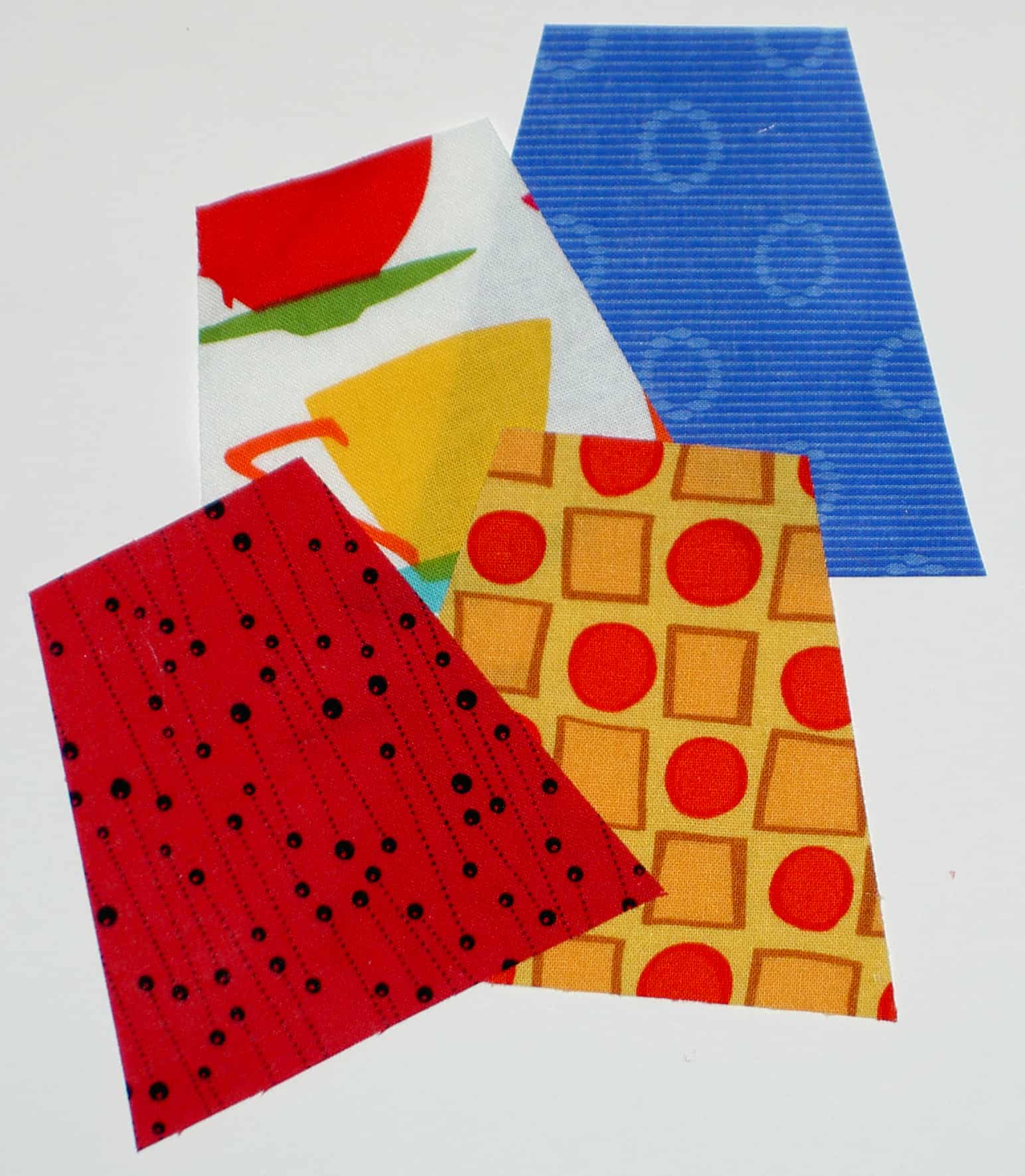
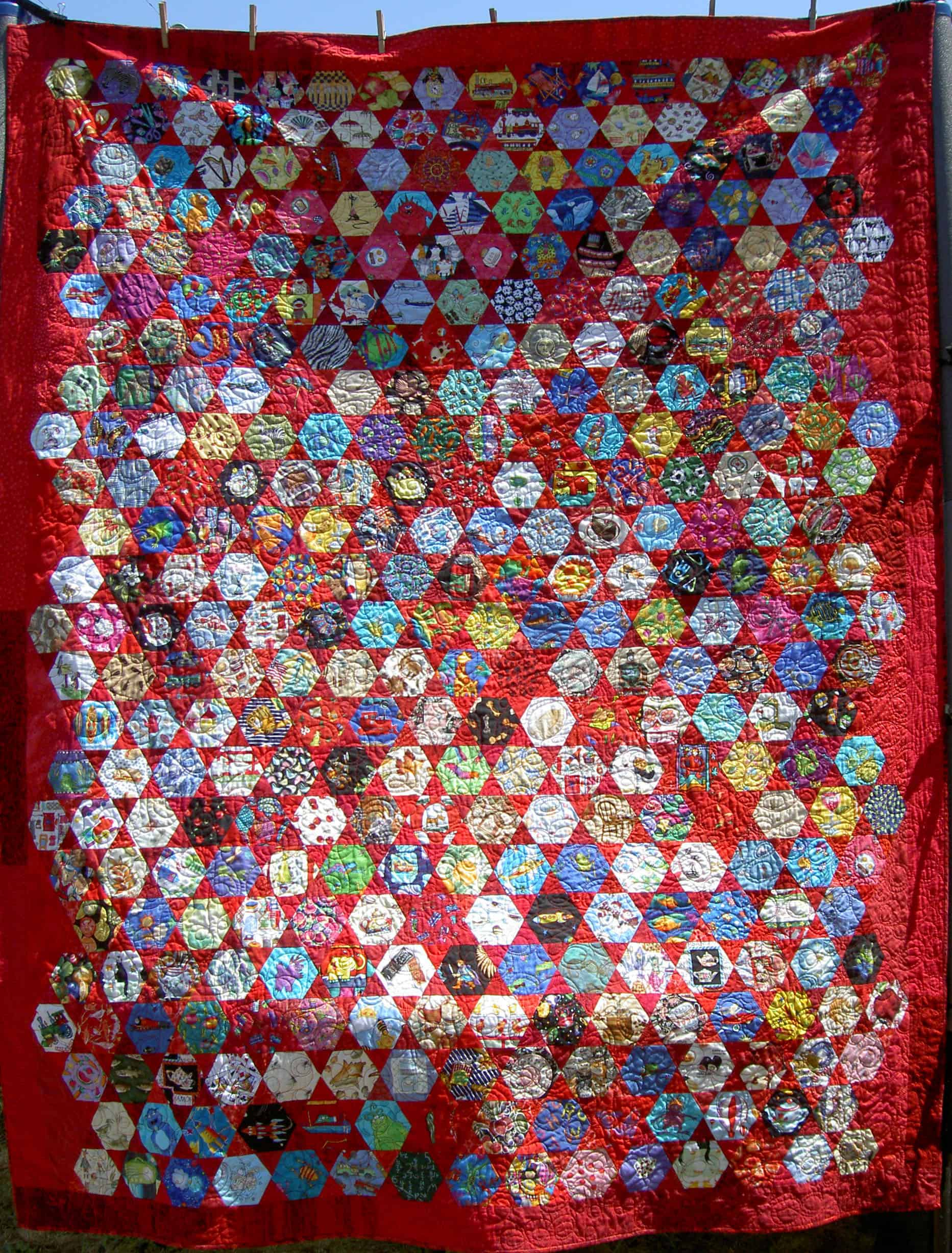
I have been cutting patches for Julie‘s Tumbler quilt for awhile. It seems only fair since she cut a boatload of hexagons for my Eye Spy quilt. Periodically, I get a bunch together and give them to her when I see her. They fit very nicely into a Recchiuti caramel box, so she gets a nice smell of chocolate along with her Tumblers. It occurred to me that I should surprise her sometime and give her a box of the actual chocolates!
I kind of like having a list of patches to cut as I work through new fabric or fabric I am using. There is something nice about collecting a bunch of blocks and then putting them all together at the end of the year or the end of some other timeframe.
The other day, Julie wrote about getting close to the end in a recent post. She is struggling with the same issue I had and that is the edge. When I was finishing up the Eye Spy, I didn’t want to slice off several hexagons to make a straight edge. That is the suggestion that many resources had for the edge of an Eye Spy.
Eye Spy, Full
I also didn’t really want to sew a binding around all of those weird angles. I did that once and once was enough. The one weird angle in the Chocolate Box was enough for me. As you may remember, I did some triangle gymnastics on the Eye Spy to finish the edge in order to end up with a straight edge.
I think this is a case of thinking about what design would be best for the quilt. Chopping off hexagons that were fussy cut to include an image would be jarring, I think. If I had thought ahead, I might have made the edge hexagons a solid or tone-on-tone fabric and not worried about chopping them off. Solid fabrics might have provided a kind of border effect.
I am happy with my solution. It wasn’t the easiest solution, but I think it looks good. I am sure Julie will come up with a good solution as well.
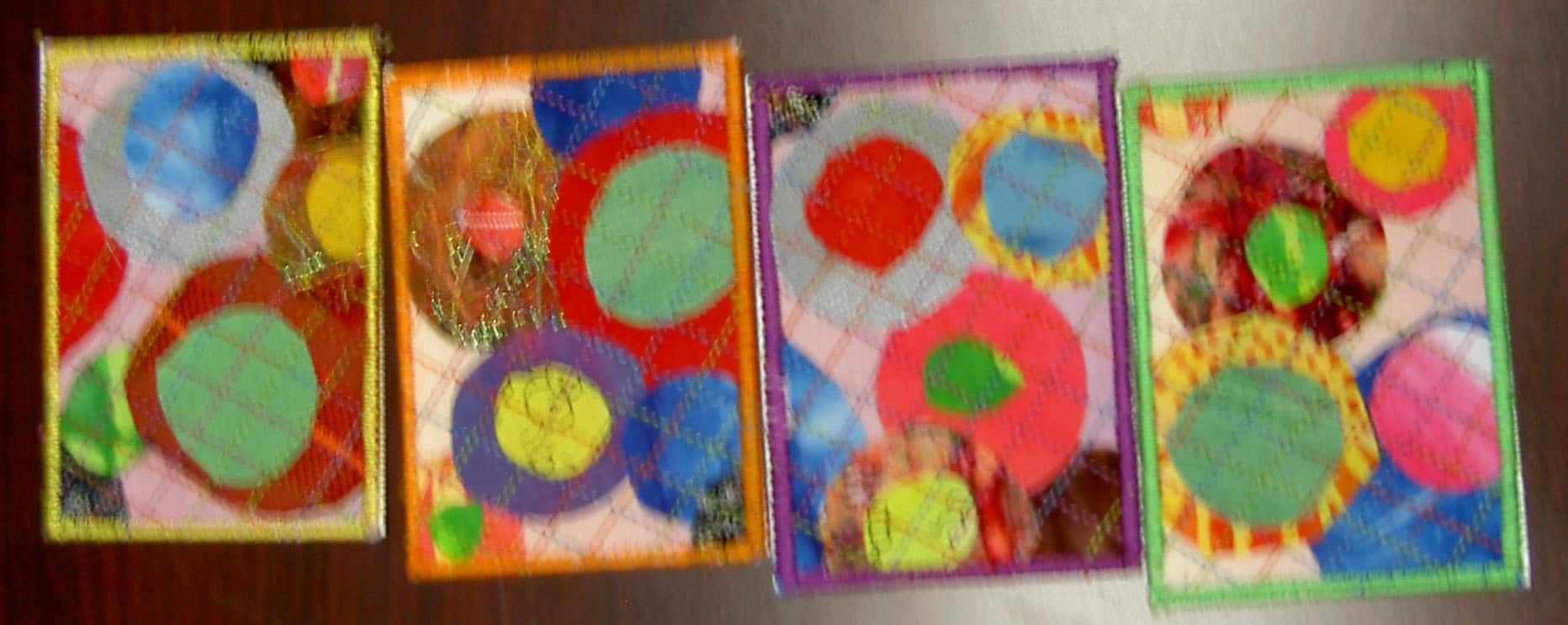
If you haven’t been over to Lisa’s blog, today is the day to check out her ATCs. These are awesome! The one with the circular motif on the right looks like a quilting design. I had to look really carefully and I still don’t know for sure that it is not stitched. She has some ATC swaps going so check out her FB fan page and/or her blog.
The CQFA meeting was Saturday. We had two new people and that was GREAT. The whole meeting, actually, was great. There was LOTS of laughter. People who came late said that they could hear the laughter out in the parking lot. I need to attend more meetings where everyone is laughing.
As usual, show and tell was excellent. Everyone is really churning out the work and being inspired by each other. It was great. I showed Passionate Purple, the Chocolate Box and FOTY 2009. I also showed some books, talked about the Dale Fleming class and traded ATCs.
My ATCs
ATCs
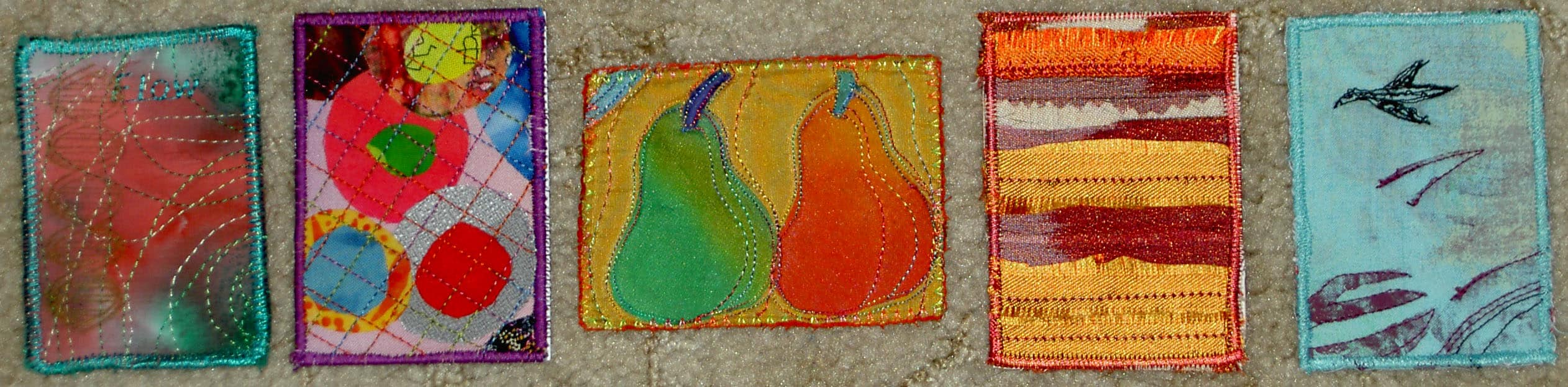
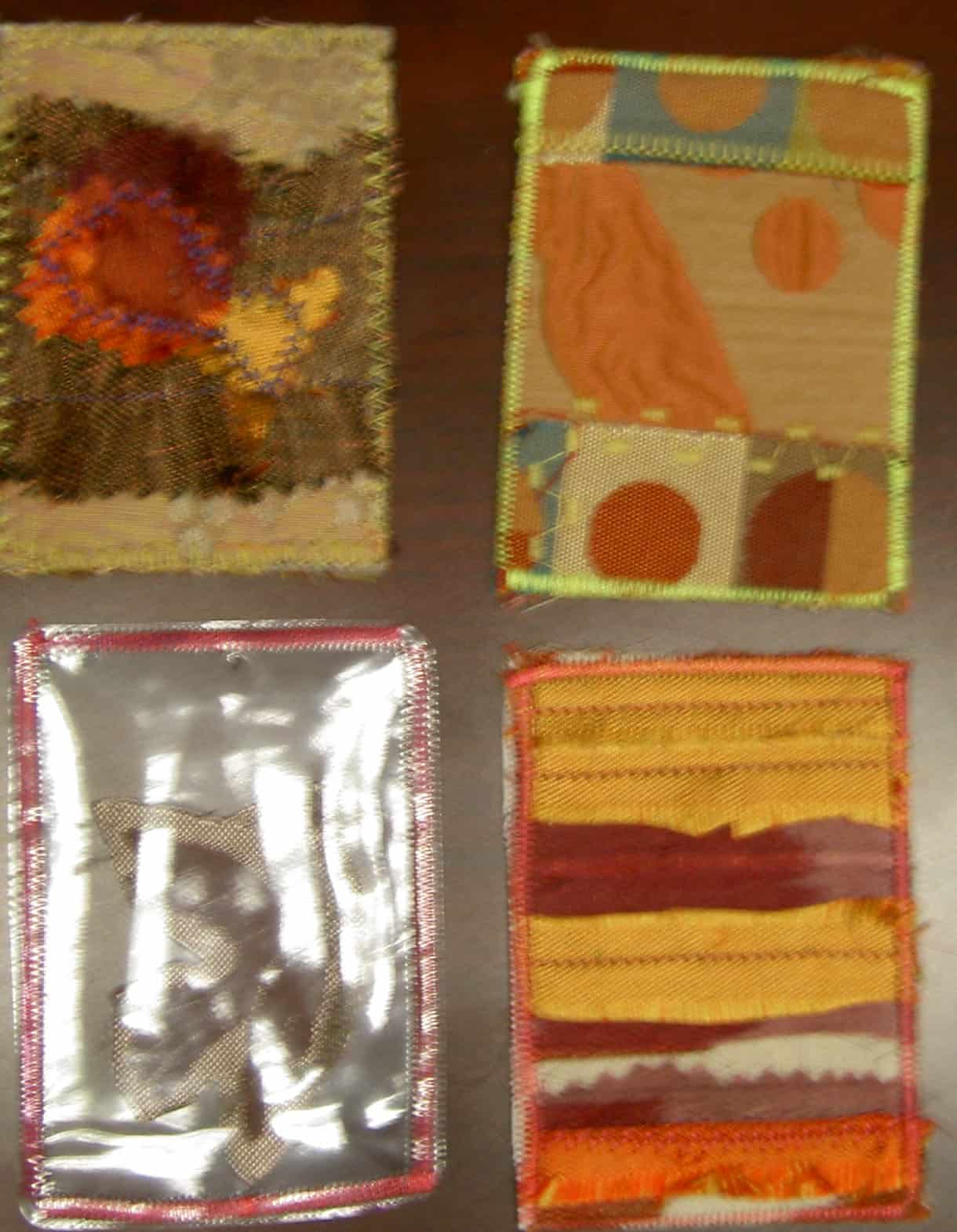
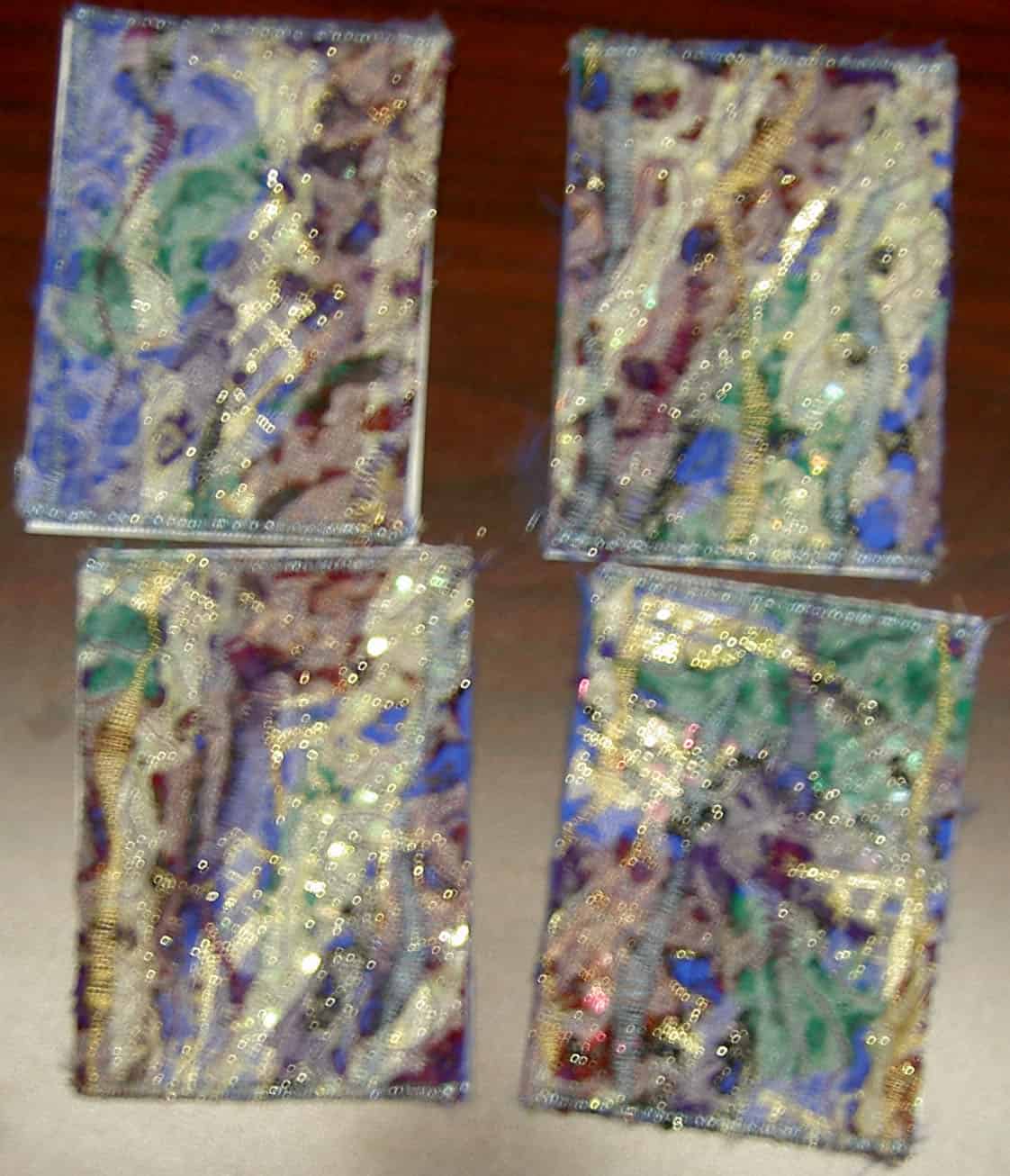
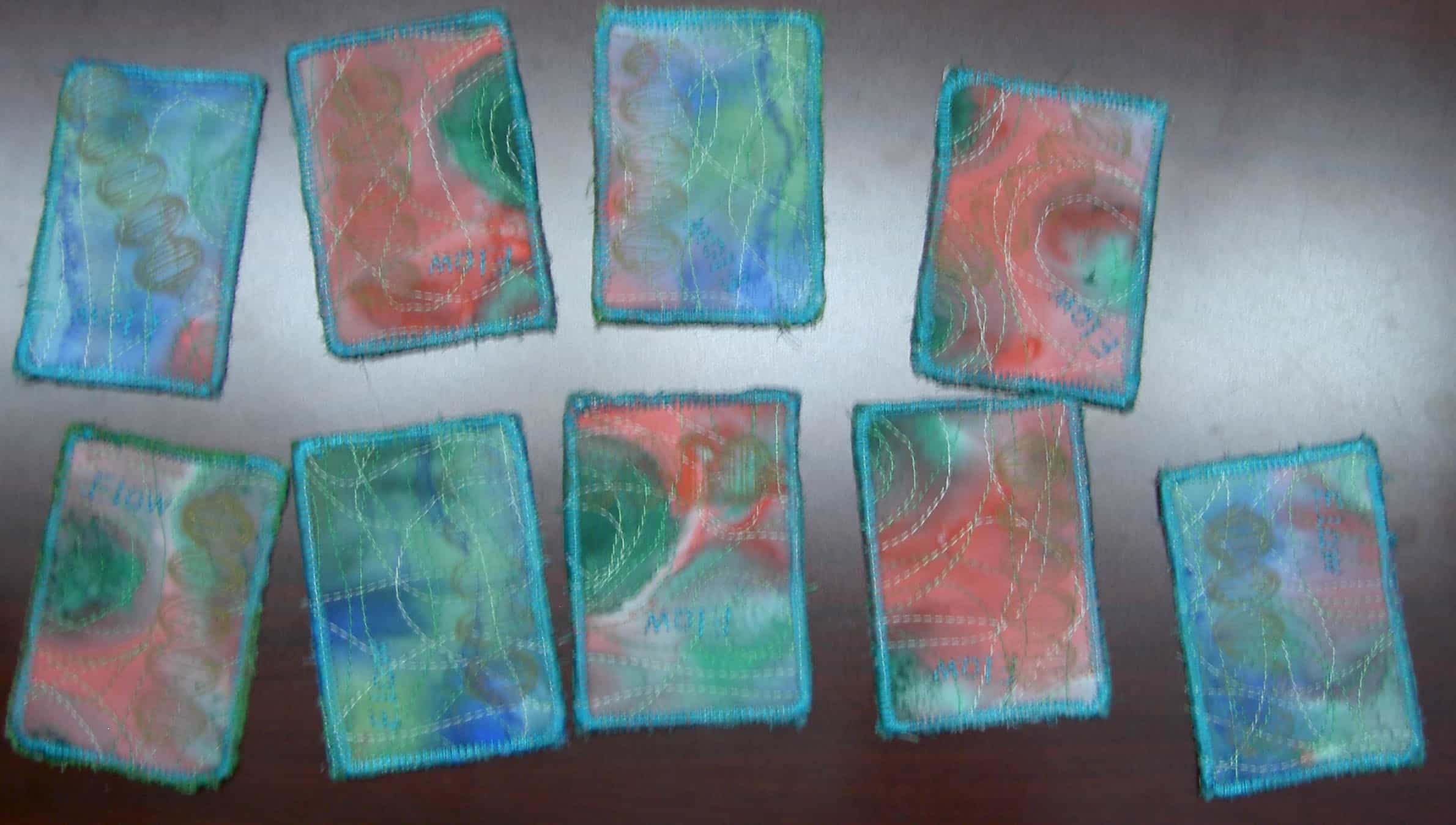
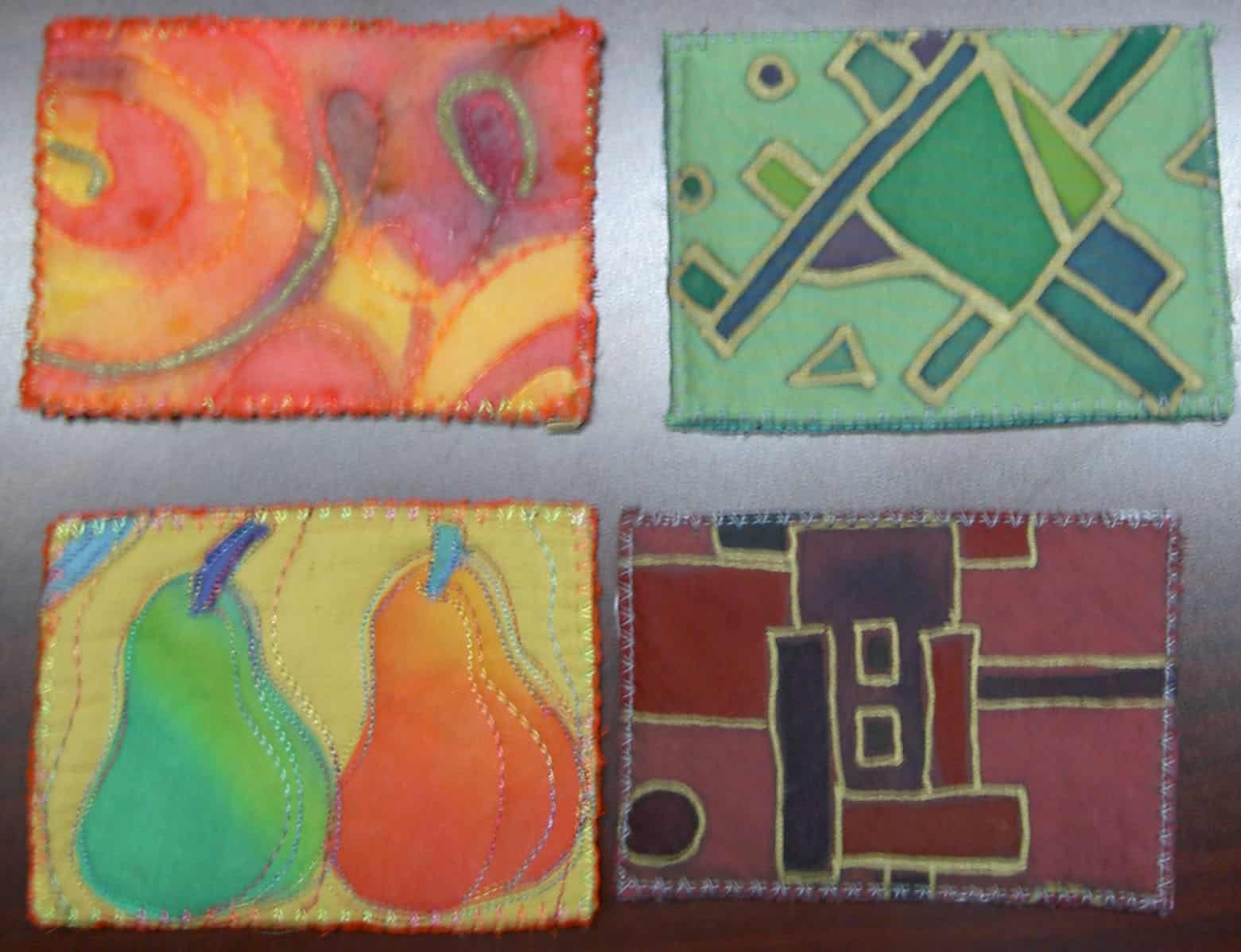
People did really nice work for this round of ATCs. I was really pleased with the ATCs I chose. My score were the pears! I love them all though.
NancyBron
Bron used FabMo fabrics for her ATCs. She is on the board and finds all the good stuff there!
Maureen
Maureen has a new blog, Flies in a Cathedral. She only promises to post once a week. I look forward to hearing about the flies.
DebbieAmy
I wasn’t fortunate enough to get one of Amy’s cards, but I loved the texture.
JulieDiane
Diane is a very accomplished silk painter. When I saw those pears I knew I had to have them. I wasn’t the first person to choose either, so I feel very lucky to get that card.
My ATCs were really fun to make. I haven’t had much fun making them in the past. I am working on a series of ATCs and I may have to rethink that as it seems like a chore — until this go ’round.
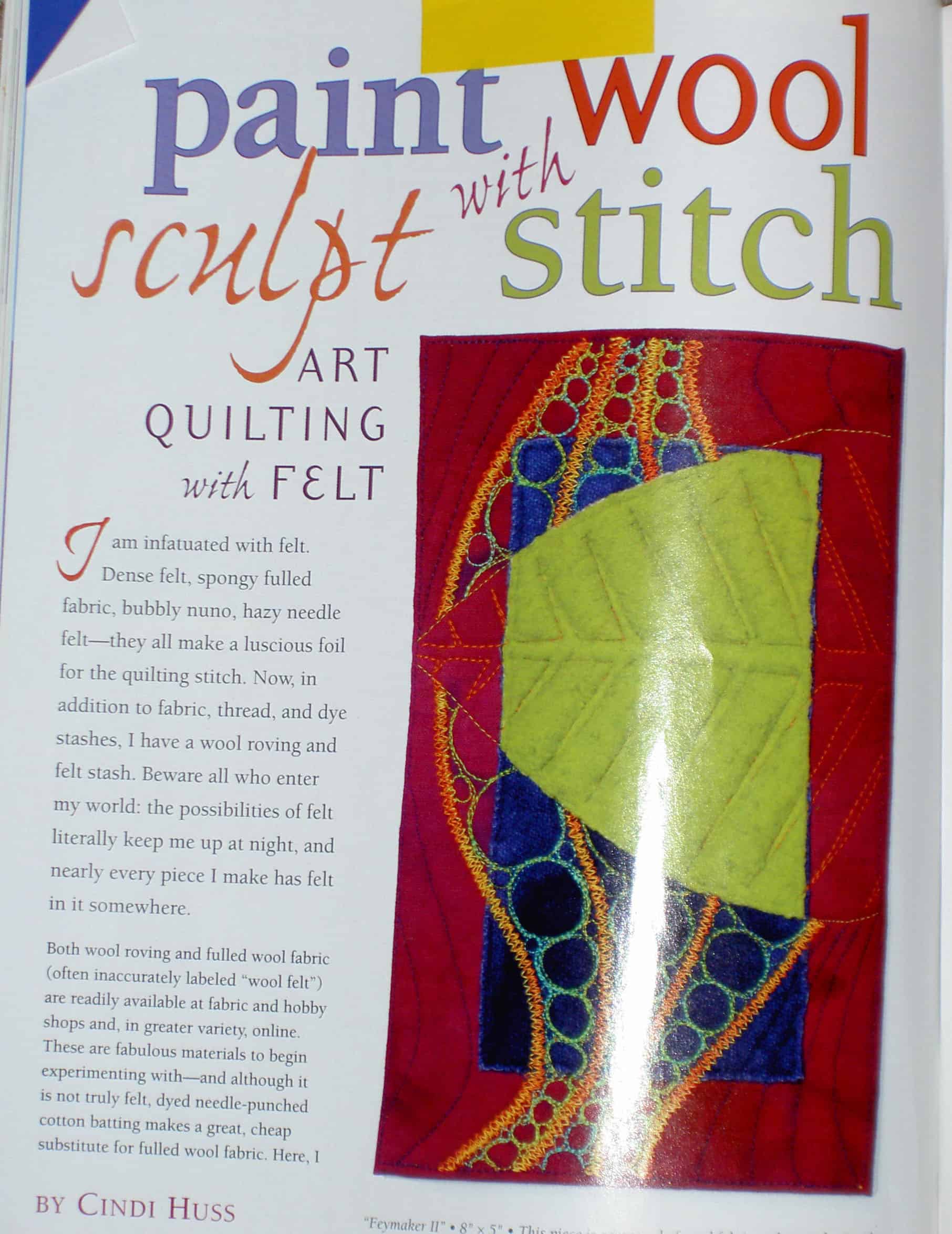
QA Article by Cindi Huss, Apr/May 2010
I was reading Quilting Arts magazine last Thursday night and saw a picture of a leaf in an article about wool felting or something I wasn’t interested in. The article was by Cindi Huss I was interested in the image and the technique.
April ATCs in Progress
From what I could see in the picture, the author stitched zigzag lines three times with different threads. I did that in the picture above. One of the great things about my machine is that it has a very precise stitch. I can stitch over the same line and the needle will land in the same hole. That wasn’t what I wanted to for this. I wanted the zigzag to be a bit messy. I wanted the colors to blend. I had to readjust the needle to get it out of sync with the previous line of stitching.
Because of the Dale Fleming class, I was no longer hampered by changing the foot. I know it sounds silly, but sometimes taking off the foot holder is just too much of a hassle. I think I am over it now. I put on the darning/free motion foot and created the circles. I drew them lightly with a white pencil first so I had something to follow. I also slowed down the machine and that helped make the stitches show. After doing all of the circles. I went over some of them with two different colors of thread. Using Aurifil means that the stitched area does not get too bulky.
My idea was to make one piece and then cut it up. I had planned to try this technique in paper, but was inspired by the QA picture that I decided to go for it. I did make the background larger, but if I do this again, I would make it even larger and the ATCs were a bit small this time.
April ATCs cut
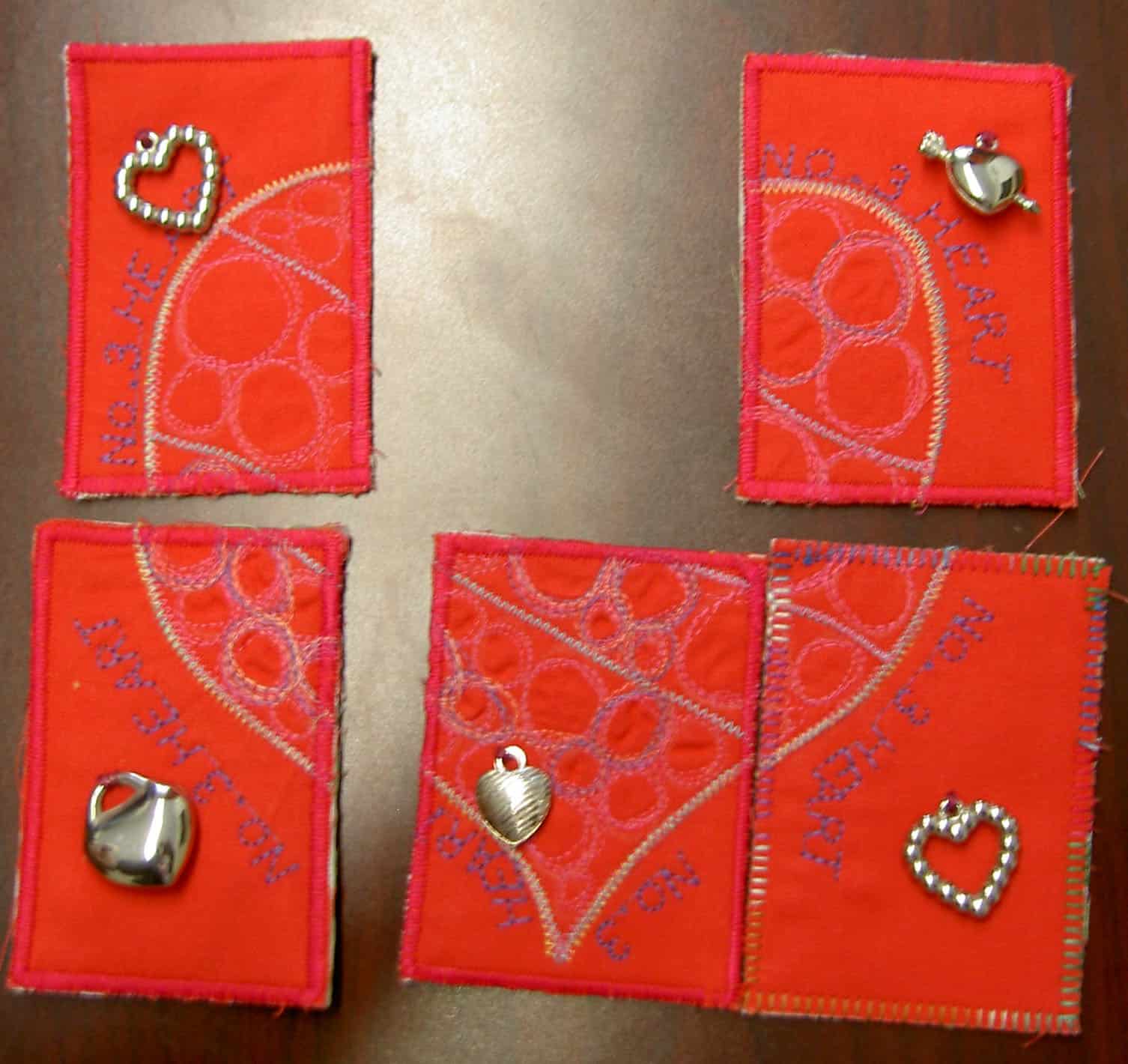
I have never made one piece and cut it up. I didn’t think people would like the right and left bottoms, but those were the first to go, actually. After cutting, I took apart a necklace Lil Sissy brought me from the Carribean and used the hearts for embellishment.
April ATCs finished
Here is the piece (minus the middle) embellished and finished and ready to be distributed. I was really pleased that they were so popular this time.
Art journaling is a technique (tool??) that I have struggled with for a while. Part of the problem for me is the mess. I thought I didn’t like to make messes. What I found was that I don’t like to make messes that I have to clean up! The Purpose Journal showed me that under the right circumstances, I can really use this technique in a creative and satisfying way.
Journal Spilling by Diana Trout is a really encouraging and pleasant book to read. I read it, and thought about what was in it, but didn’t try any of the projects that are integrated into the various chapters.
The first thing that I liked was in the Welcome message.”Welcome” is much friendlier than “preface” or “introduction.” In her Welcome, Diana states that you don’t need to be an artist to be an artmaker. I have long refused to label myself an artist – for better or for worse. Like Wayne Thiebaud, I have decided to let history decide my artistic fate and concentrate on making. If history ignores me, so be it. Thus, Trout’s comment really hit home and make me feel like my decision was fine.
The author also has a sense of humor, which is infused throughout the book. On page 9, she says “…I once did a ‘highly scientific’ experiment to check the lightfastness of Portfolios alongside Caran d’Ache. They both held up remarkably well when exposed to sunlight for six months!” I love the idea of this ‘experiment’. It really made me smile.
Ms. Trout writes about things I have never heard described this way and find very useful. In her section, Stretch & Spill, she discusses ‘micromovements.’ About them she says “micromovements refers to a system of breaking down a large job into tiny parts. This is a great concept that addresses the biggest obstacle between you and your journal: Fear. It also helped me greatly with time issues. If you break down a job (or hope or dream), step by step it seems less scary and overwhelming.” I didn’t realize until I read this that I had been doing this with the Purpose Journal. Since I been, yet, able to face making a mess, I have been breaking down the steps, before I have to make the mess, into manageable bites that fit into my schedule and my comfort zone.
The book’s title, Journal Spilling, seemed a little confusing to me until I read the section on the generosity and hospitality of pouring sake. By creating that analogy, Diana gave me a picture in my mind with which to understand as I read the book.
Throughout the book, the author talks about continuously moving. At one point she refers to it as aerobics for creativity. Isn’t that a great mind image? The idea is to not think too much and keep moving creatively; to keep your hand moving. Some examples Ms. Trout gives are to draw boxes (good for writing in later!), circles, little houses and flowers. She also gives some advice on what to say to your mind if it starts to interrupt (which mine does all the time!!) : “…quietly tell it you are busy right now.” (pg.76). This was another thing that really made me smile.
I think that most people who make interesting objects have an inner critic. A very revealing and interesting section was about her inner critic. She names him, tells us how he looks and sounds. I thought this was a great technique, because things that you name are much less scary than the things which are unknown. In this section, Diana reminds the reader “My art does not have to be BIG ART.” This is wonderful. In a way I feel like I have been doing this with all of the sewn accessories I have been making: journal covers, pencil rolls, tote bags. They are mind sorbet, in a way, but they are also, for ME, small art. For me, small art is valuable as well. She follows that up by saying “I pick up my brushes and pens in the odd spaces of time that occur in the life, gently coaxing the art out into the light.” I think this could be used as an excuse to move on to a different project, creating another UFO, but for me it means sometimes things have to simmer a bit and by working often, the simmering happens a bit faster.
Ms. Trout uses the various sections to convey techniques through her various projects. At the same time, she drops little pearls of wisdom in various text of each section. The Secrets & Wishes section is, somewhat, about getting things out without revealing too much. In the introduction, she writes “Respect the power of the words you write and believe that writing them will fix them into your mind and, maybe, with some attention, some of your dreams will become a reality.” This makes me think that I should write down some of the things that I dream about. Perhaps the power of the word, which is so important to me, can help me identify my goals and make them a reality.
Lately, in general, creativity books are more interesting to look at. The days of plain white pages with text and a few photos seem to be gone. I have seen a lot of well designed, well laid out and visually appealing books of late. This book is not an exception. Not only are the photos appealing, the step outs clear, but the page layouts fit the theme of the book. It looks like we are looking at Trouts journal. There are watercolor strokes, bits of masking tape, scribbles, and doodles interspersed with the regular book information.
As I said above, the messes stop me from working in this technique. When Diana says (pg. 55) “write into the wet gesso” I stop cold. I have to say that working at a Work of Heart helped with this feeling. I just have not, yet, been able to translate to working at home.
I found this work to be really inspirational. As I read, I found myself inspired to create a quilt design or add something to my Purpose Journal. In the Personal Landscape section, the author suggests the reader go for a walk and think about the area in which s/he lives. She follows this suggestion up with an exercise to create a collage about your thoughts and feelings. I read this section and immediately thought of the Women’s Work quilt. Reading the words made me imagine the next in the series, more of cityscape buildings, still using Gwen Marston‘s style.
In the same section, but also mentioned throughout the book, Trout talks about writing – spill writing – in her journal and then covering some of it up with her collage style. This appears to be something that she does frequently. I am not sure I want my words covered up. I may not want people to read them, but I feel like I might want to read them later. I can’t read them if I cover them up. This was also confusing, because of the power of words section she discusses in the Secrets & Wishes section.
The Drawing Games Section has perfect exercises for the CPP! She suggests exercise really clearly that would work for quick drawings of the words I suggest each week. For regular contributors, it might be a way to vary what you are doing or to break out of a rut. One exercise is to draw a “curved line from one of the paper to the other, three times. She, then, asks you to observe the shapes and take some further steps, which she outlines in the book.
Who Am I? Is the question that slammed into my head when I was partway through the Lifeline section. This section has discussions of writing your autobiography in a way that she found, she was able to handle. This feeling blew me away and I’ll have to consider a bit.
There are lots of things to try in this book: paper dolls, using book covers to make a journal, making glitter glue, using white out as an art supply, cutting rubber stamps, using regular household items to make marks, book making, and many other exercises and techniques. She also tells you how to make a traveling kit. In the end of the book are sections with various resources, such as quotes, supplies and materials inspiration and techniques.
I am planning on putting this book on my wish list.
I took the Dale Fleming circles class through EBHQ last weekend. Short Answer: AWESOME.
I was a little skeptical when I saw the supply list and began trying to gather the items required for the class. I talked about this class a few times in various posts in the last few months. The supplies required me to get out of my comfort zone, which is good, but never welcome.
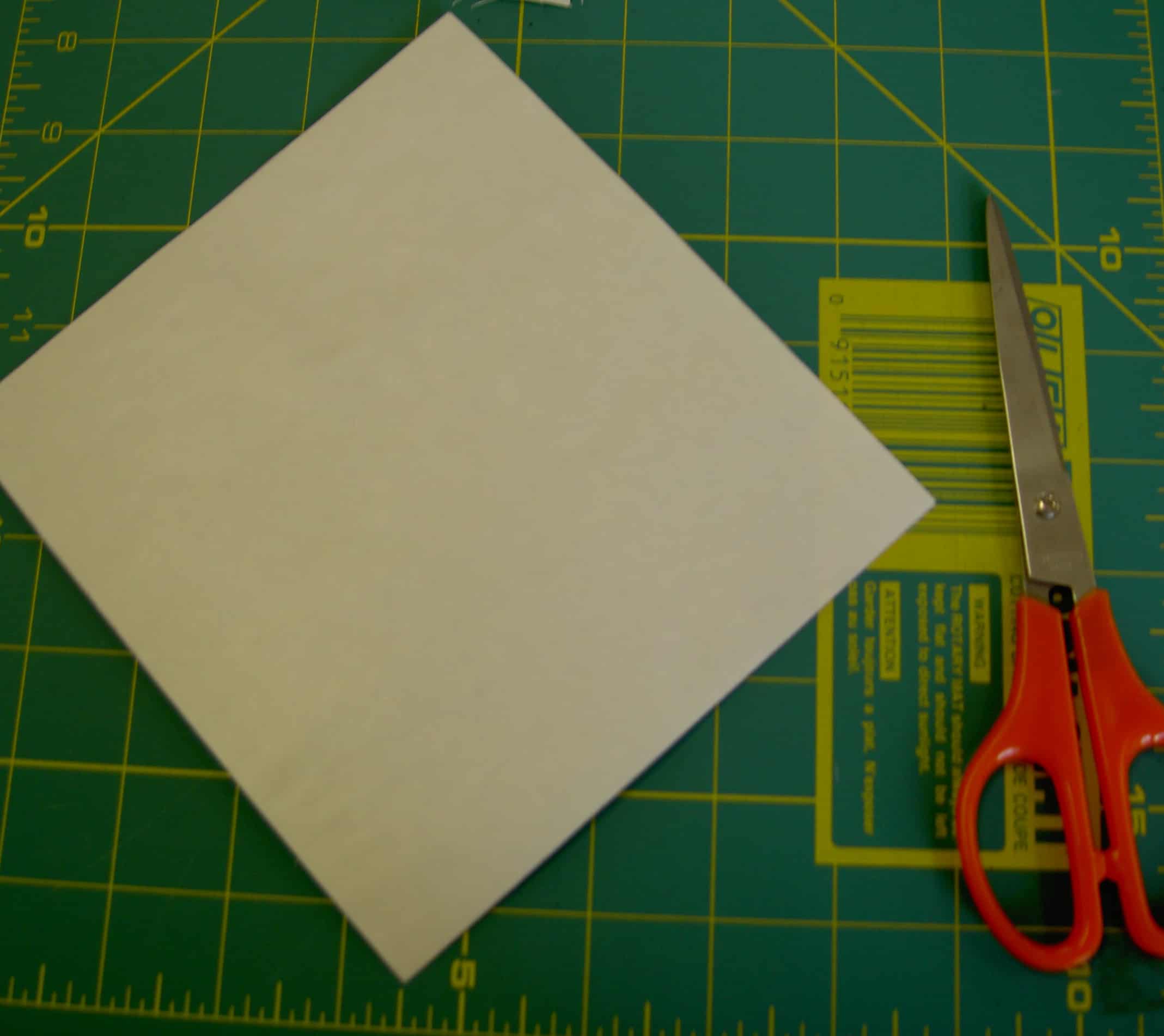
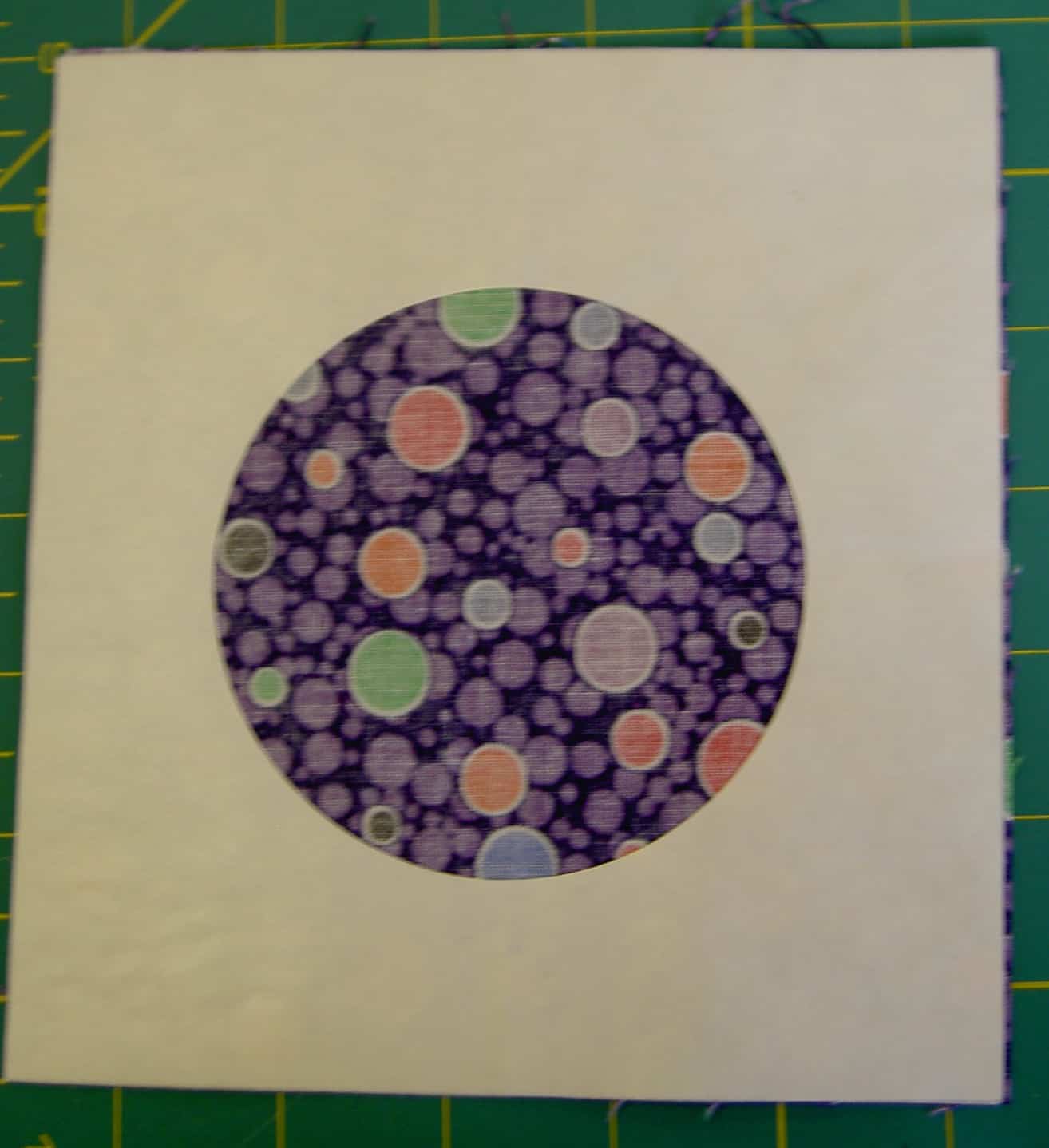
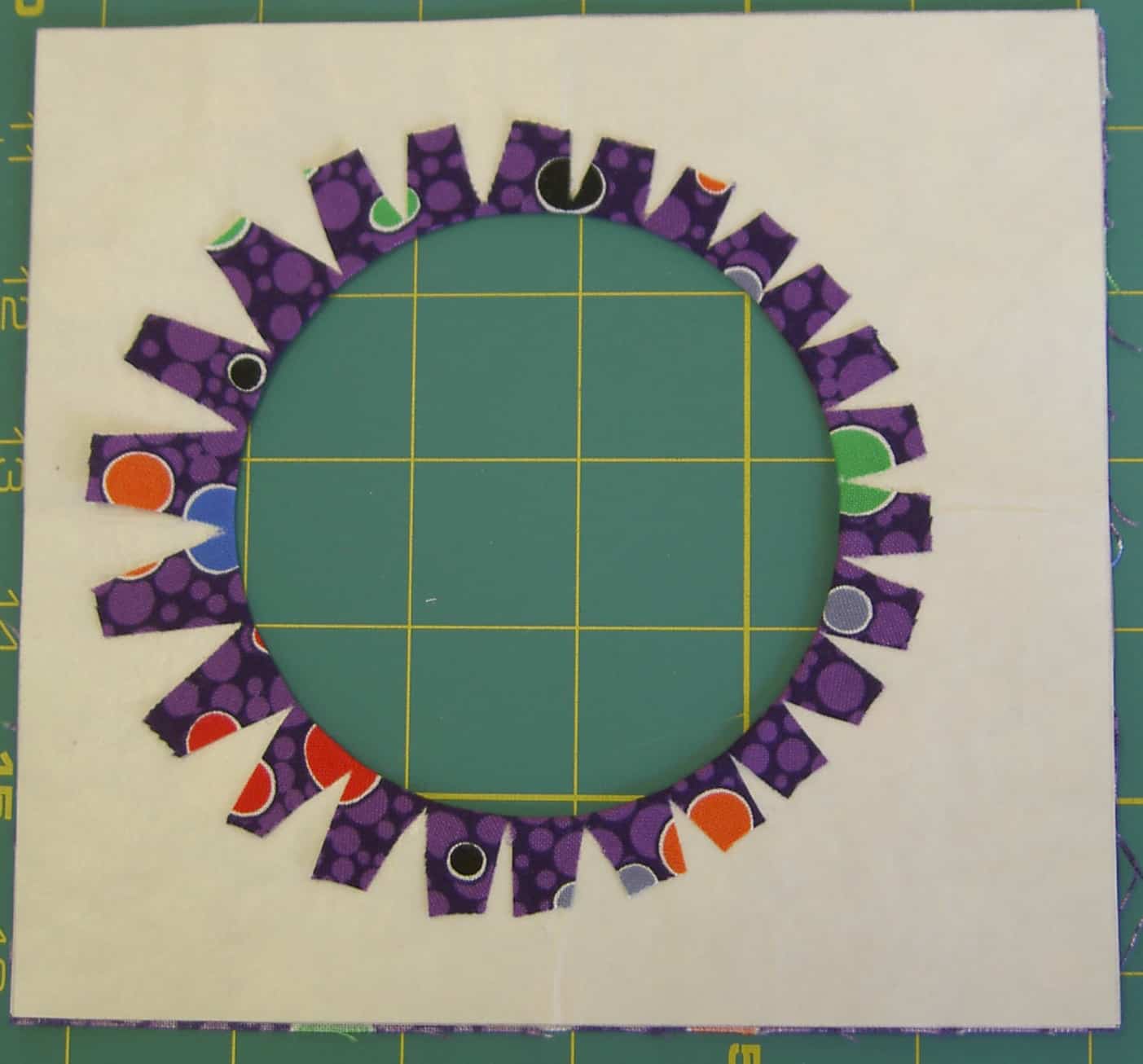
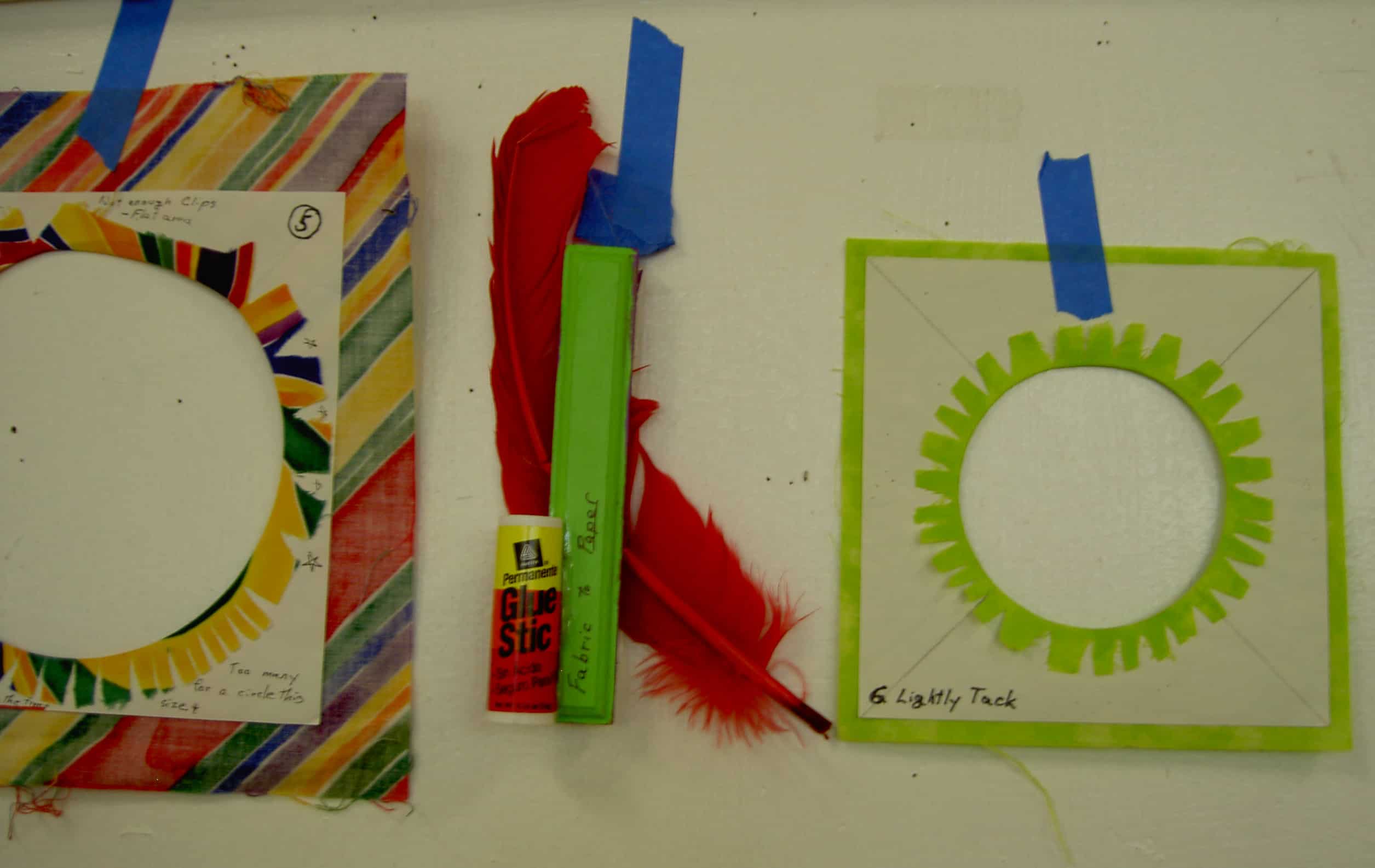
Freezer paper for BackgroundFreezer paper on BackgroundBackground trimmed around Freezer paper
The effort was totally worth it. There was nothing on the list that was a waste. This class used A LOT of freezer paper. The above circle steps use two layers of freezer paper and, apparently, I can only use the freezer paper template once, because of something to do with the amount of glue stick glue required for the process. I didn’t really ask, because it was so early in the process I was still floundering a bit. I’ll have to try using the templates over and see if there is a problem. If I were going to make a circle quilt, as I had planned, I would use TV time to make the freezer paper templates.
JL Second Circle
Ms. Fleming was an excellent teacher. I found out later that she has magnificently minded (LD) children so she was very cognizant of the different learning styles a teacher has to teach. She had detailed step outs for each part of the process, to which we could refer. She also explained the process and then showed us the process.
I didn’t find Ms. Fleming to be a prima donna. She was generous in allowing us photograph her quilts, step outs and her demos.
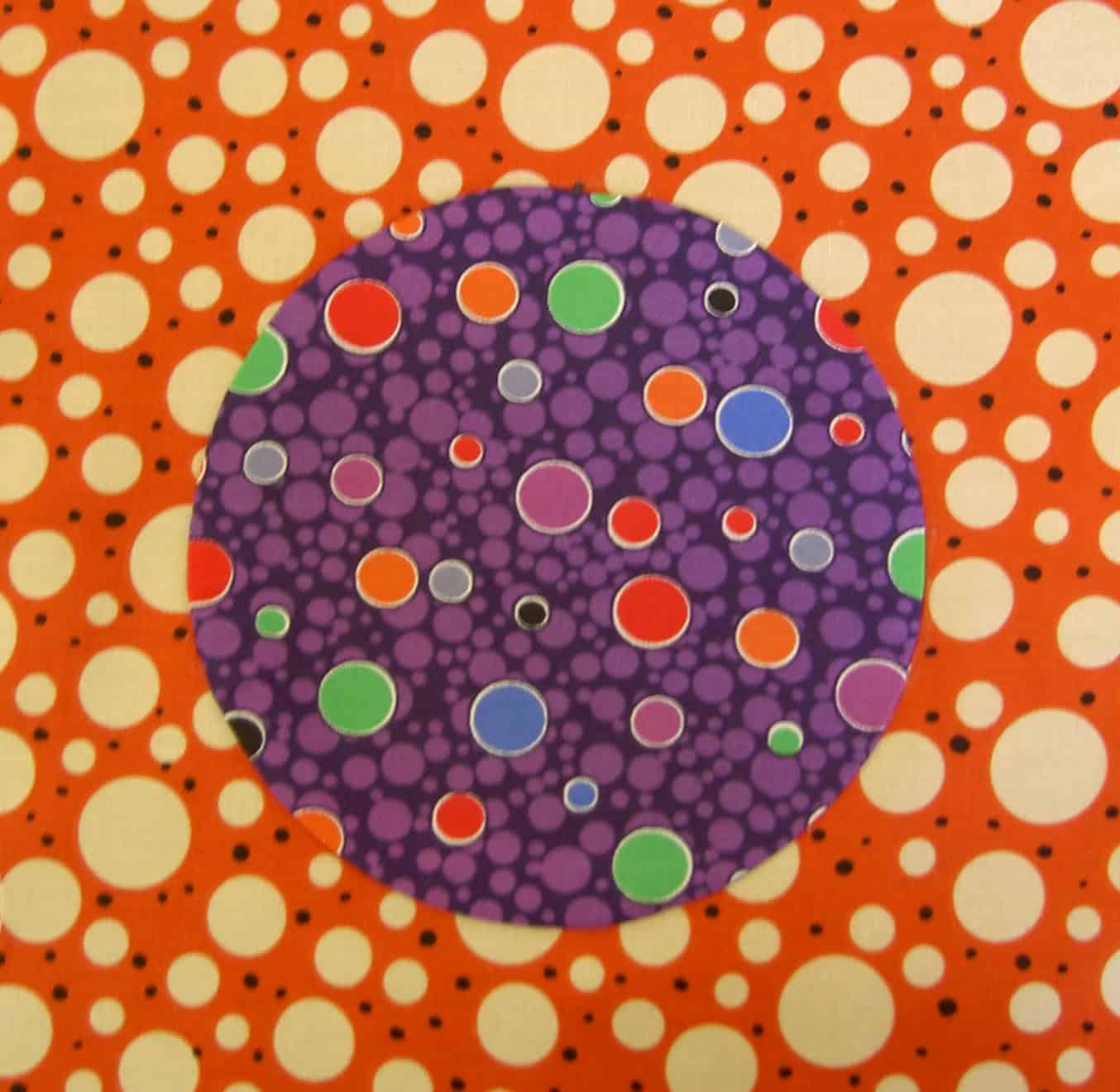
JL Second Circle
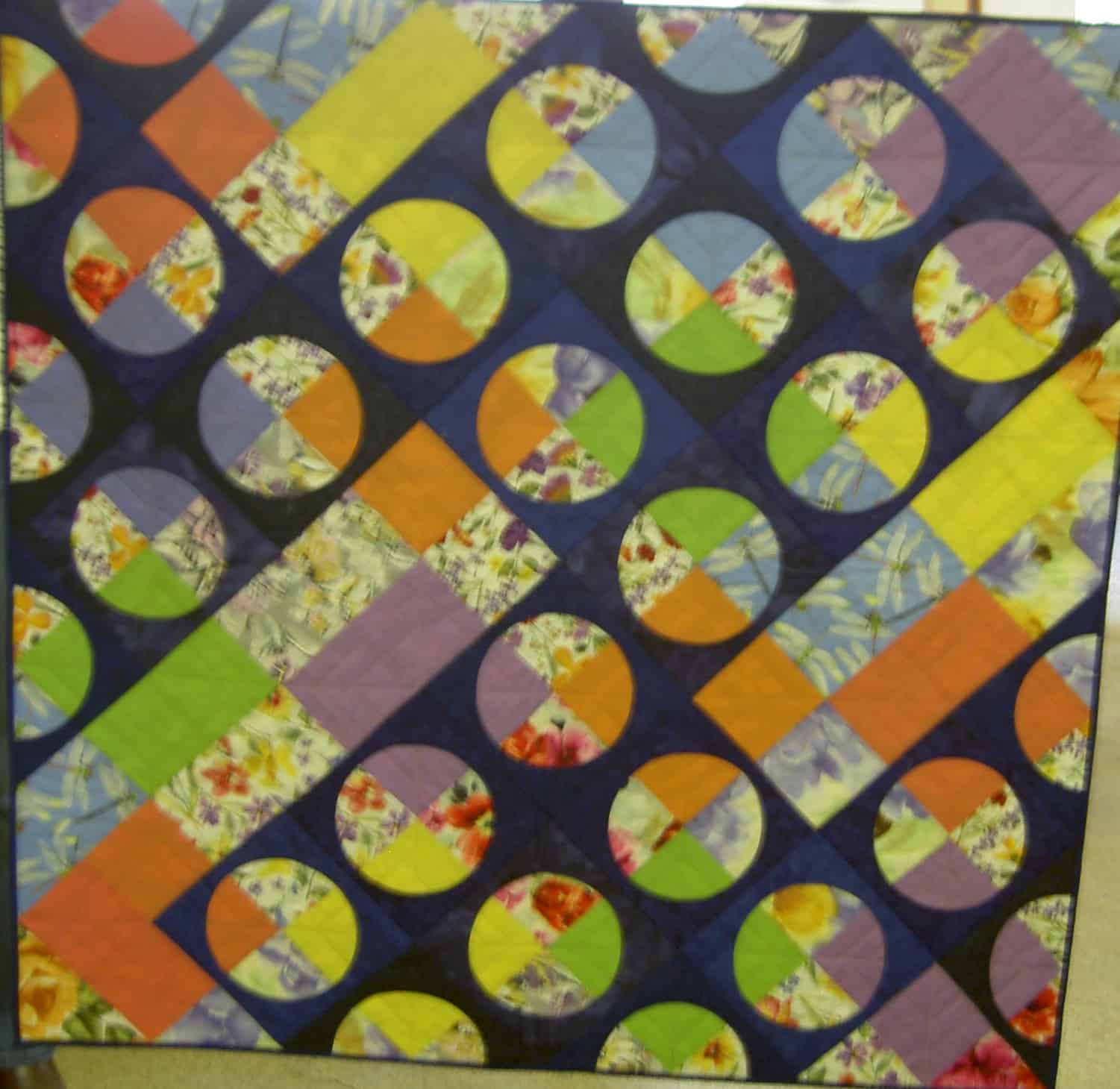
I feel really confident, after the class, that I can piece a perfect circle. The circle + background above is my second circle and I think it looks great! I used a pairing of fabric that you may be wondering about. I wanted to use fabrics that were really different that I could see well. No, they don’t really go together, but the above block will stay in my class file and not become part of a quilt. Perhaps that circle quilt that has been on my mind for a few months will come to fruition?
If you don’t want to take a class with Dale, or there is not one happening in your area, you can buy her book: Pieced Curves So Simple. If you don’t like that either, check out Becky’s blog where she talks about creating and using a circle stitcher.
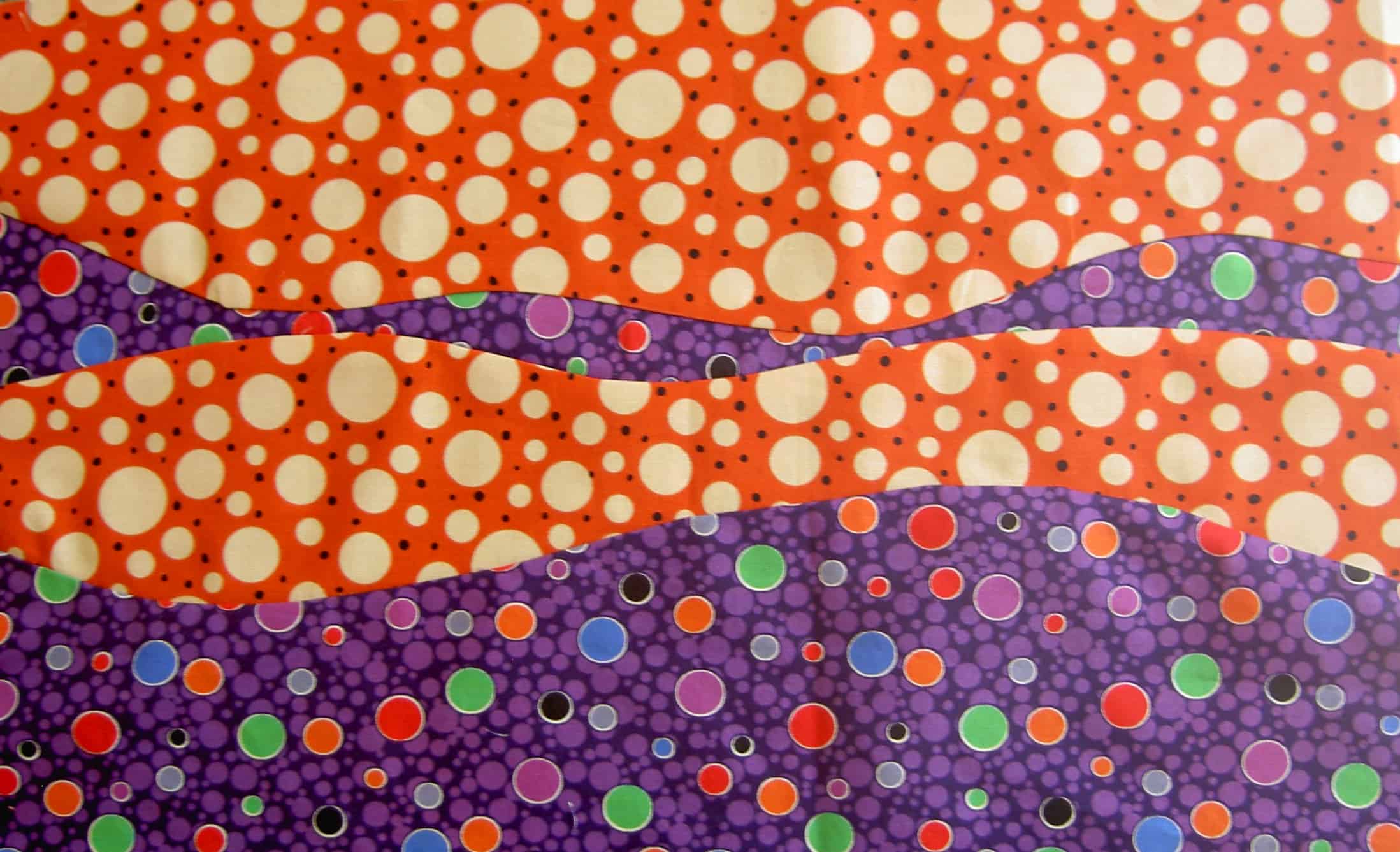
JL Waves
Dale taught us a variety of techniques, including hearts (tips and cleavage!), layered circles (see photo below) and waves. There just wasn’t enough time for me to focus on learning all of them. 6 hours was definitely not enough time with her and I really could have spent at least a whole additional day just working on really getting the technique in my mind. I suggested that she have a work day for students who had taken a workshop. She said she had never thought of that, but would contact me if she decided to do it.
One that I tried was the waves. Her version is a lot easier than the version that I learned in 1989 when I was taking my second quilt class at the adult school. It took a lot of freezer paper, but I finally found a use for the freezer paper roll I have had for a long time. Also, it is possible to make the strips on your piece really thin. Borders are rolling around in my head, especially for the Original Bullseye.
Dale said that after making 5 circles, you can make them on your own without notes. I got up to three during the class and in the few days thereafter. I haven’t gotten back to it.
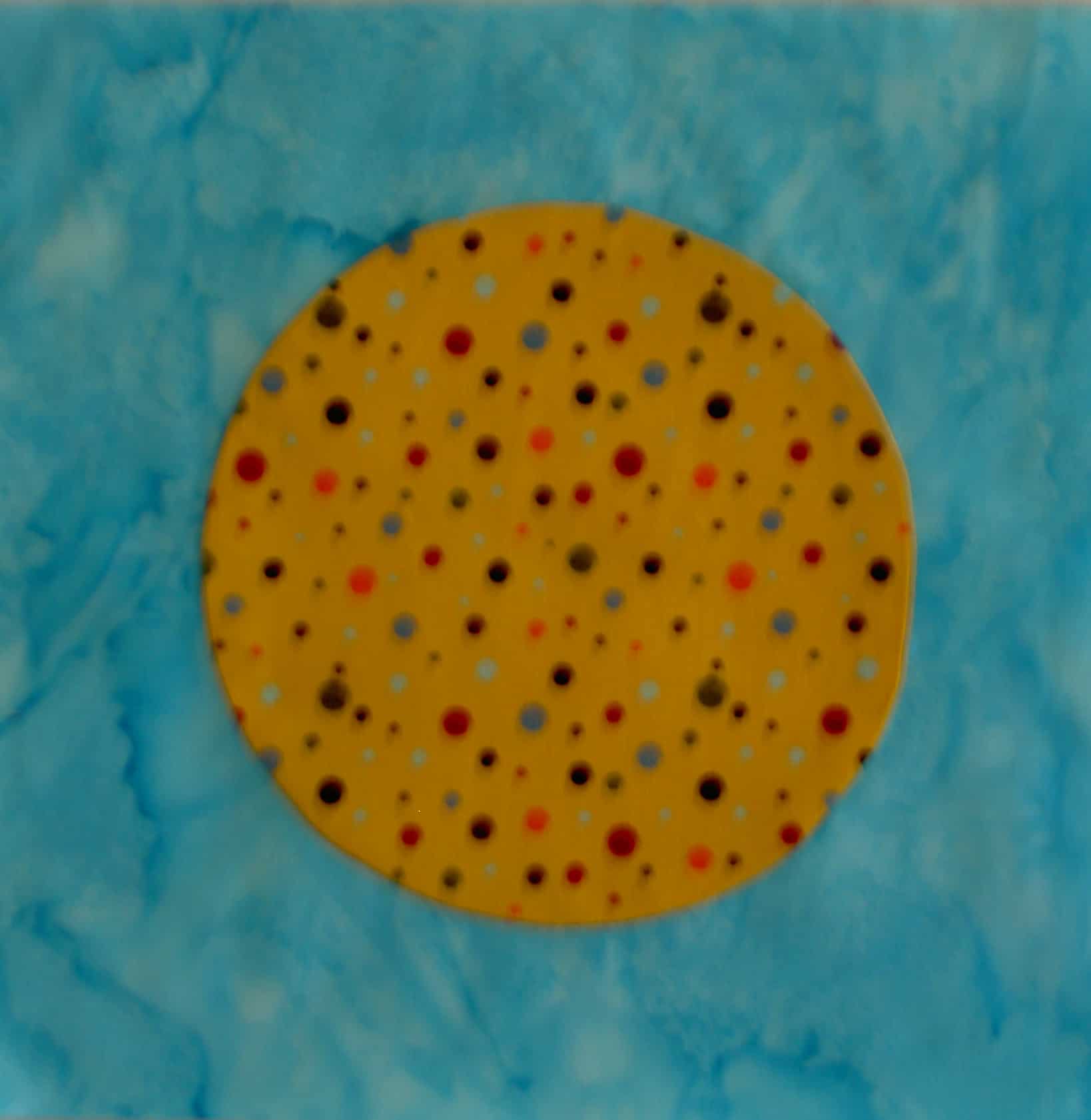
Circle Making Alone
I really like technique workshops rather than project workshops. I like to be able to put a technique into my arsenal and then pull it out when I need it. I think I will be a lot less reluctant to think about adding circles to my quilts now that I have taken this class.
To date, I haven’t gotten back to circle making. The circle above is hanging, all alone, on my design wall. As I mentioned, my original thought in taking this class was to make a circle quilt. I think the above fabrics don’t express the idea in my mind, but I am also thinking that, perhaps I don’t really want to make a circle quilt. I haven’t decided. I think I need to make a few more test blocks just to see. I definitely want to try making a really small circle and see if I can do it.
An unexpected bonus of this class is that I am now not reluctant to change feet. Changing the snapoff feet is not an issue, but changing fee that required the foot holder to be removed somehow stopped me. After putting on and taking off the zipper foot 37 times, I have no reason to worry about changing feet.
Gallery of Dale Fleming Quilts
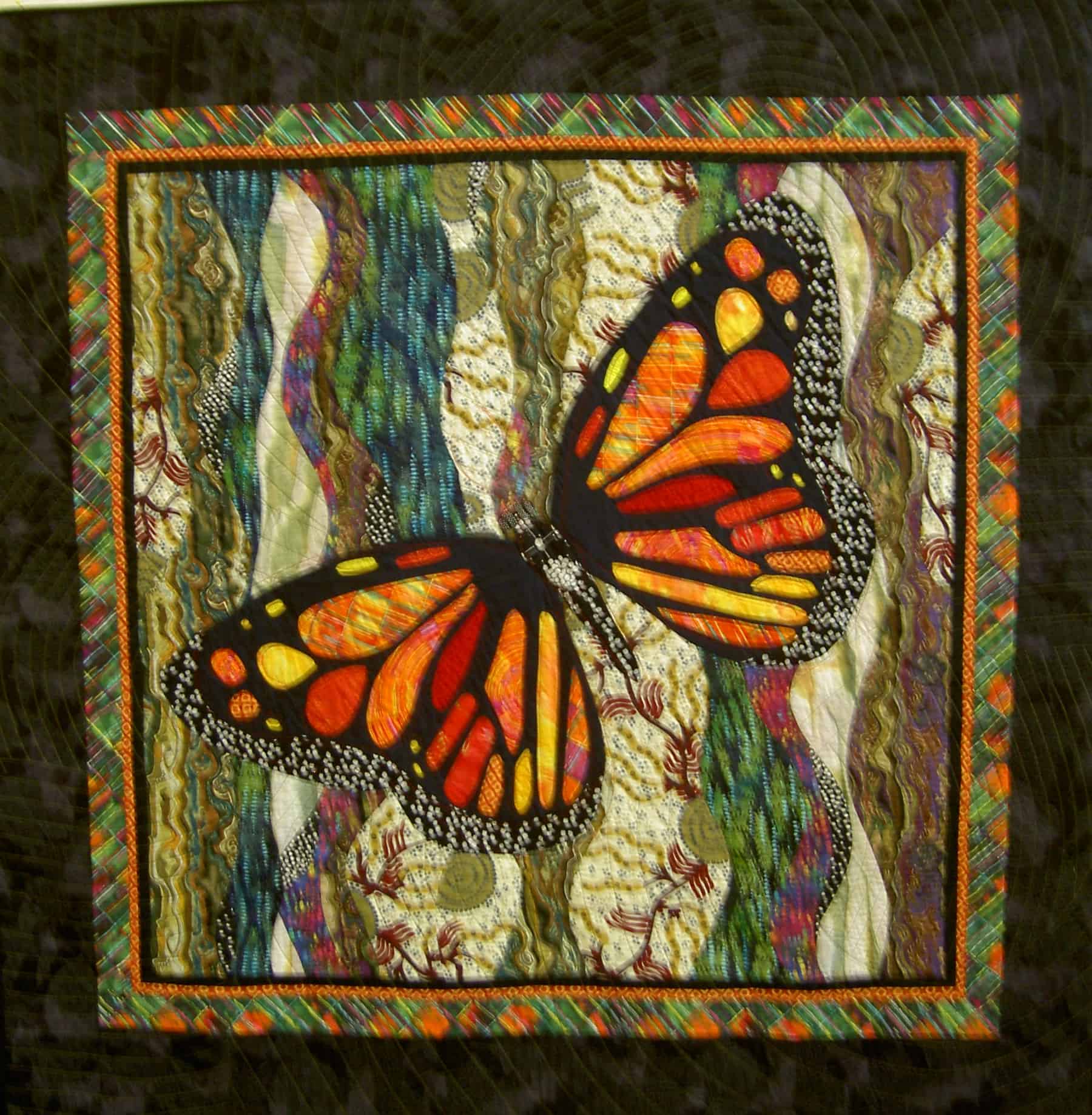
Butterfly by Dale FlemingButterfly Quilt by Dale Fleming (detail)Waves by Dale FlemingIt’s all about the Fabric style by Dale FlemingIt’s all about the Fabric style by Dale Fleming (detail)
Notice the slightly wonky sashing.
Circles by Dale Fleming
This was probably my favorite quilt. She did this using a different method than we learned. I tried to understand it, but my brain was very full.
Circles by Dale Fleming (detail)Circle Quilt by Dale Fleming
This quilt was made using the method we learned. After putting on the first circle, the maker uses that piece (circle and background) as the background.
Flower Petals by Dale Fleming
These look like flowers. I really like how the quilts show she is exploring the technique a lot of different ways. I think that shows mastery.
Flower Petals by Dale Fleming (detail)Straight Flower Petals by Dale FlemingFour Patch Circles by Dale Fleming
Summary: I highly recommend her as a teacher! Get her book! Take her class! Make some circles!
N.b. I think my camera is acting up, so I apologize for any bleary photos!
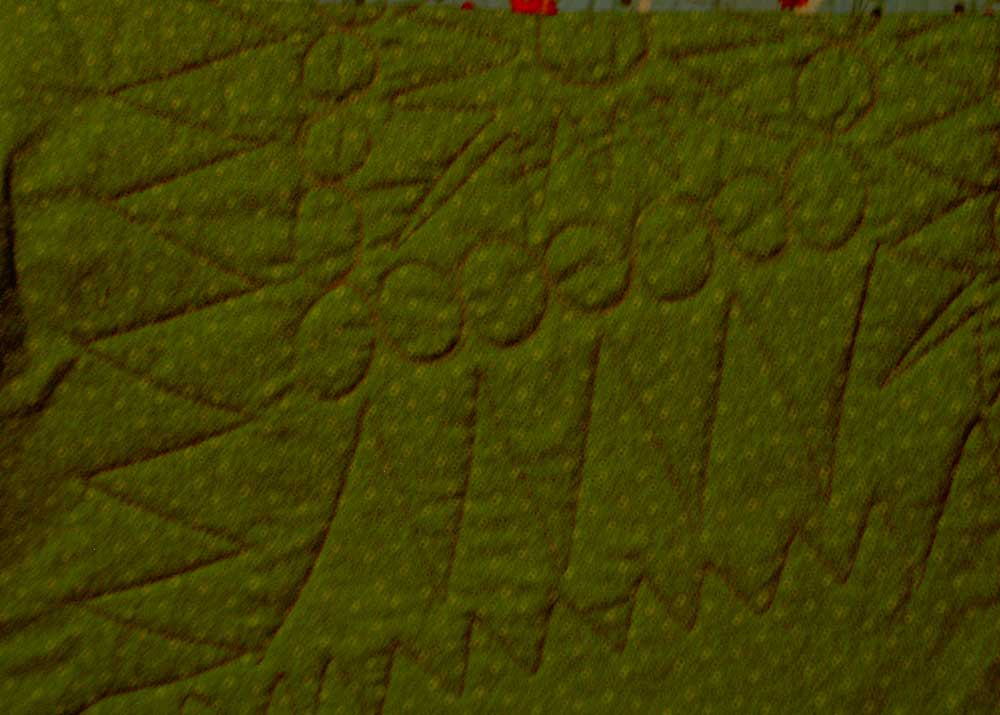
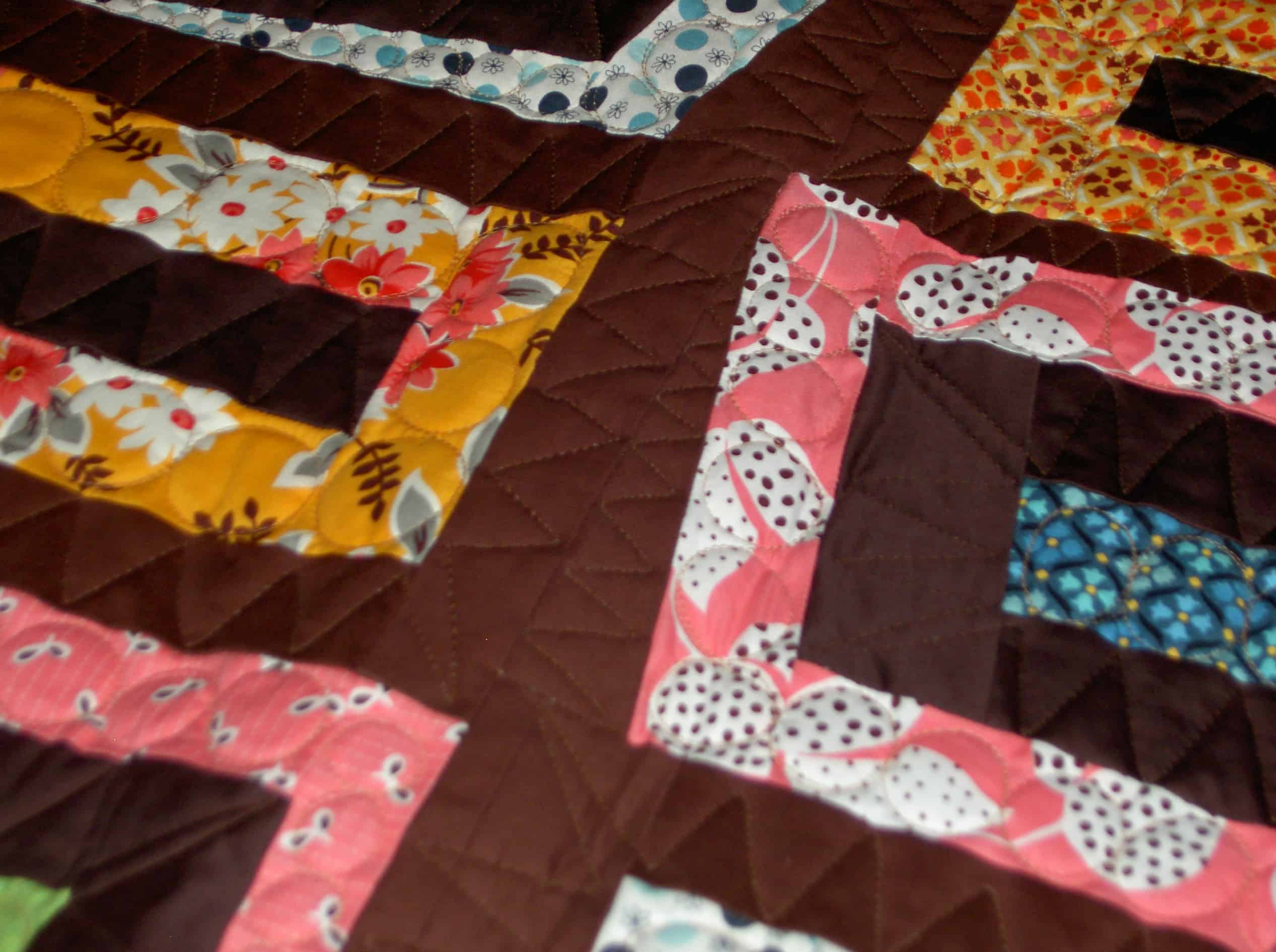
I am really pleased with the quilting on the Chocolate Box.
The whole quilt came out really well, which was surprising, since I don’t usually use much brown (as you might have noticed). I did like that brown – kind of a warm, rich, chocolatey brown.
Chocolate Box, detail
Colleen of Sew Little Time Quilting did a fabulous job. I told her what I wanted and she executed it perfectly.
Chocolate Box, detail
The quilting looks just as good on the front as on the back.
Now I have a total of 3, yes THREE, quilts to bind and sleeve. I had better get busy!
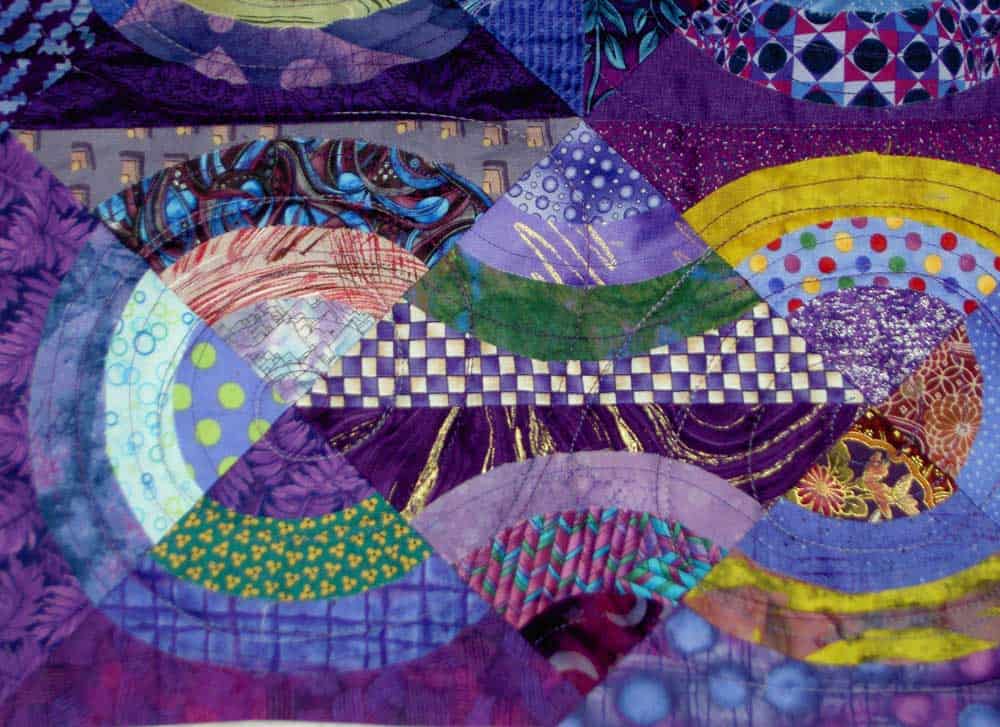
I tool Thursday off of work so that I could rest up for my quilt marathon. One of the things I did was to go and pick up my quilts from my longarmer. Passionate Purple was one of them. Now I just have to finish it. However, after looking at the quilt for a few days, I am thinking that I may take it back and get her to do some more quilting on it. It just isn’t flat enough for my tastes. I don ‘t mean flat as in I pieced it badly and it pooches. I mean flat as in the quilt is quilted within and inch of its life and there is no pooching from unquilted areas.
Passionate Purple back, detail
Here is a little of back. Perhaps you can see how much unquilted space there is?
Passionate Purple, full
Here is the full piece. I don’t think you can see the quilting at all in this picture.
I am struggling a bit with my camera lately and am hoping it will not die.
One of the great things about being a fan of Janome on FB is that they interact with their fans. I love that. I love it that they actually answer questions. Periodically I have a question about a foot or something. If I post it on their wall, they get back to me/the other fans quickly. So much better than email! It is wonderful.
I am preparing for a class this weekend with Dale Fleming. The supply list has some odd things on it and I have been working on collecting them. Good thing I started early. One of the things on the supply list is a zipper foot. I have a zipper foot for my Janome 9K. It is, however, a heavy machine to take to class and I was hoping to be able to take my Jem Gold to class instead. The Jem does not have as many capabilities, but it sews great and is much lighter. I didn’t think my question through very well, so they didn’t have enough information to answer my question exactly, but they did point me to a GREAT blog post about putting in a zipper. The Dale Fleming class isn’t about putting in zippers, but I can still use this information.
I tried the zipper foot on my Jem and it doesn’t work, so I will be hauling the big machine to the class.
Later, Janome posted a sewing machine cover project. They actually tell you how to make the cover fit your sewing machine rather than giving a pattern for one size. I have been using a plastic bag and I am definitely going to make one of these covers. I know not all of you have a Janome, but you can certainly use the projects they post and the information they offer with your own tools and supplies.
Giveaway
Did you sign up for the giveaway? C’mon, you know you want that silk. You can do it. I don’t mind taking your one last braincell to sign up for the giveaway after the fight you broke up between the kids, the dog running away, dinner not ready when you got home, that lost thing at work you just had to stay behind and find. I really don’t mind. Check out that blog post, leave a comment here and JUST DO IT!
Sew Mama Sew posted an interview with Denyse Schmidt on her blog. They talk about her workshops and a new book coming out. There are really nice descriptions of her various workshops offerings and some nice photos to illustrate the various points in the interview.
An additional interview was posted with Nancy Crow on the Quilting Arts website. A lot of the answers really talk about the creative process, space and how it impacts production of quilts.
A couple of weeks ago I mentioned the Happy Zombie blog. I went back there yesterday looking for the post about the New Wave quilt to show my mom and stumbled on to her enthusiastic and excited post about her new fabric line from Lecien. One of the things she showed was a color card. I clicked on the link because there were LOTS of dots and I cannot resist dots. Lecien has a great selection of dots on their site.
I was pleased to see a link to my blog on the blog A Stitch in Time. One of the things that interested me were Carol’s digital photography lessons. In the post that I read, she talks about and shows a lot of examples of light. Remember when I went to the scrapbook day and talked about the video I saw on improving digital photography?
Mark Lipinski posted that he needs a kidney transplant on his blog earlier this week! It made me think about a lot of things. One of the thoughts was about how much we don’t know about people out in cyberland.
Rice Zachery-Freeman (Freeman-Zachery??) of Voodoo Lounge and Creative Time & Space (this book is in the AQ Bookstore, so if you want to buy it, it is just an easy click away!) fame and podcast had a really interesting post about an quilt project author who wrote a magazine article. In the article the author claimed that, according to Rice, the most interesting part of the article was a “trade secret.” Not only was the post interesting, but the comments brought all sorts of other issues surrounding writing. One issue was should craftpeople write for free? My favorite was is everyone who claims to be an artist an artist? Another issue was whether the editor should have worked more with the author on that “trade secret”.
I am not saying what is right or what is wrong, but I like it when people call writers and editors on things that the reader may not find right. I am not advocating violence or antagonism, but a good, healthy, respectful debate.
As I said, I am not sure if I know the article in question, but what struck me was the sentence (FYI: third hand via Rice) “it is a trade secret.” While I am not a lawyer, I do work with a bunch of lawyers and I see what it takes to deal with the law. Time and money, first and foremost. I don’t like it when people throw around legal terms, which seems all to prevalent in the craft/quilt world these days. Everyone is entitled to their copyright. Still, there are rules about how people can write about your copyrighted materials. Everyone is entitled to trademark their logo or design. You have to do the work, though; you can’t just say that you have trademarked something. It takes a lot of research, effort and some cash (or credit, as the case may be). Trade secrets are whole different ball of wax. I don’t work with lawyers that ask me much about trade secrets, but I am pretty sure you can’t just say that some process you have thought up is a trade secret.
Anyway, check out Rice’s blog post about this issue. I am sure she would love to know what YOU think.
Life on the Edge
I am looking for a nice pattern for a walker bag. My granny, who we are now calling Super G, fell over the weekend and now has to walk with a walker. I think a walker bag would be handy and make it look pretty. I haven’t trolled the web, but will. If any of you have found a good pattern for a walker bag, please leave a comment and let me know.
My sister went to A Work of Heart last week. She asked me to go, but I had stuff to do, was tired and thought Spoon jewelry would look lame.
WRONG!
I should have known that between my sister and Andrea, the owner of AWOH, that something wonderful would come out of the class. These necklaces are really nice looking. I probably couldn’t wear them because I am allergic to nickel, but I can still admire them.