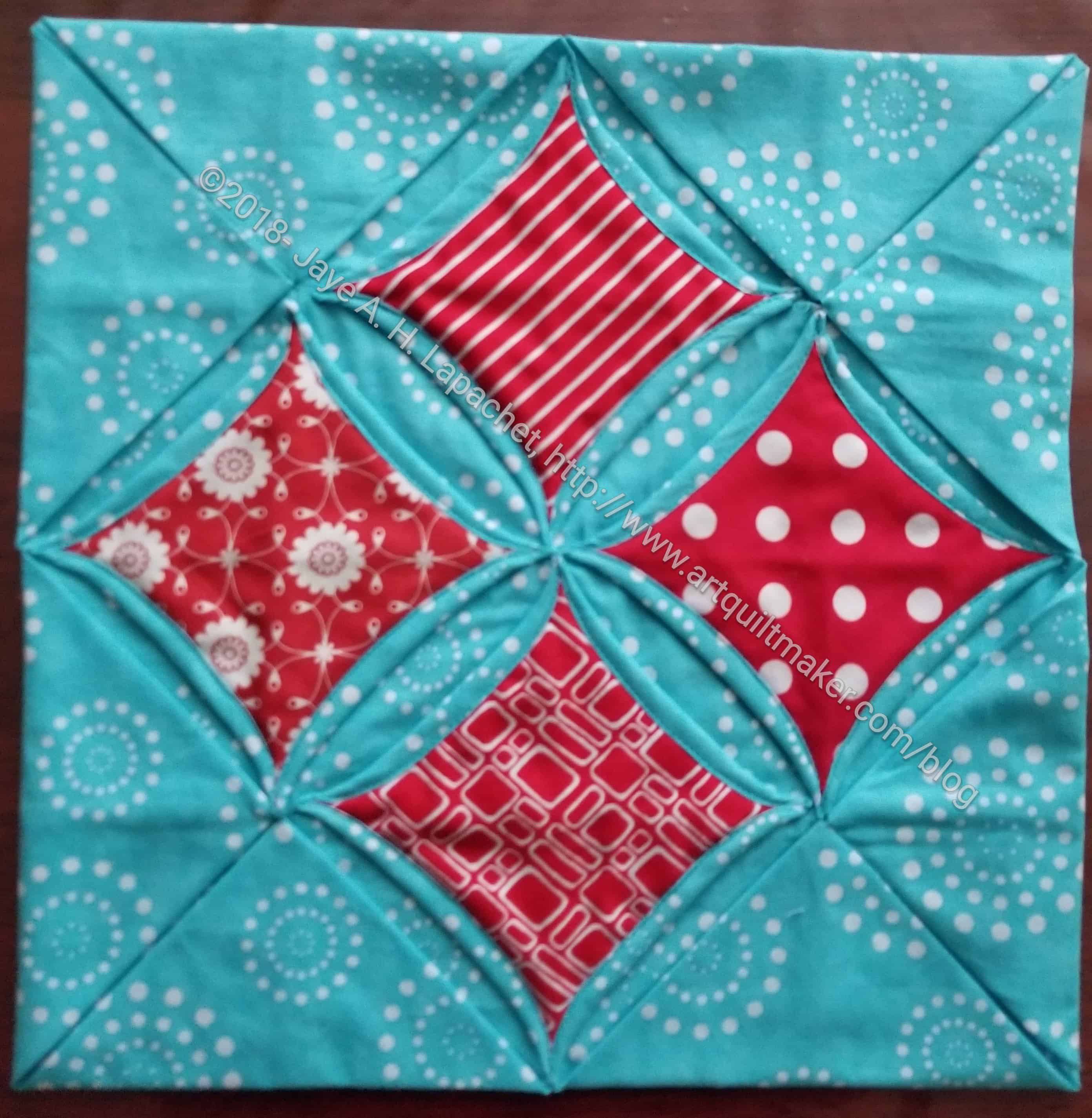
Quilt Class: Cathedral Window Block

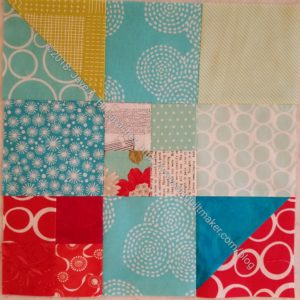
Finished Cathedral Window block

I decided to make this block after finding I needed one more block to complete my Aqua-Red Sampler. I have never made one of these, so I thought “what the heck?”. I had seen some directions for it and it caught my attention. As mentioned, I had to cobble together instructions from at least three different tutorials to be able to make the block. Below is my version. The tutorials I referenced are noted below.

Finished Block Size: 12 inches (12.5 unfinished)

Supplies

  • Fabric
    • In this tutorial, the background is turquoise and the foreground is red.
  • Thread – you might want to use your regular piecing thread for the first part of the directions, then switch to a thread that matches the background fabric for sewing the curves shut
  • Seam ripper (I use a Clover ergonomic seam ripper)
  • Sewing machine
  • 1/4 inch foot
  • applique’ foot (foot with a center mark)
  • square ruler at least 12.5 inches square
  • long ruler at least 12 inches long (I use a 3.5 x 12.5 Creative Grids)
  • snips or scissors
  • Pins
  • Iron
  • Ironing surface
  • Tool to poke out corners
  • A pen or pencil you can use to draw on fabric (I like Sewline pencils)
  • Stiletto or dental pick type instrument (something thin and pointy)
  • hand sewing needle

Instructions for making a 12″ (finished) Cathedral Windows block

1. Cut 4 squares of background fabric 12.5 inches by 12.5 inches
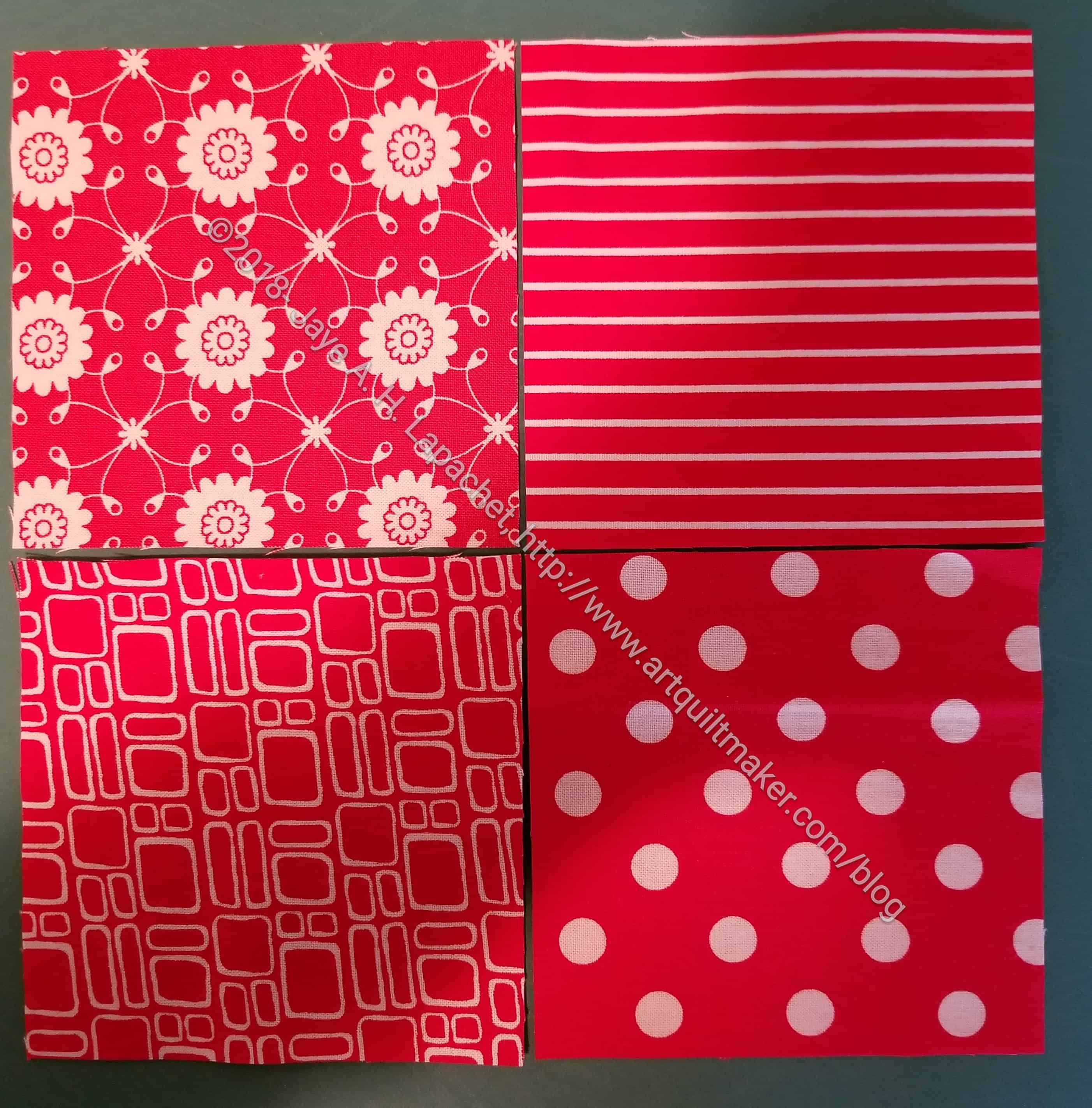
4- 4 x 4 inch foreground squares

2. Cut 4 squares for inset pieces 4 inches by 4 inches.
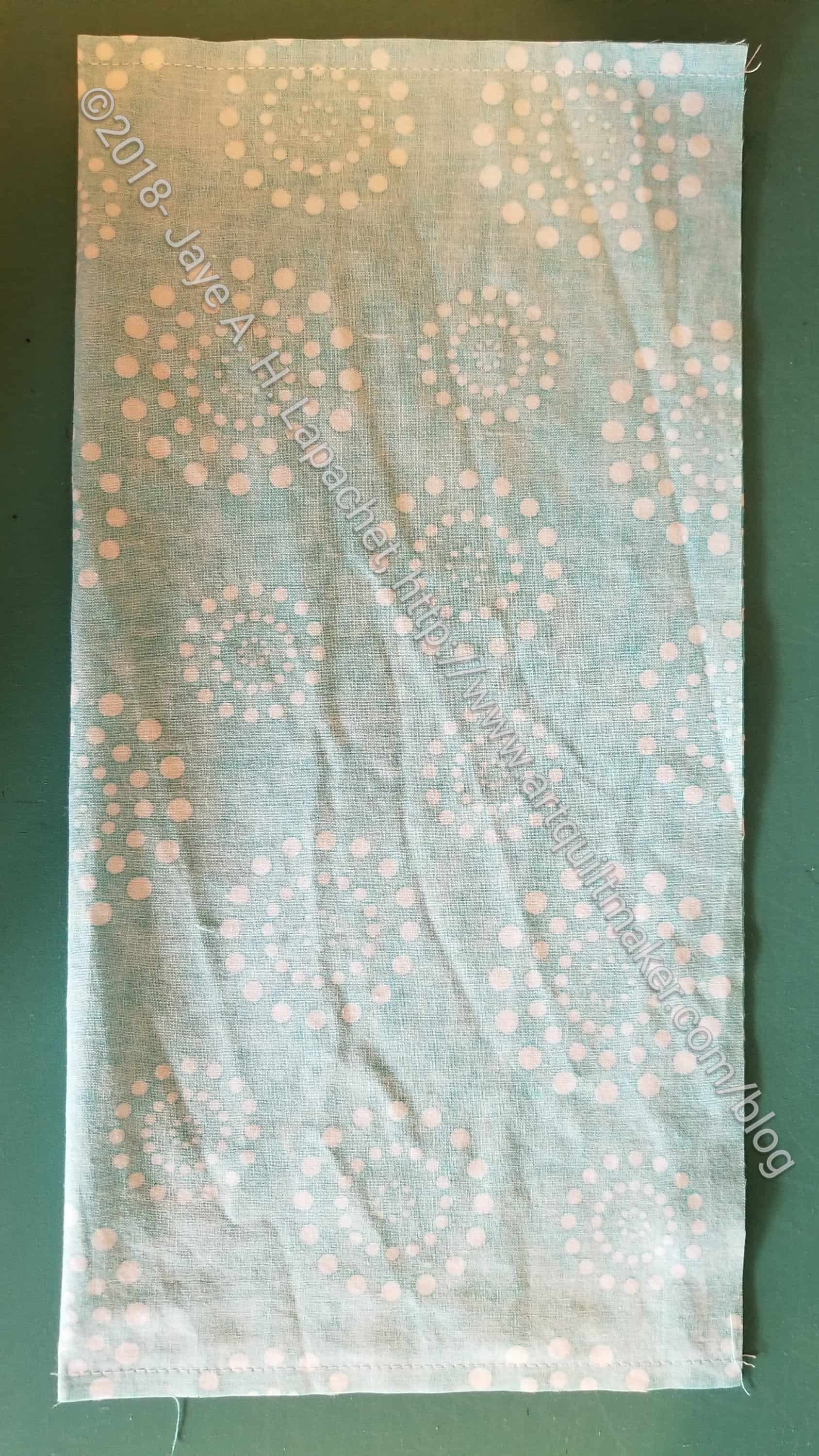
Fold 12.5x12.5 inch squares in half
Fold 12.5×12.5 inch squares in half

3. Fold each of the 4 background squares in half. This will make your 12.5 x 12.5 inch squares into rectangles (e.g. do not fold NOT along the diagonal).

  • Hint: I sew all four one after another, but you can sew one at a time, if you prefer.

3A. Sew along the short side, backstitching at the beginning and the end.
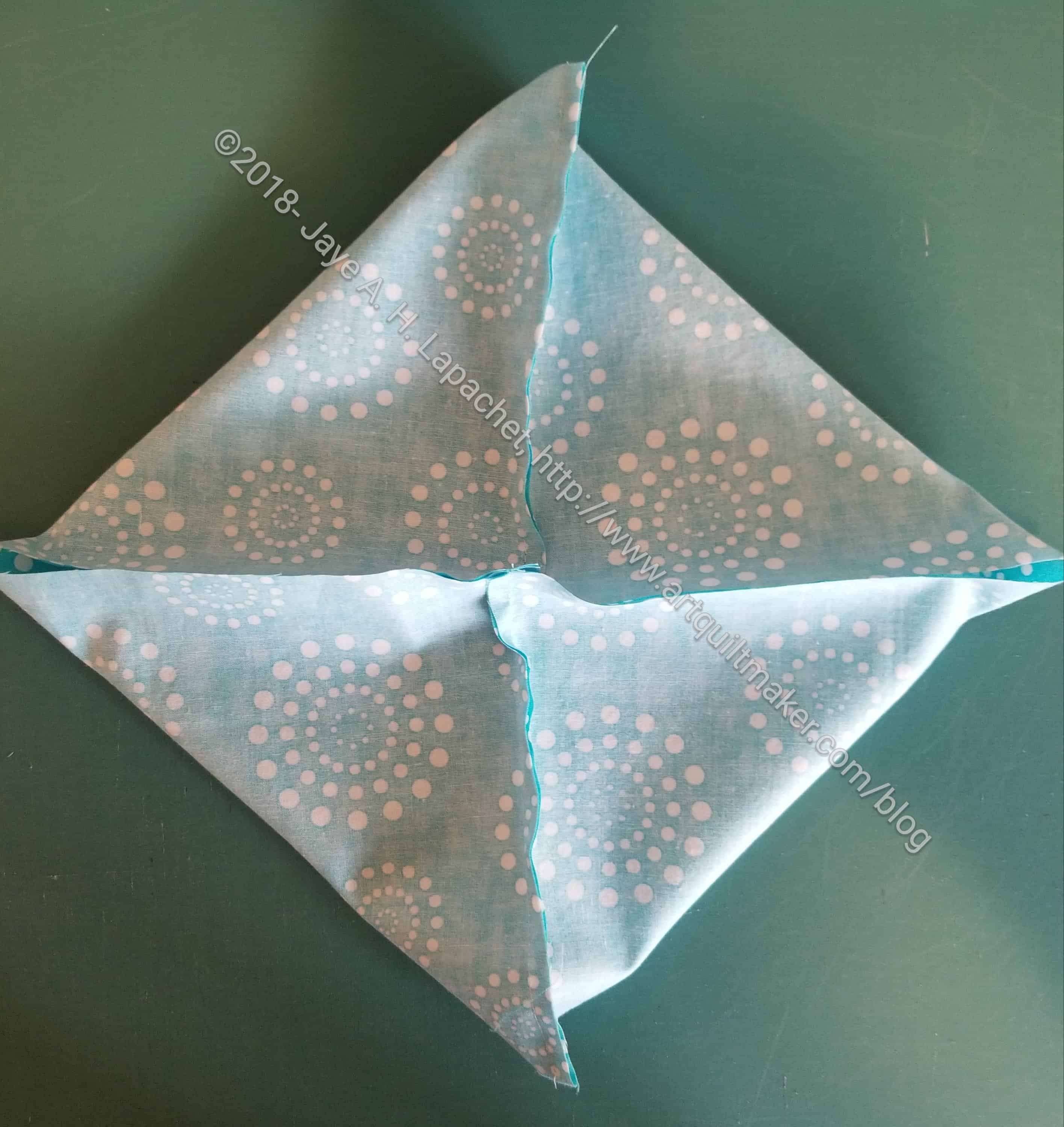
Open up rectangles & match edges

4. Open your rectangles and match up the raw edges.
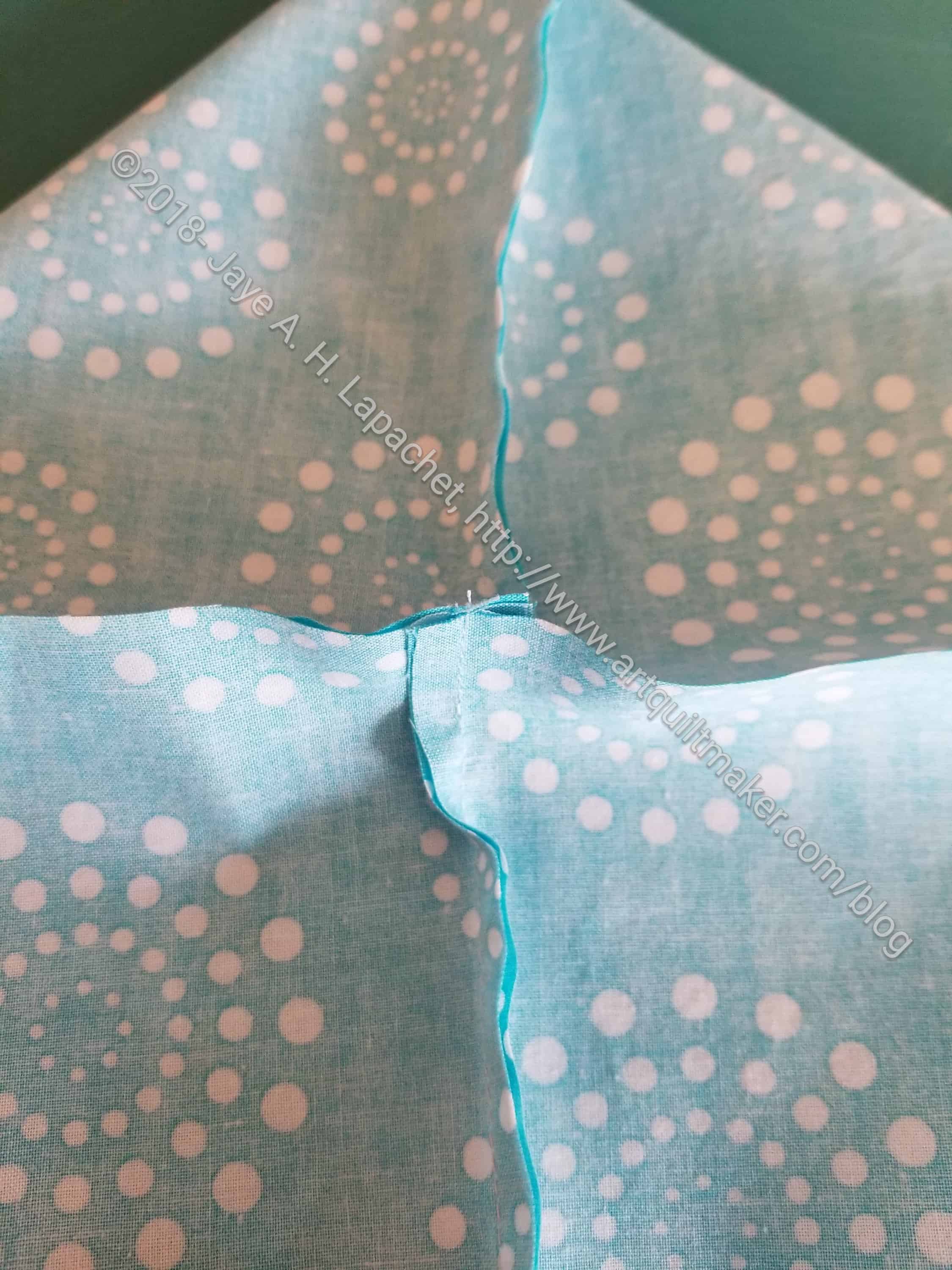
Match edges and nest seams
  • Hint: I nest the center seams and pin, starting in the middle
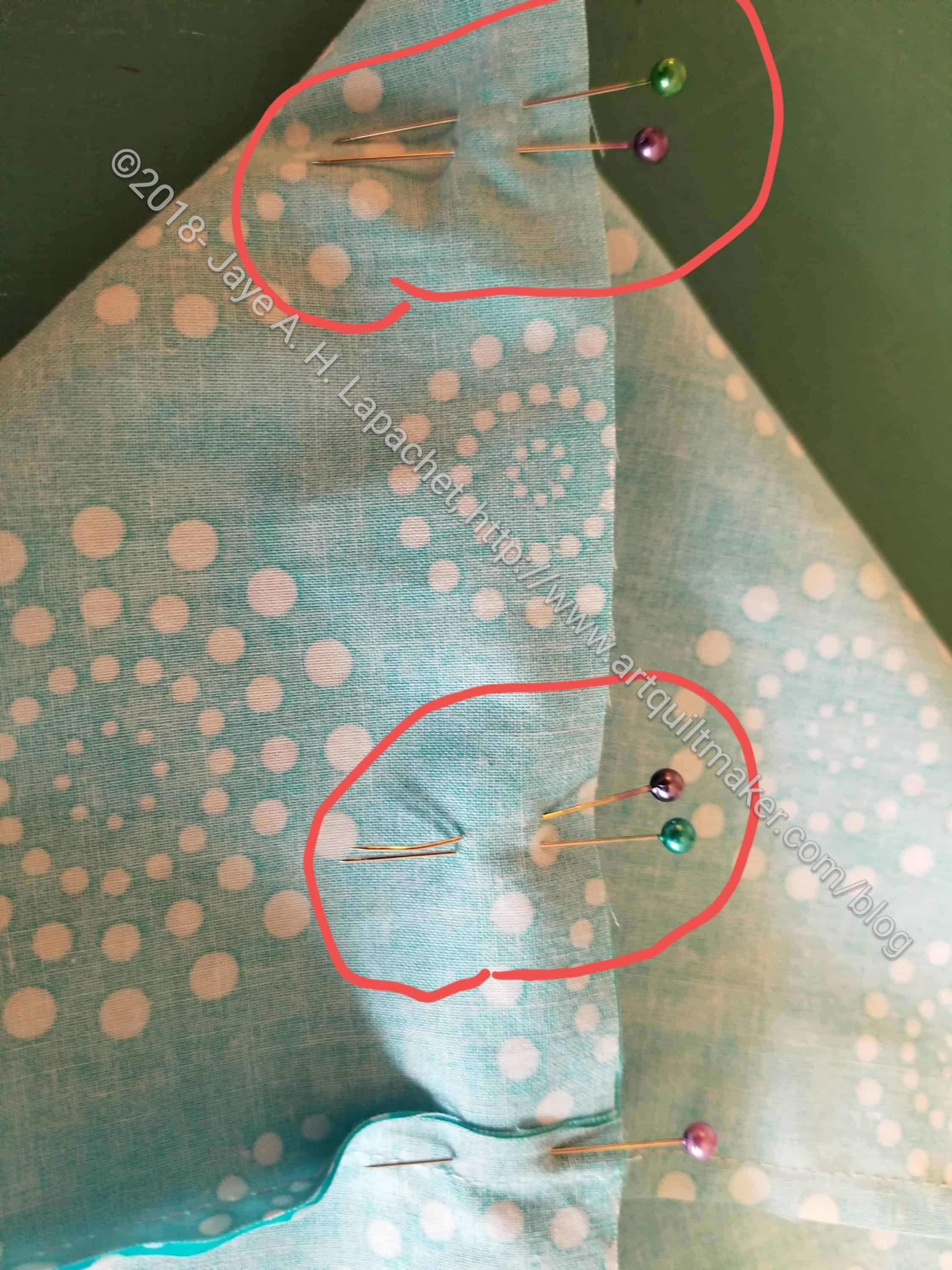
Leave opening
Leave opening
Pin edges closed, leaving an opening for turning
  • Hint: leave an opening 2-3 fingers wide for later turning.  I mark this with two pins right next to each other.
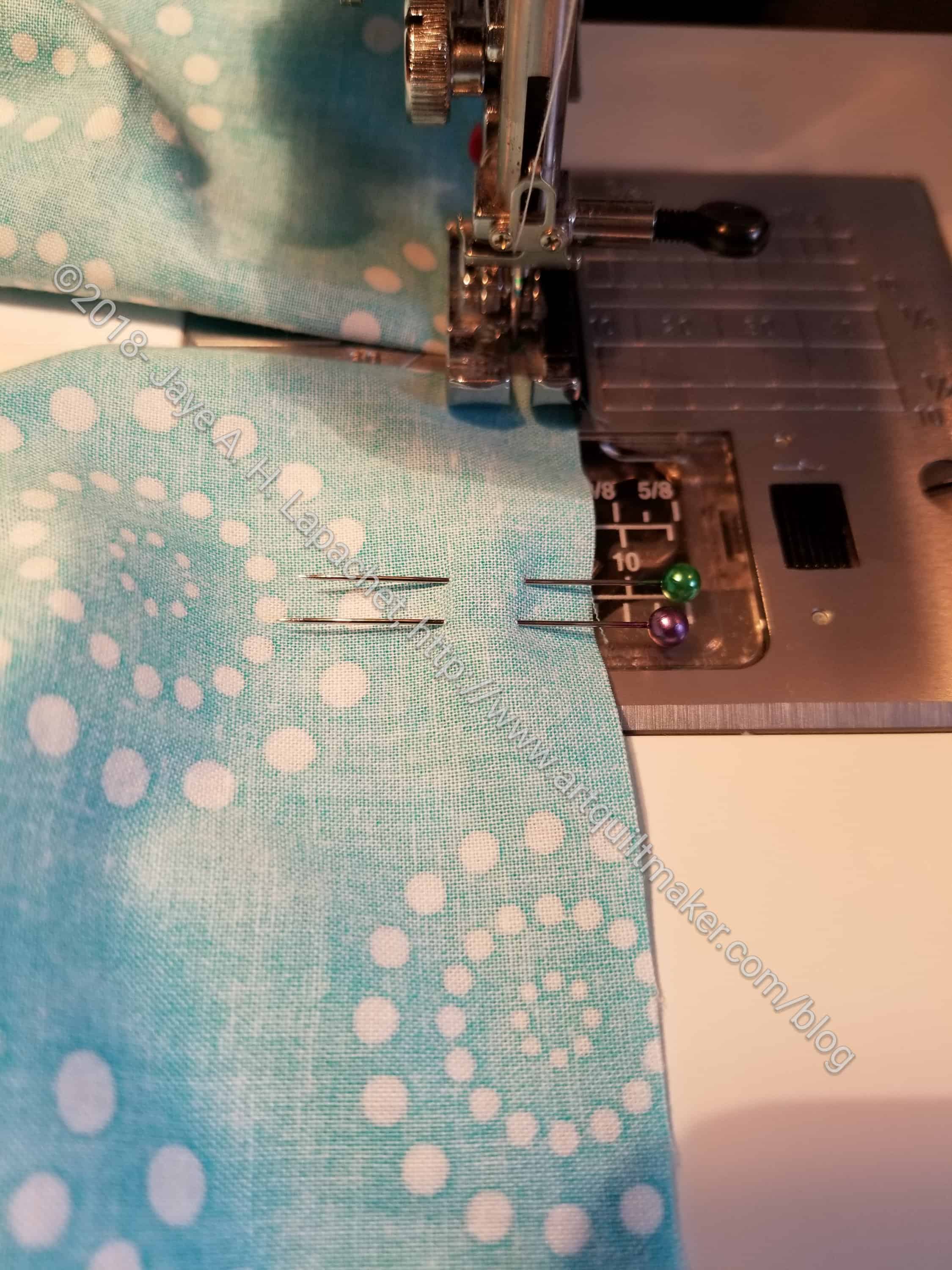
Sew seam shut
Sew seam shut

5. Sew your pinned seam shut except for the opening you have left.
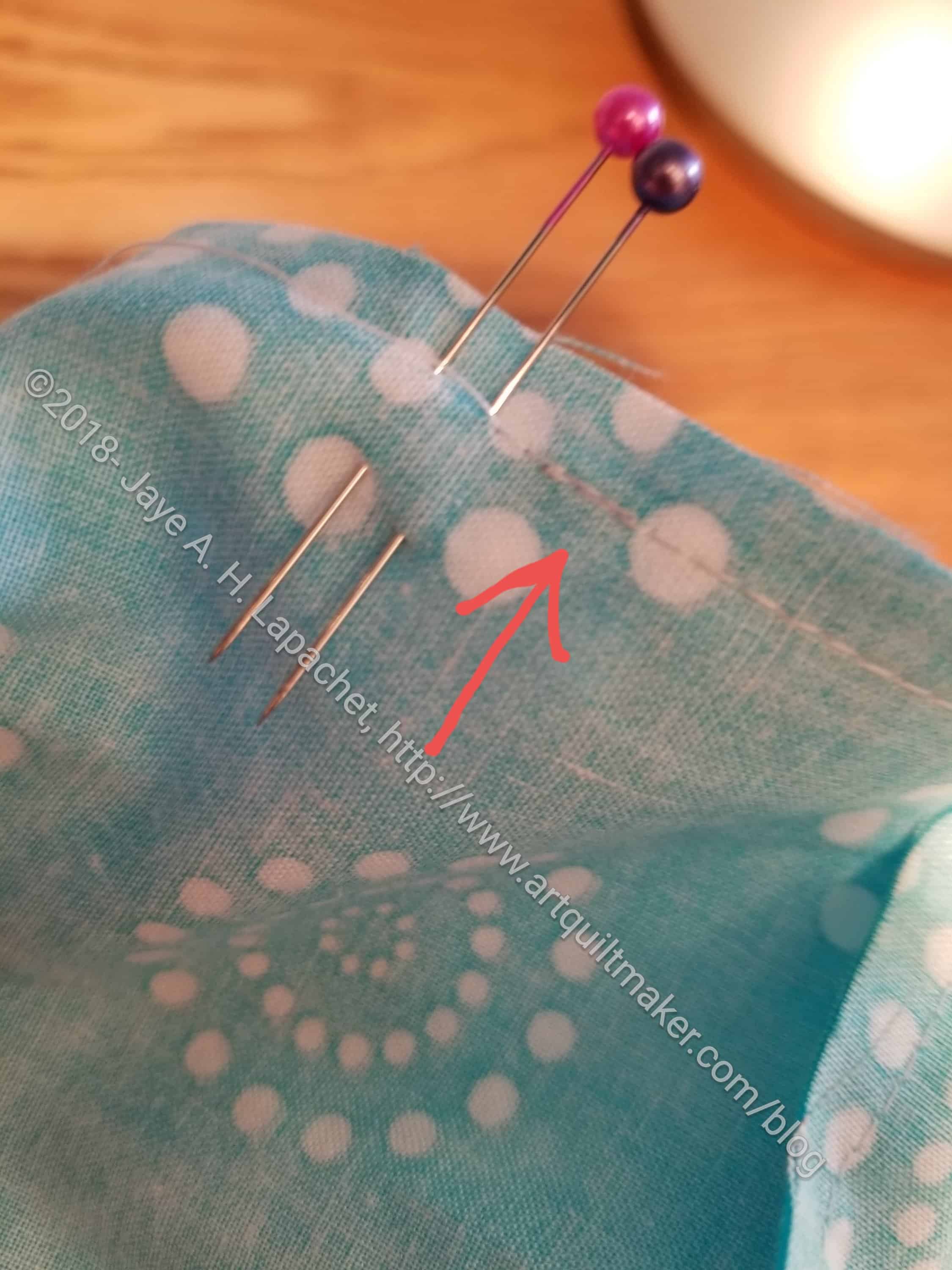
Backstitch at beginning and end
  • Hint: I backstitch at the beginning and end of the seams including next to the opening. Yes, it is a hassle to start and stop, but I don’t want the edges of the seams to come apart when I turn.
Smooth out blocks
Smooth out blocks

6. Place recently sewn squares on the ironing board and smooth out wrong side out (above). They should make nice squares.

7. Press nested seams in opposite directions from the center out.
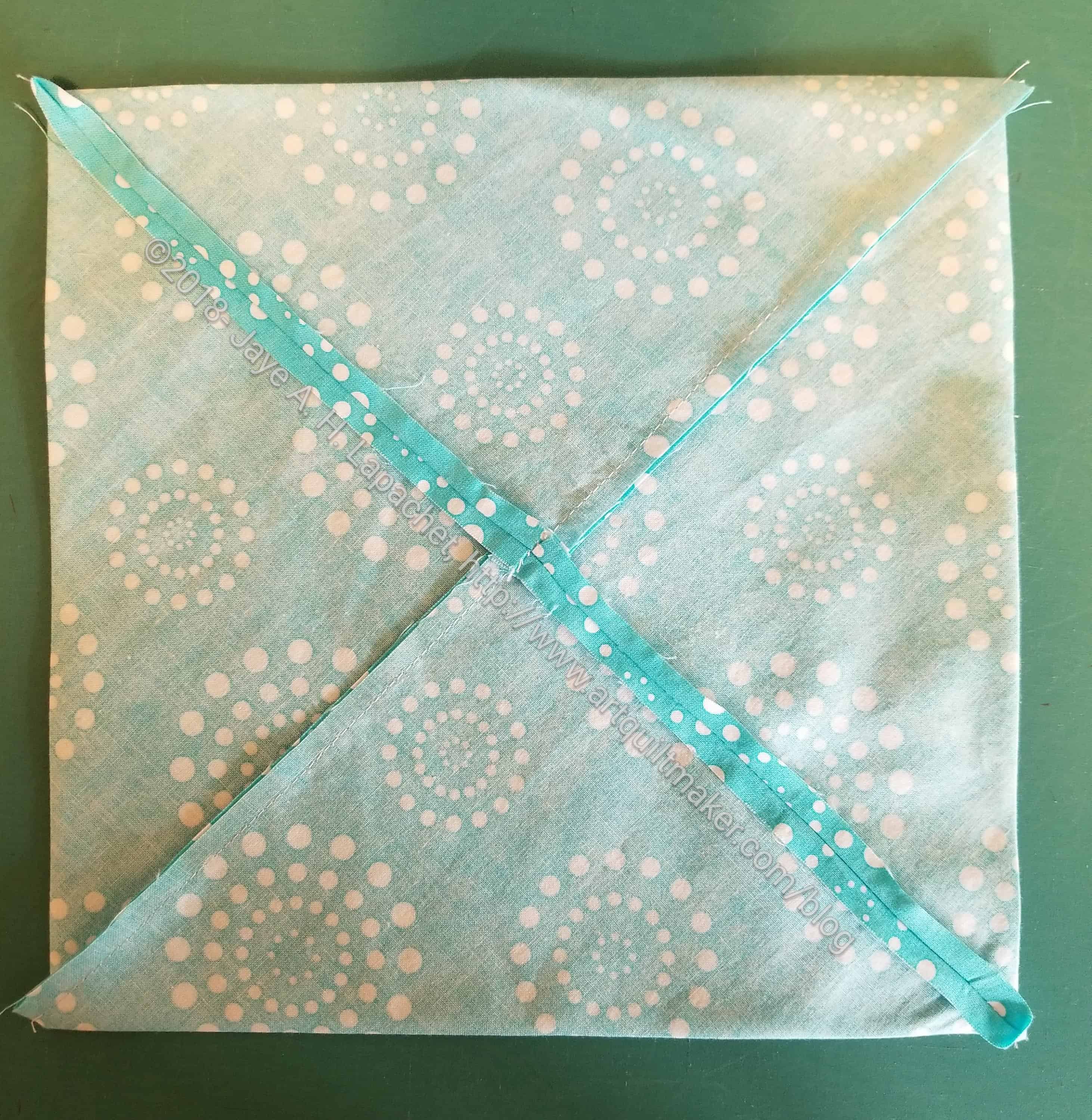
Press seam open to minimize bulk

8. Press long seams in one direction, being careful to line up edge of opening as best you can.  You can press this seam open if you want.

You should now have 4 nice flat squares with wrong sides out.

9. Turn squares right sides out.

10 Poke out corners carefully. I use a knitting needle whose mate broke.

Your squares are now on the bias, so be careful when you handle them.

Press right side
Press right side

10A. Press

Press
Press


Corners folded in
Corners folded in

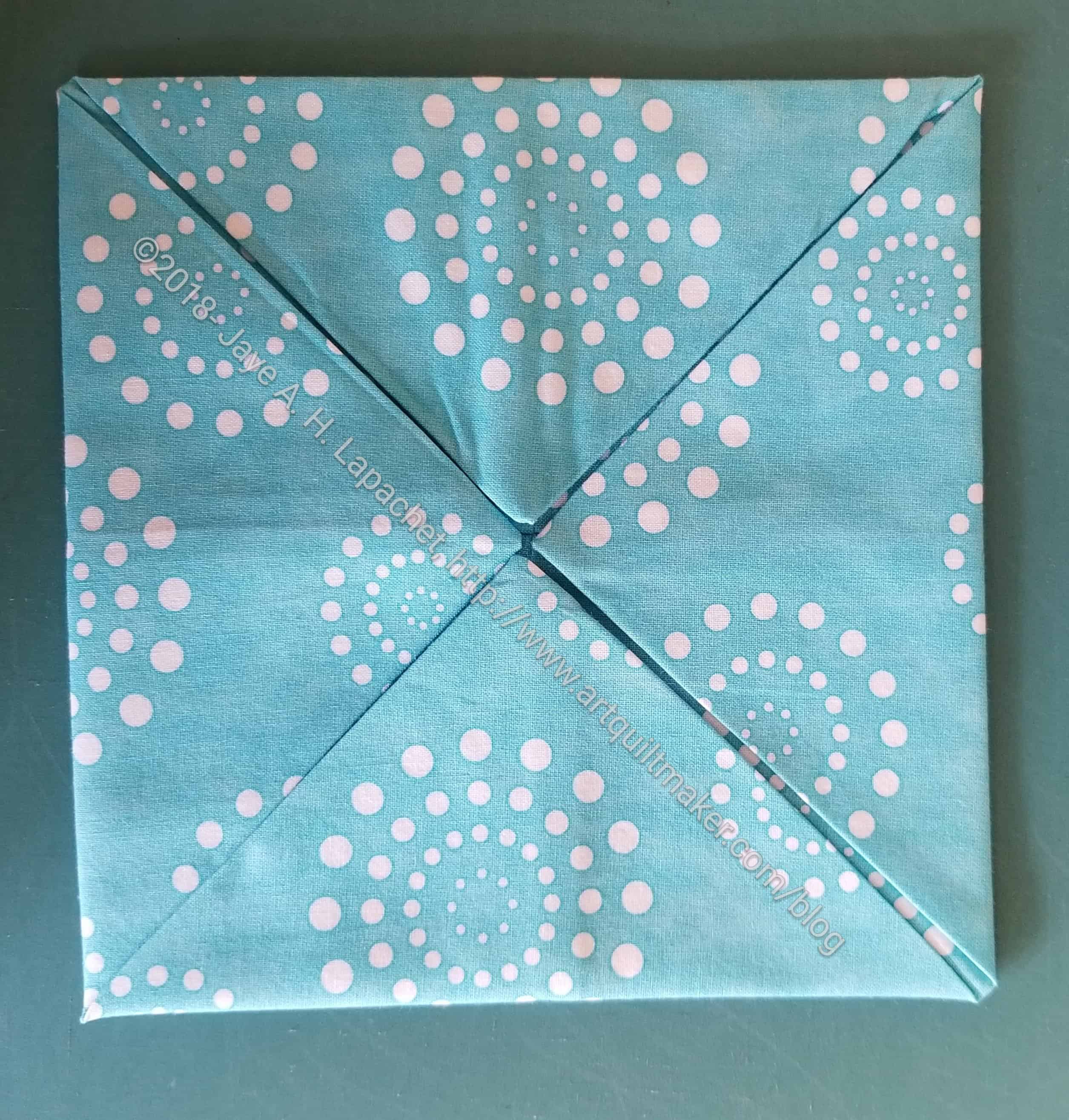
11. Fold corners into the center. Do this with all four corners and make a new square. The square should be 6 inches.
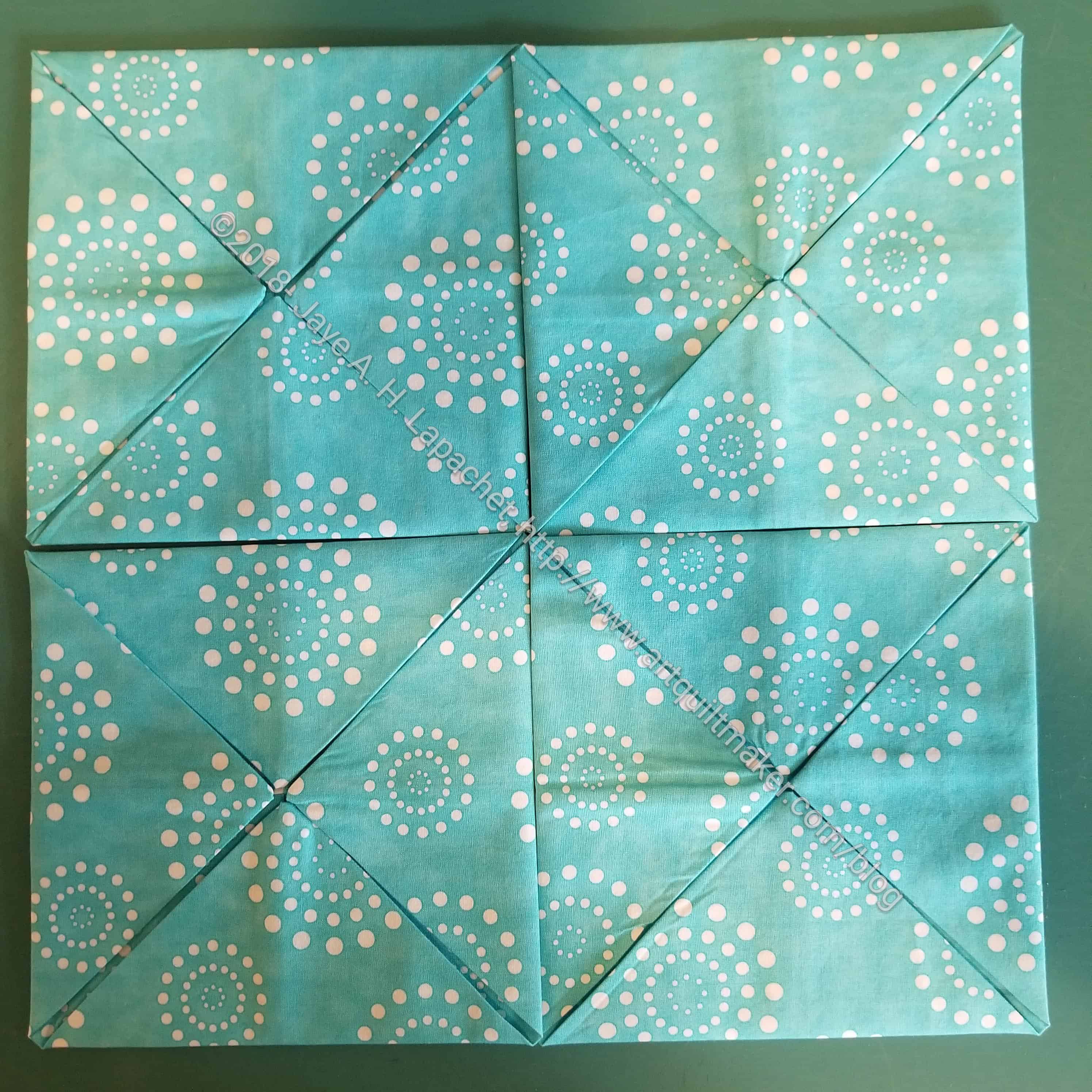
4 blocks laid out in a 2x2 grid
4 blocks laid out in a 2×2 grid

12. Lay out the blocks in a 2 x 2 grid, so you can see what you have
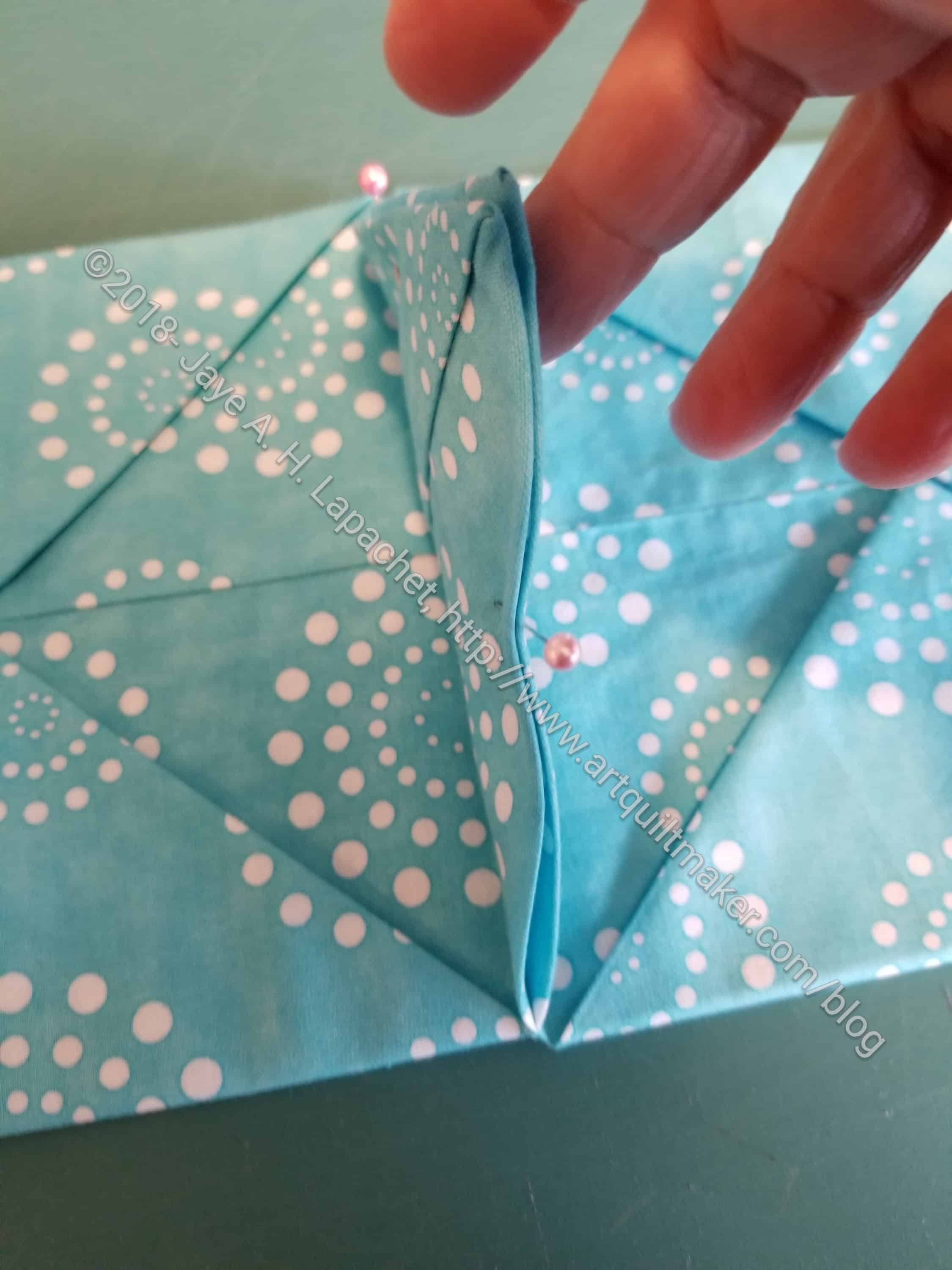
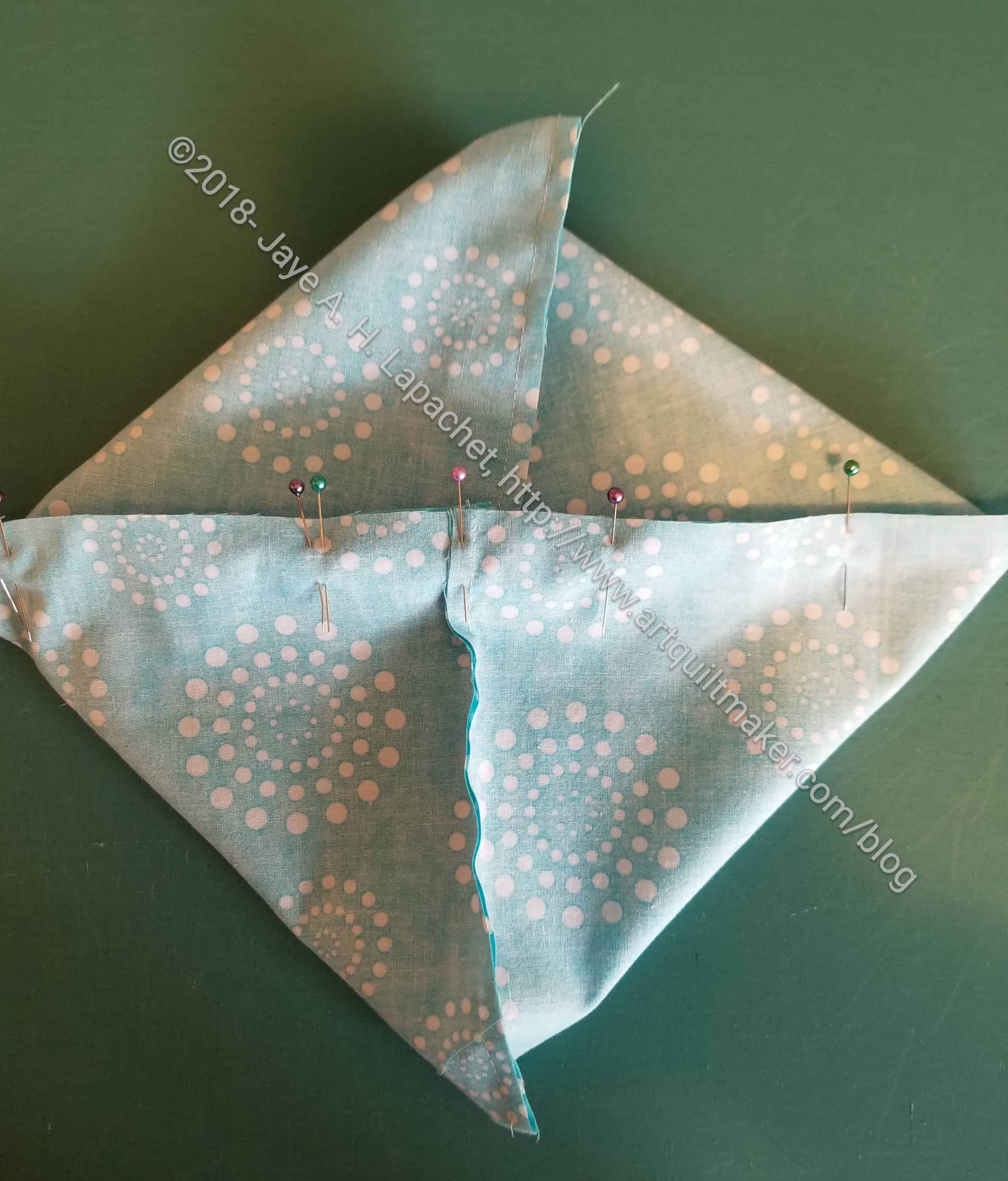
Pin triangles together

13. Pin the center triangles of the two top triangles together. Do the same for the bottom triangles. Now your 2×2 grid will be pinned together in two rectangular sections
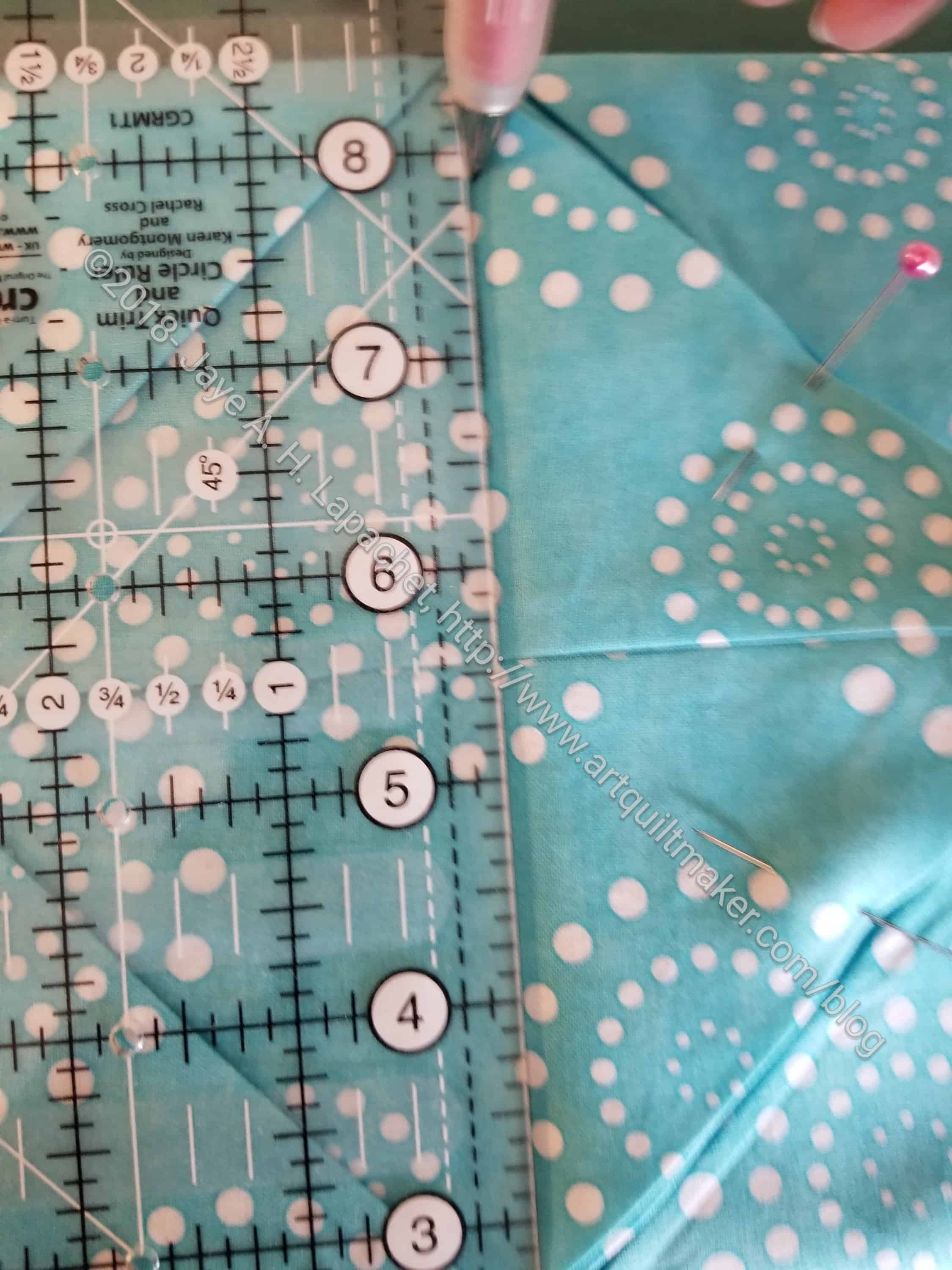
Draw a line in the crease

14. Using a ruler (I use a 3.5 x 12.5 Creative Grids), and your marking implement (I like Sewline pencils), draw a line in the crease under the triangles you are about to pin
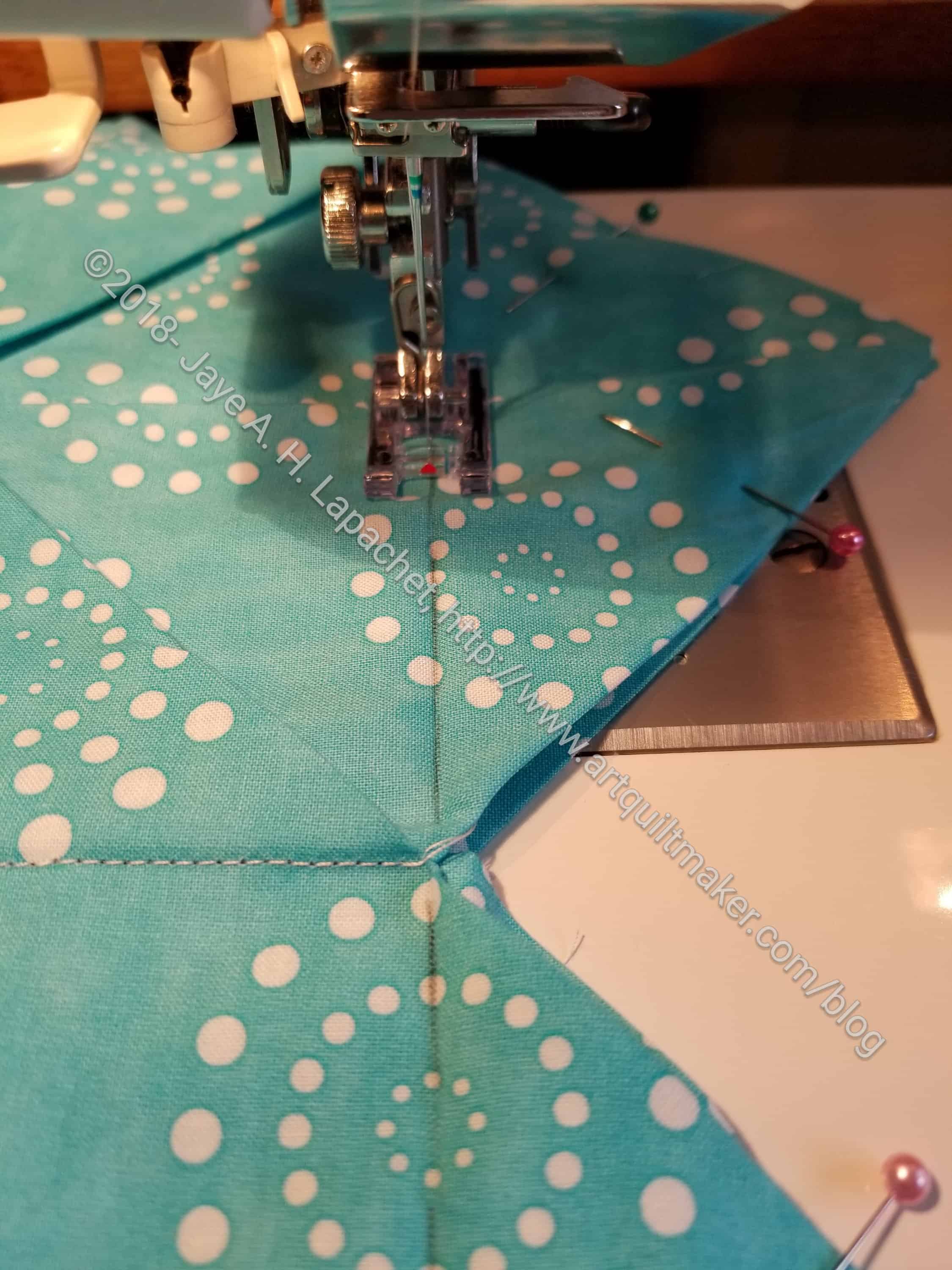
Line up squares
Line up squares

15. Line up squares with backs together and triangles pointing to the right.

16. Put your applique’ foot on your sewing machine.

17. Sew along the crease on both sets.

18. Lay out the 2×2 grid again. Now you will have two ‘rows’. You are going to sew the rows together.
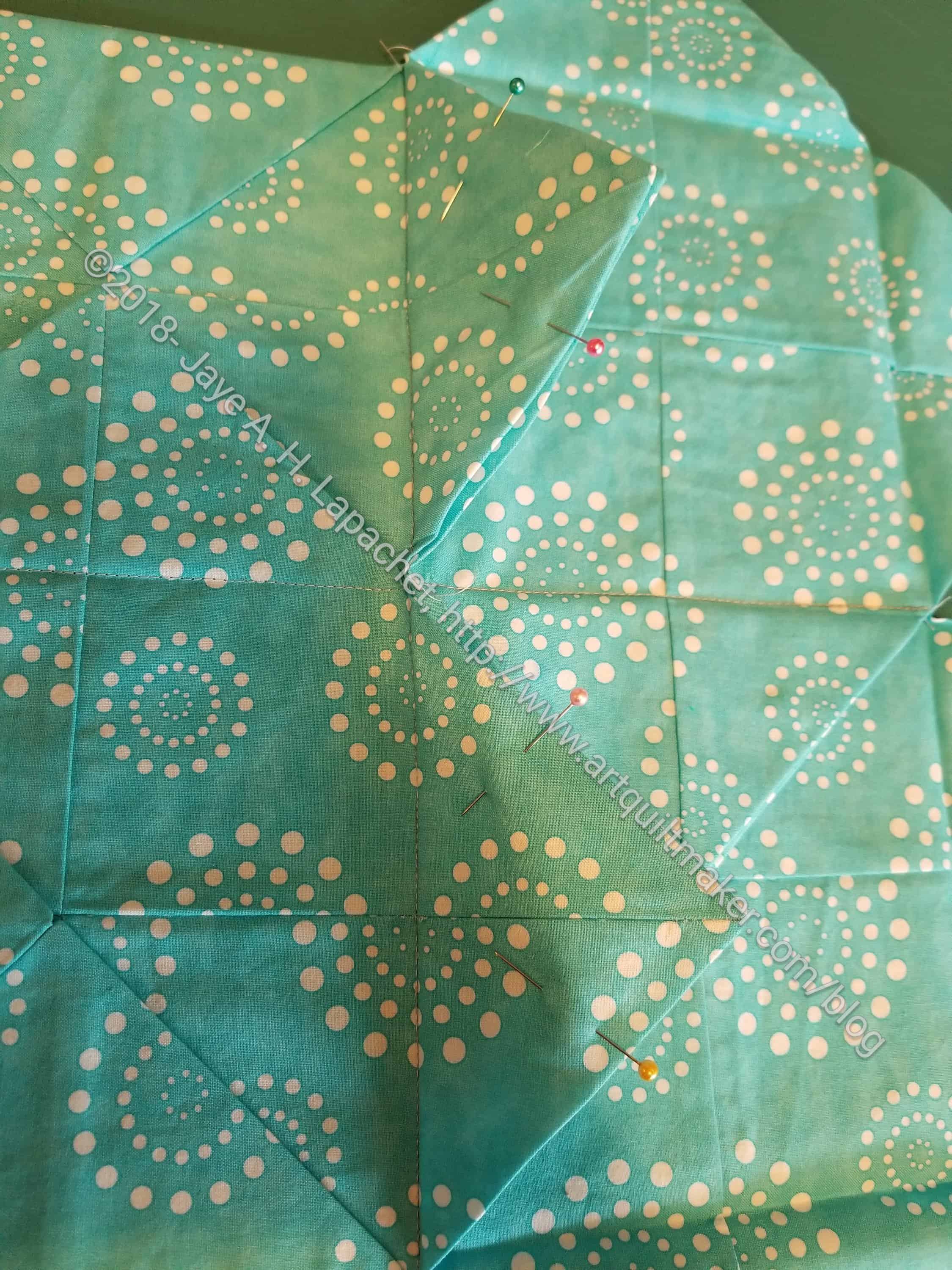
Pin them together
Pin them together

19. Fold up the top triangles from the bottom row and the bottom triangle from the top row.

Draw another line between the two 'rows' in the crease
Draw another line between the two ‘rows’ in the crease

20. Draw a line along the crease at the bottom of the two triangles.


21. Sew along the line. After, you will have your 2×2 grid of squares sewn together and the triangles will be flapping around.
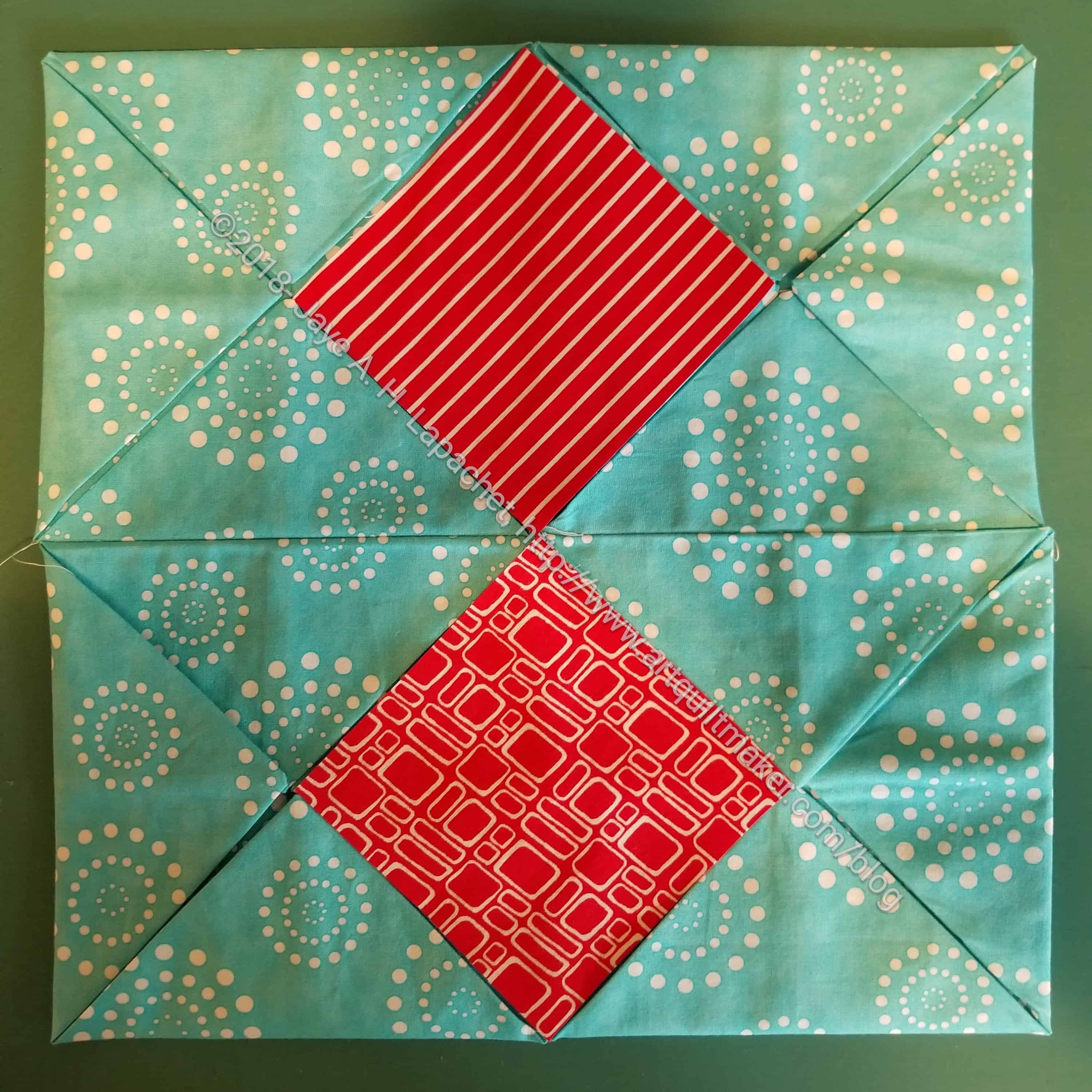
Start laying out your foreground squares
Foreground squares laid out

22. Take your foreground triangles and lay them on top of your background
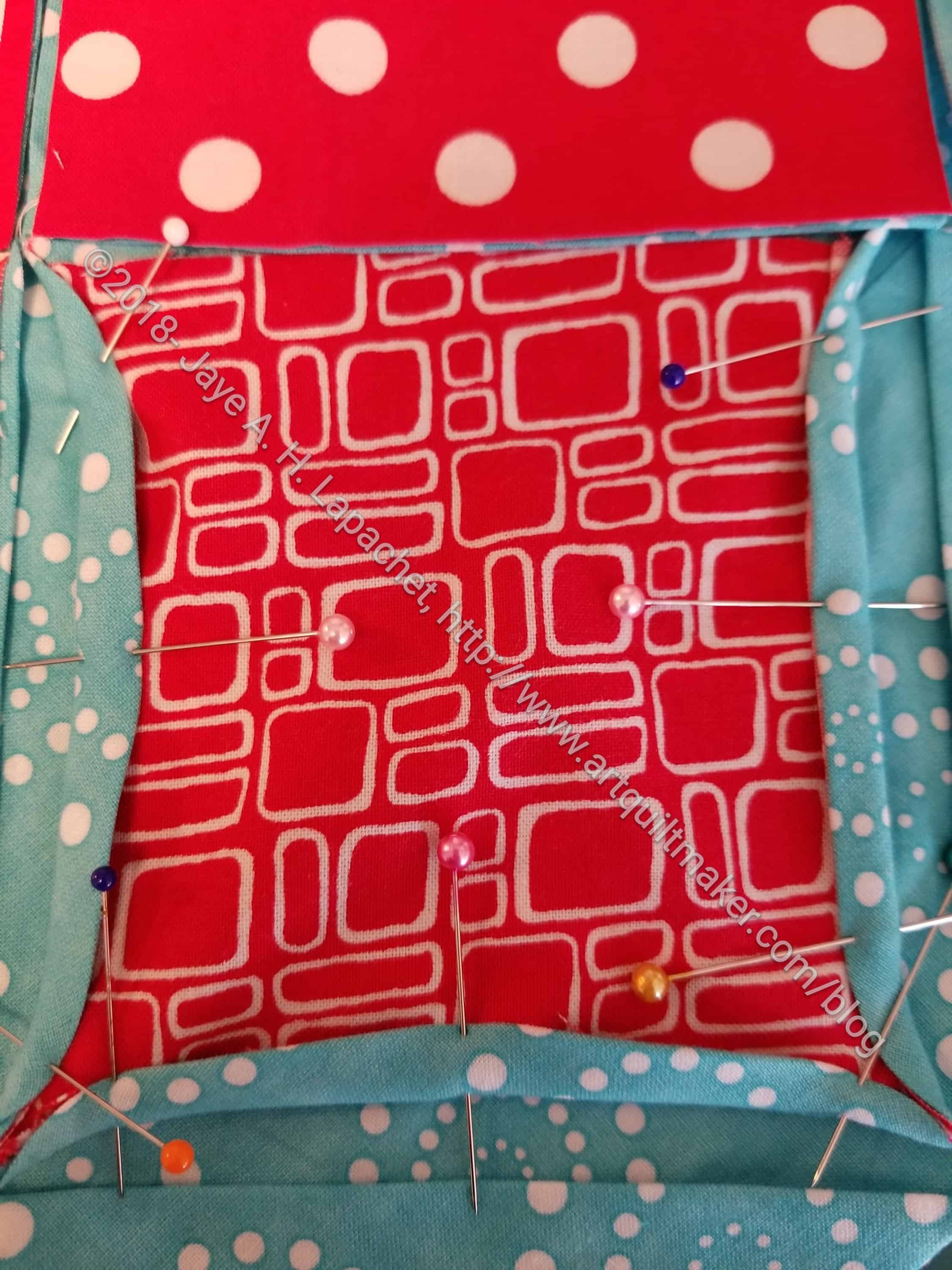
Tuck flaps over foreground

23. Tuck the flaps in towards the center and pin in place. Watch out that the edges of your foreground squares don’t show. Make the edges curve slightly

  • Note: this was confusing to figure out and it turned out that I did not have all the sewn triangles in the right place. After you sew the triangles together, make sure you flatten them back in their original places, e.g. one layer of background on top
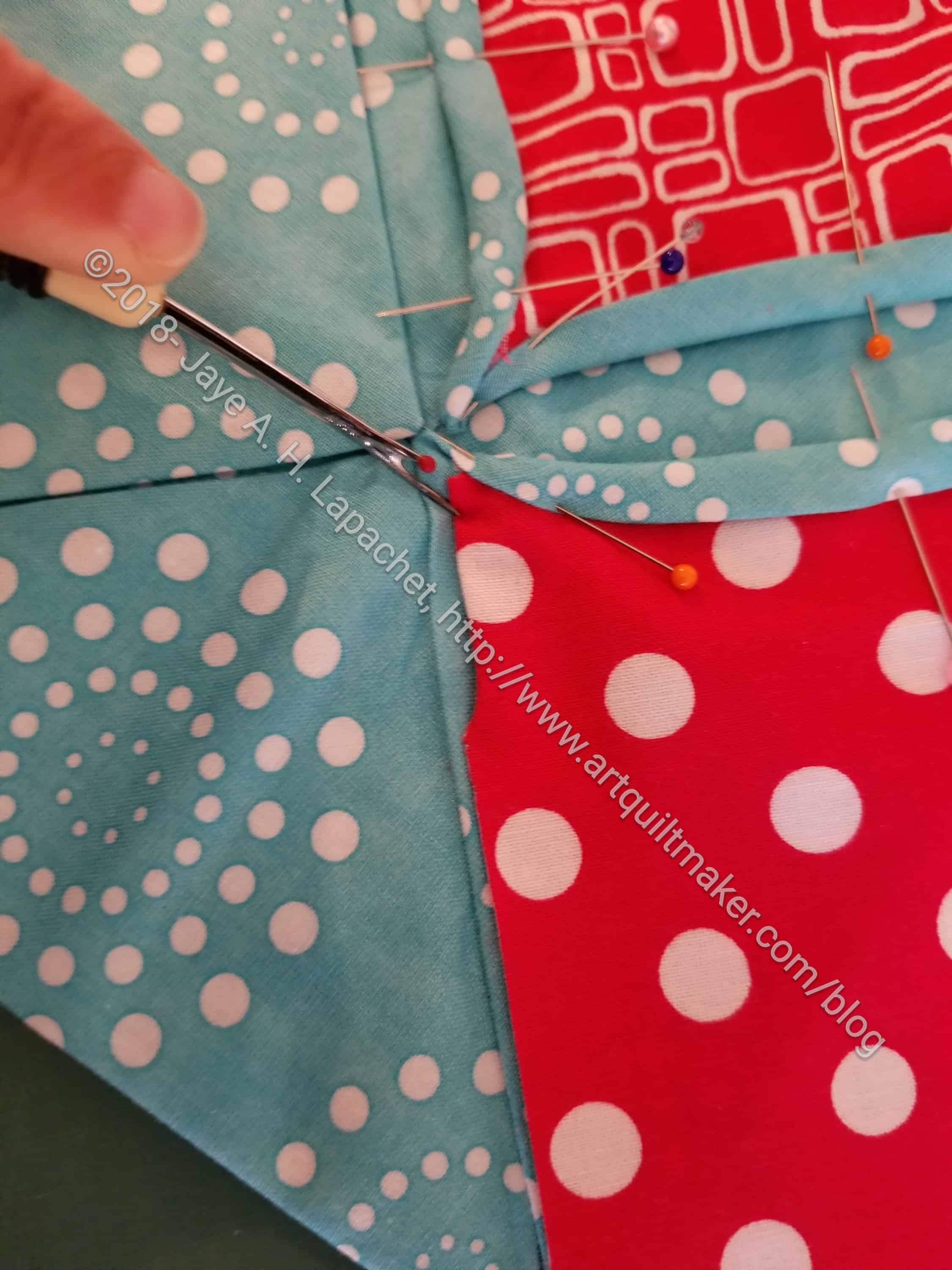
You may need to use a stiletto
  • Note: I had to use a thin sharp tool, like a stiletto or dental instrument to tuck in some of the foreground edges. I sometimes use a seam ripper, which is a very bad habit, because if you aren’t careful, you can rip your fabric. You can definitely trim the foreground fabric, but trim a little at a time very, very carefully
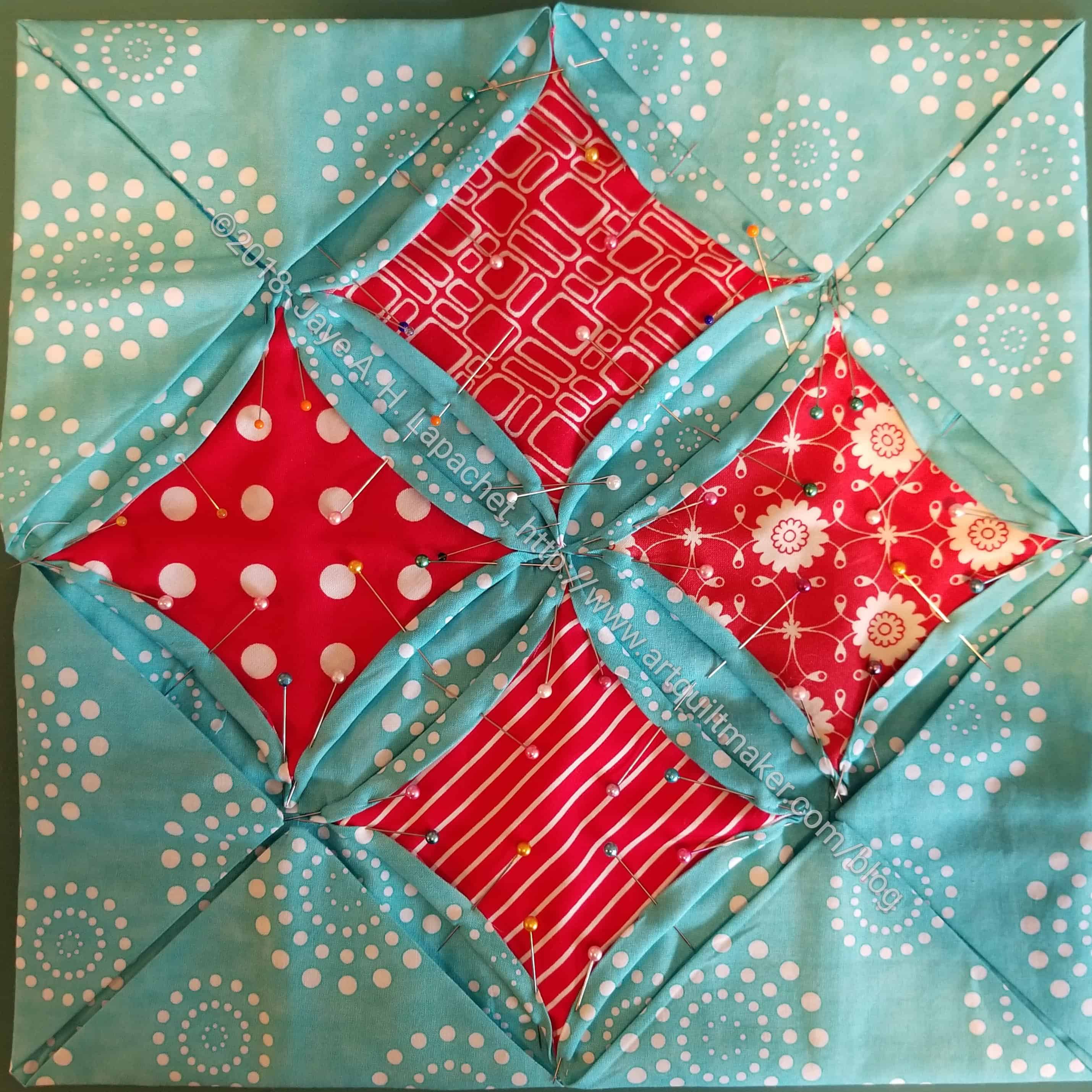
Pinned and ready for sewing

24. Pin each edge in three places with the heads of the pins facing the center of the foreground fabric. This is not micro management; this technique will allow you to sew as long as possible with the pins in place
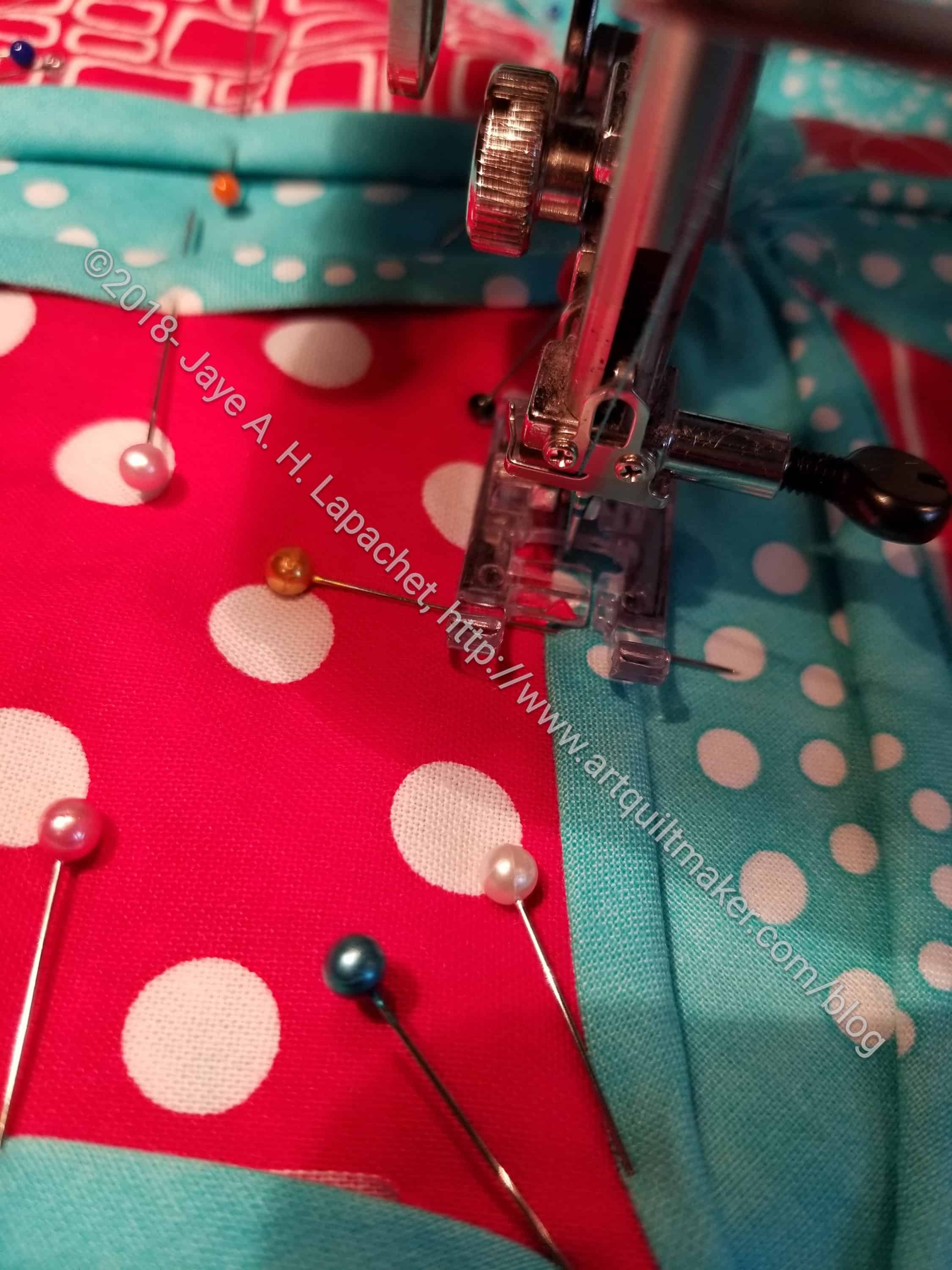
Sew close to the edge of the background fabric

25. Sew very close to the edge of the background. I sewed slowly and carefully. I used the above mentioned sharp tools when I needed a little help. Leave LONG tails so you can knot off and hide the threads

26. Handstitch the other triangle flaps closed with a few stitches. The other tutorials said to use the machine, but 2 stitches is a pain and an irritant on the machine, so I hand sewed the flaps closed when I was sinking threads.
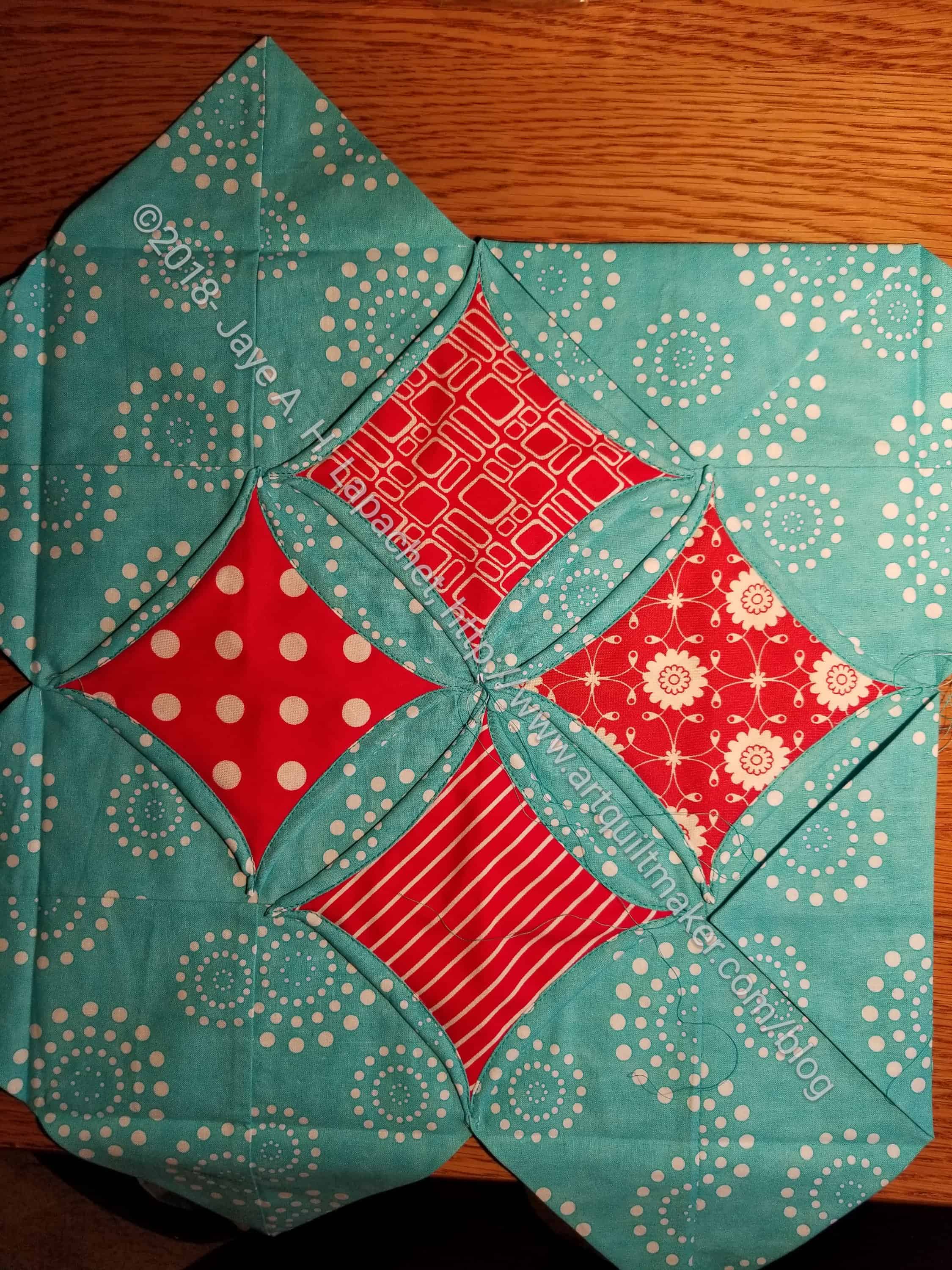
Cathedral Window Block in process

I never thought of making it before, but this block did kind of take my fancy. This is kind of a strange block, partially because of all of the layers. It is lumpier than I expected. Warn your longarmer about it.


Resources:

  • Fons & Porter Cathedral Window block– I originally found the instructions in one of their magazines as part of their ‘learning to quilt* series’. I had to go looking for other instructions when I found the directions had no sizes or actual cutting instructions. Directions are brief.
  • Lovely Little Handmades Cathedral Window block – uses a printed background, so you can see how that works. Most people use white, so it was a little confusing for me when I wanted to use the blue.
  • Sometimes Crafter Cathedral Window block – some missing detail, but has the instructions for cutting the right sized patches. I also don’t like it that the viewer cannot enlarge the photos to see the details.


*Nota bene: not sure if this is the correct name, but it describes the basic idea of the series.
Cathedral Window

I didn’t know what to sew over the weekend. It isn’t like I don’t have plenty of projects on which to work. Also, I am making good progress on the Who Am I? piece, but I wanted to make progress. I have another block to make for the Aqua-Red Sampler and decided to try something new.

I found some directions for a machine pieced (machine sewn?) Cathedral Window block and it was bugging me, so I decided it would be the last block in my Aqua-Red Sampler. It wouldn’t be the same as all the other sampler quilts and I would get to finish something today while progressing on something else.

I started with the Fons & Porter directions I found in one of their magazines. 🙁 These directions did not tell me what size blocks I was making or what size to cut the patches. The directions were not that helpful either. I am not sure what the company that owns Fons & Porter is doing, but they aren’t doing themselves any favors by hiding this crucial information.

I went to the web and found two tutorials. I used them in conjunction with each other, because neither had all the information. Sometimes Crafter had the right size, so I could tell what sizes to cut and Lovely Little Handmades had excellent directions though used different sizes patches.

Cathedral Window Block in process

My block is still in process, but it is coming along very well.

I have some hand sewing to do, which neither tutorial recommends, but I don’t care. It is the way I want to finish my block.

I decided to create a tutorial. I think the quilt world needs a more complete Cathedral Windows block tutorial in the 12.5 inch (unfinished) size, so look for that soon.

When I finish this block, another decision will be made and I will be able to put the Aqua-Red Sampler together.

Progress on RD Piece

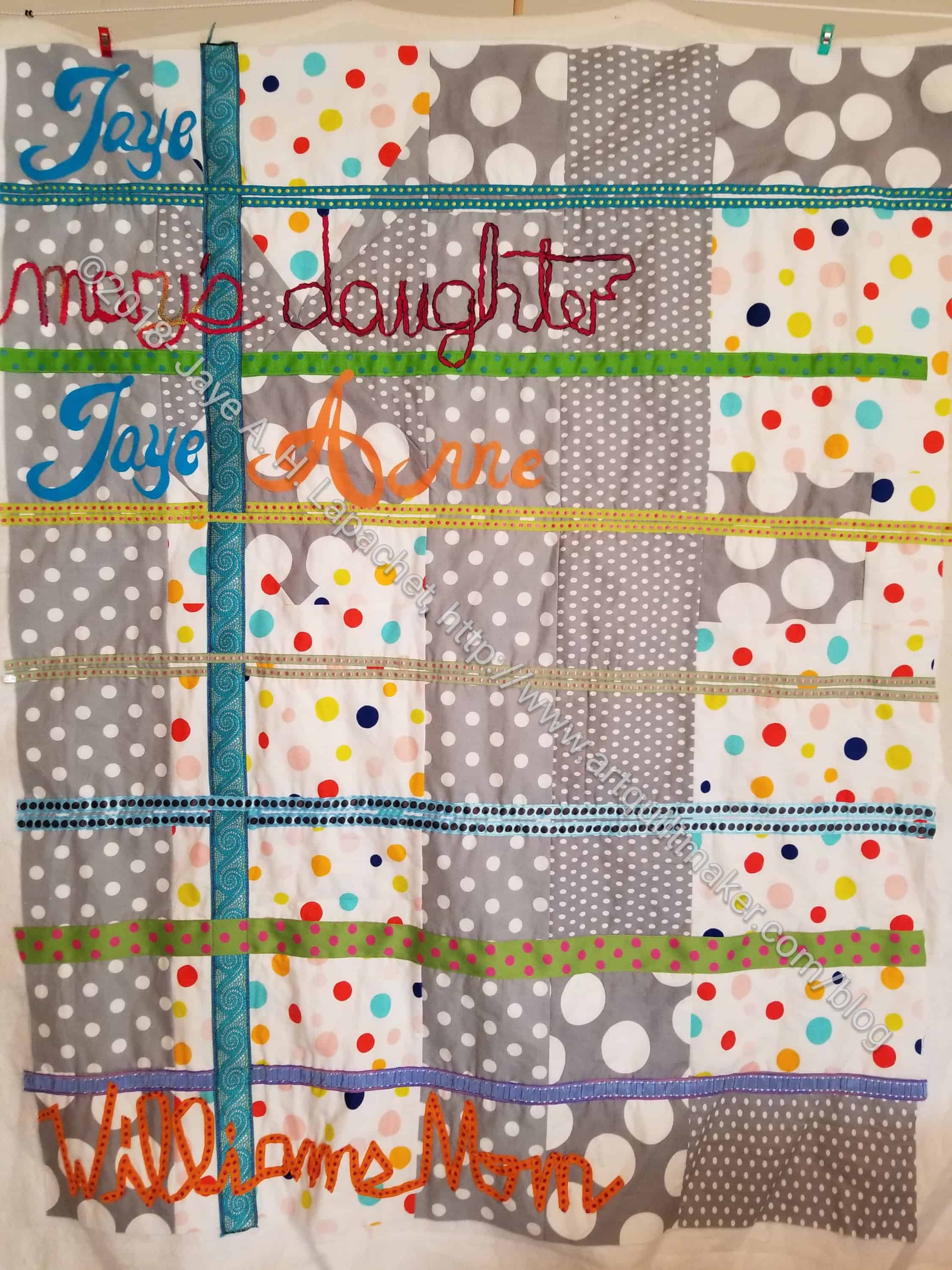
I carved out about 6 hours yesterday where I just sewed. I finished a donation block and started another. I started and finished a Color My Quilt shard. The biggest deal was that I worked on the Rosalie Dace piece I started in Sisters. I haven’t really worked on it since the trip, but my mind has been working on it. I finally cleared off the big design wall enough to get it up there.

Who Am I? - early August 2018
Who Am I? – early August 2018

I thought I would keep adding letters, but the number of pins in the piece (a problem at Sew Day I can talk about later) and unfused bits flailing around demanded a different course. The quilt really wanted me to sew down and fuse down letters so I did.

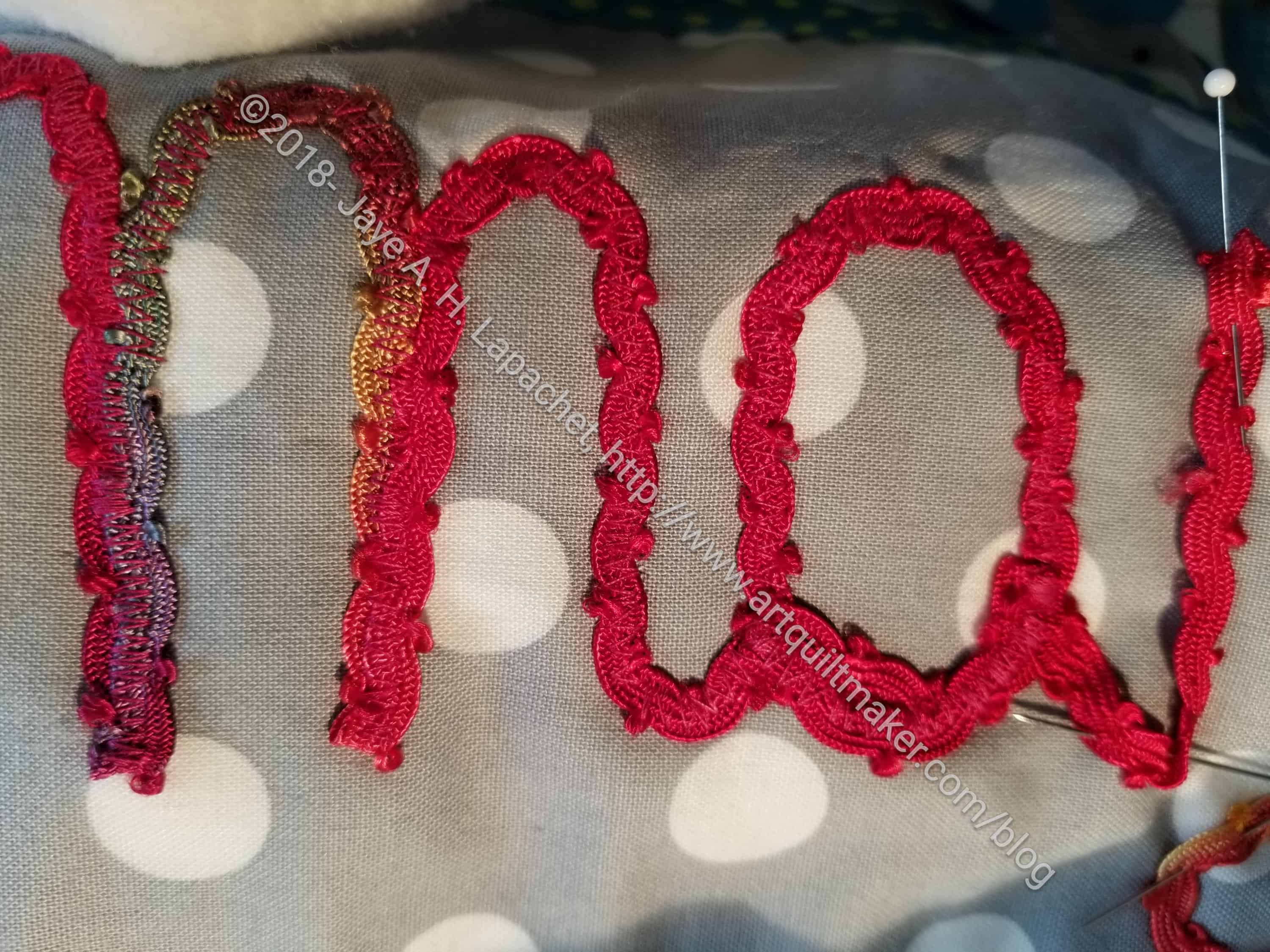
The two sets of ribbon/trim letters are sewn down using a zig zag stitch in varying widths. It really took forever because I sewed very slowly, but I am pretty pleased with the way it came out.

Mary's Daughter - early August 2018
Mary’s Daughter – early August 2018

For the ‘mary’s daughter’ piece, I used an Aurifil violet-ish color on the top and the bottom.

For ‘William’s Mom’, I used clear Auriful in the top and an an orange 50 wt in the bobbin. I started out with orange in the top, too, but it obscured the circles that are part of the design of the ribbon.

I feel good about the work. I am so pleased to be making progress.

Handbag Sampler

Handbag Sampler
Handbag Sampler

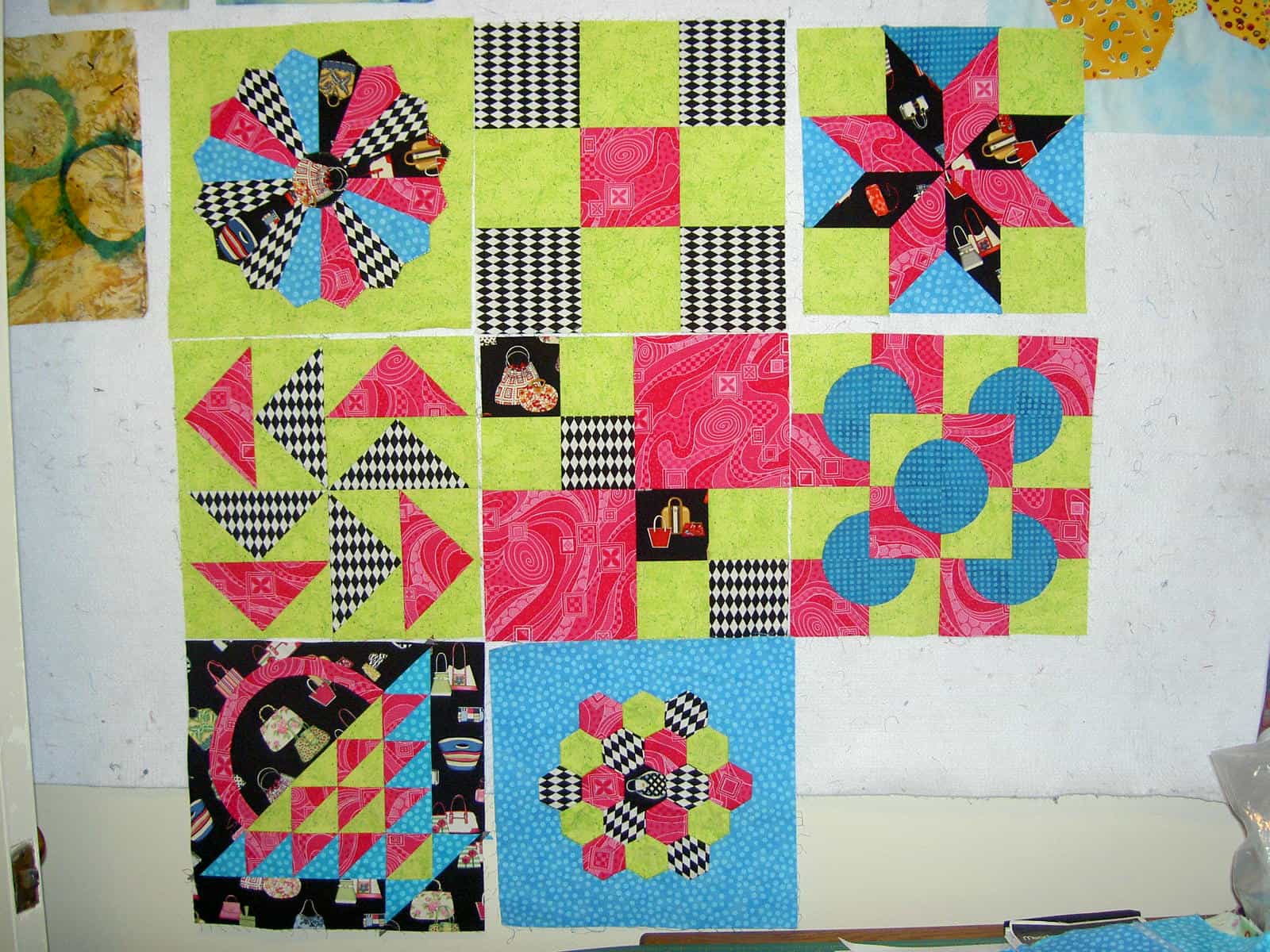
In going through old photos, I found photos of the Handbag Sampler I have been talking about recently.

I haven’t actually found the blocks, but, at least, I have a photo and sort of know what I have.

Handbag Sampler Nosegay

I found a photo of a Nosegay block that I made (or am in the process of making as well. The 9th block is good, because that means, if I find the blocks, I can just put the quilt together. I don’t have to search out fabric, which is all very distinctive. Of course,in terms of learning, it isn’t quite as comprehensive a Sampler as the Aqua-Red Sampler. There is no applique completed.

I have to find the blocks before I decide what other blocks to make.

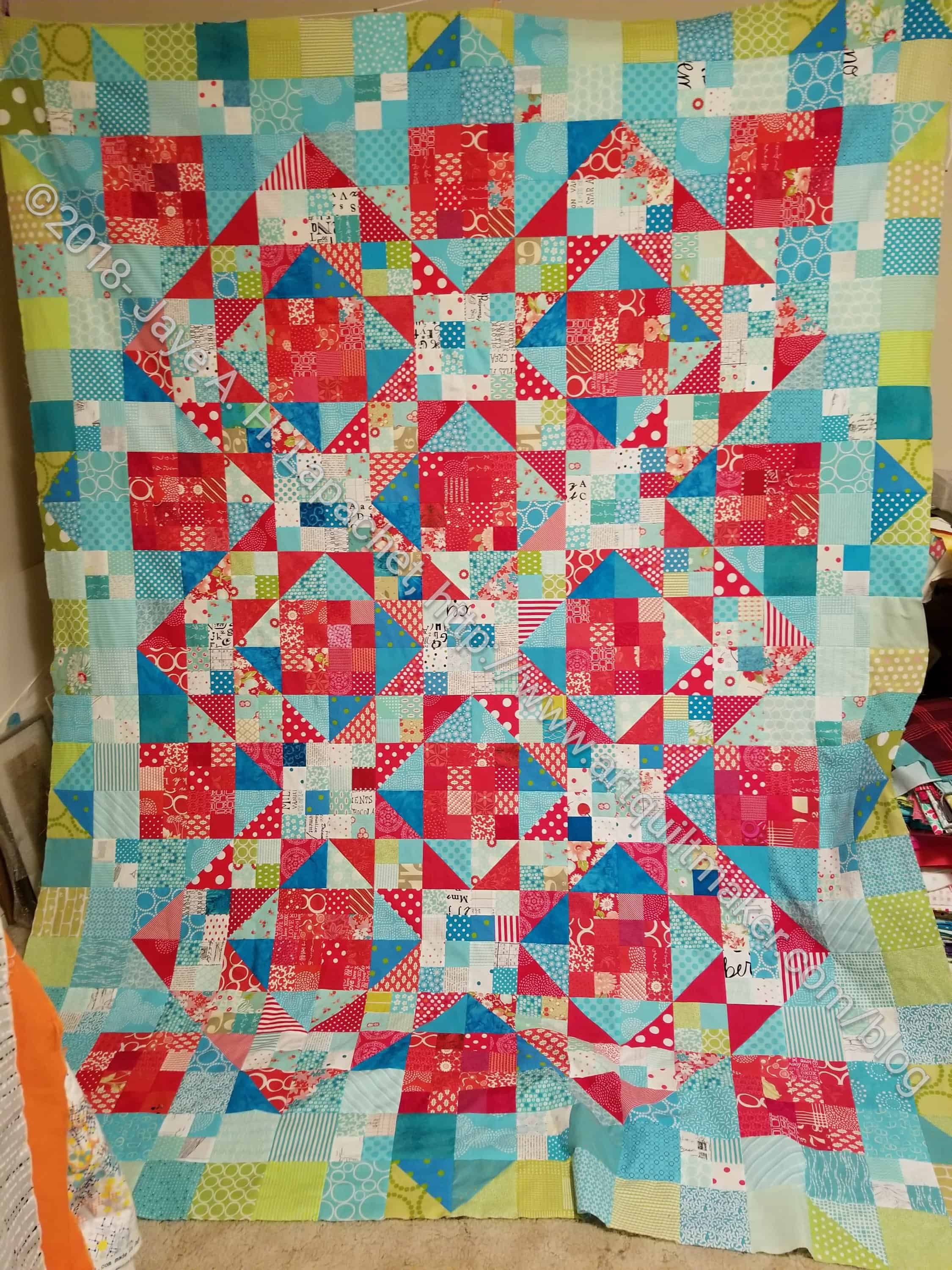
Finished: Stepping Stones n.2 Top

Stepping Stones Top
Stepping Stones Top

Yes, I worked really hard over the weekend and finished the top!

I also finished the back and binding, so the piece is ready to go to Colleen. Yay!

I started playing around with colors in 2012, so this quilt has been hanging around for longer than I thought. Those first tests were a lot different than what this quilt turned out to be. I am pretty pleased with the colors, though the darker turquoises do stand out. At least they are evenly spaced.

I have another group of fabrics destined for this pattern. Regardless of whether I actually use those fabrics for n.3 remains to be seen, but I don’t think I am quite done with this pattern yet. I’ll need a different border. This one is fine, but not for a second quilt.

As You Sew, So Shall You Rip

I realized that I don’t talk much about ripping out stitching. I do it all the time and this week was no exception.

Stepping Stones n.2 - 1 seam left
Stepping Stones n.2 – 1 seam left

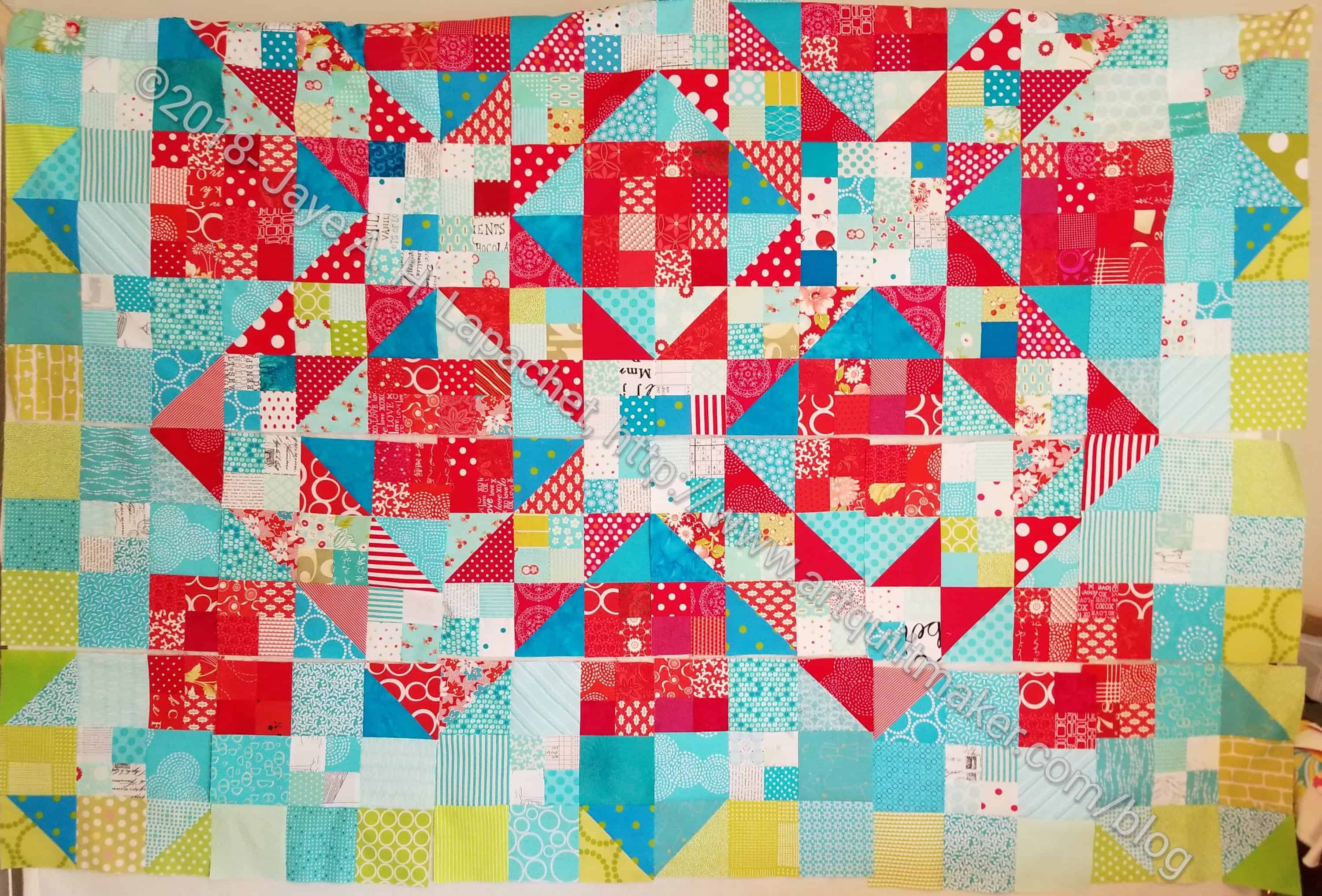
I have been eager to finish the Stepping Stones n.2 top as it has been on my design wall for too long. In my rush, I put a block together wrong and then put it in the quilt. With one seam to go to finish the top, I had to rip out a bunch of seams. Yes, I had to. I looked at the quilt for a long time time, trying to decide if I could live with the mistake. I didn’t want to rip when I was so close to finishing, but I just couldn’t live with the problem.

Stepping Stones n.2 - 1 seam left + error
Stepping Stones n.2 – 1 seam left + error

The look is almost right, but if the viewer looks hard, there is a disruption in the pattern. Also, all of a sudden two like fabrics were placed together, which I really worked hard to avoid all through the piecing process.

I am sure you can’t avoid the big circle, but refer back to the photo above to see the problem. Look down and to the left one row to the see the duplicate fabrics (not circled.

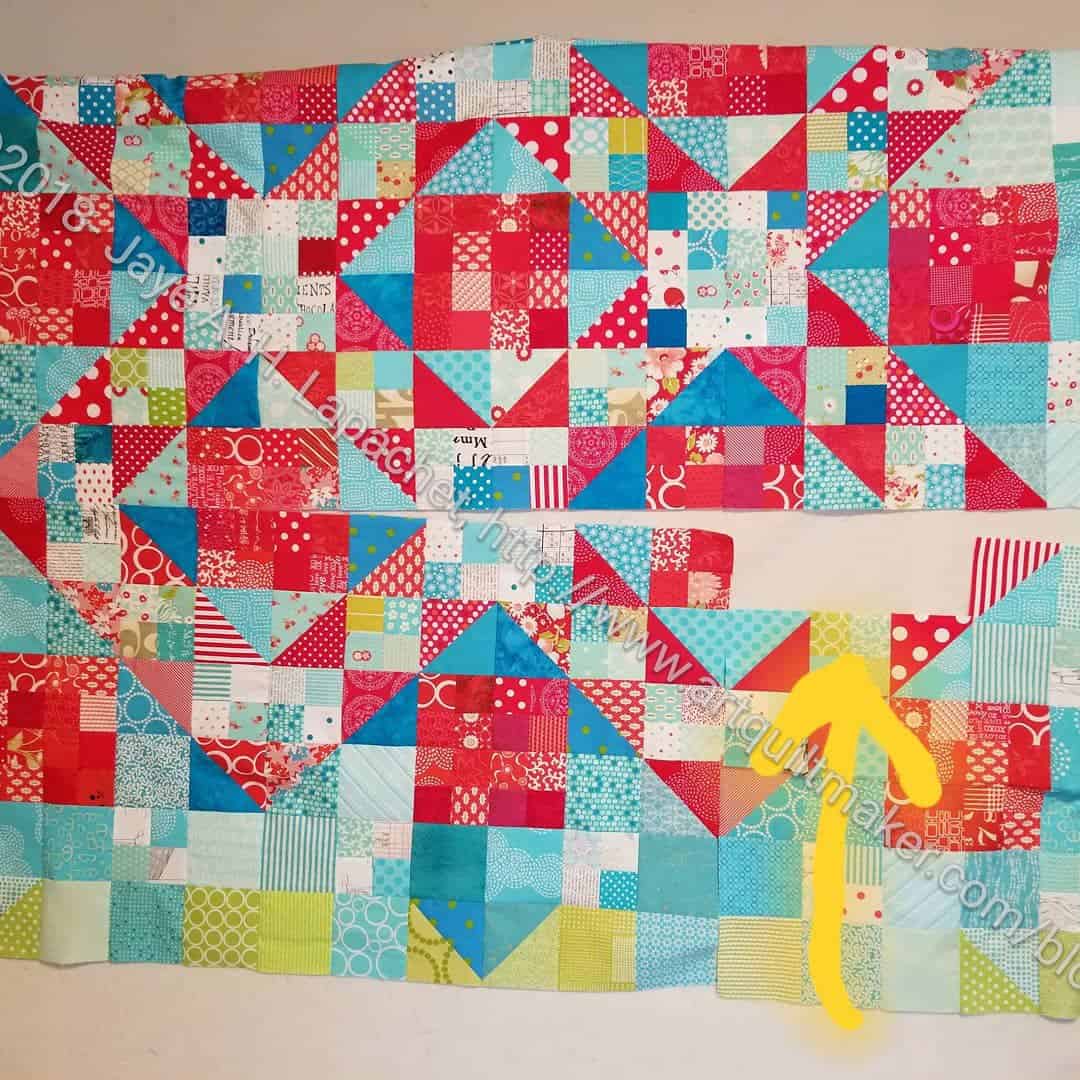
Stepping Stones n.2 - lower right hand corner - ripped
Stepping Stones n.2 – lower right hand corner – ripped

Yep. I ripped. I thought I would just take out one row from one block and sew it back in. I ended up taking part a good portion of the lower right hand corner. The photo with the arrow is before I ripped out some other pieces.

I am in the process of sewing the bottom back together and finishing the top.

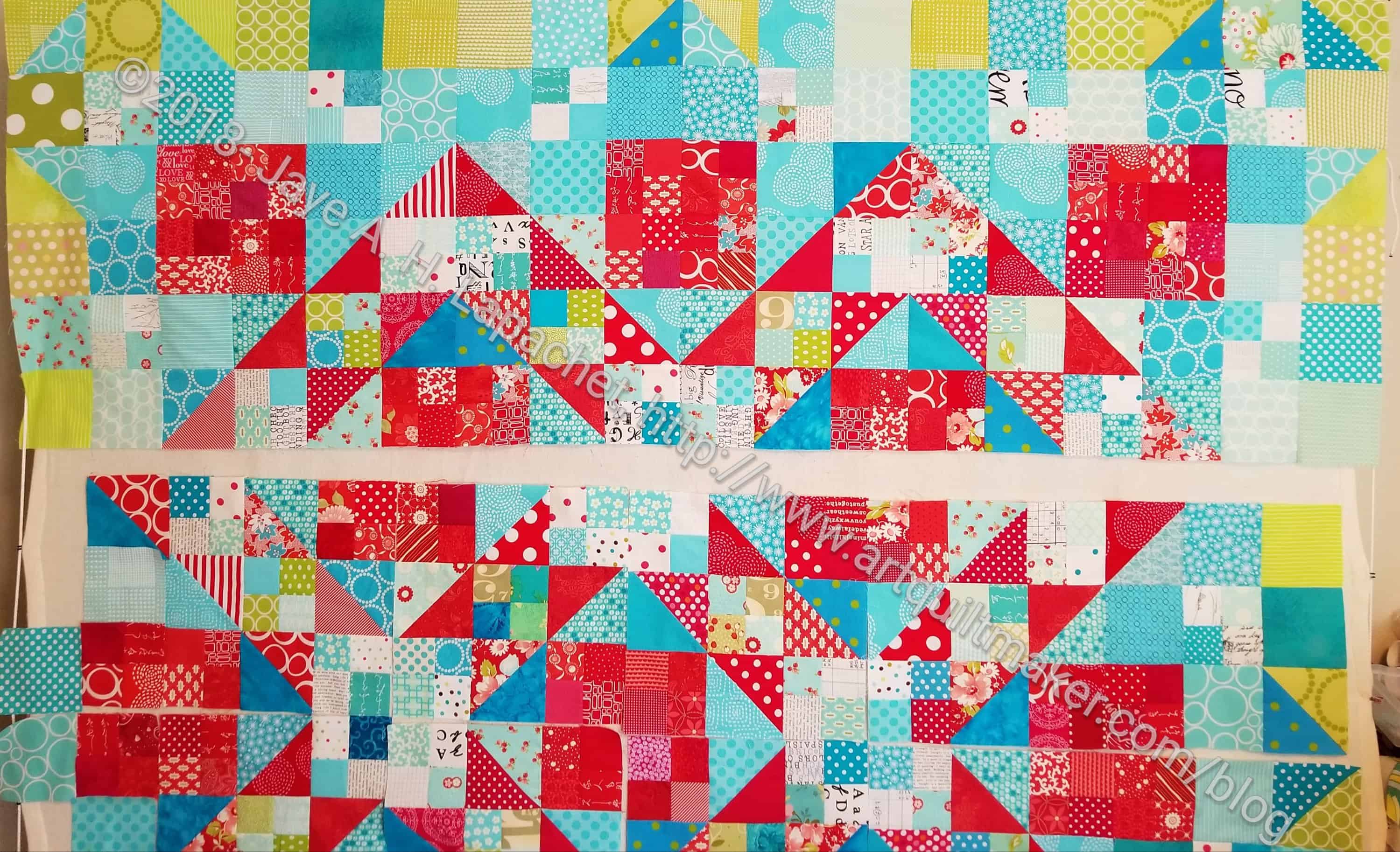
Stepping Stones n.2 – Top Quarter

Stepping Stones n.2 - top quarter
Stepping Stones n.2 – top quarter

I wouldn’t normally put a quilt together like this (you know I like chunking!), but it is too long to fit completely on my large design wall. I put the top quarter (ish??) together and and then flung it over the top so only the bottom couple of rows are showing. That allowed me to move everything up and work more on the middle. I hope also, to work on the bottom, but I will probably have to move it up again.

I am always amazed at how good quilt tops look sewing together. I really like the top part of this quilt and it took me so long to get to this point. Yes, I have a lot more cutting and a lot more sewing, but I am thrilled, finally, to be making some progress!

Stepping Stones n.2 is Back….Again

I have been in a sewing drought for the past few weeks. Not because I didn’t want to see but because I had no time.

Stepping Stones n.2 Border Block- side

On Saturday, in the late afternoon, I got back down to business. I came back from being out most of the day and started sewing on the Stepping Stones n.2 blocks.

I still haven’t cut all the pieces I need to finish the border blocks. I have been cutting and sewing alternately which allowed me to sew 2 blocks together before dinner and that small amount of progress really made me feel great

Pointillist Palette n.4 Revisited

Every month or so I have been going on and one about various projects on which I need to work. It occurred to me that some of the projects are so old that I should haul them out and take a new photo. I sighed hugely at the work involved in that little project, because some of them are well stored. I do think it is a good idea not just for you, but for me as well. I started with something accessible. The last time I looked at these pieces and parts was in 2014.

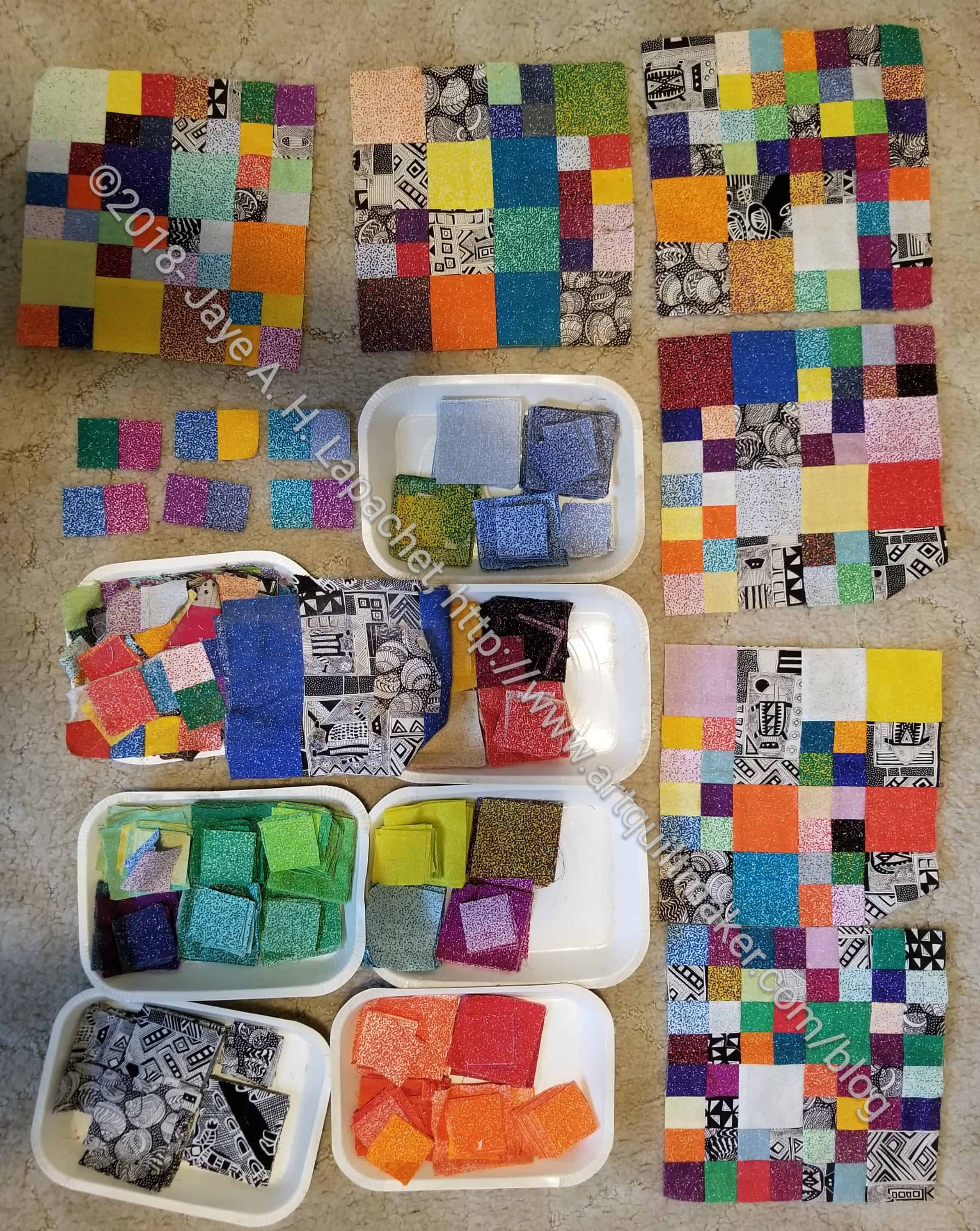
Pointillist Palette in process

The pieces and blocks for Pointillist Palette quilt n.4 (??) are in my sewing table, so I was able to pull them out (and shake them off a bit) fairly easily.

The reason I think this is a good exercise is that I can see what I have. As you can see I have 5 blocks already made and many squares cut.  I am sure I need at least twice as many blocks, but this is a good reminder of what I have.

Also, looking at the pieces and parts reminds me I need to look at what my original idea was for this quilt. Was it a Night theme or did I already do that.

See the other Pointillist Palette quilts in the Gallery.

Big Stitch Update

BAMaQG IRR May 2018
BAMaQG IRR May 2018

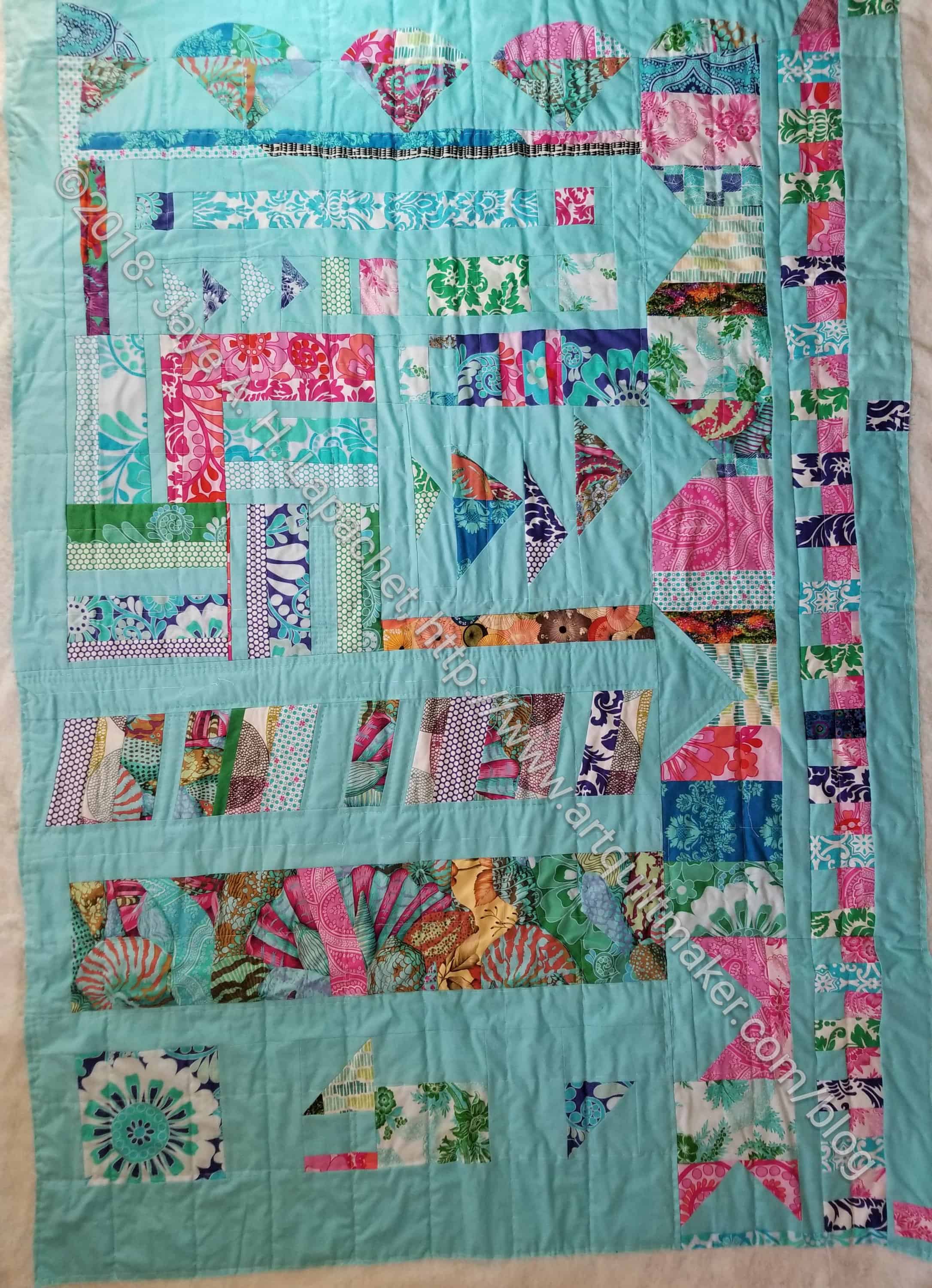
I made some progress on the BAMaQG IRR at Craft Night the other night. The image shows the whole piece. Obviously, you can’t see the hand stitching, but you can get an overall view of the piece.

I am not using a pattern or marking much when I Big Stitch. I am following the stitching lines and eyeballing where my stitches go. They are mostly straight lines, a quarter inch from seams.

I plan to use different threads, especially the Sue Spargo threads I have been buying, but at the moment I am using an Aurifil embroidery thread.

BAMaQG IRR May 2018 detail

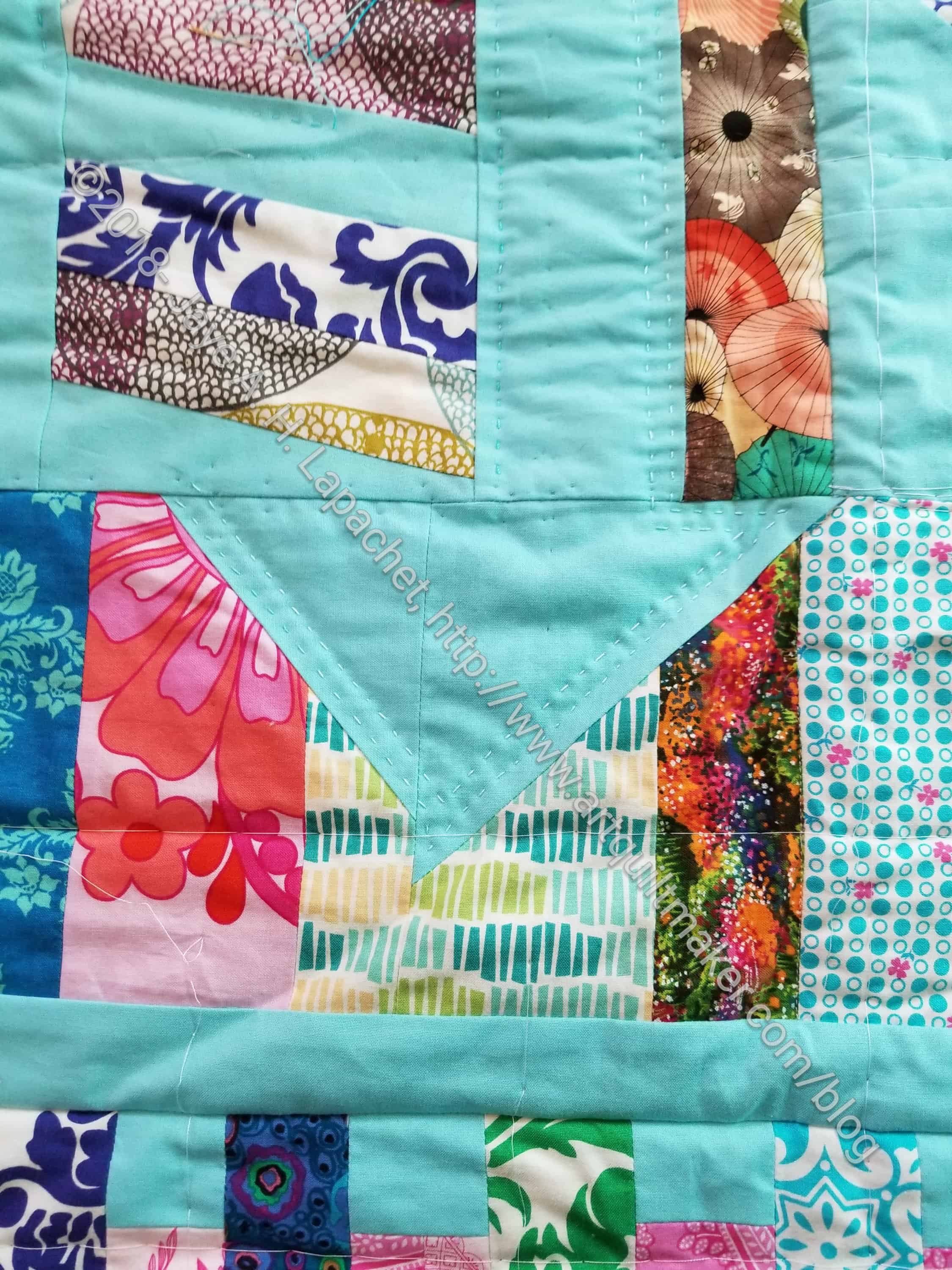
The Flying Geese made some arrow type designs.

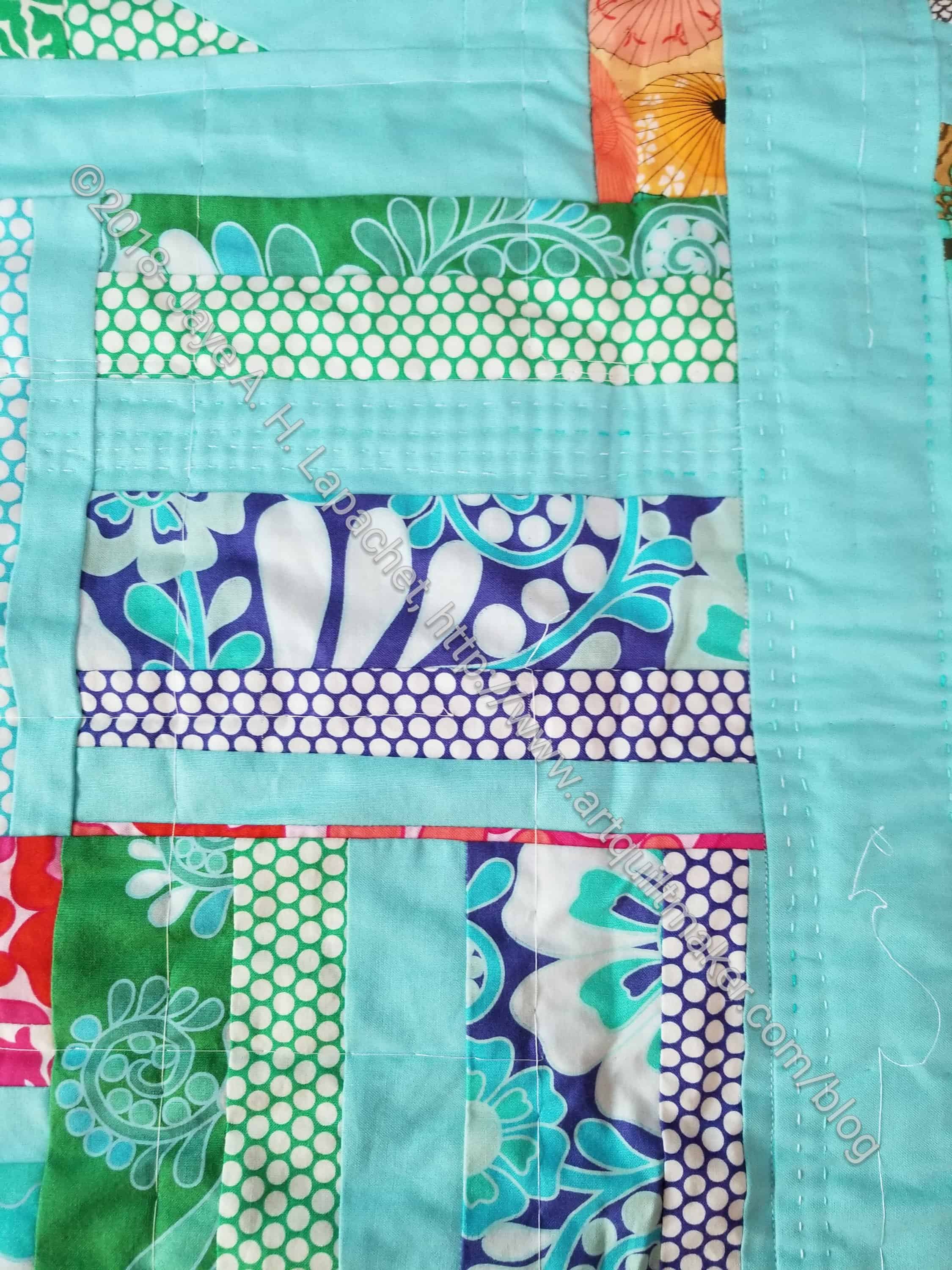
You can see, especially if you click on the image to make it larger, that I am doing multiple rows of outline stitching. I don’t want the piece to be stiff, so I probably won’t fill in the whole arrow, but I might do a few more lines. I’ll have to see.

BAMaQG IRR May 2018 back detail

I am pretty pleased with the way the back looks as well. Unlike 10 stitches to the inch hand quilting, the stitches on the back of a Big Stitched quilt are supposed to be smaller, according to Sarah Fielke. Mine are smaller and even, which is what I have been working to improve.

BAMaQG IRR May 2018 detail

If I were to put stitches in all the solid areas so there was no open space, the look would be somewhat like one section I already did. The section between the green dots and blue flowers has about 4 lines of stitching that covers the whole area.

Stepping Stones n.2 is Back

Stepping Stones n.2 - May 2018
Stepping Stones n.2 – May 2018

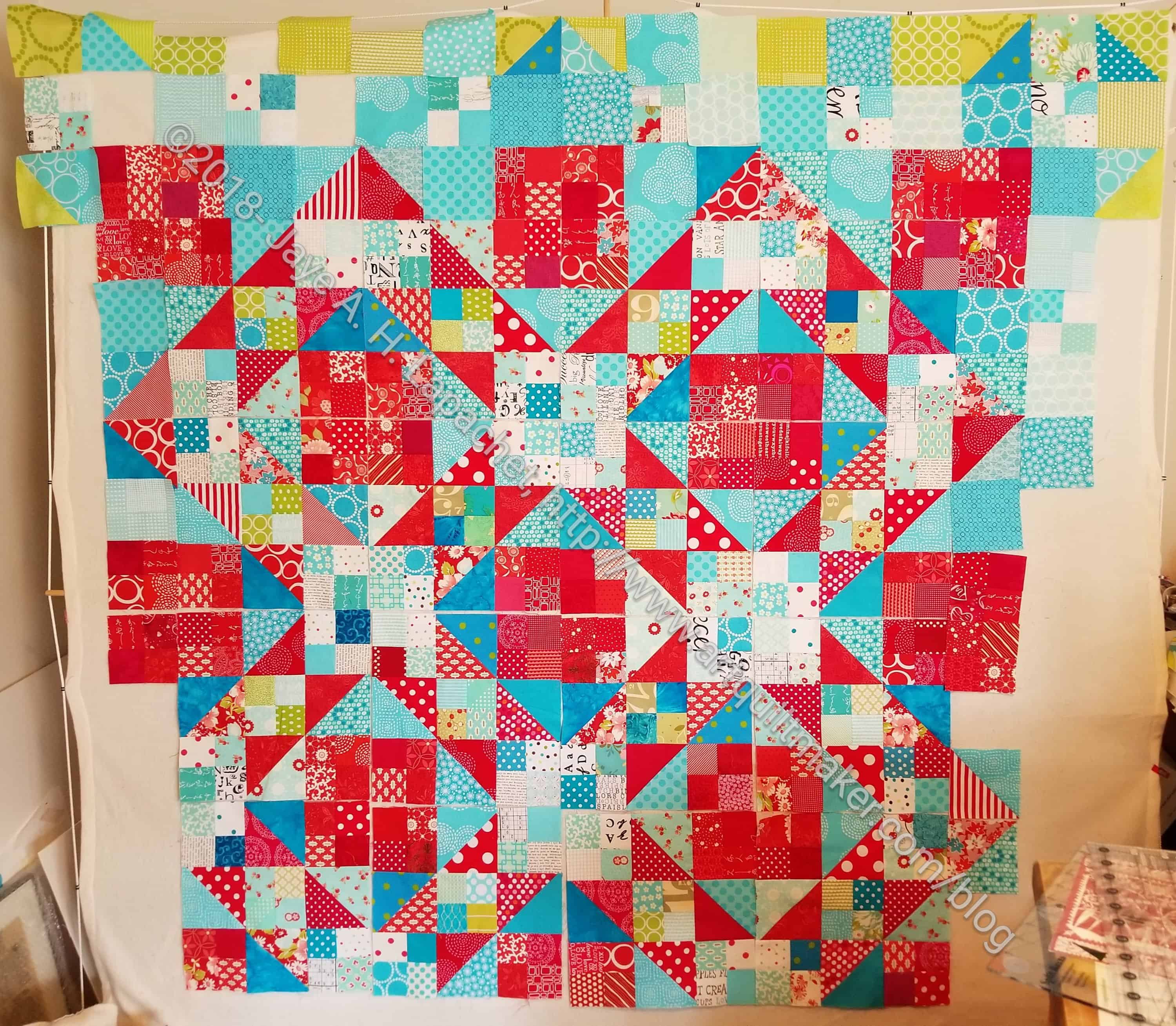
The Octagon Nine Patch is ready to go to Colleen and I put the Stepping Stones blocks back on the design wall. The last time I talked about this was only in March, so not an eternity ago. There is a lot of work to do on this piece: more cutting for the border. I am tempted to sew the upper patches into blocks and then sew the upper blocks together. I can’t really fit the whole piece on my design wall and that seems like a good solution. I am afraid I will end up with some blocks with all the same fabrics next to each other, however. I know it will look a lot better sewn together. It looks a lot more defined in the photo than it does in person.

I can’t decide if I am determined to get this done this time or not. I started this in about December of 2014, so it has been hanging around awhile. I should get it pieced and off to the quilter. I am not quite feeling the love. What a shame.

Octagon Nine Patch: Ready for Quilting

Octagon Nine Patch Top

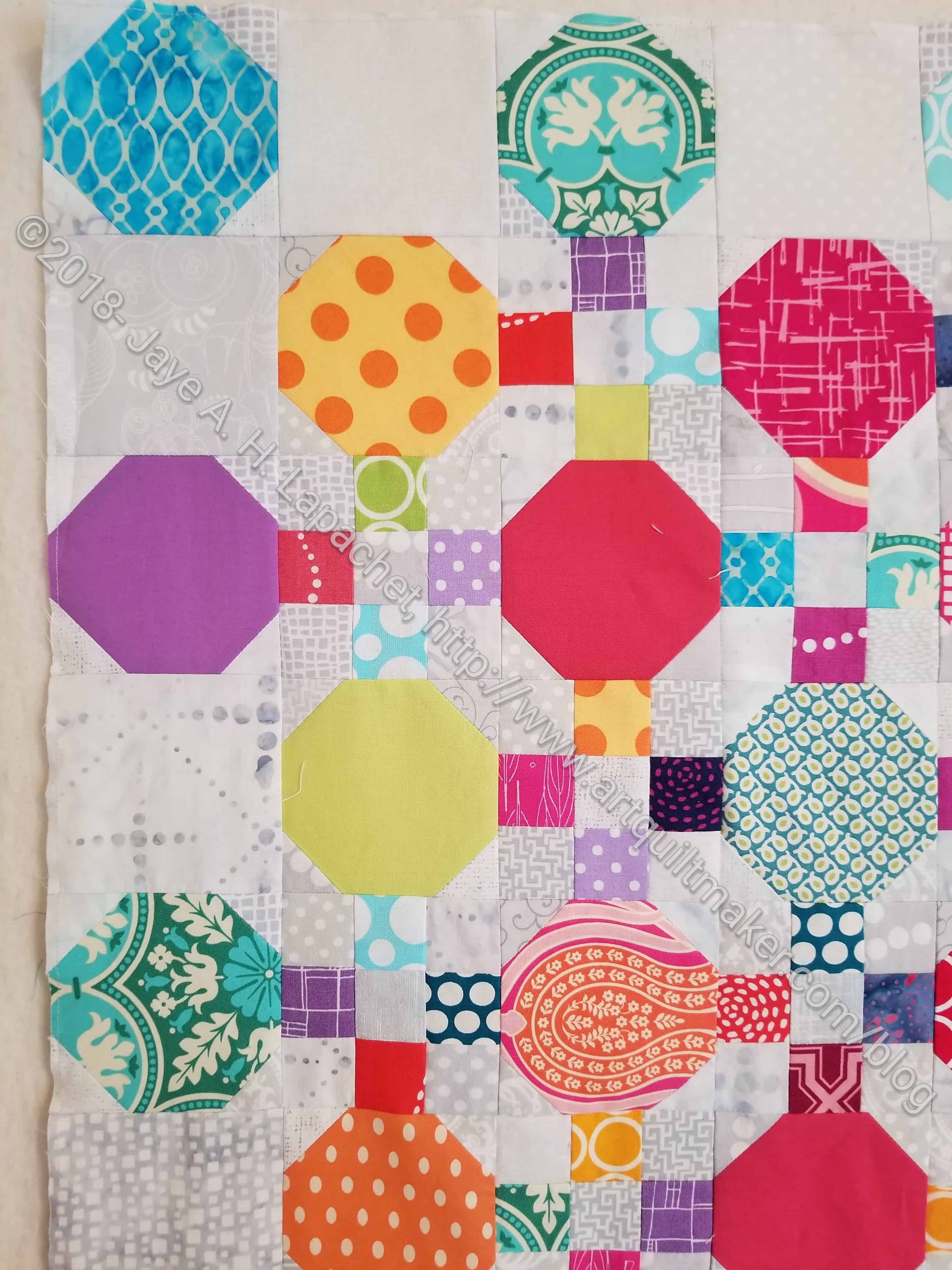
I finished the top and back over the weekend. I started this project in 2015 and am really glad to be done with it.

It is a nice quilt and I will send it off to friends after showing it around.

Octagon Nine Patch top detail

I made an effort to use cool colors on the border to pick up some of the cool colors in the Nine Patches. I think some of the darks in the border are too dark, but live and learn. This is not a pattern I will be repeating.

I tried to make the piece look like it was woven and I think, if you get close, you will see that impression. At least I hope you will. I couldn’t completely keep like colors away from each other, but I did my best. I am pleased with the way the whole thing came out.

Octagon Nine Patch back

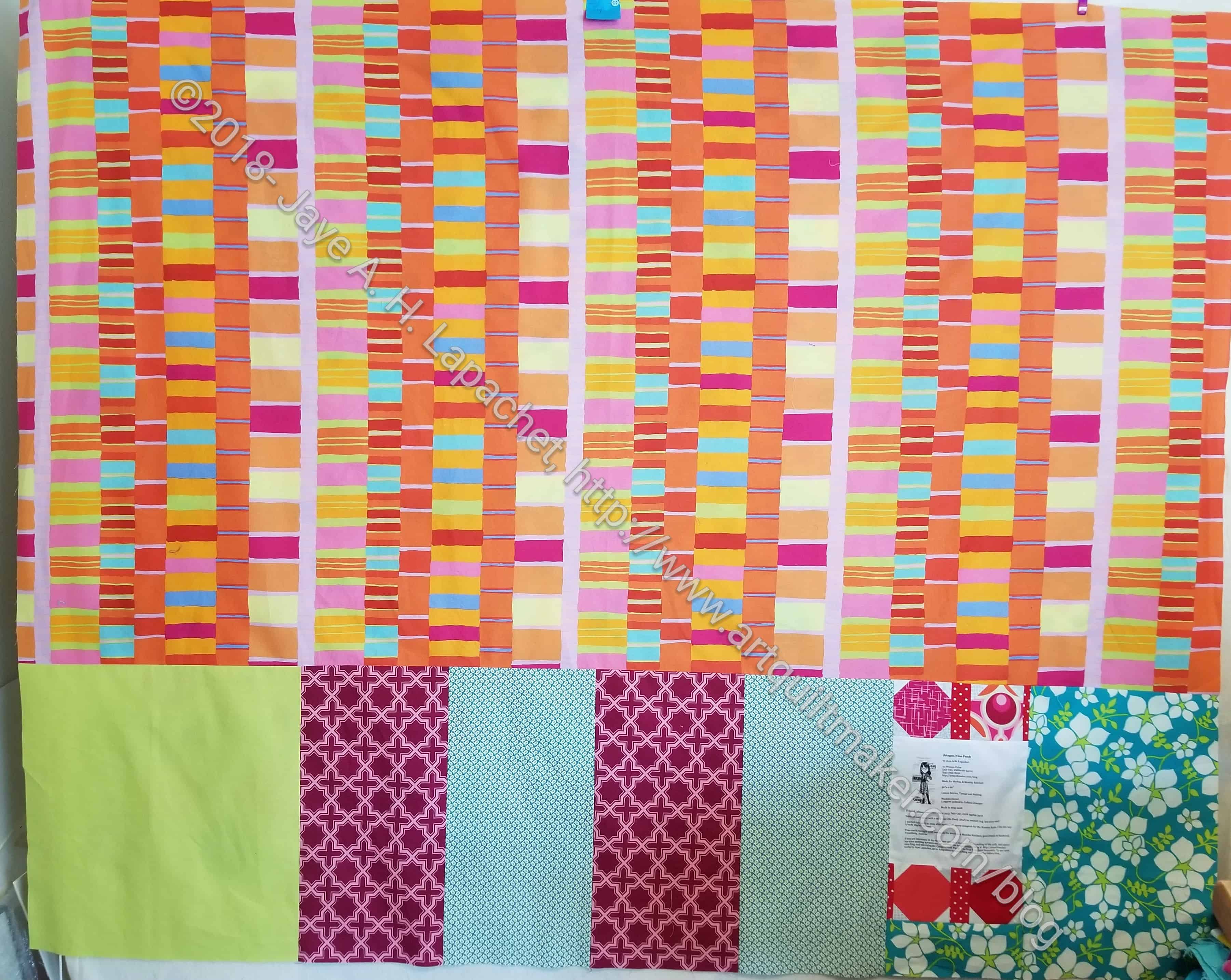
I was fortunate to find a piece of Kaffe in my backing pile that fit the quilt widthwise. I only had to make a strip to cover the rest of the vertical. I was thrilled. Not only was the Kaffe the perfect size, but the colors make it look like it was made for this quilt. Yay!

Vintage Tuesday: Artbabies

Artbabies
Artbabies

I was thinking about Marrimeko fabric the other day and this quilt came to mind.

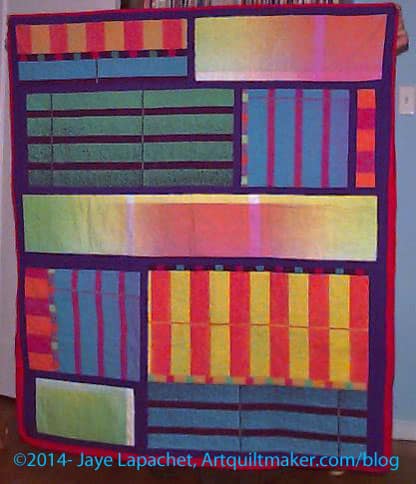
This quilt is pieced, but the smaller sections are not pieced. They are panels. They were already cut when I bought them at the Crate & Barrel outlet, so I sewed them together to make a quilt for the baby I was expecting. Machine quilt was something I was building as a skill with the new machine I had bought the year before so I decided to machine quilt it. Basting has always been a trial, so I thought I was being clever when I used Wonder Under to baste the quilt. It stayed together while I quilted it, but the quilt is stiff as a board, practically. We never really used it for a baby quilt. We did use it as a playmat. I still like it and could put a sleeve on it and hang it up.

This quilt was probably one of the last quilts I made until the YM was about 6 months, maybe a year old.

FOTY 2018 – April Progress

FOTY 2018 -April
FOTY 2018 -April

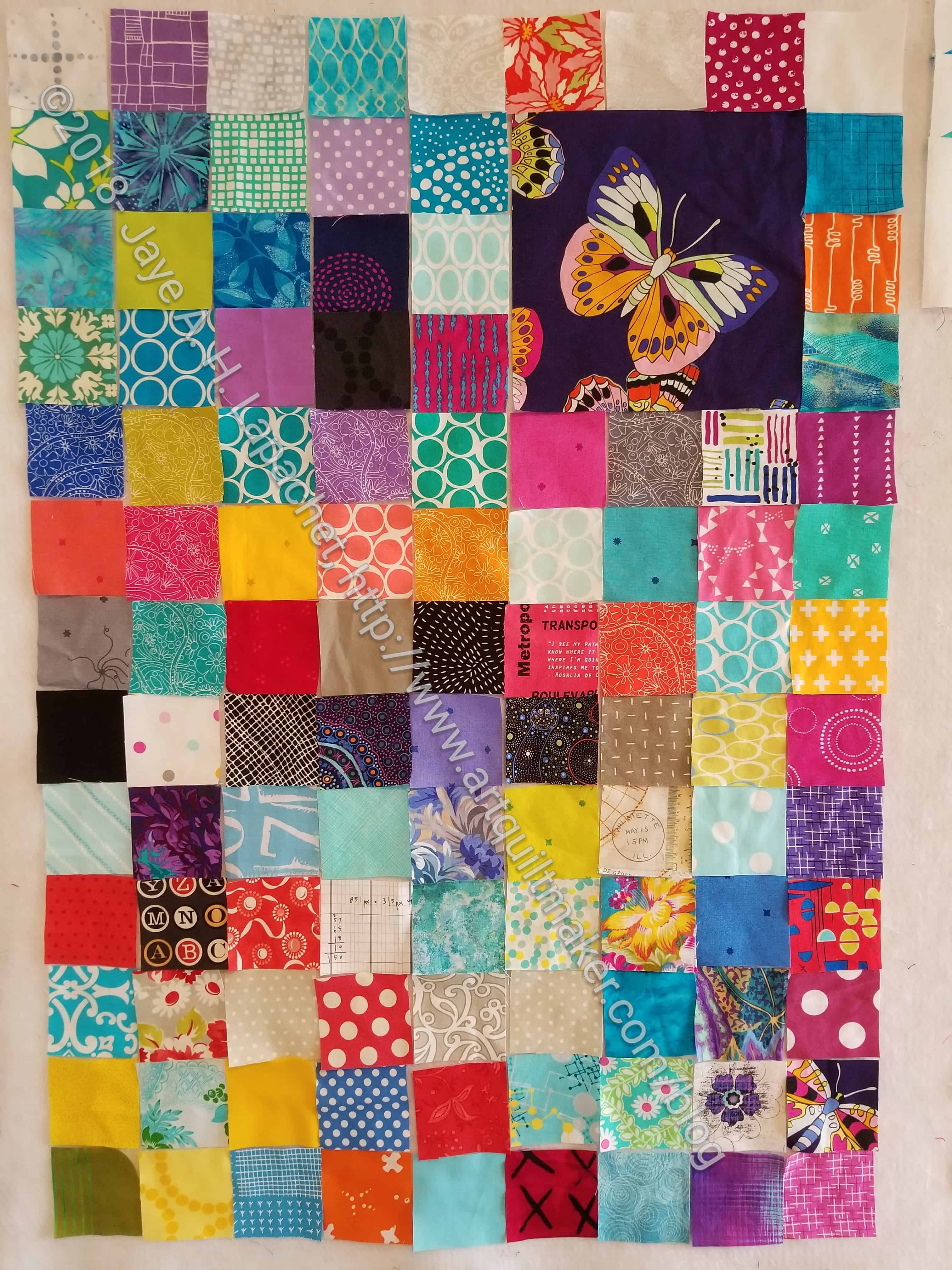
The last time I wrote about this project was March. I have actually made a lot of progress on this quilt, though it might not seem like it. The shape and size are small for this year, so I will really need to step up my cutting game.

Time has been short recently due to a lot of family events, but I have had time to press and cut shapes from my new fabrics. This means lots of new squares for FOTY 2018. In this group you will also see lots of familiar fabrics. Fabrics show up from the projects on which I have been working recently.

There is also something a little different this time: the butterfly. After I washed the fabric, I wrote myself a note to fussy cut one of the butterflies. I did, but I am not sure it will end up as is in the final project. I don’t want one fabric to dominate. If I buy (or use some already in the fabric closet) some other fabrics with fussy cuttable designs, then I might keep it. For now, the opportunity is there.

Weekend Progress- Octagon 9 Patch

Octagon 9 Patch - April Progress
Octagon 9 Patch – April Progress

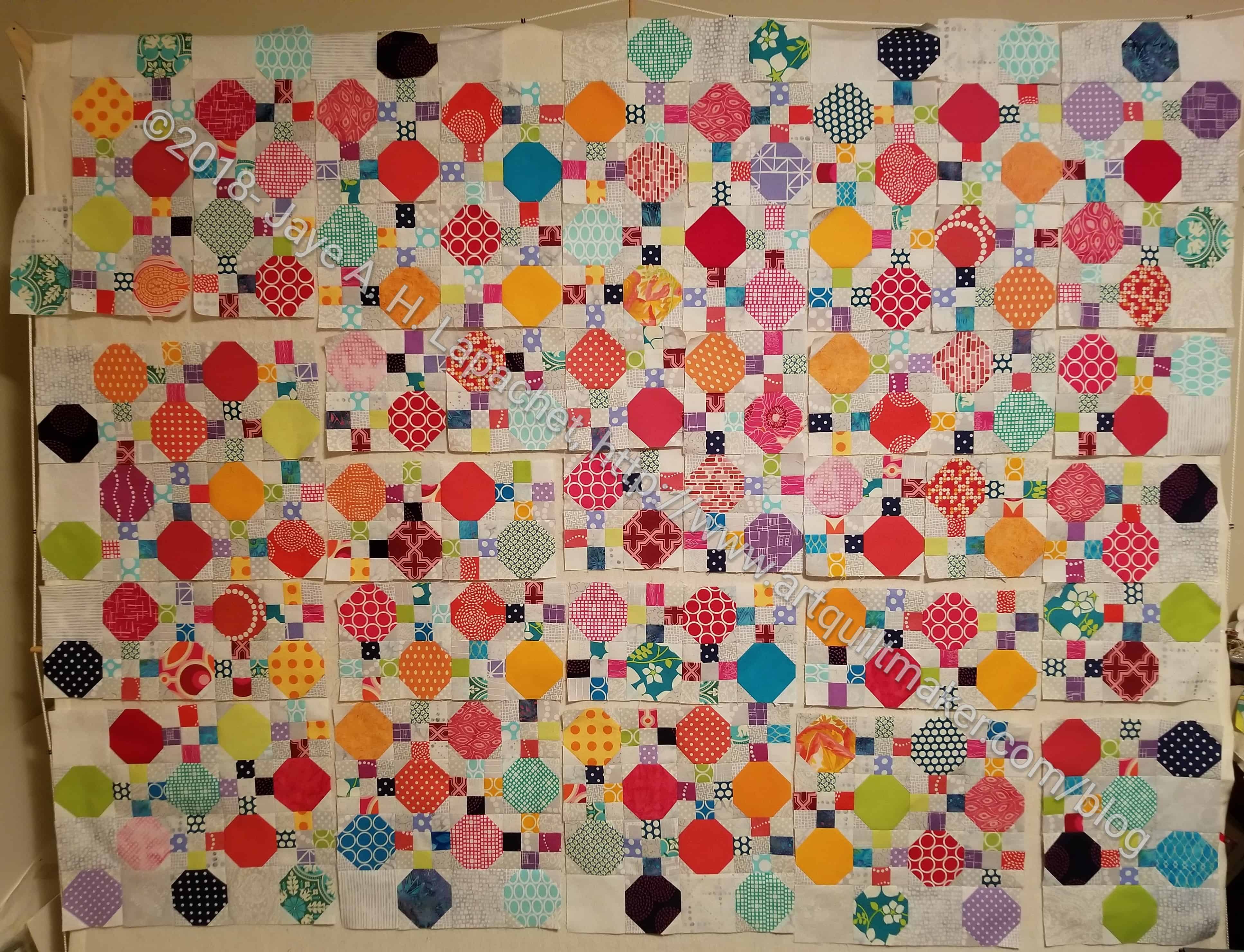
I worked on the Octagon Nine Patch quite a bit over the weekend, despite the several hours I spent helping clear out my MIL’s house. I am pleased with my progress.

I didn’t want to do a complicated border, but the quilt demanded something more than a plain border and self-bordering is way better than sewing on a plain border any day! This means I am creating more Snowball units with the intention of “finishing off” the Nine Patches. In between the border snowball units I will put squares of grey. I am hoping it will look more woven this way, but I don’t know. You can see some of it coming together in the lower right hand corner.