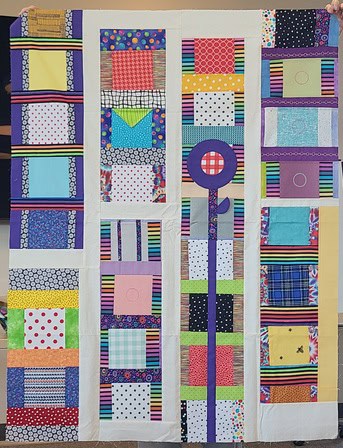
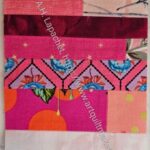
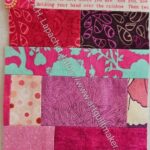
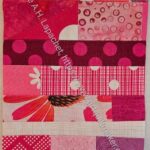
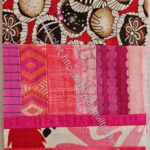
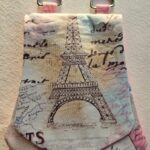
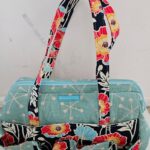
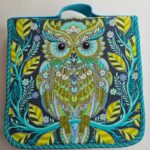
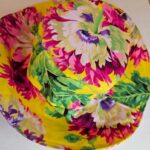
I missed the unveiling of Creative Play #2 at the meeting last week. I am very sorry I did, because it has turned out so well.
It is so great, especially after still being in pieces the last time I reported on it.
I truly had no expectations when I started off the project. I really just wanted to inject some creativity into the guild and have some fun. This piece is beyond what I could have imagined.
I hope we can enter this in the Fair as a group project.
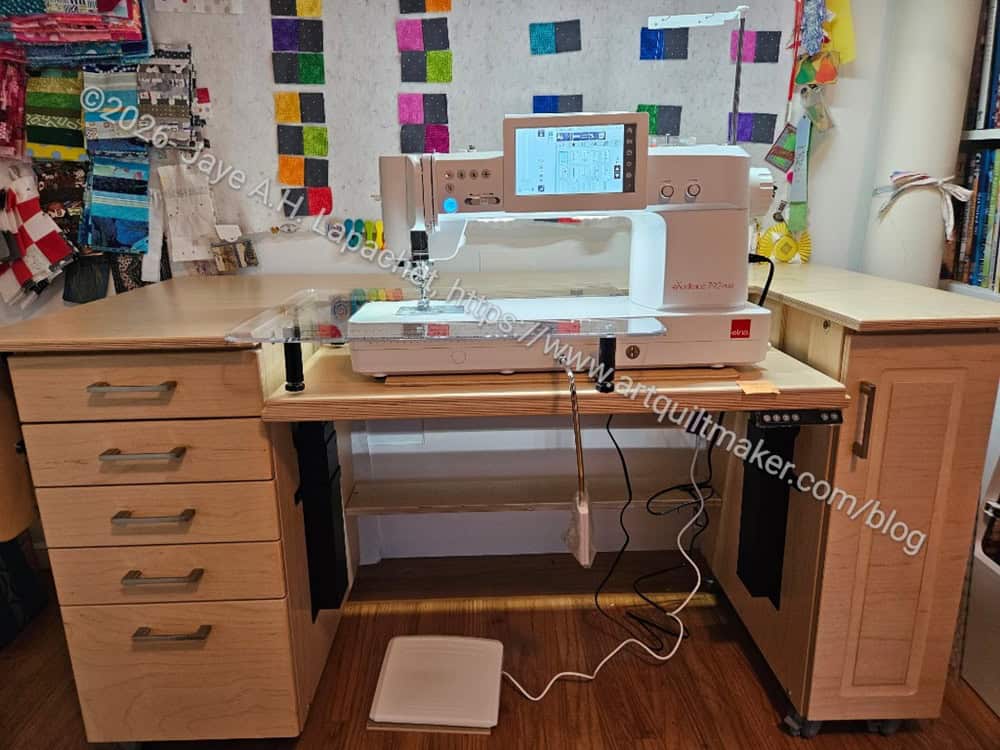
It’s been a trial, but the sewing table is finally together!
I am thrilled. It took two of us a couple of hours to get it to this state. This was in addition to the hours I spent the other day working on it. Even though I am slow, I thought I could do it myself. I was wrong. Some of the steps need four hands. DH actually offered to help and I slipped into the role of assistant, gladly.
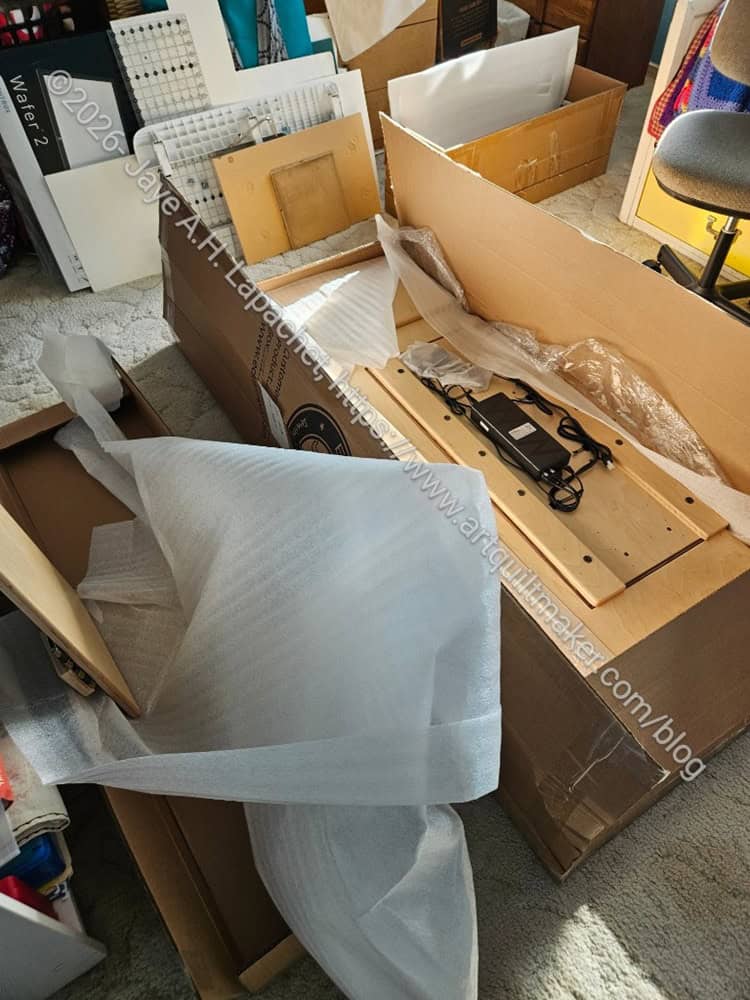
Sewing table mess
From the cabinets being assembled, I went and made a mess opening boxes to try and find the brace for the bottom. For awhile, it was very hard to walk into the YM’s bedroom.
I think the labeling could have been better. It seemed a little scattershot to me. It ended up working out eventually. We added the brace and then later took it out and turned it over so the cord hole was in the right place. I never used the one in my old sewing table and am determined to use every feature on this table.
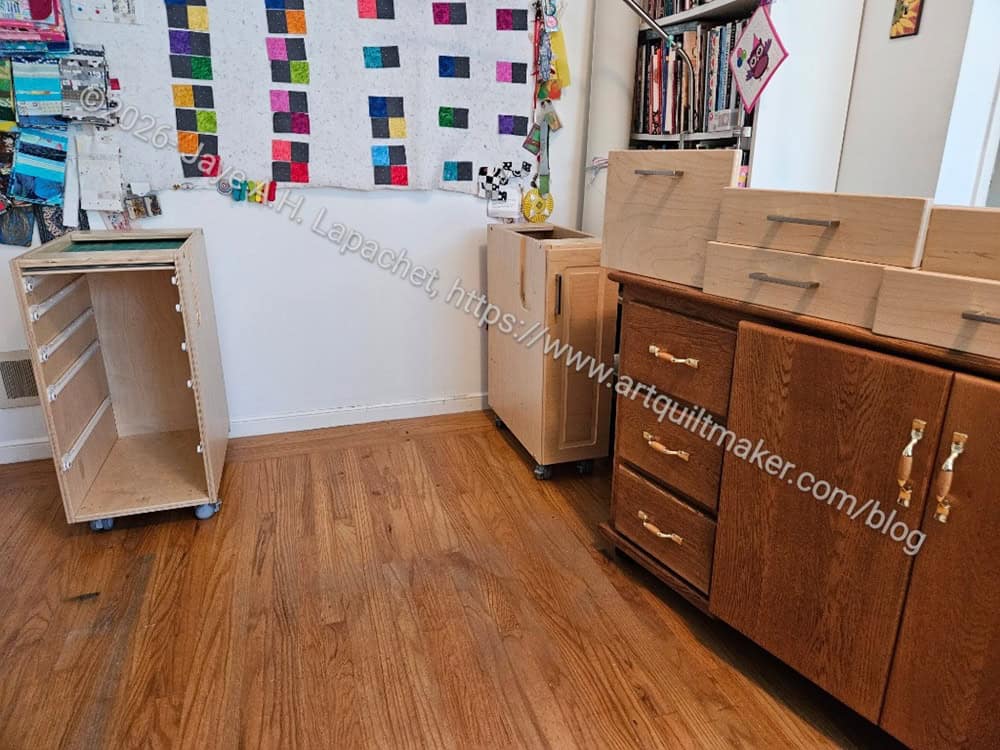
Sewing table cabinets in situ
I brought the cabinets upstairs so I could add the brace. That was a difficult operation with one person.
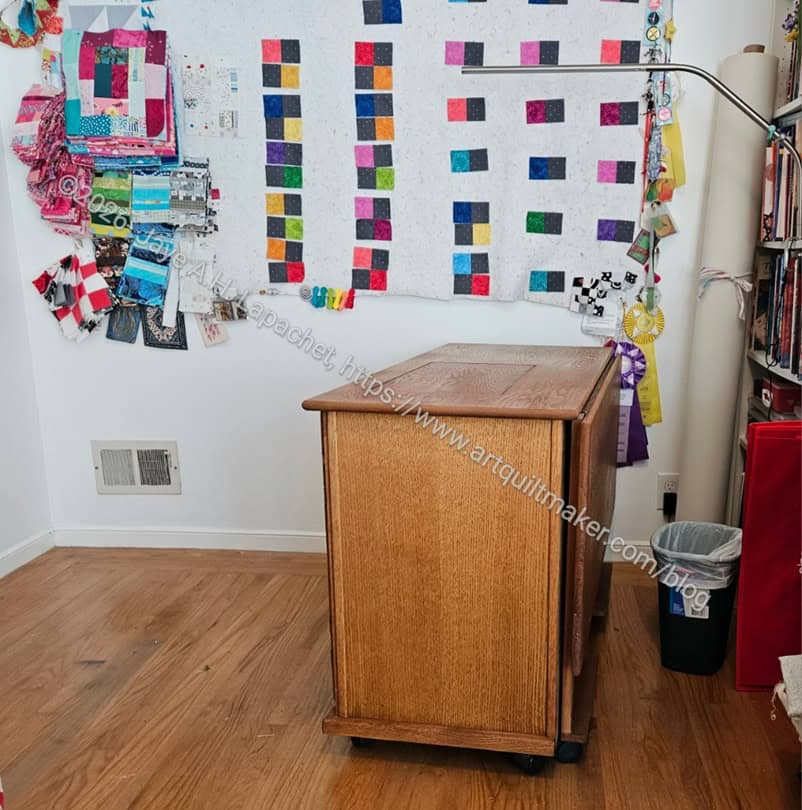
I was pleased to find that I measured correctly and the table fits well between the heating vent and the outlet. WHEW!!!
Sewing table tall cabinet
Once all the pieces were screwed together, I was able to start loading it up. I gain an extra cabinet and several drawers in addition to the space required for the larger machine.
I haven’t filled the drawers yet as I was pretty exhausted after running up and down the stairs 300 times to get parts, tools and keep the laundry cycling. That will be a project for tomorrow and another opportunity to clear out stuff I don’t need.
The worst part of this was not being able to sew. I felt stressed at certain points and it would have been great to sit down at the machine and put some blocks together. I thought about working on some hand work, but it didn’t really happen to any great extent.
I have visited Roxanne’s Wish and a Dream a few times. The last time I remember was in 2024. The trip I recorded before that was in 2013. The shop looks essentially the same as it did in these two posts. I was also pleased to see that it looks just as fresh, not tired and in need of attention. Check out the photos on the two posts linked above to see all the fabulous color. Here I am going to talk about the things I noticed.
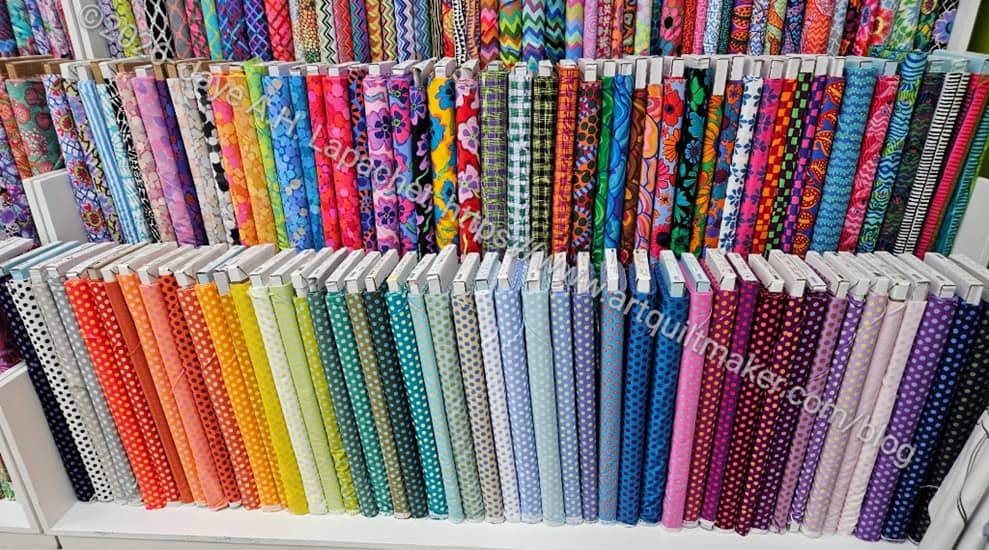
Roxanne’s – Kaffe dots
They still have A LOT of Kaffe. I had to carefully scrutinize the offerings to see if there was anything I wanted. I noticed, once again, that the selection of the Kaffe dots was still excellent. I thought about some of the grey dots for backgrounds, but decided I had enough grey backgrounds for the moment.
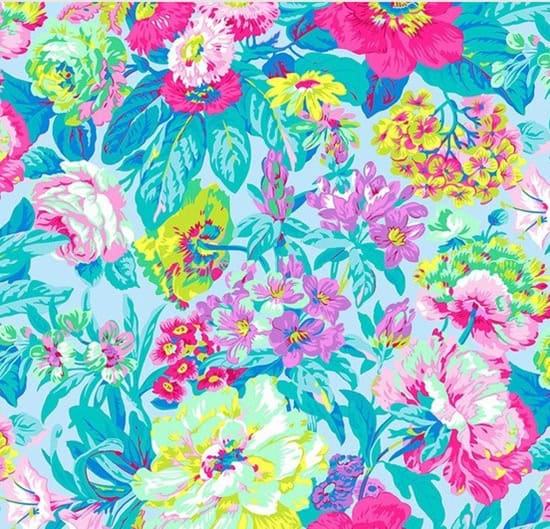
Voluptuous by Philip Jacobs
I didn’t see the Voluptuous print I used as the exterior for the Urban Sea Backpack. I was talking with the lady cutting my fabric and she was saying she had never see that color way on a Philip Jacobs print when I saw the Kaffe/Morris prints. I didn’t recognize them, but they were the right colors, so I went to look and then I saw Voluptuous. It turned out to be a wide back with a sheen or glaze. I decided to buy some anyway. It felt ok and I might want to make another bag with it. It isn’t a design I have seen in a lot of places, which I find interesting.
Martha Negley Golden Harvest
I saw some of the Martha Negley Golden Harvest prints. I like the one with the grapes, as I said, but I decided not to buy. The prices were on the high side at Roxanne’s and that print has colors I mostly don’t use: autumn golds, browns and oranges. There are enough pinks and purples to make me think twice, but I passed. Maybe they will recolor it and I will buy it later.
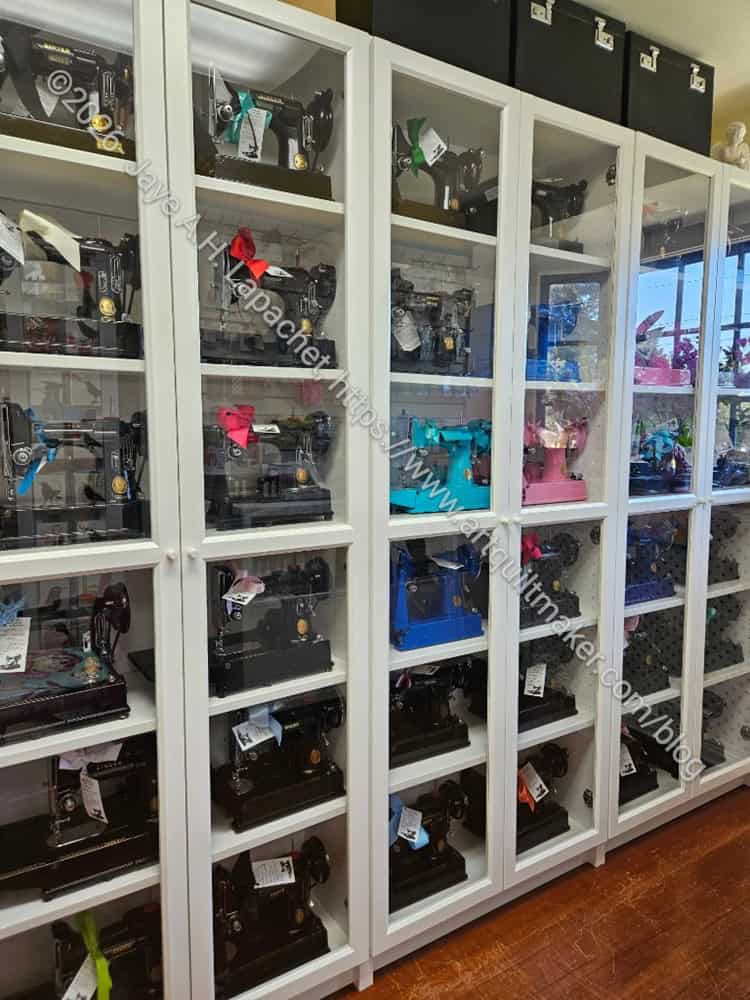
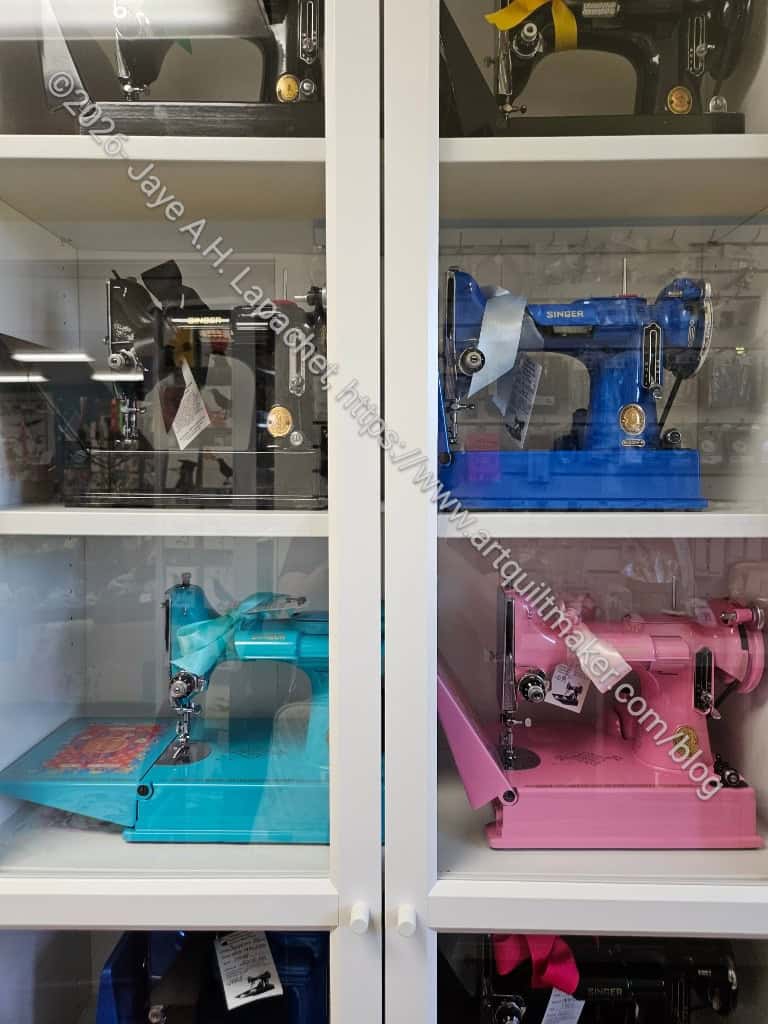
Roxanne’s – Featherweight inventory
I wandered around the shop to see what had changed. I almost bought the YM some crochet stuff, but passed. I am not sure what he has and what he wants. I wandered into the Featherweight room and was blown away by the number of Featherweights they have.
This is not all. I saw some in cases scattered around the shop as well. They must scour the area for them to have so many.
Roxanne’s – Featherweight inventory-detail
Most are around $1200! WOW! I was excited about some of the colors a few had been painted. The turquoise and the pink are fantastic. I love the turquoise best.
No, I did not buy. I do not want to collect sewing machines. It is fun to think about having a big studio (and unlimited money) where I could have multiple machines set up.
Roxanne’s – classroom decor
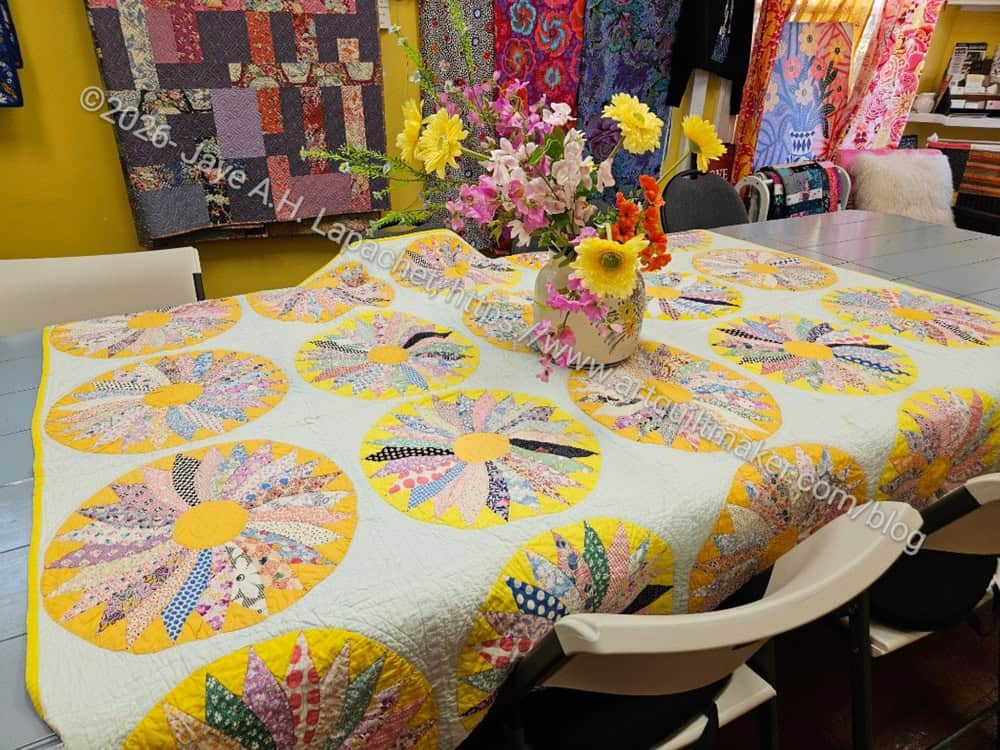
The classroom has an amazing quilt on the table. It has those circle blocks. I need to make a quilt with circle blocks sometime!
The flowers add to the look and feel of the room. This room also had a wall ‘wallpapered’ in some Kaffe fabric. I showed this wall before.
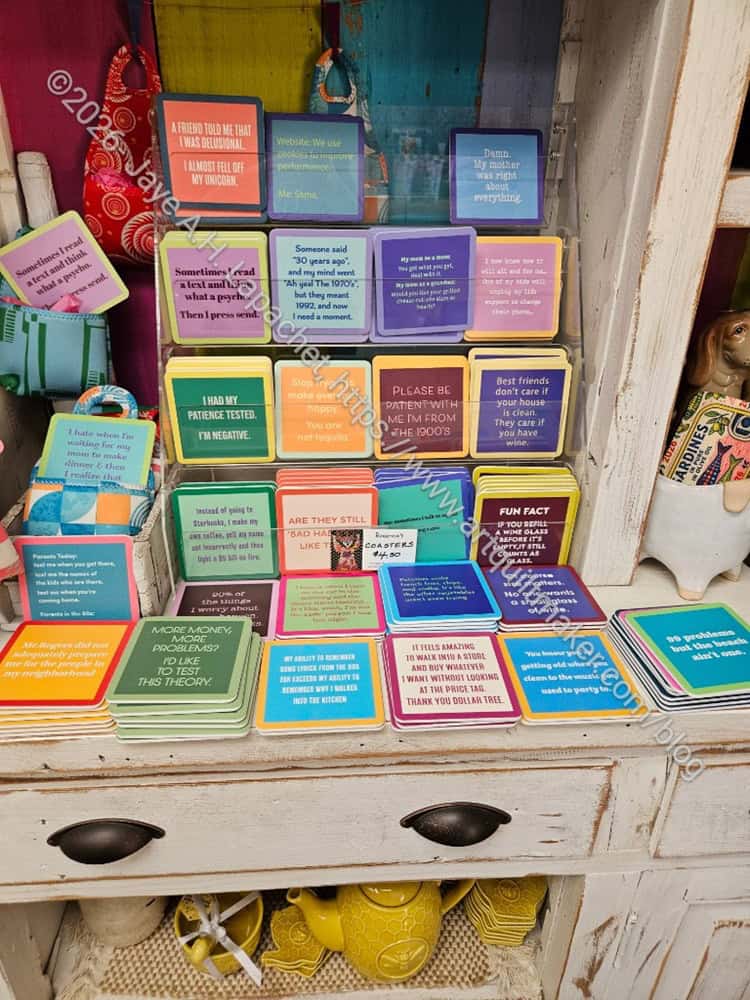
Roxanne’s – coastersRoxanne’s – coasters
Because Carpenteria is a tourist town, the shop had a lot of items non-quiltmakers could buy as souvenirs. There was a display of coasters with VERY pithy sayings on them.
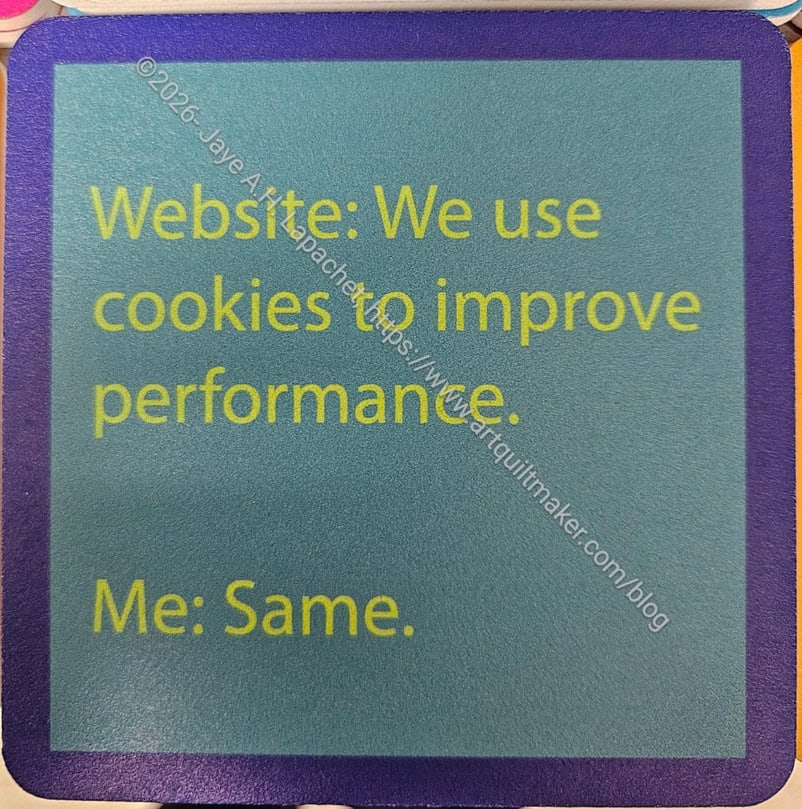
I made a batch of chocolate chip cookies last week, so when I saw the website/cookies coaster, I couldn’t help but smile.
Roxanne’s – coaster
Roxanne’s – coaster
I sent the photo of the coaster on the left to my mom. We had a good laugh. There were so many with great sayings.
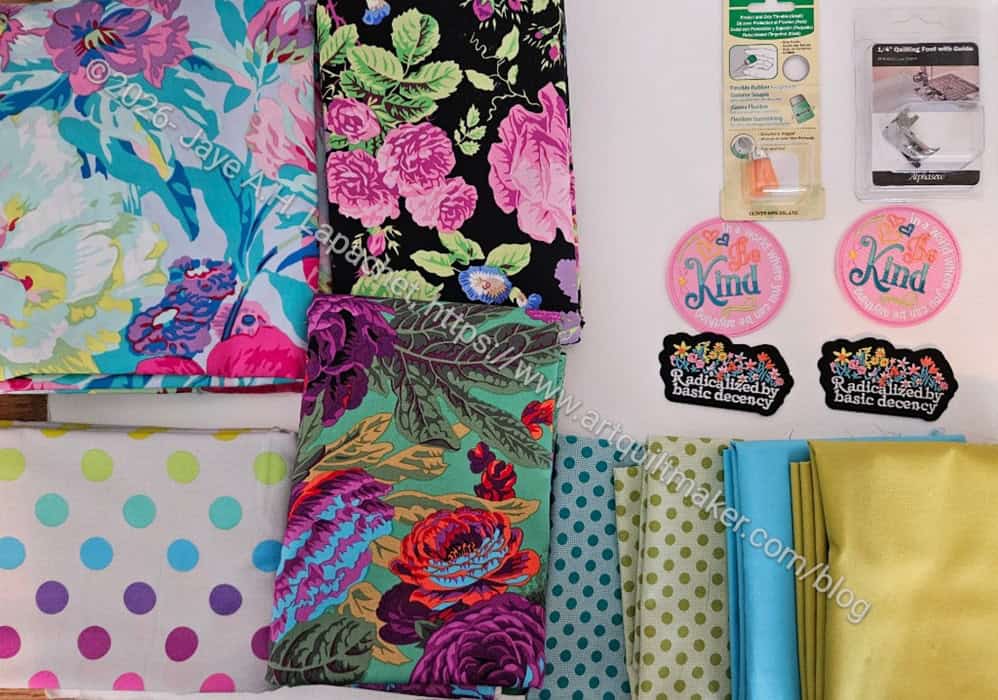
Roxanne’s purchases 2026
I ended up buying more of the Disco Poms in ‘Whisper’ (grey) from Tula. I used most of what I had for the Urban Sea Backpack, but I like the Voluptuous/ Disco Poms combination so much that I want to do something with the combination again.
I also replenished some Tilde fabrics for the Sad Quilt. I wasn’t planning on buying them so I didn’t do an inventory of the ones I need more of. However, I know I can use the green dots. I am also pretty sure I have fun out of the solid turquoise. I hope it goes with the turquoise I used in the other blocks.
The shop had some great patches as well. I bought some for gifts.
As I have said before, this store is definitely worth a visit.
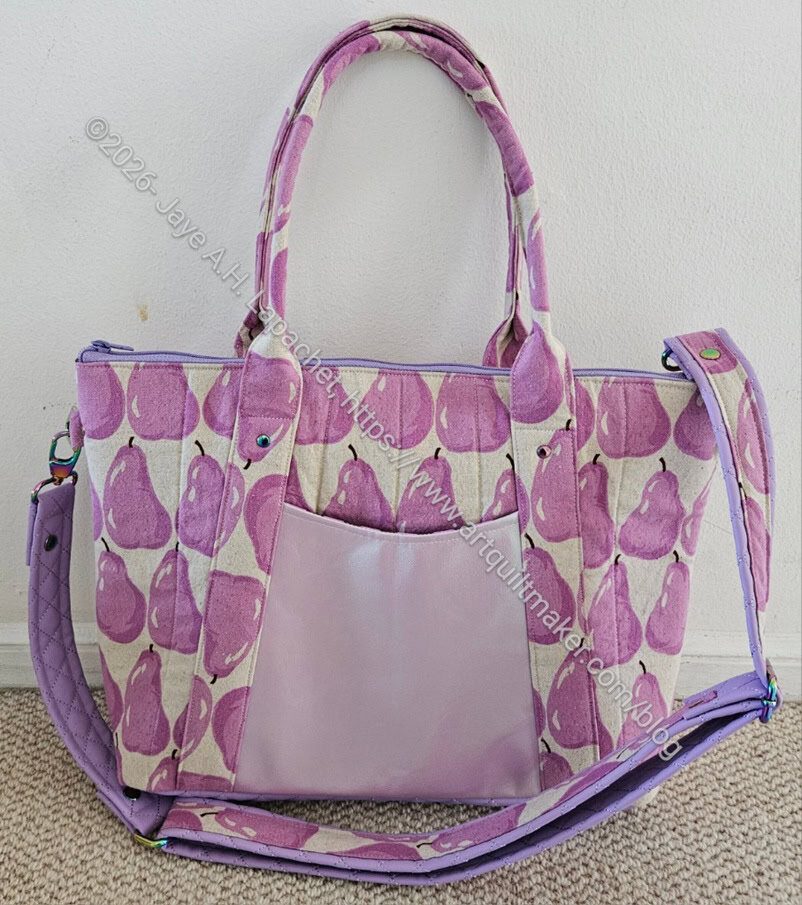
The Lavender Oxbow is done and I’ll be sending it off soon.
I like this pattern and found that it was a lot easier to manage the second time. I’d like to make the larger size, but that is a project for another day.
I think it will be useful for the recipient. I find the bag useful for my guild materials.
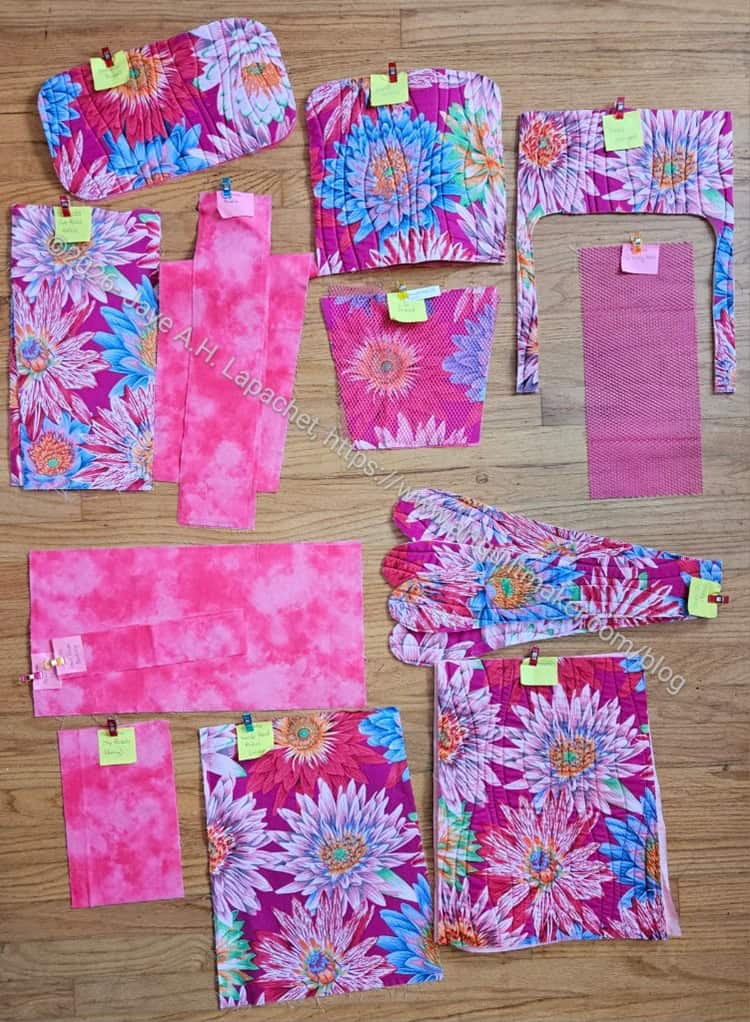
I think the colors/fabrics are great. I want to use the glittery pocket fabric for a Pandora Allure bag. That isn’t my next bag, but it is coming up.
The layers were a challenge. My new machine even balked at some of them. Turning the bag was also a challenge. I couldn’t press everything, because of the various vinyl substrates.
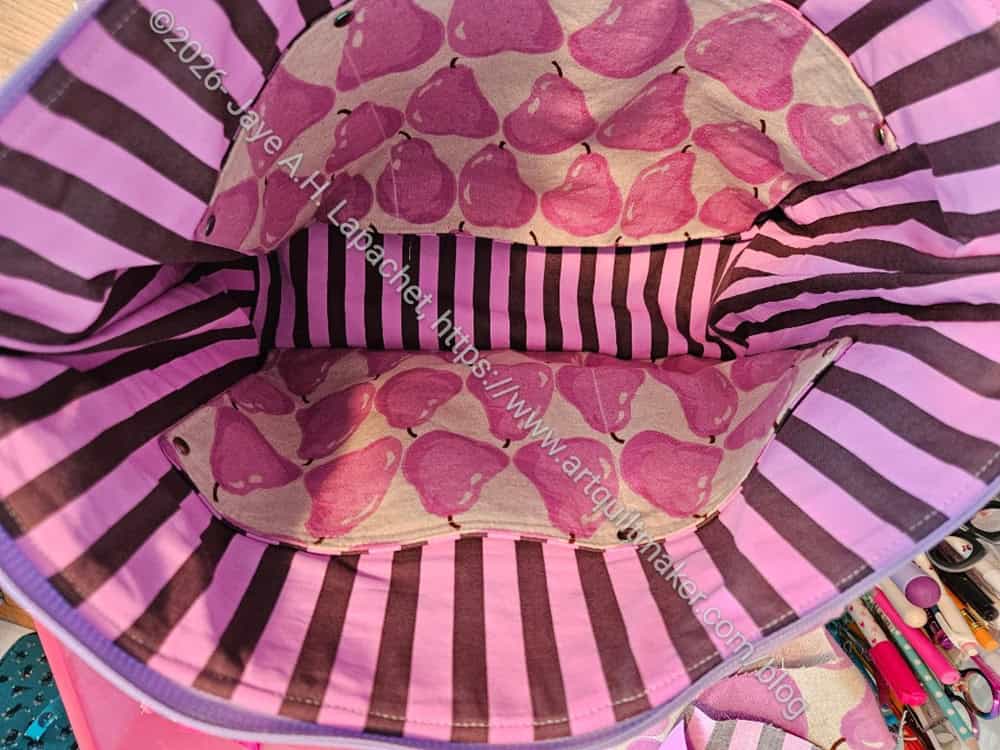
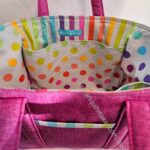
Finished: Lavender Oxbow -inside
I was super happy when the bag wasn’t quite finished, but I am less happy with it now. The lining, despite using a smaller (I thought much smaller) seam allowance is still saggy-baggy.
As mentioned, I used some of the Sewfisive stick-on interfacing to add to the reinforced bottom and I think it was too much. I think the lavender quilted bottom would have probably been fine on its own.
I am trying to decide whether I’ll be happier if I take the bag apart and redo some sections before I gift it. I have to think about it.
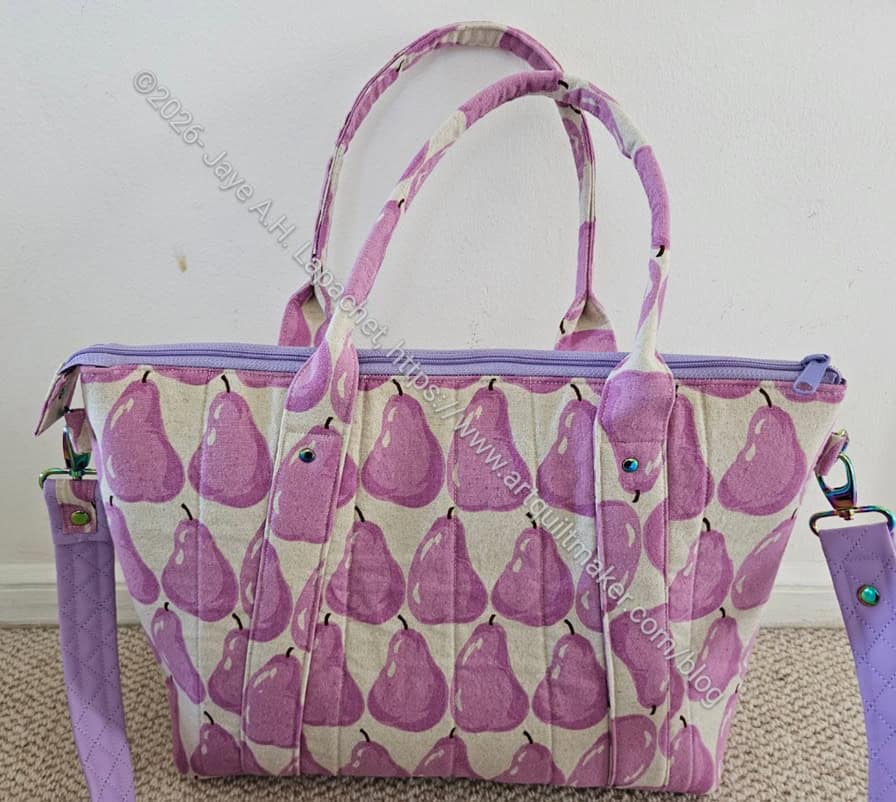
Finished: Lavender Oxbow – back
I can’t decide whether there is some reason not to add a pocket on the other side/back of the bag. It would make the directions a little challenging as Anna Graham refers to the panel with the pocket as the ‘front’.
I am in a Catch-22 sort of situation. I can’t sew because my work room has been taken apart to install the new sewing table. However, I feel down that my workroom is torn apart and can’t seem to get it together enough to put the table together.
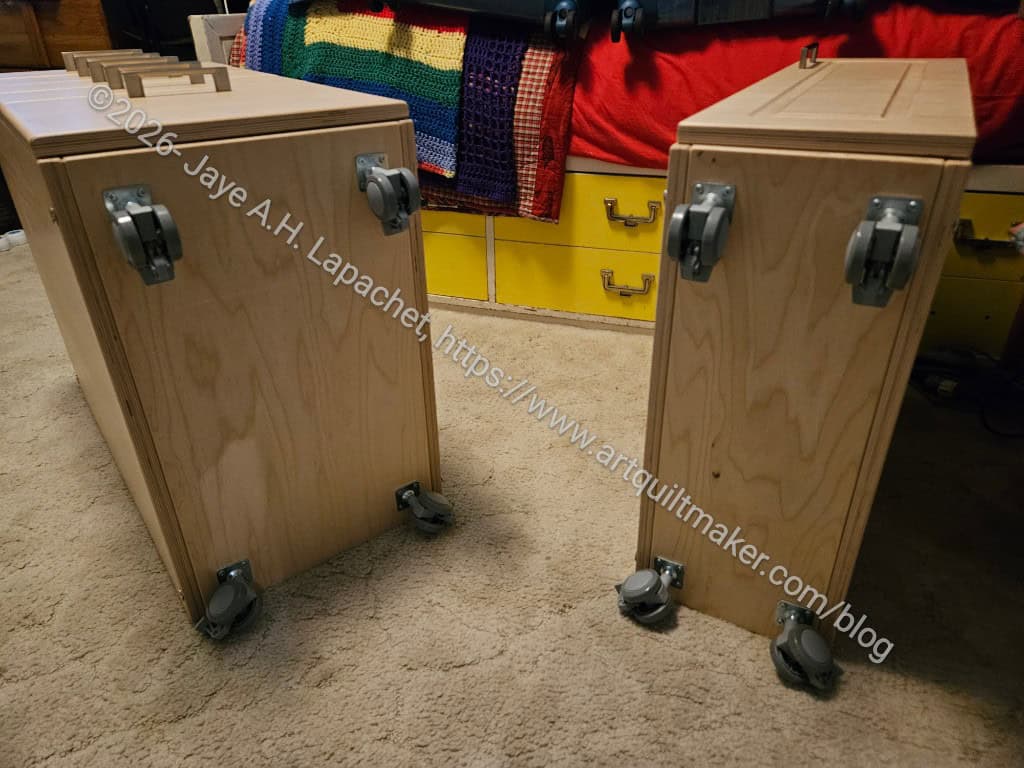
Casters added
I have done some work. First, I screwed the casters to the bottom of the cabinets.
This was not an easy task as the cabinets are heavy and hard to maneuver.
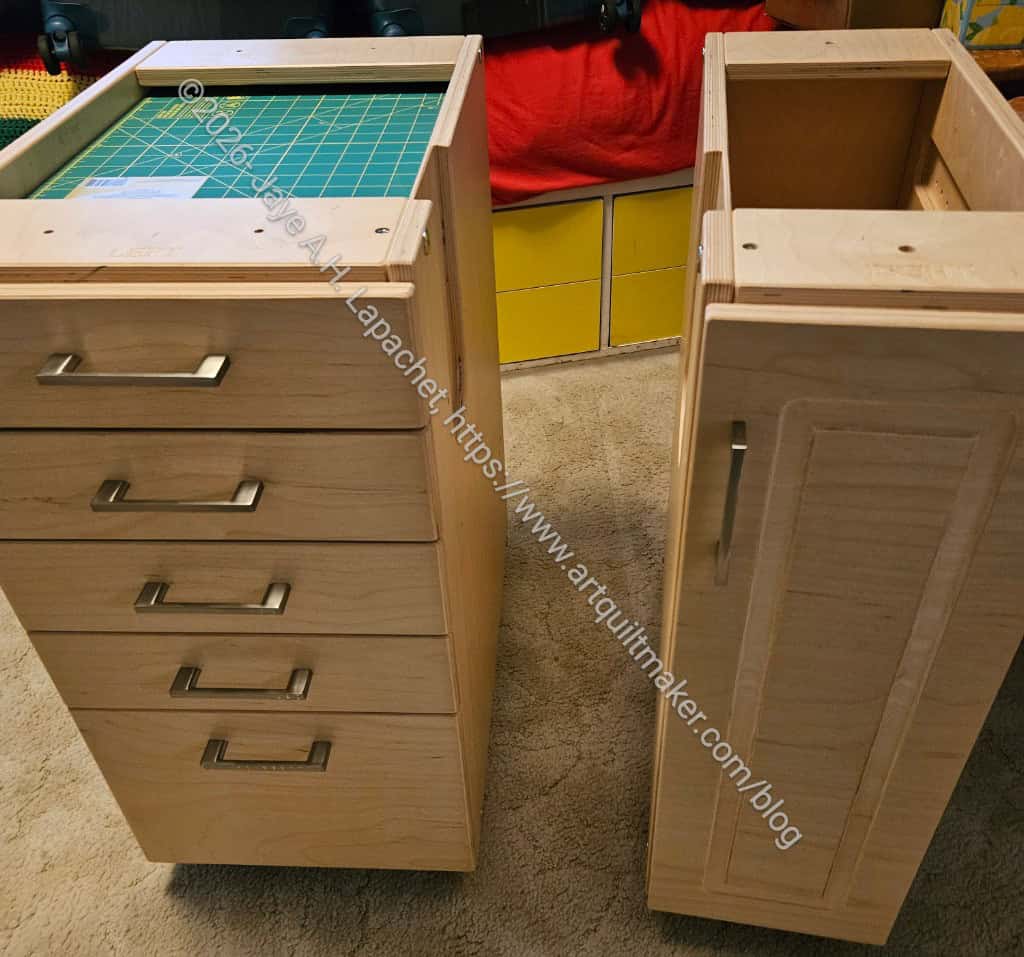
Sewing table cabinets
DH didn’t like how the screws sat, but he was not available for the manual labor, and there didn’t seem to be anything he could have done differently.
The cabinets for the sides are ready for the next step.
I really like the light wood on this table. I think it will lighten up the dark corner where my sewing machine sits.
The left cabinet also has a lot of drawers. I might have a whole separate drawer for my chocolate!!! LOL!
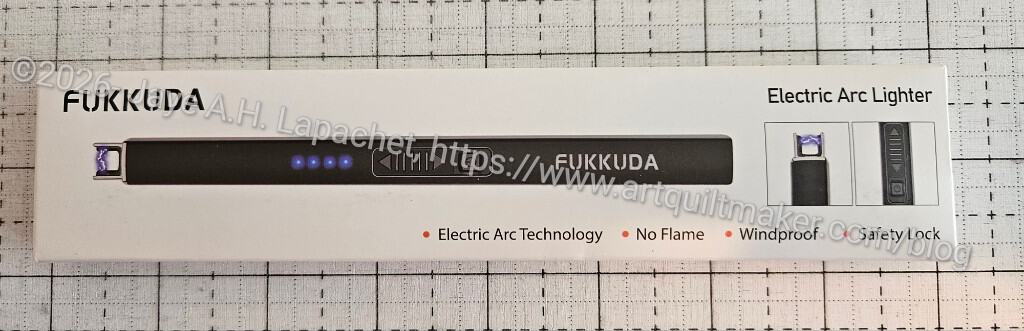
True confession time. I am scared of lighters. I also can’t make them work. I never smoked, so it wasn’t a problem. Until bagmaking.
There are times when using a lighter to seal certain edges, like webbing is really helpful. MaryC suggests it all the time. I have tried different things like glue and they are ok, but not the same.
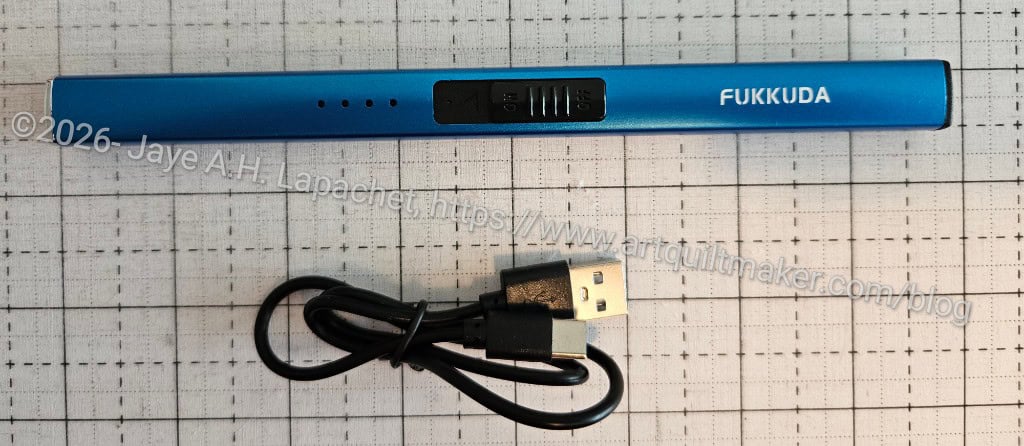
First, I don’t have to try and operate one of those rolly things on a lighter. The tool has an on/off switch and button you press to make the arc heat up. The product description says “plasma flameless arc technology, which has various features such as energy concentration, smoke-free, odorless and windproof, ensures this lighter to be used normally under any weather.”
Second, it recharges. I know it is another thing to recharge, but at least I am dealing with refilling an oil reservoir. The product description says “No need to refill the lighter ever! Built-in large capacity battery, and power indicator lights to remind you when it should be charged. The portable USB cable can connect to power source such as computers, power bank and etc.”
Third, it does not stay lit all the time. Even if I am pressing the ‘light’ button, it will turn off unless something is actually being lighted or burned. The product description says “7s Auto Off: The electric arc will automatically turn off after 7 seconds per use. Double safety switch: The power button is under the safety switch, avoiding accidental touches of the ignition button when you put it in your pocket or bag.”
Now I am able to seal the edges of webbing without lighting a candle and trying to do it from there.
**Obviously, you should shop at local quilt shops and small businesses, as I did. However, if you are too busy, don’t have a local shop nearby or can’t find what you need, I use Amazon affiliate links. I may be paid for your purchase of an item when you click on an item’s link in my post. There is no additional cost to you for clicking or purchasing items I recommend. I don’t link to items I don’t like. I appreciate your clicks and purchases as it helps support this website.
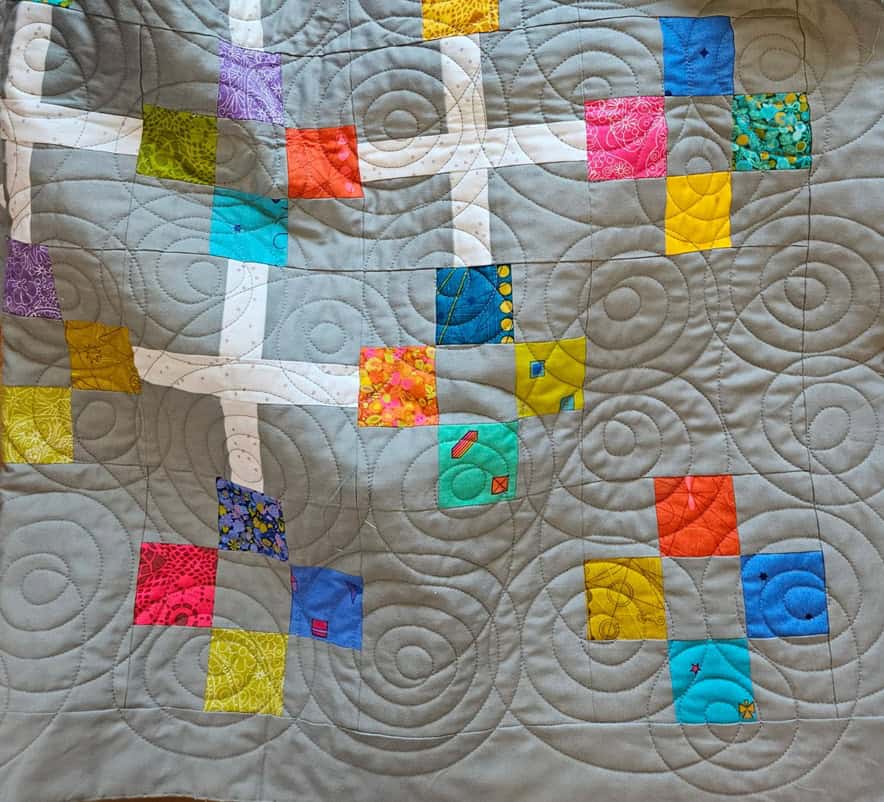
The other day I decided it was a good day to cut for the Morning Glory quilt. This has been sort of cut for awhile, but not really started. I think this was because I didn’t have a reason to make it. Now I do. There will be another wedding in the family. The family new member will get a quilt.
I don’t always wait to start projects until I have a reason, but this quilt is so easy that it is more about the fabrics and colors than the piecing challenge. I just felt like waiting, or I had no incentive to get going.
Cyndi’s Morning Glory
It started with a picture that Cyndi sent me or maybe she showed me the quilt? I don’t remember now. She made this quilt from a pattern in a book called Just Two Charm Packs** and it really appealed to me.
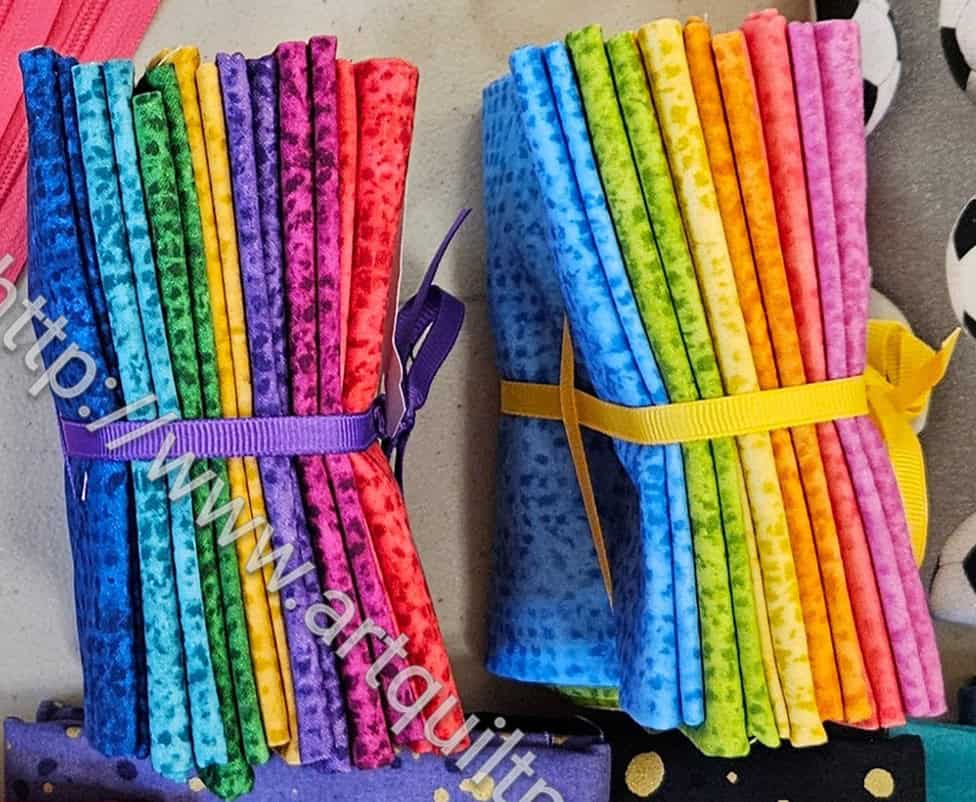
Family Threads FQ packs
I bought a couple of fat quarter packs in 2025 and that set me on the path. I am a sucker for a rainbow FQ pack. I thought they would be good to use with this pattern, so I cut them up right away and then stopped work on the project.
I thought a lot about what to use for the crosses. I didn’t want to use white, for some reason, and ended up cutting the same lavender grunge that I used for another project. I had just enough leftover for the crosses.
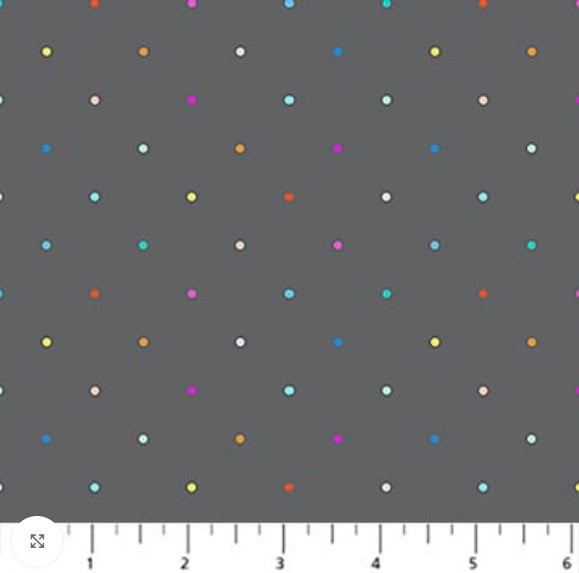
Dewfall 92091-95 Ditsy Dots Gray Multi Ghazal Razavi
The background is a darker grey than Cyndi used. It is Dewfall by Ghazal Razavi (#92091). Her fabrics are showing up quite a bit in my quilts lately. I used some of her Dovetail line in the Patchwork Palooza quilt.
The method of putting the quilt together isn’t too my taste, but I am ok with this being a quick project.
**Obviously, you should shop at local quilt shops and small businesses, as I did. However, if you are too busy, don’t have a local shop nearby or can’t find what you need, I use Amazon affiliate links. I may be paid for your purchase of an item when you click on an item’s link in my post. There is no additional cost to you for clicking or purchasing items I recommend. I don’t link to items I don’t like. I appreciate your clicks and purchases as it helps support this website.
After taking a class back in the dark ages from Lorraine Torrence, always tell myself to ‘make visual decisions visually’. It is so easy for me to see a fabric in a shop and ‘think’ it will go with my project. Not having the project with me means I can’t know for sure, but I am often confident that my color sense is good and I have the perfect fabric.
Then I am wrong.
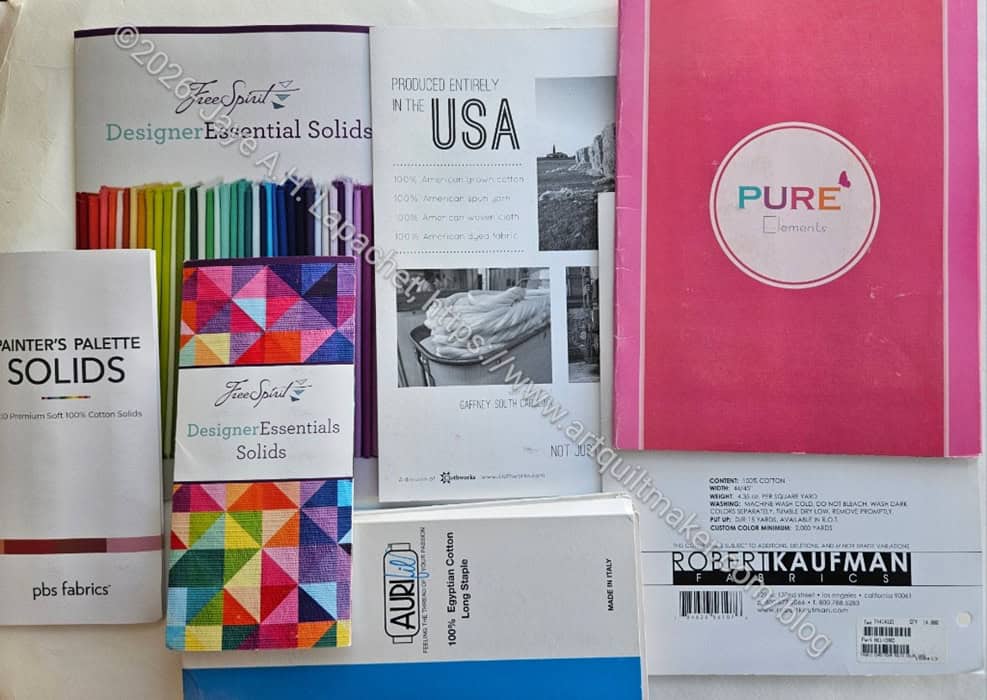
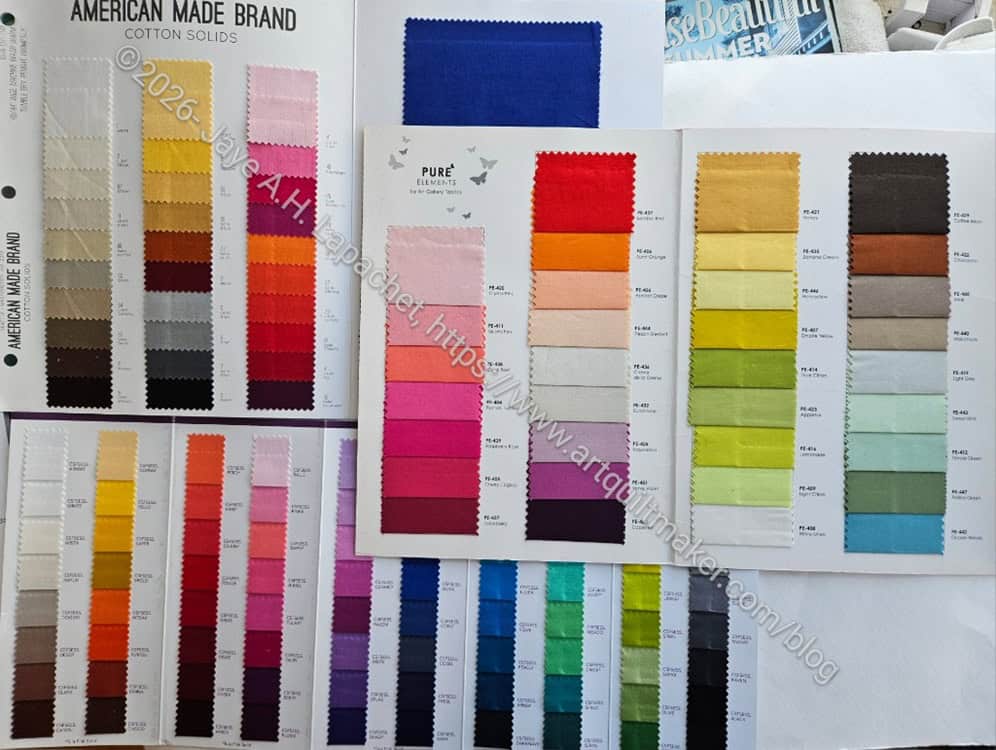
My color cards – 2026
This is where color cards come in. I don’t usually have my color cards with me in shops, so they don’t solve all of my problems. However, they definitely help with online shopping for solids.
I like to pull out my color cards when thinking about getting a new solid or needing some solids for a project and comparing my fabrics with potential options. It is also a great way to match solids or find the correct name for a solid of which you need more.
My open color cards – 2026
Color cards are also like mini pieces of art. I always want all the fabrics when I open them up.
The bad part is that color cards do get superseded by new versions as fabric manufacturers add colors. While I was researching, I found that Clothworks has increased the number of colors available in their American Made Brands line, thus requiring a new color card to take advantage of all of the options. The same is true for the AGF Pure Solids. I put these on my wishlist. 😉
Having the color cards available has prevented me from spending more money than I need to and also from selecting the wrong color. They can be on the pricey side, which is why I was pleasantly surprised at the excellent prices on the Michael Miller color cards.
While I can see that I am slowly emptying my pink scrap bin, I find it harder the more empty it gets.
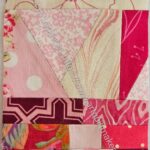
I am past the point where I can add a strip and have the block grow quickly. I have to put smaller pieces together to make larger strips and chunks before I get a large enough piece to cut a block. It is a little tedious to sew small bits together. I keep reminding myself that this is my choice.
I have over 60 of these strip and chunk blocks and would like to get to 80 so I can make two donation quilts and really clean out this scrap bin. I could start on one; I just have to cut some blacks.
I am trying to avoid making another improv scrap quilt so this is what I get. I am also putting larger chunks together to make the exterior of a needle roll (needle case?) for a holiday swap.
The exterior of the Mindalin tool roll has been sitting and waiting for me to get to it since Sew Day a month or so ago.
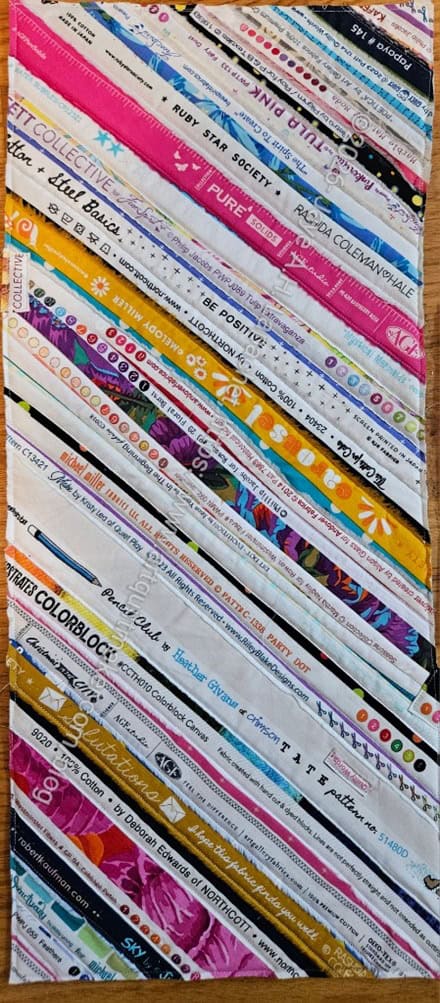
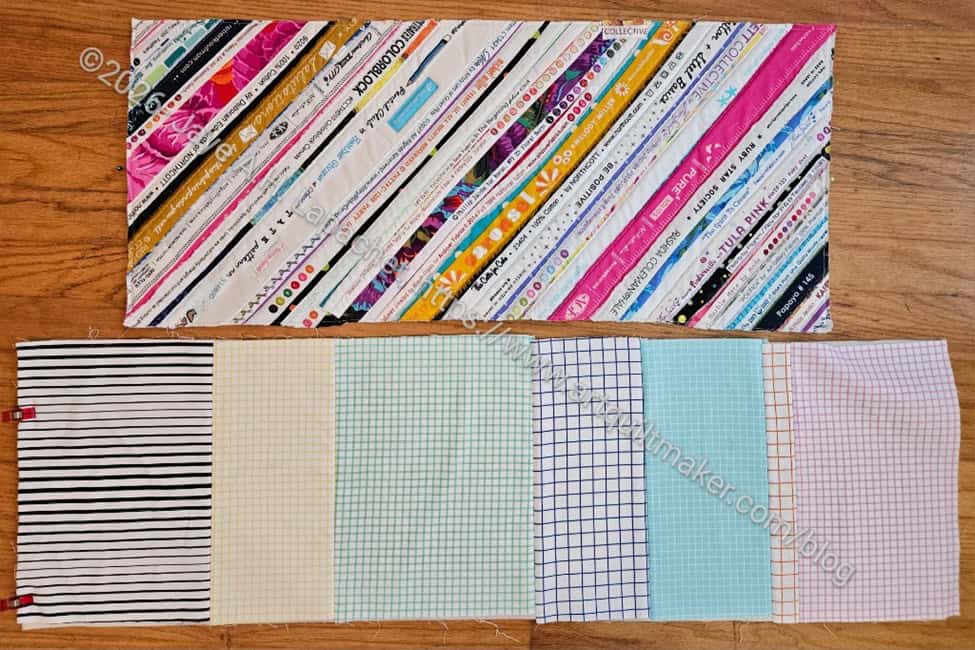
As mentioned, the pattern calls for foundation pieced blocks to make the outside, but I decided to use selvedges to make the exterior. I have a lot of them, even after this effort. It looks really cool, IMO.
Recently, I decided to dig out this project and work on it. I thought it would be a pretty easy finish. Low hanging fruit, you know.
I was soooo wrong. I felt like everything that could go wrong did go wrong.
First, the pattern is written in a way that is hard for me to understand. Now, I can’t complain too much, because I don’t have any suggestions.
Second, I couldn’t get the flap template to print the right size. I wasn’t 100% sure what the right size was, because it didn’t say in the pattern. I would put that in the pattern for sure. I did email Make Modern and they got back tome right away with a separate flap template. It was still too small, so I ended up drawing a flap of my own. Normally, I don’t have any problem printing templates. I do it all the time for Sew Sweetness patterns and even did it using MS Edge (because of the PDF permissions) for my Pandora Charisma pattern. No matter what I did, it didn’t work with this project.
Mindalin interior and exterior
I was able to make the interior, but when I compared the interior with the exterior, they were not the same sizes. Sigh.
I am not sure what happened. All I can think is that somehow I got distracted at Sew Day and miscut. That panel looks good, so I’ll use it for something else, but I am really disappointed in how this project is progressing.
The parts of my new sewing table are now stacked in the YM’s room with parts of my workroom that had to be moved so I can put the new sewing table together in place.
DH was strong enough to haul them upstairs, which was a relief, otherwise we would have had to call in the nephews to help. If I had been alone, it would have been the nephews for me.
Old sewing table stranded
My old sewing table is still upstairs. It is also heavy and I cannot bring it downstairs alone.
I spent yesterday unloading the contents into boxes and moving them downstairs. I want the table to be ready to be moved when the time comes. I also cleaned it. I vacuumed all the surfaces and then went over the whole table with wood cleaner. It hasn’t been this clean since I got it!
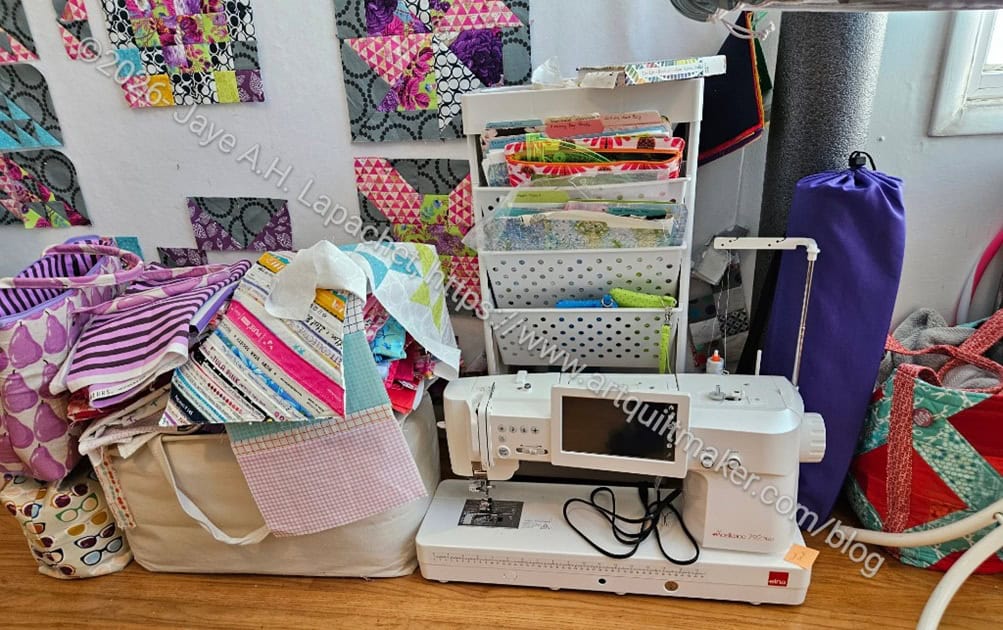
Sad and lonely sewing machine
My sewing machine is still upstairs. I feel at loose ends when I cannot sew on demand. I could go and work on La Passacaglia, but I have been reading through the directions for the sewing table and starting to put it together. I’ll need a helper, though, at some point.
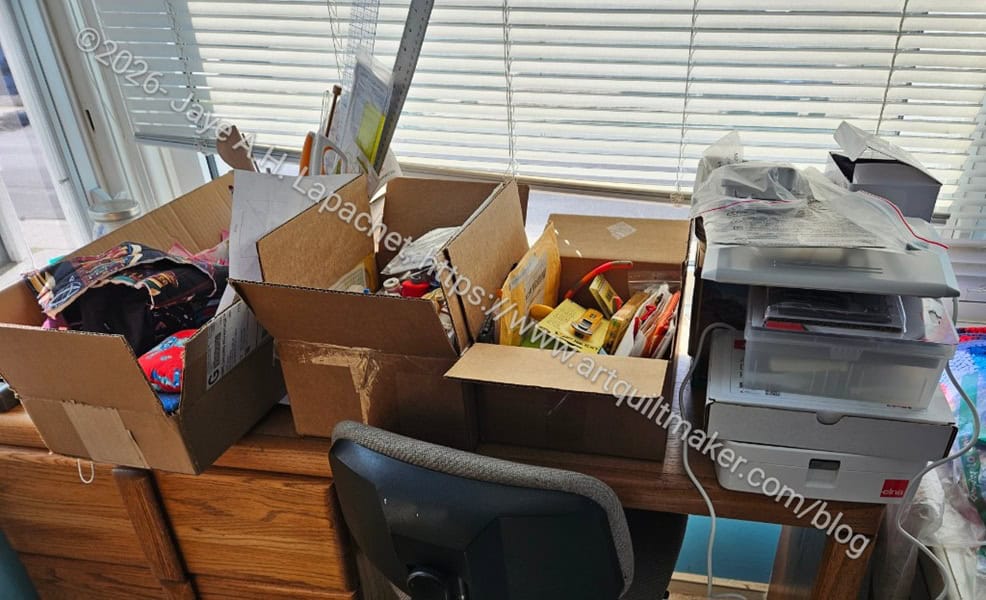
Drawer contents in transit
I took the opportunity to clear out items I wouldn’t need or haven’t used in awhile when I boxed up the drawers of my old sewing table. The guild meeting was cancelled, so I couldn’t put them on the free table, but next time.
I was surprised at how much stuff fit in or on my sewing table.
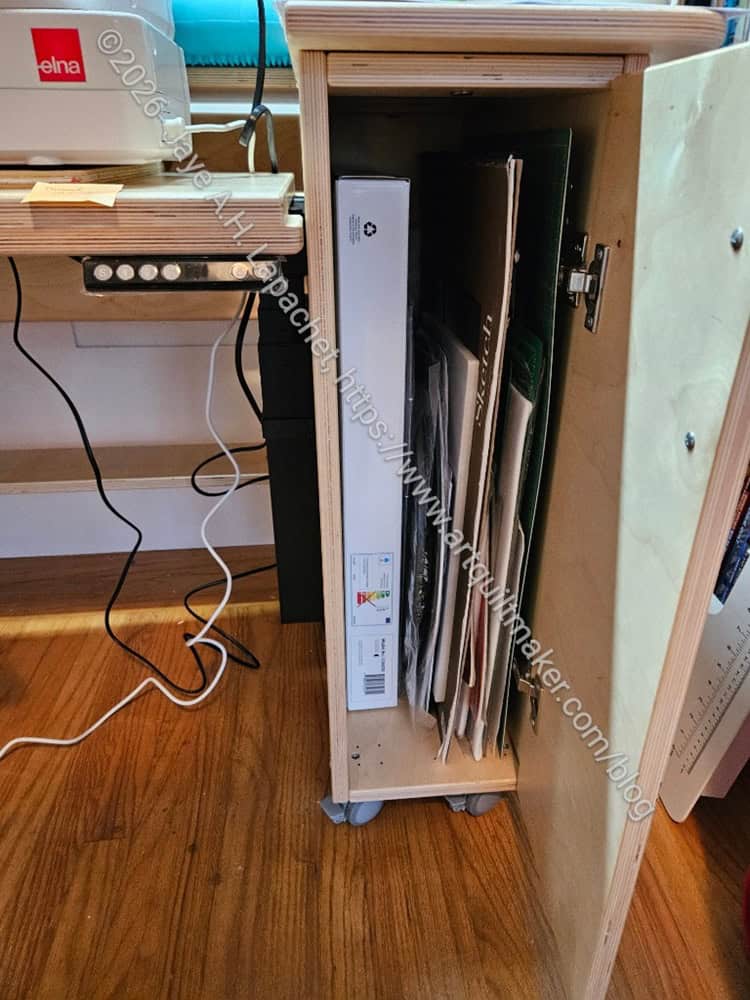
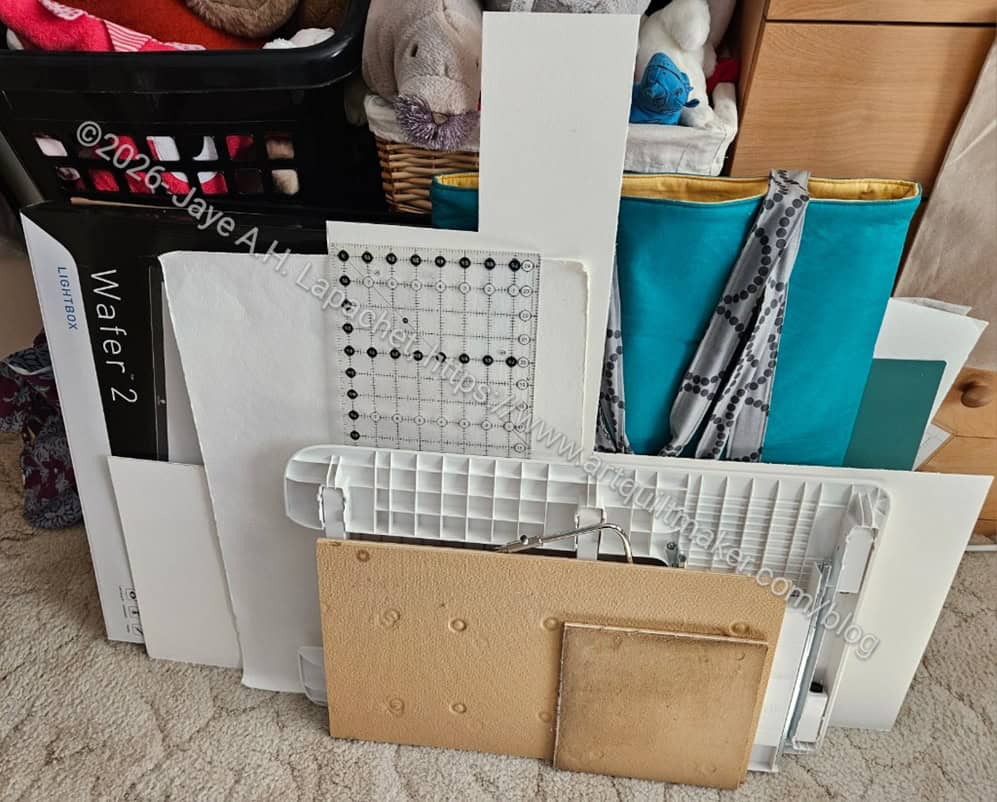
Tall tools and supplies
One thing I am gaining, in addition to a space for the larger machine, is a tall side cupboard, where my tall-ish tools and supplies will live.
These were always just leaned up against the side of the old table. I am looking forward to having everything more organized.
In the meantime, everything is everywhere. I can’t use the machine and my workroom is a mess.
When we had the Oxbow Sew Day at SueS’ house she talked quite a bit about the different methods of attaching the strap holders. I didn’t do any thing about it for the first Oxbow, but I decided to try to acknowledge the sense of her thoughts in this Oxbow.
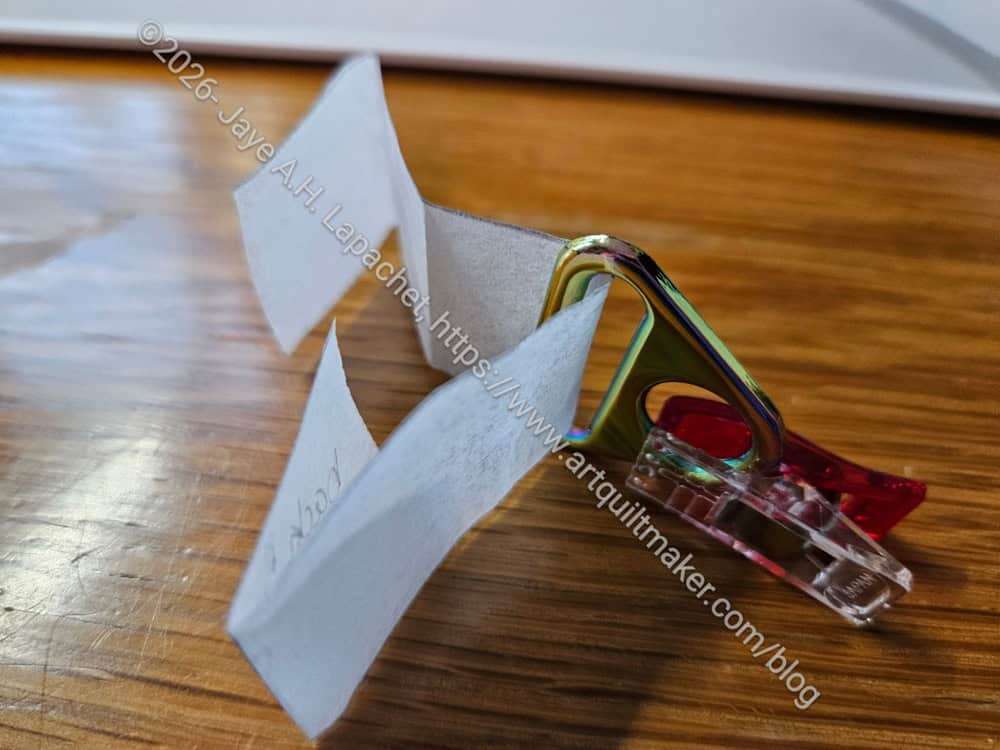
Oxbow: Playing with the strap holders
I tried to figure out how to add a strap holder that looks good when sewn down and provides added strength for the weight of a full Oxbow. I mentioned this when I started the Oxbow. I was convinced that I could create a support system that would look good and wouldn’t just be the result of my machine being able to sew through many layers.
I did not succeed.
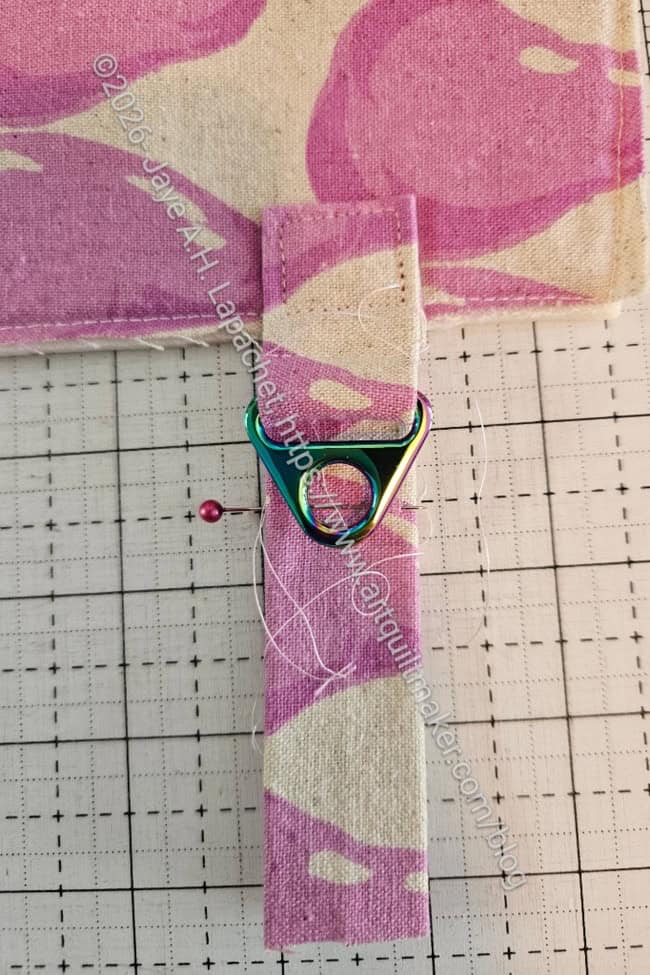
Oxbow test strap holder
After assembling the front and back Main panels, I sewed a more robust strap holder to the front of the Main Panels.
At this point I was hopeful and pretty convinced I could make my idea work. The strap holder piece sewn to the Main Panel is folded so the raw edge, like the one at the bottom of the photo, is underneath the strap holder. I wanted to wrap it around the back to minimize raw edges on the front and provide more support for the triangle.
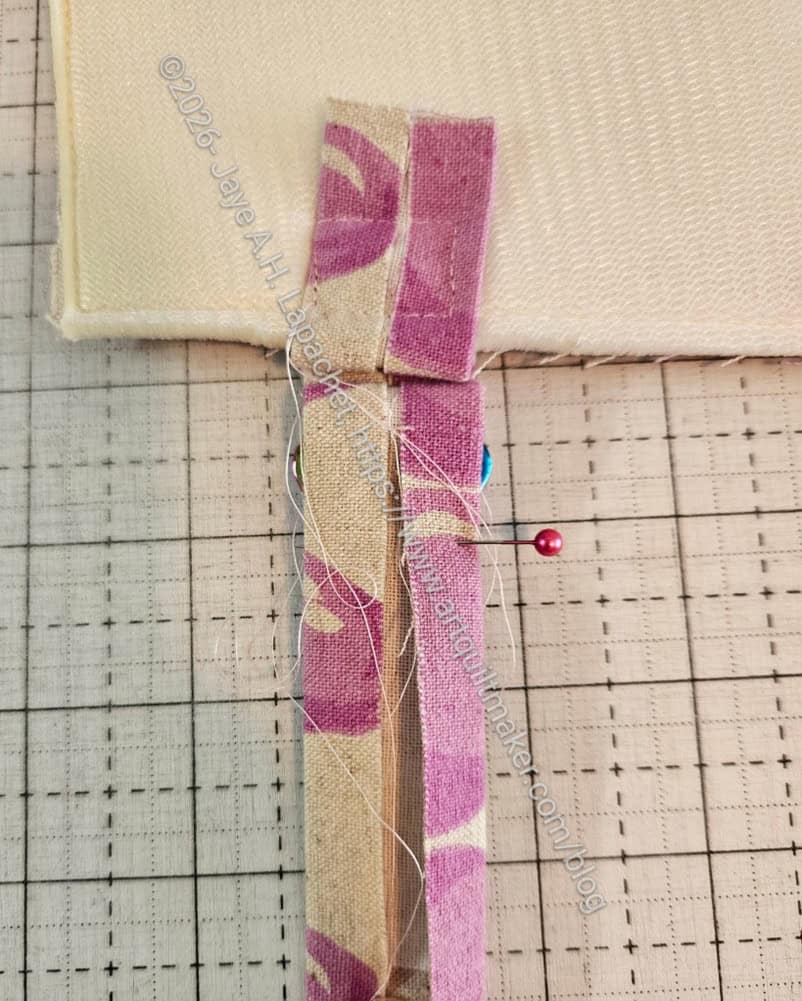
Oxbow test strap holder – back
This part worked okay, except for the wonkiness of my sewing on the back. I could have lived with that, or redone it.
The problem came when I tried to put the Main Panels together. I couldn’t figure out how to do the same stitching for the strap holder on the back Main Panel while trying to keep the Main Panels together, but out of the way and not hit a piece of hardware with my needle. I didn’t have enough hands.
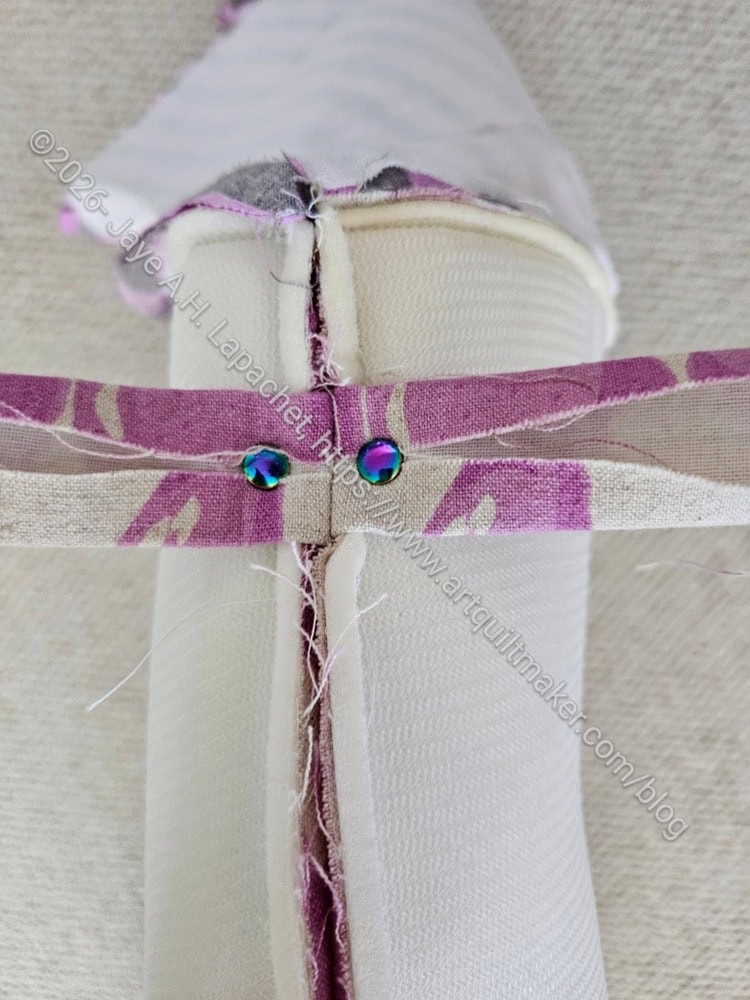
Oxbow strap holder riveted
As you can see, I ripped out the wonky stitching and redid it. I gave up trying to put the whole complex idea together after quite a bit of trying and riveted the strap holder. Was that a cop out? I don’t think so.
I do understand why pattern writing, especially for bags, is so hard. I am struggling to explain to you what I was trying to do!
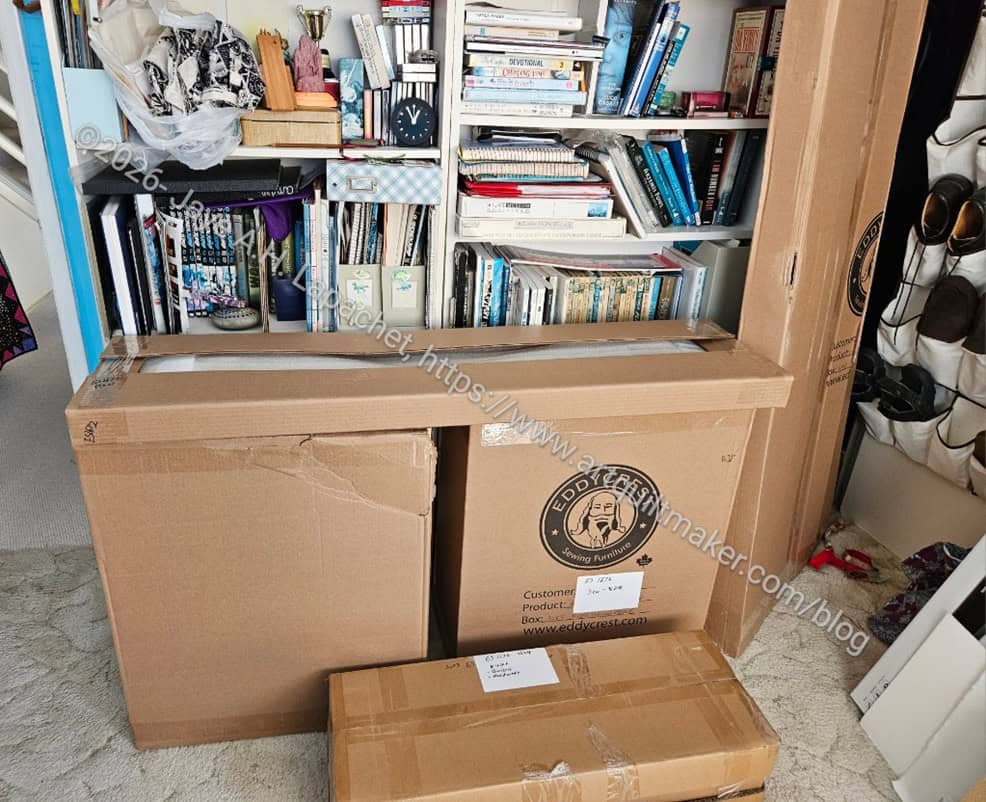
My new sewing table arrived yesterday. I knew it was coming, but I didn’t know it was coming at 8:30am!
Fortunately, I was home. I was looking for a ground sheet to lay out in the driveway when I heard the truck pull up. I was told it would be delivered to the driveway and my driveway doesn’t get sun until the afternoon. I didn’t want any moisture to seep through the cardboard boxes.
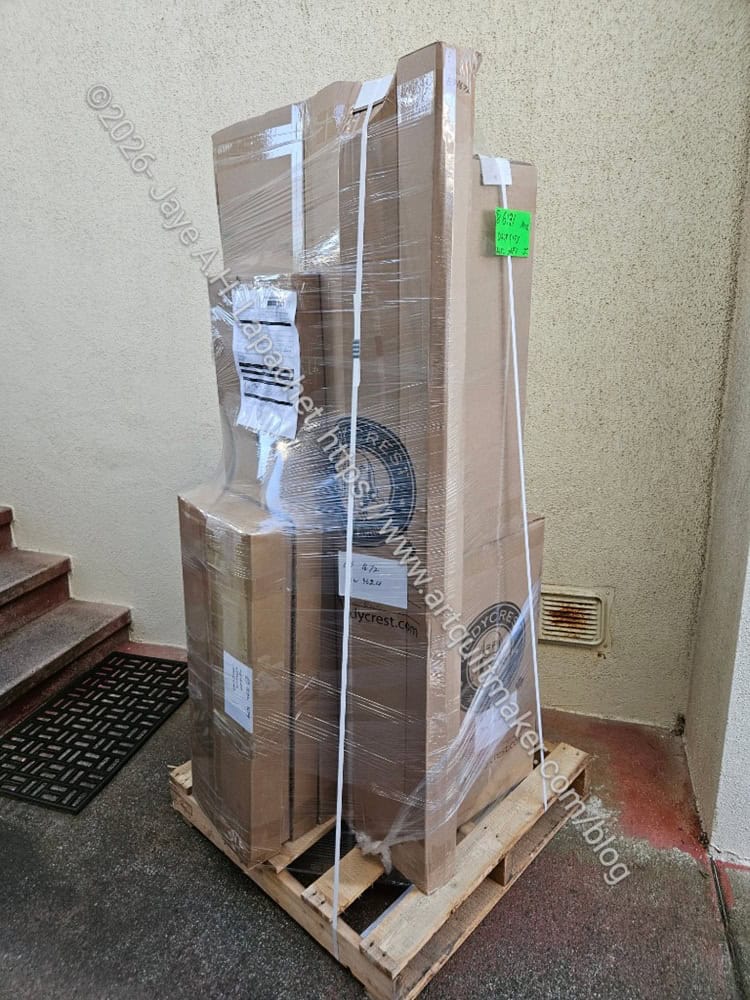
I was pleased to see the boxes were on a pallet and covered in plastic. The delivery driver also put the pallet near my front door rather than in the driveway, which is more convenient.
I spent my afternoon free time unloading my old sewing table, moving the machine and generally gearing up for bringing the new table upstairs.
Need a sewing table? My old one needs to go to a new home.
This month 8 was pulled. Another happy choice, though all the projects are good choices at the moment.
Chickadee Pieces cut out, ready to sew
The bag was all cut out and ready to sew after Sew Day and I just needed to get sewing. I haven’t made any further progress yet. I have plenty of time and think I can easily finish it before the next Sew Day.
I plan to make the handles so they don’t stick up all the time, which means a little extra hardware. I don’t like to make changes until I have made a bag, but I feel like this is an important one.
**Obviously, you should shop at local quilt shops and small businesses, as I did. However, if you are too busy, don’t have a local shop nearby or can’t find what you need, I use Amazon affiliate links. I may be paid for your purchase of an item when you click on an item’s link in my post. There is no additional cost to you for clicking or purchasing items I recommend. I don’t link to items I don’t like. I appreciate your clicks and purchases as it helps support this website.
I made some good progress on the Oxbow last week and am really happy with the progress.
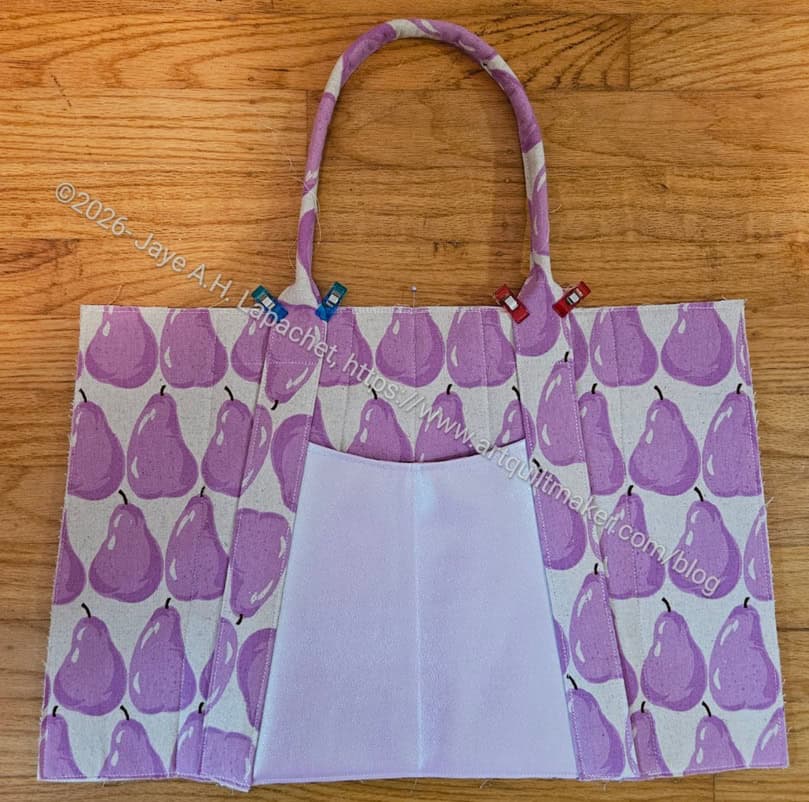
This is the exterior pocket side of the bag, which the directions say to make first. I stopped at this point, because after completing this step, I have to make the other side and then add the strap holders. I haven’t 100% decided how to do that. I did decide I needed to be fresh and ready for a challenge
I often think using the big print fabric, or special fabric, for the Oxbow exterior is a waste because the pocket covers it. I do think that enough of the pears can be seen so it isn’t a complete waste.
I forgot that part of the handle would be upside down. Even if I hadn’t forgotten, I probably wouldn’t have done anything different as splitting the fabric would have meant weakening the handles. I suppose I could have used the lavender quilted vinyl. I did think about it, but I was concerned that even with my new machine, the layers would have been too thick through which to sew.
This bag has a lot of prep, but once you get through the prep, the bag goes together really easily.